
Harris Tweed is one of the few fabrics whose name is protected by an Act of Parliament, a registered trademark and an inspectorate that visits weavers’ homes. For commercial fabric buyers, it is worth understanding exactly how that system works, because it defines the line between a protected certification and a marketing phrase any mill can use. This guide explains what the Harris Tweed certification actually covers, what a commercial mill in Wenzhou or Biella can legitimately learn from it, and which claims would cross into infringement or greenwashing.
Unsere Haltung ist hier pragmatisch: Fursone webt kommerziellen Tweed an 300+ Webstühlen in Wenzhou, und Einkäufer fragen uns regelmäßig, warum unser Stoff nicht Harris Tweed heißen darf und wie die ehrliche alternative Bezeichnung lautet. Dieselbe Disziplin gilt für die Färbeseite der Geschichte, die wir separat behandelt haben in unserem Leitfaden zu garngefärbtem versus stückgefärbtem Tweed.
Was die Zertifizierung von Harris Tweed tatsächlich schützt
Die Definition ist ungewöhnlich präzise. Laut the Harris Tweed Authority’s official site, genuine Harris Tweed must be made from 100 percent virgin wool, dyed and blended in the Outer Hebrides of Scotland, handwoven by islanders in their own homes, and finished there, protected by the Orb mark since an Act of the UK Parliament. Every metre of qualified cloth carries the Orb trademark, and the Authority’s inspectors examine the cloth on the loom before stamping it. Three consequences follow for buyers: the name denotes a place and a method, not a weave pattern; the supply is physically capped by the number of licensed home weavers; and any cloth “in the Harris style” made elsewhere is, by definition, not Harris Tweed.
Was gewerbliche Webereien aus diesem Modell zu Recht lernen können
The first lesson is traceability as a product feature. The Orb system works because each stamp is backed by inspection records; a commercial mill can reproduce the mechanism, not the mark, by keeping loom-level weaving records and tying each bulk lot to yarn lots and dye batches. The second lesson is the draft-and-blend discipline: Harris Tweed’s character comes from blending dyed fibers before spinning, which is the same reason our yarn-dyed constructions hold pattern integrity across a 300 metre custom run. The third lesson is finishing consistency, where loom tension and finishing settings interact, a topic we document in our weaving parameters guide. Käufer, die diese Mechanismen verstehen, vergleichen Webereien anhand der Dokumentation statt anhand von Adjektiven, und unsere Ratgeber Merino versus Schurwolle ist ein gutes Beispiel für diese Art von Vergleich auf Spezifikationsebene.
Wo die rechtlichen und ethischen Grenzen liegen
What a mill cannot do is use “Harris Tweed”, the Orb mark, or lookalike devices on any cloth woven outside the Outer Hebrides. The trademark is enforced, and fashion brands have faced takedowns for mislabeled marketing. Honest commercial wording describes the construction instead: “Hebrides-style woven tweed”, “home-weave aesthetic”, or simply naming the yarn, weight and weave. The same honesty rules apply to certification claims generally; our greenwashing claims guide gives brands a phrase-level checklist. If a supplier’s spec sheet says “Harris-like quality” without naming the actual fiber content, weave and finishing data, treat the vagueness as a warning sign.
Wie Sie einen kommerziellen Tweed anhand einer Harris-Referenz briefen
Buyers who want Harris Tweed’s character at commercial pricing should brief the mill on measurable attributes rather than the name: yarn count and blend, whether the dyeing happens at fiber stage or yarn stage, target weight in gsm or oz, the nub and check structure, and pilling grade (our lines are engineered to ISO grade 3-4). With those fields, a 300 metre custom program can be quoted, sampled in 7 days and compared line by line against any reference cloth. That is the honest version of the story the Orb tells, and it is the version that survives a compliance review. Development programs of this kind run through our Entwicklungsservice für Tweed im Chanel-Stil.
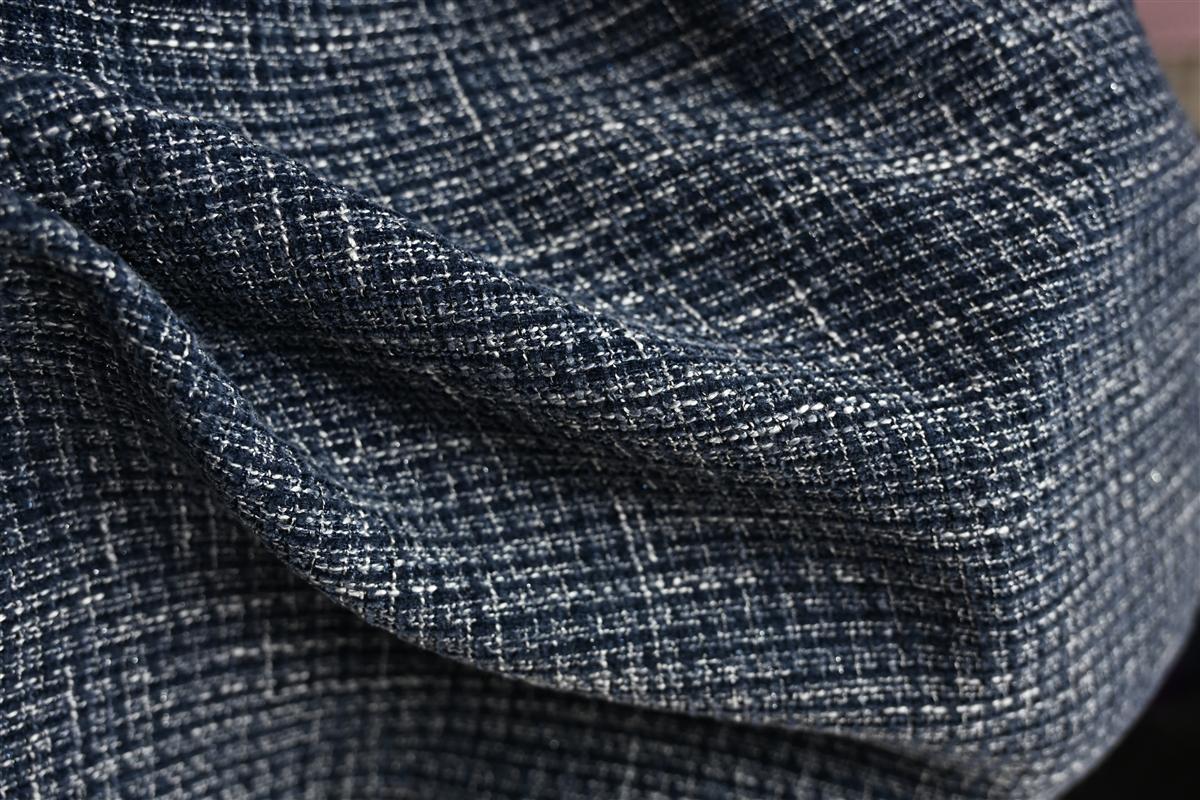
Video: verborgene Handwerkskunst beim Tweed-Weben
Das Video führt durch die Konstruktionsdetails, die einen gut gemachten kommerziellen Tweed von einem x-beliebigen unterscheiden – genau die Eigenschaften, die ein Zertifizierungssystem schützen soll.
Häufig gestellte Fragen
Kann eine Weberei in China legal Tweed weben, der wie Harris Tweed aussieht?
It can weave tweed of any construction, but it cannot call it Harris Tweed or use the Orb mark. The protection covers the name, the mark and the defined origin-and-method combination, so descriptive wording such as “in the Harris tradition” on non-Hebridean cloth is a compliance risk brands should avoid.
Warum kostet echter Harris Tweed mehr als kommerzielle Alternativen?
Lizenziertes Heimweben ist langsam, die Kapazität auf der Insel ist begrenzt, und Prüfung und Stempelung verursachen zusätzliche Kosten pro Meter. Die kommerzielle Produktion auf Kraftwebstühlen erzielt ähnliche optische Effekte zu einem niedrigeren Preis, weil die Webstühle schneller und in größerem Maßstab laufen.
Ist Schurwolle in beiden Fällen dasselbe?
Virgin Wool bedeutet neue Wolle aus dem Vlies, nicht Recyclingwolle. Harris Tweed ist per Definition 100 Prozent Virgin Wool; Handels-Tweeds können – und werden oft – als Mischungen mit recycelter Wolle oder Polyamid produziert, um Kosten- und Haltbarkeitsziele zu erreichen.
Was sollten Sie von einer Weberei an Nachweisen verlangen, statt auf eine Marke zu setzen?
Verlangen Sie Webprotokolle mit Bezug zu Ihrer Partie, Ihren Garn- und Färbechargennummern, Testberichte zu Pilling und Farbechtheit sowie das physische Goldmuster. Diese vier Punkte liefern Ihnen die Rückverfolgbarkeit, die das Orb-Zeichen signalisiert – am eigenen Stoff überprüft.

Verwandte Einblicke

Stoffbreite und Webkanten: Schnittausbeute planen, bevor Sie Tweed bestellen
Buyers compare tweed by weight, color and price, and then discover at the cutting table...
Reading Fabric Selvedge: Markings, Width and Quality Signals
The selvedge, the finished edge running along both sides of a fabric roll, is the...

Garnfeinheiten im Tweed: Was 2/8 NM für Griff, Gewicht und Kosten bedeutet
Ask three suppliers to quote “a 400 gsm tweed for overcoats” and you will often...