
Harris Tweed is one of the few fabrics whose name is protected by an Act of Parliament, a registered trademark and an inspectorate that visits weavers’ homes. For commercial fabric buyers, it is worth understanding exactly how that system works, because it defines the line between a protected certification and a marketing phrase any mill can use. This guide explains what the Harris Tweed certification actually covers, what a commercial mill in Wenzhou or Biella can legitimately learn from it, and which claims would cross into infringement or greenwashing.
Nuestra postura aquí es práctica: Fursone teje tweed comercial en más de 300 telares de fábricas asociadas en Wenzhou, y los compradores nos preguntan con frecuencia por qué nuestro tejido no puede denominarse Harris Tweed y cuál es la formulación alternativa honesta. La misma disciplina se aplica a la parte del relato relativa al teñido, que tratamos por separado en nuestro guía del tweed teñido en hilo frente al teñido en pieza.
Qué protege realmente la certificación Harris Tweed
La definición es inusualmente específica. Según the Harris Tweed Authority’s official site, genuine Harris Tweed must be made from 100 percent virgin wool, dyed and blended in the Outer Hebrides of Scotland, handwoven by islanders in their own homes, and finished there, protected by the Orb mark since an Act of the UK Parliament. Every metre of qualified cloth carries the Orb trademark, and the Authority’s inspectors examine the cloth on the loom before stamping it. Three consequences follow for buyers: the name denotes a place and a method, not a weave pattern; the supply is physically capped by the number of licensed home weavers; and any cloth “in the Harris style” made elsewhere is, by definition, not Harris Tweed.
Qué pueden aprender legítimamente las fábricas comerciales de este modelo
The first lesson is traceability as a product feature. The Orb system works because each stamp is backed by inspection records; a commercial mill can reproduce the mechanism, not the mark, by keeping loom-level weaving records and tying each bulk lot to yarn lots and dye batches. The second lesson is the draft-and-blend discipline: Harris Tweed’s character comes from blending dyed fibers before spinning, which is the same reason our yarn-dyed constructions hold pattern integrity across a 300 metre custom run. The third lesson is finishing consistency, where loom tension and finishing settings interact, a topic we document in our weaving parameters guide. Los compradores que entienden estas mecánicas comparan las fábricas asociadas por su rigor documental y no por adjetivos, y nuestro guía de merino vs lana convencional es un buen ejemplo de ese tipo de comparación a nivel de especificaciones.
Dónde se sitúan los límites legales y éticos
What a mill cannot do is use “Harris Tweed”, the Orb mark, or lookalike devices on any cloth woven outside the Outer Hebrides. The trademark is enforced, and fashion brands have faced takedowns for mislabeled marketing. Honest commercial wording describes the construction instead: “Hebrides-style woven tweed”, “home-weave aesthetic”, or simply naming the yarn, weight and weave. The same honesty rules apply to certification claims generally; our greenwashing claims guide gives brands a phrase-level checklist. If a supplier’s spec sheet says “Harris-like quality” without naming the actual fiber content, weave and finishing data, treat the vagueness as a warning sign.
Cómo definir un tweed comercial frente a una referencia Harris
Buyers who want Harris Tweed’s character at commercial pricing should brief the mill on measurable attributes rather than the name: yarn count and blend, whether the dyeing happens at fiber stage or yarn stage, target weight in gsm or oz, the nub and check structure, and pilling grade (our lines are engineered to ISO grade 3-4). With those fields, a 300 metre custom program can be quoted, sampled in 7 days and compared line by line against any reference cloth. That is the honest version of the story the Orb tells, and it is the version that survives a compliance review. Development programs of this kind run through our Servicio de desarrollo de tweed estilo Chanel.
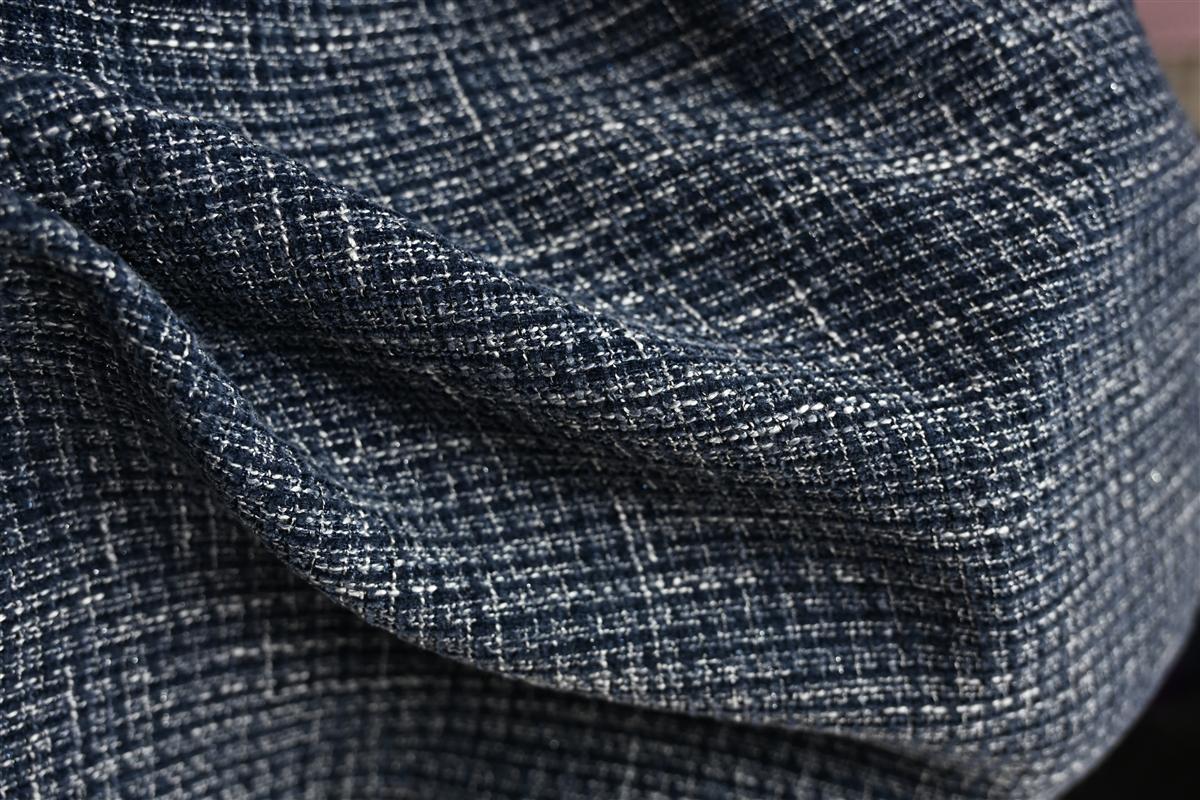
Vídeo: la artesanía oculta del tejido de tweed
El vídeo repasa los detalles de construcción que distinguen un tweed comercial bien hecho de uno genérico, los mismos atributos que un sistema de certificación tiene por objeto proteger.
Preguntas frecuentes
¿Puede una fábrica asociada de China tejer legalmente un tweed que parezca Harris Tweed?
It can weave tweed of any construction, but it cannot call it Harris Tweed or use the Orb mark. The protection covers the name, the mark and the defined origin-and-method combination, so descriptive wording such as “in the Harris tradition” on non-Hebridean cloth is a compliance risk brands should avoid.
¿Por qué cuesta más el auténtico Harris Tweed que sus equivalentes comerciales?
El tejido doméstico autorizado es lento, la capacidad de la isla es limitada y el proceso de inspección y sellado añade coste por metro. La producción comercial en telar mecánico logra efectos visuales similares a un precio inferior porque los telares funcionan más rápido y a escala.
¿Es la lana virgen lo mismo en ambos casos?
La lana virgen es lana nueva obtenida del vellón, no reciclada. El Harris Tweed se define como 100 % lana virgen; los tweeds comerciales pueden producirse, y de hecho se producen a menudo, con mezclas que incluyen lana reciclada o poliamida para cumplir objetivos de coste y durabilidad.
¿Qué debería pedirle a una fábrica que demuestre en lugar de una marca registrada?
Solicite los registros de telar vinculados a su partida y a los números de lote de hilado y de tinte, los informes de ensayo de bolitas y solidez del color, y la muestra dorada física. Esos cuatro elementos le aportan la trazabilidad que señala la marca Orb, verificada en su propio tejido.
Perspectivas relacionadas

Ancho de Tejido y Orillos: Planificar la Eficiencia de Corte Antes de Pedir Tweed
Buyers compare tweed by weight, color and price, and then discover at the cutting table...
Reading Fabric Selvedge: Markings, Width and Quality Signals
The selvedge, the finished edge running along both sides of a fabric roll, is the...

Títulos de hilo en el tweed: qué significa 2/8 NM para el tacto, el gramaje y el coste
Ask three suppliers to quote “a 400 gsm tweed for overcoats” and you will often...