
Harris Tweed is one of the few fabrics whose name is protected by an Act of Parliament, a registered trademark and an inspectorate that visits weavers’ homes. For commercial fabric buyers, it is worth understanding exactly how that system works, because it defines the line between a protected certification and a marketing phrase any mill can use. This guide explains what the Harris Tweed certification actually covers, what a commercial mill in Wenzhou or Biella can legitimately learn from it, and which claims would cross into infringement or greenwashing.
Notre position est ici pragmatique : Fursone tisse du tweed commercial sur plus de 300 métiers à Wenzhou, et les acheteurs nous demandent régulièrement pourquoi notre tissu ne peut pas s’appeler Harris Tweed et quelle formulation alternative honnête employer. La même discipline s’applique au volet teinture, que nous avons traité séparément dans notre Guide du tweed teint sur fil ou teint en pièce.
Ce que la certification Harris Tweed protège réellement
La définition est inhabituellement précise. Selon the Harris Tweed Authority’s official site, genuine Harris Tweed must be made from 100 percent virgin wool, dyed and blended in the Outer Hebrides of Scotland, handwoven by islanders in their own homes, and finished there, protected by the Orb mark since an Act of the UK Parliament. Every metre of qualified cloth carries the Orb trademark, and the Authority’s inspectors examine the cloth on the loom before stamping it. Three consequences follow for buyers: the name denotes a place and a method, not a weave pattern; the supply is physically capped by the number of licensed home weavers; and any cloth “in the Harris style” made elsewhere is, by definition, not Harris Tweed.
Ce que les usines commerciales peuvent légitimement apprendre du modèle
The first lesson is traceability as a product feature. The Orb system works because each stamp is backed by inspection records; a commercial mill can reproduce the mechanism, not the mark, by keeping loom-level weaving records and tying each bulk lot to yarn lots and dye batches. The second lesson is the draft-and-blend discipline: Harris Tweed’s character comes from blending dyed fibers before spinning, which is the same reason our yarn-dyed constructions hold pattern integrity across a 300 metre custom run. The third lesson is finishing consistency, where loom tension and finishing settings interact, a topic we document in our weaving parameters guide. Les acheteurs qui maîtrisent ces mécanismes comparent les usines sur la tenue des registres plutôt que sur les adjectifs, et notre guide comparatif Merino et laine classique est un bon exemple de ce type de comparaison au niveau des spécifications.
Où se situent les limites juridiques et éthiques
What a mill cannot do is use “Harris Tweed”, the Orb mark, or lookalike devices on any cloth woven outside the Outer Hebrides. The trademark is enforced, and fashion brands have faced takedowns for mislabeled marketing. Honest commercial wording describes the construction instead: “Hebrides-style woven tweed”, “home-weave aesthetic”, or simply naming the yarn, weight and weave. The same honesty rules apply to certification claims generally; our greenwashing claims guide gives brands a phrase-level checklist. If a supplier’s spec sheet says “Harris-like quality” without naming the actual fiber content, weave and finishing data, treat the vagueness as a warning sign.
Comment rédiger un brief pour un tweed commercial par rapport à une référence Harris
Buyers who want Harris Tweed’s character at commercial pricing should brief the mill on measurable attributes rather than the name: yarn count and blend, whether the dyeing happens at fiber stage or yarn stage, target weight in gsm or oz, the nub and check structure, and pilling grade (our lines are engineered to ISO grade 3-4). With those fields, a 300 metre custom program can be quoted, sampled in 7 days and compared line by line against any reference cloth. That is the honest version of the story the Orb tells, and it is the version that survives a compliance review. Development programs of this kind run through our Service de développement de tweed Chanel-style.
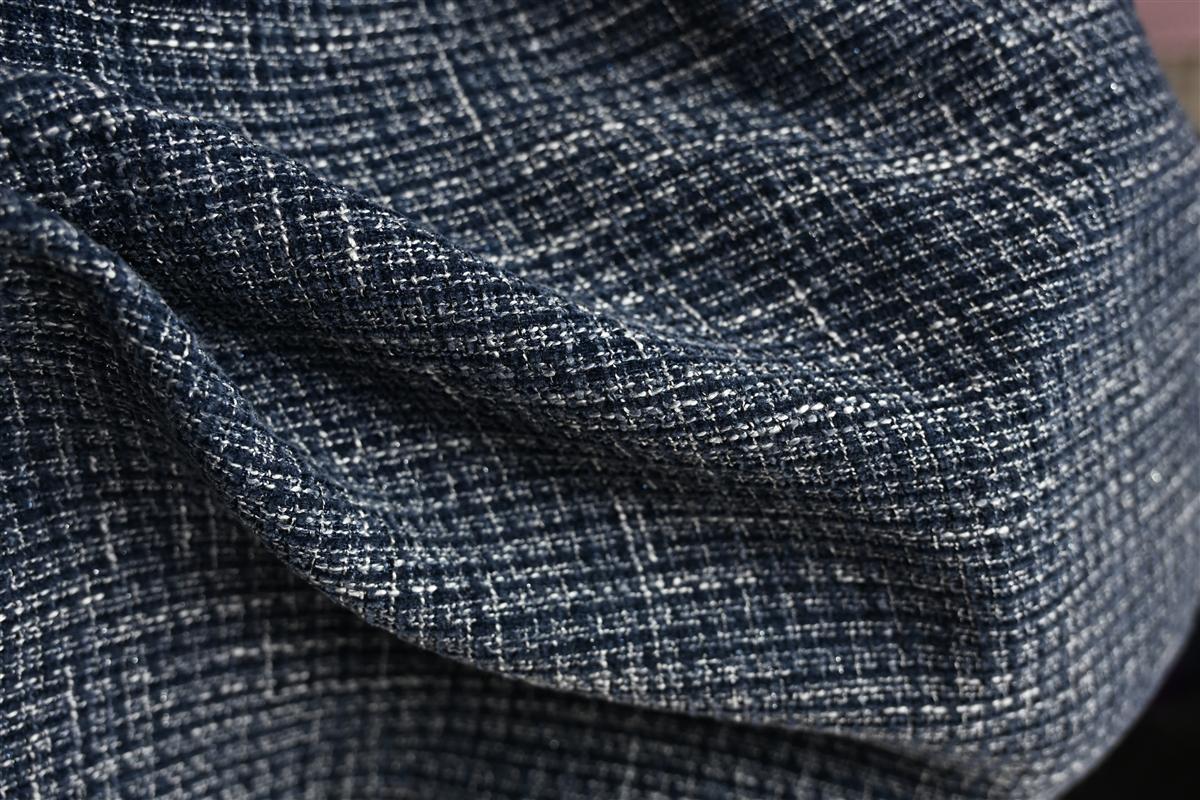
Vidéo : le savoir-faire caché du tissage du tweed
La vidéo détaille les éléments de construction qui distinguent un tweed commercial bien fabriqué d'un tweed ordinaire, les mêmes caractéristiques qu'un système de certification a pour mission de protéger.
Questions fréquemment posées
Une usine en Chine peut-elle légalement tisser un tweed qui ressemble au Harris Tweed ?
It can weave tweed of any construction, but it cannot call it Harris Tweed or use the Orb mark. The protection covers the name, the mark and the defined origin-and-method combination, so descriptive wording such as “in the Harris tradition” on non-Hebridean cloth is a compliance risk brands should avoid.
Pourquoi le véritable Harris Tweed coûte-t-il plus cher que les équivalents commerciaux ?
Le tissage à domicile sous licence est lent, la capacité insulaire est limitée, et le contrôle puis l’estampillage ajoutent un coût au mètre. La production commerciale sur métiers à tisser mécaniques obtient des effets visuels similaires à un prix inférieur, parce que les métiers tournent plus vite et à grande échelle.
La laine vierge est-elle la même chose dans les deux cas ?
La laine vierge désigne une laine neuve issue de la toison, et non recyclée. Le Harris Tweed est défini comme 100 pour cent laine vierge ; les tweeds commerciaux peuvent être, et sont souvent, produits en mélanges incluant de la laine recyclée ou du polyamide pour des objectifs de coût et de durabilité.
Que demander à une usine partenaire pour prouver la conformité plutôt qu’une marque déposée ?
Demandez les relevés de métier à tisser liés à votre lot, les numéros de lot de fil et de teinture, les rapports d’essai de bouloches et de solidité des coloris, ainsi que l’échantillon de référence physique. Ces quatre éléments vous donnent la traçabilité que signale la marque Orb, vérifiée sur votre propre tissu.

Aperçus connexes

Largeur de tissu et lisières : planifier le rendement de coupe avant de commander son tweed
Buyers compare tweed by weight, color and price, and then discover at the cutting table...
Reading Fabric Selvedge: Markings, Width and Quality Signals
The selvedge, the finished edge running along both sides of a fabric roll, is the...

Titres de fil dans le tweed : ce que 2/8 NM signifie pour le toucher, le poids et le coût
Ask three suppliers to quote “a 400 gsm tweed for overcoats” and you will often...