
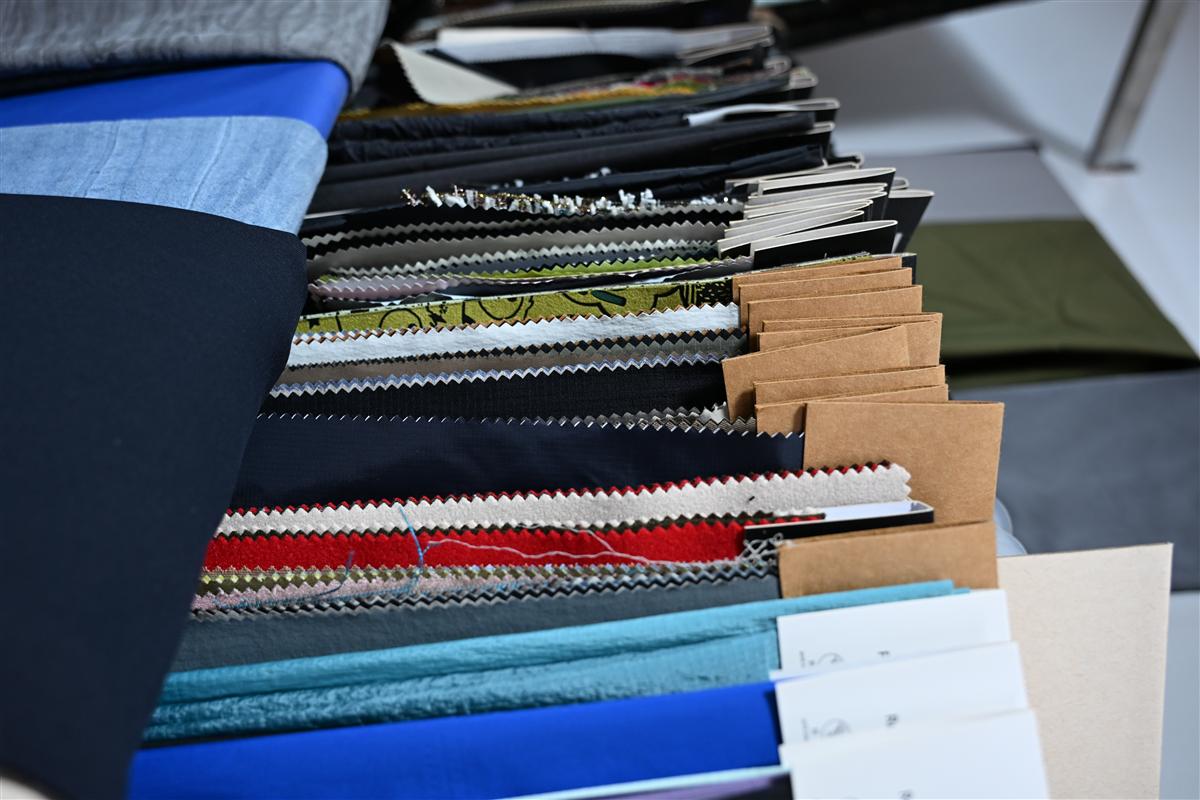
A darker shade three weeks before the yarn order is not one decision, because a wool tweed runs two yarn systems on two clocks. The warp is beamed before the weft is dyed. One fact decides most of the answer: the same request, worded identically, is a cheap depth adjustment in the weft and a fresh dyehouse batch in the warp, and neither one is priced from a colour card. Everything below sorts the request by the stage each yarn has reached, then by what the mill can put in writing before a loom is touched. Four commitments are already fixed at this point. The yarn booking, the beam, the loom slot and the dyehouse batch. Only one of the four appears on the schedule a buyer sees, and the other three are where the cost lives. A change becomes real when a signed change note names the stage, the quantity affected, the cost and the new date. Until then the mill holds an intention, not an order.
Which Commitments Are Already Fixed Three Weeks Out?
A tweed order at three weeks is a stack of four commitments, and only one of the four sits on the schedule a buyer receives. First, the yarn booking: greige wool ordered against a count and a spinning window. Second, the beam: the warp is wound and beamed before any weft arrives, because dressing the loom sets the whole run. Third, the loom slot, already promised to another order if this one moves. Fourth, the dyehouse batch, booked against a volume the dyer agreed to run. According to the Cornell text of UCC 2-209, a signed clause can exclude oral modification, so the four commitments sit under the order confirmation rather than under an email thread. In practice, the mill planner can name which of the four are still movable today. Ask for the four, one line each, in 2026. The answer shows whether a darker shade is a note on a docket or a new booking.
First Test: Is the Request a Depth Change or a Hue Change?
A depth change is a move inside one colour family, where the same dye recipe runs stronger and the hue stays put. A hue change is a different family, such as a shift from a brown ground to a green, and the recipe is rebuilt rather than pushed. The two sit in different windows three weeks out. A depth change on undyed yarn is usually another dye round, scheduled into the dyer’s next open vat. A hue change needs development work first, because a fresh recipe has to be matched and dipped before bulk, and approval rounds add days inside the three gates between a show and a delivery. According to UCC 2-209(1), an agreed modification needs no new consideration, so a mill cannot refuse for want of a fresh order value. Cost sits in capacity and material, not in consent. For example, a request for a touch deeper on a brown ground lands in the cheap window. A deeper green does not. Ask which family, not which shade.
Second Test: Which Yarn System Carries the Ground Colour?
A tweed carries two yarn systems, and the ground colour usually lives in one of them. The warp is the set of lengthwise ends, beamed and threaded before weaving starts. The weft is the pick, inserted at the loom and often the later purchase. Which system holds the ground decides the price of a darker shade, because each system has a separate commitment date. A buyer who knows only a brown ground has not answered the question the mill needs answered. Ask for the warp plan and the weft order as two lines, with the approved shade named on each. Then the change has an address.
Why Are the Warp and the Weft on Two Clocks?
The warp runs on a clock set by the beam, and the weft runs on a clock set by the dyehouse. Beaming is one pass for the whole run: ends are wound onto the beam, drawn through heald and reed, and tied in before the first pick. A darker warp therefore means a new beam, not a new hank. The weft is bought and dyed later, so a darker weft can still be a batch inside an open dye order. According to UCC 2-209(2), where a signed agreement excludes modification except by signed writing, no email can move either clock. In practice, the answer to a darker ground depends on which system carries the ground, and the two answers differ by a beam, a dye batch and a delivery date. For example, a brown ground in the warp turns a small colour request into a re-beam across the full width.
What Makes a Warp Change the Expensive One?
The expense of a warp change is capacity rather than dye, and a single invoice line called surcharge hides the difference. Three costs stack. First, beam waste: the ends already wound cannot be re-coloured, so the beam is scrapped or run as a separate quality. Second, loom time: the slot was booked against the beamed warp, and a re-beam releases the slot to another order. Third, cloth already woven in the old ground, which the mill will raise before agreeing to anything. A change note should price the three lines apart, because only the third is negotiable with a buyer’s own customer. According to UCC 2-209, modification needs no consideration, so a mill cannot demand a new order value as the price of agreeing. For example, one blended figure answers capacity, dye and cloth in a number no buyer can audit.
Is the Shade on the Yarn or on the Piece?
On wool the shade usually sits on the yarn rather than on the woven piece, and the dye route decides what a late change costs. Wool takes skein dyeing well: hanks are dyed loose, so penetration is even and the hand stays soft. Package dyeing, where yarn is dyed on a perforated package under pressure, suits cotton and synthetics better than wool. The practical consequence is a batch floor. A skein dyehouse runs a vat, and a vat has a minimum load, so a small extra batch is expensive per kilo even when the shade is easy. A mill answer will therefore be about a batch minimum rather than about loom time. According to UCC 2-209(1), an agreed modification needs no consideration, so the batch floor is a commercial figure, not a legal barrier. Ask for the minimum load in kilos before asking for a price, and ask for the shade band and lot proof every new batch has to match.
Why Does Approval Have to Happen on a Woven Swatch?
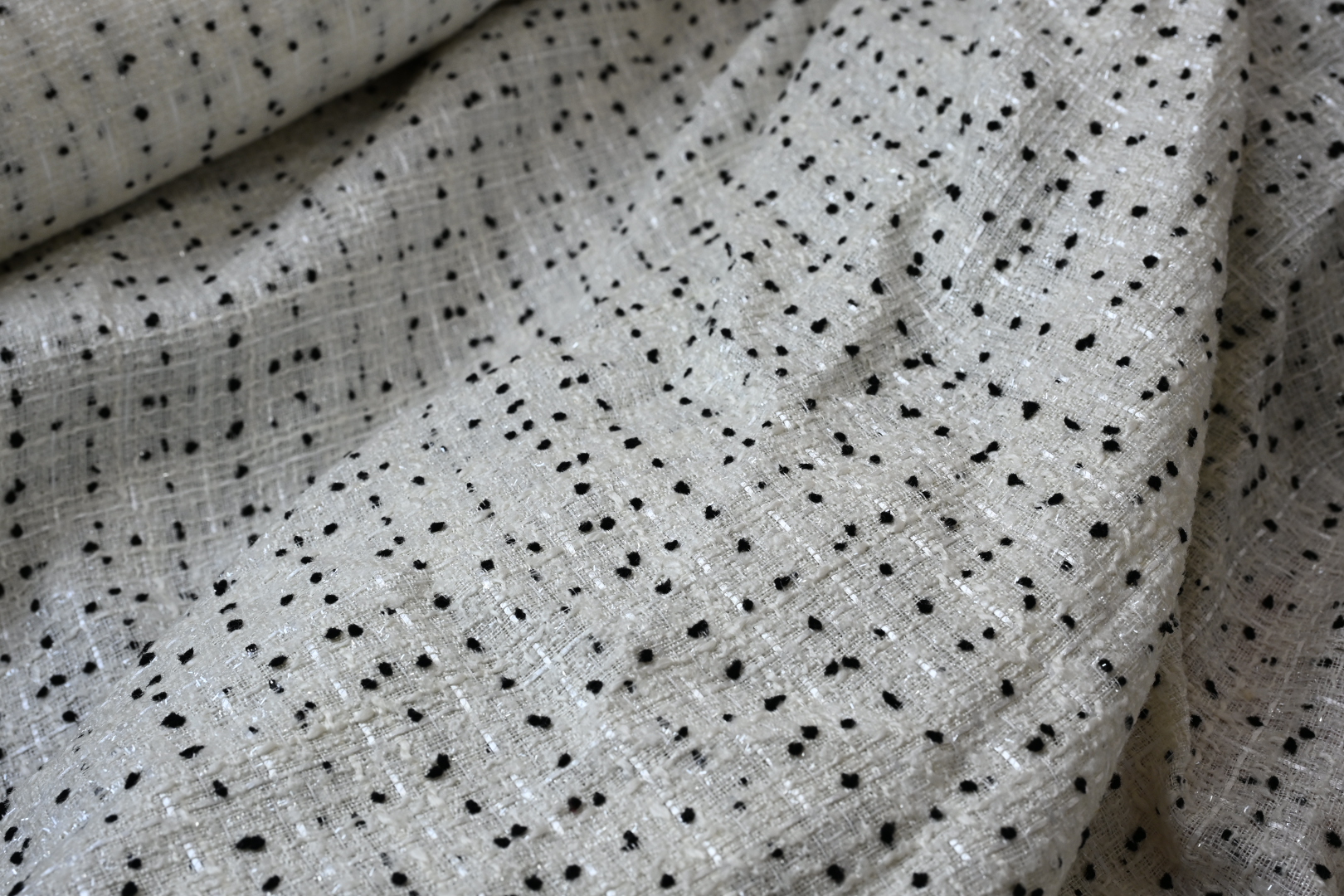
Approval for a tweed is a judgement on a woven swatch in the real construction, not on a flat dip and not on an emailed colour. Structure changes how light reflects, so a dip on paper and the same shade in a twill or a hopsack do not read alike. A flat dip verifies a recipe, not a cloth. The swatch has to carry the actual weave, the actual yarn count and the actual finish, because ground and nep contrast shift once the cloth is milled. Three checks close the gap. First, the swatch comes off the loom, not off the shade card. Second, the swatch is signed and dated against the change note. Third, a spare piece is kept for the bulk comparison, which is the habit the lab dip standard sets out. For example, a darker dip approved by email three weeks out is how a colour argument starts at inspection, with both sides holding different paper.
Which Changes Does the Mill Absorb, Price or Refuse?
Mill responses fall into three bands, and the band depends on how far the yarn has travelled. The absorbed band covers a depth change on undyed weft, a corrected dip inside an open dye booking, and a cone or packing change. No new capacity is consumed, so the mill can carry the adjustment inside the existing price. The priced band covers a depth change needing a new dye batch, a hue change with a fresh recipe, and a re-beam of the warp. Capacity is consumed, so the mill will quote. The refused band covers a new colour family on a finished lot, a fibre or count change after spinning, and any shade unreachable by overdyeing without wrecking the hand. According to UCC 2-209, a refusal is a commercial decision rather than a legal right, so the order terms still govern the answer. In practice, ask which band, and ask for the reason in one sentence. A replacement lot needs re-approval before bulk weaving, which adds a second delay.
What Turns a Request Into a Change Note?
A change note is the document that moves liability, and a salesperson’s email is not one. Four fields make the note usable. First, the stage: which yarn system the change touches, and whether the beam is dressed. Second, the quantity affected: metres, rolls or kilos already committed to the old shade. Third, the cost, split into dye, capacity and cloth. Fourth, the new delivery date, because the date is the real casualty of every late change. According to UCC 2-209(2) on modification and waiver, a signed agreement excluding modification except by signed writing cannot be modified otherwise, so an unsigned email leaves the original order intact. Subsection (4) adds a trap: an attempted modification can still operate as a waiver. Subsection (5) lets a time waiver be retracted on reasonable notice. Two signatures on one page close both doors.
What Happens to the Cloth Already Woven in the Old Shade?
Cloth already woven in the old shade is the line most change discussions miss, and the mill will raise the item before agreeing to anything. Three dispositions exist. First, ship as the first delivery, where the buyer’s own customer accepts a two-tone range or the garment programme takes an early cut. Second, credit the woven piece as a separate quality, which works where the old shade is one the mill also sells. Third, hold the piece against a later order, which preserves the cloth and ties up floor space. A fourth option, cutting the old shade into the new programme, fails on colour, because a darker shade will not match panels cut from an older lot. For example, a 2026 range showing a deeper ground beside an older brown reads as two deliveries rather than one collection, and the buyer’s own customer decides whether that reads as a defect.
What Can You Tell Your Buyer Today?
The answer to give today is a window, a price band and a date, in order, and every figure comes from the mill’s written reply rather than from a colour card. Three statements survive the phone call. First, which yarn system the change touches. Second, which band the change sits in. Third, what has to be signed before the mill moves. Anything else is a promise not yet made. The table below sorts a request by stage.
Which Change Is Still Open at Each Stage?
The table sorts a darker-shade request by the stage the yarn has reached, and names the document which has to exist before the mill moves.
| Stage | What a darker shade costs | What must be signed first |
|---|---|---|
| Yarn booked, not spun | A count or booking change inside one colour family | Amended yarn line on the order |
| Yarn spun, not dyed | A dye batch inside the dyer’s next open vat | Change note naming the batch quantity |
| Dyeing scheduled | A vat re-booking and a batch minimum | Change note naming the new dip and date |
| Weft dyed, warp beamed | A re-beam plus beam waste and loom time | Change note pricing beam, loom and cloth |
| Cloth woven, undelivered | The woven piece itself, in full | Disposition note: first delivery, credit or hold |
| New colour family, any stage | Development, dip, approval and a re-beam | A new order, not a change note |
What Do You Say on the Call Today?
Open the call with the system, not the shade: ask which yarn carries the ground, and whether the beam is already dressed. Then ask for the band, the batch minimum and the beam waste as three separate lines. Then ask for the delivery date the mill can hold if a darker shade is signed this week. Then ask what happens to the cloth already woven. Close by asking for one page with four fields, stage, quantity affected, cost and new date, signed by the mill and countersigned by the buyer. According to UCC 2-209(2), an unsigned email leaves the original terms in place, so the page is the change. For example, a buyer who ends the call holding a date and a signed page has a window; a buyer who ends holding a promise tells a story in three weeks.

Related Insights
Azo and SVHC on One Sheet: Letter or Lab Report?
The stockist’s compliance sheet came back marked “declaration only, not acceptable”, and the line that...

A Slub Found After Sewing: Whose Claim, Whose Cost?
The mill’s offer to pay for the cloth and nothing else is not a rule...

The ISPM 15 Mark on Your Crate: What to Check?
The forwarder’s message asks whether the crate holding 120 metres of wool tweed carries the...