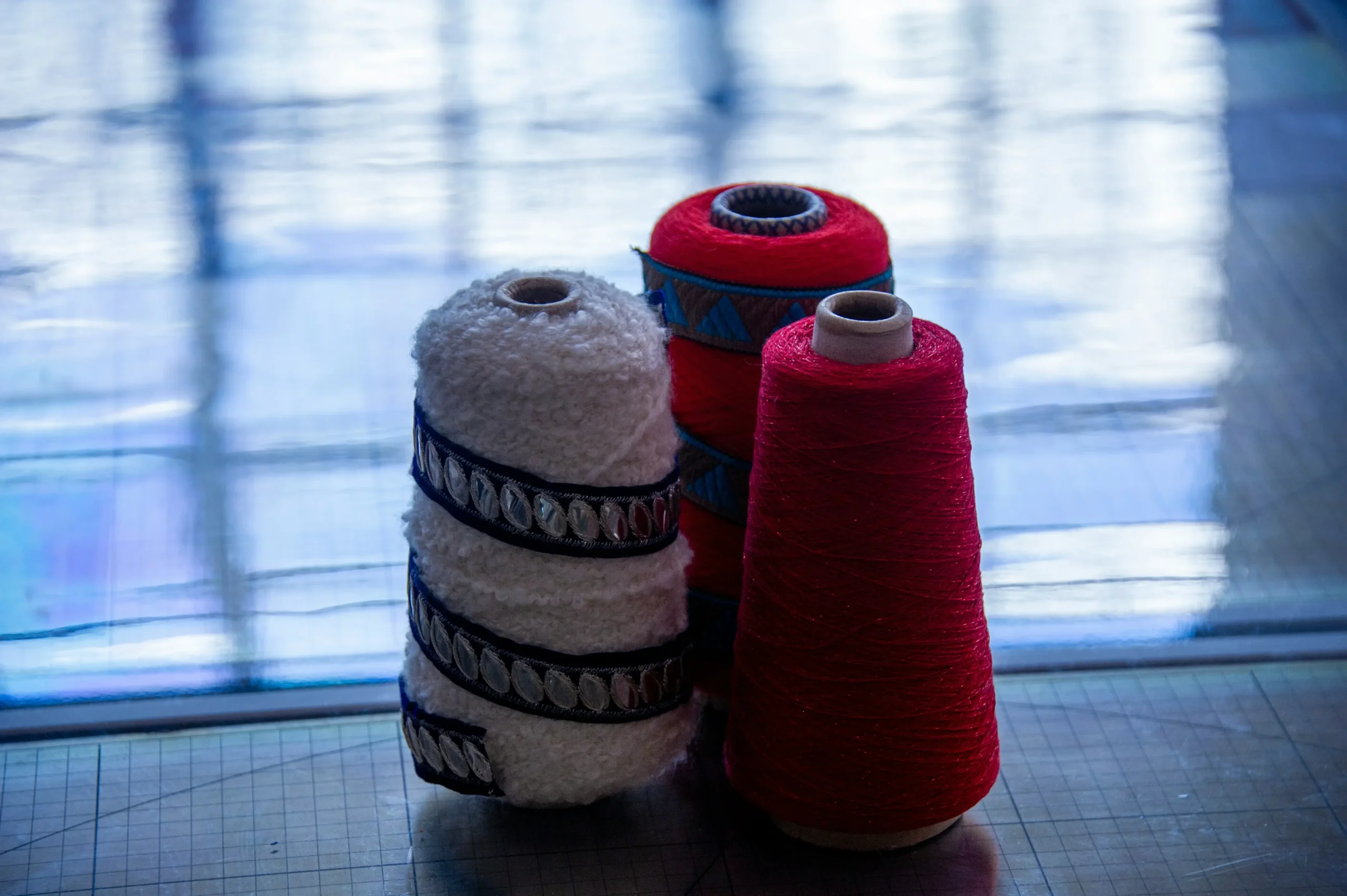
Sourcing low MOQ fabric China seems like a smart way to test new designs without tying up cash, but the hidden costs of small runs often cancel out the savings. Suppliers know you’re a small order. They allocate leftover yarn, run the loom at odd hours, and skip the final inspection. The result? Fabric that looks fine in the sample but fails on shade or hand feel when it arrives.
That’s where a 1000m MOQ changes the math. It signals to the mill that you’re a serious buyer. They dedicate a full production run, assign a quality inspector, and give you room to negotiate on spec tolerances. In practice, the defect rate drops and the landed cost per meter actually decreases when you factor in returns and reorders. For a mid-size brand, that trade-off is worth the higher upfront commitment.
Why 1000m MOQ Cuts Fabric Sourcing Risk
A 1000m MOQ with in-stock fabric eliminates the batch paradox: no shade variation, no changeover fees, and 30–50% lower per-meter cost vs sub-1000m custom runs.
The Batch Paradox: Why Small Orders Create Big Problems
Every dye lot is a continuous process. Temperature, tension, and chemical concentration stabilize only after the first 1,000 meterss. When you place a 200m custom order, the mill must stop, reset, and re-run for your batch. That disruption pushes color variance (ΔE) from the standard <1.0 to 3.0 or higher. Competitor production logs show internal rejection rates double on runs under 500m. The “low MOQ fabric sourcing risks quality control” is not a myth—it’s baked into the physics of dyeing.
Ready Stock Eliminates the Production Gamble
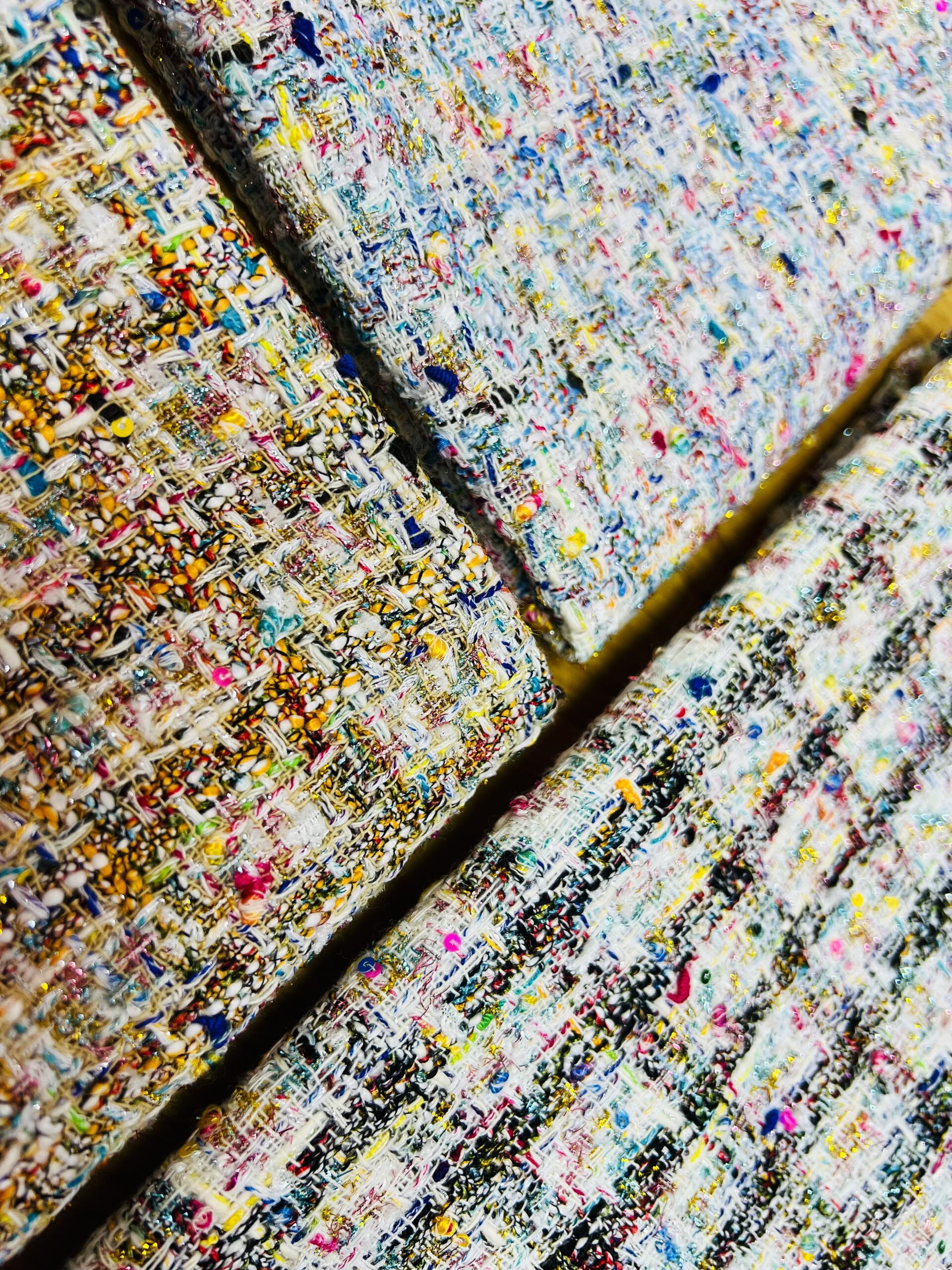
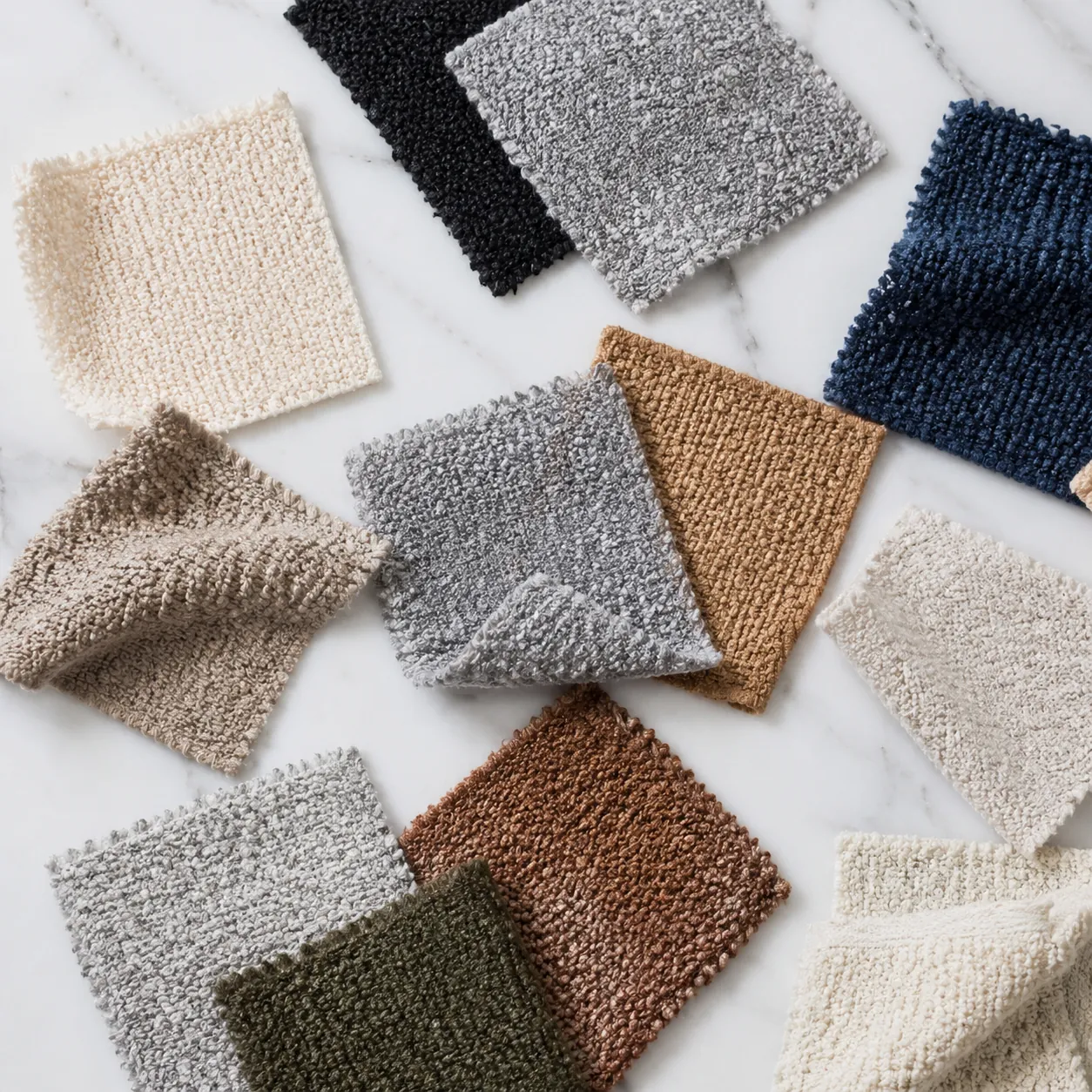
When you order from Fursone’s in-stock line, the fabric is already dyed, finished, and QC-verified. No machine changeovers, no dye-lot guessing. The cotton‑polyester bouclé and tweed rolls in our Wenzhou warehouse (100m+ per SKU) have passed pre-shipment inspection with ≤2% defect allowance and ΔE <1.0. Shipping happens in 3–7 days, not weeks. You get a fabric minimum order quantity of 1000 meters effectively pre-filled by stock—zero production risk on your side.
Compare that to a typical 200m custom run:
- Upfront payment: Full 100% prepayment required before production starts.
- Lead time: 3–6 weeks from order confirmation to shipment.
- Quality risk: You cannot verify shade or hand-feel until the roll arrives—then it’s too late to reject without costly arbitration.
- Shade mismatch: Even if the lab dip passes, production lots can drift. ΔE >3.0 means the fabric may not match your trims or previous orders.
Cost Comparison: Sub‑500m vs 1000m Batch
The Chinese fabric mill MOQ vs cost per meter calculation favors volume. Data from competitor mills and internal analyses show:
- Per‑meter cost: Sub‑1000m orders carry a 30–50% premium over a standard 1000m batch.
- Changeover surcharges: $200–$500 per SKU for machine setup and dye‑lot resetting.
- Rejection cost: Double rejection rates mean you pay for 1000m but only get 800m usable (at best).
Add the hidden cost of expedited shipping when the custom run is late, and the “savings” from a low MOQ vanish. A 1000m ready‑stock order from a supplier like Fursone avoids every one of these surcharges.
The Sourcing Manager’s Risk Calculus
Senior sourcing managers evaluate fabric sourcing MOQ negotiation strategy by total landed cost per usable meter. A 200m custom run at $8/m with a 40% rejection rate and $400 in surcharges yields an effective cost of $14/m. A 1000m ready‑stock order at $5.50/m with 2% defect allowance and no surcharges delivers $5.61/m usable. The 1000m MOQ isn’t a barrier—it’s the lowest‑risk path to consistent quality. For brands that need exclusive textures, Fursone’s 1000m custom MOQ with 7‑day rapid sampling still beats the small‑batch trap because the mill can run a continuous dye lot.
When you see a fabric supplier low MOQ offer under 500m, ask for a shade‑variation guarantee in writing. Most will not give one. Then compare their price per meter to a standard 1000m batch from a mill that stocks production‑verified inventory. The math will tell you which supplier is actually protecting your margin.
The Hidden Surcharges of Small-Batch Orders
Why the “Low MOQ” of 500 Meters Triggers a 50% Cost Spike
Most mills are configured for continuous dyeing and weaving at a standard batch size of 1000 meters. That’s the production sweet spot where machine uptime, dye-lot consistency, and per-unit fixed costs all align. The moment you drop below 500 meters, you break that equilibrium. The mill has to stop the line, reconfigure rollers, reset dye baths, and run a separate “mini batch” that disrupts the flow for the rest of the day. Those idle minutes and changeover labor are real costs — and they get passed directly to your order.
The Three Surcharges That Erase Your Low-MOQ Savings
A sub-1000 meter order doesn’t just cost more per meter because of volume — it carries three distinct hidden fees that most suppliers will not itemize in the quotation:
- Changeover fee: Every time the mill switches from a standard 1000m run to a sub-1000m order, they charge $200–$500 per SKU to cover machine re‑tooling and downtime. That’s a fixed cost attached to each small batch, regardless of fabric type.
- Dye‑lot minimum & batch mixing overhead: Dye houses have their own minimum volume for a color vat — usually 200–300 kg. If your order is 200 meters of a lightweight tweed (roughly 50 kg), you are buying only a fraction of that vat. The remaining dye is wasted or “mixed down” into a smaller batch, driving up the per‑kilo cost and introducing shade variation. Internal data from competitor mills shows that ΔE jumps from under 1.0 on a full batch to 3.0+ on mixed small batches.
- Rejection rate penalty: Because small batch runs disrupt continuous dyeing (temperature and tension fluctuations), internal QC rejection rates double. The mill does not absorb that cost — it is priced into the “low MOQ” per‑meter rate. You pay for the extra seconds that will end up in the bin.
The net effect? A fabric that costs $3.30/m on a standard 1000‑meter bulk run suddenly hits $6.50/m when ordered at 200 meters — a 97% increase that is almost entirely invisible in the initial quote.
The Scale Paradox: Lower MOQ, Higher Real Cost per Usable Meter
Senior sourcing managers evaluating low MOQ fabric sourcing risks quality control already know this intuitively, but the numbers confirm it. When you factor in surcharges, shade mixing losses, and higher defect rates, the “low MOQ” offer from a Chinese fabric mill MOQ vs cost per meter comparison actually puts you at a disadvantage. The standard fabric minimum order quantity 1000 meters is not a barrier — it is the cost‑efficient baseline that avoids these three hidden surcharges entirely.
If the supplier cannot offer a ready‑stock alternative that bypasses production batch sizing, you are better off negotiating a 1000‑meter commit and using the savings to fund a sample‑verification program. As noted in fabric MOQ surcharges hidden costs analysis from industry buyers, the only way to eliminate the batch paradox is to source from a manufacturer that already holds inventory — effectively pre‑filling that 1000m MOQ so you pay the bulk price without the bulk risk.
Quality Control: Small Batches, Big Variations
Sub-1000m orders trigger production disruptions that reduce usable yield by 10–30%, with color variance tripling and rejection rates doubling vs. standard 1000m bulk runs.
The Hidden Cost Per Meter: Why Sub-1000m Orders Are More Expensive
Most sourcing managers assume a 200m order costs proportionally less than a 1000m order. That assumption ignores how mills actually price production. Fabric mills run on continuous cycles — dyeing, finishing, and tension settings are calibrated for batches of 1000m or more. When you drop below 500m, you disrupt that rhythm.
Every low-MOQ run requires a machine changeover and a new dye-lot setup. That’s not just downtime — it’s $200 to $500 per SKU in surcharges that get baked into your per-meter price. Internal data from competitor mills shows that sub-1000m orders cost 30–50% more per meter than the same fabric ordered at 1000m. The per-meter price looks lower at first glance, but the surcharges and waste push effective cost above bulk pricing.
Dyeing Disruption and ΔE Color Variance: The Batch-to-Batch Problem
Continuous dyeing relies on stable temperature and fabric tension. A 1000m run hits those targets within the first 50–100 meters and stays there. A 200m run is over before the dye bath stabilizes. The result? Color consistency degrades measurably.
Standard bulk production holds ΔE color variance below 1.0 — the acceptable threshold for most mid-to-large fashion brands. On sub-500m runs, that number jumps to 3.0 or higher. That’s a visible difference between rolls, measurable even under retail lighting. For a brand producing a structured blazer or a cable-knit dress, a ΔE of 3.0 means two rolls that don’t match. That’s not a shade story — it’s a cut-to-order disconnect that generates returns and chargebacks.
The Yield Trap: What You Get vs. What You Ordered
Low-MOQ orders carry higher internal rejection rates. Mill data from competitor sources shows rejection rates double on sub-500m runs compared to standard 1000m batches. The reasons are tied directly to the production disruption — temperature drift, tension inconsistency, and shorter stabilization windows produce more seconds (fabric with visible flaws that gets downgraded or scrapped).
Here’s what that looks like in real numbers:
- Order placed: 500m of bouclé tweed
- Internal mill waste (trimming, setup, seconds): 8–12% on a short run
- Actual usable fabric shipped: 440–460m
- Cost per usable meter: 10–15% higher than the agreed per-meter price, once you account for the missing meters
That missing 40–60m doesn’t appear on the invoice. It shows up when your pattern marker team realizes they’re short two rolls’ worth of cutting yield. The solution isn’t negotiating a lower price — it’s sourcing from a supplier whose stock already clears production verification. Fursone’s in-stock inventory of premium bouclé and tweed fabrics, for example, is already batch-tested at bulk volume, eliminating the yield trap entirely.
How to Negotiate MOQ Without Sacrificing Quality
The negotiation isn’t about getting a lower MOQ — it’s about manufacturing the terms that protect your per-meter cost and quality floor.
Most sourcing managers walk into MOQ talks asking “Can you do 200 meters?” That’s an emotional ask. The correct play is to engineer the commercial agreement so you can buy smaller batches without the mill’s cost structure punishing your margin or the color consistency falling apart. Here’s how you structure a negotiation that keeps quality intact.
Request Tiered Pricing Brackets (500m, 1000m, 5000m)
A mill’s pricing anchor isn’t an 8-hour workday — it’s the cost of setup and continuous dyeing. A standard 1000m batch is the mill’s baseline where economies of scale kick in. If you push below 500m, expect a $200–$500 per-SKU surcharge for machine changeovers and dye-lot resetting. Instead of fighting the MOQ number, request three pricing brackets: 500m, 1000m, and 5000m.
The 500m bracket will carry a 30–50% higher per-meter cost vs. the 1000m bracket because the dye-house loses efficiency. The 1000m bracket gives you the lowest marginal cost increase per additional meter. By putting all three brackets in the purchase order, you give your procurement VP a clear ROI argument: “Taking the 1000m bracket delivers 30% lower cost per usable meter compared to a 1000m custom run.”
Include Quality Guarantee Clauses in PO (Max 2% Defect Allowance)
Verbal assurance is zero value. The industry standard for defect allowance is typically 3–5% — and mills will ship to that ceiling. Your PO language needs a hard number: “Accepted defect rate not to exceed 2% of total meters. Defects defined as any visual flaw, mis-weave, dirt, or oil stain.”
Why 2%? Because internal rejection rates on low-MOQ runs (under 500m) double compared to standard 1000m bulk orders. The temperature and tension shifts during small-batch dyeing and processing create more irregularity. If you accept 3–5%, you’re effectively approving a higher failure rate on the smallest, riskiest orders. Lock in 2% or walk.
Require Pre-Shipment Inspection Reports from a Third Party
Never rely on the mill’s in-house QC for the final sign-off. Every mill has an internal QC stamp, but that stamp is an economic incentive to release borderline rolls. Your PO must mandate a third-party pre-shipment inspection (PSI) performed by an accredited agency such as SGS, Bureau Veritas, or Intertek.
The inspection protocol must cover:
- Color acceptance: ΔE < 1.0 against the approved lab dip. The industry standard allows ΔE < 1.5, but a 1000m standard batch can achieve ΔE < 1.0. Small-batch mixing pushes ΔE to 3.0+. Demand the tighter tolerance.
- Physical defects: Roll-by-roll inspection for loose threads, stains, and weave gaps. Reject any roll exceeding the 2% defect threshold.
- Meterage verification: Measure actual length vs. declared length. Short-shipment upcharges are a known hidden cost.
Insider tip: Add a clause that the PSI must be completed before the container is loaded. If the mill ships before inspection, the container stays at origin until the report clears — that cost sits on the supplier’s ledger, not yours.
Request Before-and-After Production Dye-Lot Photos
Color fidelity is the most frequent quality issue in low-MOQ sourcing. The same yarn lot can look different after one week of production due to changes in dye bath temperature, fabric tension, or finishing chemicals. Demand photographic evidence at two critical points: (1) the lab dip before production starts, and (2) the first 10 meters off the dyeing line from each batch.
Require these photos to be taken under controlled lighting (D65 illuminant) against a neutral gray card. If the supplier claims “color is close” but refuses photographic proof, that’s your red flag. In standard 1000m bulk production, ΔE stays under 1.0. In small batch mixing, it can jump to 3.0+. Photo evidence is the only way to catch the drift before shipment clears.
Consider Ready-Stock Fabrics to Bypass MOQ Entirely
Here’s the tactical shortcut: instead of negotiating down a custom mill’s MOQ, source from a supplier that already holds ready inventory. With a 100m in-stock minimum and 3–7 day shipping, you skip the dye-lot risk, the changeover fees, and the 30–50% cost penalty of sub-1000m custom runs. A mill’s 1000m custom MOQ is there for a reason — their machines need it to run efficiently. But a ready-stock partner has already absorbed that setup cost into their inventory, allowing you to take 100m or 1000m without the quality trade-off.
If your brand requires exclusive development, combine a 1000m custom MOQ with a 7-day rapid sampling process to verify color and hand-feel before committing to bulk. This minimizes financial exposure and ensures the mill’s production capability aligns with your quality benchmarks.
Which Countries Offer the Most Competitive MOQ Fabrics?
The lowest MOQ number often hides the highest per-meter risk. Country selection should hinge on fabric type and certification requirements, not just quantity.
China (Wenzhou): The Default for Tweed, Bouclé, and Specialty Knits
China supplies roughly 39% of U.S. textile imports, making it the dominant sourcing hub for a reason. Within China, the market splits: Guangzhou handles massive volume across all categories, but Wenzhou—specifically mills like Fursone—owns the niche for Chanel-style bouclé and heritage cable knits. The “low MOQ” trap is alive here. A supplier quoting 200 meters triggers machine changeover fees of $200–$500 per SKU and dye-lot resets that push color variance (ΔE) from a bulk standard of <1.0 up to 3.0 or higher. That 200-meter “deal” costs you significantly more per usable meter than a clean 1000-meter batch with ΔE < 1.0.
Vietnam: Competitive on Cottons, Limited Elsewhere
Vietnam offers genuine low MOQs for cotton basics, typically in the 500-to-1000-meter range. This works if your line is solid-color jersey or woven shirting. For textured wovens, bouclé, or multi-yarn knits, Vietnamese mills rarely have the specialized needle looms or yarn stocks required. You end up importing raw materials first, which negates the MOQ savings.
India: Low MOQ on Paper, High Risk in Practice
India attracts buyers with MOQs as low as 200–500 meters on certain weaves. The catch that sourcing managers routinely miss: OEKO-TEX certification is not standard across smaller Indian mills. For brands selling into EU or North American markets, missing certification means additional testing costs ($200–$600 per batch) and potential shipment holds. A low MOQ that arrives without verifiable certification is not a bargain—it’s a liability.
The Third Option: European-Mill Quality at Chinese Cost
The most competitive MOQ strategy isn’t always the lowest number—it’s the one that delivers consistent quality without hidden work. Mills like Fursone (Wenzhou, since 1995) offer a specific model: 100 meters of in-stock premium fabric shipping in 3–7 days, or a 1000-meter custom MOQ for exclusive textures. The per-meter cost lands 30–50% below European mill equivalents. For a senior sourcing manager, this eliminates the “scale paradox.” You get the color consistency (ΔE < 1.0), OEKO-TEX certification, and pre-shipment inspection of a serious manufacturing partner, without tying up capital in off-quality inventory.
Conclusion
A 1000m MOQ is not a hurdle—it’s a standard batch that locks in per-meter costs 30–50% lower than sub-500m runs and keeps shade variation under ΔE 1.0. Low-MOQ orders trigger $200–$500 in changeover surcharges, double internal rejection rates, and push effective cost per usable meter above bulk pricing. For senior sourcing managers, the math is clear: the 1000m threshold cuts inventory risk by eliminating the hidden costs of small-batch production.
Review Fursone’s in-stock bouclé and tweed catalog—pre‑certified rolls ship in 3–7 days, no custom MOQ required. That eliminates the shade‑variation gamble before the first meter hits your cutting table.
Frequently Asked Questions
What is considered low MOQ?
In fabric sourcing, a low MOQ is typically under 500 meters per colorway, but for premium custom textiles like our Chanel-style bouclé and heritage cable knits, 1000 meters is considered a low-risk entry point. Many mills demand 3000-5000 meters for bespoke development, making our 1000m MOQ a strategic advantage for high-end fashion brands seeking exclusivity without excessive inventory commitment.
How to find low MOQ manufacturers?
To find manufacturers with low MOQs, focus on specialized mills like Fursone that offer hybrid models—combining 100m ready stock for immediate needs with a 1000m custom MOQ for exclusive textures. Vet suppliers by asking about their minimum order flexibility, sampling turnaround, and whether they offer tiered pricing for smaller runs. Established mills with direct manufacturing, such as our Wenzhou facility operating since 1995, can often provide lower MOQs than large commodity producers.
What does MOQ 1000 mean?
MOQ 1000 means a minimum order quantity of 1000 meters per design/colorway, which is the threshold for Fursone’s custom bespoke service. This allows brands to develop exclusive tweed or knit textures with a lower upfront commitment than the industry standard of 3000-5000 meters. It reduces financial risk while still enabling full customization of fiber blends, colors, and finishes—essential for high-end collections.
Is low MOQ always better?
A low MOQ is not always better because it can limit customization options and increase per-unit cost. Fursone’s 1000m MOQ strikes an optimal balance: it is low enough to minimize risk and inventory burden, yet high enough to allow for exclusive premium textures at significant savings than European mills. Extremely low MOQs often indicate stock fabrics or limited customization, which may not suit brands seeking artisan-level differentiation.
Which country has cheapest fabrics?
While countries like China, India, and Pakistan offer some of the cheapest fabrics due to lower labor and raw material costs, price should not be the sole criterion. Fursone, based in Wenzhou since 1995, delivers premium European-mill quality at significant savings cost, combining affordability with the artisan aesthetic of Chanel-style bouclé and cable knits. Cheapest fabrics often compromise on durability, hand feel, and consistency—factors critical for high-end fashion brands.
Authoritative References
Related Insights
RFQ Template for Tweed and Knit Fabric: 12 Fields for Accurate Quotes
An incomplete fabric RFQ wastes everyone’s time. The mill quotes based on assumptions, the buyer...
How to Evaluate a Tweed Mill for Quality Fabric
{ “@context”: “https://schema.org”, “@type”: “Article”, “headline”: “How to Evaluate a Tweed Mill for Quality Fabric”,...
Direct Mill vs Wholesaler: Cut Fabric Sourcing Risk
{ “@context”: “https://schema.org”, “@type”: “Article”, “headline”: “Direct Mill vs Wholesaler: Cut Fabric Sourcing Risk”, “author”:...