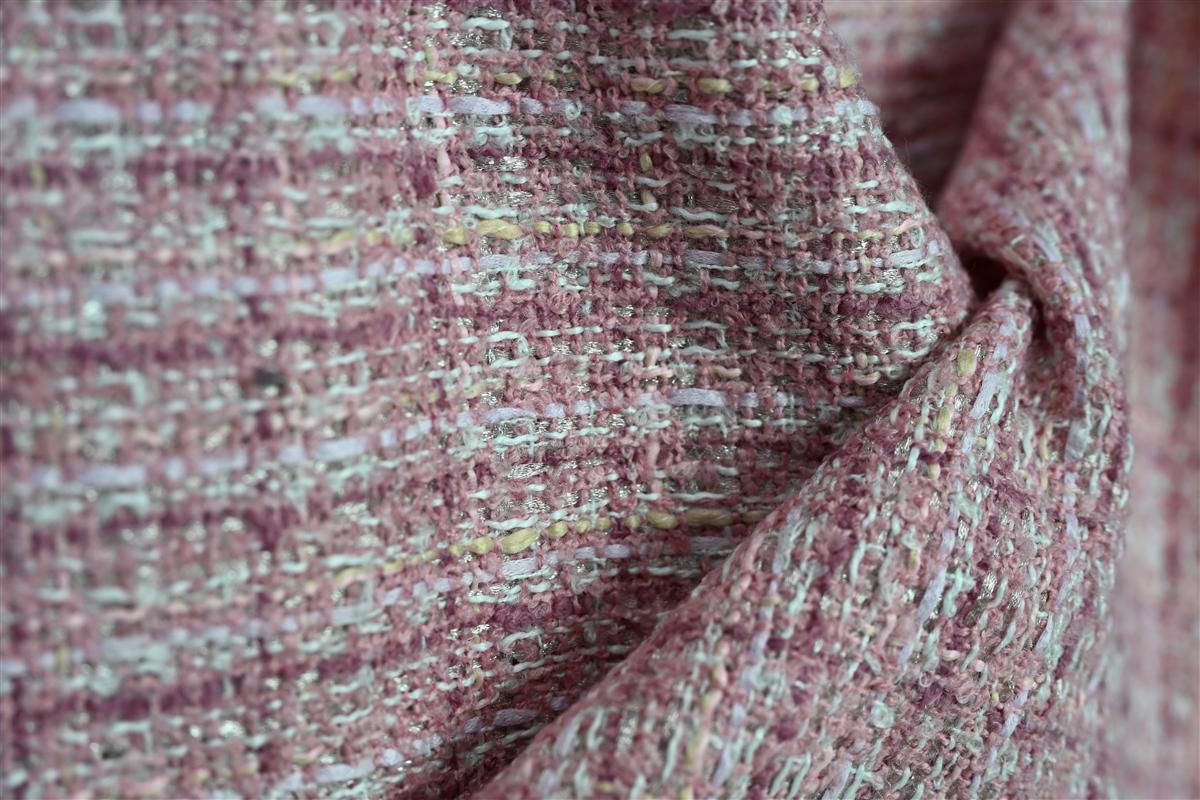
chanel-style tweed definition is the first checkpoint buyers should lock before they approve a supplier, budget, or production slot. I once saw a sourcing manager for a contemporary brand have to reject a container of “tweed” sitting in a Los Angeles warehouse. The pre-production sample he’d approved a month earlier was perfect—lofty, multi-tonal, with a soft hand. The bulk order? It was flat, stiff, and felt like cheap polyester. The mill had swapped the yarn composition after the sample approval. This is exactly why a concrete Chanel-style tweed definition isn’t just a design-team talking point; it’s a critical procurement control to prevent costly surprises on the receiving dock.
The term gets thrown around by mills from Italy to Wenzhou, but the aesthetic you’re chasing relies on
The Origin Story: From Scottish Moors to Paris Runways
The fabric’s journey from functional workwear to a symbol of luxury was a masterclass in material re-engineering.
Let’s be clear: Coco Chanel didn’t just ‘discover’ tweed in the 1920s. She appropriated a rugged, functional menswear fabric from the Scottish countryside and completely re-engineered its purpose. Original tweeds were built for durability against the elements, not for the salons of Paris. The genius was in seeing the potential to transform its core properties for a new market.
This transformation was fundamentally about weight. Heritage tweeds, like those from the Scottish Isles, were often brutally heavy at 500+ grams per square meter (GSM). For modern womenswear, that’s unworkable. The goal became achieving that textured look in a lighter, more fluid construction, landing in the 280–450 GSM range. For structured jackets, the sweet spot we target in production is around 320 GSM.
This evolution created two distinct categories that sourcing managers must differentiate. One is a historical artifact; the other is a modern commercial product.
- Heritage Tweed: Heavyweight (500+ GSM), dense twill weave, typically 100% wool. Designed for warmth and abrasion resistance. Stiff drape.
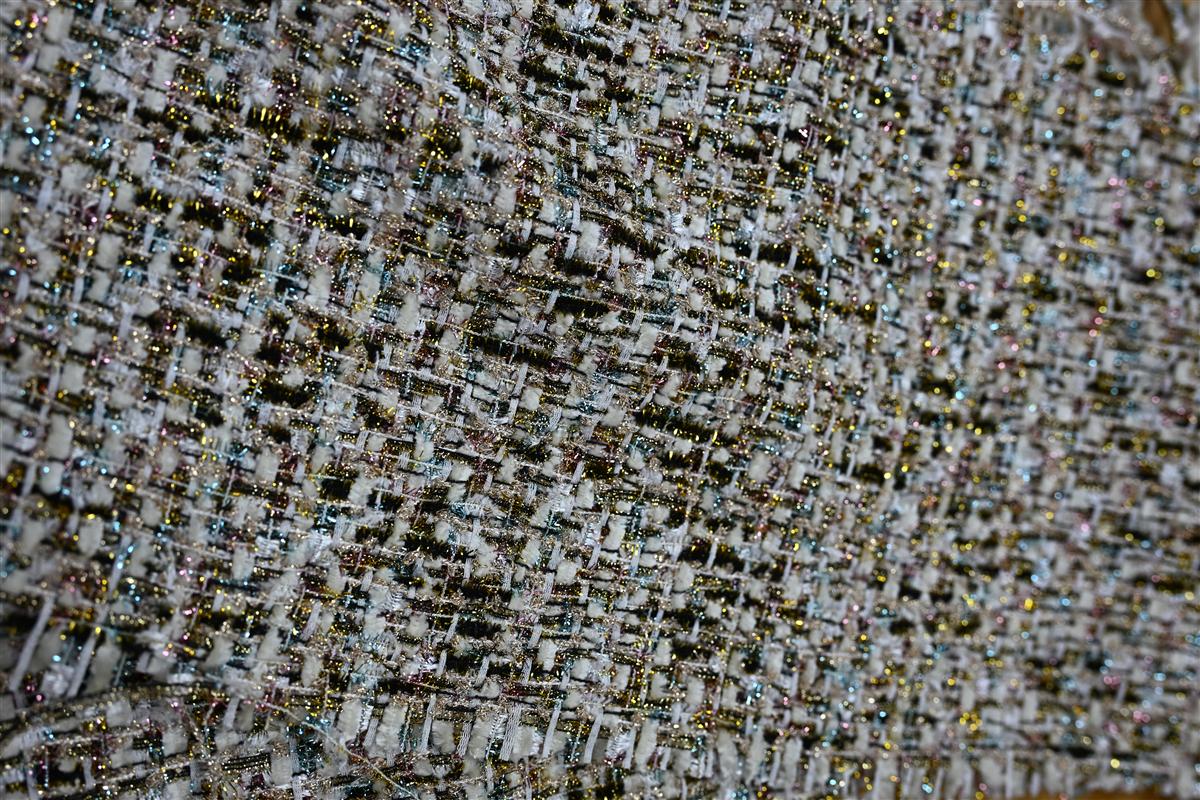
- Chanel-Style Tweed: Lightweight (280-450 GSM), often a looser plain weave to showcase fancy yarns. Uses multi-fiber blends (wool, acrylic, lurex) to create visual depth and a soft hand-feel.
Finally, a critical point that trips up even experienced buyers: ‘tweed’ is the weave structure, while ‘bouclé’ is the looped yarn that creates the nubby texture. They are not interchangeable. Ordering ‘bouclé fabric’ when you need the structure of a ‘tweed boucle jacket’ is a common sourcing error that leads to failed sample approvals and production delays. You’re sourcing a specific weave that incorporates a specific yarn type.
Yarn-Level Anatomy: Beyond “Just Wool”
The texture you’re buying is engineered in the yarn, not just the weave—get this wrong and your collection is dead on arrival.
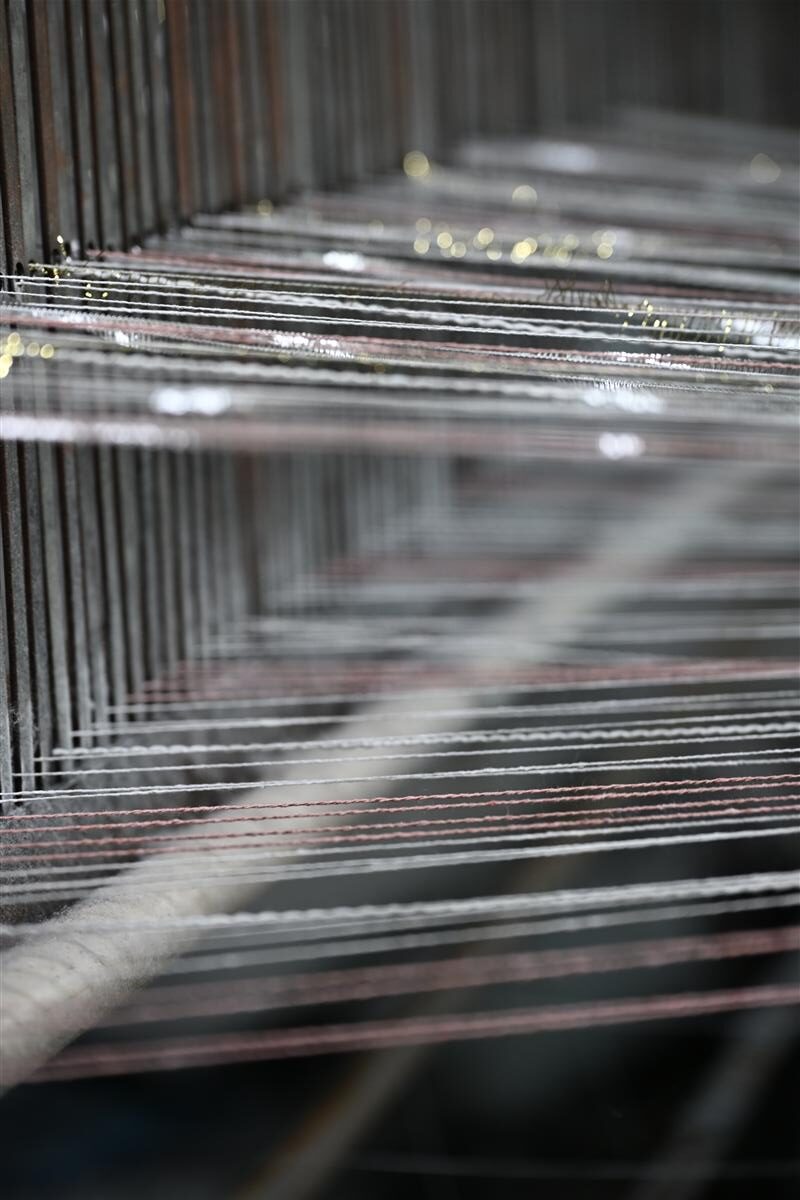
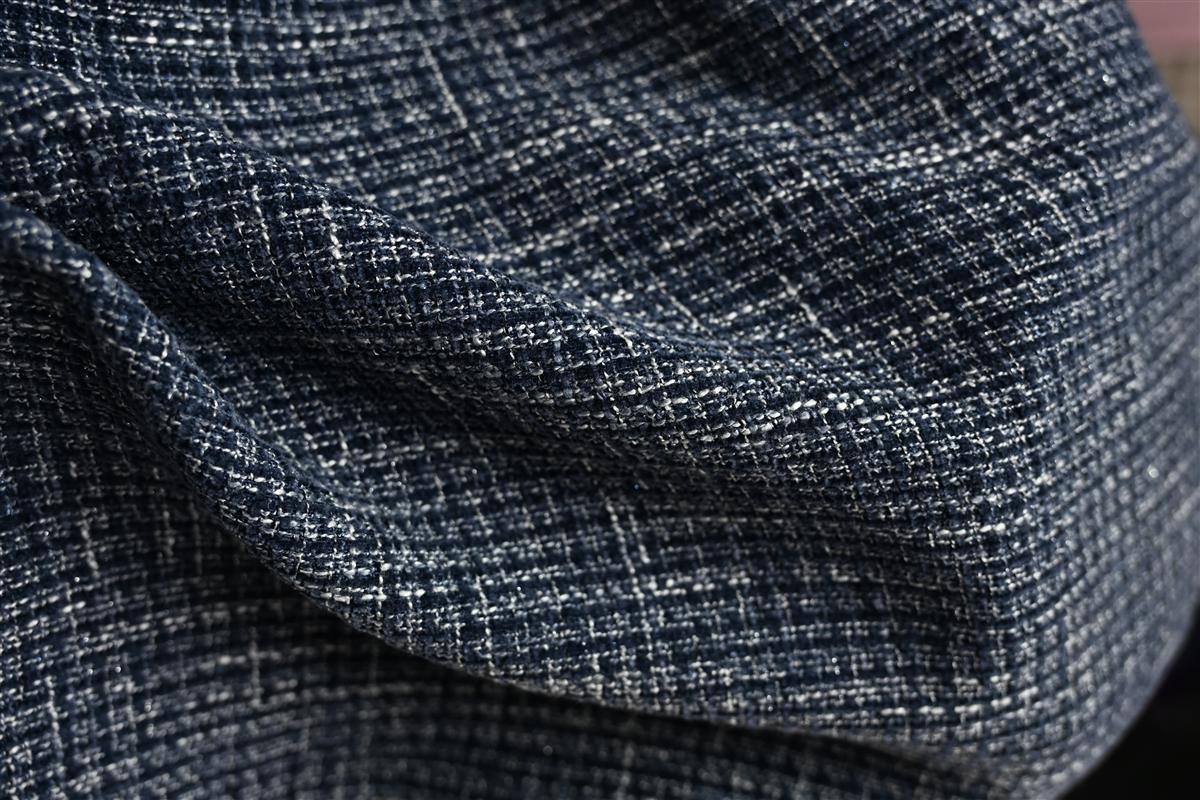
Anyone can weave a fabric. The real artistry in a Chanel-style tweed is created before the loom is even threaded. It’s about the interplay of completely different yarns. We don’t just use wool; we custom-spin proprietary bouclé yarns for the signature loops, slub yarns for irregular thickness, and integrate high-grade metallic lurex for depth. This multi-ply construction is what gives the fabric its three-dimensional, living character.
The market is flooded with fakes that get this fundamentally wrong. A low-cost supplier will show you a ‘tweed’ that is just 100% polyester with a texture printed or heat-stamped on the surface. It might look okay in a photo, but in person, it has a flat, plastic drape and zero breathability. After a few wears, it pills and loses all structure. It’s a cheap imitation that cheapens your brand.
- Authentic Multi-Ply Blend: Typically a complex blend like 40% Australian Wool, 35% Acrylic, 15% Japanese Lurex, and 10% Silk. The key is the custom-spun bouclé and slub yarns that create real, physical texture.
- Common Imitation: 100% polyester or a high-poly blend (>80%). The texture is superficial, not structural. The cost per meter is lower, but the resulting garment has a poor hand-feel and short lifespan.
For a sourcing manager, the cost benchmark is simple: a true multi-ply wool-rich blend from a direct Chinese mill will cost more than a 100% polyester fabric. However, it will still land at a fraction of the cost of a comparable quality from a European mill. You are paying for the yarn engineering, which is the only way to achieve the authentic luxury aesthetic your designers want without the couture price tag.
Quality Red Flags Every Sourcing Manager Must Spot
The sample looked perfect.
It can happen even on a large order: the pre-production sample is a work of art, but the bulk run tells a different story.
First, pull at the yarns. If they snag or pull out easily, the supplier skipped the back-coating. This isn’t a minor detail—it’s a critical failure. A proper Chanel-style tweed has a light polyurethane-based back-coating that locks the weave. Without it, your garments will fray during production, costing you dearly in time and wasted material.
Next, demand a certified fabric weight (GSM) report for the entire production lot, not just the sample. The ideal chanel tweed fabric weight gsm for jackets with structure and drape is between 280–450 g/m². If a supplier can’t guarantee this quality tolerance across the whole order, you’ll end up with inconsistent garment weights—some jackets will feel substantial, others flimsy.
- Pilling Test Reports: Don’t accept vague promises of ‘good quality.’ Demand a Martindale abrasion test report according to the ISO 12945-2 standard. This is the industry benchmark for how to identify high quality tweed that lasts.
- The Abrasion Score: Any legitimate anti-pilling chanel tweed fabric should carry a Martindale pilling rating (ISO 12945-2) of grade 3–4 or better. A poor rating means the garment will look fuzzy and worn after just a few wears, destroying your brand’s reputation for quality.
Custom Development: From Swatch to Collection in 7 Days
A rapid sample is a test of the mill’s entire operation, not just the fabric.
Let’s be clear about custom development. The real innovation isn’t just a unique texture; it’s getting that texture to market without betting the entire season’s budget. European mills often demand very large MOQs for custom yarn spins. We’ve found that select mills in Wenzhou, by spinning their own proprietary bouclé and slub yarns, can offer a 1,000-meter starting point. This slashes your upfront risk and lets you test more daring designs.
The 7-day rapid sampling process is your first and best bullshit detector. It’s not about speed for speed’s sake. When you send a Pantone code and get a physical, hand-loomed swatch back in a week, it proves the mill has full control over their yarn dyeing and weaving. It’s a direct signal of their vertical integration and a stark contrast to the 4-6 week lead times that indicate a fragmented, outsourced supply chain.
Once that sample arrives, the real audit begins. A good sample approval process goes far beyond color matching. This is your chance to spot the shortcuts that cause failures in mass production.
- The Burn Test: Don’t just trust the spec sheet. Snip a few warp and weft threads and burn them. A hard, black bead means polyester. Ash that crumbles means wool or natural fibers. This simple test instantly exposes mills substituting cheaper materials into the blend.
- The Fray Check: Aggressively rub a cut edge. If it unravels into a mess, they’ve skipped the crucial polyurethane back-coating. This fabric will cause chaos in the cutting room and lead to seam failures. Your quality tolerance here should be zero.
- The Crush Test: Ball the swatch tightly in your fist for 30 seconds. A high-quality tweed with good yarn memory will spring back with minimal creasing. If it stays crushed, the yarn is weak and the final garment will look tired and worn after a single day’s use.
Tweed vs. Boucle vs. Fancy: Nail the Terminology
Confusing these terms is the fastest way to derail a collection and waste your fabric budget.
Sourcing managers frequently get burned on this. They send a purchase order for’bouclé fabric’for a
- Bouclé: This is a YARN. It is characterized by its looped or curled ply. Think of it as a raw ingredient. You can have bouclé yarn in a woven fabric or a knit fabric, and they behave completely differently.
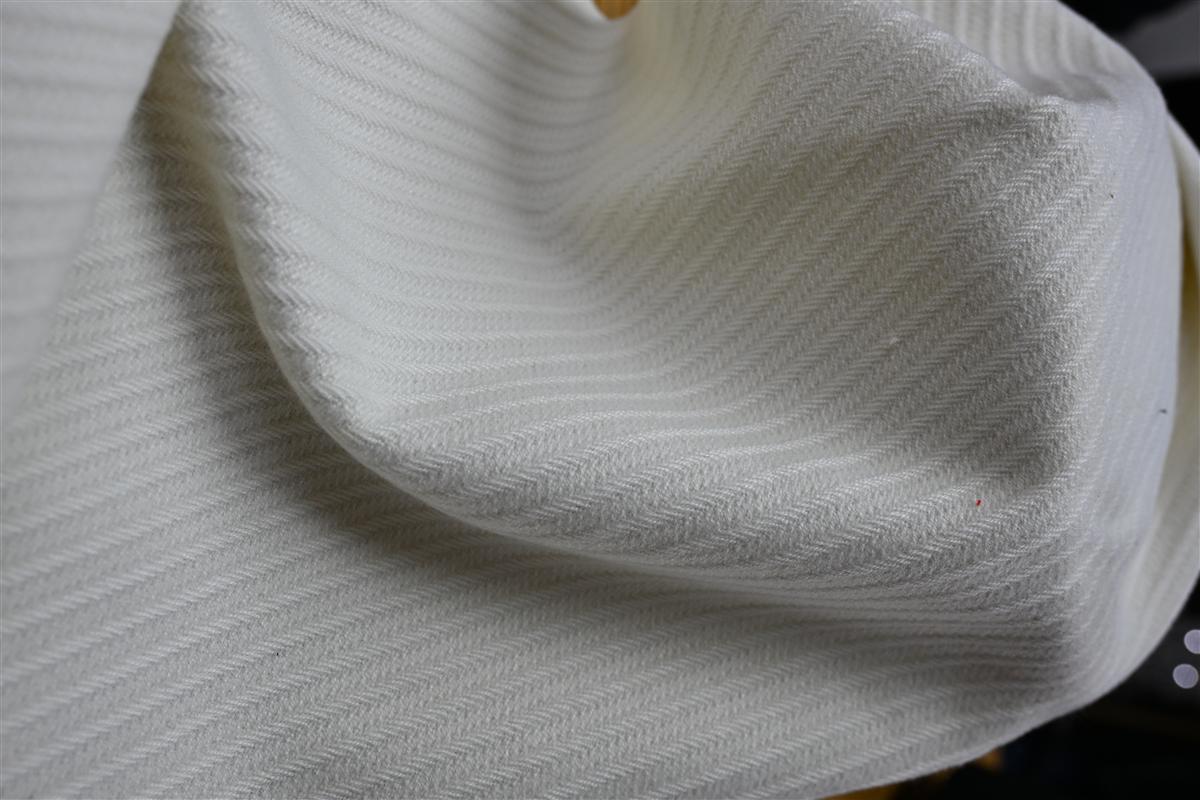
- Tweed: This is a WEAVE structure, traditionally a rugged plain or twill weave. It provides durability and a specific hand-feel. This is the construction method that gives a fabric its body and stability.
- ‘Chanel-Style’ Fabric: This is the finished AESTHETIC. It is a woven tweed fabric that strategically uses bouclé and other ‘fancy’ yarns (like slub, chenille, or lurex) to create a multi-dimensional, nubby surface. This is the final product you’re actually trying to source for jackets.
The critical mistake is ordering ‘bouclé’ when you need the structure of ‘tweed’. If your tech pack just says ‘bouclé fabric’, a supplier might deliver a knit bouclé—great for sweaters, a disaster for tailored blazers. Your PO must specify a with a target chanel tweed fabric weight gsm, typically 280-450 g/m², to get the right result.
Conclusion
Understanding the technical DNA of a tweed—from its multi-ply yarn composition to its final anti-pilling finish—is most of the battle. The final detail that separates a professional buy from a costly mistake, is contractually defining your quality tolerance for the bulk run. A perfect pre-production sample means nothing if the mass production deviates in color, weight, or hand-feel.
The only way to validate a mill’s claims is to get fabric in your hands. A physical swatch allows you to perform your own burn tests, feel the drape, and see the texture before committing to a full sample approval process.
Frequently Asked Questions
What is Chanel tweed?
Chanel-style tweed is a woven textile defined by its nubby, multi-yarn surface, created by combining fancy yarns like bouclé, slub, or chenille. Unlike traditional tweeds, its structure often includes metallic or lurex threads. The final texture is engineered at the yarn level before weaving begins.
How to identify tweed fabric?
Identify Chanel-style tweed by its visible multi-tonal, three-dimensional texture from mixed fancy yarns like bouclé and slub. A quality version will have a stable structure with no loose yarns, often backed by a light stabilizing coating. Always request a physical swatch to verify the hand-feel and structural integrity.
What are the disadvantages of tweed fabric?
The primary disadvantages are its potential for fraying and pilling if not properly finished with a back-coating. Additionally, low-quality versions made with cheap polyester yarns lack the drape and breathability of wool-rich blends. Specify a post-weave finish and yarn composition to mitigate these risks.
What is the Chanel fabric called?
In the sourcing industry, the fabric is called ‘Chanel-style tweed,’ ‘bouclé tweed,’ or ‘fancy tweed.’ The term ‘Chanel tweed’ is a brand trademark, so suppliers use ‘Chanel-style’ to denote the specific aesthetic. Use ‘Chanel-style tweed’ in your tech pack for clarity with mills.
What is the best tweed in the world?
The ‘best’ tweed for a collection is one with exclusive, proprietary-spun yarns that prevent market duplication and ensure a unique texture. It must also exhibit excellent colorfastness from quality dyeing. Evaluate suppliers based on their yarn R&D capabilities, not just their country of origin.
Authoritative References
Related Insights
Boucle Knit vs Woven Boucle: Which Construction for Which Garment
Walk into any fabric sourcing meeting about boucle and one question comes up before all...
What Is Metallic Tweed? Yarn Types, Weave Structure, and Care
metallic-tweed-bridal-fabric-case-study/” rel=”noopener”>Metallic tweed fabric merges traditional wool weaving with reflective metal-thread yarns, producing a textile...
Boucle vs Chenille: Texture, Weight, and Cost Differences
The boucle vs chenille fabric question usually surfaces when a designer holds both swatches and...