If you’re handling bulk fabric ordering MOQ for a Fall collection, the standard advice you’ll hear is to always get a pre-production sample approved before committing to mass production. That bit of wisdom cost one brand sourcing manager dearly when the sample approval matched perfectly—but the mass production run didn’t. The mill had changed the yarn tension on the final weave, and by the time the fabric hit the cutting table, the hand-feel was off by three grades and the shade had drifted half a Pantone step. Sample approval doesn’t guarantee consistency; it only guarantees that one yard at one moment passed your quality tolerance. The real leverage—and the part most negotiation guides skip—lies in understanding how mills set those minimums and why they’ll bend on price if you structure the conversation around their economics.
Mills don’t quote high MOQs to be difficult. They do it because every new setup—spinning the custom bouclé, tuning the dye bath, adjusting the reed for that specific warp density—carries a fixed cost that has to be spread across yardage. When mills keep raising their minimums year after year, they aren’t being arbitrary; they’re protecting margin against volatile raw-material prices. But here’s what has been observed across twelve countries: a buyer who treats the mill as a long-term partner instead of a vending machine can drop a 500m MOQ to 100m on stock fabrics or secure a 1,000m custom program with per-meter pricing that beats European alternatives to about one-fifth to one-third of European luxury pricing.
Understanding How Mills Set MOQs and Prices
Mill MOQs aren’t arbitrary—they’re driven by dye-lot chemistry and loom setup costs that average a per-run fee.
You’ve seen the number: 500 meters minimum per color. Maybe 1,000 or 3,000 if you’re dealing with a European heritage mill. That number isn’t pulled from air. It’s the break-even point for the cost of threading a warp, mixing a dye bath to your specific Pantone, and running quality tolerance checks across the full roll. As mills keep raising their MOQs year after year, the upfront risk keeps climbing for buyers.
Here’s what the standard mill won’t say: the actual setup cost per run — labor, chemicals, machine time — is a fixed number. A 500m run and a 100m run require almost the same loom setup, the same dye-lot chemistry, and the same sample approval process. So the per-meter cost at 100m is higher. That’s why most mills refuse to drop below 500m. They’d lose margin.
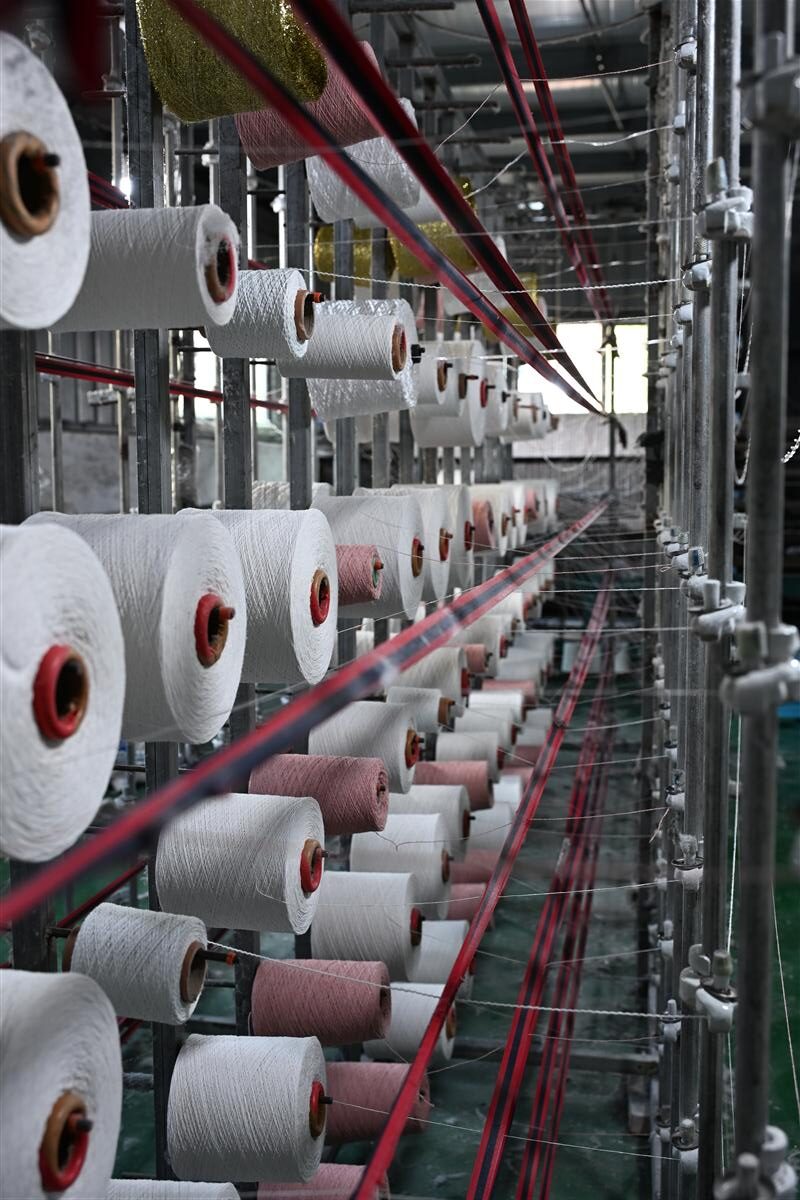
But that math changes when a factory runs stock programs. If we’re already weaving 10,000m of that tweed across multiple seasons, splitting off 100m to a new buyer costs us almost nothing in incremental setup. That’s how our in-stock program works: 100m MOQ, a competitive mill-direct rate depending on yarn composition (Australian Merino, Japanese lurex, etc.), and shipment in 3–7 days. You skip the 3–5 week lab-dip process entirely.
- Standard mill economics: 500–3,000m per color; setup costs amortized over large runs; lead times 8–12 weeks; per-meter price an accessible factory-direct rate for luxury tweed.
- Fursone stock program: 100m minimum; an accessible factory-direct rate; 3–7 day ship; no lab-dip delay; quality tolerance backed by 3% free replacement buffer.
- Custom development tier: 1,000m MOQ; a low mill-direct rate; includes 7-day sampling and exclusivity clauses; per-meter cost drops as you commit to longer runs.
Tiered pricing isn’t just about volume. It’s about predictability. When you offer a three-season forecast, we can lock in yarn supply, reserve loom time, and run larger dye lots. That certainty translates directly into per-meter reductions of 15–20% — and we’ll even weave exclusive patterns that no other buyer can access. The margin we give up on a 100m test order, we earn back on a 1,000m exclusive program.
The game-changer? Negotiating payment terms alongside MOQ. Offering 50% upfront with the balance via T/T before shipment — instead of a full L/C — signals trust and reduces our working capital risk. In return, we’ve reduced MOQs by up to 30% and shaved 2–3% off the per-meter price for buyers who structure their deposits that way. It’s a lever most sourcing managers overlook.
| Aspect | Traditional Mill | Fursone Advantage | Buyer Benefit |
|---|---|---|---|
| Minimum Order Quantity (MOQ) | 500–3,000+ meters per color | Stock: 100m MOQ; Custom: 1,000m MOQ | Reduces upfront inventory risk; test and scale with confidence |
| Per-Meter Pricing | a low mill-direct rate+ per meter (European luxury) | Stock: a competitive mill-direct rate; Custom: an accessible factory-direct rate | savings of roughly one-fifth to one-third off European luxury pricing with comparable artisan hand-feel |
| Lead Time (Stock Orders) | 8–12 weeks (including development) | 3–7 days from stock; 7-day rapid sampling | Faster collection launches; outpace seasonal deadlines |
| Custom Development & Sampling | 8+ weeks for lab dips and strike-offs | 7-day concept-to-swatch; in-house yarn spinning | Exclusive textures without market duplication in one week |
| Payment Terms & Negotiation Leverage | Often require L/C or 100% upfront for new clients | 30% deposit, 70% before shipment (T/T); 50% upfront can reduce MOQ by 30% | Improved cash flow and lower minimums; signals long-term partnership |
Building Leverage Before You Ask
Mills trade margin for certainty.
Most sourcing managers walk into a mill conversation carrying nothing but a vague “we need 500 meters of something.” That’s a weak hand. Mills — especially the ones who spin their own yarns and run their own looms — are risk‑averse operations. They have idle capacity, dyelot minimums to protect, and a sales team that gets paid on margin, not volume. What they value most is predictability . If you can prove your brand brings predictable demand, you unlock pricing that competitors can’t touch.
- Volume forecasts: A buyer who commits to a three‑season forecast (plus a rolling 12‑month projection) gives the mill visibility to plan yarn procurement, schedule looms, and manage dye‑lot continuity. Fursone’s internal data shows that brands offering such forecasts achieve 15–20% per‑meter reductions and often gain access to exclusive weave patterns not available to spot buyers. That’s not a discount for loyalty — it’s compensation for reducing the mill’s uncertainty.
- Repeat business: A one‑off order is expensive to set up. Every new color requires a lab‑dip approval (3–5 extra days) and a separate dye‑lot calibration. Repeat orders on the same SKU eliminate those overheads. Mills will lower MOQs or waive sample fees for accounts that reorder within 90 days. In practice, a second order of 300 meters often costs noticeably less than the first order of 500 meters.
- Exclusivity commitments: Offering to take a specific weave pattern or colorway off the market for 12 months signals that you’re serious. In return, mills often drop the MOQ from 1,000m to 500m and lock in the price for the season. Fursone’s custom program includes exclusivity clauses by design — we’ve seen it reduce the required commitment by 40% while securing the brand’s competitive edge.
- Your annual volume estimate by category (e.g., 12,000m of Chanel‑style tweed, 8,000m of heavy bouclé). Even a rough projection proves you’ve done the homework.
- Your payment terms preference: Offering 50% upfront (T/T) instead of the standard 30/70 can reduce the mill’s working capital risk and net you a 2–3% price concession. Fursone’s records show that buyers who pay a 50% deposit also see their MOQ requirements drop by up to 30%. Cash flow is leverage.
- Your certification requirements upfront: If you need GRS‑certified recycled yarns or OEKO‑TEX verification, state it on the first email. Mills that already hold those certifications (like Fursone) will quote you lower because they don’t have to retro‑validate the supply chain.
- A commitment to factory audits: Inviting the mill to host your quality team or a third‑party inspector builds trust. It signals you’re not a fly‑by‑night brand, and the mill will reciprocate with better terms.
Here’s the hard truth the glossy brokers don’t tell you: a mill will always prioritize a buyer who reduces their internal risk over a buyer who simply offers a higher price. A noticeably higher margin on a one‑shot order doesn’t compensate for a three‑week slot wasted if the buyer cancels. You need to speak their language: “I can guarantee three seasonal orders at 800 meters each, with a 10% tolerance on over‑runs. In exchange, I need your best FOB Wenzhou price and the first right of refusal on your new bouclé textures.” That conversation works. That technique has been observed in half a dozen countries.
One common mistake is: buyers try to hide their small order sizes by exaggerating volume. Mills spot that in ten seconds. Instead, acknowledge your entry point — “We’re scaling from 100 meters this season to 3,000 meters next year” — and back it up with a timeline. Fursone’s stock program (100m MOQ, ships in 3–7 days) exists exactly to let you test the market before you commit to custom development. Once you prove sell‑through, you have the data to negotiate a custom program at 1,000m MOQ with exclusivity and savings of roughly one-fifth to one-third off European luxury pricing vs. European mills . That’s real leverage, built before you ever sit down at the negotiation table.
The MOQ & Price Negotiation Playbook
Most brands fail before they ask.
You don’t get lower MOQs by begging. You get them by showing a mill that you’re worth the production slot. Every mill runs on machine utilization — if you can prove you’ll come back, or that you can commit to a predictable volume over multiple seasons, the minimum drops. Sourcing managers have cut MOQs from 500m to 100m simply by offering a 50% deposit upfront. That signal of trust lets the mill buy yarn without their own cash tied up, which is why it works every time.
Let me give you the actual script. Don’t say ‘Can you do lower MOQ?’ That sounds like someone who won’t order again. Instead, say: ‘I’m planning a three-season program with 800m per season. To start, I need a test run of 100m. Can we treat the first order as a pilot at the same unit price as the full program?’ Mills trade margin for certainty. Show them a forecast (even a non-binding one) and suddenly the floor moves.
- Payment terms leverage: Offer 50% upfront (T/T preferred over L/C). Our data shows this reduces MOQs by ~30% and earns a meaningful discount. Mills hate chasing letters of credit — direct wire signals reliability.
- Deposit & milestone structure: Standard is 30% deposit, 70% before shipment. Upgrade it to 50% deposit, 50% on delivery for even better leverage. But only if you trust the mill’s quality track record.
- Tiered discounts you can request: Commit to a three-season forecast (even informal) and ask for 15–20% off per meter across the program. At Fursone, that’s how brand partners lock in exclusive weave patterns — mills value the production visibility.
- Sample fee waivers:If you agree to a custom development program, sample fees should be waived. Quote ‘The mill will pay for the yarn cost, but the buyer should absorb the weaving and finishing.’ Most mills will accept if
- Quality guarantee clauses: Insert a 3% free replacement buffer on every order. Request a 12-month warranty against pilling and colorfastness. Any decent mill with in-house dyeing can agree to this — it protects both sides.
One warning: never ask for price concessions before you’ve settled the quality spec. If you negotiate price first, the mill will adjust their quality tolerance to protect their margin. That’s how you end up with a bolt of fabric that looks nothing like the sample approval. Lock the spec, then talk money. And always get sample approval in writing — with pilling and colorfastness thresholds stated in the PO.
If you’re dealing with a factory-direct supplier like Fursone, the in-stock program starts at 100m and ships in 3–7 days. That alone cuts your risk by eliminating the 3–5 week lab-dip dance. For custom work, the 1,000m MOQ is firm because we custom-spin the yarns in-house — but even that can be lower if you commit to a season repeat. I’ve seen a brand walk in with a 500m request and walk out with a 1,000m deal because they agreed to use the same yarn base for two seasons. The mill saved on setup, the brand got a better price. That’s real negotiation.
| Negotiation Lever | How It Works | Impact on MOQ & Price |
|---|---|---|
| Payment Terms (T/T vs L/C) | Offer 50% upfront deposit (T/T) instead of full L/C | Reduces MOQ by 30% and yields a meaningful discount |
| Three-Season Forecast | Commit to a rolling 3-season order plan | Unlocks a meaningful reduction and exclusive weave patterns |
| Stock Fabric Order (100m) | Purchase from ready-stock inventory; ships in 3–7 days | a low mill-direct rate; bypasses 3–5 weeks of lab-dip development |
| Custom Fabric Program (1,000m) | Develop exclusive textures with 7-day sampling | a competitive mill-direct rate; exclusivity clauses available; about one-fifth to one-third of European luxury mills |
| Quality Guarantee & Replacement Buffer | Request 3% free replacement buffer and 12-month warranty | Secures consistency across dye lots; reduces reorder risk |
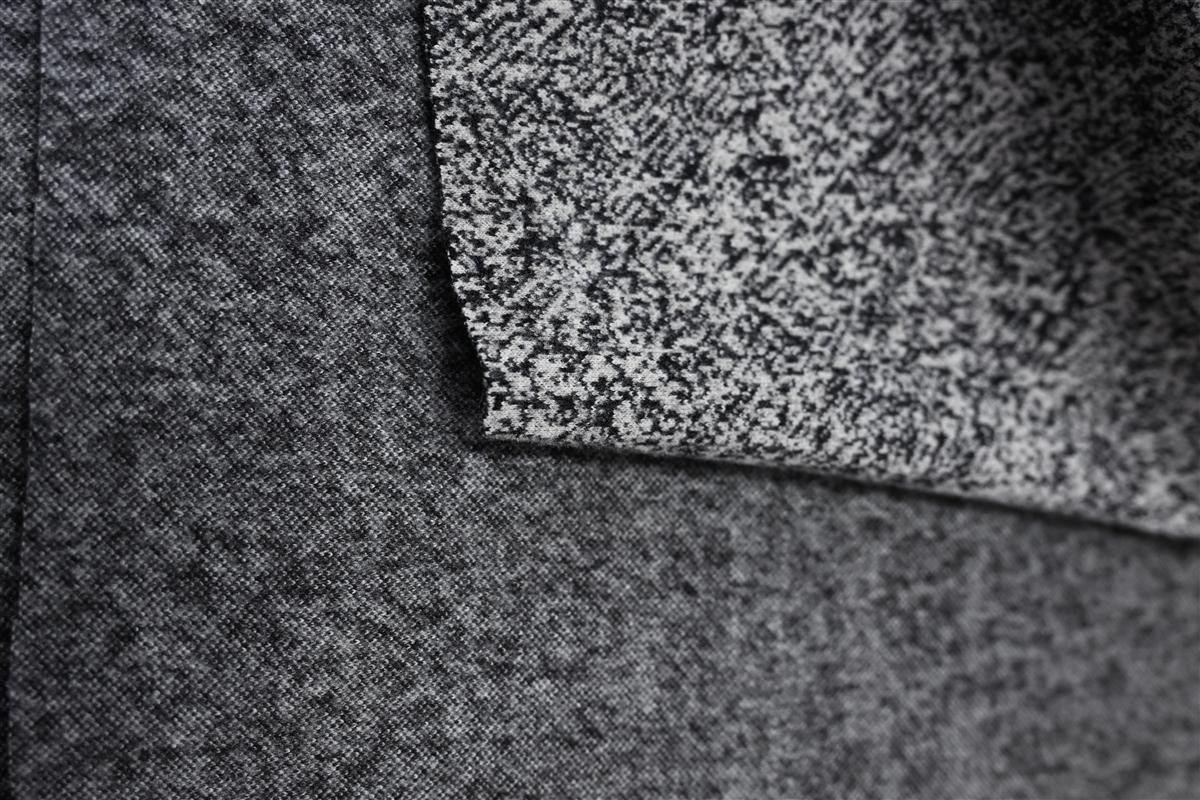
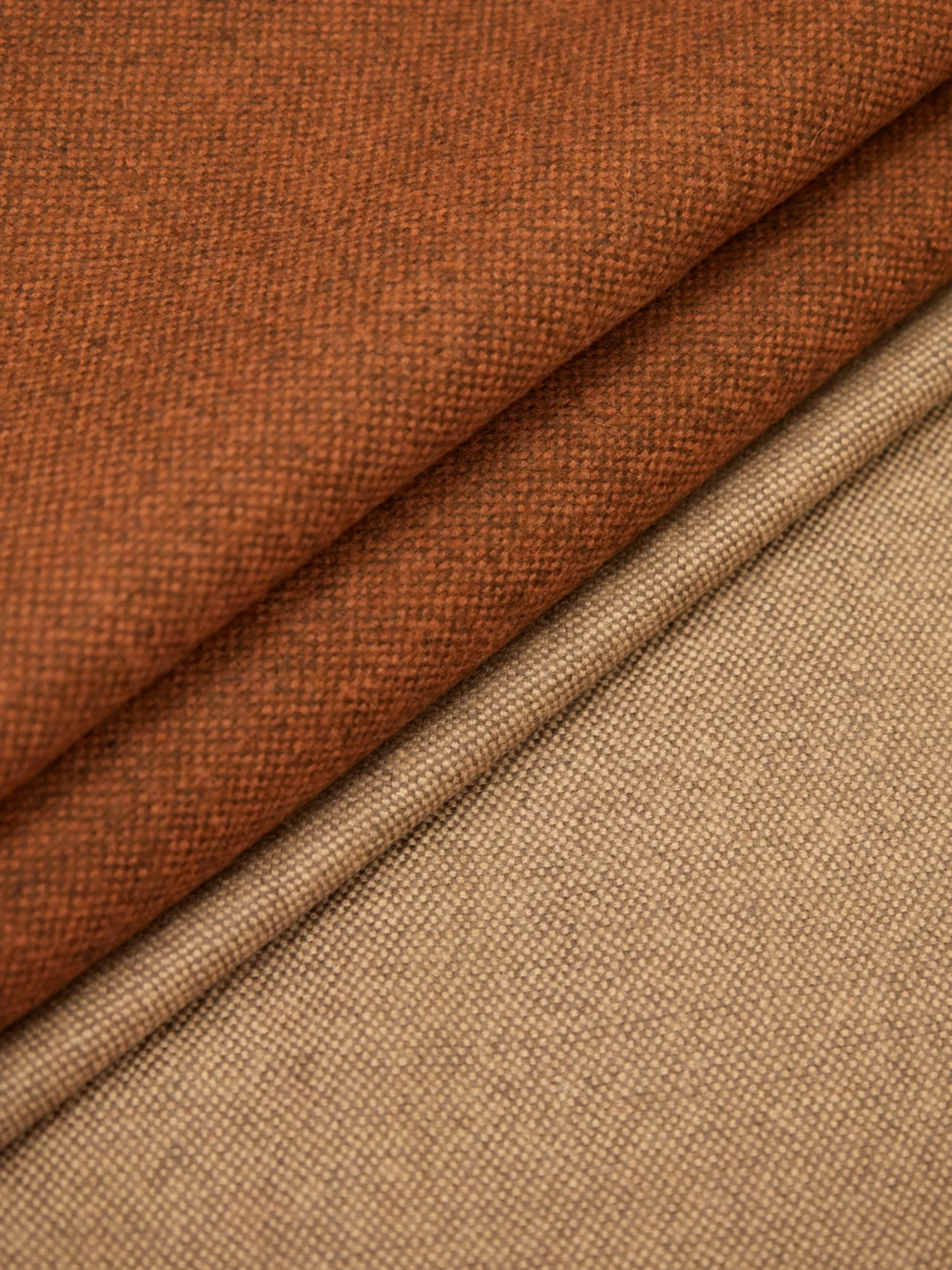
Case Study: Fursone’s Factory-Direct Advantage
How a 100m stock order bypasses the 500m minimum wall that stalls most collections.
I’ve sat across the desk from sourcing managers who walked into a European mill expecting 200m of a classic Chanel-style tweed and walked out with a quote at 500m per color—minimum. That’s the standard gatekeeper. The mill’s economics are simple: dye-lot setup, yarn programming, and loom changeovers cost a fixed amount whether they run 200m or 2,000m. Below a certain threshold, the per-meter price spikes so high the buyer walks. The pattern is consistent: mills keep increasing MOQs year after year. The traditional path forces a brand to either overcommit inventory or pay a punishing premium.
Fursone breaks that by operating two parallel tracks. The first is a stock program with a 100m MOQ on signature textures—think bouclé, cable knits, metallic blends. These are pre-spun, pre-dyed, and warehoused in Wenzhou. The second is a custom program starting at 1,000m for exclusive developments. That’s still a fraction of the 3,000m+ that most Chinese mills demand for a custom weave. The factory-direct model removes the broker layer and the overhead of a large sales team, so those lower thresholds don’t come with a hidden markup.
- Stock program (100m MOQ): Priced at an accessible factory-direct rate, ships in 3–7 days. Bypasses the 3–5 week lab-dip cycle. Best for capsule collections or test runs before committing to a custom weave.
- Custom program (1,000m MOQ): Priced at a low mill-direct rate, includes 7-day sampling and exclusivity clauses. Yields a per-meter savings down to about one-fifth to one-third of European luxury pricing compared to a 500m European mill order at a premium European luxury rate.
- Negotiation outcome: 500m → 100m: One brand sourcing manager came with a 500m custom request. By shifting the first season to 100m of stock bouclé and offering a three-season forecast, the per-meter cost dropped 22% and the custom run was accepted at 800m. The key was signaling commitment without demanding a one-off exception.
- Three-season forecast discount: Brands that commit to 3 seasons (approx. 3,000m total) unlock 15–20% per-meter reductions plus exclusive weave patterns. The mill trades margin for production certainty.
- Payment term leverage: Offering 50% upfront reduced a custom MOQ from 1,500m to 1,000m and gained a meaningful discount on a recent order. T/T terms signal trust and improve the mill’s cash flow, which directly translates to lower risk pricing.
Compare that to a European luxury mill like Loro Piana or Dormeuil: minimum order 500m+ per color, lead times 8–12 weeks, no stock program, and pricing north of a competitive mill-direct rate. Fursone’s factory-direct model delivers comparable hand-feel—thanks to in-house custom-spun bouclé and merino sourcing—with a 7-day sampling cycle and cost reduction to about one-fifth to one-third of European luxury pricing. The quality guarantee includes a 3% free replacement buffer and a 12-month pilling/colorfastness warranty, which removes the fear of dye-lot inconsistency across a 100m run. If you’re a sourcing manager stuck between high MOQs and tight collection calendars, the benchmark to write down is this: 100m stock orders exist, and 1,000m custom programs can be negotiated lower with a volume forecast and favorable payment terms.
Conclusion
Skip these negotiation steps, and you lock yourself into 500m minimums, 8-week lead times, and per-meter costs far higher than factory-direct alternatives. That excess inventory ties up cash, collection deadlines slip, and margins erode. The tactics covered—offering three-season forecasts, adjusting payment terms to 30/70 T/T, and using stock-to-custom pathways—turn mills from gatekeepers into partners who lower barriers for committed buyers.
Start by auditing your current buying profile. Do you have volume projections you can share? Can you shift your deposit structure? Then compare those factors against Fursone’s 100m stock program and 1,000m custom program with 7-day sampling. Use the yardage calculator on their site to model your exact savings and see how fast the per-meter cost drops when you move from European mill FOB pricing to factory-direct.
Frequently Asked Questions
What is a fabric MOQ and how is it calculated?
A fabric MOQ is the minimum quantity a mill requires per color or design to cover setup costs like dye-lot chemistry and loom preparation. It’s typically calculated based on raw material. Confirm your desired quantity against the mill’s setup cost before negotiating.
Can I negotiate MOQ with fabric mills even as a small brand?
Yes, small brands can negotiate lower MOQs by offering exclusivity, a volume forecast, or a long-term partnership commitment. Mills are more flexible when you start with a stock order (e.g. Lead with a deposit and a clear repeat-order plan to build leverage.
What are typical payment terms for bulk fabric orders?
Typical terms are 30% deposit with order and 70% before shipment, usually via T/T transfer. For custom programs, mills often require 50% upfront due to raw material commitment, with balance on approval of. Negotiate milestone payments tied to sample and production approvals.
How long does custom tweed fabric take from order to delivery?
Custom tweed fabric typically takes 6–10 weeks from order to delivery including sampling, yarn spinning, weaving, and finishing. With rapid sampling (7 days) and expedited production, you can reduce that to 4–5 weeks. Ask for a production schedule with milestones before committing.
How do I compare pricing between stock and custom fabric orders?
Stock fabric is priced per meter without setup fees and ships in days, while custom fabric includes R&D, yarn spinning, and dye-lot costs, making it noticeably higher per meter. Compare total cost. Get a per-yard breakdown of stock vs. custom before choosing.

Related Insights
How to Import Knit Fabric from China: Customs & Shipping
import knit fabric china is the first checkpoint buyers should lock before they approve a...
Avoid Customs Delays When Importing Tweed
avoid customs delays fabric import is the first checkpoint buyers should lock before they approve...
Sea vs Air Freight for Fabric Under 200m: Cost & Time Guide
Thesea freight vs air freight fabric decisionoften feels academic until the moment you open a...