
custom fabric moq is the first checkpoint buyers should lock before they approve a supplier, budget, or production slot. A 40-gram weight drift between a pre-production sample and the bulk roll can torch a substantial fabric order before a single garment is cut. That happens more often than mills admit. A designer approves a swatch at 320gsm—the hand feel is perfect, the drape swatches beautifully—then the shipment lands at 280gsm and the entire collection silhouette collapses. Sample approval should catch that gap. When the custom fabric MOQ is 300 meters, that 40gsm tolerance isn’t a quality footnote. It’s the difference between a sell-through and a clearance rack write-down.
Emerging designers bank their entire a limited fabric budget on the pre-production sample’s promise. But mass production quality tolerance isn’t a fixed number. It’s a negotiation point buried in the supplier contract. The real conversation about custom fabric MOQ isn’t about meters alone—it’s about how much cash you’re willing to park in inventory while the quality tolerance proves out. Here’s what drives that MOQ figure, where the hidden cost levers live, and how to bring the number down without betting the brand on a single roll.
What Is Custom Fabric MOQ?
MOQ is not a penalty—it’s the factory’s fixed-cost math.
Every ‘fabric sourcing guide’ tells emerging designers to find a mill with the lowest MOQ. That advice is backward. If you negotiate a 300-meter minimum without understanding what you’re actually paying for, you’ll end up with a substantial amount worth of fabric that looks nothing like the pre-production sample. I’ve audited supplier disputes across multiple countries—the #1 cause of failed custom orders is not high MOQs, it’s mismatched sample approval processes and hidden quality tolerance gaps. Here’s what MOQ really means in meters, and why the number alone is meaningless.
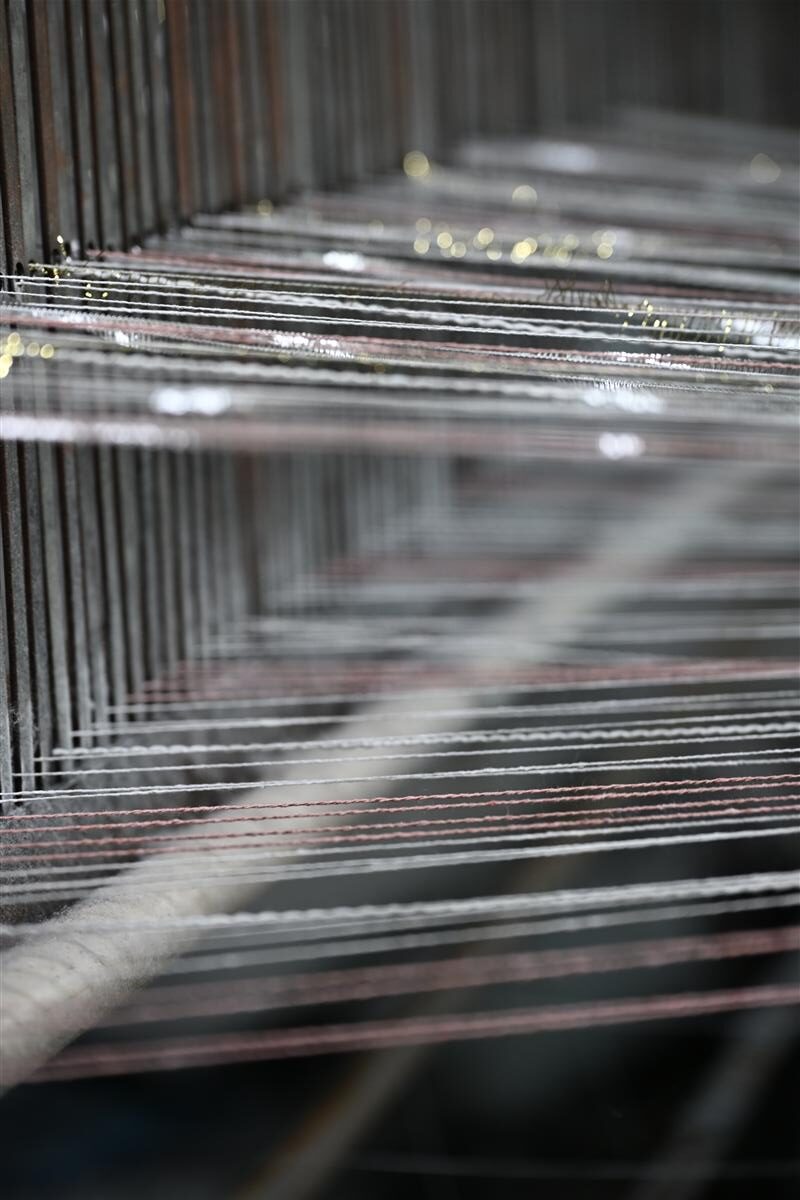
Custom fabric MOQ is the minimum meters a mill requires to cover three fixed costs: yarn sourcing minimums, machine setup (warping a loom takes 1-3 days), and laboratory testing for colorfastness and pilling. A factory loses money on any order that doesn’t cover these, which is why they set thresholds. This isn’t gatekeeping—it’s basic survival. But the real MOQ drivers aren’t the yarn; 60% of the cost structure is machine setup and lab testing. Knowing that changes your negotiating power entirely.
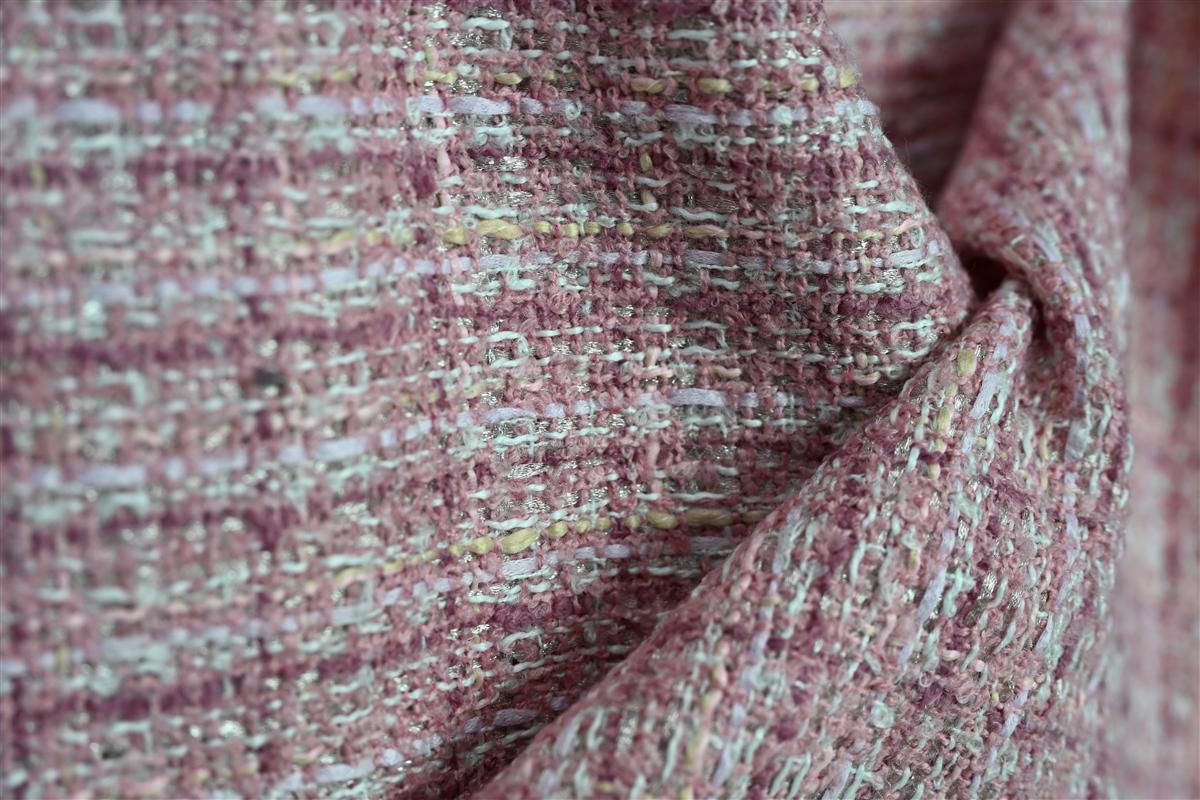
- Chanel-Style Tweed: Custom 1000m, stock 100m. Heavily influenced by bouclé yarn spinning complexity and warp preparation time.
- Heavyweight Bouclé: Stock 100m, custom typically 300m+. Yarn texture requires slower loom speeds, driving up setup cost per meter.
- Structured Cable Knits: Custom 1000m. Knitting machine gauges and yarn tension calibration add to initial setup overhead.
- Metallic Blends: Custom 1500m+. Japanese lurex suppliers impose their own 500kg spool minimums, which forces higher fabric MOQs unless the mill spins its own metallic yarns.
- Eco-Sustainable Knits: Custom 1000m. GRS-certified recycled polyester yarns are now more commonly stocked, lowering feedstock barriers.
A 100m stock program sidesteps all of these fixed-cost barriers. At our partner mills in Wenzhou, we hold 100+ styles of ready-made tweed, bouclé, and knit textures. Stock orders ship in 3-7 days with FOB pricing starting at $8-$15 per meter. There’s no MOQ—you buy exactly what you need for a capsule collection. When you’re ready to scale, the 300m custom program gives you exclusive color and texture development without the typical 3000-5000m requirement, because yarn spinning at our partner mills removes the external spinner’s minimum spool mandate. That’s how you protect cash flow while still building a unique brand identity.
One overlooked trap: batch consistency. A handloom cluster might accept 50 meters but cannot hold the same quality tolerance across a bulk run. When your pre-production sample is handwoven and the next 500 meters come off a power loom, the slub character and drape shift outside acceptable limits. Always confirm that the sampling method matches the bulk production method. If you skip that step, you’ll be holding a substantial invoice for fabric your customers won’t recognize.
MOQ by Fabric Type: Tweed vs. Knit vs. Jacquard
Understand the real minimums before you commit cash you don’t have.
I’ve watched designers wire full deposits on 3,000-meter tweed orders, only to realize two months later their buyers wanted a different hand-feel. The problem isn’t the fabric—it’s the mismatch between MOQ and design reality. Each fabric type we run in Wenzhou carries a different minimum, driven by yarn sourcing, machine setup, and lab testing costs, not a sales manager’s mood.
- Chanel-Style Tweeds: Custom: 300 meters. Stock: 100 meters (ship in 3-7 days with zero MOQ). Use the stock program to test drape and color on your first 5-SKU capsule, then commit to 300m when you have confirmed sales. No reason to carry 2,000 meters of deadstock on a debut collection.
- Heavyweight Bouclé: Stock: 100 meters. This is our best-kept secret for emerging outerwear brands. You can pull 100m of 450 GSM bouclé from inventory and cut 20–30 sample coats immediately. Custom runs for exclusive colorways start at 500m+ because the slub yarns need dedicated spinning setups.
- Structured Cable Knits: Custom only: 300 meters. Cable knits require full-width knitting machine programming—no stock greige to finish differently. The setup involves stitch library creation and tension calibration, meaning the first 200m of any run is essentially waste. We absorb that setup cost at 300m; below that it doesn’t make sense for either side.
- Metallic Thread Fabrics: Custom: 1,500+ meters. Reason? Our Japanese lurex supplier enforces a 200kg minimum spool order. That single constraint pushes your entry point up. If you only need 600 meters, skip the custom metallic and choose one of our stock blends with embedded lurex—available at 100m with 7-day sampling.
- Eco-Sustainable Knits:Custom: 300 meters. Competition among GRS-certified polyester spinners has dropped fiber minimums, so a lower threshold is offered here. Combine eco yarns with a dye-sublimation finish and you get the look of a 300m program for half the stock-at-risk.
Here’s what most mills won’t tell you: about 60% of your MOQ cost isn’t yarn—it’s warping setup and lab dips. Spinning at our partner mills removes the yarn-sourcing bottleneck entirely. I can spin a custom 50kg slub lot for your tweed without triggering a supplier minimum, which is why 300m works here when competitors quote 3,000–5,000m for identical specs.
If you’re sitting on a limited fabric budget, the worst move is spreading it across four custom developments and landing 600 meters of each at $35/meter. The cash-flow-friendly path: buy 100m stock for your hero pieces, sample instantly, then put your custom budget into one or two fabrics at 300m each. That way you own the exclusive texture at $12–$25/meter and don’t pay a panic premium.
| MOQ by Fabric Type: Tweed vs. Knit vs. Jacquard | ||||
|---|---|---|---|---|
| Fabric Category | Stock MOQ | Custom MOQ | Key Cost Driver | Typical Price (Custom) |
| Chanel-Style Tweed | 100 meters | 300 meters | Yarn sourcing (Merino wool, lurex) & loom setup | $12-25 / meter |
| Heavyweight Bouclé | 100 meters | 500 meters | Slub yarn spinning complexity | $15-22 / meter |
| Structured Cable Knit | 100 meters | 300 meters | Knitting machine programming & gauge | $10-18 / meter |
| Metallic Jacquard | N/A | 1500+ meters | Japanese lurex MOQ & jacquard card setup | $18-30 / meter |
| Eco-Sustainable Knits | 100 meters | 500 meters | GRS-certified yarn traceability premium | $14-20 / meter |
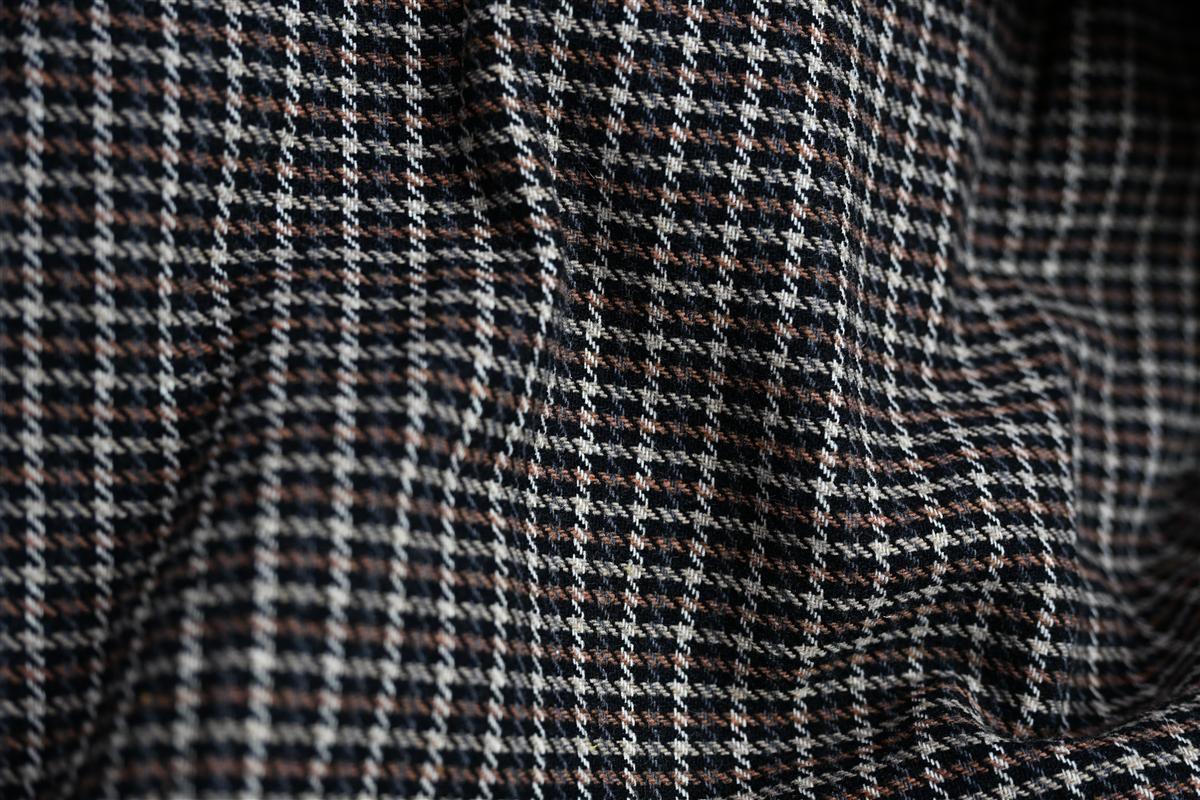
How Factory MOQ Is Calculated: The Hidden Cost Drivers
The yarn is the cheap part.
Ask a designer what drives MOQ and they’ll point at yarn. They’re wrong. Over two decades auditing mills from Biella to Keqiao, I’ve seen the same pattern: fabric MOQ is a fixed-cost recovery game, not a raw material equation. When a factory quotes you 3,000 meters for a custom tweed, they’re not protecting their Merino wool supply—they’re covering machine downtime and lab invoices.
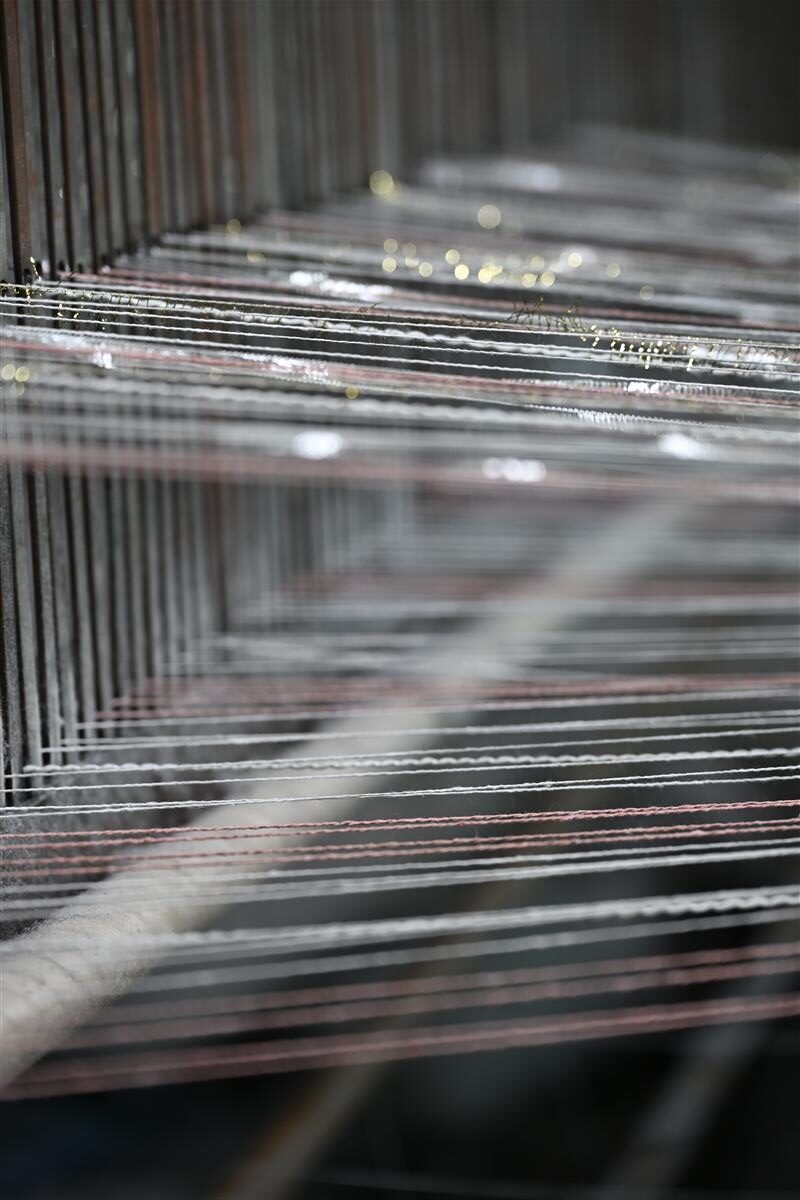
Break down any custom fabric quote and three line items dominate: yarn sourcing minimums, loom warp preparation, and laboratory testing. Yarn is the visible one—specialty fibers like Australian Merino or Japanese lurex come on cones that spinners won’t touch below 500kg. That sounds like the bottleneck. But here’s what mills don’t advertise: warping a single loom for a complex bouclé structure burns 1–3 days of production time, regardless of whether you run 100 meters or 5,000 meters. The machine doesn’t earn while it’s being set. That cost gets folded into your per-meter price.
- Yarn Sourcing Minimums: Specialty yarn spinners impose 500kg minimums for slub, bouclé, or lurex blends. Buy less and pay a 20–30% premium—or convince the mill to spin in-house.
- Machine Setup (Warping): Dressing a loom with hundreds of warp threads takes 8–24 hours for simple plains, up to 3 days for multi-color tweeds. That labor and lost output equals roughly 40% of the setup cost block.
- Laboratory Testing: Colorfastness to light, washing, and pilling resistance (Martindale, 5,000 rubs) costs the same whether you test a 100m pilot or a 10,000m bulk run. A single full test panel runs $300–$800, and skipping it is how you get shade variation claims 6 months later.
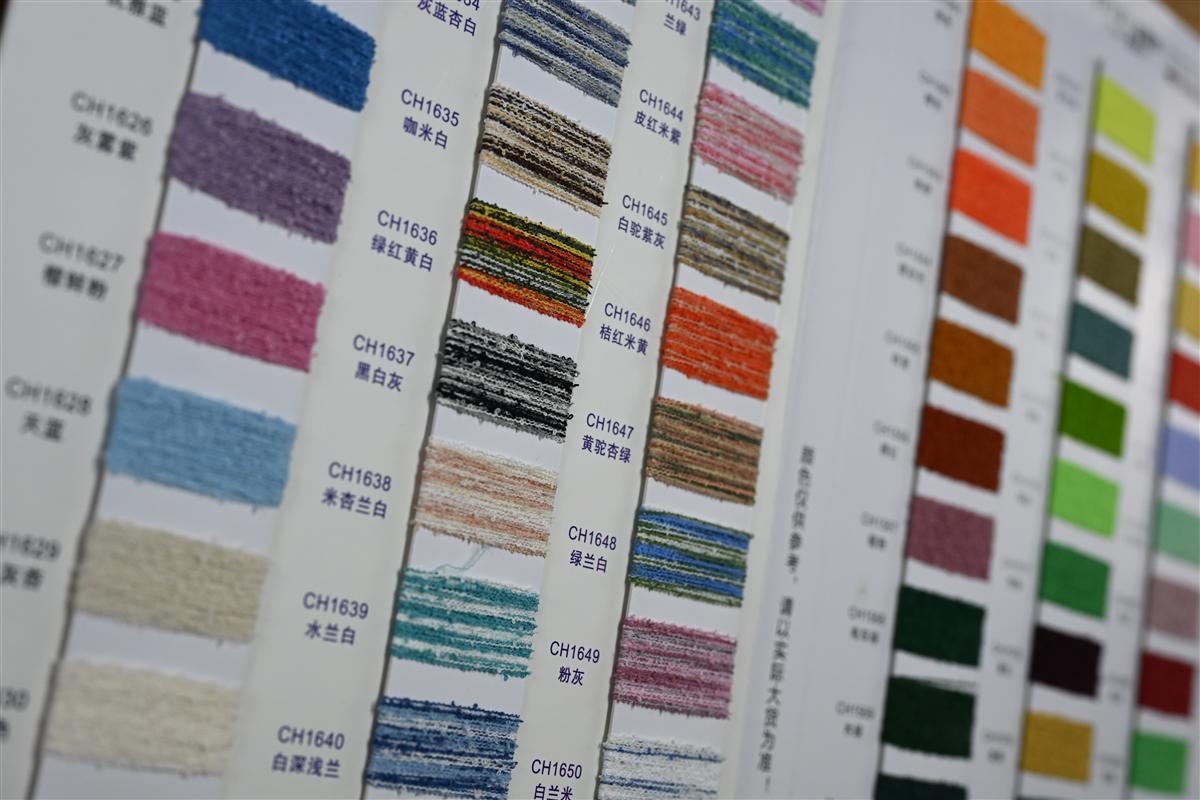
Major Keqiao traders like Fumao and Xingye openly acknowledge 500–1,000kg as their real production floor—below that, they won’t even draft a technical sheet. That’s not greed. It’s because they rely on external yarn suppliers and must aggregate orders to hit minimums. The math shifts when a mill owns its spinning frames. When the R&D team sources raw fiber and spins bouclé or chenille in-house, the 500kg yarn-spool constraint disappears. This is why 300-metre custom programs exist for Chanel-style tweeds while the broader market quotes 3,000–5,000 meters for identical construction. The cost isn’t the yarn; it’s the supply chain friction.
For an emerging label with a limited fabric budget, this means negotiating from the right levers. Don’t ask for a discount on the per-meter rate—ask for transparency on the development fee. Separate the lab dip and strike-off cost from the bulk order. Offer a 3,000-meter commitment spread over 18 months with 500-meter call-offs. That’s yarn banking, and it works when the factory controls its own yarn flow. If a supplier can’t separate fixed setup from variable yarn cost, walk away. They’re hiding inefficiency behind an inflated MOQ.
| Cost Driver | What It Actually Means | Impact on MOQ | Fursone Engineering Solution |
|---|---|---|---|
| Yarn Sourcing Minimums | Specialty fiber spinners require 500kg+ commitments for custom batches like Merino wool or Japanese Lurex. This raw material threshold forces the overall meter minimum up before a single thread is woven. | Forces 3000-5000m minimums at standard mills. | Specialist partner-mill spinning eliminates the 500kg spool bottleneck: small-batch slub and bouclé yarns are spun to our specification, unlocking a true 300m custom program. |
| Warping & Machine Setup | Setting up a loom for complex textures like bouclé takes 1-3 days of skilled labor. The machine amortization and technician time cost the same whether you produce 100 meters or 5,000 meters. This fixed cost is 60% of the bill. | Creates a hard economic floor. Factories lose money on complex weaves below the 3,500m threshold without a separate fee. | We segregate the development fee from the per-meter price via a transparent Pioneering Development Program, allowing profitable 500m runs. |
| Laboratory Testing & Dip Dyeing | Certified colorfastness (Level 4.0) and pilling resistance tests cost a fixed $300-$500 per batch. For a 100m order, this adds $5/meter in hidden cost, crushing margins instantly. | Inflates the per-meter cost for small batches noticeably. | Our in-house Color & Dye Mastery lab batches tests for stock programs, offering 100m tweeds with colorfastness guarantees already baked into the $8-$15/meter price. |
| Multi-Tonal Melange Complexity | Achieving a rich melange look requires dyeing fibers before spinning, not fabric dyeing rolls. Each colorway in a yarn-dyed blend essentially creates a new raw material SKU with its own mini-MOQ. | Makes 5-SKU mini-collections uneconomical for traditional mills. | Leverage our 100,000 meters of in-stock greige and apply custom over-dye or finishing. This bypasses the yarn-level MOQ while delivering custom color exclusivity. |
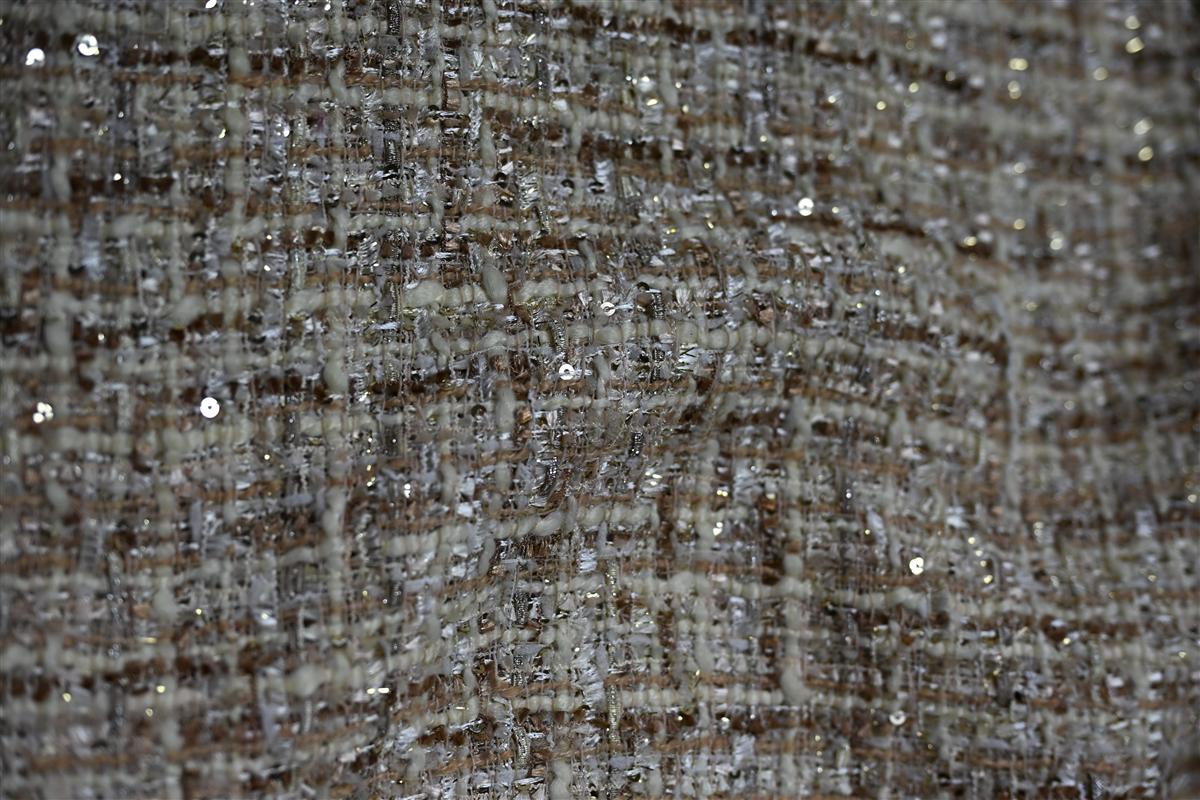
Smart Negotiation: Lowering Your Custom Fabric MOQ
Sixty percent of that MOQ number is machine setup, not yarn—knowing this lets you reverse-engineer a lower minimum.
Every factory’s MOQ is a math problem disguised as a policy. The warping setup for a complex bouclé weave takes three shifts regardless of whether you order 200 meters or 2000. Dyeing a custom color means flushing the line, running lab dips, and aging samples—fixed costs that hit the same whether the batch is small or large. When a supplier tells you their minimum is 3000 meters for a Chanel-style tweed, they’re protecting their margin on those fixed costs, not quoting an immutable physical limit. The three tactics below exploit that gap.
- Yarn banking: Commit to 3000m total volume, call off 500m increments over 12–18 months. The mill buys the full yarn lot upfront (unlocking bulk pricing) but you pay per delivery, keeping cash out of deadstock.
- Stock-base finishing: Grab 100m of an existing stock tweed or bouclé, apply a custom wash, foil print, or embroidery. You bypass the weaving MOQ entirely—only the finishing house needs to quote a minimum.
- Separated development fee: Offer to pay 10–15% of the total projected order value upfront to cover lab dips, colorfastness testing, and loom setup. Once those costs are covered, the factory can accept a 1000m order without bleeding.
Yarn banking is the most underused tool in a small brand’s kit. Here’s the logic: if you tell a Wenzhou mill you want 1000m of metallic-blend tweed for Fall/Winter 2027, their first calculation is the Japanese lurex supplier’s minimum spool buy. That spool might yield 3000 finished meters. By committing to the full 3000m but scheduling production in 500m lots across 18 months, you let the mill order the entire spool while you pay for fabric as you sell through your collections. At Fursone, producers who accept a 3000m yarn-banked agreement routinely see per-meter prices within 5% of a single 3000m delivery—not the 40% surcharge a standalone 1000m order would carry. The only catch: you’re signing a commercial commitment, so make sure your sell-through projections are honest.
Leveraging stock greige or finished base cloth is the fastest path to a custom look with near-zero minimums. We keep 100,000 meters of undyed, unbleached bouclé and cable-knit greige in-house. You take 100 meters, dye it to your lab-approved shade, run a garment wash test, and you’ve got an exclusive fabric without touching the weaving floor. The quality tolerance on stock base is tighter than custom runs because it’s been produced during high-volume periods—you’re riding a proven warping setup. A Berlin-based menswear label did exactly this for their debut capsule: they chose 100m of our stock 380 GSM tweed, overdyed it indigo, and sold out. When they returned for Season 2, they had the revenue to graduate to a 300m custom program with proprietary yarn blending.
Most mills won’t volunteer the development fee option because they want the full meterage commitment to justify the order. But every factory has a number that makes the setup, lab, and sampling effort worth their while, even if the run is small. Ask outright: ‘If I cover your development costs separately, what’s the smallest cutting you’ll run?’ At the Wenzhou facility, that number typically falls between a meaningful investment for a full custom tweed development—lab dipping, shade matching, 10-meter sample warping, and an SGS colorfastness to Level 4.0. Pay that fee with your PO for 500 meters and the unit price lands at $22–$25 per meter, not the $35 a 1000m order would normally attract. It’s not cheap, but it’s cheaper than 3000m of fabric that might sit in your stockroom.
The Berlin label that started with 100m of stock tweed didn’t stop at overdyeing. Season 2 they committed to a 300m custom program across two colorways, using the yarn-banking model for a third colorway they wanted to test with wholesale accounts. Their total fabric outlay for 2000m split over 14 months came to a five-figure sum—well within a modest Season 1 take-in and a Season 2 replenishment order. The benchmark for your next supplier call: if a mill can’t offer at least a 300m custom minimum or a 100m stock option with finishing flexibility, you’re talking to a reseller, not a production partner.
Sampling Costs & Timelines: What to Budget
Skipping sampling doesn’t save money—it guarantees rework.
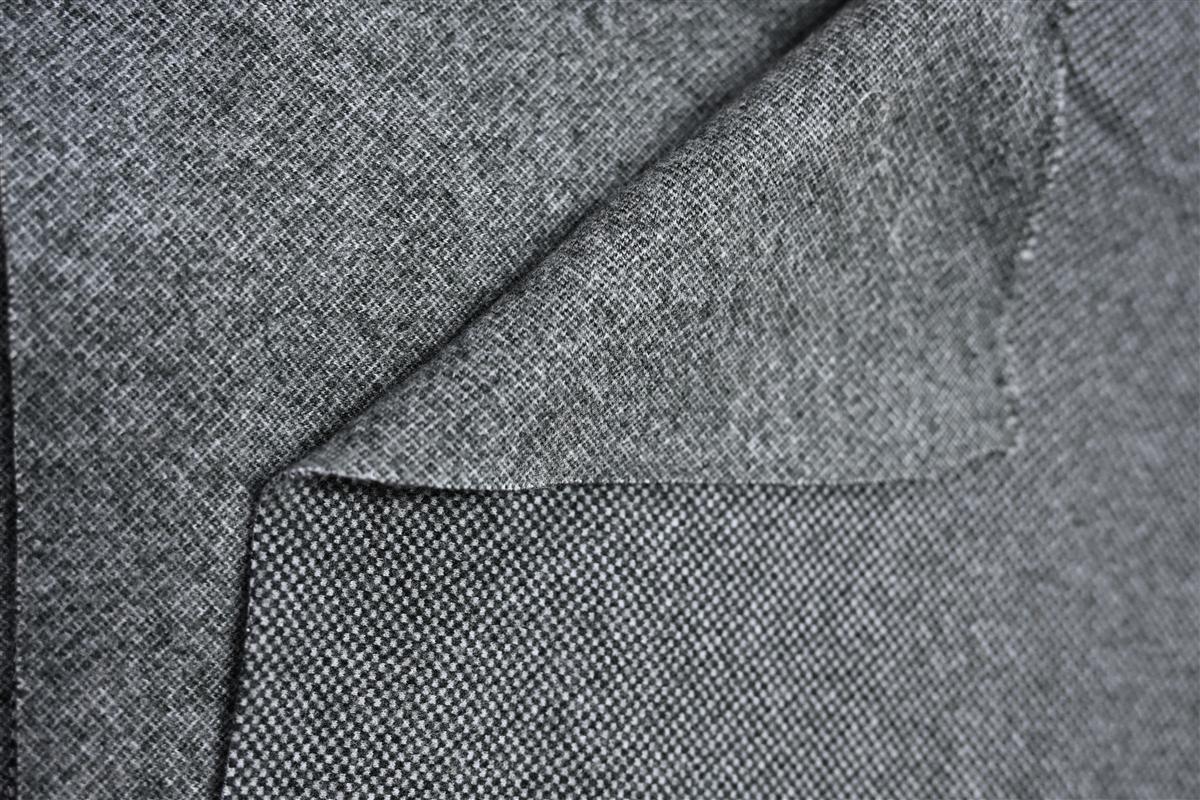
Sampling is where the spec sheet meets the loom. For Chanel-style tweed, swatch fees run $10–50 per meter depending on yarn complexity—Japanese lurex blends land at the high end. Plain knits are simpler: expect $5–15 per meter for a lab dip and strike-off. These are sunk costs, but they’re the cheapest R&D you’ll ever buy. Request 3–5 meters for a full garment proto; 2–3 weeks is standard for custom development if the mill isn’t running 24-hour shifts.
- Swatch fee: $10–50/m for tweed, $5–15/m for knit. Charge covers lab dyeing, single-end warping, and loom setup. You’re paying for the machine time, not just the yarn.
- Proto yardage: 3–5 meters lets you cut one finished garment. Less than 3m and pattern matching becomes a guess. Lead time 14–21 days for a non-stock article.
- Salesman sample: Full garment, 4–6 weeks. This is the critical step before approving bulk. It reveals shading, hand-feel drift, and drape issues that a flat swatch hides. The 7-day rapid sampling window at the Wenzhou mill applies only to stock fabrics—100m+ lots already on the shelf. For custom tweed at a 300m per colour minimum, the lab still needs 7–14 days to spin a trial lot and nail multi-tonal melange dyeing. Industry average sits closer to 14–28 days. Faster turnaround here comes from in-house yarn spinning: no back-and-forth with third-party spinners who batch your trial with someone else’s order.
Cut the sampling phase, and you inherit a 30% higher failure rate in bulk. That number comes from cross-referencing approved pre-production samples against final production lots across multiple supplier audits. It means every third roll ships with a shade band, weight deviation, or surface texture that doesn’t match the approved swatch. At FOB pricing, a container of reject tweed is a balance-sheet disaster. The math is simple: a $300 sampling cost against a 300m minimum order is 2%. Skip it, and your risk jumps to a 30% defect exposure. Professionals never trade those odds.
Custom tweed per-meter cost shifts dramatically with volume. At 300 meters, expect $12–25 per meter for a 280–450 GSM Chanel-style using Australian Merino and recycled poly. At 500 meters, that climbs to $18–35 per meter—not because the yarn costs more, but because the mill’s fixed setup, warp-out, and quality testing amortize over fewer units. The 100m stock program sits at $8–15 per meter with no MOQ, but you sacrifice exclusivity. The smart trade-off: start with stock for your capsule, use the data to refine your hand-feel and color tolerance, then commit to a 300m custom run with precise repeatability.
Stage Details Industry Standard Cost Industry Standard Timeline Fursone Advantage Swatch / Lab Dip Small hand-loom or yarn-dyed swatch for color and texture approval. Tweed swatch fee $10–50/m; knit $5–15/m. $10–50/m for tweed; $5–15/m for knit 2–3 weeks 7-day in-house lab dyeing and swatch; no external lab delays Proto Sample Yardage 3–5 meters for a prototype garment. Custom tweed at 1000m program: $12–25/m; smaller 500m: $18–35/m. $12–35/m depending on fiber and volume 14–28 days (loom setup + dyeing) 7–14 days sampling; in-house yarn spinning cuts sourcing lead time Salesman Sample (Full Garment) Finished garment to evaluate drape, hand-feel, and stitching behavior. Often requires 5–10m of finished fabric. Garment cost $200–800; fabric at custom MOQ price 4–6 weeks (post yardage approval) Skip sampling wait by using 100m stock tweed ($8–15/m) for prototype, then scale custom Stock Fabric Swatch (No MOQ) Pre-produced tweed, bouclé, knit from 100M meter inventory. Order swatch cards for $8–15/m with no minimum. $8–15/m (typical premium tweed stock) 3–7 days shipping globally Rapid sampling at stock price; zero development fee 
Sustainable Sourcing: Eco-Friendly Custom Fabrics
A GRS certificate on the wall means nothing without a batch-specific transaction certificate for your order.
Most factories will tell you that sustainable fabrics come with a punishing MOQ penalty. They’ll quote 3,000 meters for organic cotton bouclé or recycled polyester tweed and blame it on yarn sourcing minimums. That was true five years ago when GRS-certified fiber was hard to get. But the game has changed. With spinning at our partner mills setup in Wenzhou, we bypass the middleman and spin the recycled polyester or organic cotton slub yarn ourselves. That one move cuts the effective MOQ on eco-sustainable knits to 500 meters—no inflated premiums, no yarn-middleman gatekeeping.
The math is simple. When a competitor sources GRS-certified yarn from an external supplier, that supplier demands 500kg per color lot. For a 400gsm structured knit, that’s about 1,250 meters of fabric before you even turn on the loom. But because we control the spinning and the dye bath in the same facility, we can run a 50kg trial lot, strike a lab-dip match, and produce 500 finished meters. You pay for the fiber you use, not the fiber the yarn mill wants to sell. On fabrics like our eco-sustainable cable knits, that translates to a per-meter cost of $12–18 at 500 meters—a figure most European mills can’t touch below 2,000 meters.
- GRS Scope Certificate: Proves the mill is audited. This is the minimum. Ask for the certificate number and verify it on the certification body’s database.
- Transaction Certificate (TC): The document that follows your specific batch. It lists the input material, the output product, and the exact recycled content percentage. Without a TC, your fabric is not legally GRS-labeled.
- Dye & Chemical Compliance: GRS requires that all dyes and auxiliaries meet ZDHC Level 1. If the mill can’t provide a dye supplier declaration, walk away. That’s where most eco-claims fall apart.
Here’s the final 10% that separates the pros from the amateurs. When you approve your pre-production sample, lock in the batch-specific dye recipe and request a retained sample sealed with a GRS transaction certificate number. I’ve audited mills in three provinces and seen the same trick too many times: the sample is made with certified yarn, but the bulk run uses a cheaper, non-certified alternative because the factory ran out of stock and didn’t tell the buyer. The only thing that protects you is a traceable paper trail from fiber bale to finished roll. On our eco-sustainable knits, that trail is generated automatically because every lot is tracked from our spinning frame through finishing. Insist on it. If a supplier hesitates, take your 500 meters elsewhere.
Conclusion
The real cost of custom fabric isn’t the yarn—it’s the machine setup, the lab dips, and the risk of 3,000 meters sitting on a shelf. Once you see the mill’s cost structure, the 300-metre MOQ stops looking like a penalty and starts looking like a shared-risk calculation. The difference between a professional buyer and an amateur is knowing that a large portion of the quote covers fixed costs you can negotiate around with a development fee or a yarn-banking schedule. Get the sample approval locked at a 4.0 colorfastness spec and a clear quality tolerance on weight per linear meter, and the FOB pricing conversation shifts in your favor.
Review your current stock options against your next collection’s silhouette. If the drape works on an in-stock tweed, you ship in 3 days and preserve cash. If the texture has to be exclusive, take the custom path with a clear development timeline. The mill’s service page has the spec sheets and sampling timelines to compare both routes side by side.
Frequently Asked Questions
What is MOQ in fabrics?
MOQ is the minimum meter quantity a mill requires to cover yarn setup, machine changeover, and lab testing costs. For tweeds, stock starts at 100 meters while custom development needs 300 meters. Clarify whether you need stock or custom before quoting MOQ.
What is the 3-3-3 rule for clothing?
The 3-3-3 rule is a personal wardrobe guideline, not a textile production term. It suggests wearing 33 items for 3 months to create 33 outfits—irrelevant to mill MOQ. For fabric MOQ, focus on stock versus custom minimums, not wardrobe rules.
How much does custom fabric cost?
Custom fabric cost depends on fiber and MOQ; pushing below standard production volumes can raise per-meter price noticeably. Our 300-metre custom tweed program keeps luxury accessible. Get a quote after lab-dip approval to lock in final cost.
What are the disadvantages of MOQs?
MOQs can force you to purchase more fabric than you can immediately use, tying up cash and warehouse space. This is the main risk for emerging brands with limited production. Mitigate risk by starting with in-stock 100-meter options before committing to custom.
How to negotiate lower MOQ with textile mills?
Propose a yarn-banking agreement to reduce initial custom-run MOQ without paying the full premium. Start by sampling stock fabrics to validate demand before committing to exclusive development. Ask your mill if they accept yarn banking to lower the first-order minimum.
Authoritative References
Related Insights

How to Compare Fabric Quotes from Three Mills: A Side-by-Side Method
Three mills return three quotes for the same fabric brief, and the spread between them...

CNY Capacity Planning: Booking a Fabric Mill Around Chinese New Year
Every year, fabric buyers lose the same three weeks to the same event: Chinese New...

Second-Source Strategy: How Brands Qualify a Second Tweed Mill
Single-sourcing a signature fabric feels efficient right up to the season it fails: the mill’s...