The custom vs stock fabric cost question keeps most first-time collection designers staring at spreadsheets at 2 AM. You have roughly 500 meters to order across maybe five styles. Spend too much on exclusivity and the math falls apart. Go all-stock and risk launching a line that looks like three other brands on the same rack. Neither option is wrong. Picking the wrong one for the wrong style is what burns the budget.
Stock fabric runs a competitive mill-direct rate for tweeds and knits from a direct mill like ours in Wenzhou. Custom starts around a competitive mill-direct rate and climbs higher depending on the yarn construction. The per-meter difference looks straightforward until you add the costs most designers miss on their first order: shrinkage that eats 10% of your yardage, standard widths that don’t match your markers, and sampling fees that hit differently when you need labdips instead of pre-cut swatches. A 500-meter order with two custom styles lands somewhere between a substantial sum once waste and sampling settle in. An all-stock buy sits at a significant sum. The gap is real but smaller than the sticker price suggests.
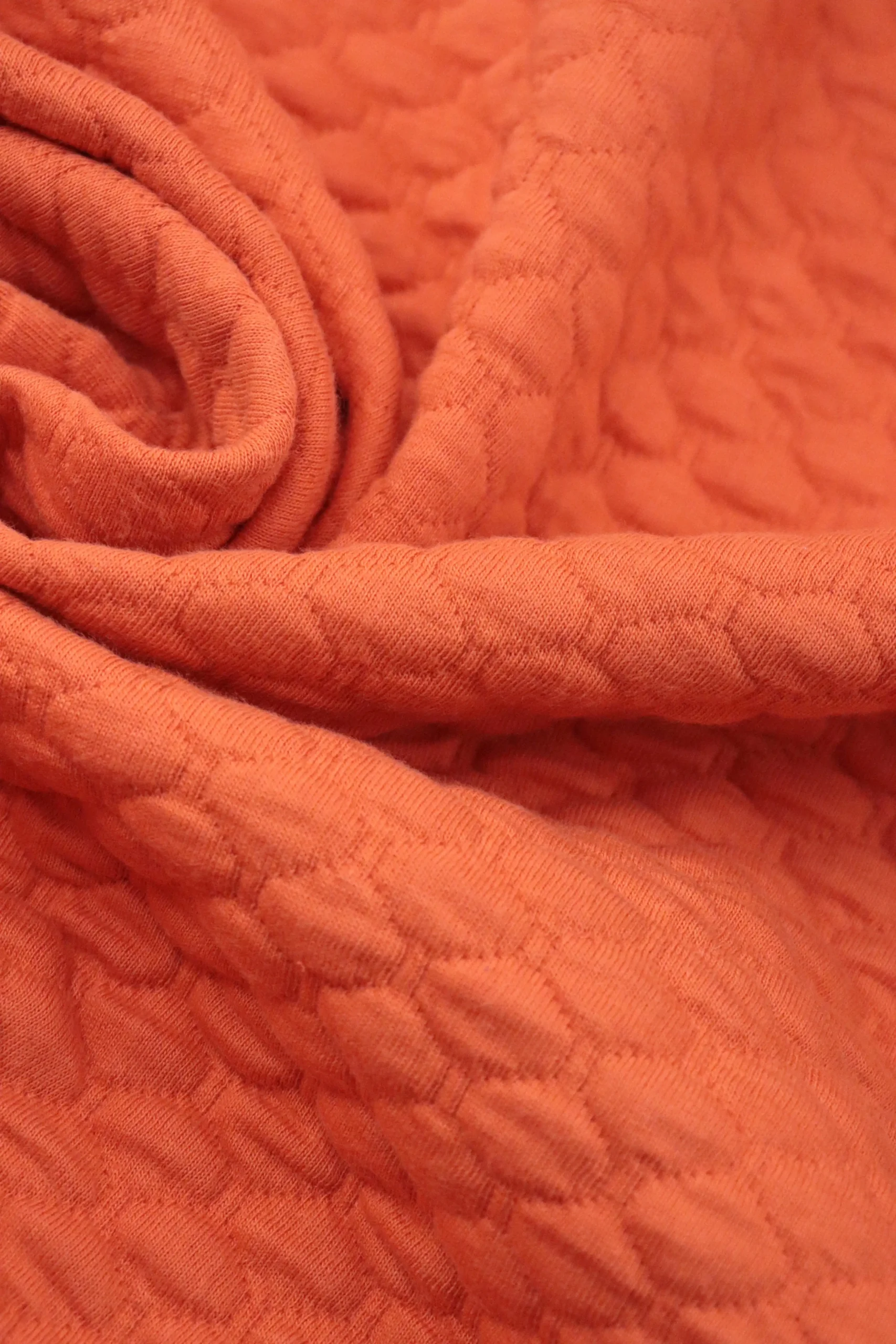
The bigger play with custom is what stock cannot offer: a texture nobody else can source. Most off-the-shelf tweeds use standard polyester-nylon blends spun on commodity yarn lines. Custom lets you specify bouclé, slub, or chenille yarn spun in-house so the fabric reads as uniquely yours. That matters when your jacket is the hero piece of the collection and the lining can be generic. Use stock for basics. Pour the custom budget into the two styles that define your brand. That hybrid approach is what keeps a 500-meter collection both financially viable and visually distinct.
Stock vs Custom Fabric: Cost per Meter Comparison
Custom fabric costs noticeably more upfront but eliminates waste and duplication.
For a 500-meter collection, stock tweed and knit fabrics land between a low mill-direct rate and an accessible factory-direct rate. Custom development pushes that to a low mill-direct rate. The premium pays for exclusive yarn blends and width control you can’t get from open-market rolls.
- Standard cotton jersey: Stock a competitive mill-direct rate; custom an accessible factory-direct rate. Stock uses generic 20s/1 combed cotton; custom lets you specify yarn count and mercerization.
- GOTS organic cotton: Stock a low mill-direct rate; custom a competitive mill-direct rate. Certification adds cost, but custom ensures full chain-of-custody documentation from ginning to dyeing.
- Technical recycled nylon: Stock an accessible factory-direct rate; custom a low mill-direct rate. GRS-certified stock exists, but custom lets you match exact denier and filament count for performance outerwear.
- Chanel-style bouclé tweed: Stock a competitive mill-direct rate; custom an accessible factory-direct rate. Off-the-shelf bouclé uses common poly/wool blends; custom spins slub and loop yarns in-house to prevent market duplication.
- Shrinkage control: Stock fabrics from generic Asian suppliers often carry 5–10% uncontrolled shrinkage. Custom mills pre-shrink and guarantee <3% — preventing post-production size variances that cost you returns.
- Exact-width weaving: Custom fabric can be woven to 140cm instead of the standard 150cm, saving up to 8% material. On a 500m order, that’s a low mill-direct rate back in your pocket.
- Proprietary yarn spinning: Custom enables bouclé, slub, and chenille yarns spun in-house — textures that simply don’t appear on stock lists. This is how emerging brands build visual signatures without opening a mill.
Stock fabric pricing reflects mass production: mills run 5,000-meter dye lots, so your 500 meters ride on volume efficiencies. The trade-off? Zero differentiation. Any competitor with a credit card can buy the same roll. Custom fabric flips this — you own the color and texture, and you weave to your collection width, cutting waste from 10–15% to under 8%.
Factory-direct sourcing drops custom costs significantly. While European mills quote a top-tier European mill rate for similar development, mills in Wenzhou (including Fursone) deliver comparable hand-feel and durability for a low mill-direct rate. This roughly one-fifth to one-third gap, detailed in the factory-direct pricing comparison, comes from in-house yarn spinning and lower labor overhead — not lower quality.
| Fabric Type | Stock Price per Meter | Custom Price per Meter (500m order) | MOQ | Lead Time |
|---|---|---|---|---|
| Standard Tweed (poly/wool blend) | a competitive mill-direct rate | an accessible factory-direct rate | Stock: 100m; Custom: 1000m (500m accepted at +a meaningful premium) | Stock: 3–7 days; Custom: 7-day sampling + 4–6 weeks production |
| Heavyweight Bouclé (fancy yarn blend) | a low mill-direct rate | a competitive mill-direct rate | Stock: 100–200m; Custom: 1000m (500m accepted at +a meaningful premium) | Stock: 3–7 days; Custom: 7-day sampling + 4–6 weeks production |
| Structured Cable Knit (cotton/recycled poly) | an accessible factory-direct rate | a low mill-direct rate | Stock: 100–200m; Custom: 1000m (500m accepted at +a meaningful premium) | Stock: 3–7 days; Custom: 7-day sampling + 4–6 weeks production |
| Eco Sustainable Knit (GOTS organic cotton) | a competitive mill-direct rate | an accessible factory-direct rate | Stock: 100m; Custom: 1000m (500m accepted at +a meaningful premium) | Stock: 3–7 days; Custom: 7-day sampling + 4–6 weeks production |
| Fancy Yarn Blend (metallic/chanel-style) | a low mill-direct rate | a competitive mill-direct rate | Stock: 100–200m; Custom: 1000m (500m accepted at +a meaningful premium) | Stock: 3–7 days; Custom: 7-day sampling + 4–6 weeks production |
The Hidden Costs of Stock Fabric: Wastage & Duplication Risk
Stock fabric’s standard width and open-market availability silently erode your collection’s margins and identity.
Most stock tweed and knit fabrics ship in a fixed 150cm width. When your pattern pieces don’t divide cleanly into that width, you leave 10–15% of every meter on the cutting room floor. On a 500m order, that’s 50 to 75 meters of paid-for fabric going straight into the bin—costing you between a meaningful amount depending on the per-meter price.
The financial bleed doesn’t stop at physical waste. Stock fabric is open-market inventory. Any competitor, fast-fashion brand, or wholesale distributor can buy the same roll. When your collection hits the market, there’s zero guarantee another label isn’t using identical material. For an emerging brand building a visual identity on texture, this duplication risk dilutes everything you’re trying to achieve.
- Width-mismatch waste: Standard 150cm stock width forces 10–15% textile loss for patterns optimized for a different cuttable width. Custom fabric woven to your exact spec—such as 140cm—reduces this waste to under 8%, saving a competitive mill-direct rate on a 500m order alone.
- Shrinkage inconsistency: Stock fabrics from generic Asian mills commonly carry 5–10% shrinkage rates that novices overlook until final garments arrive smaller than graded. Custom mills with in-house testing labs can pre-wash and guarantee under 3% shrinkage before you cut a single piece.
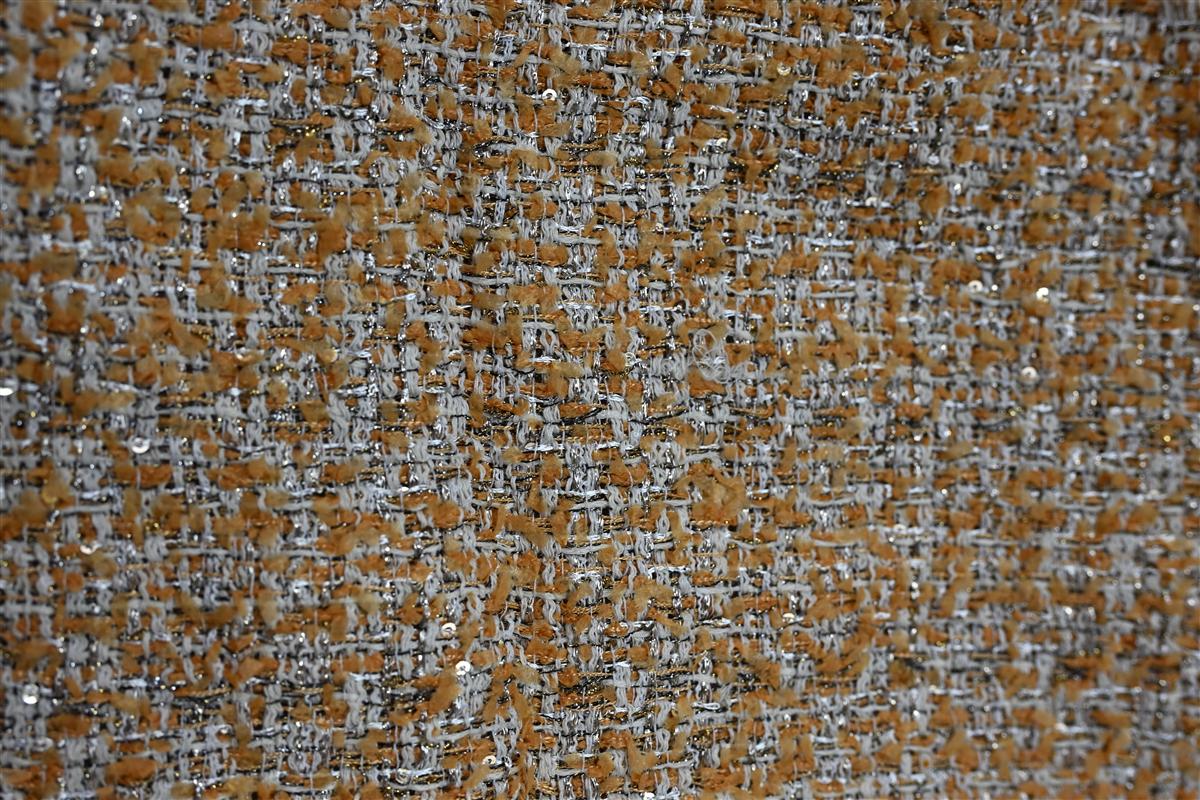
- Yarn composition deception: Many off-the-shelf tweeds lean on standard polyester/nylon blends that photograph well but lack dimensional texture. Custom development lets you commission proprietary bouclé or slub yarns spun exclusively for your brand—an advantage stock suppliers can’t replicate.
- Duplicate inventory risk: When a hot stock fabric sells out and gets re-ordered by multiple brands simultaneously, your ‘core textile’ suddenly belongs to everyone. Custom programs grant pattern card exclusivity, locking your fabric recipe so no other brand can source the same construction.
These hidden costs accumulate silently. The 8% width waste, 5–7% shrinkage overage, and lost uniqueness aren’t line items on your supplier’s invoice—but they show up when you calculate actual cost per sellable garment. For a 500m collection, choosing custom allows you to trade the uncertainty of stock for tight technical tolerances and genuine market differentiation.
| Hidden Cost Factor | Stock Fabric Risk | Custom Fabric Advantage | 500m Order Impact | Brand Consequence |
|---|---|---|---|---|
| Width Mismatch Waste | Standard 150cm width often mismatches pattern layouts, forcing 10–15% cutting waste. | Woven to your exact width (e.g., 140cm), reducing waste to <8% and saving fabric. | a sizeable figure lost in wasted fabric; custom saves an accessible factory-direct rate. | Eroded margins, inflated per-garment cost, and unpredictable budgeting. |
| Market Duplication | Same stock rolls are sold to multiple brands, leading to identical fabrics in competing collections. | Exclusive proprietary yarn spinning (bouclé, slub) prevents duplication, ensuring a signature look. | Loss of collection uniqueness—competitors can replicate hero pieces. | Diluted brand identity, reduced perceived value, and potential loss of stockist interest. |
| Shrinkage Inconsistency | Inconsistent shrinkage rates (5–10%) without pre-testing, distorting garment sizing after first wash. | Pre-tested shrinkage <3% and full quality reports provided with labdips. | Potential full batch rejection or costly rework, risking thousands in production. | Customer returns and reputation damage from poor fit, undermining luxury positioning. |
MOQ Showdown: 500m Order – Which Option Wins?
500m is the trap order—too big for stock flexibility, too small for standard custom.
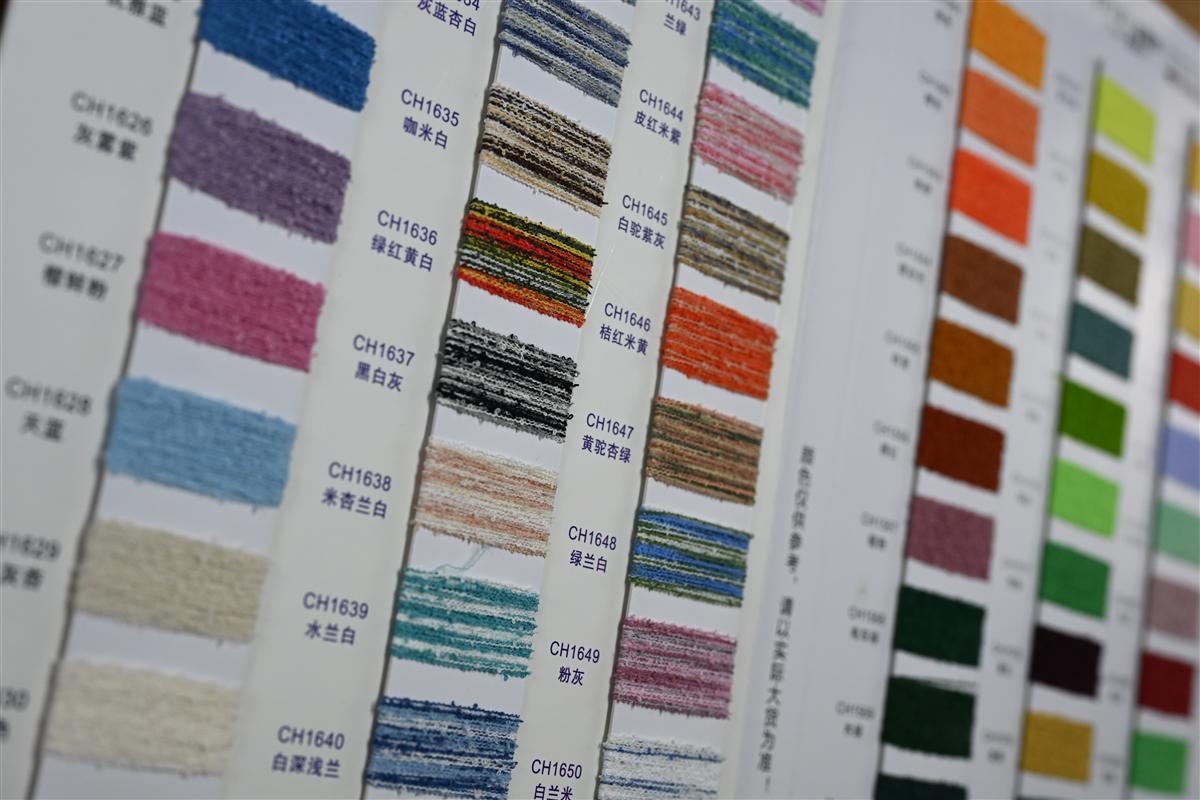
Standard stock fabric comes wound on rolls of 100 to 200 meters per color. Mills rarely break those rolls. For a 500m order, stock forces you into a corner: maybe 3 colors at 150–200m each, or 4 colors if you find smaller rolls. You buy more colorways than you wanted. You design around fabric availability—the reverse of how a collection should work.
- Stock constraint at 500m:: Minimum 1–2 rolls per color (100–200m each). To hit 500m, you accept 3–4 color commitments. Cost estimate with mid-tier tweed at an accessible factory-direct rate: 3 colors × 200m = a sizeable figure. If you only needed 2 colors, you just spent a substantial sum on fabric you did not want.
- Custom Fursone program:: Standard custom MOQ is 1,000m per color. But a 500m order is accepted as a half-MOQ with a 15–20% surcharge on the per-meter rate. You get exactly 2 colors, nothing forced. Cost estimate for a premium custom tweed at a low mill-direct rate + 20% surcharge: 500m at a competitive rate = a significant sum. Higher price, but every meter goes into a garment you planned.
- The color math advantage:: Stock cost for 5 colors you do not want: wasted money. Custom cost for 2 colors you specifically designed: 100% usable. The per-meter premium shrinks when you stop paying for unwanted inventory.
The real cost conversation shifts when you look at what custom eliminates. Stock tweed from generic Asian mills often carries inconsistent shrinkage—anywhere from 5% to 10%. A novice designer orders 500m, washes a sample, and finds the dimensions have moved. Suddenly, cutting markers are off, and 25–50 meters are scrap. At a competitive mill-direct rate, that is a low mill-direct rate gone before a single garment ships.
A mill operating a custom program with internal testing protocols—where shrinkage is pre-tested and guaranteed below 3%—removes that hidden cost. Internal production data from Fursone’s lab shows that pre-shrunk, tested custom fabric reduces post-production waste to under 8%, versus the 10–15% standard for untested stock goods. On a 500m order, that waste differential alone recovers 35–75 meters, or a substantial sum depending on the fabric tier.
There is another lever no one discusses: fabric width. Stock fabric typically comes at 150cm. If your pattern is optimized for 140cm—a common width for tailored jackets and structured tweed pieces—you are paying for 10cm of material you throw away with every cut. Custom weaving to exact collection width recovers up to 8% of total material. On a 500m order, that is roughly a competitive mill-direct rate back in your pocket. The custom surcharge starts to erase itself.
One final warning: if your custom fabric supplier does not offer GRS or OEKO-TEX certification on the half-MOQ order, you are building a sustainability claim you cannot prove. When EU or US retailers ask for certification—and they will—your 500m custom run becomes a liability instead of an asset. Make sure the custom program includes traceable certification, not just a promise.
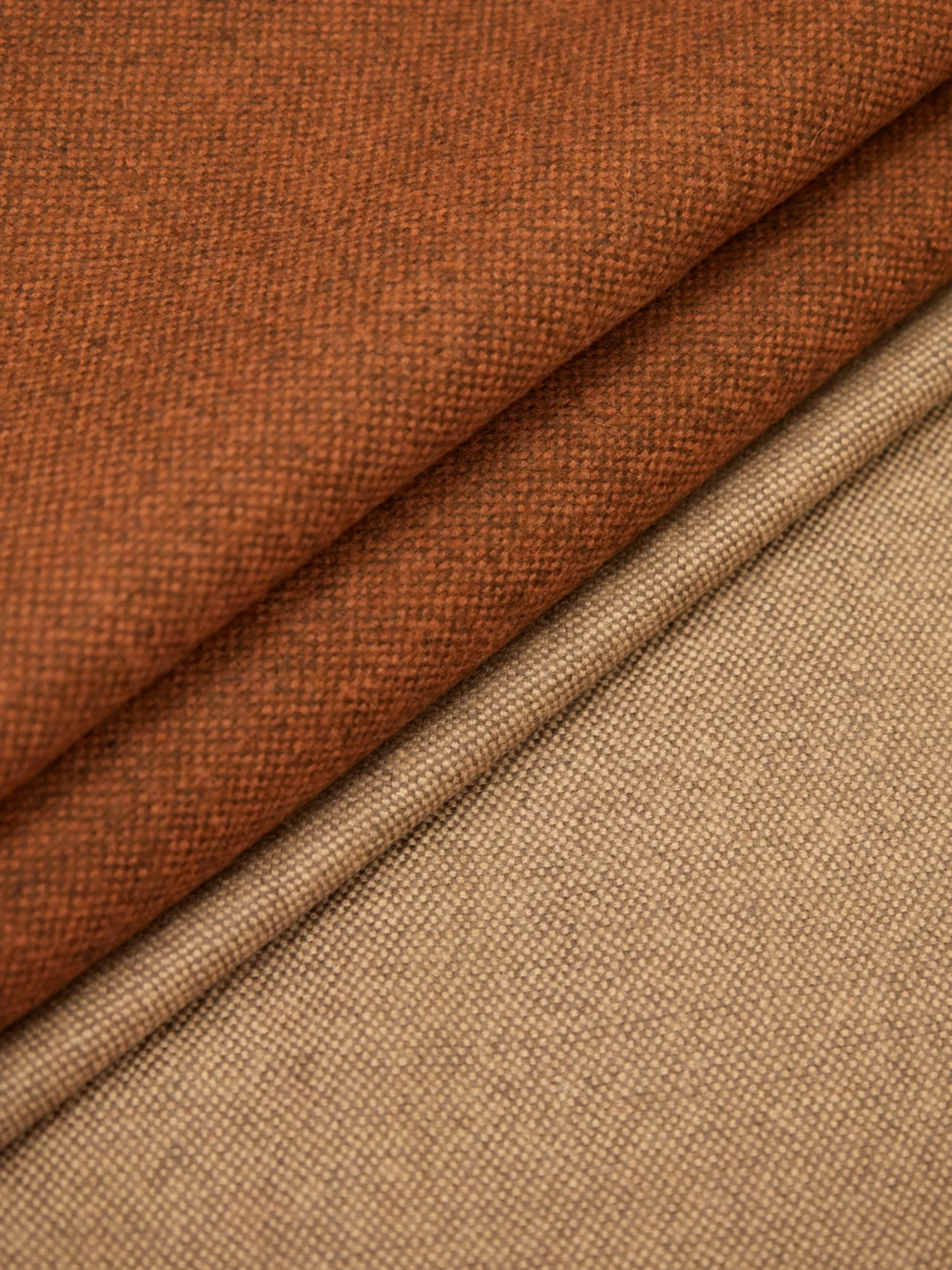
Sampling Costs & Timelines: Stock Swatches vs Custom Labdips
Stock swatches skip the lab report — custom labdips deliver guaranteed shrinkage under 3%.
If you’ve never ordered custom fabric, the sampling line item can feel like an unnecessary toll. Stock swatches sit on your desk in 2 days for a few dollars a pop. The custom route demands a per-color fee and a 10-day wait. The difference isn’t just the cash — it’s what you’re actually buying.
- Stock Swatch: an accessible factory-direct rate each. Ships in 2–5 days. You get a pre-cut rectangle of existing inventory — no testing data included.
- Custom Labdip: a per-color fee. 7–10 day turnaround. You receive a dyed-to-match swatch plus a one-page technical report: wash shrinkage, colorfastness rating, and skew tolerance.
A 500m collection using 2 colors adds up fast. Stock sampling runs a low mill-direct rate total. Custom labdips land at a competitive mill-direct rate. On a tight budget, that gap stings. But here’s what the stock swatch won’t tell you: shrinkage on standard tweeds from open-market mills routinely hits 5–10%. You find that out when 18 jacket sleeves come out 2cm short. A custom mill that pre-tests and guarantees below 3% shrinkage turns an accessible factory-direct rate sampling fee into quality control you can amortize across every garment.
Labdips also bundle colorfastness to light and crocking (wet/dry rub) — data points stock suppliers rarely disclose. If your collection ships to a boutique that returns half the batch because of bleeding onto linings, the a low mill-direct rate labdip looks like the cheapest line item on your P&L.
| Sampling Stage | Stock Swatch (In-Stock Fabric) | Custom Labdip (Custom Development) | Key Decision Factor | Novice Trap to Avoid |
|---|---|---|---|---|
| Initial Inquiry to Swatch | a per-sample fee. Ships in 2–5 days. Often free for active buyers. | a per-color fee. 7–10 day turnaround after color confirmation. | Stock gives instant hand-feel; custom reveals true color accuracy on your proprietary yarn blend. | Assuming a stock swatch color is final—batch dye lots can shift 5–10% without a labdip. |
| Technical Testing Included | Rarely includes technical data cards. You get the swatch only; no shrinkage or fastness guarantees. | Always includes shrinkage (<3% guarantee), colorfastness to light/crocking, and weight verification. | Custom labdips double as a pre-production quality audit. Stock swatches require your own third-party testing. | Skipping testing on a stock fabric that feels ‘premium’ but shrinks 8% in washing—ruining garment fit. |
| Total Sampling Cost (2 Colors) | an accessible factory-direct rate for two color swatches. Immediate shipment. Zero commitment. | a low mill-direct rate for two labdips. This fee is usually credited against your 500m production order. | Stock sampling is a sunk cost. Custom sampling is a refundable deposit if you proceed to production. | Viewing the a competitive mill-direct rate labdip as a pure expense, not as the only way to lock an exclusive, tested colorway. |
| Risk of Color Mis-match | High risk. Swatch may be from a different dye lot than the roll you receive, causing stripey garments. | Near-zero risk. The approved labdip becomes the binding master standard for your entire 500m batch. | For solid-color jackets or matching sets, a custom labdip is the only insurance against lot-to-lot shade variation. | Ordering 200m of a stock ‘charcoal’ tweed, only to find it’s 20% lighter than the swatch you approved. |
| Turnaround Impact on Launch | You can approve basics and start cutting within 5 calendar days of swatch arrival. | Adds exactly 7 days to concept-to-swatch, but saves 3–4 weeks of rework if stock dye lots mismatch later. | Use stock for fast-track linings and base layers. Use custom for hero fabrics where a botched colorway kills the collection. | Ordering all custom to ‘be safe’—and losing a 4-week selling window for your pre-fall basics. |
Total Cost of Ownership: 500m Collection Budget Calculator
The price gap isn’t just per meter—it’s the 15% waste you silently pay on stock fabric.
You’re planning a 5-style spring collection, 100 meters per style. Total fabric needed: 500 meters. The question isn’t simply stock vs. custom price per meter. It’s what you actually pay after sampling, shipping, and the cutting table.
Option A — All Stock. Fabric cost: a significant sum. Standard tweed and knit stock rolls come in 150cm widths. When your pattern is optimized for 140cm, you lose 10–15% to offcuts. That pushes your real cost to a meaningful amount. Stock swatches run a competitive mill-direct rate per colorway; shipping is fast (3–7 days), so cash leaves your account immediately.
Option B — 2 Custom Exclusives + 3 Stock Pieces. Custom fabric runs an accessible factory-direct rate, so a per-style fee, or a sizeable figure total. Stock fills the remaining three styles: a substantial sum. Combined range: a significant sum. Custom labdip samples add a per-color fee, but those R&D costs include shrinkage testing (<3% guaranteed at Fursone) and colorfastness data you won’t get with stock.
- Waste reduction: Custom can be woven to your exact collection width (e.g., 140cm). This cuts waste by up to 8%—an accessible factory-direct rate saving on a 500m order.
- Shrinkage control: Stock fabric from commodity channels often carries 5–10% residual shrinkage. Fursone pre-tests custom runs to keep it under 3%, eliminating post-production size drifts.
- Exclusivity: Custom yarn spinning (bouclé, slub) gives you textures no other brand can buy off the shelf. Stock fabric is available to anyone, including your direct competitors.
The hybrid path costs a meaningful amount more upfront than the all-stock route. But that premium is offset by lower waste, predictable shrinkage, and collection differentiation. Plus, you avoid the expensive mistake of finding your ‘signature’ fabric on a competing brand’s rack three months later.
Allocate your custom budget to hero pieces—the Chanel-style bouclé jacket or structured cable knit coat that defines the line. Use in-stock fabrics for linings, basic shells, and accessories where speed and price matter more than uniqueness.
| Cost Category | Stock Fabric Scenario | Custom Fabric Scenario | Calculation Basis | Insider Insight |
|---|---|---|---|---|
| Fabric Base Price (500m total) | a sizeable figure (a low mill-direct rate) | A substantial total (premium per-meter rate, inc. a low-MOQ premium) | Price/m × 500m. Stock uses mass-produced greige; custom absorbs proprietary yarn spinning & small-batch dyeing. | Custom appears 2x pricier but aligns cost directly with the ‘hero’ pieces that define your brand’s visual signature. |
| Sampling Investment (pre-production) | a low mill-direct rate (a per-sample fee for 2 styles) | a competitive mill-direct rate (an accessible factory-direct rate/lab-dip per style, covering 2 custom exclusives) | Stock swatches are cut from existing rolls; custom lab-dips involve trial dye-baths, spectrophotometer matching, and 7-day R&D time. | Custom lab-dips include shrinkage & colorfastness test reports — data stock suppliers rarely provide. This an accessible factory-direct rate saves a low mill-direct rate+ in avoided production disasters. |
| Material Wastage (cutting floor reality) | a substantial sum (10–15% typical waste on 500m) | a low mill-direct rate (<8% waste; exact-width weaving possible) | Stock rolls fixed at 150cm vs. your pattern’s 140cm optimal. Custom can be woven to 140cm, reducing unusable selvedge and end-bits. | Focusing on custom for your structured jackets? Exact-width weaving on 500m saves ~a competitive mill-direct rate. That’s your entire sampling budget back. |
| Shipping, Duty & Logistics (Asia -> US/EU typical) | a competitive mill-direct rate (air-freight for 3-7 days; sea possible) | an accessible factory-direct rate (mostly air for quick turn; sea for 4-6 week production) | Stock ships immediately, often via air courier. Custom production adds weight and volume due to sampling rounds, but sea freight cuts cost 60%. | Never budget zero for custom logistics. We’ve seen start-ups lose a meaningful amount on last-minute air-shipments because they forgot transit time. |
| Hidden Quality / Duplication Risk | High: 3+ brands might buy the exact same roll. Color-lot mismatch between batches is common. | Zero: Proprietary yarn & exclusive weave guarantee no market overlap. Single-dye-lot consistency across your 500m. | Stock means you compete on style with identical raw material. Custom gives you a textile ‘patent’ without the legal fees. | In a customer’s showroom review, identical fabric to a mass-market line cut their premium perception. The lost sales couldn’t be calculated per meter. |
| Total Cost of Ownership (TCO) | a significant sum (incl. waste, sampling, shipping) | a meaningful amount (2 styles custom + 3 styles stock, all costs in) | Sum of Base Fabric + Samples + Waste + Shipping. Does not include design differentiation value. | TCO reveals true intelligence: the custom option lets you charge 20%+ margin on ‘hero’ coats, more than offsetting the higher upfront fabric bill. |
Conclusion
Stock fabric’s low per-meter price hides costs that hit you mid-production — 5–10% shrinkage on standard tweeds, 10–15% cutting waste from fixed 150cm widths, and the quiet risk of seeing your “signature” bouclé on a competitor’s rack. Custom fabric costs noticeably more on the front end, but locks in sub-3% shrinkage, exact-width weaving that trims waste below 8%, and proprietary yarn specifications no one else can buy. For a 500m collection, the math favors putting stock fabrics into linings and basics while reserving custom development for the two or three styles that define your brand.
Review the stock and custom fabric options on the Fursone services page to compare in-stock tweeds starting at 100m rolls against custom programs that accept 500m with a modest premium. Request swatches for both routes and run your own cost numbers before committing.
Frequently Asked Questions
How much does custom fabric typically cost?
Custom fabric for a 500m fashion collection typically runs a competitive mill-direct rate. That range shifts sharply based on yarn complexity, dye process, and mill minimums, so treat early-stage ballparks as directional. Request a lab-dip and weight quote to lock a firm price.
How to calculate the cost of fabric for a collection?
Multiply total fabric consumption per garment by planned units, then multiply by the per-meter price and add 10–15% for process waste. The biggest variable is the per-meter rate, which hinges on custom. Build two columns—stock price and custom price—before committing to volume.
Can I start a clothing brand with an accessible factory-direct rate?
A a low mill-direct rate budget can cover sampling or a small stock-fabric test run, but it won’t fund a full 500m collection or custom development. Stock programs with low minimums (100m). Start with deadstock or our 100m stock option to validate demand before scaling.
What is the fabric pricing calculator?
A fabric pricing calculator is a costing tool that multiplies your required meterage by the supplier’s quoted unit price, then adds waste, dyeing surcharges and freight. Without a confirmed tech pack and. Use it as a comparison frame, not a final quote.
What is the formula for costing fabric?
The practical formula is: (garment consumption × quantity × price per meter) + processing waste + freight. For custom fabric, add a meaningful premium to the stock base and validate against the. Always get the landed cost, not just the ex-mill price.

Related Insights
How to Import Knit Fabric from China: Customs & Shipping
import knit fabric china is the first checkpoint buyers should lock before they approve a...

Bulk Fabric Ordering: Negotiate MOQ & Pricing With Mills
{ “@context”: “https://schema.org”, “@type”: “Article”, “id”: “evo301-geo-ai-block”, “definition”: “Bulk fabric ordering MOQ negotiation succeeds when...
Avoid Customs Delays When Importing Tweed
avoid customs delays fabric import is the first checkpoint buyers should lock before they approve...