
When you’re staring down the custom boucle vs stock fabric decision, the math looks simple on paper—stock is cheaper and faster. But luxury brands don’t think that way. They know that a stock fabric is just a color somebody else can order tomorrow. For a creative director pushing a seasonal story, that’s a dealbreaker. The real cost isn’t in the per-meter price; it’s in losing the ability to trademark a texture that makes your collection unmistakable.
Custom bouclé gives you something stock never can: repeatable, exclusive weave structures that become part of your brand DNA. A Parisian house I know developed a signature loop yarn with a hidden metallic thread—it took six sample rounds, but now that fabric is locked under a design patent. Stock alternatives? They’d copy the visible surface but miss the internal construction. That’s the difference between looking like a luxury brand and being one.

Why Custom Bouclé Wins for Brand Identity
A stock fabric is a shared resource. A custom bouclé is a proprietary asset with legal ownership of weave and color.
Total Control over Yarn, Loop, and Color
Stock bouclé is a gamble on someone else’s taste. You pick from a catalog of pre-determined yarn compositions (wool, mohair, silk blends) and fixed loop heights. If the loop is 4mm but your design calls for a tighter 2.5mm structure, you compromise. Custom development removes that compromise entirely. You specify the exact yarn composition, from the blend ratio of alpaca to the inclusion of Lurex for shimmer. You set the loop height between 2mm and 8mm. You define the fabric weight, from 250 gsm for lightweight jackets to 600 gsm for structured coats. This is the difference between a garment that looks “like bouclé” and a garment that defines what your brand’s bouclé looks like.
A Signature Fabric Is the Best Competitor Barrier
The moment you use a stock fabric, you accept the risk that a competitor, maybe in the same showroom, has the exact same roll. There is no legal recourse. With custom development, you lock the design. The weave structure, the color formula, the specific yarn combination — these become your intellectual property. No other brand can replicate your “charcoal loop with teal slub” because the mill has the data locked in. This is not a branding abstraction. It is a supply chain defense. A signature fabric raises the barrier for knockoffs: a fast-fashion factory cannot reverse-engineer your texture from a photograph when the yarn composition uses three different twisted loop threads registered to your account.
The Exclusivity Math: Custom vs. Stock on Your Competitor’s Rack
Here is the question every Creative Director must answer honestly: Does your brand differentiate on aesthetic or on story? If you rely on stock fabric, you compete on silhouette and cut. That is a harder fight. A stock bouclé is a commodity. Any buyer can walk into a fabric showroom, see your jacket, source the same raw material, and produce a copy in 30 days. Custom bouclé eliminates this risk. The cost difference is marginal — we are talking about a 300m custom MOQ versus a 100m stock buy for a collection. The real cost of stock is lost exclusivity. We see this pattern repeatedly: a brand launches a successful stock-based piece, then immediately moves to custom for the follow-up season. The 100m stock MOQ is not the endgame. It is the test-and-learn bridge to a proprietary fabric that no competitor can touch.
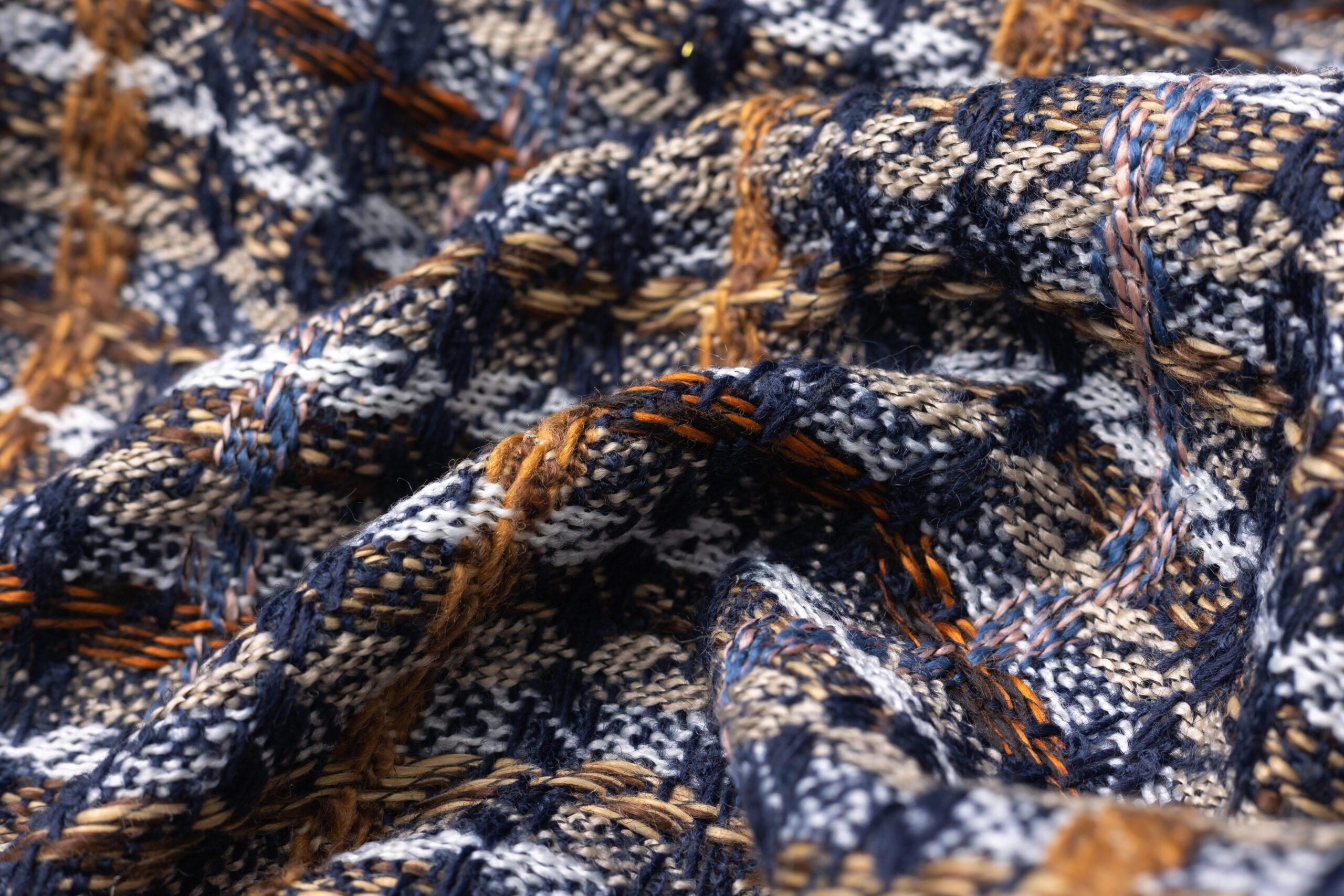
Stock Fabric: Speed and Low-Risk Testing
Stock fabric is a demand-validation tool, not a compromise. 100m rolls ship in 3–7 days, letting you test the market before committing to a custom run.
The 100m Test-and-Learn Model
Most emerging designers we work with begin with a 100m roll of stock bouclé before they ever place a custom 300m order. The logic is simple: you don’t know if a silhouette will sell until you see it on a runway or in a pre-order campaign. Stock fabric eliminates the guesswork. You get identical construction — same yarn composition, same loop height range of 2mm to 8mm, same 250–600 gsm weight — as our custom line, but with zero development fees and a lead time measured in days, not weeks.
Three Scenarios Where Stock Fabric Wins
- Capsule collections: Buy 100m to produce 15–20 units across 2–3 SKUs. Test the price point and sell-through rate before scaling to a full season line.
- Pre-order tests: Launch a social media campaign with a sample garment made from stock fabric. If the pre-orders hit 200m, you now have validated demand to justify a custom run. If they don’t, you’re only out the cost of one roll.
- Emergency fill-ins: A bestseller runs out of stock and your custom order is still 3 weeks out. Grab a matching 100m roll from inventory to bridge the gap without losing retail placement.
From Stock to Custom Without Wasted Capital
The real financial mistake isn’t buying stock fabric — it’s jumping straight to a 300m custom run without testing. We’ve seen brands burn a significant investment on custom development for a style that sold 40 meters. A 100m stock roll at our pricing keeps your risk under a significant amount. If the style works, you take the data to your next custom order: color lock, weave lock, exclusive rights to the texture. Stock fabric doesn’t delay your brand identity. It insures you against betting on the wrong one.
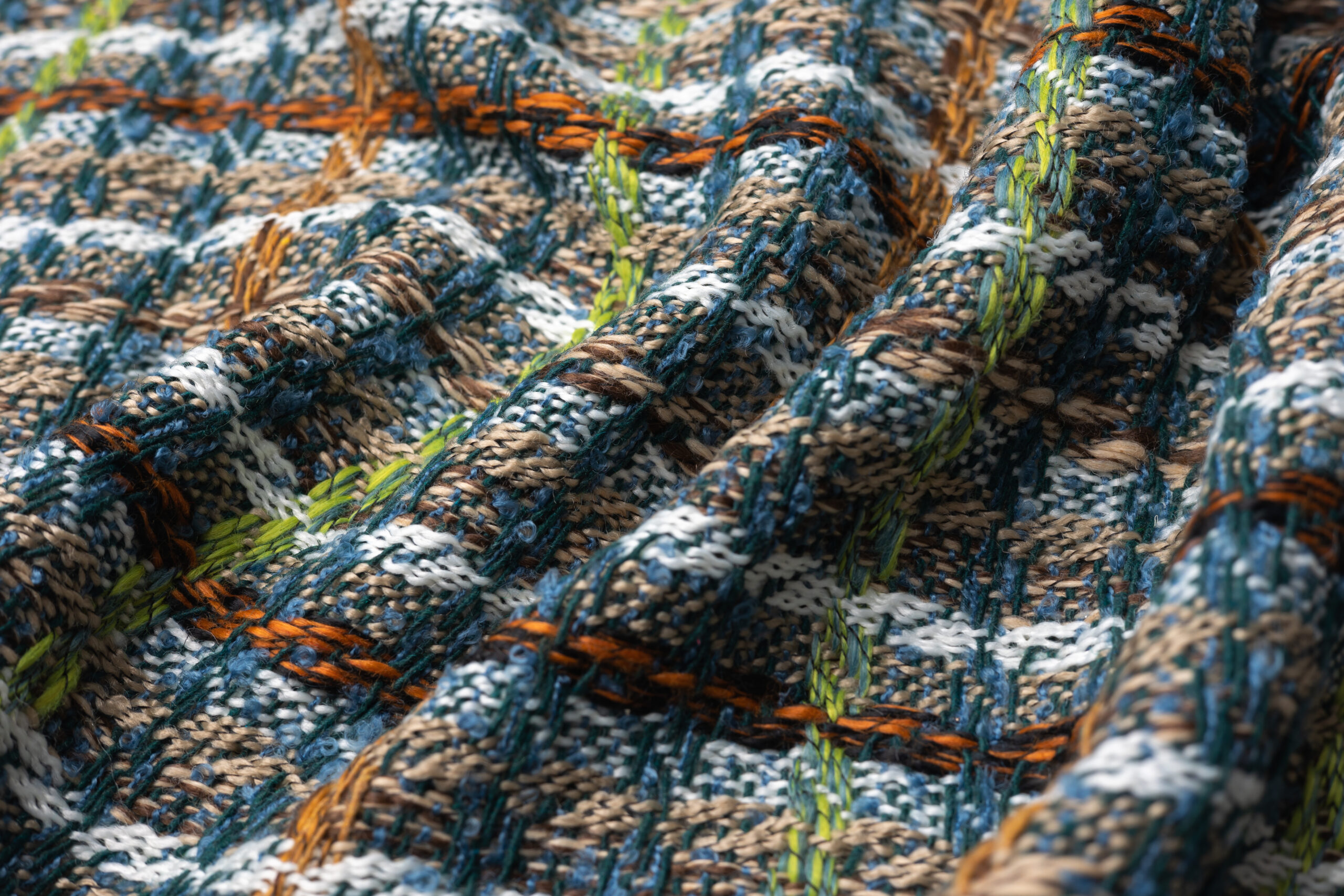
Cost Comparison: Custom vs Stock Bouclé
Stock bouclé at 100m MOQ ships in 3–7 days with zero development fees. Custom bouclé at 300m MOQ costs significant savings than European mills but adds 4–6 weeks lead time. Your decision hinges on whether you need speed or exclusivity.
The Cost Per Meter: Where the Bulk Savings Actually Live
The per-meter price gap between stock and custom is narrower than most brand owners assume, but the upfront commitment changes the math. For stock bouclé at a 100m MOQ, you’re looking at a higher unit price because you’re covering the mill’s overhead on a small batch. The trade-off is zero development fees—you pick a ready roll, pay per meter, and ship in 3–7 days. This makes stock ideal for a debut collection or a quick seasonal fill-in.
Custom bouclé flips the equation. At a 300m MOQ, the per-meter price drops significantly because we amortize the development work across a larger production run. The real differentiator is the full-roll savings versus buying stock multiple times. A designer who commits to 300m of a custom shade effectively locks in a 30–50% cost advantage over repeating small stock orders. These savings come from direct mill sourcing in Wenzhou, where hand-loom techniques—wool, mohair, alpaca, silk blends—achieve the same loop structures as premium European mills without the 2–3x markup for “artisan” branding.
Development Fees vs. Hidden Sampling Costs
This is where the decision gets tricky. Stock bouclé has no development fee. You request a swatch, we cut it from inventory, and you either approve it or move on. The hidden cost is limited availability—if a stock color is discontinued or sold out, you have no recourse.
Custom bouclé carries a development fee, but our 7-day rapid sampling de-risks the upfront cost. The process works like this: you send an inspiration image or Pantone reference, we produce a physical swatch within seven days, and we confirm the color match using a digital spectrophotometer (ΔE ≤ 1.5) before cutting. The fee is a fraction of what European mills charge because our sample lab runs parallel to production. That fee covers the yarn sourcing and loom setup for your unique yarn composition—whether that’s 60% wool and 20% mohair or a Lurex accent.
The hidden risk in custom is the dye-lot consistency across the full 300m run. We guarantee a ΔE ≤ 1.5 tolerance, but that requires a single continuous production batch. If your brand plans to reorder the same custom color six months later, we retain the spectrophotometer readings to replicate it, but this is standard procedure for any serious bouclé fabric manufacturer handling custom orders.
MOQ Thresholds and the “Test and Learn” Bridge
Many luxury brands start with stock bouclé for a debut collection, then migrate to custom once demand is validated. The 100m stock MOQ is not a compromise—it’s a risk management tool. You test a silhouette with 100m of ready-stock Chanel-style bouclé, confirm sell-through, and then commit to 300m of a custom weave that your competitors cannot replicate.
This “test-and-learn” bridge matters because locking your cash into 300m of a texture that might not sell is the primary fear of emerging designers. The framework is simple:
- Stock path (100m, 3–7 days): Use for capsule launches, trend validation, or sample production for buyers. Zero development fee, lowest risk, highest per-meter cost.
- Custom path (300m, 4–6 weeks): Use for full collection runs, signature textures, and brand exclusivity. Higher upfront commitment, lower per-meter price, and the ability to trademark a weave or color.
Lead Time: The Silent Budget Killer
Speed is the hidden variable that most cost comparisons ignore. A stock order ships in 3–7 days. That means you can go from design to garment production in under two weeks. For a brand chasing a tight seasonal window or needing a quick refill, stock eliminates the risk of missing retail deadlines.
Custom bouclé requires 4–6 weeks from design lock. That includes yarn sourcing, loom setup, sampling, color confirmation, and full production. If your design team is still finalizing silhouettes, those four weeks can slip into eight. The cost of that delay—missed wholesale appointments, canceled pre-orders—can easily offset the per-meter savings.
The pragmatic approach: stock for speed, custom for signature. Both are viable, but only if you align the route with your actual seasonal calendar.
| Feature | Stock Bouclé | Custom Bouclé | Strategic Value |
|---|---|---|---|
| Minimum Order Quantity & Risk | 100 meters (ready stock, ship 3-7 days) | 300 meters (bespoke, design-lock required) | Test market viability vs. build exclusive brand DNA |
| Per-Meter Cost (vs. European Mills) | Competitive market pricing (no development fee) | significant savings than European equivalents | Affordable luxury margin protection |
| Lead Time to Delivery | 3-7 days from order | 4-6 weeks from design approval | Speed for tight seasonal windows vs. crafted uniqueness |
| Sample Turnaround | Immediate physical swatch from existing rolls | 7-day rapid sampling (digital color match included) | Validate concept in a week without delaying production |
| Exclusivity & Intellectual Property | Shared design – no trademark protection | Design lock + legal ownership of weave and color | Prevent copycats; strengthen brand identity |
Exclusivity and Legal Protection
If you cannot legally lock a weave structure, your “exclusive” collection is just a heads-up for the copycats. Ownership starts at the mill.
Negotiate Exclusivity Clauses That Actually Hold
Most designers sign a generic NDA and assume their custom bouclé is protected. That assumption gets tested the moment a competitor walks into the same mill asking for “something similar.” The fix is a design lock clause written directly into the production contract. This clause specifies that the exact yarn composition, loop height range (2mm–8mm), fabric weight (250–600 gsm), and color formula (digital spectrophotometer with ΔE ≤ 1.5) belong to your brand exclusively for an agreed period — typically 12 to 24 months. Without those four parameters locked in writing, the mill can legally reproduce a near-identical fabric for another buyer using slightly adjusted yarn counts or a different colorway. We have had brands come to us after losing exclusivity on a signature texture because their previous supplier’s contract only covered “color and pattern,” not the underlying yarn recipe and weave architecture.
Owning the Textile Design Means Owning the Recipe
Copyright registration for fabric patterns protects the visual surface — the loops, the slubs, the Lurex hits. It does not protect the construction data: the exact blend of wool, mohair, alpaca, silk, rayon, and cotton, the tension settings on the loom, or the finishing sequence that gives your bouclé its specific drape and hand feel. That construction data is what makes a fabric truly irreproducible. When you work with a custom development partner like Fursone, the design lock paperwork transfers ownership of that full manufacturing specification to you. The mill retains the right to produce, but not to sell your recipe to a third party. For creative directors building a house aesthetic around a proprietary texture — a 600 gsm bouclé with a signature 8mm loop and rose gold Lurex accent — this lock is the difference between a season-defining fabric and a commodity that shows up at fast-fashion retailers within 12 months.
Signed Design Lock Paperwork and 24-Hour QC Alerts
The paperwork side of the design lock is straightforward: a signed document that lists the yarn recipe, color reference codes, loop height tolerances, and weight range, with a clause that the mill cannot reproduce or sell this specific combination to any other buyer. But paperwork alone does not guarantee exclusivity — you need production-line verification. The process we follow for every custom bespoke order (300m MOQ) ties the design lock directly to the QC workflow. Once the design is locked and the 7-day rapid sampling is approved (including digital color match confirmation), we activate a 24-hour QC alert system on that specific production batch. Every shift, the QC team checks the fabric against the locked parameters and logs the results. If a yarn lot substitution is required mid-run, the system alerts the brand owner for approval before any change hits the loom. This prevents the common scenario where a mill runs out of a specific mohair lot and silently substitutes a different batch, altering the hand feel and color balance of your exclusive fabric. The 24-hour alert window means you are notified within one shift of any deviation, and you have veto power before production continues. That is the difference between owning a design on paper and owning it in practice.
Sampling: The 7-Day Rapid Sampling Advantage
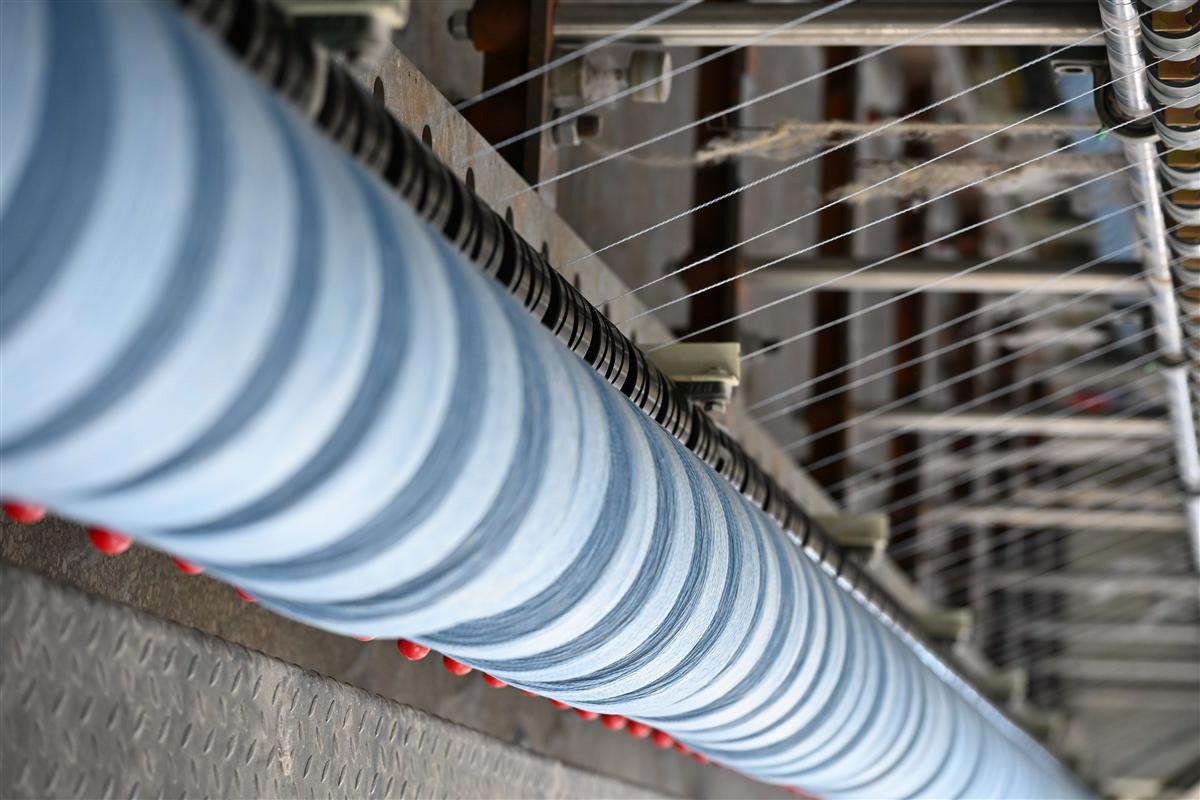
Most mills take 3–5 weeks to send a first sample. We deliver a physical swatch in 7 days on custom orders, including a digital color match lock before we cut.
The Two Paths to a Sample: Custom vs. Stock
The 7-day program covers two distinct scenarios, and the process differs depending on which route you choose. If you are developing a custom bouclé, you start by approving a digital color match. Our lab uses a spectrophotometer to measure your Pantone or brand reference, then sends you a digital rendering for approval. Once you confirm the color, we move to loom and ship a physical sample within the same 7-day window. This eliminates the back-and-forth of shipping physical prototypes that miss the mark on hue. If you are sourcing from our ready-stock inventory, the process is even simpler — you order individual meters directly from our stock catalog, and the sample ships within 3–7 days. No approvals needed.
Why 7 Days Matters More Than the Price
For a fashion brand, missing a seasonal window is not a budget problem — it is a revenue problem. If your Spring/Summer collection arrives in June instead of March, markdowns eat 30–40% of your margin. The 7-day sampling cycle compresses your development timeline by three weeks compared to the European mill standard. That means you can lock a fabric, cut a sample garment, and have it in a fit model’s hands before your competitor’s mill has even acknowledged the inquiry. For a Creative Director who needs to see the loop structure in natural light before approving bulk production, this speed is not a luxury — it is the difference between hitting the season or sitting it out.
The Real Cost of a Slow Sample Round
Emerging designers often underestimate the hidden cost of slow sampling. A typical European mill sequence goes: request sent, 10 days to acknowledge, 14 days to weave, 7 days to ship. That is 31 days minimum for a first sample. If the color is off by 2% (and with European mills, ΔE tolerances can drift to 3.0 or higher), you repeat the cycle. Now you are 60 days in with nothing to show. Our protocol uses a digital spectrophotometer with ΔE ≤ 1.5 tolerance, and the 7-day turnaround includes a re-spin if the first physical sample does not match the approved digital reference. We do not reset the clock on revisions — we absorb the adjustment within the same week. That is a structural advantage, not a marketing line.
Conclusion
The choice between stock and custom bouclé comes down to risk tolerance and brand stage. Custom bouclé locks your texture, color, and weave structure so no competitor can copy your season’s story. Stock fabric gets you to market in 3-7 days with zero development fees. One doesn’t eliminate the other: many brands test a debut collection on stock 100m rolls, then shift to custom development after proof of demand.
You don’t have to guess which path fits. Compare the exact MOQ tiers, lead times, and per-meter cost differences on our side-by-side pillar page — then request a sample of either route to see the loop structure and hand feel yourself.
Frequently Asked Questions
Is bouclé considered luxury?
Yes, bouclé is a definitive hallmark of luxury fashion, prized for its intricate looped texture and artisan weaving that demand skilled craftsmanship. Iconic houses like Chanel have cemented its status, making it synonymous with prestige and exclusivity. Fursone delivers this premium aesthetic with European mill quality at 30–50% lower cost, allowing luxury brands to maintain high-end positioning while improving margins.
Disadvantages of bouclé?
Bouclé fabric can be more delicate due to its looped construction, making it prone to snagging and requiring careful handling. Traditionally, high minimum order quantities and long lead times from European mills posed additional challenges. Fursone addresses these disadvantages with a 300m custom MOQ to minimize financial risk, 7-day rapid sampling for faster iteration, and affordable pricing that reduces the cost barrier without sacrificing quality.
Which fabric makes you look rich?
Bouclé fabric, particularly in the Chanel-style tweed form, is widely recognized as a marker of wealth and sophistication due to its textural depth and association with high-end fashion houses. Its dimensional loops and varied yarns create a rich, artisan look that instantly elevates any garment. Fursone’s premium bouclé enables fashion brands to project that luxurious image, delivering the same visual impact as European mills at a fraction of the cost.
Chanel: tweed or bouclé?
Chanel uses both, but their signature jackets are crafted from bouclé tweed—a hybrid that combines the woven structure of tweed with the looped yarns of bouclé for a unique, tactile surface. This fabric is central to the brand’s iconic aesthetic, offering a textured, dimensional look that defined Coco Chanel’s legacy. Fursone specializes in this exact Chanel-style bouclé, offering 100m ready stock for rapid deployment and 300m custom solutions for exclusive collections.
Bouclé out of style?
No, bouclé remains a timeless and continually relevant fabric in luxury fashion, consistently featured on runways and in premium collections year after year. Its classic elegance and versatility allow it to adapt to contemporary trends while retaining its heritage appeal. Fursone’s sustained investment in bouclé—with in-stock materials shipping in 3–7 days and custom bespoke options—confirms the fabric’s enduring demand and market stability.
}, ]}
Authoritative References

Related Insights

How to Compare Fabric Quotes from Three Mills: A Side-by-Side Method
Three mills return three quotes for the same fabric brief, and the spread between them...

CNY Capacity Planning: Booking a Fabric Mill Around Chinese New Year
Every year, fabric buyers lose the same three weeks to the same event: Chinese New...

Second-Source Strategy: How Brands Qualify a Second Tweed Mill
Single-sourcing a signature fabric feels efficient right up to the season it fails: the mill’s...