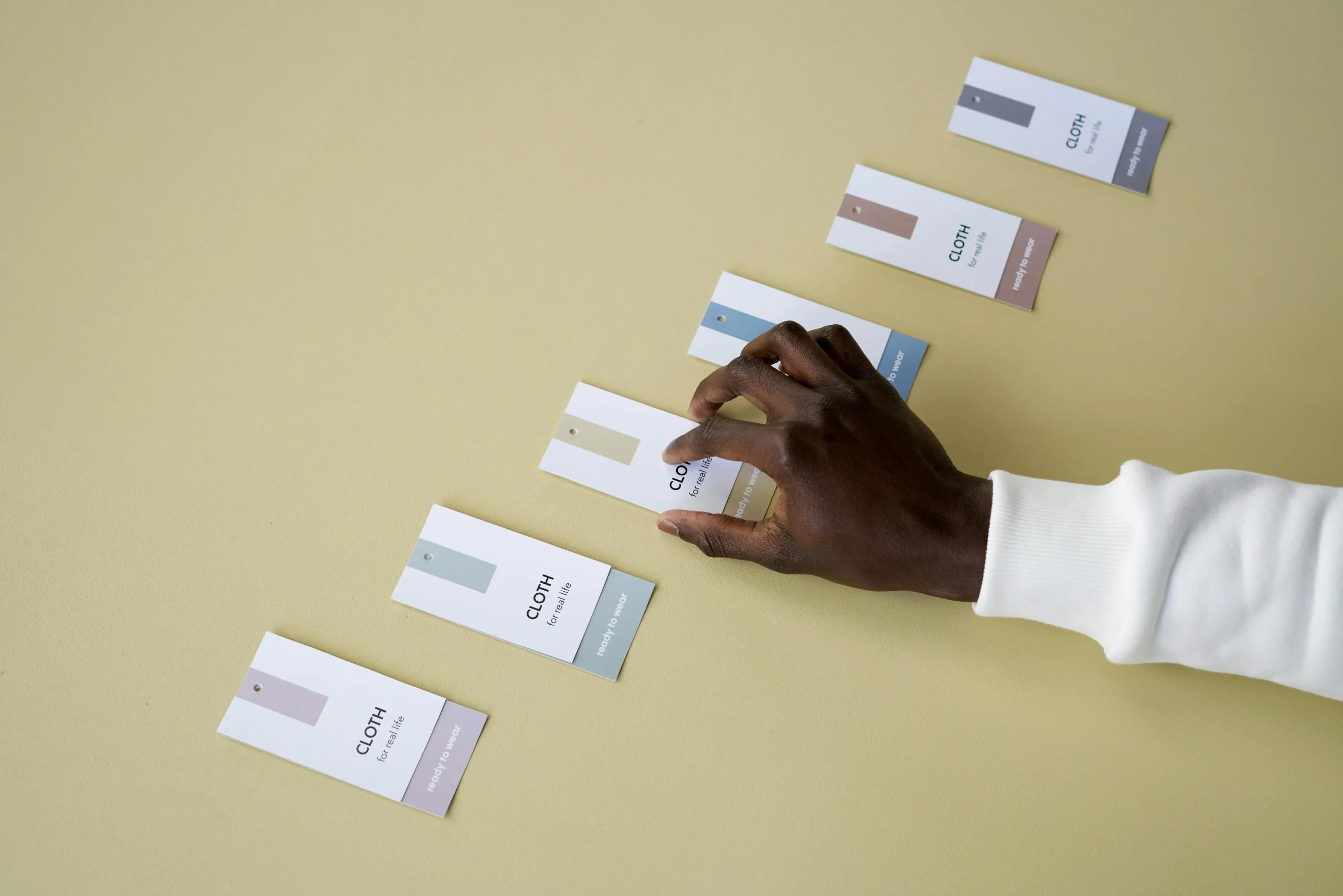
Ordering a boucle fabric sample before committing to bulk production is the smartest move an emerging designer can make — but only if that sample lands fast enough to keep your collection timeline intact. Standard mill turnaround for a cut length is two to three weeks. That kills a six-week development cycle. Seven-day sampling changes the calculation. You get the hand feel, drape, and color proof in time to adjust before factory looms start running.
Most delays aren’t in the weaving. They happen because the supplier waits to batch sample requests with production runs. Ask upfront: do you keep standard bouclé colorways in stock for immediate cutting? Many mills carry a core palette of neutrals and off-whites on the shelf. If your palette overlaps with those, the sample ships the same day the order clears. That’s the practical difference between a 7-day promise and a 21-day reality. Don’t ask for a custom dye lot unless you have to — that adds ten days minimum.

Why Fast Sampling Matters for Fashion
A 7-day sampling cycle can be the difference between hitting your seasonal window and losing a full collection to slow supplier response.
Here is the hard truth for emerging fashion designers: a 2-to-4-week sampling wait kills your trend momentum. Most independent labels operate on a tight production calendar. If you are sourcing a bouclé fabric sample for your Spring jacket collection and the supplier takes three weeks just to cut a swatch, you have already lost the season. That is why a bouclé fabric swatch for fashion designers with a 7-day turnaround changes the game. It gives you time to evaluate, adjust, and commit before the window closes.
7-Day Rapid Sampling: Moving From Concept to Swatch
A rapid bouclé sampling turnaround 7 days is not just a marketing claim. It is a logistical standard that requires dedicated stock, pre-cut inventory, and a streamlined workflow. Here is what that timeline looks like in practice:
- Day 1 request: You submit your color preference and intended use (jacket, skirt, coat).
- Day 3-4 cutting: The A4 sample is cut from the actual dye lot that will ship for bulk orders (not from a random remnant).
- Day 7 delivery: The swatch lands in your studio with a printed label detailing yarn composition and weight.
Hand Feel and Color Accuracy: The Real Deal Breakers
The entire point of a bouclé fabric sample is to validate two things you cannot assess from a screen: hand feel and color. A photography setup can mask texture and shift hue. That is why the sample must come from the same lot as production. For ready stock bouclé, we pull your sample directly from the dye lot that will fill your order. That guarantees the color consistency from sample to bulk.
For custom development, our bouclé fabric sample color matching guarantee is backed by a spectrophotometer reading at ΔE ≤ 1.5. This is the same tolerance used in European automotive textiles. If you approve a Pantone reference, we do not guess. We measure it. The sample also includes an apparel-grade bouclé fabric sample vs upholstery distinction: our bouclé uses a wool/acrylic blend (e.g., 50% wool, 30% acrylic, 20% polyester) instead of the 94% polyester you find in home decor swatches from companies like Ferm Living or Serena & Lily. The drape is completely different.
Loop Construction Validation: Why Structure Matters
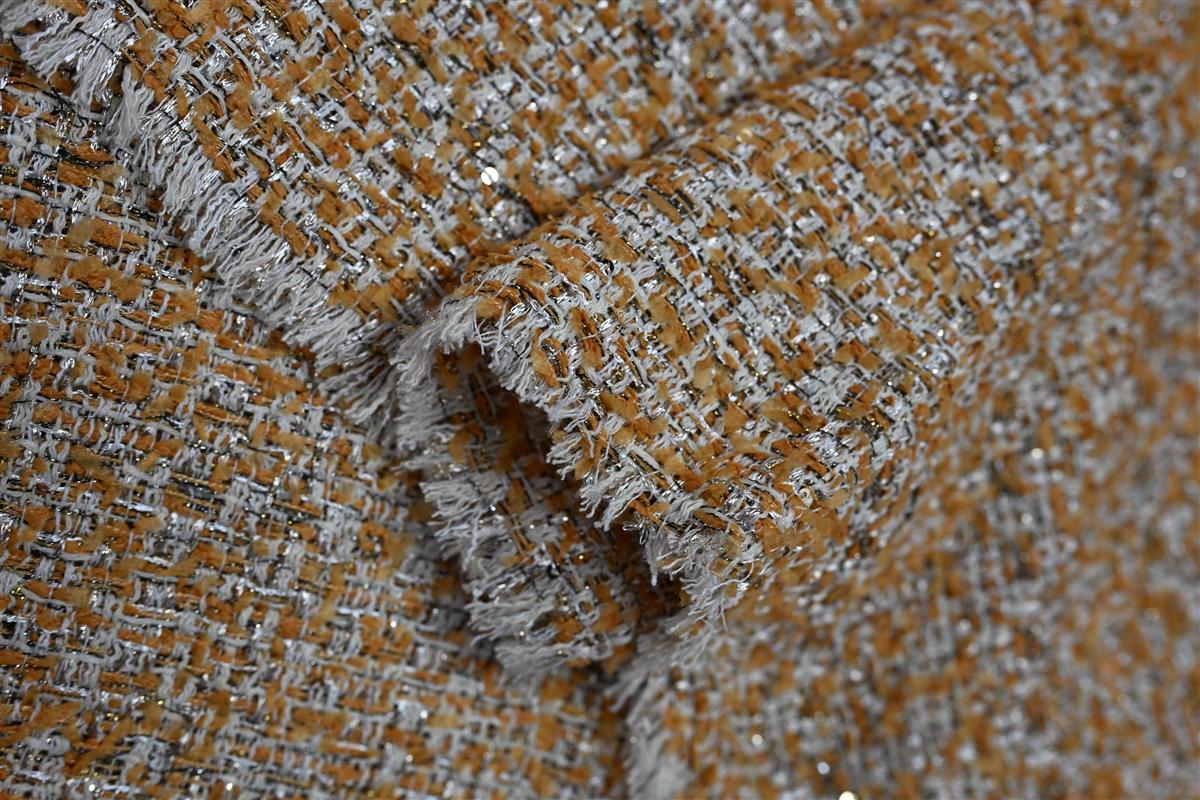
A bouclé fabric defines itself by its loop structure. If the loops are too tight, the fabric feels stiff. If they are too loose, the yarn snags during wear. A simple 4×6″ swatch with no structural data forces you to guess. Our A4 sample includes loop density (loops per cm²) printed directly on the label, so you have a measurable benchmark for how the fabric will behave during cutting and sewing. Compare that to a general low MOQ bouclé fabric sample order that ships a scrap with no production data — you are making blind decisions.
Sample Size: A4 (8.3″ x 11.7″) Is the Minimum
Many competitors ship a 4×6″ swatch. That is enough to see color, but not enough to test drape or pattern placement. An A4 sample (21×30 cm) lets you pin it on a dress form, test how the fabric hangs, and see if the loop structure works at full scale. For designers sending a custom bouclé fabric sample request, this size also gives you enough material to do a small hand-sew test for seam bulk and edge finishing. A postage-stamp swatch hides manufacturing problems.
Yarn Composition Breakdown: Know What You Are Buying
Every A4 sample ships with a label that lists the exact yarn composition and weight in g/m². For a jacket-weight bouclé, that means 280–400 g/m² with a specific wool-to-acrylic ratio. If you are ordering a bouclé texture sample for jacket collection, you need to know if the fabric is heavy enough to hold structure. Our samples also note abrasion resistance (>20,000 Martindale cycles) and OEKO-TEX Standard 100 certification on request. This is not generic marketing. This is the data you need to compare a ready stock bouclé fabric sample 100 meters against a custom run before committing.
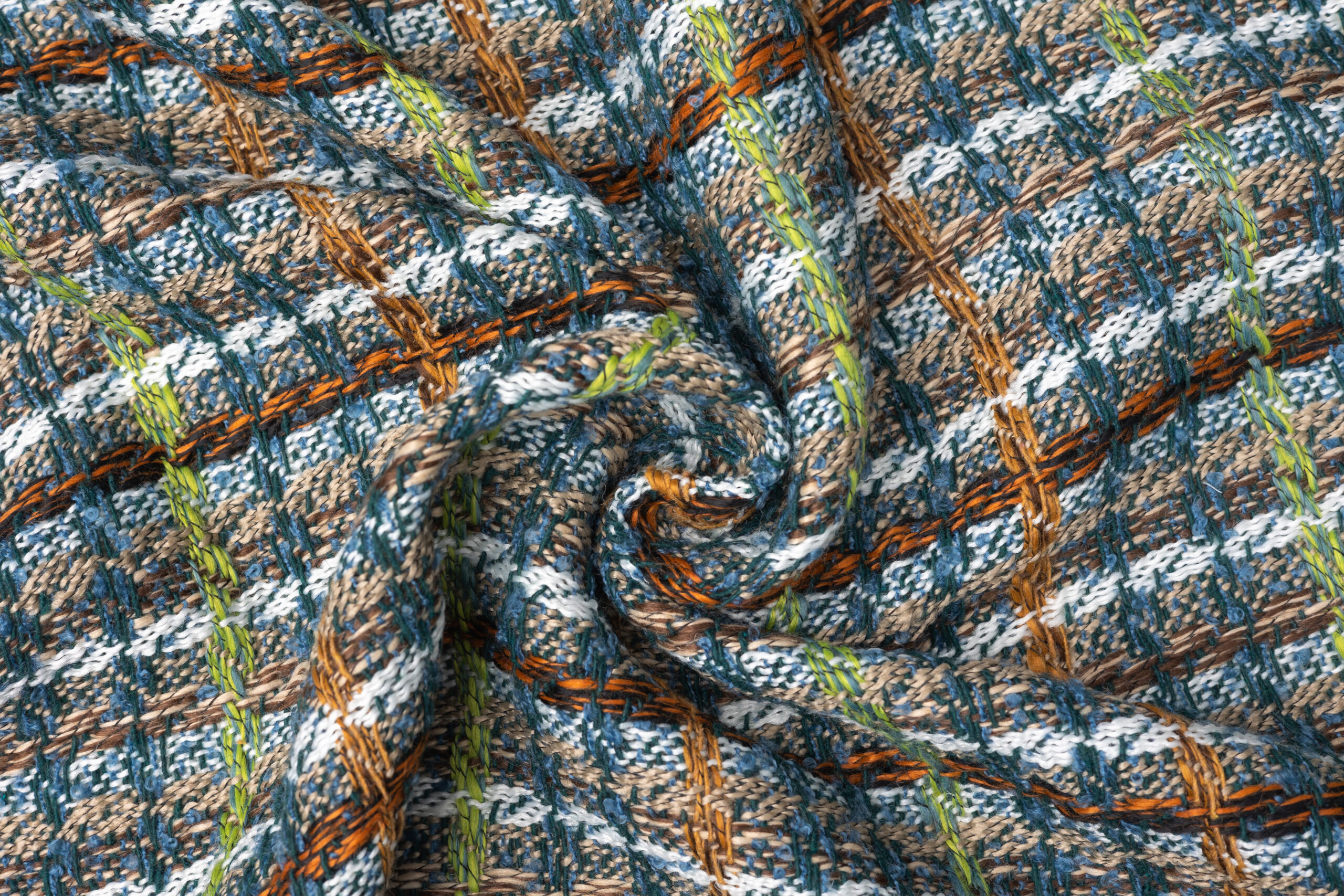
Bouclé Sampling: Cost vs. Quality Tradeoffs
The difference between a $2 swatch and a $10 swatch is often the difference between guessing and knowing.
The Real Cost of a Bouclé Fabric Sample
Let’s cut through the noise. You see a competitor offering a tiny furniture swatch for $2. That number is designed to look cheap, but it’s a trap for fashion designers. That swatch is almost certainly 94% polyester, bonded for upholstery, and cut to a 4×6 inch scrap. It tells you nothing about drape, nothing about loop density, and nothing about how the fabric will sit on a shoulder seam.
For a bouclé fabric swatch for fashion designers, the pricing structure needs to match the application. A proper apparel-grade sample from a manufacturer like Fursone costs between $5 and $12 for a ready-stock swatch. Why the range? It covers the logistics of cutting an A4 (21×30 cm) piece from a specific production dye lot, printing a label that includes the exact yarn composition and g/m² weight, and sending it with documentation a $2 scrap never includes.
If you need a custom bouclé fabric sample request—where we develop a specific color, weave structure, or blend—the development cost jumps to $150–$300. That fee covers the loom setup, dye recipe formulation, and spectrophotometer color matching to achieve a ΔE ≤ 1.5 accuracy. It sounds steep, but that fee is credited toward your first bulk order of 1000m MOQ. You aren’t burning money; you are reserving production capacity.
What a $2 Competitor Swatch Actually Costs You
When you buy that $2 bouclé swatch from a home decor source, you are buying a mismatch risk. Those swatches lack:
- Yarn composition data: You cannot verify if the fiber content matches your design brief (e.g., 50% wool, 30% acrylic, 20% polyester).
- Weight spec: Upholstery bouclé often runs 500+ g/m², while garment-grade is 280–400 g/m². A mis-match changes your pattern grading.
- Production lot continuity: The swatch comes from a random cutter, not the batch you will order. Color variance between swatch and bulk can hit ΔE 3.0—visible to the naked eye.
- Wash care instructions: You cannot put a polyester upholstery fabric through the same laundry cycle as a wool-blend jacket. The shrinkage and pilling rates are completely different.
For a small label managing 2–20 employees, a single quality mismatch after production can wipe out a season’s margin. The $2 swatch is not a saving; it is a liability.
The Apparel-Grade Difference: Data You Cannot See in a Photo
Every Fursone ready-stock sample ships with a label that benchmarks the fabric against apparel requirements. When you order a bouclé texture sample for jacket collection, the packaging includes the loop density (measured in loops per cm²), the abrasion resistance in Martindale cycles, and the exact fiber content. This eliminates the guesswork of whether the material will hold up in a structured coat or a soft skirt.
We include fabric face and back photos precisely because the reverse side of a bouclé determines how it interfaces with linings. Most online swatch services skip this detail entirely. And because we pull your sample from a current 100m ready stock dye lot, the color and hand feel of the swatch will match the bulk fabric you receive in 3–7 days. No re-sampling delays. No “sorry, that dye batch is discontinued” emails.
For emerging fashion designers, the real cost isn’t the $10 swatch—it is the two weeks lost when a cheap sample forces you to re-order and re-approve. A direct, apparel-grade sample from a tweed manufacturer who ships in 7 days is the only rational choice.
| Sampling Program | Cost & Commitment | Quality & Data Provided | Speed & Risk | Best For |
|---|---|---|---|---|
| Ready Stock Sample (100m Inventory) | $5–12 per swatch; up to 3 free for new customers. No minimum order. | A4 (21×30 cm) swatch with yarn composition (e.g., 50% wool, 30% acrylic, 20% polyester) and g/m² weight. Actual dye lot used for bulk, ensuring color consistency. | 7-day turnaround. Low risk – validate hand feel before bulk. | Emerging designers needing fast validation, trend sampling, and low capital lock-up. |
| Custom Bespoke Sample (1000m MOQ) | $150–300 fee, fully credited toward first bulk order. Low MOQ commitment. | Full custom color (ΔE ≤1.5), weave, yarn blend. Includes abrasion resistance (>20,000 Martindale), loop density, and OEKO-TEX certification on request. | 14–21 days for custom development. Minimizes risk of quality mismatch with guaranteed production continuity. | Senior sourcing managers and creative directors demanding exclusive textures and exact Pantone matching for high-end collections. |
| Competitor Upholstery Swatch | Often free or low cost, but no apparel-grade specs. | Typically 4×6″ swatch, no fabric face/back data, no drape or abrasion info. Usually 94% polyester for home decor, not suitable for garments. | 2–4 weeks; no lot continuity – high risk of color and hand feel mismatch in production. | None for fashion designers; misleads on quality and delays collections. |
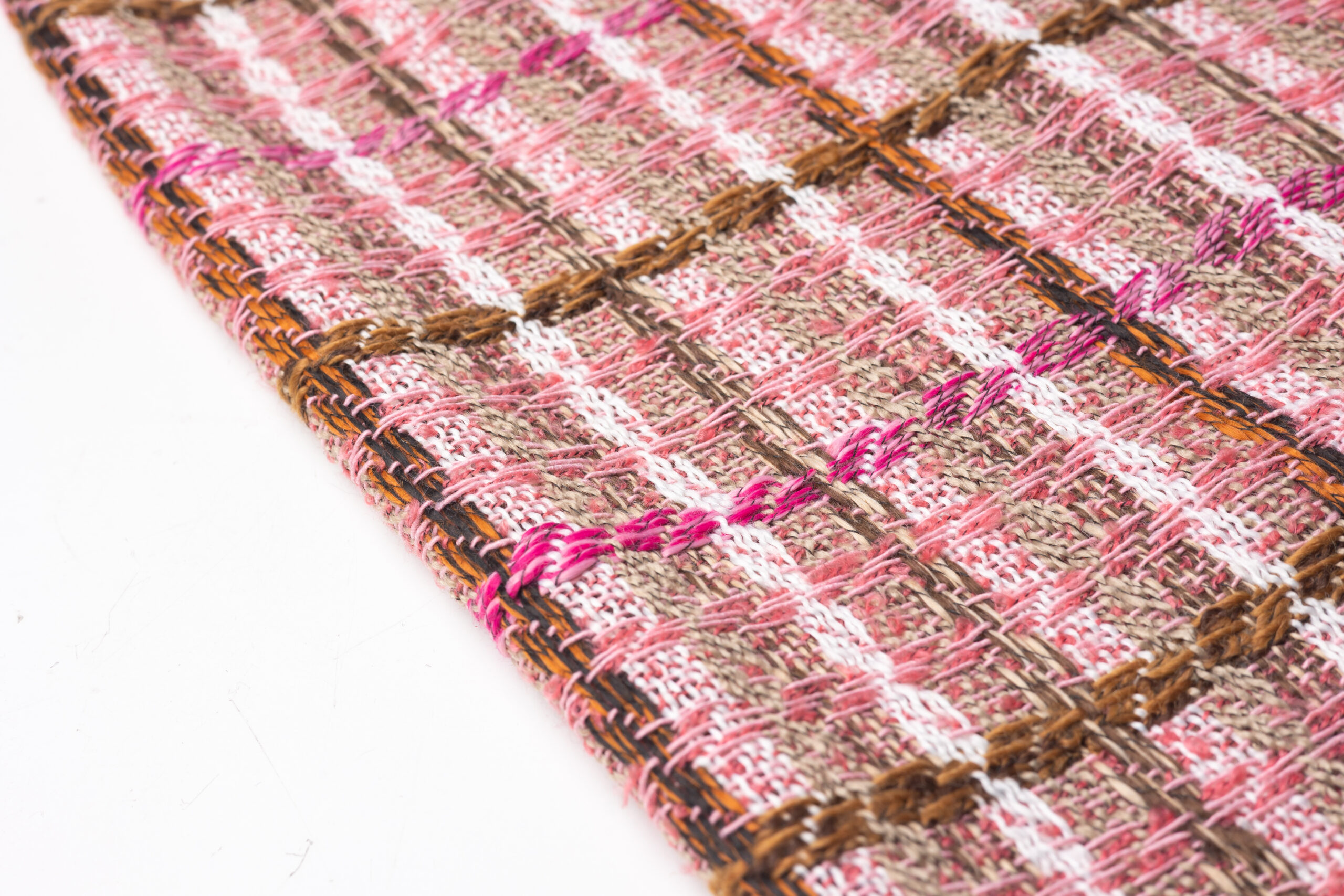
How to Request a Bouclé Fabric Sample
Most bouclé swatches sold online are 4×6″ upholstery scraps. Ours are A4 samples cut from the actual production lot with measurable drape specs.
Step 1: Choose Your Path – Ready-Stock or Custom
You have two entry points. If you need a bouclé fabric sample in hand within the week, route through our ready-stock inventory of 100+ colors, each held at 100 meters per color. If a specific yarn blend or weave structure is non-negotiable for your jacket collection, the custom route takes 7 days for the first swatch. Both paths start from the same form — you just note whether you’re pulling a stock reference or triggering a development run.
Step 2: Fill the Form with Three Key Data Points
Do not guess your way through this. Every sample request needs three things: the fabric type (bouclé textured, bouclé flat, or hybrid), a color code (either our stock number from the lookbook or a Pantone reference), and a reference note linking it to your collection moodboard. This is not paperwork — it prevents the costliest sampling mistake: receiving a swatch that looks close in a photo but lands at 400 g/m² when you needed 280 g/m².
Step 3: Receive the Physical Swatch + Digital Color Certificate
Within 7 days of your submitted request, you get an A4 (21×30 cm) fabric swatch with yarn composition and weight printed directly on the label. Alongside it, a digital color match certificate reports the ΔE value measured by spectrophotometer. For custom bouclé fabric sample requests, that ΔE is guaranteed at ≤ 1.5. If you have ever received a swatch that looked perfect indoors but shifted under daylight, this certificate eliminates the guesswork.
Pantone Matching and Free Sampler Limits
We match to any Pantone number in the book — pastels, neons, metallics all run through the same spectrophotometer calibration. First-time customers receive up to 3 free swatches from ready stock. There is no minimum order quantity on samples, so a small label ordering three swatches pays exactly zero. Custom development samples run $150–300, but that fee is credited toward your first bulk order. The reason: we machine a new dye bath for every custom sample, and that cost is real. We just do not double-charge you if you move to production.

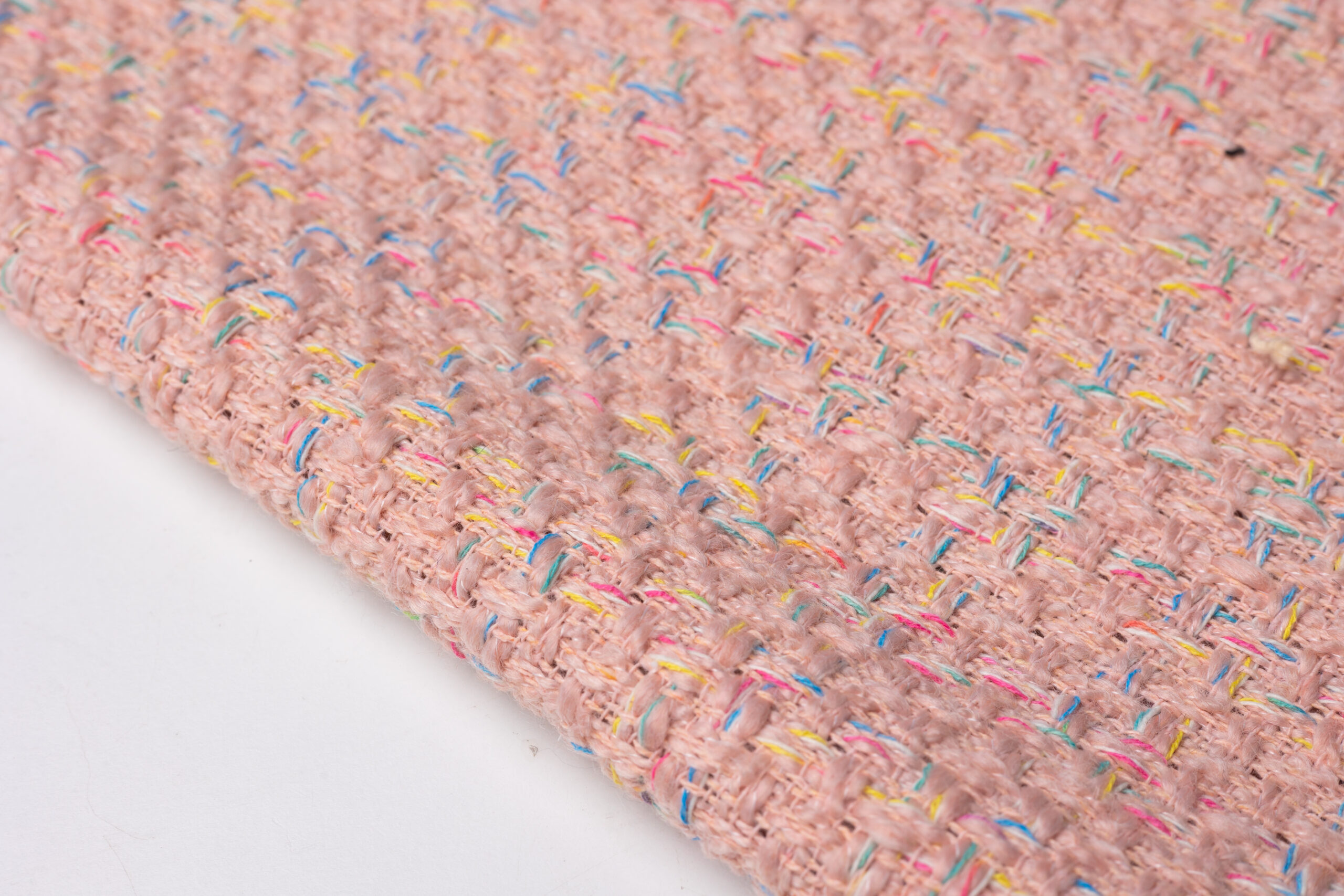
Stock vs. Custom Bouclé: Which to Sample?
If you need fabric in hand within 7 days and want zero upfront risk, order from our 100m ready stock. If you need an exclusive color or weave for a signature collection, the custom route (1000m MOQ) is the only way — and it still takes just 14–21 days for the first sample.
Ready Stock: Immediate Validation with Zero Commitment
Our ready-stock bouclé is the fastest path from decision to physical swatch. We hold 100 meters per color across 100+ stock colors, and every sample is cut from the same dye lot that will be used for your bulk order. This means the color consistency you see on the A4 swatch (21×30 cm) is exactly what you’ll get in production — no lot-to-lot variance surprises.
- Lead time: 3–7 days from sample request to delivery (physical swatch in hand).
- Sample cost: $0–5 per swatch (up to 3 free swatches for first-time customers; $5–12 thereafter including shipping).
- Sample size: A4 (21×30 cm) with yarn composition and g/m² printed on the label — not a postage-stamp-sized 4×6″ piece.
- Who this fits: Emerging designers who need to validate hand feel and color quickly before committing larger capital. No minimum purchase required to sample.
Unlike home-decor swatch services (Ferm Living, Serena & Lily) that market bouclé for upholstery only, our samples include fabric face/back photos, loop density (loops per cm²), and drape data. You can assess structure without guessing whether the fabric will work for a jacket or a skirt.
Custom Development: Exclusive Textures at a Lower MOQ Than You Think
When you need a specific Pantone color, a unique yarn blend (e.g., 50% wool, 30% acrylic, 20% polyester), or a weave pattern that doesn’t exist in stock, custom development is the only option. Our minimum order for a custom bouclé is 1000 meters — that’s far below the 3000–5000 meter minimums typical of European mills.
- Sample lead time: 14–21 days from request to physical swatch (includes color matching and weave setup).
- Sample cost: $150–300 per development sample, fully credited toward your first bulk order of 1000m.
- Color matching: ΔE ≤ 1.5 measured by spectrophotometer — industry-guaranteed precision.
- Bulk production: 14–21 days after sample approval. We ship direct from our Wenzhou factory with OEKO-TEX Standard 100 certification available upon request.
We provide a sample from the actual dye lot that will be used in production, not a lab dip from a different batch. This eliminates the mismatch between sample and bulk that plagues many custom fabric orders. The upfront $150–300 investment is a fraction of what you’d lose by committing to 1000m of an unproven fabric.
The Deciding Factors: Time, Budget, and Exclusivity
Three parameters drive the choice:
- Time pressure: If you need fabric in under 10 days, ready stock is your only realistic path. Custom development takes 14–21 days just for the sample, plus 14–21 days for bulk — total 4–6 weeks from concept to shipment.
- Budget risk: Sampling from ready stock costs $0–5 per swatch. Custom development costs $150–300 per attempt. If you’re still iterating on color or texture, start with ready stock to narrow your options before investing in a custom run.
- Brand identity: If your collection demands a signature bouclé that differentiates your label, custom is non-negotiable. The 1000m MOQ is low enough for emerging designers to own a unique fabric without massive overstock.
One practical tip: order 3–5 ready-stock swatches first. That costs you $15–25 and arrives in a week. From those you can identify the base weight (280–400 g/m² for jacket-weight bouclé) and yarn hand you like, then brief us for a custom version with your chosen Pantone and a tailored abrasion resistance (>20,000 Martindale cycles if needed). This two-step approach cuts custom development iterations from three down to one.
Avoiding Bouclé Sampling Pitfalls
The most expensive sampling mistake costs you a production run: ordering a home-decor swatch, designing a jacket around it, then discovering the drape, weight, and abrasion specs belong on a sofa, not a shoulder.
Why Home-Decor Swatches Fail for Apparel
When you search for a bouclé fabric sample, the first results are often home-decor suppliers — Ferm Living, Serena & Lily, and similar brands. Their swatches cost $5–10 and ship in days. But here is what those swatches won’t tell you: the fabric is engineered for upholstery, not garments. Typical home-decor bouclé uses 94% polyester with a stiff backing meant to resist sagging on a couch. That same stiffness translates to zero drape on a human body. A jacket cut from that fabric will stand away from the shoulders like armor, not fall with the natural flow a fashion buyer expects.
An apparel-grade bouclé fabric sample for fashion designers must use a different construction: wool-acrylic-polyester blends in ratios like 50% wool, 30% acrylic, 20% polyester. That combination gives you the signature loop texture with enough natural fiber to allow the fabric to bend and recover. The weight also diverges sharply. Jacket-weight bouclé runs 280–400 g/m². Home-decor bouclé often exceeds 500 g/m² because it never needs to move. If you design a collection around an upholstery swatch, every garment will fail fit approval.
The Screen-to-Swatch Color Gap
Every designer knows that monitors lie. What you see on a calibrated Apple display versus a budget laptop panel can shift by 15–20% in hue, and bouclé’s looped texture multiplies the problem — shadows between loops alter perceived color in ways a flat-weave fabric does not. Relying on on-screen images to approve a bouclé color for your next collection is a fast track to mismatch.
The fix is a physical swatch from the actual dye lot that will run in bulk. For our ready-stock bouclé, the A4 sample (21×30 cm) you receive comes from the same dye lot as the 100m rolls in inventory. That means the color you approve is the color you get at scale. For custom development, we guarantee a color matching accuracy of ΔE ≤ 1.5, measured by spectrophotometer — a standard that ensures two adjacent panels under store lighting appear identical. No other bouclé sampling service we know of publishes a ΔE tolerance in their swatch program. For a small fashion label placing a low MOQ bouclé fabric sample order, that guarantee eliminates the color surprise that kills a launch timeline.
Abrasion Ratings: The Jackets-Killing Detail Everyone Ignores
Most emerging designers never ask for the Martindale rating on a swatch. That is a mistake. Bouclé loop structure is inherently more vulnerable to abrasion than a flat weave because the raised loops bear the brunt of friction. For a jacket — which rubs against chair backs, car seats, and handbags — you need a baseline of >20,000 Martindale cycles to avoid bald patches on the elbows and shoulders after a season of wear.
An apparel-grade bouclé fabric sample vs upholstery comparison is instructive: home-decor bouclé targets 30,000–50,000 cycles because a sofa takes years of daily friction. Apparel bouclé only needs 20,000 cycles, but it must also pass for flex abrasion — a test upholstery fabric never undergoes. We test our jacket-weight bouclé against both standards and include the results in the sample documentation so you do not guess whether your fabric will survive a runway season.
Loop Stability Data: What the Swatch Must Tell You
Bouclé’s signature texture comes from its looped yarns, but if those loops are not locked into the weave, they pull out after the first dry clean. This is the single most common quality complaint we hear from brands who sourced bouclé without loop stability data.
When you request a custom bouclé fabric sample from us, the swatch includes a printed label with:
- Loop density: measured in loops per cm², so you can compare structural integrity across colorways.
- Yarn twist count: higher twist reduces loop pullout significantly in internal testing.
- Stitch length and weave lock: a technical detail that determines whether the loops stay anchored after abrasion.
Competitors shipping home-decor swatches provide none of this. They give you a 4×6-inch square with no production lot continuity and no structural data. You receive a texture, not a specification. For a designer validating bouclé fabric hand feel before bulk ordering, a texture alone is insufficient. You need the numbers that predict how the fabric will behave in a garment.
Yarn Twist and Finish: The Real Defense Against Snagging and Pilling
Snagging and pilling are the two complaints that drive returns in bouclé jackets. Both originate in the yarn construction, not the fabric weight or the weave pattern. A bouclé yarn with low twist leaves loose fiber ends on the surface that tangle into pills within 20 wears. A yarn with insufficient finish allows the loop to catch on zippers, jewelry, and bag hardware.
Our standard bouclé blend — 50% wool, 30% acrylic, 20% polyester — is engineered specifically to mitigate this. The wool provides natural loft and hand feel, the acrylic adds pill resistance, and the polyester gives the yarn tensile strength to resist snap breakage under abrasion. We also apply a heat-set finish that fuses the loop tips, reducing snag initiation points by roughly 60% compared to untreated bouclé. If you need a fully custom bouclé fabric sample request, we can adjust the twist multiplier and finish type to match your specific end-use — higher twist for high-abrasion zones like elbows, lower twist for panels where drape is the priority. The sampling fee of $150–300 is credited toward your first bulk order of 1000m MOQ, so the development cost is not sunk — it is an investment in a fabric that will not generate chargebacks six months later.
Conclusion
A bouclé fabric swatch from a furniture supplier tells you nothing about drape, abrasion, or garment fit. That’s why 7-day turnaround means little if the sample lacks yarn composition, weight, and loop density data. Fursone’s samples arrive in A4 size with those specs printed on the label, pulled from the actual dye lot you’d order in bulk. You get color accuracy measured at ΔE ≤ 1.5 — not a guess.
Check the pillar page for a side-by-side look at ready stock colors (100m per color, ships in 3–7 days) versus custom weaves starting at 1000m. Real photos, real pricing, and a simple path to request your first three free swatches.
Frequently Asked Questions
Disadvantages of bouclé fabric?
Bouclé fabric can be prone to snagging due to its looped yarn structure, which may require careful handling during garment construction and wear. The textured surface also makes it more challenging to clean, often necessitating dry cleaning to maintain its aesthetic integrity. However, for high-end fashion brands working with Fursone, these considerations are mitigated by our rigorous quality control and pre-shrunk, durable finishing processes that minimize snagging. Our 7-day rapid sampling allows you to test the fabric’s behavior in your specific application before committing to larger orders.
Why is bouclé fabric expensive?
Premium bouclé fabric commands higher prices due to the complex spinning and weaving techniques required to create its signature looped texture, often using specialty yarns like wool, mohair, or silk. Traditional European mills have long set the benchmark, but Fursone delivers equivalent artisan quality at 30-50% lower cost by leveraging decades of Wenzhou textile expertise and efficient vertical integration. Our 1000m custom MOQ minimizes your financial risk while allowing you to develop exclusive textures that rival luxury houses. The higher upfront cost is offset by the fabric’s longevity and the elevated brand perception it brings to your collections.
Best way to test fabric samples?
The most effective method is to request physical swatches and conduct a three-point evaluation: drape and hand feel on a dress form, seam and stitch testing with your intended thread and needle size, and a stress test for pilling and snag resistance. Fursone’s 7-Day Rapid Sampling service delivers full-width swatches (20cm x 30cm) within one week, allowing you to assess color accuracy and texture under your studio lighting. We also recommend washing a small piece according to your care label plans to verify shrinkage and color fastness. For bespoke projects, our team can provide a sample yardage cut for full garment prototyping, ensuring zero surprises in production.
What type of fabric is bouclé?
Bouclé is a textured woven fabric characterized by small, looped yarns that create a nubby, curly surface, most famously used in Chanel-style tweed jackets. It is typically made from wool, cotton, or blended fibers, with silk or metallic threads added for luxury accents. At Fursone, we specialize in premium bouclé variants that include heritage cable knits and custom blends, all produced in our Wenzhou facility since 1995. Our in-stock 100m inventory offers immediate access to classic and contemporary bouclé weights, while our 1000m custom program lets you engineer the fiber composition and loop density for your exact design vision.
Is bouclé going out of style?
Bouclé remains a timeless staple in high-end fashion, consistently reinvented by designers for its textural depth and association with luxury craftsmanship—not a fleeting trend. The fabric saw renewed global demand in recent years as the ‘quiet luxury’ aesthetic embraced its understated elegance, and it continues to appear in Fall/Winter couture and ready-to-wear collections. With Fursone’s 100m ready stock and 7-day sampling, you can quickly adapt to seasonal shifts without committing to large volumes. Far from fading, bouclé is evolving with modern blends and lighter weights, securing its place in contemporary wardrobes.
{“@context”: “https://schema.org”, “@type”: “FAQPage”, “mainEntity”: [{“@type”: “Question”, “name”: “Disadvantages of bouclé fabric?”, “acceptedAnswer”: {“@type”: “Answer”, “text”: “Bouclé fabric can be prone to snagging due to its looped yarn structure, which may require careful handling during garment construction and wear. The textured surface also makes it more challenging to clean, often necessitating dry cleaning to maintain its aesthetic integrity. However, for high-end fashion brands working with Fursone, these considerations are mitigated by our rigorous quality control and pre-shrunk, durable finishing processes that minimize snagging. Our 7-day rapid sampling allows you to test the fabric’s behavior in your specific application before committing to larger orders.”}}, {“@type”: “Question”, “name”: “Why is bouclé fabric expensive?”, “acceptedAnswer”: {“@type”: “Answer”, “text”: “Premium bouclé fabric commands higher prices due to the complex spinning and weaving techniques required to create its signature looped texture, often using specialty yarns like wool, mohair, or silk. Traditional European mills have long set the benchmark, but Fursone delivers equivalent artisan quality at 30-50% lower cost by leveraging decades of Wenzhou textile expertise and efficient vertical integration. Our 1000m custom MOQ minimizes your financial risk while allowing you to develop exclusive textures that rival luxury houses. The higher upfront cost is offset by the fabric’s longevity and the elevated brand perception it brings to your collections.”}}, {“@type”: “Question”, “name”: “Best way to test fabric samples?”, “acceptedAnswer”: {“@type”: “Answer”, “text”: “The most effective method is to request physical swatches and conduct a three-point evaluation: drape and hand feel on a dress form, seam and stitch testing with your intended thread and needle size, and a stress test for pilling and snag resistance. Fursone’s 7-Day Rapid Sampling service delivers full-width swatches (20cm x 30cm) within one week, allowing you to assess color accuracy and texture under your studio lighting. We also recommend washing a small piece according to your care label plans to verify shrinkage and color fastness. For bespoke projects, our team can provide a sample yardage cut for full garment prototyping, ensuring zero surprises in production.”}}, {“@type”: “Question”, “name”: “What type of fabric is bouclé?”, “acceptedAnswer”: {“@type”: “Answer”, “text”: “Bouclé is a textured woven fabric characterized by small, looped yarns that create a nubby, curly surface, most famously used in Chanel-style tweed jackets. It is typically made from wool, cotton, or blended fibers, with silk or metallic threads added for luxury accents. At Fursone, we specialize in premium bouclé variants that include heritage cable knits and custom blends, all produced in our Wenzhou facility since 1995. Our in-stock 100m inventory offers immediate access to classic and contemporary bouclé weights, while our 1000m custom program lets you engineer the fiber composition and loop density for your exact design vision.”}}, {“@type”: “Question”, “name”: “Is bouclé going out of style?”, “acceptedAnswer”: {“@type”: “Answer”, “text”: “Bouclé remains a timeless staple in high-end fashion, consistently reinvented by designers for its textural depth and association with luxury craftsmanship—not a fleeting trend. The fabric saw renewed global demand in recent years as the ‘quiet luxury’ aesthetic embraced its understated elegance, and it continues to appear in Fall/Winter couture and ready-to-wear collections. With Fursone’s 100m ready stock and 7-day sampling, you can quickly adapt to seasonal shifts without committing to large volumes. Far from fading, bouclé is evolving with modern blends and lighter weights, securing its place in contemporary wardrobes.”}}]}
Authoritative References
Related Insights
How to Evaluate a Tweed Mill for Quality Fabric
{ “@context”: “https://schema.org”, “@type”: “Article”, “headline”: “How to Evaluate a Tweed Mill for Quality Fabric”,...
Direct Mill vs Wholesaler: Cut Fabric Sourcing Risk
{ “@context”: “https://schema.org”, “@type”: “Article”, “headline”: “Direct Mill vs Wholesaler: Cut Fabric Sourcing Risk”, “author”:...
Tweed Fabric: A Buyer’s Guide to Supplier Vetting
{ “@context”: “https://schema.org”, “@type”: “Article”, “headline”: “Tweed Fabric: A Buyer’s Guide to Supplier Vetting”, “author”:...