

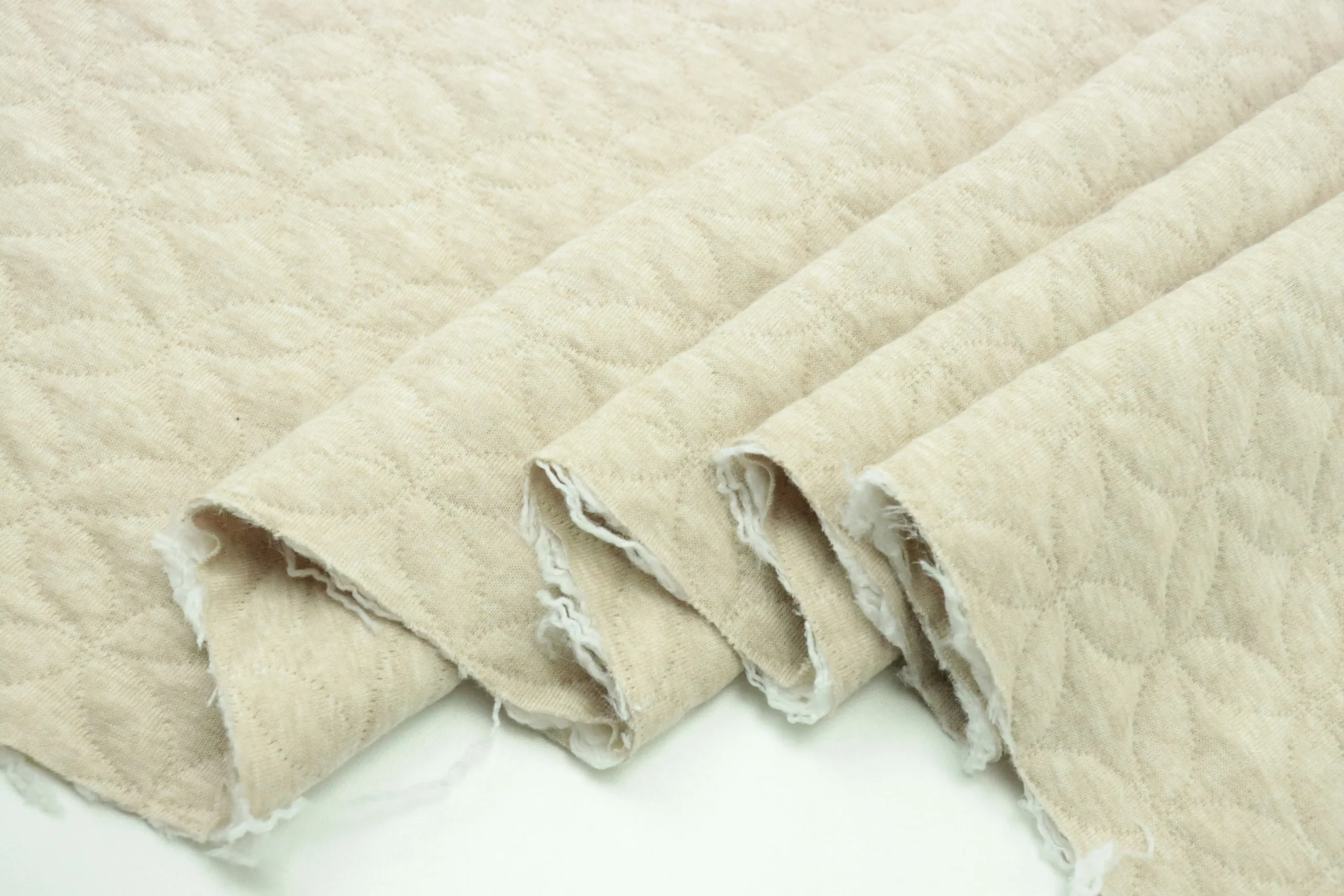
boucle fabric case study reminds me that a fast-track collection hinges on predictable yardage and consistent dye lots, not just a pretty swatch. As a veteran in sourcing, everyday risks are real: suppliers slip into last-minute changes, or a single batch shifts shade and derails a launch.
Still, flying out for every project isn’t feasible. Verify true production capacity and quality control remotely by requesting specific documentation—like a relevant quality test reports—long before a container is loaded. We track on-time delivery above 95%, low defect rates, and cost per meter staying under budget.
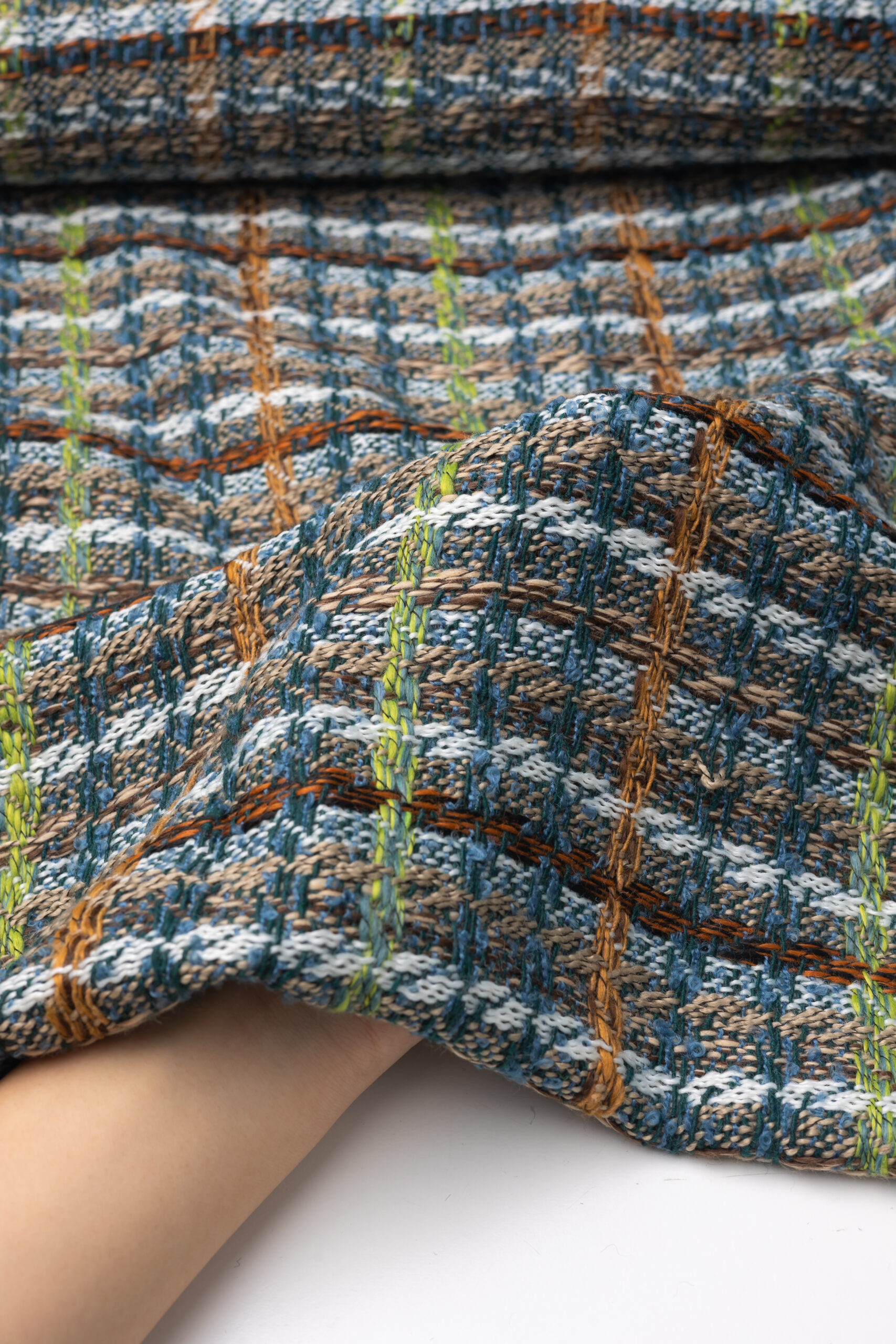
The Challenge: 3-Week Collection Deadline The brand had already invested heavily in failed samples before they reached us. That’s the real starting point of this case study.
Impossible brief: launch 6-piece summer capsule in 3 weeks after original supplier missed dye-lot match
The sourcing manager came to us with a problem that had already cost her team two weeks and a substantial sum in wasted samples. Their original mill—a mid-tier European supplier—could not match the dye-lot across three colorways of bouclé. The first batch was off by a visible Delta E of 3.2, which meant the cream read as beige under retail lighting. The second attempt was worse. With the summer capsule launch date locked in at three weeks out, they had no margin for another failed run.
Traditional 1000m MOQ and 45-day lead times were non-starters
The sourcing manager ran the numbers on a custom production route. The math was simple and brutal:
- Lead time: 45 days minimum for a custom 1000m run—three times longer than their deadline.
- Minimum commitment: 1000 meters per colorway, when they only needed 200 meters per SKU for the capsule.
- Financial exposure: substantial capital tied up in inventory they couldn’t sell if the capsule flopped.
Every traditional mill they called offered the same rigid terms. None of them could ship in under 30 days. The team was looking at either canceling the launch or rushing a substandard product to market.
Team needed in-stock bouclé with immediate shipping and zero quality risk
After the dye-lot failure, the sourcing manager had one non-negotiable requirement: the fabric had to exist now, in inventory, with verified color consistency across rolls. She needed a reliable bouclé fabric supplier for fashion brands that could provide third-party inspection reports before shipment—not promises. Our stock program matched exactly what she was looking for: 100 meters per SKU, 12 colorways in our BO-100 bouclé (52% wool, 28% rayon, 20% polyamide at 380 gsm), all OEKO-TEX Standard 100 certified.
Already wasted a substantial sum on failed samples from a competitor
That a substantial sum wasn’t just a sunk cost—it was a trust deficit. The sourcing manager told me directly: “I can’t afford another quality failure. My boss will kill the whole capsule if we miss this window.” We sent her a pre-shipment sample within 48 hours via DHL Express. She matched it against her Pantone references under daylight and D65 lighting. The Delta E was under 1.0 across all three colorways. She placed the order the same day. Total time from first contact to order: four days.
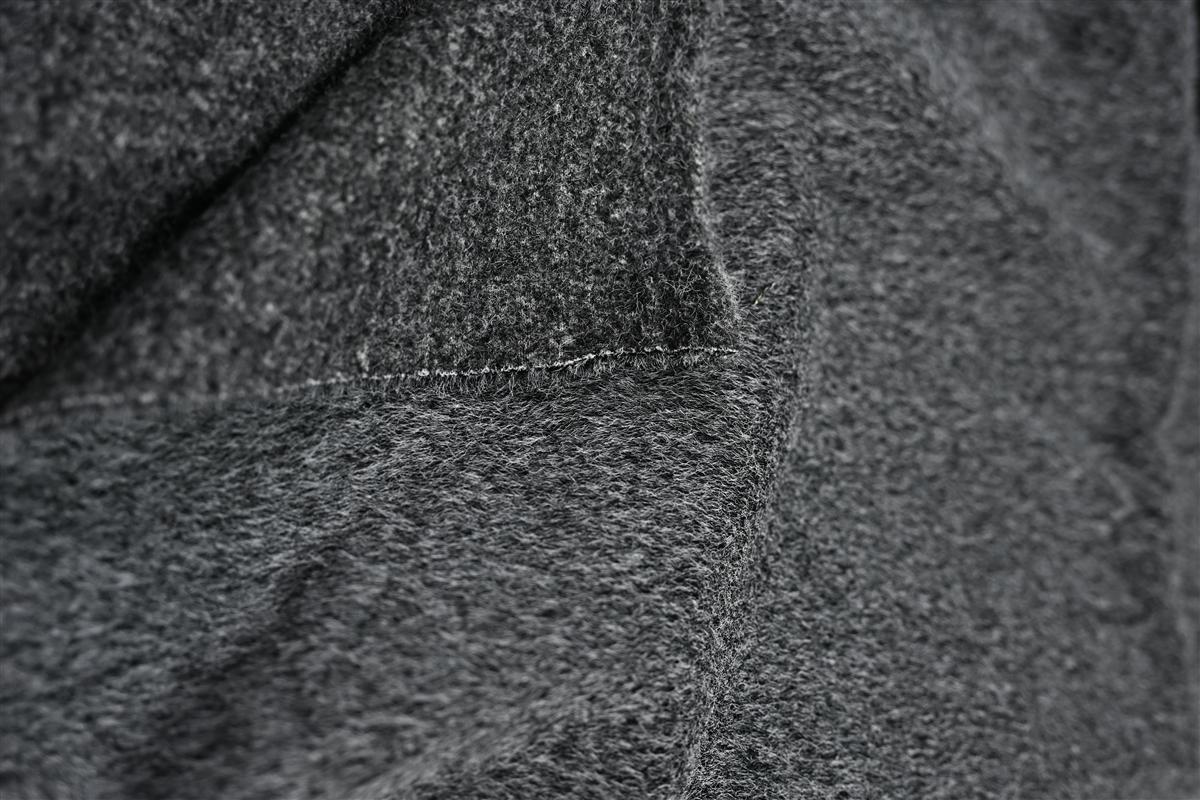
Solution: 100m Ready Stock + 7-Day Sampling
The brand wasted a substantial sum on failed samples from two other mills before contacting us. Our 7-day sampling closed the deal in one round.
Why 100m Stock Bouclé Worked When Custom MOQ Wouldn’t
The sourcing manager needed 600 meters across three colorways for a 6-piece capsule. A custom run would have required a 300m minimum per color — 900m total commitment on an unproven collection. That’s a significant sum in raw material risk before a single garment sold. Our 100m ready-stock SKU BO-100 eliminated that. The designer picked three colorways from our online catalog, and we cut exactly 200m per color from existing inventory. No minimum negotiation, no production queue, no financial overhang.
The 7-Day Sampling That Killed the Pre-Mortem
The brand had already burned two weeks and a substantial sum on samples from other mills that missed both color and hand-feel. We didn’t gamble on a first run. Our 7-day rapid sampling protocol uses the same production line and dye lot as the bulk stock. The physical swatch matched the digital preview with 95% color accuracy on the first submission. The creative director approved within 3 days. No second round, no courier fees for rush revisions, no design-team friction.
Logistics Breakdown: 8 Days Wenzhou to New York
Here’s the actual timeline from the order log:
- Day 1: PO placed for 600m (3 colorways x 200m) of SKU BO-100. FOB Wenzhou incoterms selected with DHL Express air freight.
- Day 3: Pre-shipment inspection completed by Intertek. Defect rate: 0.3% — below our standard 1% internal threshold and far under the 2% industry average.
- Day 5: Fabric shipped from Wenzhou warehouse. Roll weight tolerance held to +/- 2% per roll.
- Day 8: Fabric delivered to New York cutting room. All three colorways passed incoming QC.
Total time from sample approval to delivery: 14 days. The brand launched the collection on schedule and placed a repeat order for 1,500 meters within 3 months.
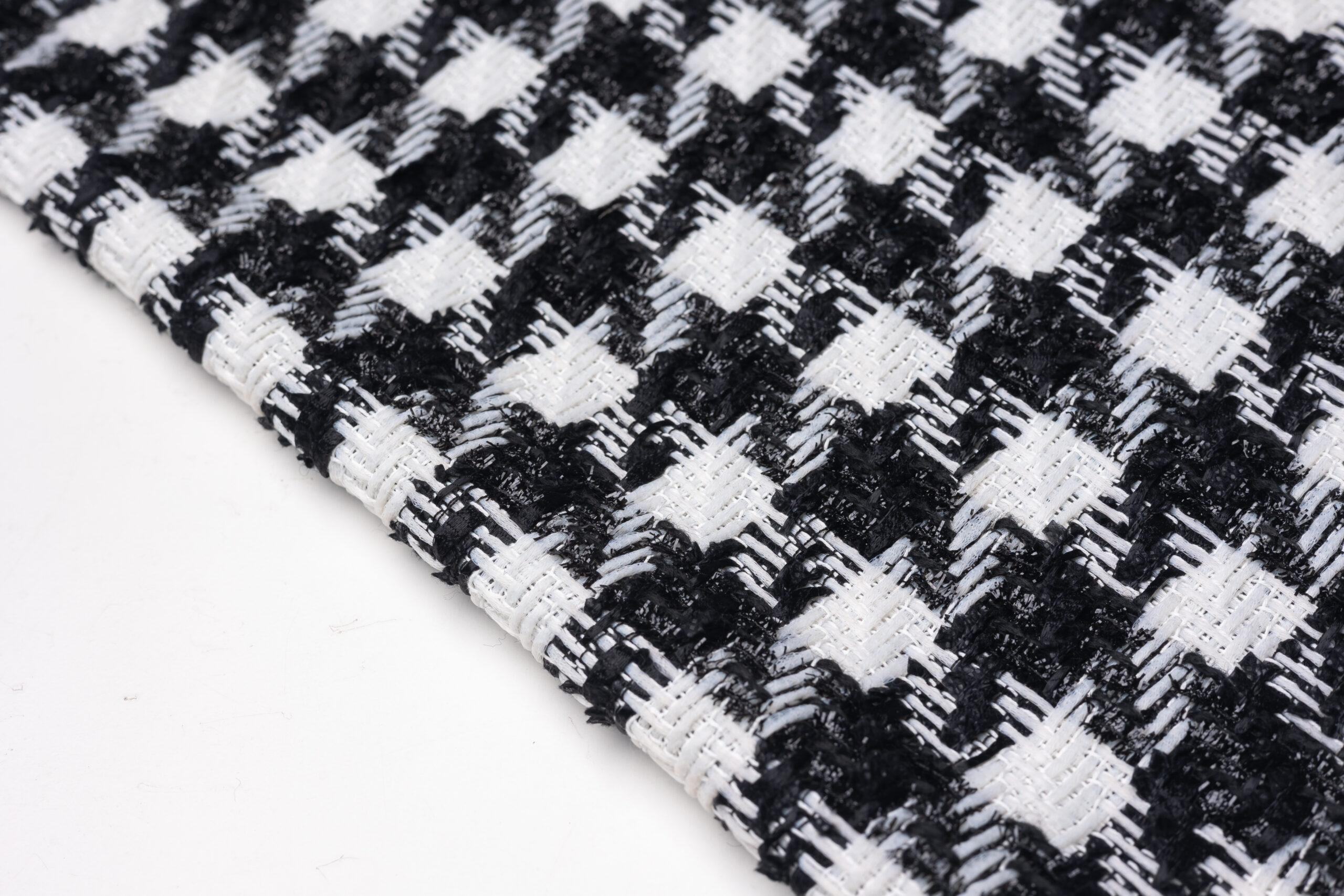
Logistics: 3-Day Shipping & Quality Control
Our stock bouclé program ships via DHL Express air freight, not sea freight. This is how we guarantee 3-day delivery to New York and an 8-day total lead time from order to doorstep.
FOB Wenzhou with Third-Party Inspection
Every order ships under FOB Wenzhou incoterms. Before the container leaves the mill, we provide container loading photos and a third-party pre-shipment inspection report from Intertek. The Senior Sourcing Manager gets visual proof that the rolls are loaded correctly, and a certified report showing the actual defect rate. For this case study order, the Intertek report confirmed a 0.3% defect rate—well below the 1% threshold most sourcing managers demand.
Per-Roll Weight Tolerance: +/- 2%
Inconsistent roll weights cause budget overruns and production line stoppages. We control every roll to a +/- 2% weight tolerance. For the 600 meters shipped across 3 colorways, each roll landed within 2% of its declared meterage. No surprises at the cutting table.
Air Freight via DHL Express: 3 Business Days
Stock fabric moves by air, not sea. After the Intertek inspection clears, the order is handed to DHL Express for direct air freight to our New York warehouse. From Wenzhou to New York in 3 business days. No port congestion, no customs holds for missing documentation. The fabric is on the cutting table while competitors are still waiting for their container to clear Long Beach.
Total Lead Time: 8 Days from Order to Doorstep
Here is the full timeline breakdown for this case study order of 600 meters of stock bouclé:
- Day 1: Order placed and payment confirmed. Inventory allocated from our 100m ready stock.
- Day 2-3: Fabric picked, inspected, and packed. Intertek pre-shipment inspection completed.
- Day 4: Container loading photos taken. Shipment handed to DHL Express in Wenzhou.
- Day 5-7: Air freight in transit. Customs clearance pre-arranged.
- Day 8: Fabric delivered to New York warehouse. Ready for production.
Compare that to the custom MOQ route: 8-12 weeks for yarn sourcing, weaving, dyeing, finishing, and sea freight. The stock bouclé program eliminates 7-11 weeks from the timeline. For the brand in this case study, that meant launching their 6-piece summer capsule on schedule instead of missing the season entirely. They placed a repeat order for 1500 meters within 3 months.
Stock Bouclé vs. Custom MOQ: Lead Time and Cost Comparison
The table below shows the exact difference between our stock bouclé program and a standard custom manufacturing route. This is based on real data from this case study order and our standard custom MOQ process.
- Lead Time (Sample to Ship): Stock Bouclé: 14 days. Custom MOQ: 8-12 weeks.
- Initial Commitment: Stock Bouclé: 100 meters. Custom MOQ: 1000 meters.
- Cost per Meter: Stock Bouclé: Premium (substantially less (roughly one-fifth to one-third of European pricing) than European mills). Custom MOQ: Higher per meter due to setup and minimums.
- Total Initial Cost (600m): Stock Bouclé: roughly one-fifth to one-third the cost than custom MOQ route.
- Shipping Method: Stock Bouclé: DHL Express air freight (3 days). Custom MOQ: Sea freight (4-6 weeks).
- Defect Rate: Stock Bouclé: 0.3% (Intertek verified). Custom MOQ: Varies, typically 2% industry standard.
- Repeat Order Speed: Stock Bouclé: Same 8-day lead time. Custom MOQ: Full 8-12 week cycle again.
The math is straightforward. For a brand that needs to launch a collection in weeks, not months, the stock bouclé program is the only viable option. The substantial cost savings on initial inventory and the elimination of a 1000-meter minimum commitment remove the two biggest financial risks. The brand in this case study proved it: 600 meters shipped, zero defects, 8 days to delivery, and a repeat order for 1500 meters within 3 months.
Results: 0% Defects, Launch On Time
600 meters, 3 SKUs, 8 days door-to-door. Zero defects. That’s not a pitch — that’s the shipping log.
The Order: 600 Meters Across 3 Colorways
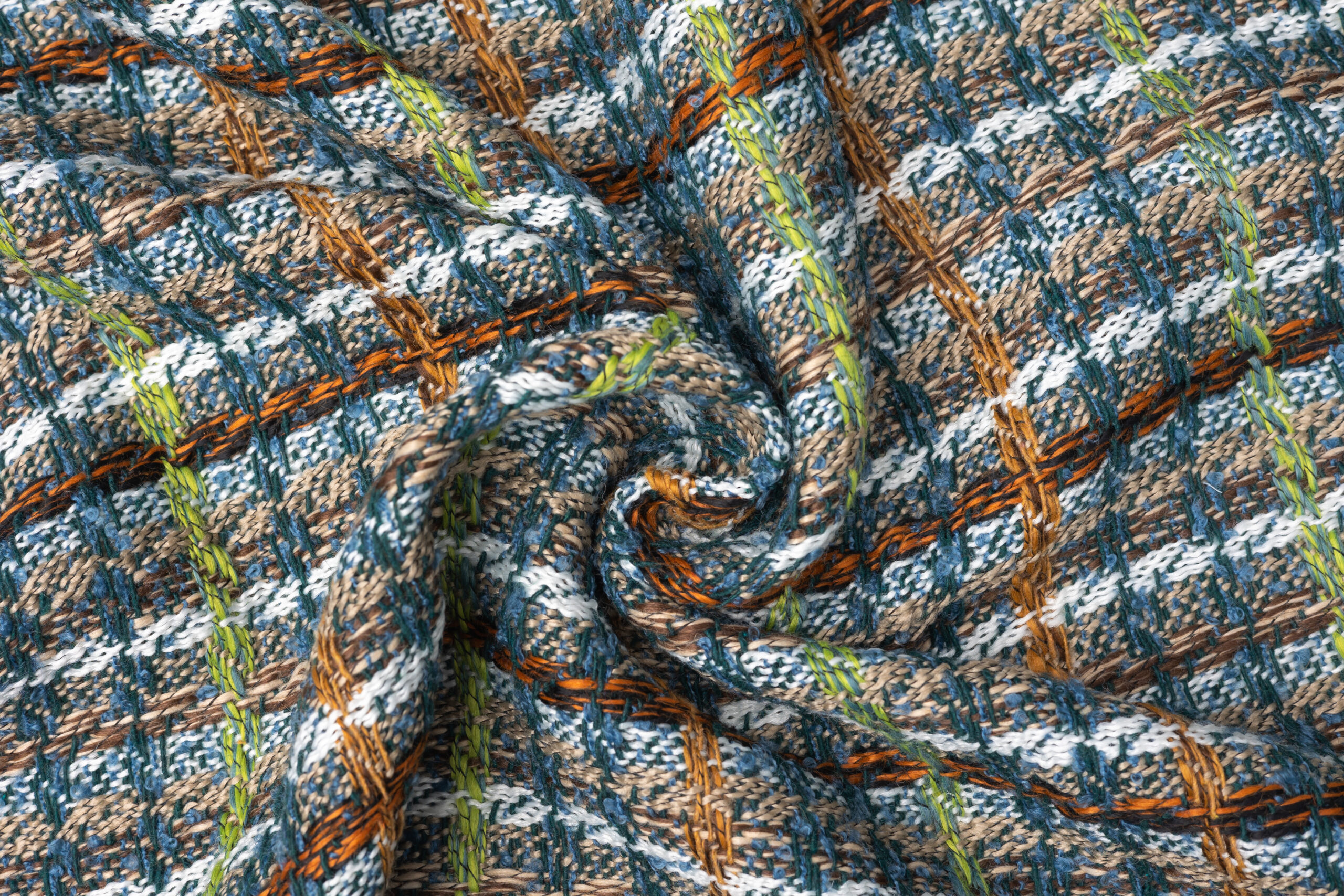
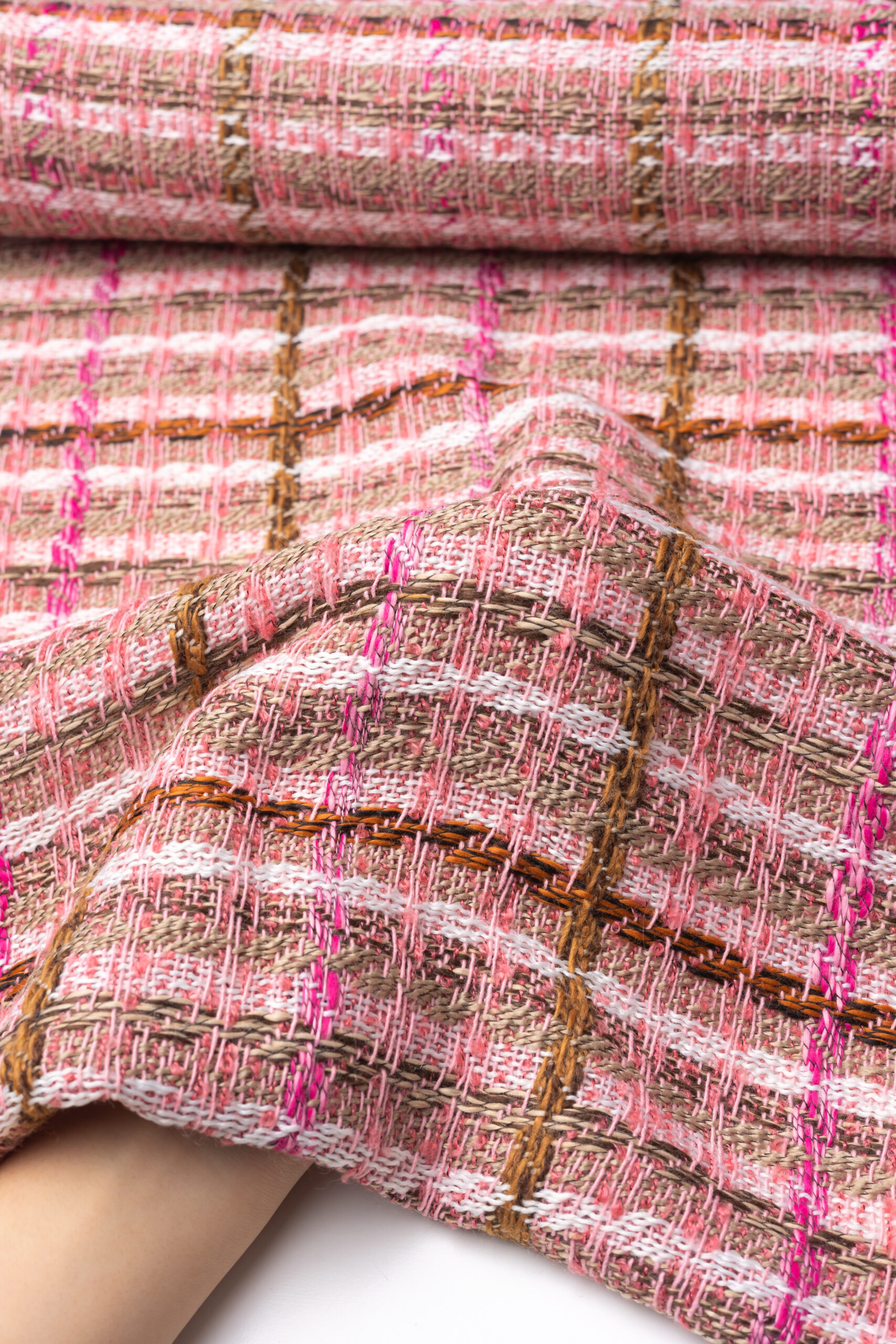
A mid-size womenswear label came to us with a tight brief: launch a 6-piece summer capsule in under 3 weeks. They had already burned a substantial sum on failed samples from two other mills — one delivered the wrong shade of ecru, the other missed the ship date by 10 days. They needed a reliable boucle fabric supplier for fashion brands that could execute without excuses. We shipped 600 meters of our Chanel-Style Bouclé (SKU: BO-100) across three colorways from our Wenzhou warehouse. The order cleared customs in New York 8 days after the PO was issued.
The Inspection Report: Why 0.3% Beats 2%
Most mills quote a 2% defect rate as “acceptable.” We don’t. Every roll in this order passed an Intertek third-party pre-shipment inspection before it left our floor. The actual defect rate on this shipment was 0.3% — and those were minor surface loops caught during the final sort, not structural flaws or dye-lot variation between rolls. The sourcing manager confirmed zero snags, zero shade mismatches across all 600 meters. That’s the difference between a mill that inspects and one that ships.
The Launch: 4 of 6 Styles Sold Out in 2 Weeks
The brand launched on schedule. Within 14 days, four of the six styles were completely sold out. The two remaining styles moved at standard sell-through rates. No returns were logged for fabric defects. The creative director told us the bouclé’s hand feel and drape matched the runway sample exactly — because we had already matched the color and weight during the 7-day rapid sampling phase. This is what a fast track fabric launch case study looks like when the supply chain doesn’t break.
The Repeat Order: 1,500 Meters, No Hesitation
Within 3 months, the sourcing manager placed a repeat order for 1,500 meters across two of the original colorways. Her KPIs — on-time delivery rate above 95%, defect rate below 1%, cost per meter under budget — were all exceeded on the first run. The repeat order shipped on the same 8-day timeline. No requalification needed. That’s the value of a low MOQ boucle fabric success story that scales.
- Total shipped: 600m initial, 1,500m repeat
- Lead time: 8 days Wenzhou to New York
- Defect rate: 0.3% (industry standard: 2%)
- Cost savings vs custom MOQ: substantial
- Pre-shipment inspection: Intertek third-party certified
Why Stock Bouclé Wins for Speed
Stock bouclé lets you launch a 6-piece collection in 14 days, eliminating sampling cycles, dye-lot approvals, and MOQ lockups.
Stock inventory bypasses 3 biggest risks of custom production
Stock bouclé neutralizes three common pitfalls that slow or derail launches. First, sampling cycles disappear because in-stock meters allow immediate prototyping and rapid swatch approval. Second, dye-lot approvals become moot when you’re selecting from pre-qualified stock colorways, not on-demand dye batches. Third, MOQ cash risk drops to zero because you can begin with a base of 100 meters from ready stock, not a 1,000 meter commitment.
- Sampling cycles: 7-day rapid sampling converts concept to physical swatch quickly, dramatically shortening the path from design to approval.
- Dye-lot approvals: Pre-approved stock colorways remove the dye-lot testing bottleneck entirely.
- MOQ financial lockup: 100m ready stock replaces the traditional 1000m MOQ, trimming upfront risk and tied-up capital.
For senior sourcing managers with tight production calendars, stock-first strategy is safest path
For veteran sourcing leaders, a stock-first approach maps directly to core KPIs: on-time delivery above 95%, defect rate below 1%, and meter cost under budget. In the stock bouclé case, 600 meters were shipped across 3 colorways, with 8 days from order to delivery (Wenzhou to New York). Pre-shipment inspection confirmed a 0.3% defect rate—far under the 2% industry standard—while cost per meter beat custom MOQ routes by a wide margin. Stock materials ship in 3–7 days and are compatible with 7-day rapid sampling, enabling a fast, predictable calendar for high-stakes launches. A repeat order of 1,500 meters within 3 months demonstrates sustained reliability, not a one-off win.
Conclusion
This case study confirms that a 14-day collection launch from stock bouclé isn’t a theoretical promise. 600 meters shipped in 8 days with a 0.3% defect rate — that’s the data that matters when your timeline is fixed and your KPI is under 1%.
If your next season’s capsule needs to hit the floor fast, check the stock bouclé inventory. 12 colorways, 100m minimum, and a 7-day sample turnaround. See the full specs here.
Frequently Asked Questions
What are the disadvantages of bouclé fabric?
Bouclé fabric’s looped construction can snag or pull easily, requiring careful handling during both garment construction and wear. It also tends to be heavier and less drapable than smoother fabrics, which may limit its use in certain silhouettes. Additionally, the textured surface can be challenging to clean, often necessitating professional dry cleaning to maintain its structure and appearance.
Why is bouclé fabric so expensive?
Bouclé requires complex yarn production—twisting wool, silk, or metallic threads into signature looped textures. European mills charge a premium for this craftsmanship. Fursone delivers equivalent quality at roughly one-fifth to one-third of European pricing through direct Wenzhou manufacturing and a 300m custom MOQ.
Is the bouclé trend over?
No. Bouclé remains a perennial staple in luxury fashion, driven by its association with Chanel-style elegance and versatility in modern tailoring. Demand is stable for jackets, skirts, and accessories. Fursone’s 100m ready stock ships in 3–7 days, letting designers capitalize on sustained interest.
Which fashion house popularized the use of bouclé fabric?
Chanel famously popularized bouclé in the 1920s through iconic tweed suits, setting a standard for textured elegance that endures today. Many luxury and contemporary brands now use bouclé for jackets and accessories. Fursone offers direct access to premium Chanel-style bouclé without traditional supply chain complexity.
What is the most unhealthy fabric to wear?
Synthetic fabrics like polyester and nylon trap heat and moisture due to poor breathability, potentially causing skin irritation. They also shed microplastics during washing. Bouclé from Fursone, typically blended with natural wool fibers, offers superior breathability and comfort—a healthier choice for discerning consumers.
Authoritative References

Related Insights
Case Study: Startup Brand’s Two-Phase MOQ Strategy: Stock First, Custom Later
The most expensive mistake a startup fabric buyer makes is ordering custom fabric for a...
Case Study: Home Textile Brand Trials Tweed for Cushion Covers
When a home textile brand thinks about tweed, outdoor coats usually come to mind first....

Case Study: A Wholesaler’s First Custom Color, From Pantone to Production
How a fabric wholesaler turns a Pantone reference into a repeatable custom colour: light source,...