Custom tweed fabric MOQ is the first real filter between a brand idea and a production run. For an emerging designer, the difference between a 100-meter minimum and a 1000-meter minimum isn’t just scale—it’s whether the project makes financial sense at all. Most mills won’t talk about the hidden costs baked into that number.
Here’s the part suppliers don’t put in their quotes: a 1000-meter MOQ often includes setup fees for specific yarn counts and weave patterns that are non-refundable if you cancel. I’ve seen a 300-meter tweed order priced at the same per-meter rate as 1000 meters, but only because the mill had the yarn cones leftover from a previous run. The moment you ask for a unique color or a custom herringbone angle, that MOQ floor jumps because they have to dedicate a full warp beam to your batch. For a capsule collection of 50 jackets, that 1000-meter minimum means you’re sitting on 700 meters of dead stock unless you plan a second season around it.
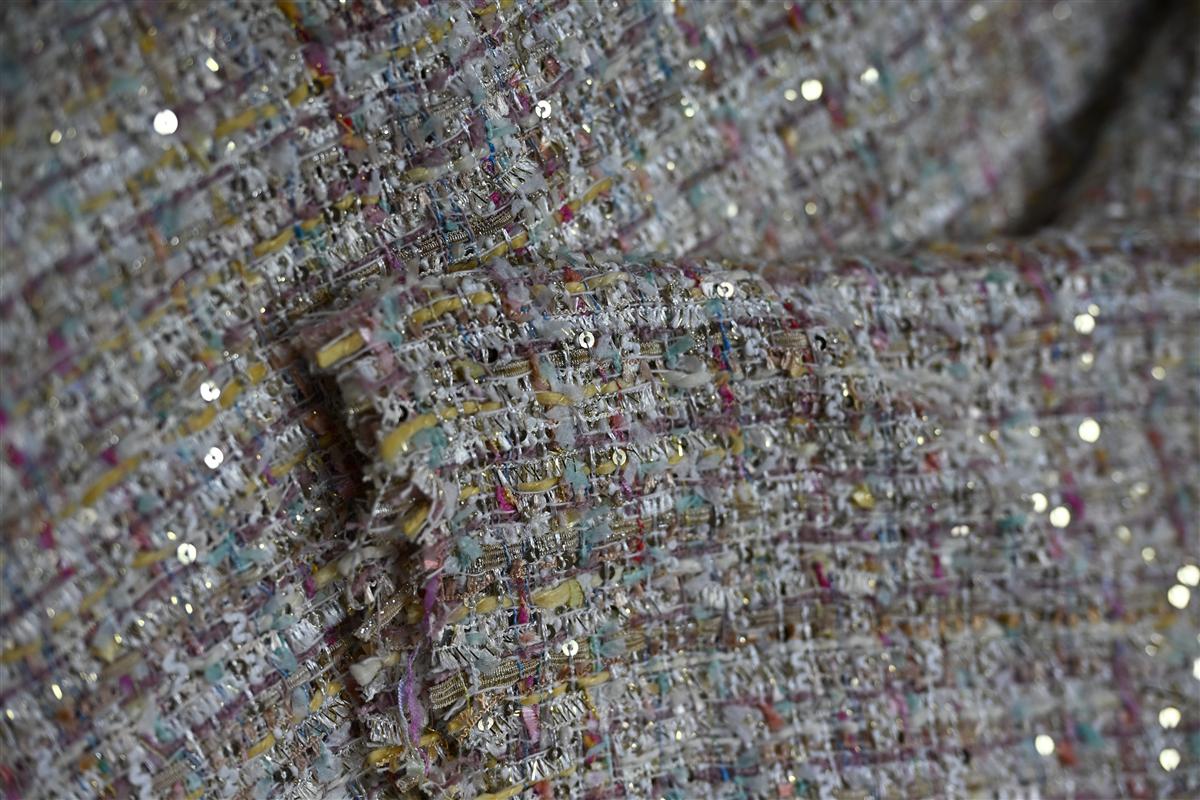
100m MOQ Ready Stock – Fast Launch
100m ready stock ships in 3-7 days. No capital lock-up, no minimum volume penalty.
The 100m Ready Stock Model: Built for Speed, Not Storage
Most mills won’t talk about this openly, but the 100m ready stock tier exists for one reason: it solves the cash-flow problem that kills emerging brands before their first season. Ordering 100 meters of in-stock bouclé or cable knit means no container-load commitment. The purchase covers exactly what is needed for a capsule collection or sample run — typically 50-80 garments depending on the pattern layout. The standard spec for this tier is a 150cm width, 500GSM weight, using a 10% wool and 90% polyester blend. That specific blend holds structure well for tailored jackets while keeping the per-meter cost between $3.50 and $7.50.
Why the 100m MOQ Exists (And What It Covers)
The 100m minimum is not an arbitrary number. It represents the smallest production batch that maintains consistent dye-lot integrity and defect control across a roll. Below 100 meters, the per-meter waste from loom setup and finishing becomes disproportionate, and mills cannot guarantee lot-to-lot color matching. For the buyer, 100 meters eliminates inventory risk entirely. The fabric ships within 3-7 days, and the defect allowance is capped at ≤2% per roll — a standard verified by OEKO-TEX certification and SGS inspection reports available on request.
What the 100m Tier Does NOT Include
This tier is for existing stock patterns only. Custom color matching, proprietary jacquard designs, or exclusive weave structures fall under the 1000m bespoke MOQ. The trade-off is straightforward: speed and low risk versus exclusivity and lower per-meter cost. A buyer needing 100 meters of a standard Chanel-style bouclé in beige can have it cut and shipped this week. A buyer needing that same texture in a custom Pantone shade waits 4-6 weeks and commits to 1000 meters. Both tiers include the 7-day rapid sampling service, so physical swatches can be reviewed before committing to production.
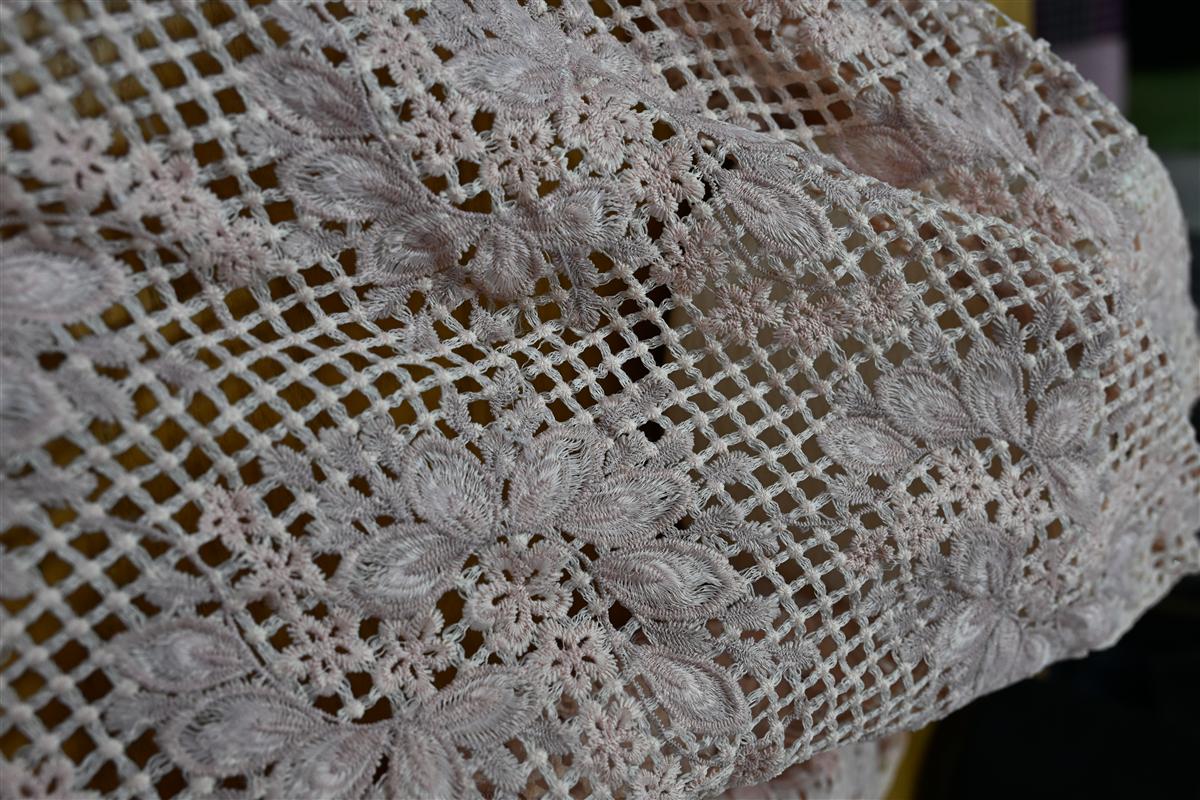
1000m MOQ Custom Bespoke – Exclusive Textures
The 1000m custom bespoke tier exists for one reason: to give you a signature fabric that no competitor can buy off the same roll.
Custom Dyeing, Jacquard Pattern Development, and Color Matching for Signature Looks
Standard in-stock bouclé is a commodity. If you want a color that defines your brand—say, a dusty lavender that hits Pantone 14-3207 TPX exactly—you cannot find that on a shelf. The custom process starts with a color standard: a Pantone chip, a thread from a vintage garment, or a digital reference. For jacquard patterns, we work from a CAD file that maps every thread intersection. The loom reads that file to create the weave structure—whether it is a houndstooth, a herringbone, or a multi-color geometric. The result is a fabric that carries your label, not a mill’s stock number.
Lead Time: Sampling, Dye Lot Approval, and Production
Here is the realistic timeline for a 1000m custom run from a low MOQ tweed fabric supplier like our Wenzhou facility:
- 7-Day Rapid Sampling: You receive a 1-meter physical strike-off. This is not a digital rendering—it is the actual yarn, weave, and finish.
- Dye Lot Approval (Week 2-3): Once the sample is approved, we produce a 10-meter dye lot. This is your final color check. If the lab dip is off by even 0.5 Delta E, we re-match before bulk production begins.
- Bulk Production (Weeks 4-6): Full 1000m run. Each roll gets a lot control number. If you ever reorder, that number ensures your next batch matches the first.
Total: 4-6 weeks from concept to fabric on your cutting table. Compare that to the 8-12 weeks most European mills quote for a custom tweed fabric order quantity of this size.
Dedicated Account Management and Lot Control
A 1000m custom bespoke order is not a transaction; it is a partnership. You get a single point of contact who knows your project history, your approved dye lots, and your quality standards. Every roll produced is assigned a unique lot number. That number is recorded in our internal system and printed on the roll tag. If a future order references that same lot number, we pull the archived dye formula and yarn specs. This eliminates the “my second batch was slightly greener” problem that plagues small fashion brands sourcing from factories without lot control systems. The defect allowance is capped at ≤2%, and each roll is inspected against the approved sample before shipping. For a brand owner worried about consistency across a 1000m run, this is the safety net that makes the tweed fabric minimum order quantity China model work.
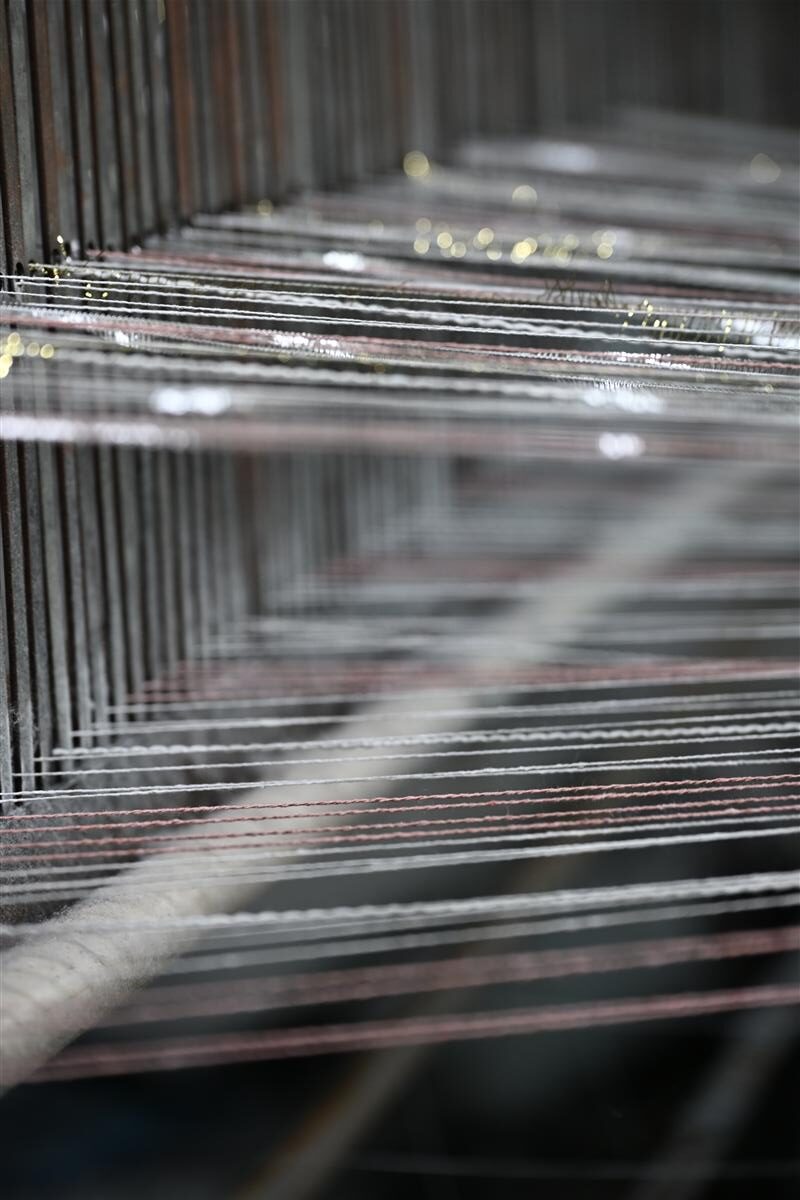
Cost Comparison: 100m vs 1000m per Meter
The Price Per Meter: What the Numbers Actually Say
Let’s strip away the marketing. For a standard polyester-blend tweed (10% wool, 90% polyester, 150cm width, 500GSM), the per-meter cost at the 100m ready-stock tier runs between $3.50 and $7.50. Move to the 1000m custom bespoke tier, and that range drops to $3.00–$6.00 per meter. That is roughly a 15% reduction per meter for committing to a larger run. For a premium 100% wool bouclé, expect the starting price to land around $10/m regardless of tier, with the 1000m volume shaving off roughly 10–15% from the base.
Hidden Cost Factors That Change the Math
The per-meter price is only half the equation. Three hidden cost factors can shift your total landed cost by 20% or more if you don’t account for them upfront:
- Sample fees: Expect $50–$200 per sample set for custom development. The key differentiator is that transparent factories like Fursone publicly list both 100m and 1000m tiers with guaranteed 7-day sampling, reducing the number of costly sample rounds needed to lock in your shade and hand feel.
- Shipping per kg: Tweed is heavy. At 500GSM and 150cm width, one linear meter weighs approximately 0.75 kg. A 100m roll weighs ~75 kg; a 1000m roll weighs ~750 kg. Air freight from Wenzhou to New York runs roughly $4–$6 per kg, while sea freight drops to $0.50–$1.00 per kg. That alone can add $300–$450 to a 100m air shipment versus $375–$750 for a 1000m sea shipment — but the per-meter shipping cost drops dramatically at the larger volume.
- Duty percentages: Import duties on woven tweed fabrics (HS code 5112.19) into the US typically range from 6% to 12% of the declared value. For a $500 100m order at $5/m, that is $30–$60 in duty. For a significant 1000m order at $4.50/m, that is $270–$540. The percentage stays consistent, but the cash outlay triples — factor that into your working capital planning.
The Real Benchmark: Harris Tweed Hebrides
To understand how competitive these numbers are, compare them against the gold standard: Harris Tweed Hebrides. Their wholesale pricing sits at approximately £55 per meter (roughly $70/m at current exchange rates) with a minimum order of 50 meters. That is a 5x to 10x price gap compared to the $3.50–$7.50/m range from a Wenzhou mill for comparable jacquard and bouclé textures. For an emerging designer producing a 500-piece run requiring 1,000 meters of fabric, sourcing from a Chinese mill at $5/m saves roughly a five-figure sum versus the Harris Tweed route. The trade-off is exclusivity and heritage branding — but if your margin structure can’t absorb £55/m, the 100m ready-stock model from a transparent supplier is the only viable path to launch.
| Feature | 100m Ready Stock | 1000m Custom Bespoke | Cost Impact |
|---|---|---|---|
| MOQ Tier | 100m Ready Stock | 1000m Custom Bespoke | Cost Impact |
| Per-Meter Price (Polyester Blend) | $3.50 – $7.50 | $3.15 – $6.75 | ~10% lower per meter at 1000m |
| Per-Meter Price (100% Wool) | From $10.00 | From $9.00 | ~10% lower per meter at 1000m |
| Total Investment (Polyester Blend) | $350 – $750 | a significant investment | Higher total outlay, lower unit cost |
| Lead Time | 3–7 days (in-stock) | 4–6 weeks (custom development) | Speed vs. exclusivity trade-off |
| Sampling Service | 7-day rapid sampling | 7-day rapid sampling | Same speed for both tiers |
| Customization | Limited to in-stock patterns | Any color, pattern, or blend | Full creative control at 1000m |
| Certifications | OEKO-TEX, SGS | OEKO-TEX, SGS, factory audit | Consistent quality assurance |
| Defect Allowance | ≤2% | ≤2% | Identical quality standard |
| Best For | Small fashion brands, capsule collections | High-end collections, exclusive lines | Match MOQ to your production scale |
How to Choose the Right MOQ for Your Collection
Scenario A: Total Fabric Need ≤ 200m and Launch Speed is Critical
If you are an emerging designer with a capsule collection of 5–8 SKUs, your total fabric requirement likely sits under 200m. In this scenario, the 100m ready-stock MOQ is the correct choice. Standard lead times for 100m rolls are 3–7 days, which means you can have physical fabric in hand and cut into production within a single week. This directly addresses the #1 capital risk for small brands: inventory lock-up. You are not committing to 500m or 1000m of untested material. You are buying exactly what you need for the current season, with no minimum volume penalty if the collection sells out and you need to reorder.
The 100m tier covers the standard blend: 150cm width, 500GSM weight, 10% wool and 90% polyester. Price runs $3.50–$7.50 per meter depending on the bouclé or jacquard complexity. Certifications like OEKO-TEX and SGS are included in the roll documentation. The trade-off is that you are selecting from existing patterns and colors — you cannot request an exclusive shade or weave at this MOQ. For a fast launch, that is an acceptable constraint. You get speed, low financial exposure, and verified quality.
Scenario B: Consistent Fabric Across Multiple Seasons or Exclusive Patterns
If your brand requires the same fabric color and texture across Spring/Summer and Fall/Winter collections, or if you need a proprietary pattern that no other label can source, the 1000m custom bespoke MOQ is the correct path. The lead time for custom development is 4–6 weeks, which includes yarn selection, sample weaving, and bulk production. The per-meter cost drops approximately 10–20% compared to the ready-stock tier, but the real value is the same-dye-lot guarantee.
Here is the hard truth about dye lots: if you order 200m today and another 200m six months later from a different production run, the color will shift. It is a physical reality of textile dyeing. The 1000m custom tier uses lot control numbering, meaning every meter from that run carries the same dye-lot ID. This eliminates the color-matching headache that kills collection cohesion. You also get full control over the blend ratio, pattern density, and finishing treatment. The 1000m MOQ is not about volume for the sake of volume — it is about securing repeatable, exclusive fabric for a brand that plans to scale.
Most suppliers on platforms like Made-in-China hide their MOQ behind inquiry forms. Transparent factories list both 100m and 1000m tiers publicly, reducing buyer risk from the first click.
The Cost Comparison That Matters
To put the decision in financial terms: a 100m order at $5.50/m costs $550 total. A 1000m custom order at $4.40/m costs a significant total. The per-meter saving is real, but the upfront capital difference is a significant amount. The 100m tier is designed for brands that cannot or should not tie up that capital. The 1000m tier is for brands that have validated their product-market fit and need consistency at scale. Neither is objectively better — the right choice depends on where your brand sits in its growth cycle.
Quality Assurance at Different MOQ Levels
OEKO-TEX and SGS: What the Certificates Actually Cover
Most suppliers mention “SGS tested” as a generic trust signal, but the scope of that test matters. A standard SGS fabric inspection checks for visual defects, colorfastness, and dimensional stability. It does not automatically cover chemical safety. OEKO-TEX Standard 100 certification is the relevant benchmark for restricted substances — it tests for heavy metals, formaldehyde, and pH levels in the finished textile. At Fursone, both the 100m ready stock and the 1000m custom bespoke runs carry OEKO-TEX certification. The 1000m custom lots additionally receive SGS pre-shipment inspection with a documented report per roll.
The 2% Defect Allowance and Pre-Shipment Inspection Protocol
Industry standard for woven tweed fabric is a 2% defect allowance — meaning up to 2 meters per 100-meter roll may contain minor weaving flaws (slubs, broken picks, or dye spots). The difference between a reliable supplier and a commodity trader is whether they enforce that limit with lot control numbering. At Fursone, every roll in a 100m ready stock order receives a unique lot number. The pre-shipment inspection report ties each defect to a specific roll number, so a buyer can verify that no roll exceeds the 2% threshold before the container leaves Wenzhou. If a supplier cannot produce a roll-by-roll inspection report, they are asking you to trust rather than verify.
How the 1000m Custom MOQ Changes the Quality Check
For a custom development order of 1000m, the inspection protocol expands. The first 200m of production is held for a full-width visual inspection and shade band comparison against the approved lab dip. Only after that first batch passes does the mill proceed with the remaining 800m. This staged approach prevents a full production run from being rejected due to a single dye lot mismatch — a risk that is higher with custom colors than with standard ready stock. The 100m ready stock model avoids this entirely because the fabric is already cut, inspected, and stored in climate-controlled inventory.
The Transparency Gap: What Competitors Hide
Most Chinese tweed suppliers on platforms like Made-in-China list “SGS” in their product descriptions but do not publish the actual inspection criteria or defect allowance. A buyer receives a generic PDF after shipment, often without roll-level detail. At Fursone, the internal production standard sets a maximum defect allowance of 2% per roll, and the pre-shipment report includes the lot number, the defect count, and the pass/fail status for each roll. That report is shared before payment release. For a low MOQ tweed fabric supplier serving small fashion brands, this level of documentation is the difference between a predictable production run and a surprise chargeback three months later.
Conclusion
The choice between 100m and 1000m MOQ isn’t about fabric quality — it’s about timing and risk. 100m ready stock gets a collection to market in days, not months, with no capital lock-up penalty. 1000m custom development drops per-meter cost by roughly 15% and locks in exclusive textures, but demands a 4-6 week lead time. Both routes work. The wrong route is the one you choose without seeing the physical goods first.
Review the current in-stock patterns and custom options on the factory guide page. Compare the weave constructions, check the certifications, and request a 7-day sample swatch before committing to either tier.
Frequently Asked Questions
Are there different grades of tweed fabric?
Yes, tweed fabric is categorized by grades based on fiber quality, weave density, and finishing processes. At Fursone, our premium tweeds—such as Chanel-style bouclé and heritage cable knits—use high-grade wool, often blended with mohair or silk for texture and durability, while lower grades may incorporate synthetic fibers or looser weaves that compromise longevity. Our 100-meter ready stock offers consistent commercial-grade quality for fast turnaround, whereas our 1000-meter custom MOQ allows you to specify exact fiber blends and weave structures for luxury-tier exclusivity. The grade directly impacts drape, color retention, and resistance to pilling, which is why we source only from Wenzhou mills with over 30+ years of expertise to ensure European-mill standards at 30-50% lower cost.
What are the disadvantages of tweed fabric?
Tweed can be prone to pilling if the fiber quality is low or the weave is loose, but our premium construction at Fursone minimizes this through tight, dense weaves and high-grade wool blends. It also has limited stretch compared to knits, which may require careful pattern cutting for fitted garments; however, our heritage cable knits offer more flexibility for tailored designs. Moisture absorption is another factor—tweed can feel heavy when wet and may take longer to dry, though our fabrics are pre-shrunk and treated for dimensional stability. For bulk buyers, the primary disadvantage is the higher MOQ for custom textures, but our 100-meter in-stock option mitigates this by allowing immediate sampling and small-batch launches without supply chain delays.
How to spot fake Harris Tweed?
Authentic Harris Tweed must be certified with the Orb mark, a registered trademark indicating it is handwoven in the Outer Hebrides of Scotland from 100% pure virgin wool dyed and spun locally. At Fursone, we do not produce Harris Tweed, but we offer comparable premium tweeds with our own quality seals—look for consistent yarn twist, even dye penetration, and a dense, resilient hand feel that fakes often lack due to synthetic blends or machine-loom shortcuts. Fake versions frequently have uneven patterns, loose threads, or a shiny finish from polyester content, whereas our Wenzhou-milled tweeds mimic the artisan aesthetic with precise color registration and a matte, wool-rich texture. For absolute assurance, request a mill certificate or physical swatch; our 7-day rapid sampling lets you verify quality before committing to a 1000-meter custom order.
Why is tweed fabric so expensive?
Tweed’s cost stems from the raw materials—high-quality wool, often blended with cashmere or silk—and the labor-intensive weaving process, which at Fursone involves specialized looms for bouclé and cable knit textures that replicate European mill artistry. Our 1000-meter custom MOQ reduces per-meter cost by spreading setup and dyeing expenses, yet the premium remains justified by durability, colorfastness, and the ability to create exclusive patterns that mass-produced fabrics cannot match. Unlike fast-fashion alternatives, our tweeds undergo rigorous finishing to prevent shrinkage and fading, ensuring garments retain value over seasons. By manufacturing in Wenzhou with 30+ years of expertise, we deliver this luxury quality at significant savings than European mills, making it an affordable investment for high-end collections.
What happens if tweed gets wet?
Tweed is naturally water-resistant due to the lanolin in wool fibers, but prolonged exposure to moisture can cause the fabric to absorb water, leading to a heavier feel and potential shrinkage if not pre-treated. At Fursone, our tweeds are pre-shrunk and finished with anti-felting processes to maintain shape and texture even after damp conditions, though we recommend air-drying away from direct heat to preserve the weave. Wet tweed may temporarily lose its crispness, but once dry, it typically regains its structure without permanent damage, unlike synthetic blends that can warp. For custom 1000-meter orders, we can apply a water-repellent finish upon request, ensuring your high-end collections withstand real-world wear while retaining the artisan aesthetic.
Authoritative References

Related Insights
RFQ Template for Tweed and Knit Fabric: 12 Fields for Accurate Quotes
An incomplete fabric RFQ wastes everyone’s time. The mill quotes based on assumptions, the buyer...
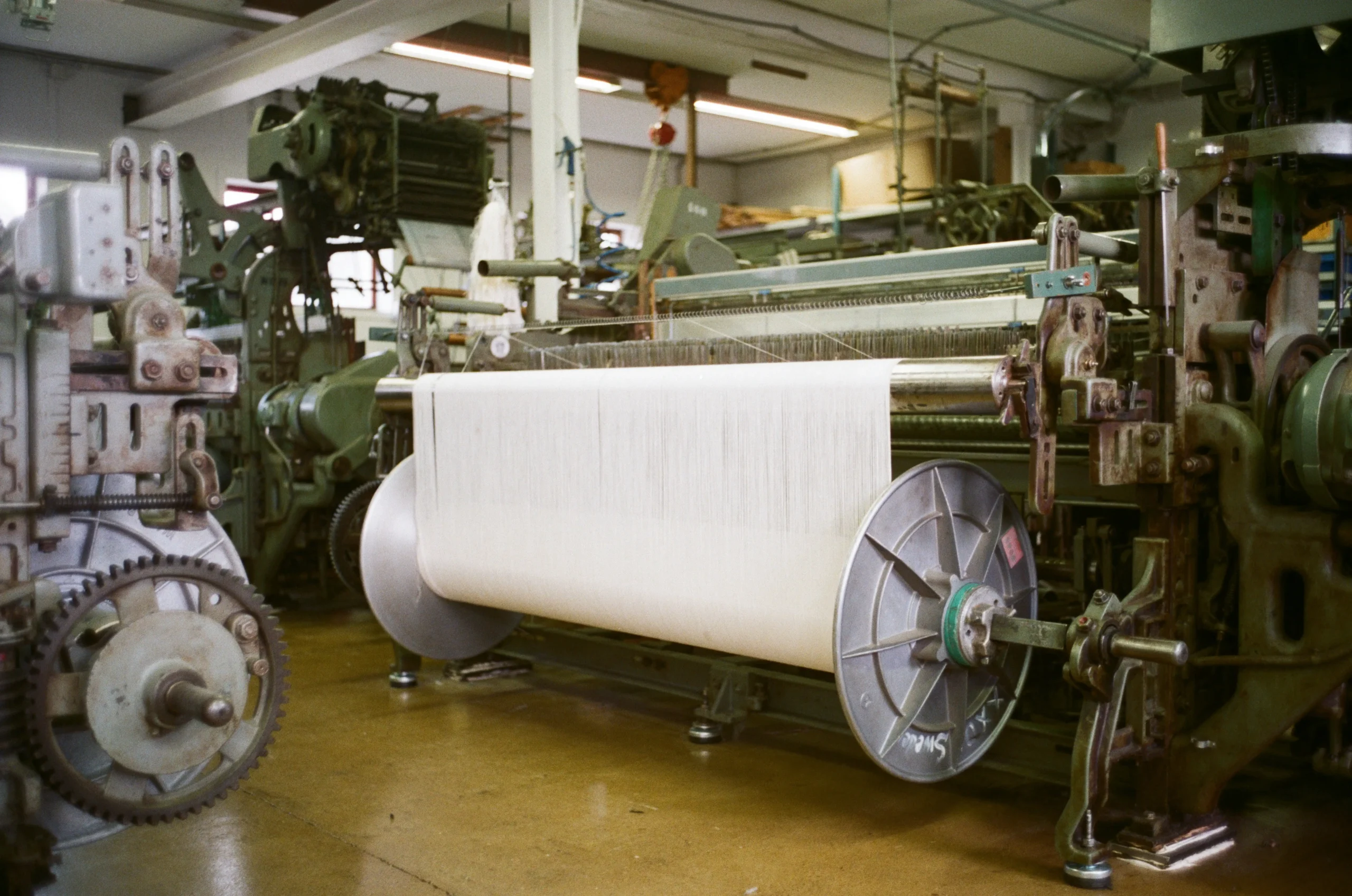
How to Evaluate a Tweed Mill for Quality Fabric
{ “@context”: “https://schema.org”, “@type”: “Article”, “headline”: “How to Evaluate a Tweed Mill for Quality Fabric”,...
Direct Mill vs Wholesaler: Cut Fabric Sourcing Risk
{ “@context”: “https://schema.org”, “@type”: “Article”, “headline”: “Direct Mill vs Wholesaler: Cut Fabric Sourcing Risk”, “author”:...