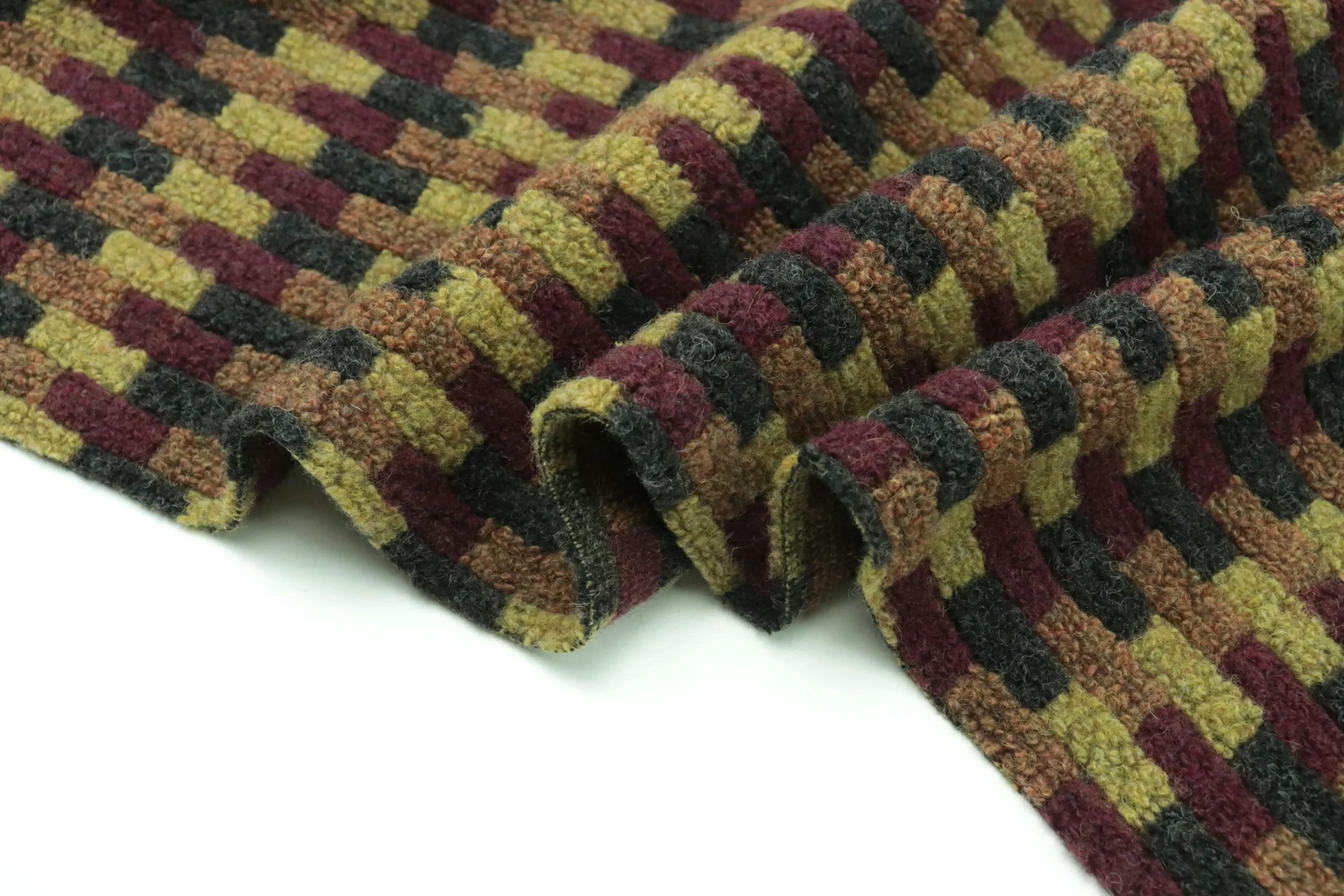
Walk into any fabric sourcing meeting about boucle and one question comes up before all others: should you specify woven construction or knitted? The two methods produce fabrics that look similar in a swatch book but behave completely differently in production, on the body, and after twenty trips through the dry cleaner. A buyer who picks the wrong construction for a jacket line learns this the hard way when panels stretch unevenly or seams pucker after the first press.
Fursone manufactures both woven and knitted boucle on a floor of 300+ looms in Wenzhou, China, running since 1995. That dual capability means the question is not which is better in the abstract but which construction matches the garment you are actually building.
Key Takeaways
- Woven boucle interlaces warp and weft yarns at right angles, producing a stable, low-stretch fabric ideal for structured jackets and coats.
- Knitted boucle interloops yarns into stitches, giving natural two-way stretch and drape that suits softer, unstructured silhouettes.
- Fursone runs both constructions on 300+ looms with ISO grade 3-4 pilling resistance across the boucle line.
- Woven boucle holds a pressed crease and holds shape under tailoring; knitted boucle conforms to body movement without seam rigidity.
- Cost and lead time differ: woven production is yarn-efficient for stable widths, while knit production can yield garments with fewer pattern pieces and less seam waste.
How Boucle Construction Differs at the Loom
Boucle yarn itself is the same raw material whether it ends up in a woven or a knitted fabric. The fancy yarn has a core thread, an effect thread that forms the signature loops, and a binder that locks the structure. What changes is how that yarn enters the fabric matrix.
In woven construction, boucle yarn typically runs as the weft (the crosswise thread) across a taut warp of smooth cotton or polyester. The loom lifts alternate warp threads and passes the weft through the shed, building the fabric pick by pick. The result is a grid where boucle loops sit on the surface and the smooth warp holds the structure underneath. This gives woven boucle dimensional stability: pull it in any direction and it resists.
In knitted construction, boucle yarn feeds into a circular or flat knitting machine where needles form it into interlocking loops. Every stitch is a small loop of the boucle yarn itself, so the surface texture comes from both the fancy yarn structure and the knit stitch geometry combined. The fabric stretches when you pull it because the stitch loops open and close, not because the yarn itself stretches.
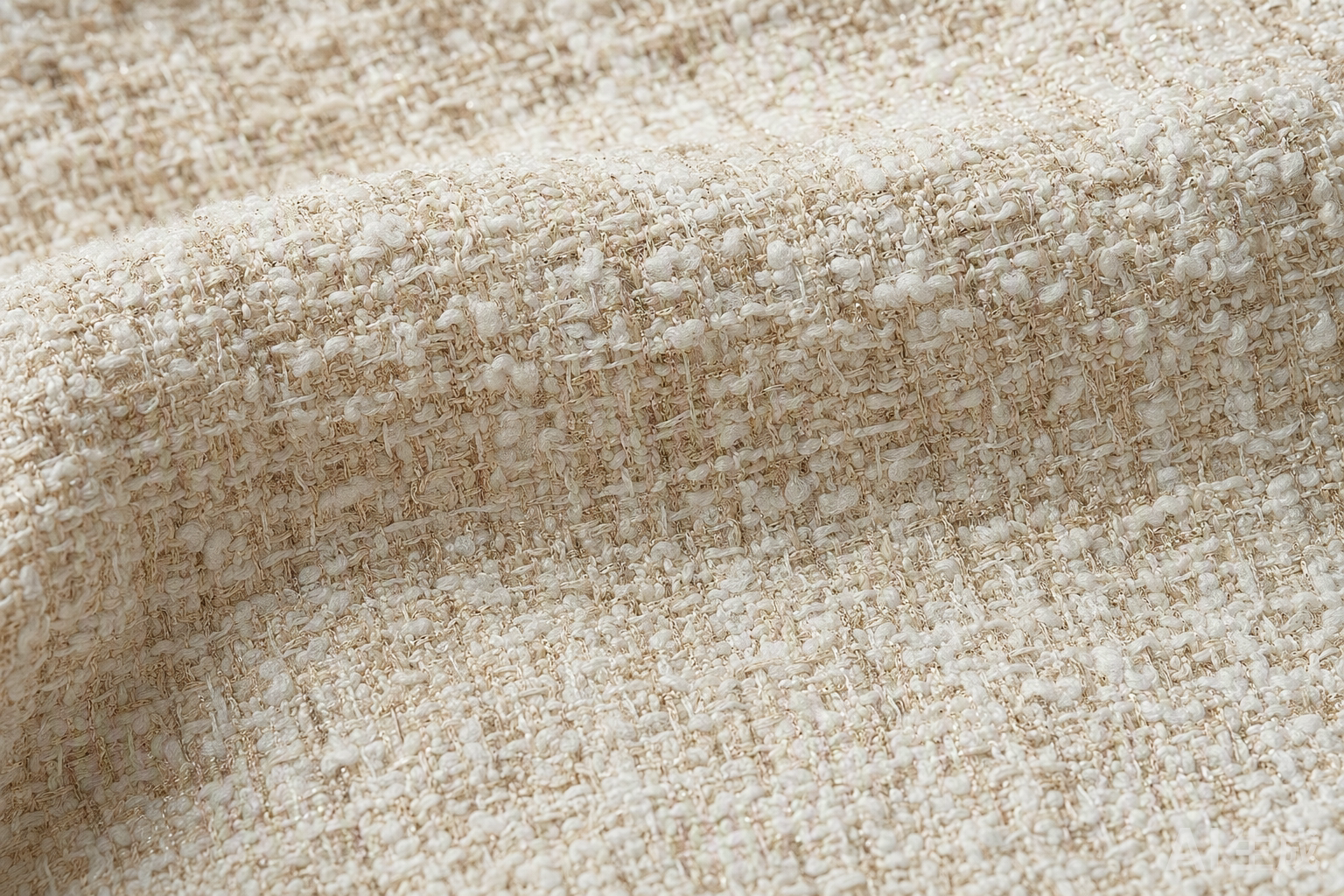
That mechanical difference is the root of everything that follows. A woven boucle jacket hangs on the body with architecture. A knitted boucle cardigan wraps and moves. Confuse the two in a tech pack and your sample room will send back something that neither drapes nor tailors the way the designer intended.
Structure and Stretch: The Mechanical Gap
The stretch difference between woven and knitted boucle is not a matter of degree but of physics. Woven fabrics, by construction, have near-zero mechanical stretch unless spandex is knit or wrapped into the yarn. A standard woven boucle stretches less than 5% before the yarns lock and the fabric simply cannot give further. Press a woven boucle jacket shoulder and it holds its shape against the body.
Knitted boucle stretches 20 to 40% depending on stitch type and gauge. A coarse-gauge flat knit gives more open loops that stretch further; a fine-gauge circular knit gives denser stretch that recovers well. This is why a knitted boucle coat can use a zipper closure without a placket and still look clean when the wearer moves, while a woven boucle blazer needs button placement engineered to the body measurement with little margin.
Recovery tells a parallel story. Woven boucle does not need to recover because it never stretches in the first place. Knitted boucle relies on the yarn’s inherent elasticity and the stitch architecture to snap back. Wool boucle yarns with good twist recovery return to shape well; viscose-heavy boucle yarns with low twist can bag at elbows and seat points over time. When specifying knitted boucle for a garment that sees wear, ask for the wool content and the twist level in the yarn spec.
Woven Boucle: Characteristics and Best Uses
Woven boucle earns its place in tailored garments where structure matters. The fabric holds a pressed seam, maintains a rolled lapel, and keeps a lined jacket’s shape through wear. Designers who reference Chanel-style jackets are specifying woven boucle, the kind Fursone produces on the Chanel-Style Tweed line with metallic and sequin accents.
Key properties of woven boucle for production:
- Dimensional stability: the warp-and-weft grid holds shape through tailoring and pressing, which is why structured blazers use it.
- Seam integrity: woven boucle takes stitching without distorting, so piped seams, fringe edges, and chain-weighted hems all hold their line.
- Surface texture retention: the boucle loops lock into the weave structure and do not migrate, so the texture pattern stays consistent across the garment front.
- Fraying: woven boucle frays at cut edges, so seam finishes (serging, bound seams, or lining) are mandatory in production.
For a brand building a structured jacket or coat collection, woven boucle is the default. The 100M ready-stock rolls at Fursone let you start sampling immediately without a custom MOQ, and the 1000M custom threshold opens if you need a specific weight, color, or fiber blend for the line.
Knitted Boucle: Characteristics and Best Uses
Knitted boucle is the choice when the garment needs to move with the body rather than hold a shape against it. Think cardigans, soft coats, wrap fronts, and duster-length pieces where drape is the design feature. The Knitted Overcoat product line at Fursone serves exactly this segment, and the Performance Knit line covers the functional-knit side.
What makes knitted boucle different in production:
- Natural stretch: the loop structure gives two-way or four-way stretch depending on knit direction, eliminating or reducing the need for elastic fibers.
- Drape: knitted boucle falls from the shoulder in a continuous curve, which suits unstructured silhouettes and open-front designs.
- No fray: knit construction means cut edges do not unravel the way woven edges do, simplifying seam finishing on exposed-edge designs.
- Pattern efficiency: knit garments often use fewer pattern pieces (a one-piece body, for instance) because the fabric conforms to the body without darts.
Where knitted boucle falls short is in garments that need a crisp line. A lapel that rolls, a shoulder that holds a pad, a welt pocket that stays square: these require the stability of a woven. A brand that tries to build a tailored blazer in knitted boucle will find the lapel collapsing and the pockets distorting after a few wears.
Durability, Pilling, and Recovery Compared
Pilling is the question every boucle buyer asks, and the answer depends on both the yarn and the construction. Fursone’s boucle products carry ISO grade 3-4 pilling resistance per ISO 12945-2, which means the fabric surface shows only slight fuzzing after the standard abrasion test cycle. That rating applies across both woven and knitted lines because it is primarily a function of yarn twist and fiber quality.
Construction does affect how pilling manifests. In woven boucle, pills tend to form at friction points: collar edges, cuff interiors, and underarm seams where the fabric rubs against itself or another layer. The stable grid structure means pills stay localized and do not spread across the surface. In knitted boucle, pilling can appear more broadly because the stitch loops create more surface-to-surface contact during wear, but the pills are also easier to remove with a fabric comb since the knit structure gives under the comb pressure.
Recovery from stretching is where the constructions diverge sharply. A woven boucle jacket that gets stretched during wear (a tight fit, a long flight) returns to shape because it never really stretched in the first place. A knitted boucle coat that bags at the elbow or stretches across the back needs the yarn’s inherent recovery to snap back. Wool-rich knitted boucle (60% or more wool content) recovers well; blends heavy in acrylic or viscose may not. If your tech pack specifies knitted boucle for a fitted garment, require a wool content minimum and a twist specification in the yarn.
Cost and Production Speed Comparison
The cost structure of woven versus knitted boucle differs in ways that affect both the fabric invoice and the garment cut-and-sew cost. Here is a practical comparison based on Fursone’s dual-production capability:
| Factor | Woven Boucle | Knitted Boucle |
|---|---|---|
| Yarn efficiency | Higher for stable widths; less yarn waste | More yarn per square meter due to loop density |
| Production speed | Power-loom production, high meters per shift | Circular or flat knit, moderate meters per shift |
| Garment cut-and-sew | More pattern pieces, lining, seam finishing | Fewer pieces, optional lining, no-fray edges |
| Sampling | 7 days from Fursone stock rolls | 7 days from Fursone knit programs |
| Price position vs European mills | 30-50% below European pricing | 30-50% below European pricing |
The net cost picture depends on what you are building. A structured blazer in woven boucle costs more in cut-and-sew (more pieces, lining, finishing) but the fabric itself is yarn-efficient. A soft cardigan in knitted boucle costs less in assembly but may use more yarn per garment. For brands sourcing from Fursone, the 7-day sampling turnaround applies to both constructions, so you can test both approaches before committing to production.
Which Construction for Which Garment Type
The decision comes down to what the garment asks the fabric to do. Here is the practical routing:
Choose Woven Boucle For
- Structured jackets and blazers with lapels, shoulder structure, and lining
- Coats with welt pockets, bound buttonholes, and tailored seams
- Skirts and dresses where the fabric must hold a shape against the body
- Any garment with a pressed crease, piped seam, or fringe edge detail
Choose Knitted Boucle For
- Cardigans and open-front jackets where drape is the design feature
- Soft coats and wraps that conform to body movement
- Duster-length pieces where the fabric falls in a continuous line
- Garments with knit-in patterns, color blocks, or seamless construction
Some collections use both. A brand offering a two-piece set might specify woven boucle for the jacket and knitted boucle for the matching skirt or vest, creating visual cohesion through shared texture while optimizing each piece for its structural demands.
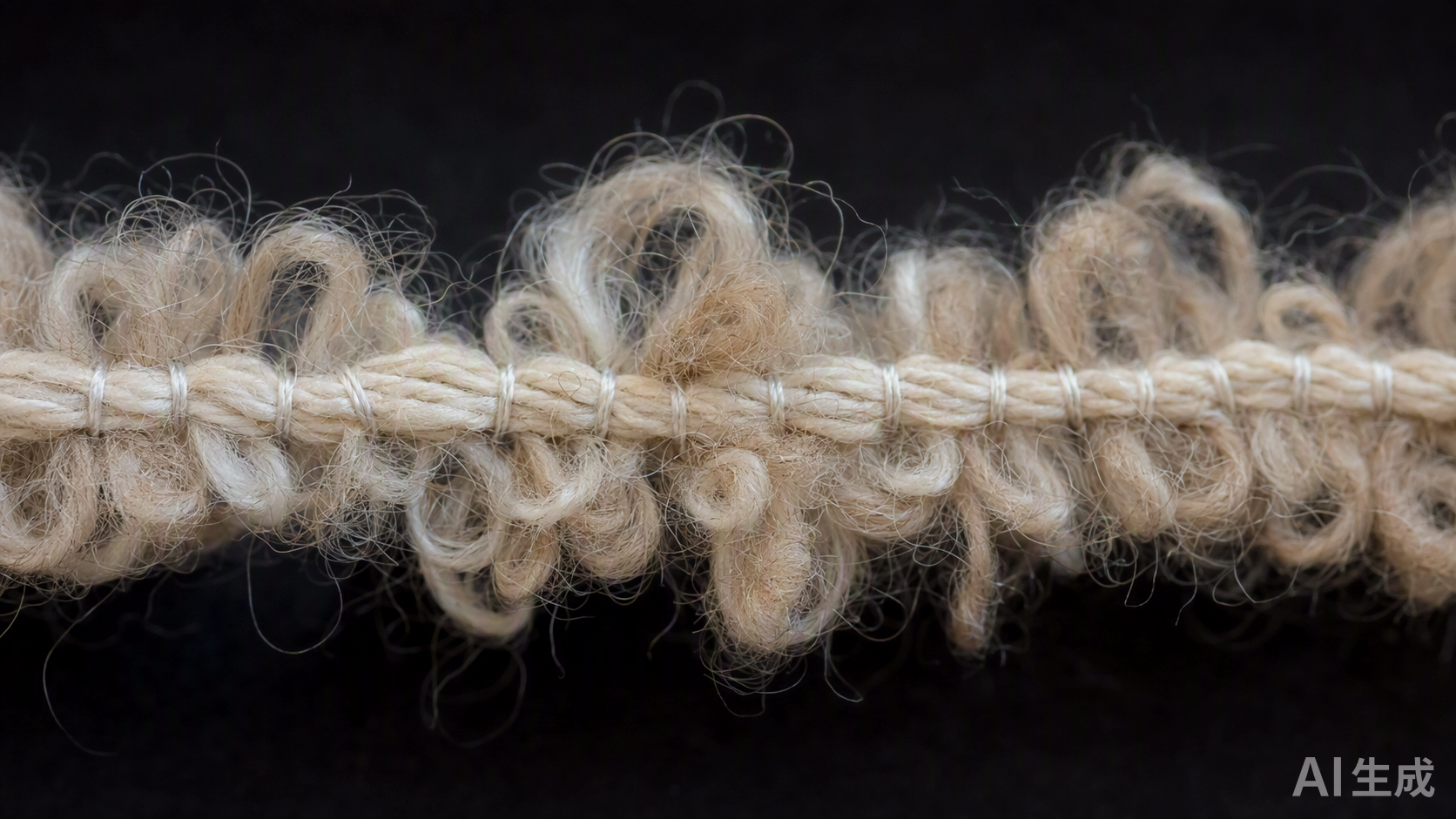
For brands deciding between the two, Fursone’s 100M ready-stock program lets you pull swatches of both constructions from the same yarn family and compare them side by side. The stock program has no MOQ, so you can sample multiple constructions before committing to the 1000M custom order for production.
Need Both Constructions for One Collection?
Fursone runs woven and knitted boucle on the same factory floor in Wenzhou. Sample both from 100M stock rolls in 7 days, then scale to 1000M custom production with matching yarn specs.
Explore Our ProductsFrequently Asked Questions
Can woven boucle stretch at all?
Woven boucle stretches less than 5% mechanically. The warp-and-weft grid resists deformation. Adding 2-3% elastane to the yarn gives slight give, but the fabric remains a stable, structured material compared to any knit.
Does knitted boucle pill more than woven?
Pilling depends primarily on yarn twist and fiber quality, not construction. Fursone’s boucle carries ISO grade 3-4 pilling resistance across both types. Knit construction may show pilling more broadly due to stitch contact, but pills are also easier to remove with a comb.
Can I use the same boucle yarn for woven and knitted production?
Yes. Boucle fancy yarn is construction-agnostic. The same three-component yarn (core, effect, binder) can run as weft in a loom or feed into a knitting machine. Fursone stocks boucle yarn families that serve both lines.
Which construction costs less per garment?
It depends on the garment. Woven boucle is yarn-efficient but costs more in cut-and-sew due to lining and seam finishing. Knitted boucle uses more yarn but simplifies assembly. For soft, unstructured pieces, knit wins on total cost; for tailored pieces, woven is the only correct option.
Conclusion
The woven versus knitted boucle question has a straightforward answer once you know what the garment needs. Structured jackets, coats with tailoring, and pieces with pressed seams call for woven boucle and its dimensional stability. Cardigans, soft coats, and drape-driven designs call for knitted boucle and its natural stretch. The yarn is the same; the construction changes everything about how the fabric behaves on the body and in production.
Key takeaways for your sourcing decision:
- Match construction to garment structure, not to personal preference.
- Require ISO grade 3-4 pilling data and wool content minimums for any boucle, woven or knit.
- Sample both constructions from Fursone’s 100M stock program before committing to the 1000M custom order.
If your collection calls for both constructions, sourcing from a single mill that runs both lines eliminates the yarn-matching problem entirely. Fursone has run woven and knitted boucle on the same Wenzhou floor since 1995, and the 7-day sampling program lets you compare both approaches before you commit.