
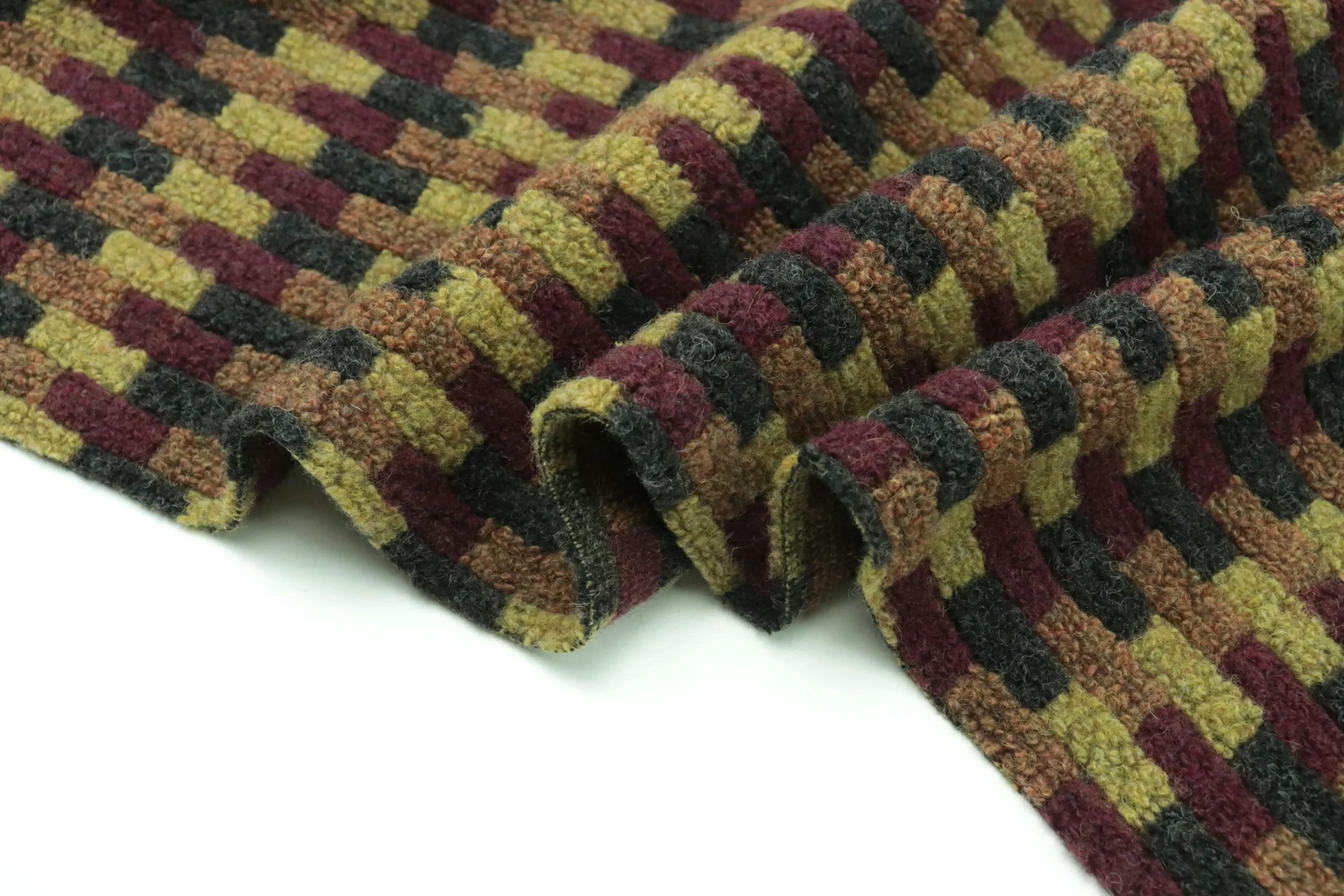
metallic-tweed-bridal-fabric-case-study/” rel=”noopener”>Metallic tweed fabric merges traditional wool weaving with reflective metal-thread yarns, producing a textile that catches light without sacrificing the structural density that makes tweed a staple for coats, jackets, and tailored dresses. Buyers sourcing metallic tweed fabric for seasonal collections need to understand three things before committing to a bulk order: which metallic yarn types are available, how those yarns behave inside a woven structure, and what care requirements will affect the end consumer. Getting any of these wrong leads to returns, pilling complaints, or color migration after dry cleaning.
At Fursone, metallic threads have been woven into Chanel-style tweed on power looms how metallic yarns are woven into tweed on power looms for over a decade. The Wenzhou facility runs 300+ looms and holds ISO certification with grade 3-4 pilling resistance, meaning metallic tweed produced here maintains surface integrity through repeated wear. The same production lines handle both 100-meter stock orders and 300-metre custom runs, giving buyers flexibility to test metallic tweed at small volume before scaling.

Metallic Yarn Types Used in Tweed
Lurex and Metalized Film Yarns
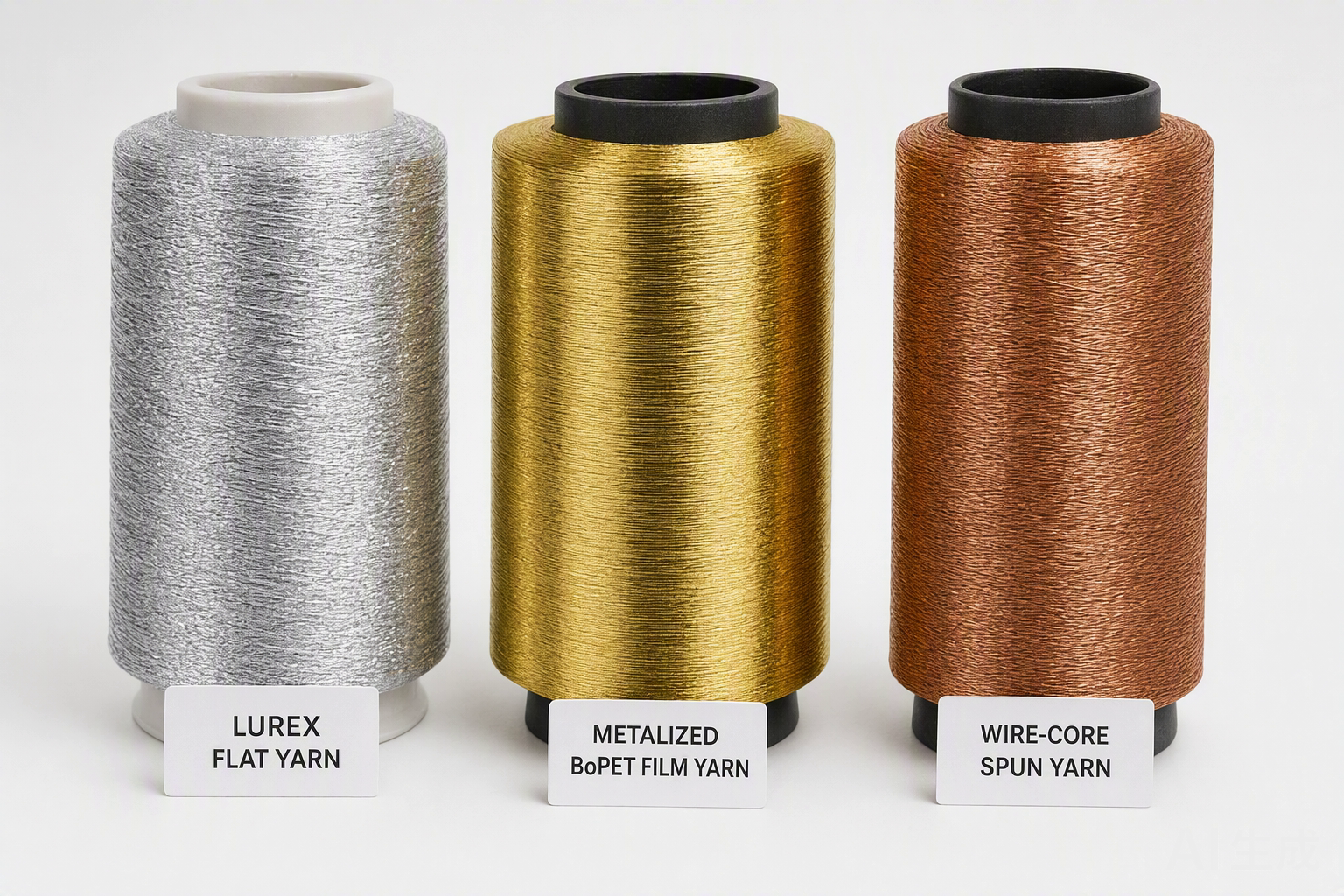
Lurex is the industry shorthand for metalized polyester film yarn, manufactured by laminating a micro-thin layer of aluminum onto a polyester film base, then slitting the composite into flat strips typically 0.25 to 1.0 millimeters wide. The aluminum layer provides reflectivity while the polyester carrier gives the yarn enough tensile strength to survive loom tension. In tweed production, Lurex yarns are the most common metallic component because they balance brightness against cost, running notably less expensive than solid metal wire-core alternatives.
The flat strip form factor creates a directional sheen, the fabric surface looks brighter from one angle than another, which designers exploit for garments that shift appearance under runway lighting. When twisted around a cotton or nylon core, Lurex becomes a round-profile yarn that integrates more uniformly into boucle and textured tweed structures.
BoPET Film Yarns (Mylar-Type)
Biaxially-oriented polyethylene terephthalate film, known commercially as Mylar (a DuPont trademark), serves as another metallic yarn substrate. The metalization process deposits aluminum vapor onto the BoPET surface in a vacuum chamber, creating a mirror-like finish. BoPET-based metallic yarns tend to hold color better than Lurex, the metallic layer bonds more tightly to the BoPET surface, reducing the risk of flaking during finishing processes like decatizing or crabbing.
For tweed specifically, BoPET metallic yarns work well in piece-dyed constructions where the wool component absorbs dye but the metallic yarn retains its original luster. This two-tone effect is a hallmark of Chanel-style tweed, where metallic highlights sit against dyed wool boucle loops.
Spun Metal and Wire-Core Yarns
The third category uses actual metal fibers, stainless steel, silver, or gold-plated copper, either spun directly into yarn or wrapped around a textile core. These yarns produce the most authentic metallic luster but come with production trade-offs. Metal wire-core yarns are heavier, adding measurable weight to the fabric compared to Lurex equivalents, and accelerate loom component wear. On Fursone’s 300+ loom configuration, wire-core yarns require specialized tension settings and reduced running speeds to prevent reed damage.
Wire-core metallic tweed appears most often in couture and stage costume applications where weight is acceptable and visual impact outweighs production efficiency. For commercial ready-to-wear, Lurex and BoPET yarns dominate because they deliver comparable visual impact at a fraction of the cost and production complexity. For a real-world example of how a costume house sourced metallic tweed for stage and film, see our metallic tweed costume case study.
How Metallic Threads Integrate Into Tweed Weaves
Warp and Weft Placement Strategies
Metallic yarns enter tweed in two primary configurations. The first places metallic yarn as supplemental weft, crossing the wool warp at regular intervals to create horizontal metallic lines or scattered highlights. This approach minimizes loom reconfiguration, the warp beam stays wool-only, and the metallic yarn feeds from a separate creel. The second configuration weaves metallic yarn into the warp itself, producing vertical metallic streaks that catch light when the garment moves.
Most Chanel-style tweed uses a combination: wool warp with intermittent metallic warp ends, plus a boucle weft that includes metallic slubs. This creates the scattered, irregular sparkle that distinguishes metallic tweed from uniformly shiny brocade. The irregularity is deliberate, it reads as handcrafted rather than mass-produced.
Tension Control and Yarn Breakage
Metallic yarns elongate differently from wool. Wool stretches significantly under tension and recovers; metallic film yarns stretch far less before the metalized layer deforms permanently. On a power loom running hundreds of picks per minute, this mismatch causes two problems: metallic yarn snaps when wool tension spikes during shed formation, and stretched metallic yarn creates loose, wavy fabric sections that fail inspection.
Fursone’s production team manages this through differential tensioning, the creel feeding metallic yarn runs at lower tension than the wool warp. This reduced tension lets the metallic yarn sit into the weave without overstretching. The trade-off is slightly looser pickup, but experienced weavers compensate through pick density adjustment. Production records show that properly tensioned metallic yarn breakage drops significantly compared to uniform tension settings, reducing waste and improving bulk consistency.
Fursone produces metallic tweed on 300+ power looms with ISO-certified quality control. Order 100m stock rolls for immediate sampling, or specify custom metallic yarn type, color, and GSM with a 300m MOQ. 7-day sampling turnaround.
Visual and Tactile Properties of Metallic Tweed
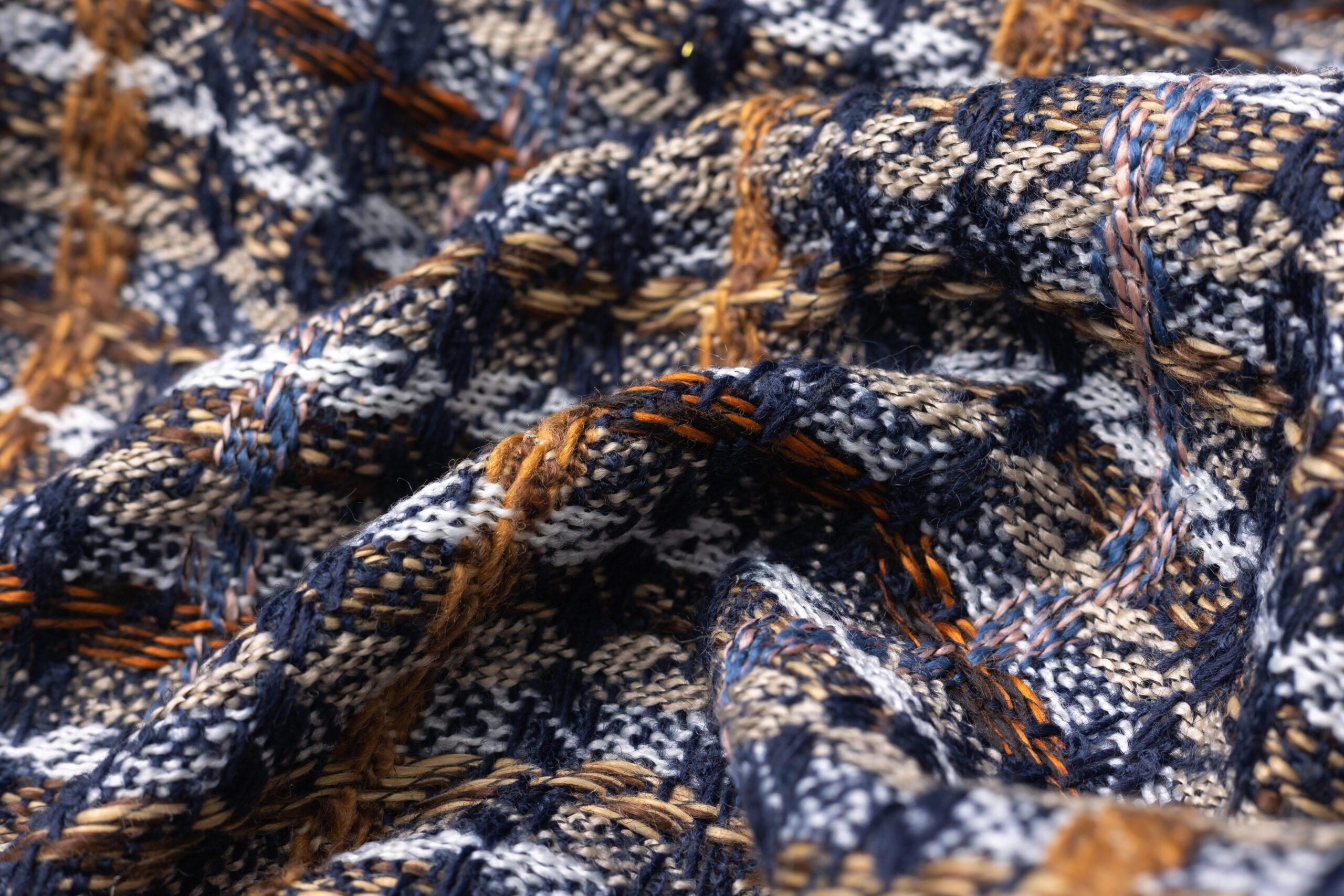
The visual impact of metallic tweed depends on three variables: yarn type, density of metallic placement, and base wool color. A fabric with Lurex weft every 10th pick reads as a subtle glint, while the same construction with metallic yarn every 3rd pick approaches a full metallic surface. Designers specify pickup density to control where the eye lands on the garment.
Tactile differences are measurable. Metallic tweed runs heavier than equivalent non-metallic tweed because metallic yarns add mass without bulk. The hand feel shifts from soft wool to a slightly crisp, textured surface. Some buyers describe metallic tweed as having more “body” or “structure,” which is desirable for coat-weight applications but may require lining for dress-weight constructions.
| Property | Lurex Tweed | BoPET Tweed | Wire-Core Tweed |
|---|---|---|---|
| Reflectivity | Bright, directional | Soft, diffuse | Sharp, authentic |
| Weight Add | +10 to 15% | +10 to 15% | +20 to 25% |
| Pilling (ISO grade) | Grade 3-4 | Grade 3-4 | Grade 3-4 |
| Cost Index | Baseline | Slightly higher | Premium |
Care and Maintenance for Metallic Tweed
Metallic tweed requires more specific care than standard wool tweed. The metallic component, whether Lurex film or wire-core, is sensitive to three things: high heat, abrasive friction, and chemical exposure. Dry cleaning is the standard recommendation for metallic tweed garments. The perchloroethylene solvent used in dry cleaning does not react with aluminum or polyester film, preserving metallic luster through multiple cleaning cycles.
Home washing, even on wool cycles, risks mechanical abrasion that can scratch the metallic surface and cause clouding. Heat is the more common damage vector. Ironing directly on metallic tweed at temperatures above 150 degrees Celsius causes the aluminum layer to deform, creating dull patches that cannot be reversed. Steam pressing with a pressing cloth between the iron and fabric surface is the safe approach for finishing metallic tweed garments during production.
Chlorine bleach should never contact metallic tweed. The chlorine oxidizes aluminum, turning bright metallic yarns dull and grayish within minutes. Even trace chlorine in municipal water supplies can cause gradual degradation over repeated gentle washes, which is another argument for dry cleaning as the default care method.
Storage matters for metallic tweed. Garment bags should allow air circulation, and items should not be compressed tightly, creases pressed into metallic yarns during storage become permanent. For woolen overcoat constructions using metallic tweed, hanging storage on padded hangers prevents crease formation at the shoulders where metallic yarn concentration is typically highest.
Sourcing Metallic Tweed for Production
When sourcing metallic tweed, buyers should specify four parameters in their initial inquiry: metallic yarn type (Lurex, BoPET, or wire-core), pickup density (metallic picks per centimeter), base wool composition, and target GSM. Without these four specifications, mills default to their standard metallic tweed construction, which may not match the buyer’s intended visual effect or weight target.
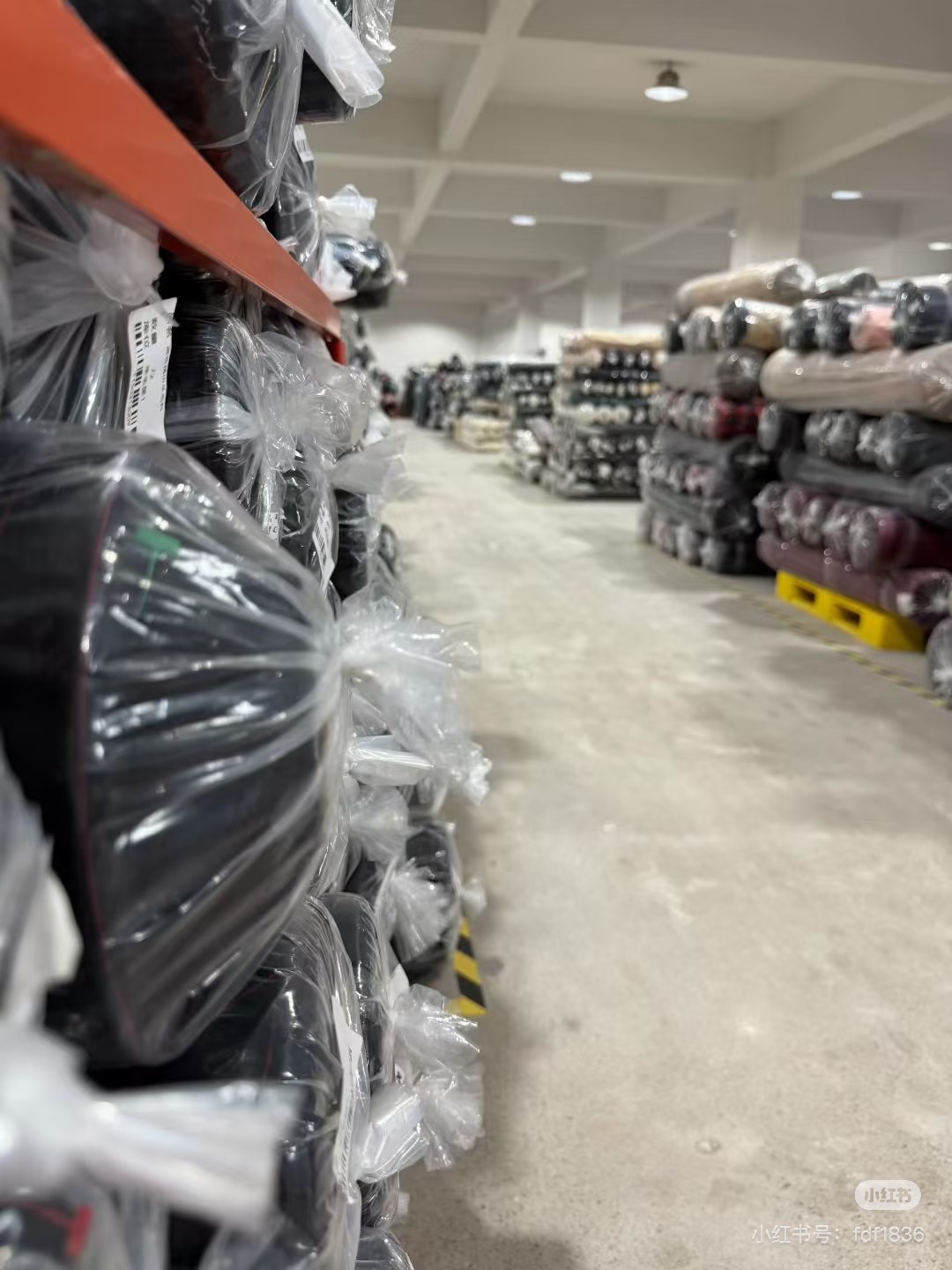
Fursone’s Chanel-style tweed line offers metallic tweed in both stock and custom configurations. The 100-meter ready stock program lets buyers receive fabric within days for prototyping and sample garments, with no minimum order. Once the sample is approved, the 300-metre custom MOQ enables specification of metallic yarn type, custom color matching via Pantone reference, GSM adjustment from 280 to 450, and exclusive weave patterns. Sampling turnaround runs 7 days from specification lock, compared to the 6-week industry standard documented in Fursone’s factory operations.
Pricing for metallic tweed runs higher than standard wool tweed because of the metallic yarn cost and reduced loom efficiency. Fursone’s positioning as a Wenzhou-based fabric developer with deep production experience means metallic tweed costs approximately one-third of comparable European production, without the minimum order quantities or lead times that European mills typically require. Buyers can verify quality benchmarks through the ISO certification and grade 3-4 pilling test reports provided with each shipment, per International Organization for Standardization testing protocols.
Frequently Asked Questions
What is metallic tweed fabric made of?
Metallic tweed fabric is woven from wool or wool-blend yarns combined with metallic thread yarns (typically Lurex, metalized BoPET film, or wire-core). The metallic component adds reflective highlights to the traditional tweed weave structure, usually in a plain or twill construction on power looms.
Can you wash metallic tweed?
Dry cleaning is strongly recommended for metallic tweed. Home washing risks mechanical abrasion that scratches the metallic surface, and chlorine in water can oxidize aluminum-based metallic yarns. Steam pressing with a protective cloth is safe for production finishing.
Does metallic tweed pill easily?
Quality metallic tweed achieves ISO grade 3-4 pilling resistance, meaning the surface maintains integrity through repeated rub cycles. Pilling occurs when low-quality metallic yarns flake or when the wool component is not properly finished. Specifying grade 3-4 minimum in purchase orders prevents this issue.
What is the difference between Lurex and metallic tweed?
Lurex is a specific brand of metalized polyester film yarn. Metallic tweed is the fabric itself. Not all metallic tweed uses Lurex brand yarns, some use metalized BoPET film or actual wire-core yarns. Lurex has become a genericized term in the industry, similar to how “Xerox” means photocopy.
What GSM should metallic tweed be for coats?
For coat-weight metallic tweed, target 380 to 450 GSM. This range provides sufficient drape and warmth while keeping the metallic yarn proportion balanced. Dress-weight metallic tweed typically runs 280 to 350 GSM for lighter silhouettes.
Conclusion
Metallic tweed gives designers a fabric that performs structurally while delivering visual impact that standard wool tweed cannot match. The choice between Lurex, BoPET, and wire-core yarns determines reflectivity, weight, and cost; the weave integration method controls how light moves across the garment surface. Care requirements are specific but not complex: dry clean, avoid high heat, and never use chlorine bleach.
When sourcing, specify yarn type, pickup density, wool composition, and GSM in the initial RFQ. Test with 100-meter stock rolls before committing to 300-metre custom production. Verify ISO pilling grade on every shipment. These steps prevent the most common metallic tweed quality issues, yarn breakage, surface clouding, and weight deviation, before they reach the cutting table.
For how boucle snagging differs from pilling and how to prevent each, see how boucle snagging differs from pilling and how to prevent each.

Related Insights

Fabric Width and Selvedge Lines: Planning Cutting Efficiency Before You Order Tweed
Buyers compare tweed by weight, color and price, and then discover at the cutting table...
Reading Fabric Selvedge: Markings, Width and Quality Signals
The selvedge, the finished edge running along both sides of a fabric roll, is the...

Yarn Counts in Tweed: What 2/8 NM Means for Hand, Weight and Cost
Ask three suppliers to quote “a 400 gsm tweed for overcoats” and you will often...