


Spring 2027 tweed is moving in two directions at once: pastel colorways that bring the fabric out of its winter heritage, and lightweight constructions that make it wearable in warmer months. Brands that develop their spring fabric specs now, in August 2026, have six to eight months to move from sampling to retail floor. Brands that wait until January will sample against a production queue that no longer meets the calendar.
Fursone’s 300+ looms in Wenzhou run both directions: the Chanel-Style Tweed line carries the pastel and metallic colorways the metallic tweed holiday 2026 forecast, and the knit fabric lines produce the lighter constructions. Here is what the Spring 2027 tweed directions look like from the production side, and what brands need to specify now to hit the season.
Tweed has a winter image problem for spring: the black, camel, and charcoal palettes that sell in October look heavy on a rack in March. Spring 2027 moves pastel, and the direction is specific. The color palette brands are developing now runs to four core tones:
- Dusty rose: a muted pink that reads as neutral in daylight but catches warmth in golden-hour photography. Pairs with cream and grey bases.
- Sage green: a soft, desaturated green that works as a spring alternative to olive or forest. Reads as fresh without being pastel-bright.
- Powder blue: the lightest blue that still reads as a color rather than as off-white. Works in boucle with white base yarn for a tonal effect.
- Lavender: a soft purple that bridges spring and summer. In metallic tweed, lavender with silver Lurex gives a light-reflective surface that photographs well for e-commerce.
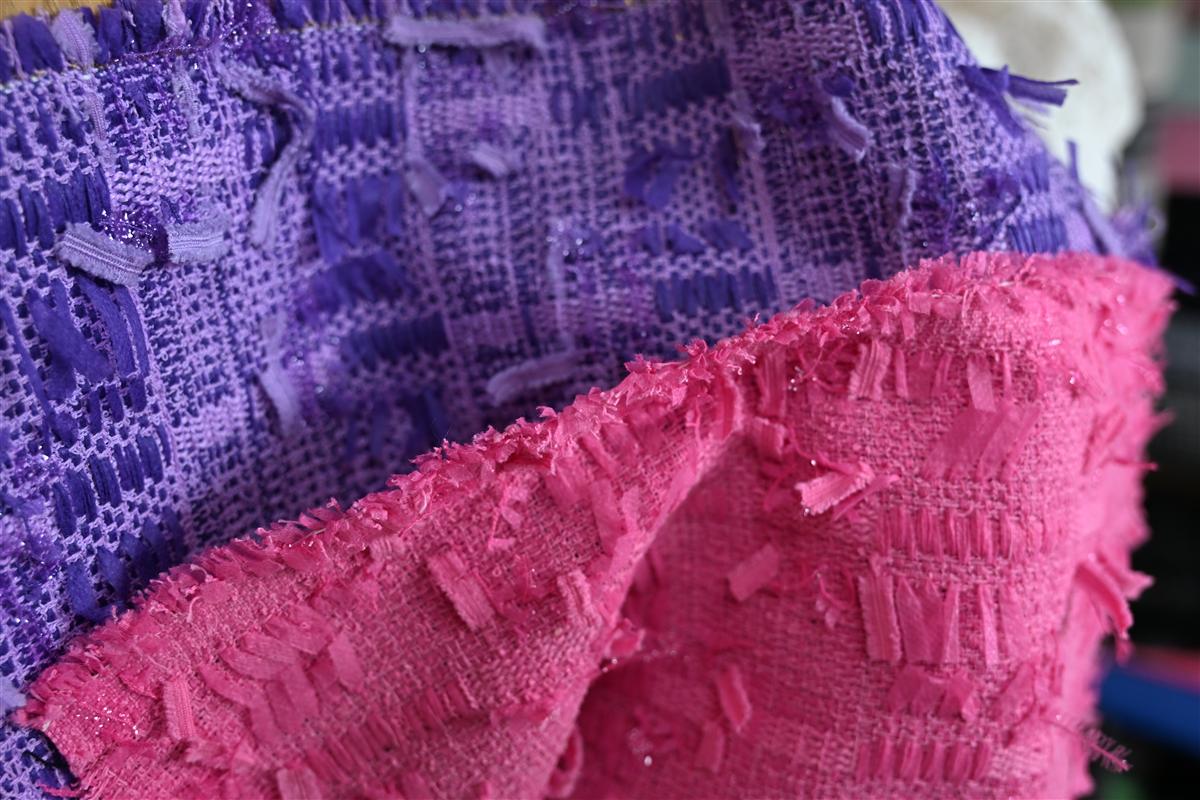
These are not Pantone-forecast colors pulled from a trend service. They are the tones that Fursone’s Chanel-Style Tweed line already produces for clients developing spring capsules, and they translate from sample swatch to production fabric without the color-shift problems that come from specifying a tone the mill has never dyed before.
For brands specifying pastel tweed, the base yarn matters. A cream or off-white base lets the pastel effect yarn read true; a grey base mutes the pastel into a more sophisticated, less sweet direction. Brands that want the pastel to pop should specify a white or cream base; brands that want a more editorial, restrained pastel should specify a light grey base. Fursone can produce either on custom order at the 300M tier, with swatches available in 7 days from the 100M stock program.
Weight is the other axis of the spring shift. Winter tweed runs 400-500+ GSM for coat and jacket weight. Spring tweed drops to 280-380 GSM, which is light enough for a blazer worn over a t-shirt, a skirt that moves, or a dress that does not require a lining for warmth. The construction change from winter to spring is not just less yarn per square meter; it is a different fabric architecture.
| Season | GSM Range | Typical Use |
|---|---|---|
| Fall/Winter | 400-500+ GSM | Coats, heavy jackets, structured blazers |
| Transitional | 350-420 GSM | Light jackets, lined blazers |
| Spring 2027 | 280-380 GSM | Unstructured blazers, skirts, dresses, cardigans |
The lightweight direction opens tweed to garment types that the winter weight cannot serve. A spring blazer at 320 GSM in pastel boucle can be worn over a silk blouse for a March wedding. A tweed skirt at 280 GSM moves like a flounce rather than hanging like armor. The fabric gains versatility, but the brand must specify the GSM in the tech pack because a mill’s default tweed spec often sits at winter weight unless told otherwise.
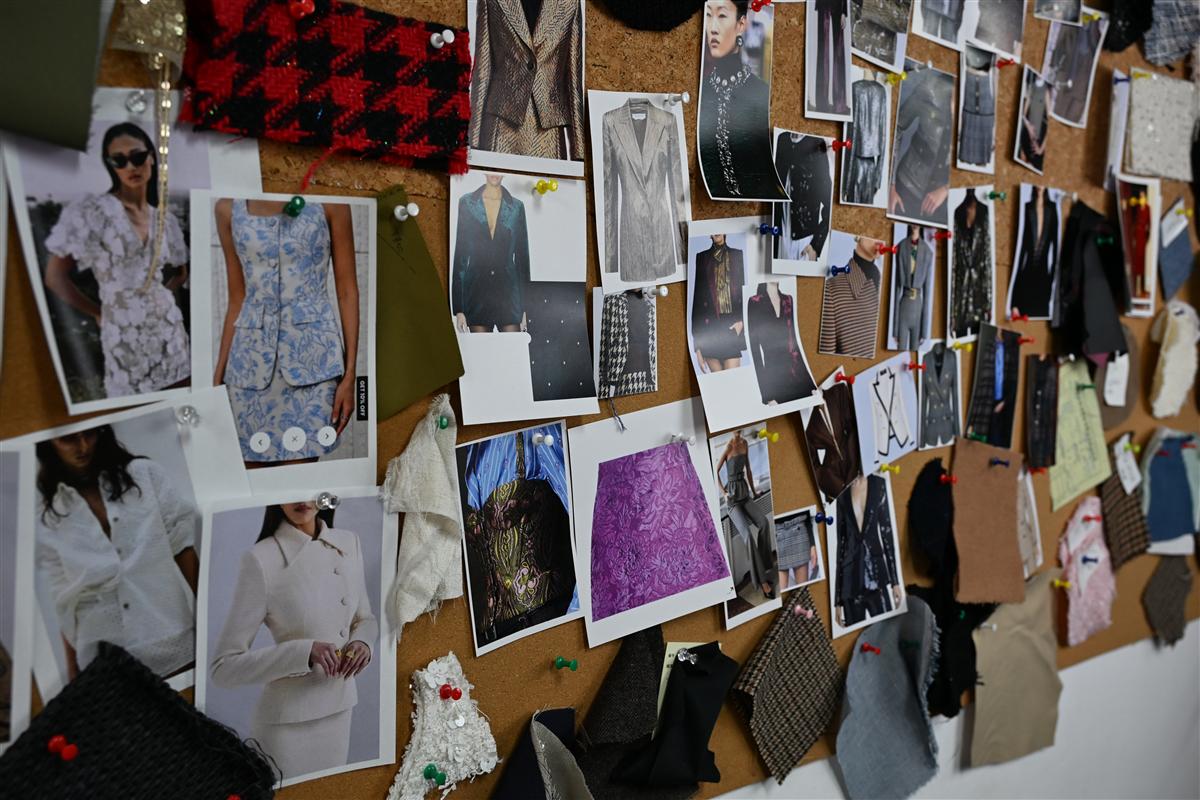
The lightweight direction pushes tweed toward knit construction. Woven tweed at 280 GSM is possible but pushes the loom to produce a fabric that is light enough to lose the structure that makes woven tweed valuable. Knitted tweed at 280-320 GSM keeps its drape and stretch, which is exactly what spring silhouettes need. This is why Fursone’s Knitted Overcoat and Fashion Sweater Knit lines see increased interest from brands developing spring capsules.
Knit tweed for spring serves three garment categories that woven tweed cannot:
- Spring cardigans: open-front, unstructured pieces where drape is the design. Knit tweed at 300 GSM gives the look of tweed with the comfort of a knit.
- Soft blazers: blazers that skip the shoulder pad and structured lapel, using the knit’s natural stretch to fit without tailoring. A growing category in spring collections.
- Dresses: tweed-look dresses in knit construction give the texture without the weight. At 280 GSM, a knit tweed dress is comfortable from March through May.
The Performance Knit line covers the functional side of this direction, with knits engineered for stretch recovery and shape retention that hold up through a season of wear. For brands building a spring capsule that mixes structured and soft pieces, specifying both woven and knit tweed from the same color family gives the collection coherence without sacrificing the right fabric for each garment type.
Metallic tweed is a fall staple, but Spring 2027 brings it into lighter weights and softer color combinations. The direction is not full metallic coverage but subtle metallic accents within a pastel boucle: silver Lurex threads scattered through a dusty rose base, or gold BoPET film flecks in a sage green. The metallic gives the fabric light-catch for spring photography without the heaviness of a full metallic winter tweed.
Fursone’s metallic yarn capability supports this direction. The three metallic yarn types (Lurex, metalized BoPET film, wire-core) can be specified at lower density than the winter standard. Where a fall metallic tweed might run 8-12% metallic yarn content, a spring metallic tweed can drop to 3-5%, giving a subtle shimmer that reads as an accent rather than a statement. The 7-day sampling program lets brands test different metallic densities on the same base fabric to find the right level.
Spring collections increasingly carry sustainability messaging, and the fabric spec is where that claim is earned or lost. Fursone’s Sustainable Tweed Fabrics Design program offers two paths for spring:
- GRS-certified recycled wool: for brands that need a recycled-content claim on the hangtag. The heathered, slightly irregular color of recycled wool suits the spring pastel direction because the natural variation reads as organic rather than flat.
- OEKO-TEX certified conventional wool: for brands that want the safety certification without the recycled claim. OEKO-TEX confirms the fabric is free from harmful substances, which matters for spring garments worn against bare skin.
Both paths run on the same 300-loom floor with the same 7-day sampling and ISO grade 3-4 pilling resistance. The sustainability certification does not compromise the production quality or the pilling performance; it changes the fiber source and the documentation trail.
The fashion calendar gives brands a narrow window to develop spring fabric. Spring 2027 collections need to ship to retail by January 2027 at the latest, which means production fabric must be ready by September 2026, which means sampling must conclude by August 2026. Here is the timeline with Fursone’s production parameters:
- August 2026 (now): request samples from Fursone’s 100M stock program in pastel colorways and lightweight constructions. 7-day turnaround.
- August-September 2026: iterate on the spec. Test GSM, color, metallic density, and fiber blend. Each sample round is 7 days.
- September 2026: commit to the 300M custom production order with the final spec. Production runs on the 300-loom floor.
- October-November 2026: fabric delivered. Cut-and-sew begins. Garments ship to retail for January 2027 floor set.
Brands that start sampling in August have time for two to three rounds of iteration before committing to production. Brands that start in October or November lose the iteration window and must commit to a spec based on the first or second sample, which is where quality issues in spring collections typically originate.
Spring 2027 tweed moves in two directions that reinforce each other: pastel colorways bring the fabric into spring aesthetics, and lightweight constructions make it physically wearable in the season. The brands that win the spring tweed category will be the ones that start sampling now, in August 2026, and use the iteration window to dial in the exact GSM, color, and construction their garment designs need.
- Specify 280-380 GSM for spring; anything heavier is a winter fabric.
- Choose knit construction for unstructured spring pieces, woven for structured ones.
- Start sampling in August to allow iteration before the September production commitment.
Fursone’s 300+ looms run both pastel woven and lightweight knit tweed with 7-day sampling and 30-50% cost advantage versus European mills. Start your spring 2027 fabric development with swatches from the 100M stock program.

Related Insights

Tweed and Boucle for Spring 2026: Lighter Weights and Softer Palettes
Tweed’s migration out of the winter wardrobe is now a settled pattern: buyers who once...

Building a Fall Capsule Around One Tweed: The Six-Piece Math
Small fashion brands do not lose money on tweed because they picked the wrong color....

Tweed Accessories Programs: Caps, Bags and the Offcut Economy
The fastest-growing piece of many tweed programs is not the jacket. It is the 40-dollar...