

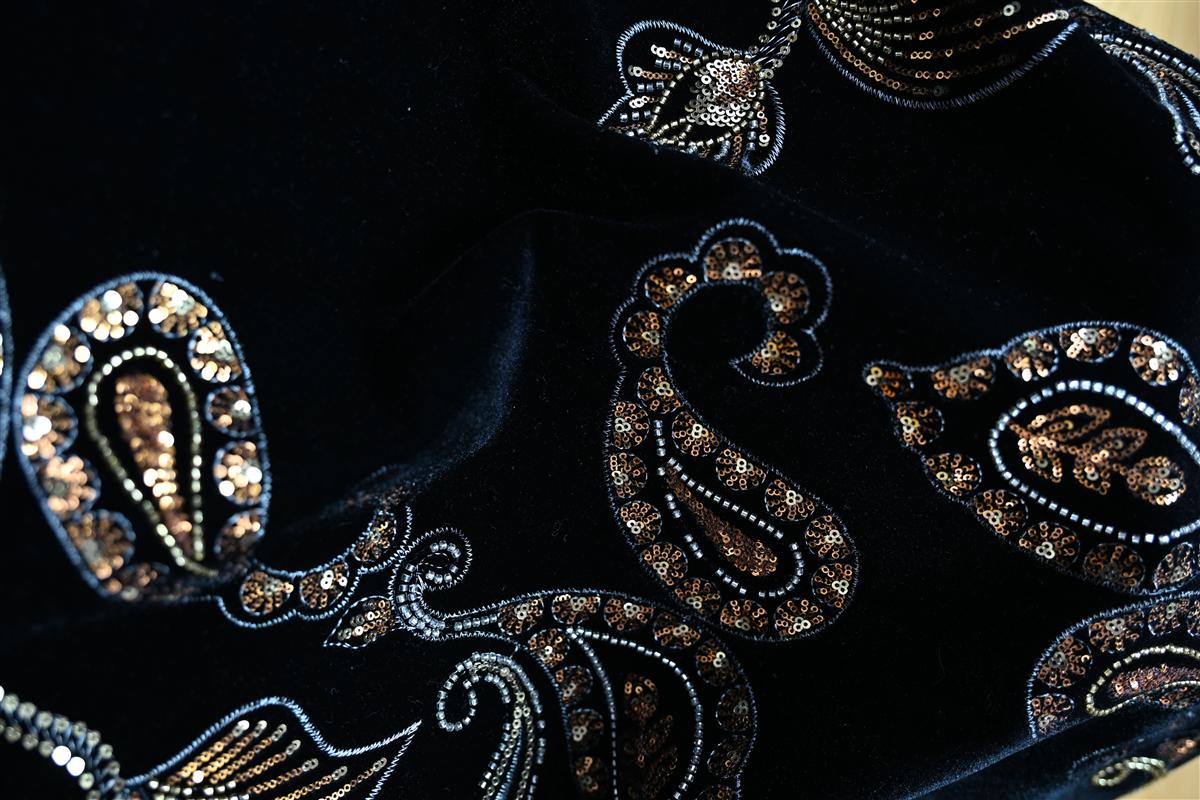
Holiday 2026 is a metallic season. The Style Rave party dress trends 2026 report describes glamour and sequins returning after years of pared-back dressing, and for fabric buyers that direction lands on one material that already knows how to catch light: metallic tweed. The question is not whether to use it, but which yarn family, which weight, and which calendar gets a metallic tweed program into stores for December.
From the mill side, the timing works if the decisions happen now. Fursone weaves metallic threads into Chanel-style tweed on 300+ looms in Wenzhou, with samples in 7 days, ready stock from 100 meters in 72 hours, and custom programs from 300 meters. This forecast covers the party-season directions, the yarn choice for evening pieces, and the sampling calendar that hits December delivery.
What Holiday 2026 Wants From Tweed
The season’s direction is explicit: high-volume, high-drama party pieces with sequins, sculptural cuts, and statement embellishment. Tweed’s role in that program is texture with a metallic payoff, the fabric equivalent of a tailored jacket that sparkles when the wearer moves. Our fall/winter 2026-27 forecast already positioned metallic accents inside evening and bridal programs, where the occasion justifies the yarn cost, and holiday is where that logic peaks.
Two product families carry the trend. Structured jackets in metallic tweed work for party dressing over silk or satin, and short metallic tweed dresses cover the cocktail segment. Both need the same underlying fabric discipline: metallic yarn that survives cutting and wear, a weight that holds the silhouette, and a base color that makes the metal read. The metallic tweed yarn types and care guide covers the fabric side; this forecast covers the buying side.
The mill-side read on the trend is volume with a ceiling. Metallic tweed programs run smaller than plain boucle programs because the fabric is occasion-bound, and the buying pattern we see for holiday is a two-tier plan: a hero custom color for the flagship style, and stock metallic colorways for the rest of the capsule. That split keeps the metallic program profitable on both ends, because the custom color carries the marketing and the stock colors carry the margin. The same structure appears in the FW26-27 forecast for tweed generally, and holiday sharpens it.
The Metallic Yarn Decision for Party Pieces
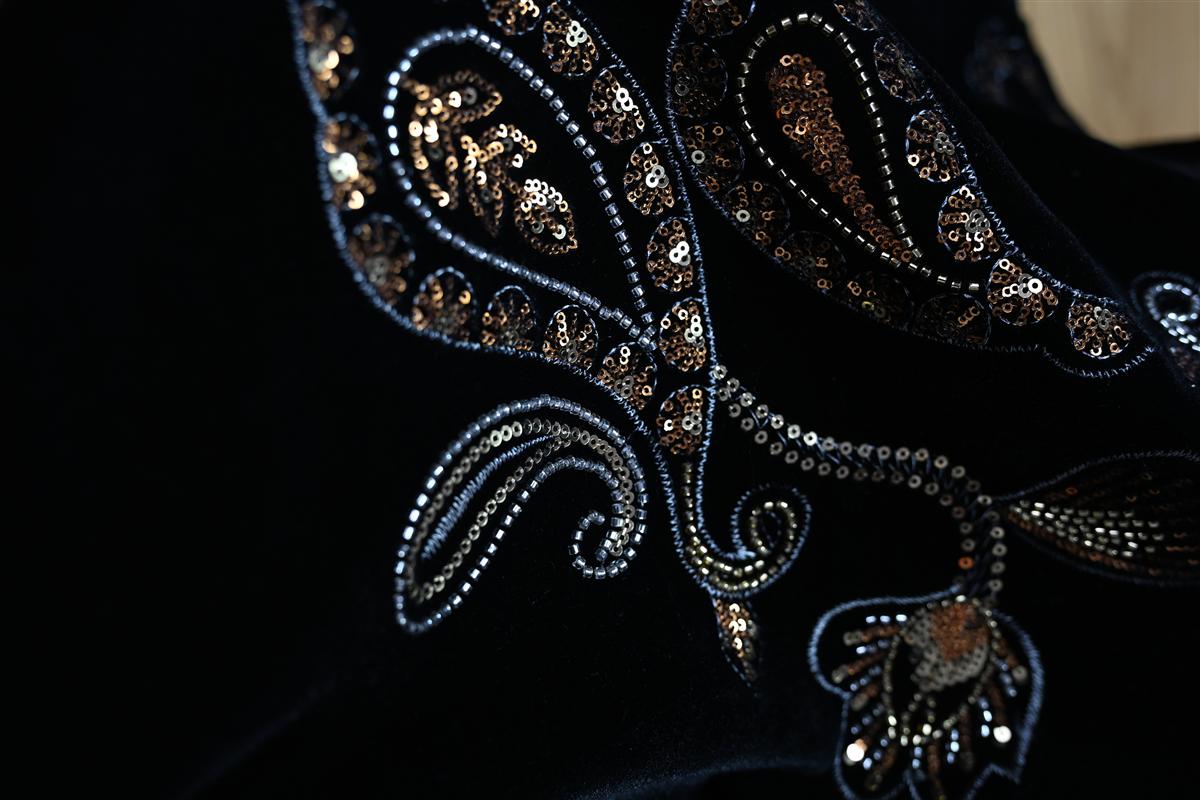
The yarn family decides how the fabric reads under party lighting. Lurex gives a warm shimmer that works in soft, warm light, which makes it the safe choice for dinner-and-dancing programs. BoPET film yarns hold color better and resist flaking through finishing, which matters when the fabric is cut into fitted silhouettes that stress the surface. Wire-core yarns create a structured, almost sculptural metallic surface, the strongest evening statement and the highest production cost.
Each family changes the program economics. Lurex runs notably less expensive than wire-core and is the default for commercial ready-to-wear. Wire-core adds weight and slows the loom, and it belongs in hero pieces where the garment price absorbs the fabric cost. A holiday capsule with three jackets and ten dresses can split the families: Lurex for the dresses, wire-core for one hero jacket that anchors the campaign imagery. The metallic tweed bridal sourcing case study shows the same split applied to a 200-dress program.
One technical note matters for party wear specifically. Metallic yarn can make the fabric surface slightly rough, and fitted party pieces sit against bare skin at the neckline and arms. The sample check is to hold the fabric against the skin and confirm the metallic content does not irritate. A fabric that passes on the rack and fails on the body is a returns problem waiting for January.
Weight and Construction for Holiday Pieces
Weight decides whether the piece holds its line. For a structured metallic tweed bodice, lighter than 380 g/m² lacks body and heavier than 450 g/m² hangs stiffly, so the bodice band runs 380-450 g/m². For holiday jackets, stock tweed at 320-360 g/m² carries a tailored shoulder without overcoat weight, and it is the weight band already running in Fursone’s stock program. The full Chanel-style tweed line spans 280-550 g/m², so the party range sits inside the tested envelope rather than at its edge.
Construction follows the fabric. A metallic tweed jacket needs a lining that does not fight the metallic surface, and dresses need seam allowances that accommodate metallic yarn’s lower flexibility. Cutters should expect slightly higher waste on metallic tweed than on plain boucle, because pattern matching on a sparkle surface is stricter. Add the allowance into the yardage math at the start, not at the reorder.
Pilling discipline is part of the construction spec. Metallic film or wire can abrade surrounding wool fibers under friction, so the pilling grade is measured on the metallic construction, not the base wool. Fursone holds ISO 12945-2 grade 3-4 on the Chanel-style line, and the test report should come from the production lot. Party pieces get worn hard and photographed close; grade 3-4 is the floor, not the aspiration.
The cutting room needs the same heads-up. Metallic yarn is more brittle than wool or polyester, and a mill that sets loom tension for the metallic family, running slower pickup speeds to protect the thread, produces fabric that cuts cleanly. A jacket pattern that worked on plain boucle can behave differently on metallic tweed at the same GSM, so the sample cut should test seam slippage and edge behavior before the bulk order is placed.
Color Directions for the Season
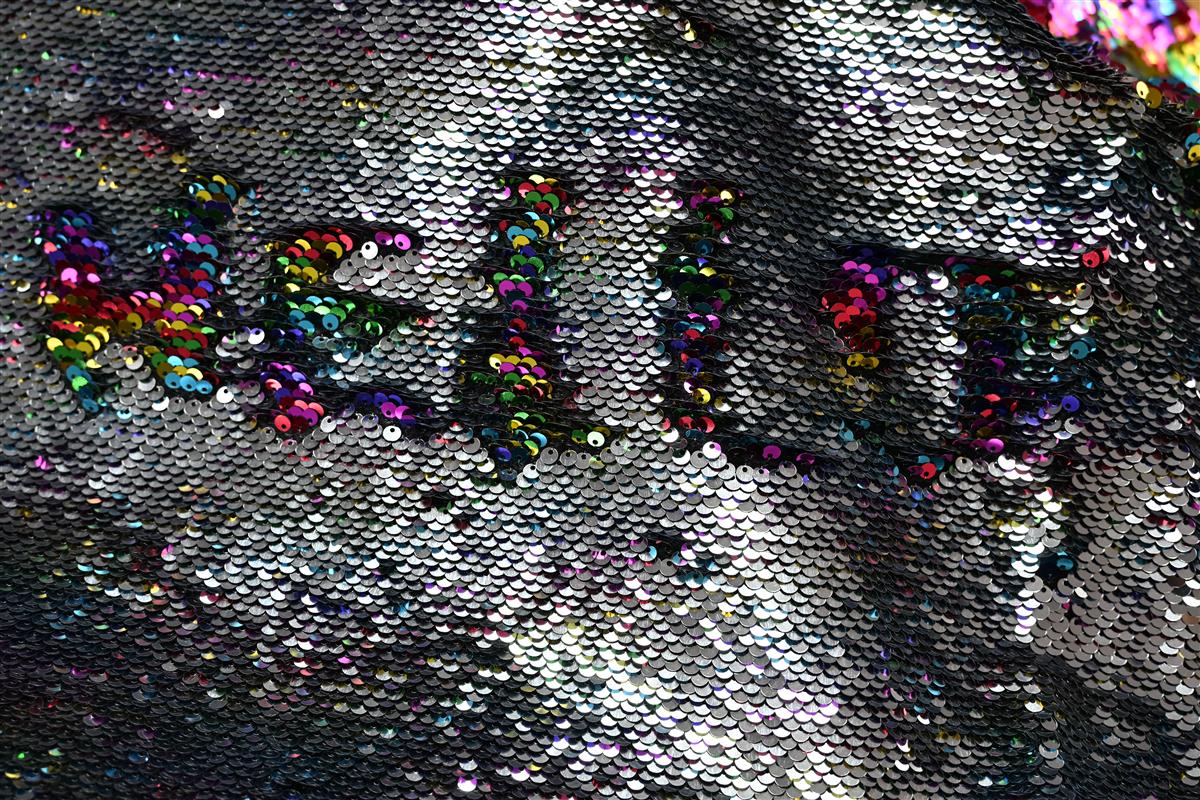
The holiday palette builds on the two metallic colorways already running through Fursone’s metallic tweed programs: silver and gold. Silver on a black base is the evening default, giving the fabric a cool, jewel-like sparkle that photographs well under flash. Gold on cream or champagne bases reads warmer and more romantic, closer to the bridal direction that the same line serves. The base color controls the mood: a grey or black base mutes the metal into sophistication, while a white or cream base lets it pop.
Buyers planning holiday capsules should treat the base as the spec decision, not the metallic yarn alone. The same Lurex yarn on a black base and a cream base produces two different products, and the base choice is what keeps a holiday line distinct from a spring metallic program. Our spring 2027 tweed trends forecast shows the same line shifting to pastels for the next season, which is exactly why the holiday colorways should be locked separately.
Base color also drives the production risk. On a black base, metallic density variation shows as a dull patch; on a cream base, it shows as a bright streak. That is why holiday metallic programs should specify the metallic content on the spec sheet and require the dye lot approval under controlled light. A 0.5 Delta E gate on a 10-meter length, the same gate Fursone applies to custom programs, catches the variation before it becomes 300 meters of mismatched jackets and dresses.
The Sampling Calendar for December Delivery
Holiday delivery runs on a calendar that starts in August. Sampling in late August locks the spec; a 7-day sample round with three pre-test wash cycles gives the design team time for one revision inside the month. Bulk production runs 4-6 weeks, so a September production start delivers fabric in October, leaving November for garment sewing and QC, and December for retail. Brands that wait until October to sample are choosing between express production and a missed holiday.
The calendar works differently for stock and custom. Ready stock from 100 meters ships in 72 hours, which makes it the tool for quick capsule additions and reorders when a style sells out in November. Custom programs from 300 meters need the full 4-6 week window plus Pantone matching and dye lot approval at 0.5 Delta E. A realistic holiday plan uses both: custom for the two or three hero styles, stock for the fill-in colors that carry the collection.
The fall/winter 2026-27 fabric forecast lays out the same two-tier thinking for the whole season, and the numbers hold for holiday specifically: stock tweed at 320-360 g/m² for jackets, custom at 300 meters for hero coat colors.
Stock vs Custom for Party Programs
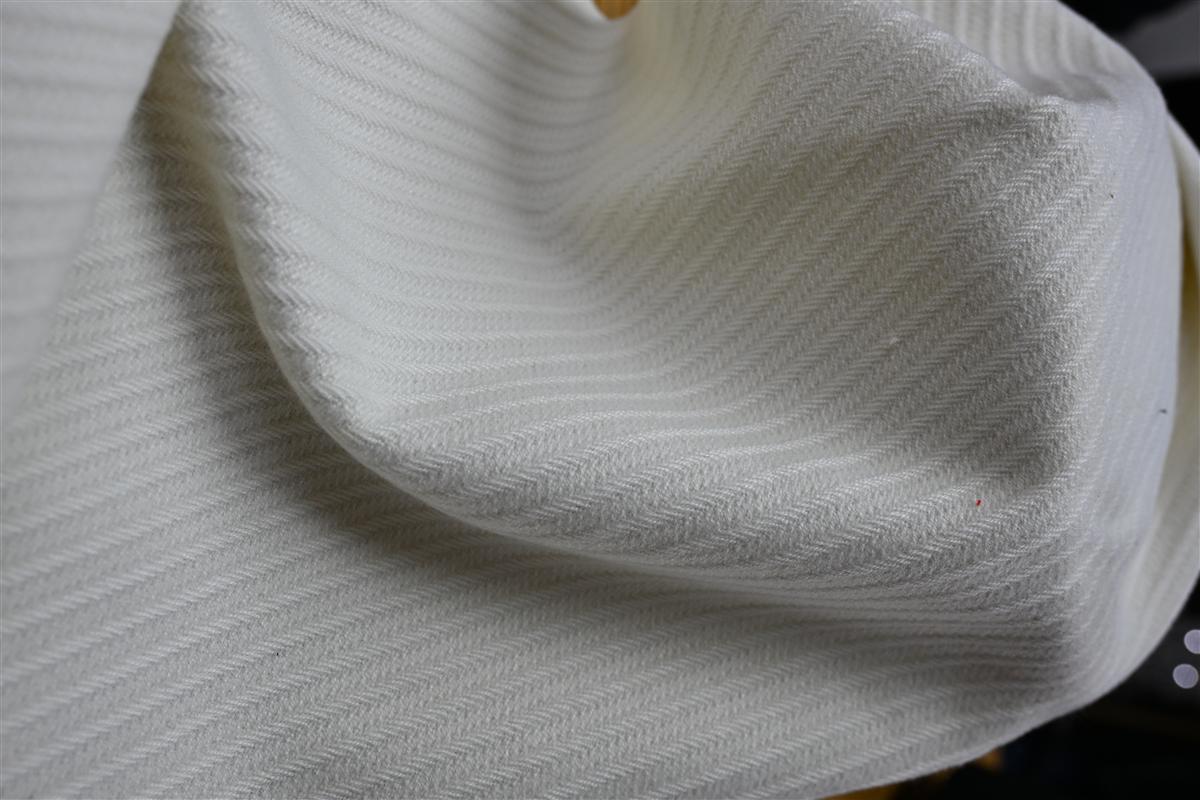
The stock-versus-custom decision is a calendar decision first. A holiday capsule announced in September can only use stock or express custom, because the 4-6 week custom window closes around mid-September for December retail. Fursone’s ready-stock tier answers that constraint: 100 meters per color, 72-hour dispatch, with the width, GSM, and pilling grade already on the spec sheet. The Chanel-style tweed collection carries 35+ stock patterns, including metallic options, so a buyer can see the actual sparkle before committing.
Custom still wins when the program needs consistency across a larger run. A 200-piece holiday dress program consuming 400-600 meters of one metallic tweed should run as a 300-metre custom order in a single dye lot, because metallic density and base color must match across every piece. The bridal case study shows the mechanics: one lot, one loom set, and the metallic content locked at sample stage. Holiday programs face the same match requirement when a jacket and a dress from the same fabric are sold as a set.
The hybrid pattern is the one most brands land on: custom for hero styles, stock for fill-ins, with the stock order placed first to keep the launch calendar alive while custom production runs. That sequencing is why the ready-stock tier exists, and it is the same logic that carries capsule programs in other categories.
Inspection is the last calendar item. Metallic tweed needs inspection trained on metallic defects: missing metallic lines, dull patches, and density variation between rolls. A 4-point inspection protocol that names metallic gaps as major defects catches what a color-only inspection misses, and it should run on both stock and custom deliveries before the fabric goes to cutting. Party programs have no reorder window in December, so the inspection gate in October is the only safety net.
FAQ
Is metallic fabric in style for 2026?
Yes. Party dress trend reports for 2026 describe glamour and sequins returning, and metallic tweed is the tailored way to carry that direction into jackets and dresses.
What is the holiday 2026 trend for fabrics?
High-drama party pieces with metallic accents. For tweed buyers, the direction is metallic yarns on black, cream, and champagne bases, with silver reading cool and gold reading warm.
What weight should metallic tweed be for a party dress?
A structured metallic bodice needs 380-450 g/m². Lighter than 380 lacks body; heavier than 450 hangs stiffly. Holiday jackets run 320-360 g/m² in stock.
When should brands sample for holiday delivery?
Sample in late August. With 7-day samples, 4-6 week bulk production, and November garment sewing, a September production start delivers fabric in time for December retail.
What is the MOQ for metallic tweed?
Ready stock starts at 100 meters with 72-hour dispatch. Custom programs start at 300 meters per color with Pantone matching and 0.5 Delta E dye lot approval.
Conclusion
Metallic tweed is the holiday 2026 fabric that connects the season’s glamour direction to a tailored, commercial product. Choose the yarn family by lighting and budget, hold the bodice at 380-450 g/m², lock silver and gold colorways on the right bases, and run the calendar from August so December delivery is a plan, not a prayer.
If you are planning a holiday metallic tweed program, Fursone can match the yarn family and weight to your pieces and return a sample within 7 days. Ready stock ships in 72 hours for the quick capsule, and custom programs from 300 meters run with Pantone matching and single-dye-lot consistency. Request a quote with your holiday timeline, and we will confirm the stock or custom route that fits it.

Related Insights

Tweed and Boucle for Spring 2026: Lighter Weights and Softer Palettes
Tweed’s migration out of the winter wardrobe is now a settled pattern: buyers who once...

Building a Fall Capsule Around One Tweed: The Six-Piece Math
Small fashion brands do not lose money on tweed because they picked the wrong color....

Tweed Accessories Programs: Caps, Bags and the Offcut Economy
The fastest-growing piece of many tweed programs is not the jacket. It is the 40-dollar...