
How to Source Fabric from China for Small Brands: A Complete Guide
A practical, no-fluff sourcing guide for independent designers and small fashion brands — covering MOQ, free fabric samples, colour matching, dye-lot consistency and how to pick a supplier who will actually work with a small order.
If you run a small fashion label, design studio or just launched a brand, sourcing fabric from China can feel like a wall of minimums, jargon and risk. The good news: it is far more doable than most guides make it sound. This guide walks you through the real decisions, in the order you will actually face them.
What Is the Minimum Order Quantity (MOQ) for Fabric?
The MOQ is the smallest amount a supplier will sell per colour or design — and it is usually the first thing that blocks a small brand. Real numbers vary by construction, but as a rule of thumb:
- In-stock / ready-to-ship fabric: at Fursone, from 1 roll (approx. 20–50 m).
- Custom dyeing on an existing base: usually triggers its own minimum.
- Bespoke yarn / jacquard development: at Fursone, from 300 m per colour or per design.
The single most useful question you can ask early: “What is your real minimum, and can I start smaller for a test run?” A good supplier will answer honestly, not just quote a catalogue number.
How Do I Find a Low-MOQ Fabric Supplier?
Not all mills treat small orders the same. Rather than chasing the biggest name, look for suppliers that signal they build around small runs:
- They talk about designer-friendly minimums and sample-first workflows.
- They offer colour matching / swatch sourcing — not just a Pantone code.
- They publish free or low-cost samples to let you check hand and colour first.
- They will confirm the real minimum, lead time and price before you commit to anything.
How to Get Fabric Samples Before You Commit
Sample-first sourcing protects you. Before any bulk order, ask for real swatches of your chosen colour and weight — ideally free or at cost, because a good small-batch partner treats sampling as the start of a relationship, not a revenue line.
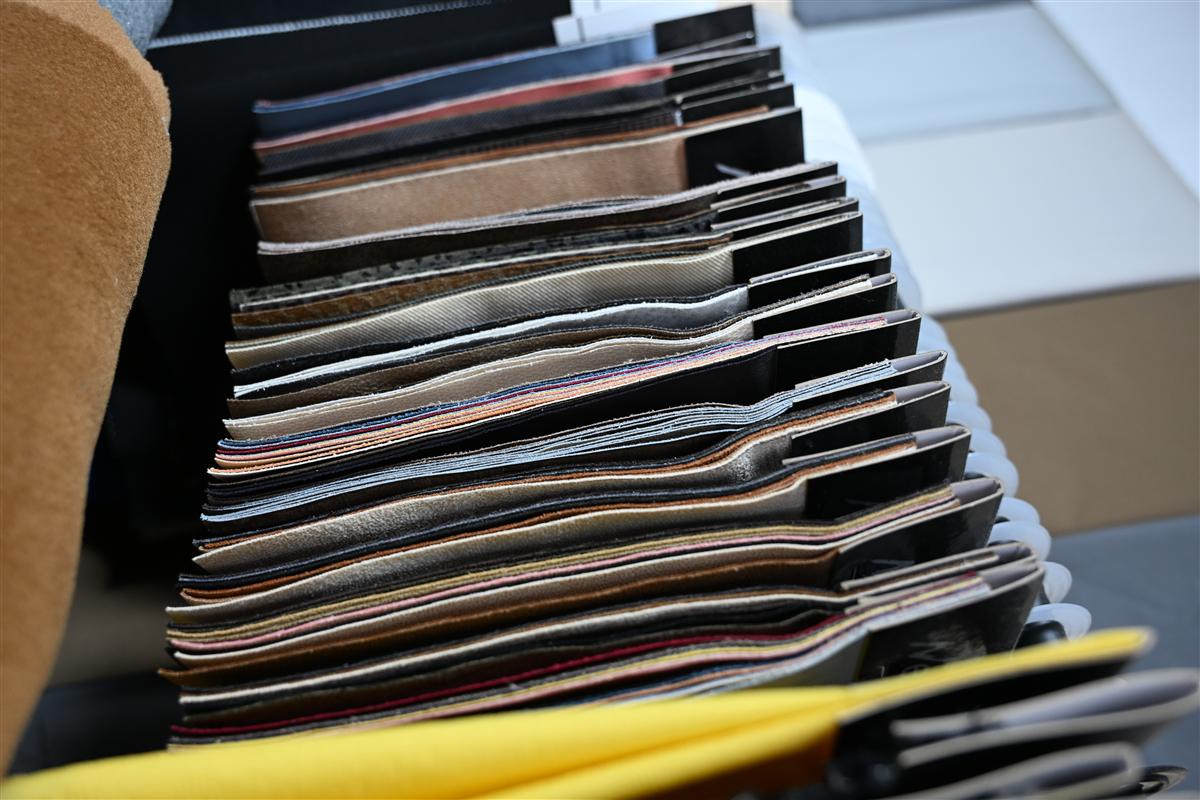
- A5–A4 swatch cards start the conversation — enough to check colour and surface.
- 50–100 m sample lengths are woven or knitted on the same process as future bulk, so you can sew a full garment before committing.
- Always confirm sample shipping cost and lead time so you are not surprised later.
Stock Fabric vs Custom Dyeing: Which Fits a Small Brand?
If you only need a little, stock fabric is your friend: it usually has the lowest (or no) minimum, ships fastest and costs less per metre because it is made at scale. Custom dyeing gives you your exact colour but costs more and takes longer. A workable path for many small brands:
- Start with stock or close-to-stock fabric to test the market.
- Once a style proves itself, move to a custom colour or small dye lot.
- Scale to a repeat program only after demand is proven.
How to Source Fabric from China: A Step-by-Step for Small Brands
- Write a fabric brief. Composition, weight (GSM), width, colour target, end use — a mill cannot read your moodboard.
- Shortlist low-MOQ suppliers (2–3) and send the same brief to each so you can compare apples to apples.
- Ask for samples first. Confirm swatch cost, shipping and time.
- Ask the minimum, lead time and price in one go, and get it in writing.
- Approve the sample — colour, hand, weight — before anything else.
- Start a small run, then grow the relationship as demand builds.
What to Ask a Fabric Supplier Before You Order (RFQ)
A good RFQ gets you a quote you can actually compare. Cover these fields:
- MOQ per colour / per design
- Price per metre, and how it changes with quantity
- Sample cost and sample lead time
- Bulk lead time
- Colour matching capability (Pantone / lab dip)
- Certifications (OEKO-TEX, GRS, GOTS, RCS) and whether the scope matches your order
- Dye-lot consistency — how they keep a repeat order the same shade
- Payment terms and shipping terms (FOB / EXW / DDP)
Common Small-Brand Sourcing Mistakes to Avoid
- Assuming the sample equals production. The approved swatch should match the bulk dye lot — confirm how the mill controls shade consistency between runs.
- Only comparing price. Two quotes at the same price can differ hugely in minimum, lead time and consistency.
- Not asking the minimum up front. Falling in love with a fabric you cannot afford in quantity is the classic trap.
- Buying more than you need. A low-MOQ partner lets you order the minimum and grow.
- Trusting a certificate without reading it. Check the cert’s scope actually covers your product.
Start With a Free Sample
Ready stock from 1 roll (approx. 20–50 m); custom development from 300 m per colour. We start with A5–A4 swatch cards, then 50–100 m sample lengths so you can sew a garment before bulk.
Request a Free Fabric SampleFrequently Asked Questions
What is a typical MOQ for fabric suppliers?
At Fursone, ready stock starts at 1 roll (approx. 20–50 m) and custom development from 300 m per colour or per design. Always ask any supplier for the real minimum.
Can MOQs be negotiated?
Often yes, especially for a first test run. A low-MOQ partner will let you start smaller and grow — ask for a “test order” minimum rather than a catalogue number.
How do I get a fabric sample without a big order?
Start with A5–A4 swatch cards, then a 50–100 m sample length for a prototype garment. Confirm sample shipping cost and lead time up front.
Is stock or custom fabric better for a small brand?
Stock fabric has the lowest minimum and fastest turnaround — ideal for testing. Move to custom colour once a style proves itself.
How do I make sure the bulk order matches my sample?
Confirm how the mill controls dye-lot consistency between the approved swatch and production. A registered sample colour is your reference.
What certifications should I ask about?
For direct skin contact, OEKO-TEX Standard 100 is a common test standard; GRS/RCS for recycled content; GOTS for organic. Fursone can arrange testing and sustainability certification per project; cost and timeline are confirmed separately.