

No single test separates a tightly woven tweed from a finished one, because a dense cloth can post a decent spray rating with no finish on it at all, and a flimsy one can bead for a moment while a surface treatment holds. The separation comes from comparisons on the same lot: measured construction data, a spray test (AATCC TM22 or ISO 4920), a rain penetration test (AATCC TM35 or ISO 22958), each run on the production cloth, on a stripped or greige control cut from the same roll, and on the same cloth again after the care the coat will receive. If production and control behave alike, the performance belongs to the weave. If production beats its own control, the mill is selling you a finish, and it owes you that finish in writing.
Why a Tight Weave and a Finish Are Different Claims
A weave resists water by geometry. Yarns packed closely leave fewer openings for a drop to enter, and the measurements that describe this are counts, not adjectives: ends and picks per unit length, yarn count, fabric mass, thickness, and the cover factor you calculate from them. Thread density is measured to ISO 7211-2 or ASTM D3775 and reported as warp and weft figures. A mill that answers a rain question with the words tightly woven has answered a construction question, and that is not the question your customer asked. Wool adds its own noise to the picture. The fibre surface, the oils left from spinning and the lanolin that survives processing can all hold a droplet away from the cloth for a while and then let it in.
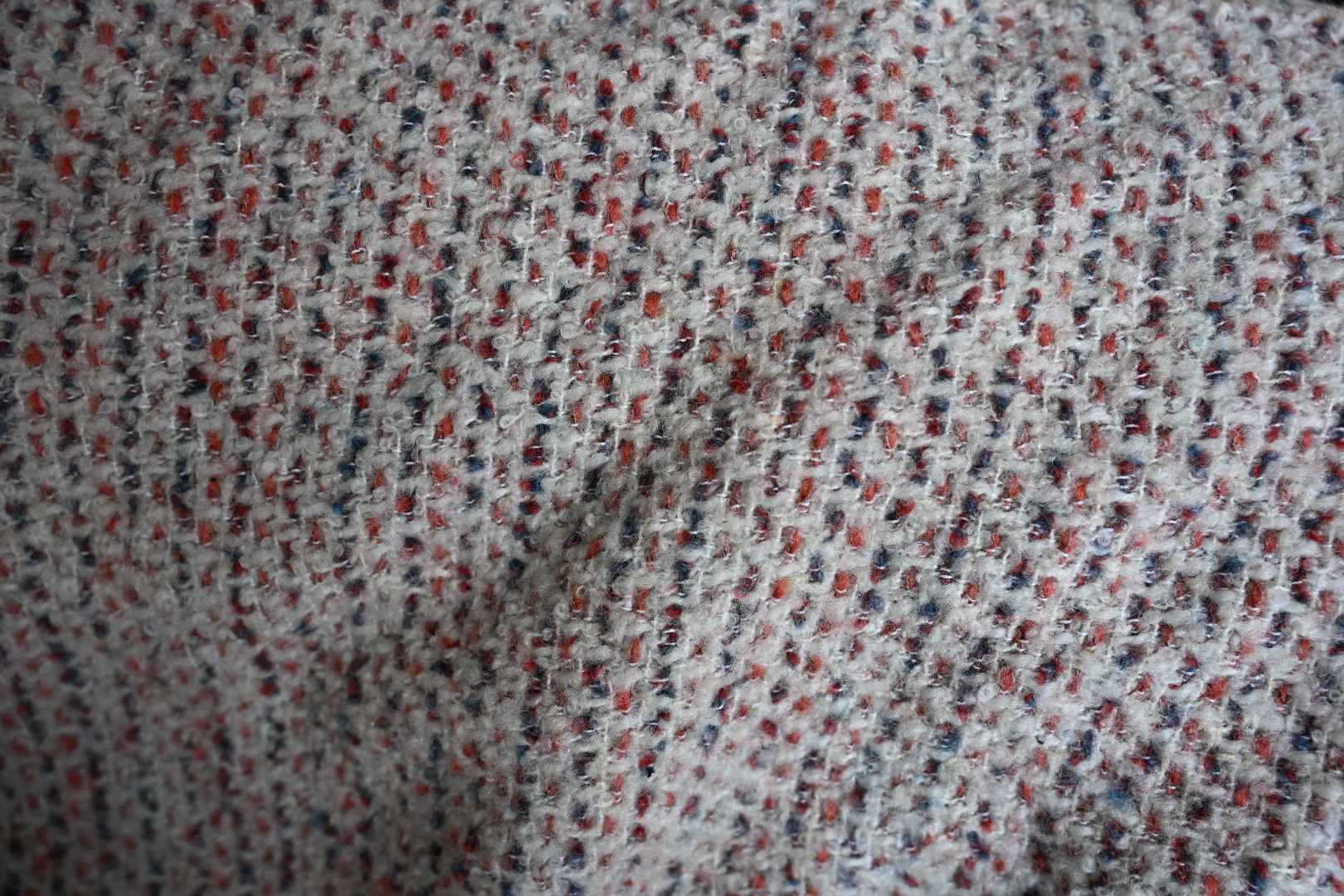
A finish resists water by chemistry. It lowers the surface energy of the fibre so a droplet keeps its shape instead of spreading, and the effect shows up as beading and run off rather than soaking. An open cloth with a good finish can beat a dense cloth with none. A dense cloth with no finish can survive a minute of light drizzle and then darken through the whole thickness. That is why the customer’s sentence, a coat that shrugs off a wet commute, describes a claim rather than a fabric property. A claim has two parts: the mechanism that produces the effect, and the care path under which the effect survives. Ask the mill which of the two it is selling you.
The droplet test on the cutting table is worth doing and worth distrusting. A few drops from a short height will expose cloth that soaks at once, and it costs nothing to run. It will not separate the two mechanisms, because trapped air and wool’s own fibre surface make dense untreated cloth bead briefly, and because the first drop changes the surface the second drop meets. Treat it as a screening step that finds the obvious failure, never as evidence that a finish is present.
Tests That Read the Surface of the Cloth
The spray test is the quickest way to compare two pieces of cloth. Water is sprayed against a taut specimen set at an angle, and the wetted surface is graded against a standard chart or a set of photographs. ISO 4920 reports a rating from 0 to 5. AATCC TM22 reports on a 0 to 100 scale in fixed steps. Both mount the specimen the same way, and both are explicit about their scope: they measure resistance to surface wetting, not the movement of water through the cloth. A high rating tells you the face does not wet easily. It does not tell you why.
Run the spray test on both faces and keep the two results apart. A finish applied on one side leaves a fingerprint in the numbers: the treated face beads while the untreated back wets out inside the same specimen. When the mill sends a single figure, ask which face produced it. If the cloth is sold as rain resistant and the back wets quickly, every seam, pocket edge and exposed reverse in the coat is working against the finish.
Then repeat the test on a specimen that has been held wet for a set time, blotted or wrung, and left to dry. A surface treatment that survives the first spray and collapses after one wetting and drying cycle is a real result, and it is the result that matters for a coat worn in the rain more than once.
Tests That Read Water Passing Through
A walking commute puts water through cloth, not only on it, so the penetration tests carry more weight than a spray rating. The rain test, AATCC TM35 or ISO 22958, applies water to the specimen under controlled impact with a weighed blotter behind it. The gain in blotter mass is the result, expressed as the water that got through. Impact penetration, AATCC TM42, uses the same blotter arrangement as a faster screening test for driven water. Hydrostatic pressure, AATCC TM127 or ISO 811, raises water pressure against the specimen until it passes, and reports the head in centimetres, millimetres or millibars together with the endpoint definition the laboratory used.
These methods answer different questions, so match the test to the way the coat will fail. Spray and impact methods describe a shower hitting the shoulders. Hydrostatic pressure describes the messenger bag strap, the wet bench, the folded forearm pressed against a rail. A dense wool tweed can hold a light rain and still leak under a strap, and a finish can lift a spray rating without changing the pressure result much. Hydrostatic pressure responds to both construction and fibre repellency, so it cannot assign cause on its own. That assignment is the job of the control pair.
The Control Pair That Separates Construction From Finish
Ask for three specimen sets cut from the same roll of the same lot. The first set is tested as received. The second set goes through the agreed care cycle and is tested afterwards. The third set is kept untouched as a reference, so the after care figures can be compared with something more reliable than memory. A mill that offers a laboratory swatch from an earlier lot has not answered the question, because the weave and any finish you are buying are the ones on the roll that will be cut.
The control is the piece missing from most disputes. If the mill can supply greige or pre finish cloth woven from the same warp and weft, that is the cleanest control available. If it cannot, ask for a specimen stripped in the laboratory instead: solvent extraction of the finish from a piece cut from the roll you are buying, dried and conditioned, then tested alongside the production cloth. If the stripped specimen wets out at once and the production specimen does not, the beading came from the finish. If the two behave the same, the cloth is doing the work through construction, and your customer should hear that plainly.
Condition matters as much as the specimens. Textiles are conditioned to a standard atmosphere before testing, and the two references to name are ISO 139 and ASTM D1776. A specimen tested damp, or tested in a humid room, will move the result without anyone intending it. Ask for the conditioning, the number of specimens, the face tested, the water temperature and the timing, and expect individual readings rather than an average on its own. Run the non destructive tests first, then send the same specimens into the care cycle, then retest. The figure that answers the customer’s question is a difference, not a value: production against its own control, and after care against before care.
Retest After the Care the Coat Will Actually Get
Durability results are only meaningful against the care method the garment will really receive. A wool tweed coat is usually dry cleaned, so the retest should follow the dry cleaning procedure the care label will name, and if the answer is a domestic wash instead, the retest should follow the wash procedure that the label will allow. Testing both is useful. Reporting only the one that flatters the cloth is not.
Add the mechanical events that wear a finish out. Abrasion at the cuffs, the collar and the pocket edges, repeated flexing at the elbow, and pressing or steam all change a finished surface, and a hot press can flatten a treatment as well as alter the hand of the cloth. Where the finish is meant to be durable, the retest should follow the procedure the finish supplier specifies, and the mill should say which procedure that is. When you write the order, state the retention requirement as your own requirement and name the method and the care cycle that will be used to check it. A single pass figure from one as received specimen cannot support a wear claim, and a dried specimen that scores well tells you nothing about the third winter. Tying the requirement to the care method the coat will get is the subject of the care spec that has to be fixed before the bulk, and it belongs in the same conversation as the test results.
What the Mill Should Put in Writing
Ask for the construction record first: fibre composition, weave, yarn counts, ends and picks per unit length, mass, thickness, usable width, and a plain statement of the wet processes applied to this lot. Then ask for the treatment status in words that cannot be read two ways. Either the cloth carries no water repellent finish, stated as such, or the finish is named with its chemistry class and the stage at which it was applied. Untreated on its own is not a statement, because softeners, milling oils, shrink resist treatments and added lanolin are all things done to cloth, and a customer told untreated will not know which of them are present.
The test report should carry the method and its edition, the laboratory, the conditioning atmosphere, the number of specimens, the face tested, every individual result with its units, the endpoint definition, and the before and after care figures side by side with the care procedure named. Chemistry belongs in the file too: the product identity or generic chemistry, the supplier, the safety data sheet, and any restricted substance declaration your market requires. If a fluorine free finish is claimed, ask for the declaration rather than reading it out of the marketing name, because a C0 label describes a chemistry route and is not a certificate. The paperwork side of chemical control in a mill is set out in what a mill should be able to prove about chemical management.
Ask for lot traceability in the same package, so the roll the laboratory tested can be identified against the rolls that will be delivered. Then settle the wording of the claim. Water repellent, rain resistant and waterproof are not interchangeable, and waterproof is tied to a specification and a test method rather than to a treatment that sheds one shower. A defensible statement names the mechanism, the test, the care path and the limit.
Write down what the cloth is not warranted to do. A dense untreated tweed that holds a light drizzle and soaks through in steady rain is a perfectly good cloth, and a customer who is told so in advance is a customer who is not surprised by a wet shoulder. A mill that will not put the control comparison and the after care retest in writing is telling you where its claim stops. Get that sentence straight before the order, not after the first complaint.

Related Insights
Shrink vs Stretch Returns: Separating Cloth From Care
A shrink-versus-stretch attribution is a controlled comparison that separates cloth change from care change on...
Lab Dip Close to Pantone: What to Sign Before Bulk Dye
A lab dip approval is a signed colour standard that freezes dye recipe, substrate, illuminant,...
Merino Is Not a Fibre Name: Labelling a Wool Coat for Two Markets
A wool coat sold in both markets needs two different fibre lines, and the words...