
“How long until bulk delivery?” is the first question every fashion brand asks a tweed mill, and the honest answer is a timeline, not a number. A tweed order passes through 5 distinct stages, each with its own failure modes, and the brands that receive on time are the ones that plan each stage explicitly instead of asking for one optimistic date. This guide maps the 5 stages of a commercial tweed program and shows where lead times are won or lost.
The stages below reflect how our partner mills in Wenzhou plans programs on 300-plus looms, and they align with the pre-production framework described in our pre-production meeting guide. Use them as a planning structure and have your mill commit a date to each stage rather than to the whole order.
Stage 1: yarn selection and dyeing
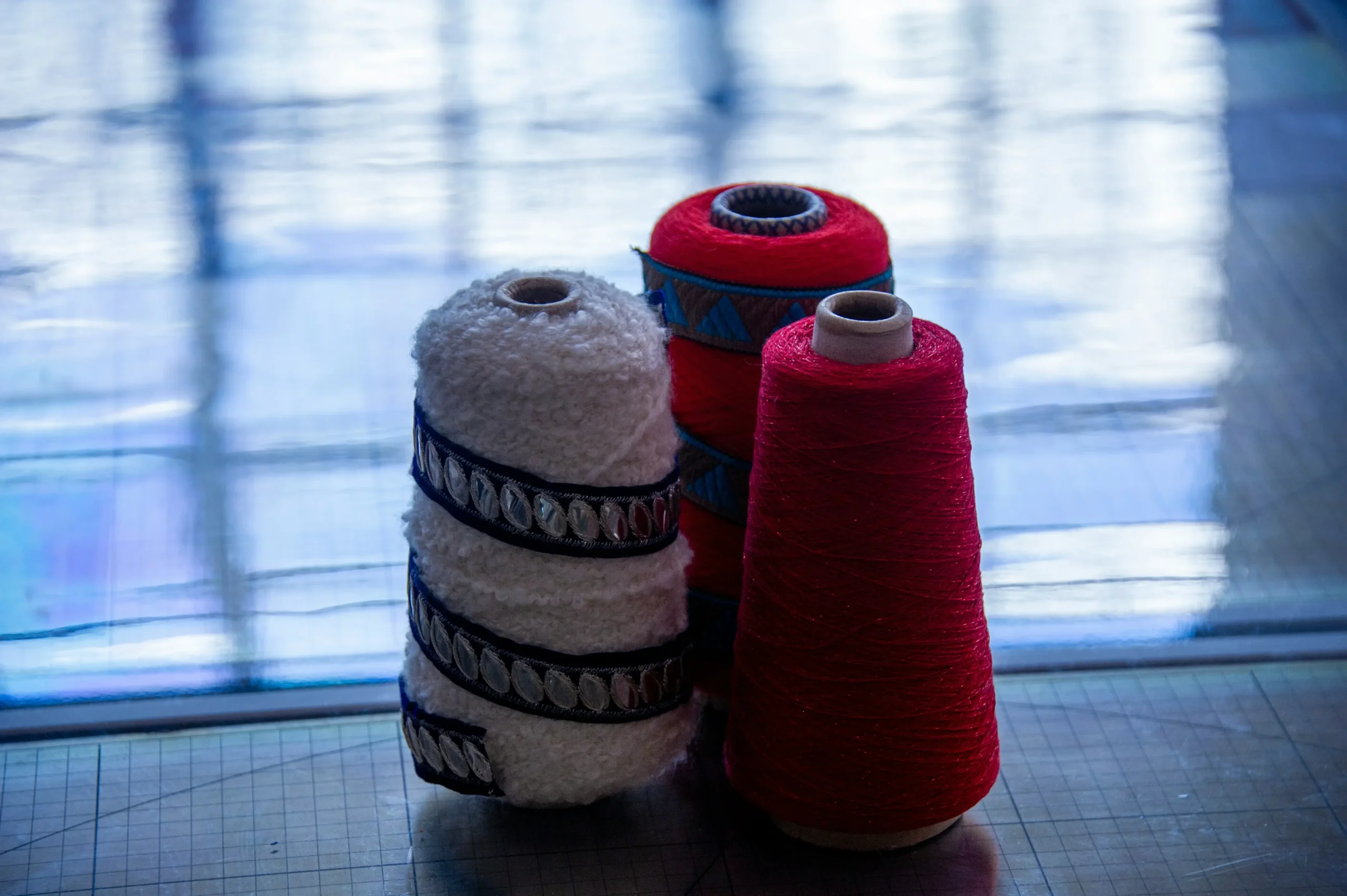
Tweed is a yarn-dyed fabric, so color is locked in before weaving, which makes yarn the longest-lead component. Stock-color yarns from the mill’s inventory move immediately; custom-dyed lots add dye-house time and a lab-dip approval round. The planning rule: every custom color in the design adds one approval cycle, so consolidate the palette before the yarn order is placed. Buyers who need certainty on where color is applied should read our yarn-dyed vs piece-dyed explainer; the difference decides whether you can recolor late or not.
Stage 2: warping and beam preparation
Warping ties the design’s repeat, width and tension together. Errors here surface as weaving defects thousands of metres later, so mills that rush warping pay for it in Stage 3. The buyer-visible output of this stage is the warped beam; the buyer-relevant check is the approved width, which on most tweed constructions is quoted at 58 to 60 inches, as covered in our tweed width and yardage guide.
Stage 3: weaving on the looms
Weaving speed depends on the complexity of the pattern: a fine herringbone runs faster than a heavy nub boucle with metallic yarns, which demand lower speeds and more stops. This is also the stage where mill capacity matters. A mill running 300-plus looms can slot a 300 metre custom program into the schedule without displacing stock production; a small workshop cannot. Stock programs shortcut this stage entirely: with 100,000 metres of stock boucle and tweed held in Wenzhou, stock orders ship in days rather than weeks, which is why the stock-versus-custom decision is really a lead-time decision as much as a price decision.
Stage 4: finishing and inspection
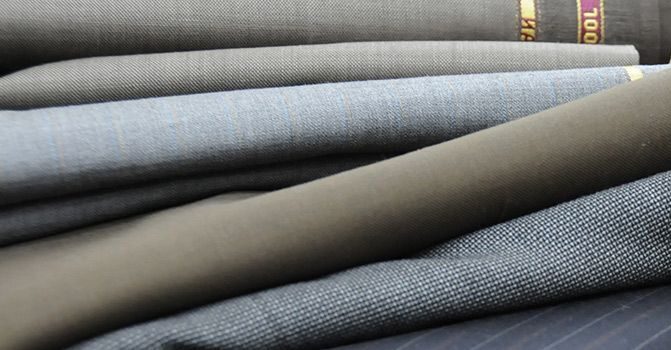
Finishing sets the hand: washing, fulling, decatizing and pressing relax the cloth and stabilize the dimensions. After finishing, the lot is inspected roll by roll; our lines are engineered to ISO grade 3-4 pilling and checked on a 4-point style inspection before packing. Buyers should name the inspection standard in the contract, not assume it; the same lot can pass one grading system and fail a stricter one, and buyers who cannot attend in person can commission independent third-party inspection such as SGS at the finishing stage.
Stage 5: packing and freight
The final stage is logistics, and it is the one most often left off the timeline. Fabric rolls palletized and containerized from Wenzhou move on ocean schedules measured in weeks to Europe and North America, while sample yardage moves by air in days. Sampling speed is the one lead time a mill can genuinely compress: our development flow turns approvals around in 7 days, and the pricing logic behind sample versus bulk runs is explained in our sample versus bulk pricing guide. For programs where even custom timing is tight, the stock-versus-custom MOQ trade-off in our stock vs custom case study shows how brands bridge a gap season with stock cloth while the custom program weaves.
Building the timeline into your calendar
The working method is simple: ask the mill for a 5-row table, one date per stage, and hold the program to the dates rather than to a single delivery promise. Approvals are the buyer-controlled variable in every stage; each day a lab dip or pre-production sample sits unapproved is a day added at the end. Development programs that need dates committed stage by stage can be scoped through our Chanel-style tweed development service, where the 7-day sampling commitment is contractual.
Video: tweed fabric trends and mill production
The video shows cloth moving through development and production, the physical reality behind the 5 planning stages above.
Frequently asked questions
What is the fastest way to get tweed for a collection?
Buy stock. Stock tweed and boucle ship in days because yarn dyeing, warping, weaving and finishing are already complete. Custom programs trade lead time for exact color and construction.
Which stage causes most delays?
Yarn dyeing. It sits first in the chain, it requires approval rounds, and every downstream stage inherits its delay. Consolidating the color palette before ordering yarn is the single biggest schedule saver.
Does a complex pattern really weave slower?
Yes. Heavy nub structures, metallic yarns and irregular slub effects reduce loom speed and increase stops. A fine herringbone and a dense boucle at the same weight are different weaving jobs.
Should the inspection standard be in the contract?
Always. Name the grading system, the pilling target (ours is ISO grade 3-4) and the sampling method. Inspection assumptions that are not written down are disputes waiting to happen.
See also our CNY capacity planning for fabric buyers.

Related Insights

Color Approval Without Surprises: Lab Dips, Loom State and the Light Booth
Color is the most common reason a tweed bulk run disappoints. Not because mills cannot...

Fulling and Finishing: The Mill Steps That Change Tweed’s Hand Feel
Two tweeds can leave the loom with identical yarn, identical weave and identical weight, and...

Garment Dyeing vs Piece Dyeing: Cost, Color Control and When Each Wins
Garment dyeing, dyeing the finished garment instead of the fabric roll, has quietly become a...