
When a fabric shipment is held at a border over something as mundane as a wooden pallet, the delay costs more than the freight saved by cutting corners. ISPM 15, the international standard for wood packaging material in trade, is the rule that decides whether your pallets, crates and dunnage clear customs or get quarantined. Fabric buyers rarely think about wood, yet fabric ships on wood at almost every step, and this guide explains what the standard requires and how to write packing into a fabric development order.
What ISPM 15 actually requires
ISPM 15 is the International Standards for Phytosanitary Measures publication No. 15, administered under the International Plant Protection Convention (IPPC), the treaty body for plant health in trade hosted by the FAO. The standard applies to raw wood packaging thicker than 6 mm: pallets, crates, dunnage and spools. It requires that wood packaging be made of debarked wood and treated by approved methods, heat treatment or fumigation, and marked with an internationally recognized stamp carrying the producing country, the treatment code and the certified producer number. Packaging entirely made of processed material, plywood, OSB or plastic, falls outside the standard because no live wood pests can survive in it.
Where wood shows up in a fabric shipment
More places than buyers expect. Fabric rolls travel on wooden pallets; bulk beam warps ship in wooden crates; some loom-state cloth is rolled on wooden cores; and container shipments use wooden dunnage and bracing. For a tweed or boucle program leaving a Chinese mill, the typical container uses a mix of certified-stamped pallets and processed-wood packing. The failure mode buyers actually encounter is the unlabeled pallet: a subcontracted warehouse swaps a stamped pallet for a raw one, and the container is stopped at destination with the whole shipment inside. The lesson is that packing quality is part of the fabric order, not a warehouse detail, which is why our quotes treat export packing as a line item rather than an assumption.
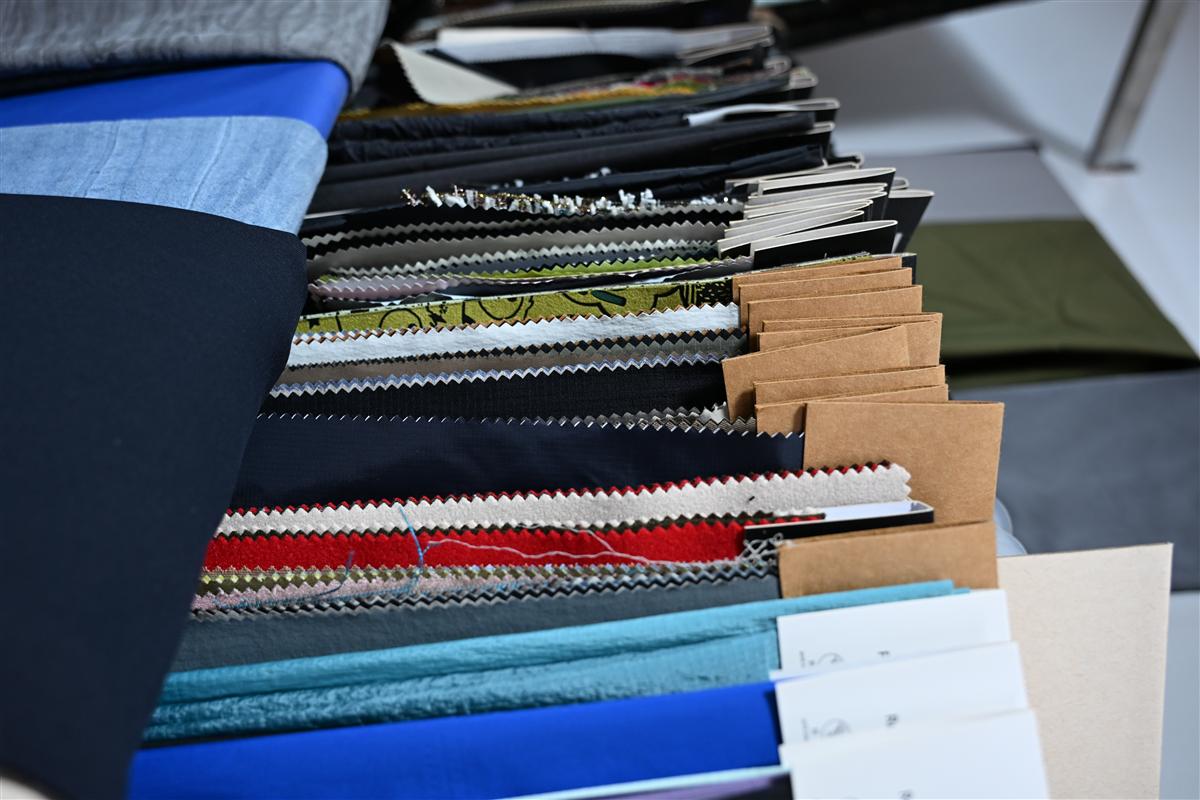
Writing packing into the fabric order
Four lines prevent most problems. Line 1: pallet spec, certified ISPM 15 stamped wood or all-plastic, stated explicitly. Line 2: roll packing, typically poly wrap with paper interleave, with cores specified as cardboard where the destination market prefers it. Line 3: container plan, roll orientation and weight distribution so freight partners can load without re-palletizing at the port. Line 4: documents, the packing list matching pallet count to roll count so customs inspection can reconcile quickly. Buyers coordinating mixed suppliers should align these lines with the consolidation logic in our supplier consolidation case study, and ocean-mode specifics are covered in our LCL versus FCL shipping comparison.
The cost picture
Certified stamped pallets cost more than raw ones, and the delta is small relative to the fabric value they carry: quarantined containers face re-export or destruction orders, detention charges and missed season windows, any of which dwarfs the pallet premium. Processed-wood and plastic alternatives eliminate the ISPM question entirely at a slightly higher material cost. The sensible default for fabric exports is stamped pallets for heavy rolls and cardboard cores with poly wrap for sample yardage; the packing choice should follow the roll’s weight and the destination’s inspection intensity. Duty and customs-cleared delivery trade-offs are mapped in our fabric incoterms guide, and the customs clearance sequence itself is walked through in our customs-without-delay guide.
Video: from fabric roll to garment
The video shows the cloth’s journey from roll to finished garment, the journey the packing spec above protects.
Frequently asked questions
Does ISPM 15 apply to cardboard cores?
No. The standard covers raw wood above 6 mm. Cardboard cores, poly wrap and processed wood such as plywood are outside its scope, which is why many mills pack fabric rolls on cardboard rather than wood.
How do I verify a pallet is certified?
Look for the IPPC stamp: it carries the IPPC symbol, the two-letter country code, the treatment code such as HT for heat treatment, and the certified producer registration number. No stamp means no certification.
Who is responsible if a shipment is quarantined over packing?
It depends on the incoterm and the contract. Under FOB the buyer contracts the main carriage but the seller packed the goods, so well-run mills and buyers agree in writing that export packing meets ISPM 15 before the container is booked.
Is fumigated wood better than heat-treated?
Heat treatment is the common choice for fabric exports because it leaves no chemical residue near the cloth. Both are approved treatments under the standard; the stamp matters more than the method.
Related reading: The Document Set for a Fabric Shipment: Invoice, Packing List, Origin and Test Reports

Related Insights
Short Size Runs Before Seal: Ratio Audit, Carton Marks, Claim Clock
Short-shipped size runs that force day-one markdowns are a size-ratio and carton-marking failure you can...
Care Labels Shrink and Twist: Substrate, Sew Method, Wash Flatness
Care labels that shrink and twist after the first wash on lined coats are a...

Same Yarn Lot Six Weeks Later: Lot Proof, Shade Band, Idle Gate
A mill that quotes “same yarn lot” for a 100-metre reorder six weeks later is...