

Every mill can produce a beautiful sample. The sample is handled by the best operator, on the best loom, with the fibre that happened to be in the sample room that week. The question a buyer actually needs answered is different: what does this mill produce on an ordinary Tuesday, for an order that is not the first one, when the sample room is not watching.
A visit answers that question in a way no sample box can. This guide covers what to look at, what to ask, and what to photograph, so the visit produces evidence instead of impressions.

Start With Production, Not the Showroom
The showroom is where visits usually begin and where they reveal the least. Ask to start on the floor instead, and walk the route a real order takes: warping, weaving, inspection, mending, finishing, packing. The route itself is informative, because a mill that cannot walk you through its own order flow in sequence is a mill where orders move by memory rather than by system.
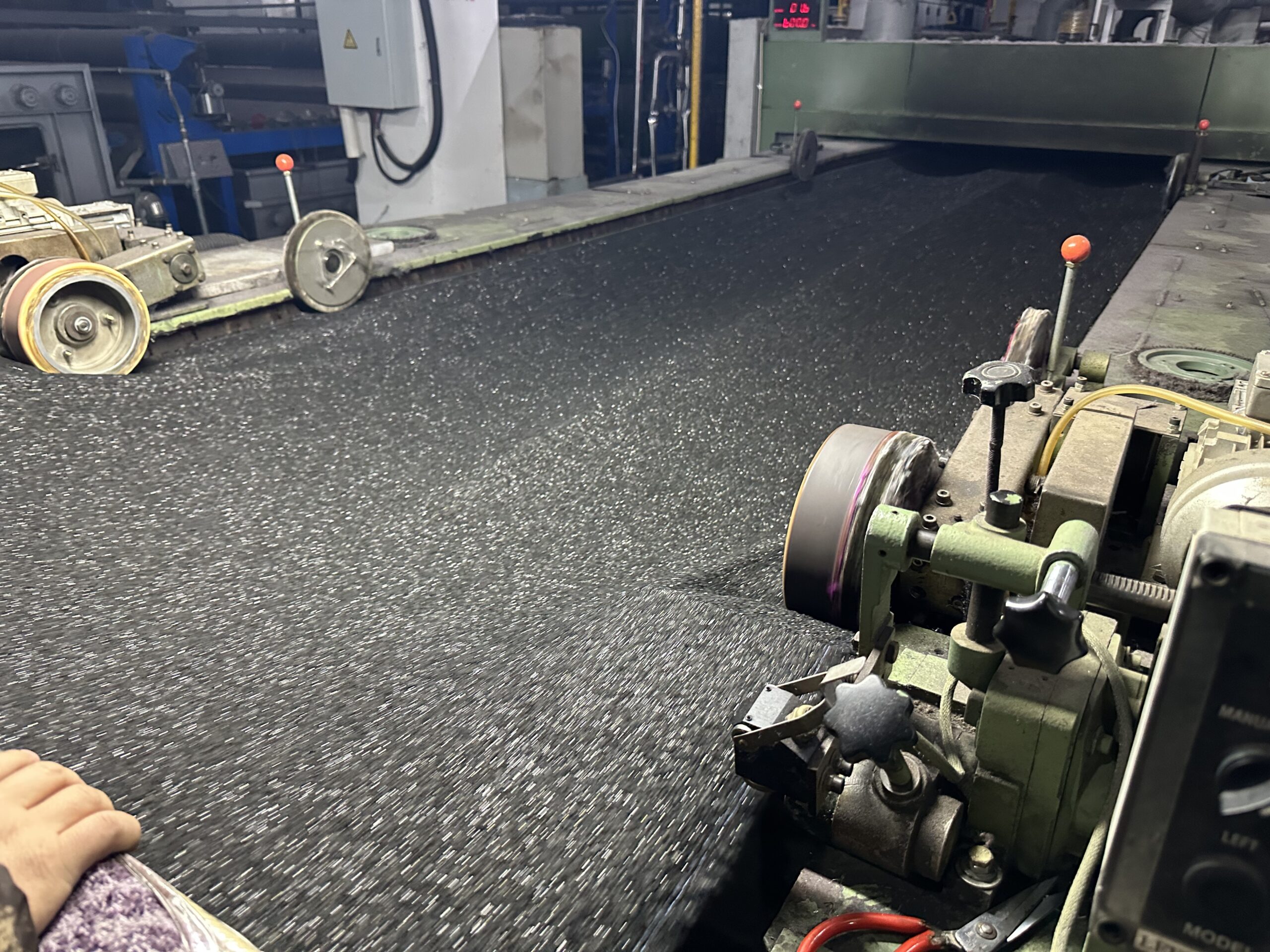
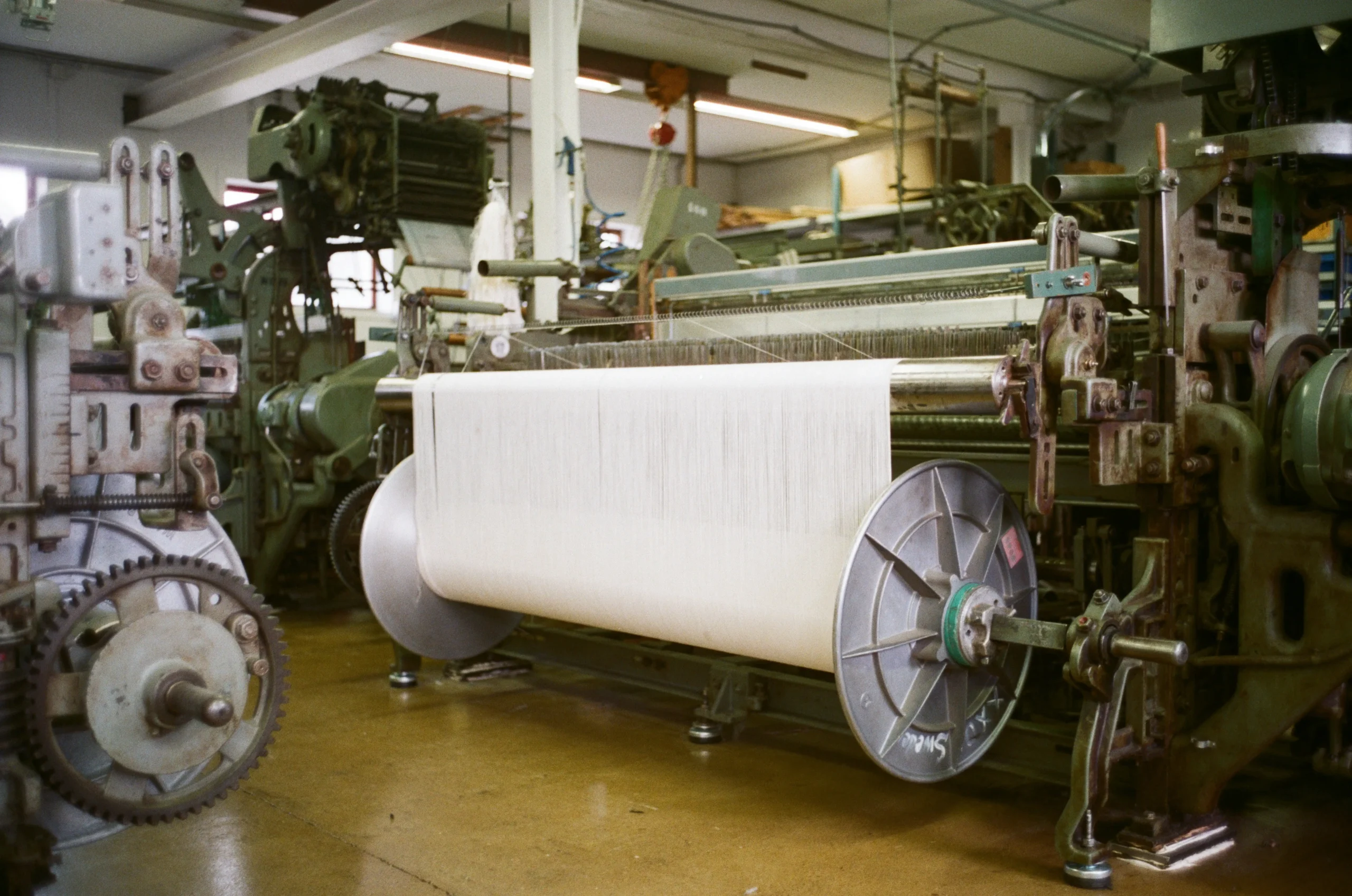
Count the looms and look at what is on them. Are they running the fabric type you are buying, or only plain constructions while your interest is in checks and boucle? A mill with forty looms weaving exactly your construction is a different supplier from one with four hundred looms that will schedule your order wherever a gap appears.
Watch the warping area for size and tension control, and look at how yarn is stored. Humidity and dust in the yarn store predict more about the next order than any brochure, and they are the kind of detail that is only visible in person.

The Four Questions That Matter
First: who owns the looms? Some mills weave everything in-house; others are trading houses that broker to a network of small workshops. Both models can work, but they carry different risks, and the question is the fastest way to learn which model you are talking to.
Second: who does the finishing? Finishing is where fabric quality is won or lost, and many mills send cloth out to a finishing house. Ask which one, ask to see it or at least see its process records, and ask what happens when the finisher is busy in peak season.
Third: how is inspection done? Ask to see the inspection table and the records. A mill that inspects on a backlit frame with a trained inspector and files reports per roll is running a process; a mill that inspects by eye as the roll is wound is running a hope. Fourth: what happens when something goes wrong? Ask for a recent example of a claim, in outline, and what changed afterwards. The answer tells you more about the working relationship than any certification framed on the wall.

Read the Inspection and Mending Stations
The inspection table is the single most informative object on a mill floor. Look at the lighting, the frame, the record book, and whether the inspector is actually using them. Look at what is stacked beside the table: rejected pieces waiting for a decision, or nothing at all. A mill with no visible rejects is either perfect, or not inspecting.
Mending stations come next. Mending is a skill and a cost, and a mill that invests in it is signalling what kind of quality it intends to ship. Ask to see a mended piece and the corresponding inspection note. How mending is documented tells you whether the mill is managing defects or hiding them.
Packing closes the loop. Watch how bales are wrapped, whether roll numbers are attached, and whether humidity protection is used for humid-season shipments. Packing is where the last two weeks of quality work is protected or lost, and it is one of the few parts of the process that a buyer can change at almost no cost simply by asking. The detailed receiving checks on the other end are covered in container arrival checks, which pairs with what you see at this end of the journey.
Sample From the Running Lot
The most useful thing to carry home from a visit is not a swatch from the sample room. Ask to cut a small piece from a roll that is running for another customer, subject to their permission, or from the current production of your own reference construction. A piece from a live lot carries the tension, the finishing and the mood of an ordinary production day, which is precisely what you are buying.
Photograph as you go: the looms running your construction, the inspection record page, the mending station, the packing area. These photos become the reference set that later conversations are anchored to. When a batch arrives and something feels different, a photo of the standard you audited is worth more than a description of it.
Finally, write the visit up within a week, while detail is fresh. A one-page record with photos, answers to the four questions and the names of the people you met is the document that turns a pleasant afternoon into usable sourcing evidence. It is also the start of the vendor file that a supplier scorecard can be built on, and the same file informs the choice between working direct, through an agent or in some combination.
After the Visit: Turning Impressions Into Decisions
A visit produces three kinds of information: facts you can verify later, impressions that need to be tested, and gaps you could not close on the day. Sort them that way when you write up. The facts go into the vendor file; the impressions become the questions for the next call; the gaps become the reasons for a second visit or a reference check.
Use the visit to set the specification, not just to judge the supplier. If the mill’s strength is a construction outside your current brief, and the price of that construction is acceptable, the visit has earned its cost. Buyers who visit with an open brief consistently find one or two opportunities they would have missed on paper.
Finally, check the market context before you go. The country commercial guides published by the US Commercial Service cover business practice, documentation and market conditions per country, and reading the relevant guide before the trip turns a set of general impressions into specific questions. Our own fabric sourcing guide sets out the same process from the enquiry side, and the two are designed to be used in the same sequence.
FAQ
What is the single most useful thing to see on a mill visit?
The inspection table and its records. It shows whether quality is a process or a promise.
Should I take samples from the sample room?
Ask for a piece from a running production lot instead. It reflects an ordinary day rather than a prepared sample.
How do I know if a mill subcontracts weaving?
Ask directly who owns the looms and where the fabric is woven. Ask to see the weaving floor for your construction.
What should I photograph?
Looms running your construction, inspection records, the mending station and the packing area, all with permission.
How soon should the visit be written up?
Within a week, as a one-page record with photos, answers and names. It becomes the vendor file.
Video: High-Quality Fabrics for Designers: My Journey
If you are planning a sourcing trip or deciding whether a mill is worth one, our fabric sourcing guide sets out the questions to bring and the evidence to collect, and the team can host a visit against the same checklist.

Related Insights
Fabric Sourcing Calendar: When to Start for Fall and Spring Lines
Fall delivery windows do not move, but fabric calendars are planned backwards from them, and...

Roll Ends and Remnant Stock: Buying Mill Leftovers Without Buying Problems
Every mill has a corner of short rolls: the last fifteen metres of a dye...
Stock Rolls Versus Custom Runs: Choosing Between 100 Metres and 1,000
The choice between buying from a mill’s stock range and commissioning a custom run is...