
Seam slippage is the movement of yarns away from a stitched seam when the fabric is pulled, and in woven suiting it shows up as an ugly gap of exposed thread at the shoulder, armhole, or side seam. It happens at the yarn level: the warp or weft threads slide along each other instead of the fabric stretching, so the seam opens from the inside out.
For tweed suiting the risk is structural, because tweed is often woven with a loose interlacing and a soft hand, exactly the construction that lets yarns slip. This guide explains how seam slippage is tested, what the numbers mean, and what documentation buyers should request with a roll. We run quality control on every lot at our partner mills in Wenzhou, which has been weaving since 2020 across 300+ looms, and seam slippage testing is part of the standard pre-shipment battery.
What seam slippage is, in mechanical terms
A woven fabric resists pulling through two mechanisms: the yarns themselves stretch, and the interlacing holds the yarns in place. Seam slippage is a failure of the second mechanism. Under load at a seam, the yarns adjacent to the stitch line slide over their crossing yarns and gather, leaving a visible opening where only the thread is left. The two directional cases behave differently. Warp-way slippage, where weft yarns slide along the warp, and weft-way slippage, where warp yarns slide along the weft, can give very different numbers on the same cloth, which is why test reports always state the direction.
Three construction factors drive the result. Sett, the number of threads per centimeter, is the biggest lever: a denser weave gives yarns more crossing points and more friction, so slippage falls. Yarn surface, woolen yarns with a fuzzy surface grip better than smooth worsted yarns, is second. Weave structure comes third, plain weaves interlace more often than twills and satins, and for a given sett a twill will slip more than a plain weave. That is not a defect, it is a design trade, and it is why a drapey twill suiting and a crisp plain-woven jacket cloth need different acceptance levels.
How the test is run
The internationally recognized method for woven fabrics is the ISO 13936 series, and the fixed-load variant, ISO 13936-2, is the one most mills and third-party labs report for suiting. In the test, a seam is sewn into the specimen with a standard needle and thread, the specimen is then loaded to a set force, and the width of the opening at the seam is measured in millimeters. The standard’s full text is published by ISO and can be reviewed through the ISO 13936-2:2004 entry on the iTeh standards catalogue, which records the scope: determination of the resistance to yarn slippage at a sewn seam in woven fabrics. The companion parts of the series use a fixed slippage allowance or a needle-clamp configuration, and the choice of method changes the result, so the method must be named on any certificate.
The test answers a practical question: at the load a seam experiences in wear, how many millimeters does the seam open? Lower is better. The same fabric can pass with a heavier seam allowance or a different stitch density, which is why garment makers test the final seam construction, not just the raw cloth. Mills test the greige and finished cloth; garment factories test the made-up seam. Both numbers belong in the sourcing file.
Why tweed suiting needs the test more than most fabrics
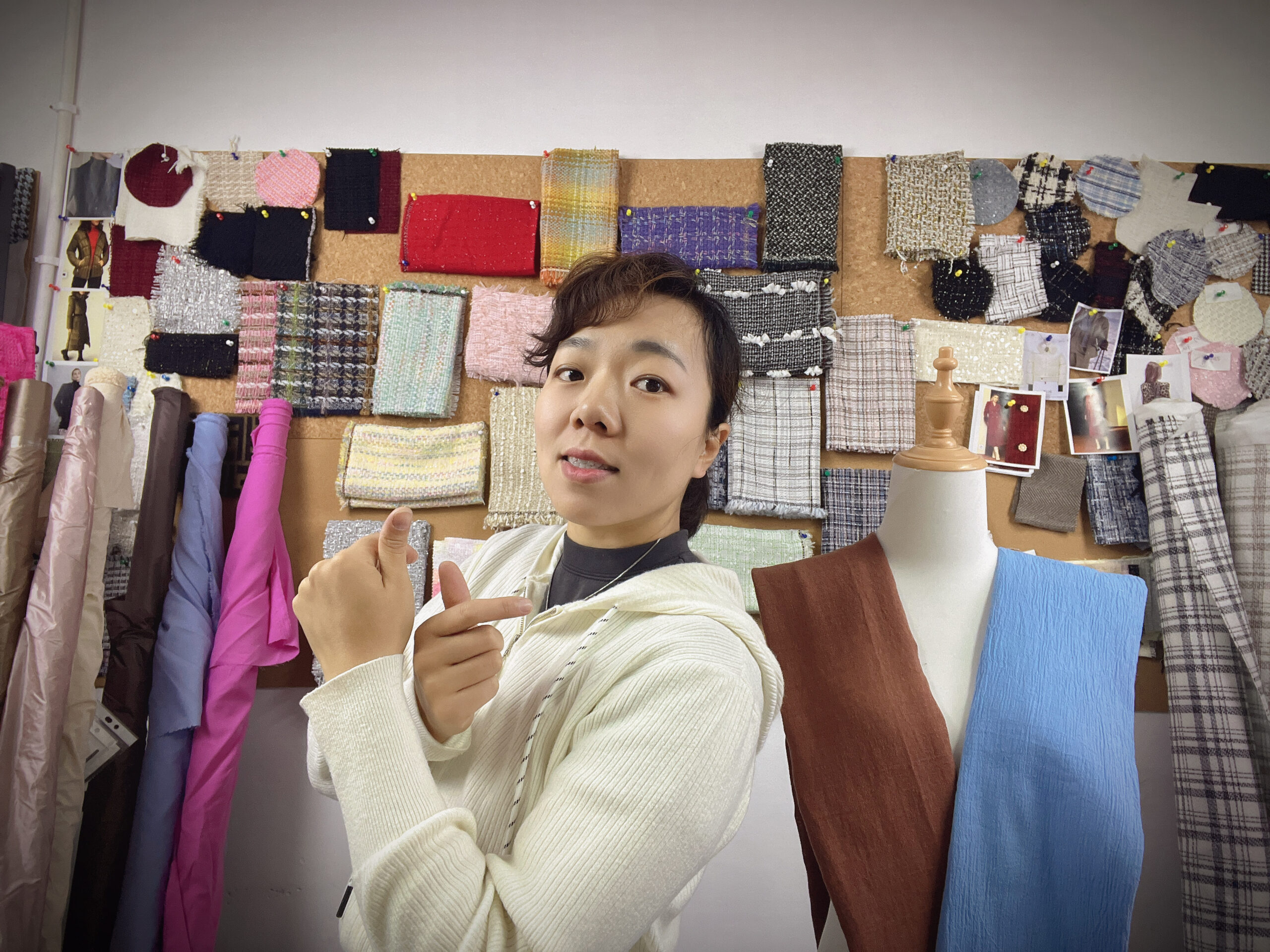
Tweed sits on the risky side of every slippage driver. It is frequently woven at a moderate sett to keep drape and softness, the fuzzy woolen surface helps, but a wool-polyamide blend with smooth yarns loses that grip, and twill and herringbone structures, the classic tweed patterns, interlace less often than plain weaves. Add a loose weave for a boucle or a looped surface and the ground structure carries even more of the load. A Chanel-style jacket sewn on a silk or synthetic lining seam, or a coat with a heavy shoulder seam, puts exactly the loads that expose slippage. Buyers who skip the test on tweed are gambling on the one property they cannot see at the showroom table.
The countermeasure is construction control. Tighten the sett for the weight, or move from a 2/2 twill to a closer interlacing for the same look, and slippage drops without changing the visible character. Finishing also matters, because milling and decatizing settle the yarns into place and add friction. Our custom manufacturing program treats seam slippage as a design parameter: weave construction is selected against the garment application, not just the aesthetic, and the pre-production sample is tested before bulk. For suiting and coat programs, we document the test result per lot, so the number follows the fabric, not the sales pitch.
What to ask for in the test report
A usable seam slippage report names five things: the test method and its edition, the warp and weft directions tested separately, the load used, the opening in millimeters for each direction, and the specimen conditioning. If any of those is missing, treat the report as incomplete. On the sourcing side, request the report for the delivered lot, not a generic product sheet, and compare it against the garment’s seam construction, because a borderline cloth can be rescued by seam taping or a wider seam allowance in production. The full QC picture matters too, seam slippage sits alongside pilling, seam strength, and colorfastness in the pre-shipment battery, and our ready-stock program ships from 100,000 meters of inventory with the relevant test documentation per program, with custom development starting at a 300-metre MOQ and a 7-day sampling cycle for testing before bulk commitment.
One closing thought for buyers. Seam slippage is the rare defect that appears only under load, which means it survives the showroom and dies on the customer’s shoulders. The test costs a fraction of a returned season, so it is one of the cheapest pieces of due diligence in fabric sourcing. A mill that volunteers its slippage numbers is telling you how it thinks about construction; a mill that does not know the number is telling you something else.
Frequently asked questions
What is seam slippage in fabric?
It is the sliding of warp or weft yarns away from a stitched seam under load, which opens a visible gap at the seam. It is a structural property of the weave, not a stitching error.
How is seam slippage tested?
A standard seam is sewn into the specimen, a set load is applied, and the seam opening is measured in millimeters. ISO 13936-2 is the fixed-load method most commonly reported for suiting.
Why does tweed slip at the seams?
Tweed is often woven at a moderate sett with twill interlacings, both of which reduce yarn grip. Smooth blended yarns and loose looped constructions increase the risk further.
Can seam slippage be fixed?
Yes, at construction level: tighter sett, closer interlacing, or finishing that settles the yarns. At garment level, seam taping or a wider seam allowance can manage borderline results.
For a step-by-step guide: How to Source Fabric from China for Small Brands. Need samples first? Request free fabric swatches.
Related Insights
Shrinkage Control in Knit Manufacturing: Pre-Shrinking and Relaxation
Shrinkage complaints on knitwear rarely come from bad fiber; they come from unrelaxed fabric cut...

Raising and Brushing: How Nap Is Built in Wool Finishing
Two wool fabrics can leave the loom identical and arrive as different products. One is...

Steaming and Mending Before Packing: The Mill’s Final Pass on a Tweed Roll
Between the loom and the bale there is a department most buyers never see. In...