

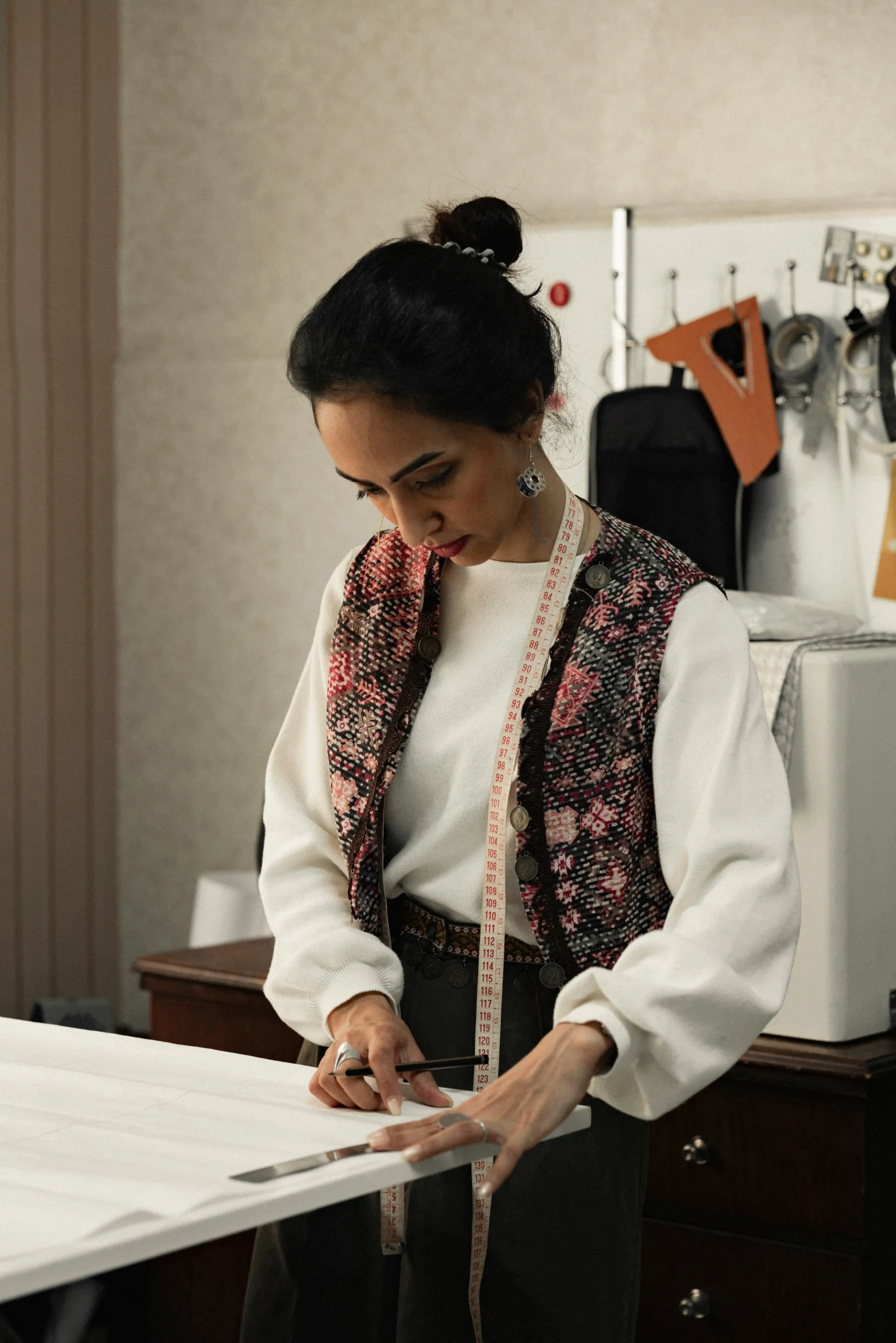
Single jersey and interlock are the two knit structures that most garment programs meet first, and they look deceptively similar on a swatch card. They are not variants of each other. Single jersey is knitted on one needle bed, curls at the edges and drapes with a fluid, lightweight hand; interlock is knitted on two needle beds in lockstep, lies flat, and runs thicker and more stable. Choosing between them changes weight, recovery, cutting behavior and garment use more than any finish applied afterward.
Our partner mills in Wenzhou run knit programs alongside its 300-loom weaving floor, with a 7-day sampling gate before every custom run, and structure selection is the first line on those specs. This guide compares the two structures on the properties buyers actually specify, and shows where each one wins in a collection.
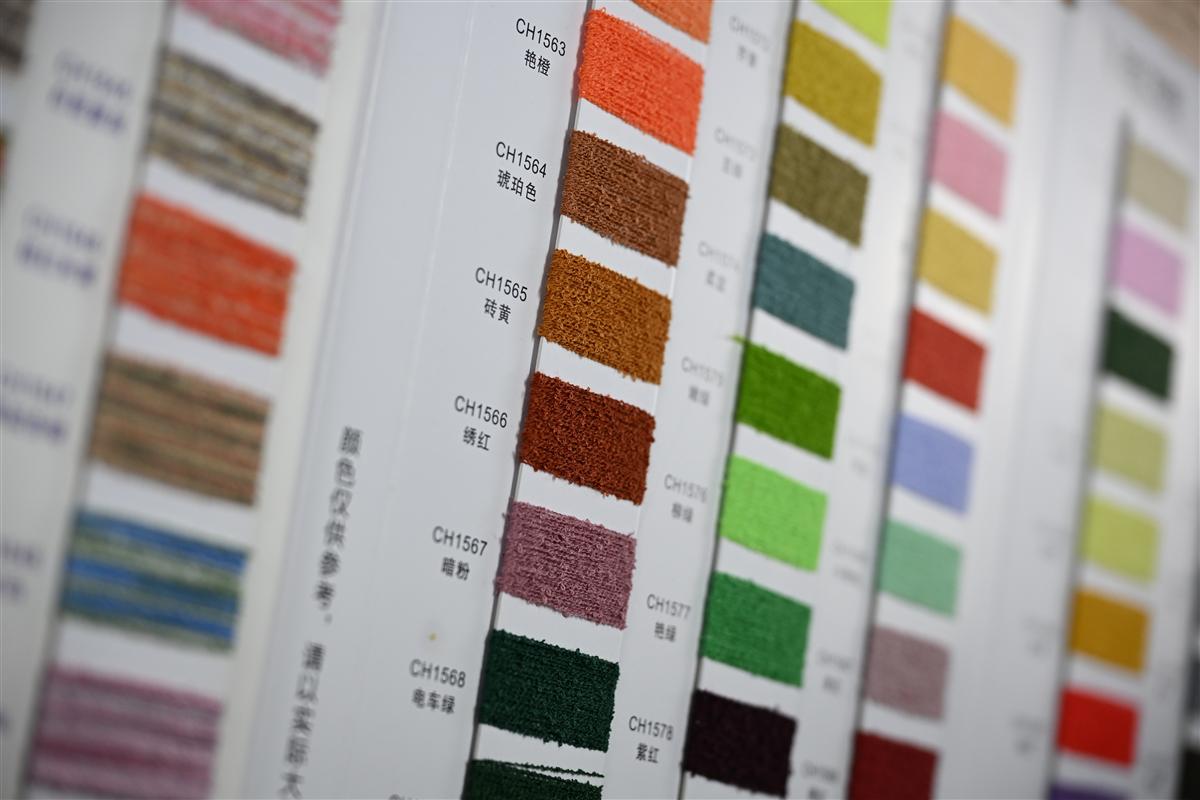
How the structures differ at the machine
Single jersey is made on one set of needles, producing a fabric where the face shows plain knit loops and the back shows the loop heads as a subtle purl ridge. Because only one bed is active, the fabric is asymmetric through its thickness, and that asymmetry is why cut edges roll toward the face. Interlock knits two plain fabrics simultaneously on opposed needle beds, bonded into one cloth that shows knit loops on both faces. The double construction roughly doubles the yarn input per square meter at the same gauge, and both faces being identical is what makes the fabric lie flat.
The consequence chain is direct: more yarn means more weight and less transparency; two interlocked layers mean higher dimensional stability and better recovery; symmetric structure means no curling at the cutting table. Buyers who want the formal terminology for these and other fabric constructions will find them standardized in ASTM D4850, the standard terminology relating to fabrics and fabric test methods, which is the reference worth citing when a spec needs to name structures unambiguously.
What each structure is like to specify and cut
Single jersey suits garments that move and breathe: tee bodies, dresses, lightweight layering. Its curling edges are the production consideration, managed by cutting slightly larger allowances, using spreaders, or stabilizing with tape on long edges, and by allowing the fabric to relax overnight before cutting, since the structure relaxes after roll tension. Interlock suits garments that need structure without woven stiffness: polos with body, skirt panels, loungewear with weight, and baby garments where flat, stable fabric and no curl matter. Interlock also takes prints and finishes more evenly because both faces behave the same.
Weight planning differs too. At the same gauge and yarn, interlock runs close to double the grams per square meter, so a program moving from 180 gsm jersey to an equivalent interlock look lands nearer 300 gsm, with all the cost and drape implications that follow. GSM conversions between systems are handled in our GSM to oz guide. Structure also interacts with the failure modes covered in our spirality and needle line defects guide: single jersey is the structure most exposed to spirality when yarn twist is unbalanced, while interlock’s balanced construction suppresses it.
Structure comparison on spec lines
| Property | Single jersey | Interlock |
|---|---|---|
| Needle beds | One | Two, interlocked |
| Weight at same gauge and yarn | Baseline | Close to double |
| Edge behavior | Curls toward face | Lies flat |
| Dimensional stability | Moderate, relaxes after roll tension | High, balanced structure |
| Spirality risk | Higher with unbalanced twist | Suppressed by symmetry |
| Typical garments | Tees, dresses, lightweight layering | Polos, skirts, structured loungewear, babywear |
Video: fabric to garment effect
Seeing the same fabric on the body makes the structure difference obvious faster than any spec sheet. Custom structures from our performance knit program start with a sample gate at 7 days, with gauge, yarn and structure locked before bulk knitting.
Frequently asked questions
Is interlock just thicker jersey?
No. It is a different construction, two interlocked plain knits on opposed needle beds, which changes stability, edge behavior and face symmetry, not just weight. Thickness is a consequence, not the definition.
Why do jersey edges curl and interlock edges stay flat?
Jersey is asymmetric through its thickness, so the loops pull the edge toward the face. Interlock is symmetric front to back, and the opposing stresses cancel out.
Which structure is better for printing?
Interlock prints more evenly because both faces behave identically and the surface is denser. Jersey prints well but the lighter structure shows more of the underlying curl and relaxation during handling.
How much heavier is interlock at the same yarn?
Close to double the grams per square meter at the same gauge, since two needle beds are feeding yarn into one cloth. Budget weight, cost and drape accordingly when switching structures.

Related Insights

Reading Knit Gauge: What 7gg, 12gg and 14gg Mean for Sweater Programs
Gauge numbers appear on every sweater knit quotation, 7gg, 12gg, 14gg, and too many buyers...

Moisture-Wicking Knits: Sources, Test Methods and Durability
Moisture-wicking is one of the most quoted claims in knitwear and activewear sourcing, and one...

Does Knit Fabric Shrink After Washing? Relaxation, Felting and What to Specify
Yes, knit fabric shrinks after washing, and the question is never whether but how much...