
Ask three mills for a herringbone and you will receive three fabrics that share a zigzag direction and disagree on scale, contrast, weight and hand. The names describe a family of arrangements rather than a single specification, which is why a purchase order that names a pattern and stops there is an order that will not be filled as expected.
This guide explains what each of the common names actually specifies, where the names get stretched, and how to write a construction that a mill can quote against and an inspector can verify.
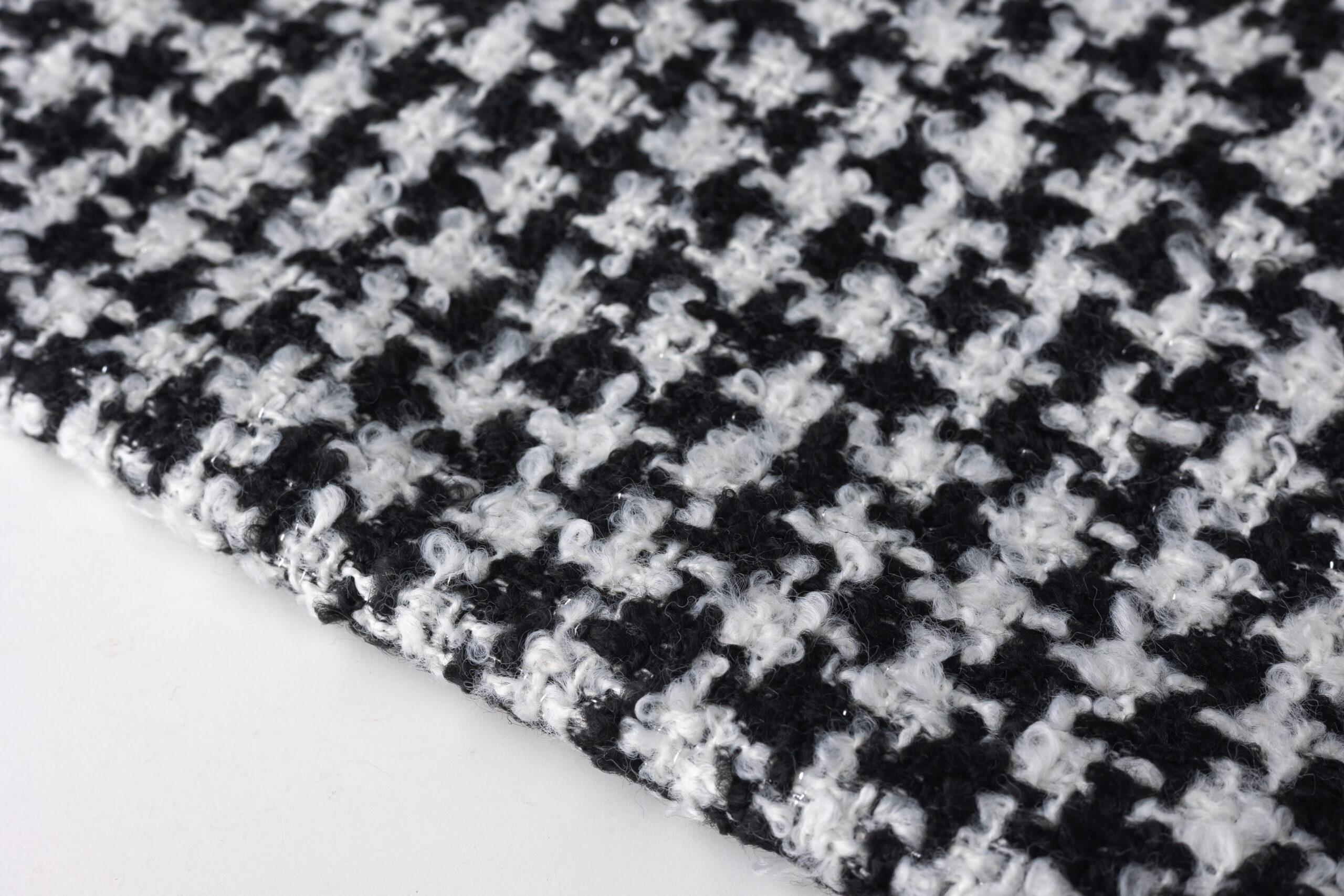
What the Names Actually Describe
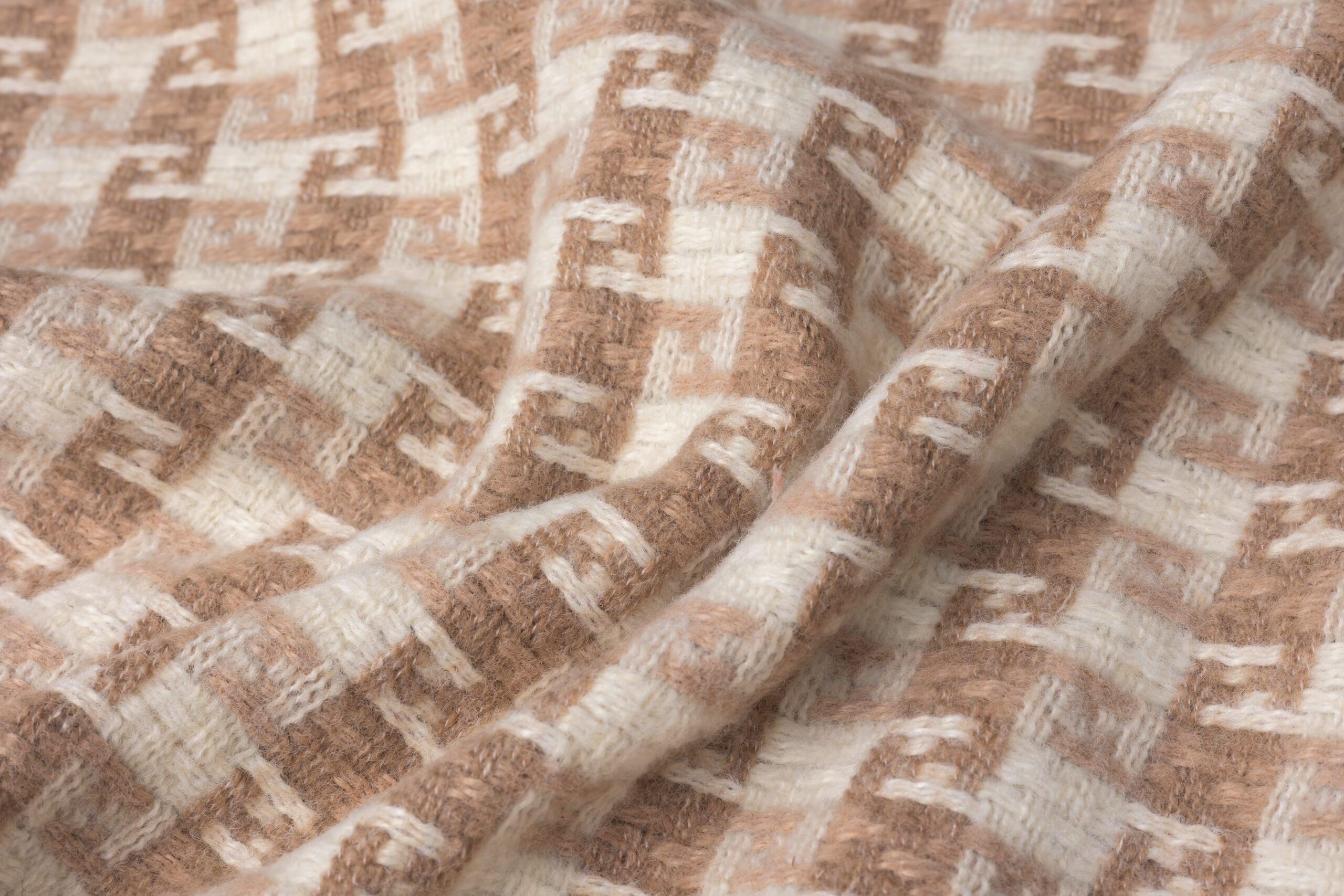
Herringbone is a twill whose direction reverses at regular intervals, producing a V or zigzag. The variables are the twill angle, the interval between reversals and the yarn contrast, so a fine worsted herringbone and a heavy woollen herringbone can sit at completely different ends of the market while both being correctly named.
Houndstooth is a colour-and-weave effect built from blocks of four ends and four picks in alternating light and dark, which produces a broken, pointed check. Its variables are block size and colour pair, and at larger scale the same structure is often called a houndstooth check rather than a pattern.
Glen check is a large-scale check on a twill ground with a contrasting overcheck, historically associated with Scottish estates and still sold under a family of names for the same construction. Because the name is geographic in origin, it carries no technical definition at all.
Where the Names Get Stretched
Two stretches are common. The first is scale: a buyer approves a swatch with a 4 mm houndstooth block and receives a bulk run at 8 mm because the mill changed the pick density, and the pattern name is still accurate while the fabric is not what was approved. The second is composition: a name that originated in wool is often applied to a polyester or acrylic lookalike, which is legal and often desirable on cost, but changes performance markedly.
Colour naming creates a third category of dispute. A check built from four yarn colours can be described by the ground colour or by the overcheck, and two suppliers describing the same cloth may therefore appear to be quoting different fabrics. Written colour references with yarn-level specification remove the ambiguity.
None of this is sharp practice by itself. It is what happens when a descriptive name is used where a construction is needed, and it is the reason sampling exists. The tweed guide sets out the construction fields we ask for on every enquiry so that a name is never the only description.

Writing a Construction Instead
A construction that a mill can quote and an inspector can check names seven things: weave structure, pattern repeat size in millimetres or inches, ground colour with a yarn reference, overcheck colour or colours, yarn count for warp and weft, fabric weight in grams per square metre, and finished width.
Repeat size deserves emphasis because it is the line that fixes scale, and scale is what a buyer actually approved. Ask for it in both directions, since warp and weft repeats can differ, and ask for the tolerance. A check that repeats within half a millimetre of the approved swatch is consistent; one that drifts by three millimetres is a different fabric at a distance.
Colour continuity across reorders deserves the same treatment. Two runs of the same construction can still differ if the yarn dye lots differ, which is why batch matching is planned rather than discovered. Our notes on colour continuity across tweed runs describe how a second batch is made to match the first.
Matching Pattern to Weight and Use
Pattern scale and fabric weight should be chosen together, because a large glen check in a light cloth reads as a shirt while the same construction in a heavy weight reads as outerwear. Getting that pairing wrong is a design problem that no amount of production control fixes, and it is worth settling before sampling rather than after.
The GSM and drape relationship is set out in our notes on boucle and tweed for dresses, which shows how the same pattern family behaves across weights. At the fibre level, wool type changes the surface as well as the hand: Shetland, Cheviot and lambswool produce visibly different textures on an identical weave structure, which is one reason a construction sheet should name the wool type and not merely the word wool.
Labelling rules follow the composition, so the fibre declaration on a finished garment traces back to what was actually woven. In the United States the wool and textile labelling requirements sit in eCFR Title 16, wool and textile labelling rules, and a construction sheet that names the fibre precisely makes the later label straightforward.
Sampling and Approval Discipline
Because names are descriptive, the sample carries the specification. Approve a swatch large enough to judge scale and colour, keep the signed reference on both sides, and state which properties are fixed and which may vary within stated tolerances.
Photograph the approved swatch next to a ruler under consistent lighting and attach it to the order. That single precaution resolves most later disagreements, because it converts a subjective memory into an objective record of scale.
The final step is to decide what happens when a bulk run differs from the approved sample. A different-looking pattern at the same construction is a rejection; a marginally different shade at the selvedge is often a usable margin. Writing those thresholds before production starts is what keeps a reorder relationship calm, and our tweed team will define them with you at sampling stage.
FAQ
Are herringbone, houndstooth and glen check standardised?
No. They are descriptive names for weave and colour arrangements. Scale, contrast, composition and weight vary widely within each name.
What defines a herringbone?
A twill whose direction reverses at intervals to form a V arrangement. The twill angle, the reversal interval and the yarn contrast are all variables.
Why does my reorder not match the first run?
Usually because yarn dye lots changed rather than because the construction changed. Batch matching has to be planned, and the approved swatch is the reference.
How do I fix pattern scale in an order?
Specify the repeat size in both directions with a tolerance, not just the pattern name, and approve the sample against a ruler.
Does the pattern name affect labelling?
No. Labelling follows fibre composition, so the construction sheet must name the fibre and blend precisely for the label to be correct.
Video: Tweed Fabric Trends: Highlights from a Leading Manufacturer
If a pattern has arrived at the wrong scale or contrast, send the approved swatch beside the bulk. The tweed team will rewrite the construction with repeat size, yarn counts and tolerances so the next run matches the sample.

Related Insights
Shoulders That Collapse After Two Wears: Spec the Cloth
A coat that holds its line on a hanger and folds at the shoulder after...
Eighty Metres Against Two Hundred: Which Route Keeps the Colour
The shortest route to the same colour is not a new dyeing. It is the...

Repeating a Donegal Effect From Stock Yarn: Fleck Count, Shade Band, Transition
What the mill should show you is not a sample box. It is a trial...