
Tweed Suit Fabric: Weight and Mobility
A tweed suit must do two things at once: hold a clean, structured line and still let the wearer move. It is a balancing act between the two, and the weight of the fabric is the main dial. Too heavy and the jacket feels rigid and hot; too light and it loses the tailored character that made you choose tweed in the first place. Here is how to read the weight and structure of a tweed suiting fabric before you commit.
Where suit tweed sits on the weight scale
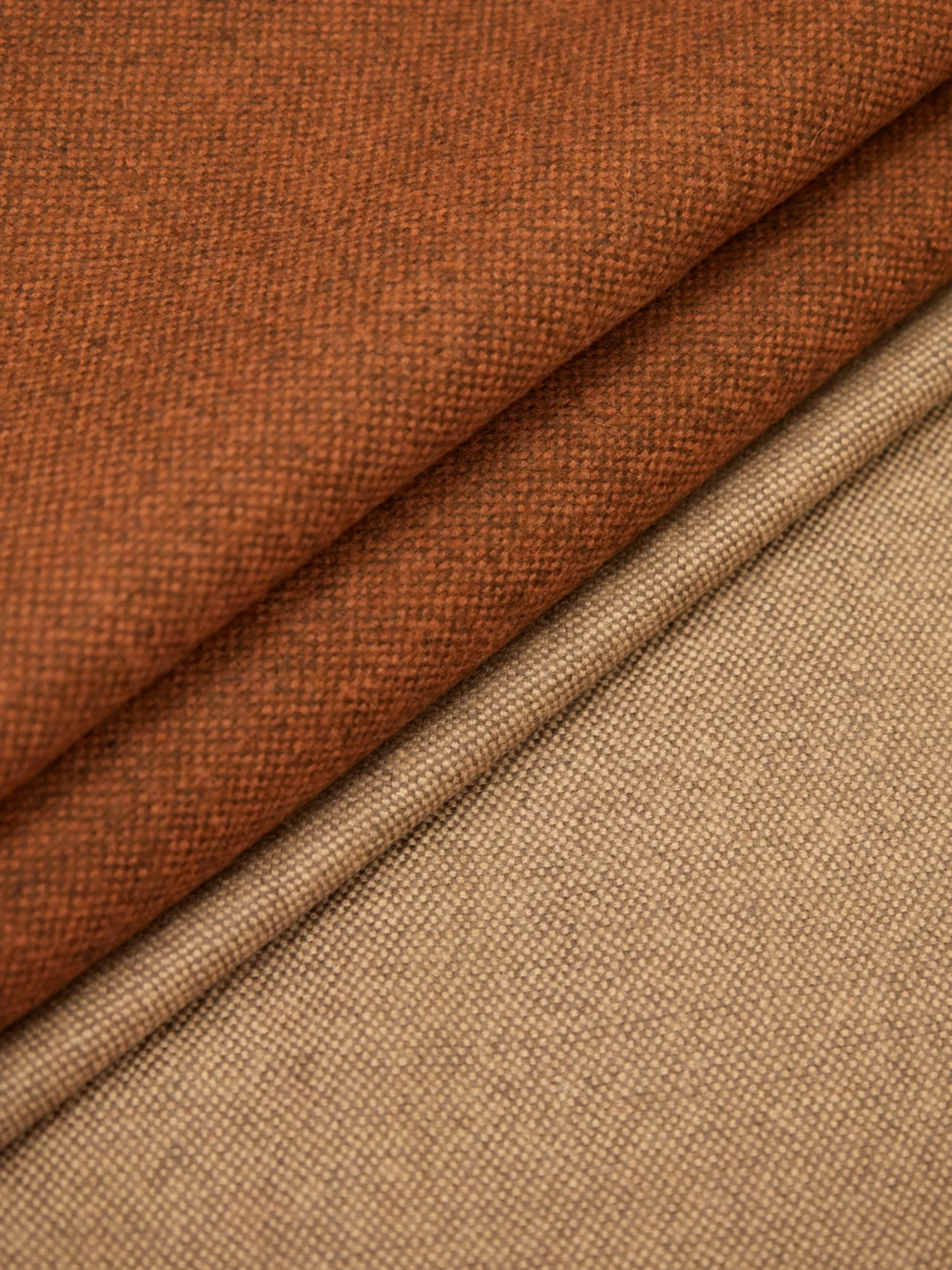
A suiting tweed usually sits in a different range from a coat tweed. Where a heavy overcoat tweed runs around 380-450 GSM, a two-piece suit fabric is typically lighter, so it holds a pressed crease and moves with the body. The key is that it must be dense enough to hold structure but not so heavy it weighs the shoulder down. Ask the mill to state the exact GSM so you cost and tailor against a real number.
Weight controls drape, and drape controls silhouette
A heavier tweed drapes in a firm, boxy way, which suits a structured jacket. A lighter tweed falls softer and closer to the body, which suits a more fluid silhouette. Decide the silhouette first, then select the weight. If you want a sharp, tailored look, choose the heavier end; if you want a relaxed, soft suit, choose lighter. Our merino vs regular wool tweed guide shows how fibre choice changes the drape.

The weave and the finish matter as much as the weight
Two tweeds at the same GSM can feel entirely different depending on the weave and the finish. A tightly woven tweed with a crisp finish holds a pressed crease and resists wrinkling; a looser weave with a brushed finish feels softer and warmer but creases more. For a suit, you generally want a tighter weave that tailors well. Look at the weave structure closely and ask what finish the mill applies.
Mobility comes from recovery, not just lightness
How a fabric recovers matters. When you fold it and release, does it spring back or hold the crease? A good suiting tweed recovers quickly, so it moves with the wearer without looking rumpled. This is linked to the fibre blend: a small amount of elastane or a clever weave can add give without losing the tweed character. Our stretch tweed for modern tailoring article covers exactly how elastane is added while keeping the look.
Check the hand against skin
A suit is worn close to the body, so the hand against the skin matters. A coarse, hairy tweed can itch, while a softer, smoother twill is more comfortable. If the buyer or the end customer will wear the suit all day, choose a fabric that is comfortable as well as handsome. Ask whether the mill can supply a softer finish for a suiting application.
Test mobility with a made-up jacket
No measurement table can replace sewing a jacket. Put the fabric in a real garment, check the shoulder, the sleeve and the vent, and move in it. This is the only way to confirm the fabric gives the mobility you want. A mill that can turn a sample around quickly, like Fursone’s 7-day sample cycle, makes this practical. Look at our birdseye and dogtooth tweed patterns for suiting options.
Wool quality is the foundation
Beyond weight, the quality of the wool itself drives how the tweed looks and wears. Genuine merino wool gives a finer, smoother hand and better recovery than a low-grade wool. Certification standards from The Woolmark Company are a useful reference point for genuine wool quality, and they help you verify the fibre before you order a suit-length run.
Fursone produces custom tweed suiting with a woolen overcoat and suiting range, and we tailor weight, colour and composition to your design. We supply designer brands, garment factories and fabric wholesalers who need a suiting fabric that balances line and movement.
Video: hidden craftsmanship in tweed fabric
FAQ
What weight tweed is best for a suit?
A suiting tweed is generally lighter than a coat tweed, so it holds a pressed crease and moves with the body. Match the weight to the silhouette you want: heavier for a structured jacket, lighter for a soft suit.
Is tweed suit fabric stiff?
It does not have to be. A tighter weave with a crisp finish holds a sharp line, while a looser or softer weave gives more movement. Choose based on whether you want a structured or a fluid silhouette, and check the recovery when folded.
Related reading: stretch tweed tailoring give

Related Insights

RWS Explained: Responsible Wool in Tweed, from Certificates to Claims
The Responsible Wool Standard (RWS) is the wool industry’s most widely recognized animal welfare and...

Recycled Wool vs Virgin Wool Tweed: Hand, Price and Claims Compared
Recycled wool tweed has moved from niche to mainstream rack presence, and buyers now weigh...

Sewing Boucle and Tweed: Managing Fray in Production
Every garment maker who cuts boucle has a story about fray. The looped yarns that...