The fabric sampling process usually takes four to six weeks if you let the mill run the calendar. Seven days sounds like a fantasy—unless you know which levers to pull. Most designers I talk to treat sampling as a black box: send a sketch, wait, hope. That works if your launch date is flexible. It doesn’t work when you’re racing a trade show deadline or a retail buyer’s open-to-buy window.
The trick is separating the sampling path from the production path. A mill that runs 100,000 meters of a single grey cloth won’t stop the line to weave your 50-meter trial. But a mill with dedicated sample looms—usually narrow-width, 190 cm or less—can cut that timeline from weeks to days. The catch? You have to know what to ask for before you send the artwork. Specify the yarn count, the weave structure, and the finish upfront. If you leave any variable open, the mill fills it with whatever is on the creel, and you get a swatch that matches your sketch but not your production intent.
Fabric Sampling Basics
A swatch confirms texture; a full sample confirms production reality. Most mills blur the line to inflate their sampling pipeline.
Swatch vs. Full Sample: The Functional Difference
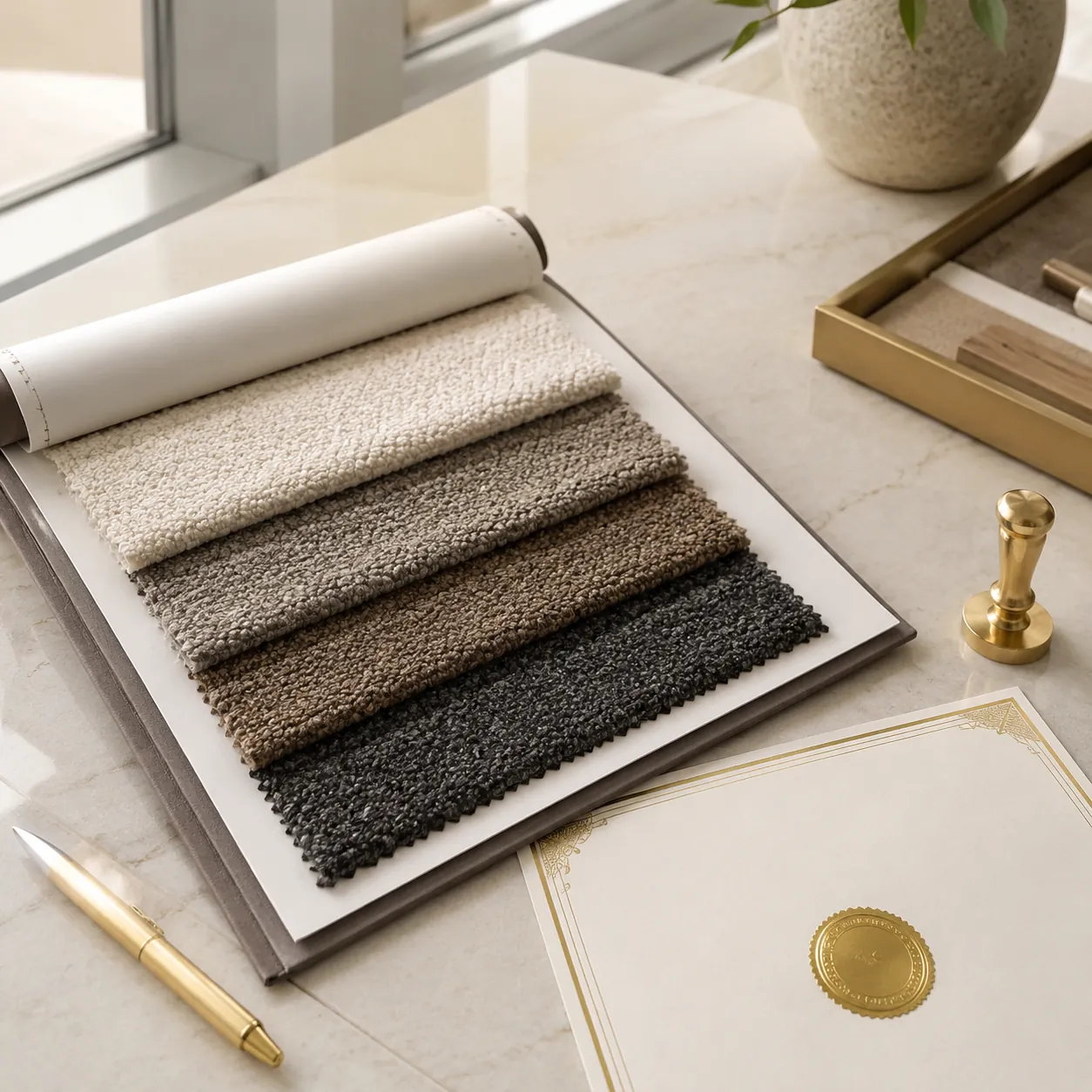
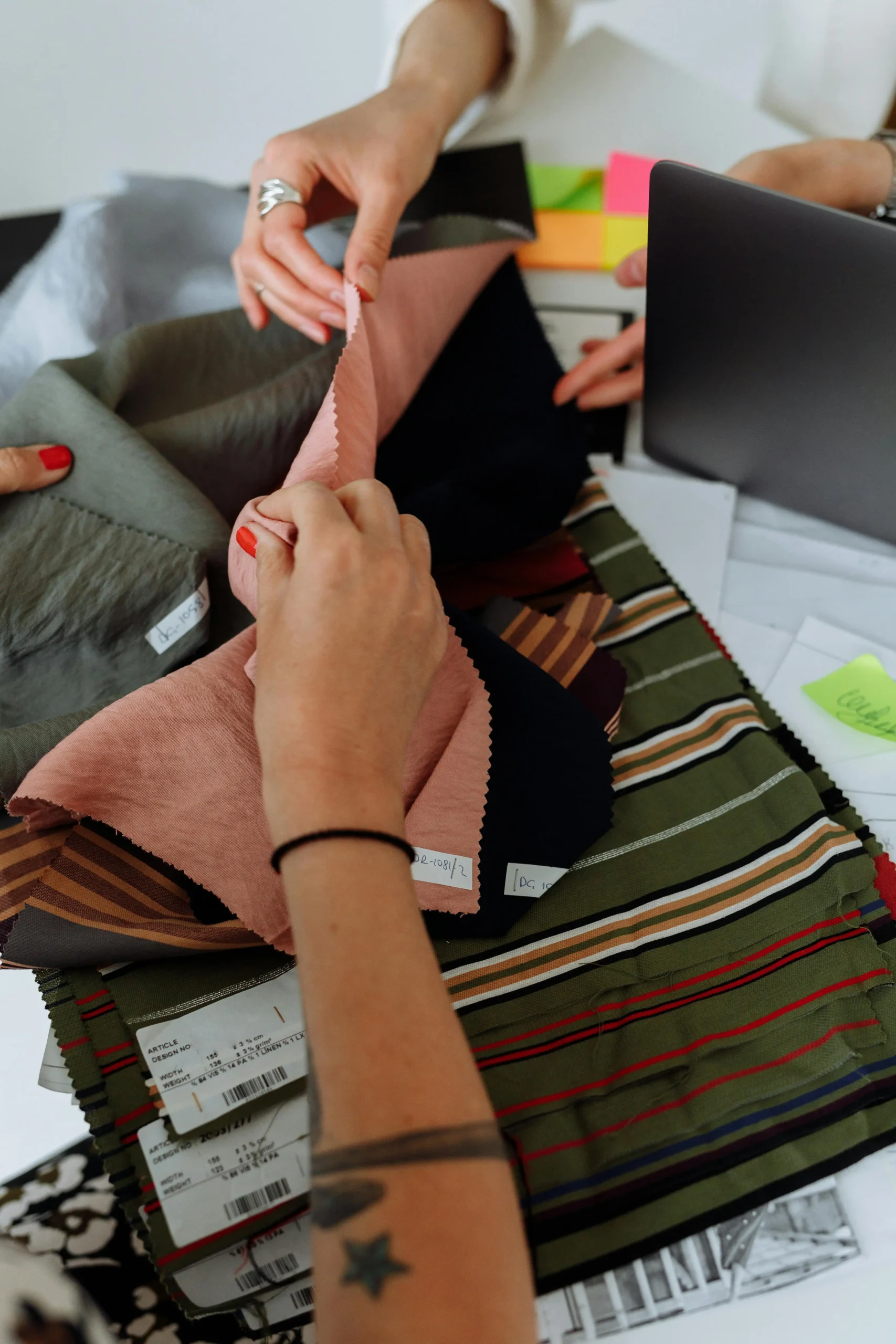
A fabric swatch is a small piece, typically 4×4 inches or 6×6 inches, cut from a production roll. Its sole purpose is to validate hand feel, color, and weave pattern. A full sample, by contrast, is a cut piece of 1 to 5 meters that allows a designer to test drape, sew a garment prototype, and assess how the fabric behaves under industrial cutting and stitching. Confusing the two is a common source of timeline friction in the fashion supply chain. If you only need to confirm that a bouclé texture matches your mood board, a swatch is sufficient. If you need to put a garment on a fit model, you need a full sample.
Typical Lead Times and the 7-Day Rapid Sampling Framework
Industry standard lead times for custom fabric sampling range from 2 to 4 weeks, often longer for mills that batch sampling runs with production orders. This creates a bottleneck for designers operating on seasonal calendars. The 7-day rapid sampling framework compresses that window by separating the sampling workflow from production scheduling. Under this model, a designer submits a color reference or Pantone code, and within one week, a physical swatch with documented dye-lot data is in hand. For ready-stock materials, the timeline is even tighter: stock options ship in 3 to 7 days because the fabric is already woven and finished, waiting in inventory.
Stock Availability and Minimums: 100M Meters vs. 1000M MOQ
The distinction between stock and bespoke sampling is not just about speed; it is about financial risk. With 100M meters of premium bouclé and heritage knit fabrics held in ready stock, a designer can order swatches or full samples without committing to a custom production run. This is the low-risk path for color matching and texture validation. When an exclusive texture or custom color blend is required, the bespoke route applies a minimum order quantity of 1000M meters. That MOQ is intentionally set lower than the 3000M to 5000M typical of European mills, allowing emerging fashion houses to develop proprietary fabrics without overextending inventory capital.
In-House Weight Specs and Hand Feel Assurance
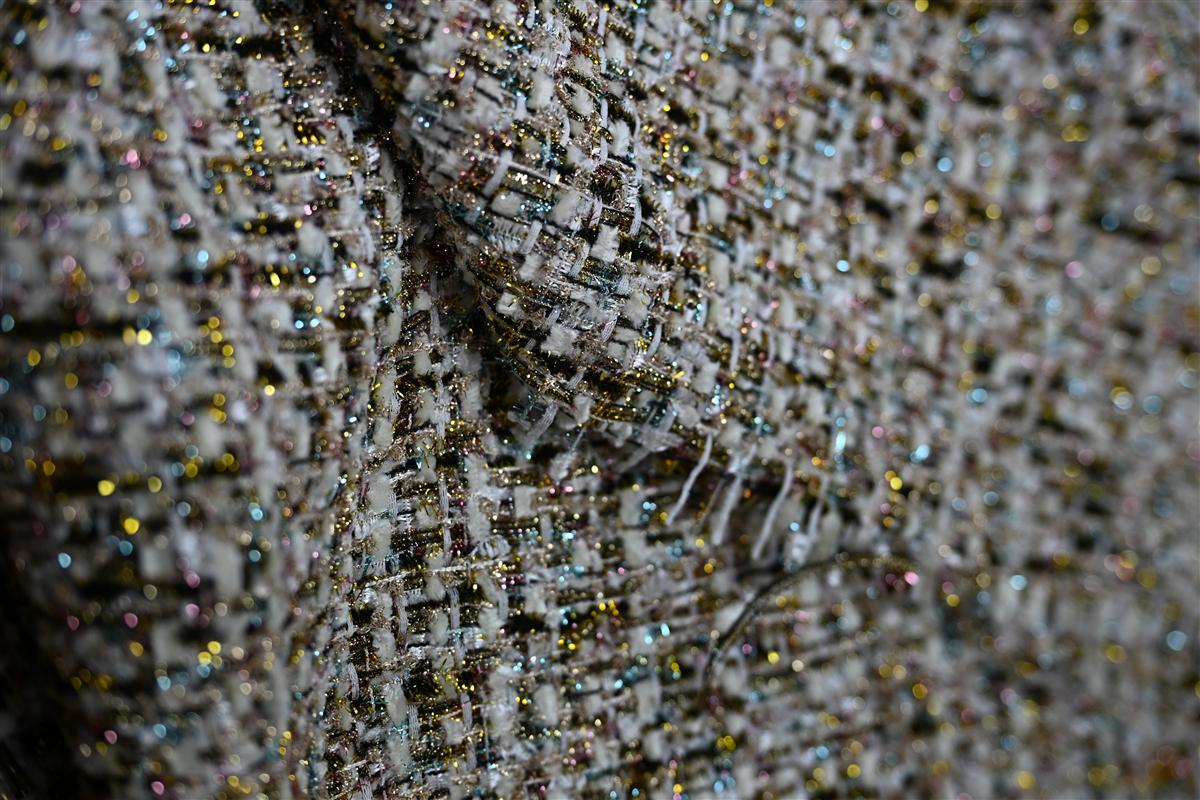
Every swatch shipped from this mill includes documented weight specs, typically expressed in grams per square meter (GSM), alongside pre-shipment QA photos that capture dye-lot consistency. This practice is rarely advertised by other suppliers, but it is the difference between receiving a swatch that matches your reference and receiving one that drifts in hue or texture on the production roll. The hand feel of a bouclé fabric is determined by the twist of the yarn and the density of the loop structure. Our internal production data shows that stock bouclé weights fall between 280 and 420 GSM, depending on the pattern. When you request a swatch, you receive that specific weight range, not a generic approximation. For bespoke orders, the weight is calibrated to your spec and locked in via a signed sample card before production begins.
Stock vs Bespoke Options
A dual-path sampling strategy — using ready stock for speed and bespoke for exclusivity — cuts development cycles by weeks without sacrificing texture control.
The Two Lanes: Ready-Stock Bouclé and Heritage Knits
The first decision in any fabric sampling process is whether to pull from existing inventory or develop a new texture. For bouclé fabric samples 7 days or faster, the stock lane is the answer. Fursone maintains over 100 million meters of premium bouclé and heritage cable knits in standard weights and colorways. These are not leftovers — they are current production runs held specifically for rapid fulfillment. A designer requesting a swatch from this pool receives a physical sample within 3 to 7 days, not weeks. The weight specs, hand feel, and stock photos are already documented, so there is no guesswork about whether the fabric will drape or hold structure.
When to Go Bespoke: The 1000M Custom MOQ
If the collection demands an exclusive texture — a unique color blend, a custom yarn twist, or a non-standard weight — the stock lane cannot deliver. That is where the bespoke path begins. The custom fabric sampling MOQ 1000m threshold is not a barrier; it is a risk-management tool. At 1000 meters, a brand can test a proprietary texture without committing to the 5000- or 10,000-meter minimums typical of European mills. The tradeoff is lead time: while stock ships in days, a bespoke run requires 7 days for the initial sampling phase, followed by production scheduling. For a Creative Director who needs exact color fidelity, this is the only viable route.
Lead Time Tradeoffs: 3-7 Days vs. MOQ-Driven Schedules
The difference between these two paths is not just about inventory — it is about calendar risk. Stock options ship in 3-7 days because the fabric is already woven, finished, and inspected. There is no wait for yarn dyeing, no loom setup, no finishing queue. Bespoke orders, by contrast, are triggered by the MOQ. Once the 1000-meter commitment is placed, the mill schedules a production slot. The sampling turnaround for fashion houses on bespoke work is still fast relative to industry norms — the 7-day rapid sampling program applies here as well — but the total timeline from concept to bulk fabric is longer because the dyeing and weaving happen after the order.
Weight Ranges and Color-Matching Fidelity
Every sample, whether stock or bespoke, ships with documented weight ranges and color accuracy data. For stock fabrics, the weight is fixed and the dye lot is already recorded. For bespoke orders, the mill provides dye-lot photos and pre-shipment QA images before the fabric leaves the factory. This is a rarely-advertised practice that prevents post-procurement hue drift — a common pain point when a production batch arrives looking different from the original swatch. The dye lot controlled fabric samples protocol ensures that the color you approved in the sample stage matches the bulk shipment. If a designer orders color matched fabric samples fast, they receive not just the cloth but a digital record of the lot parameters.
Dye-Lot Controls and Quality Assurance
Color consistency across production runs is the single most underreported failure point in textile sourcing. Many mills will ship a swatch, then deliver bulk fabric from a different dye lot without notification. The result is a garment that looks correct in the sample but mismatched in production. The industrial fabric sampling workflow here mandates that every bespoke order is assigned a unique dye-lot number at the yarn-dyeing stage. That number follows the fabric through weaving, finishing, and inspection. Before shipment, the QA team photographs the fabric under standardized lighting and compares it to the approved reference. If the delta exceeds the agreed tolerance, the lot is rejected before it leaves the factory floor. The designer never sees the mismatch because it never ships.
Speed to Market Metrics
The Swatch-to-Approval Cycle: 7 Days vs. Industry Norm
Most traditional mills quote 3–6 weeks for a first strike-off. That eats into a seasonal window where a 2-week delay can mean missing a retailer’s buy appointment. The internal production standard here is a 7-day rapid sampling cycle from concept to physical swatch. For stock fabrics, that timeline shrinks further to 3–7 days shipping because the material is already woven and inventoried. For bespoke textures, the 7-day clock starts once the design brief and color targets are locked.
The practical impact on a seasonal launch is straightforward. A designer who needs bouclé fabric samples 7 days before a line review can hold a physical swatch, assess hand feel, and confirm drape while competitors are still waiting for an email confirmation from their mill. That compressed timeline allows for one or two revision cycles within the same month, which is often the difference between hitting a Spring/Summer drop or pushing to Resort.
Time Saved vs. Traditional Mills: The Math
Running a side-by-side comparison reveals the gap clearly. A typical European mill process: design brief submission (Day 1), sample queue (Day 7–10), strike-off production (Day 14–21), shipping (Day 21–28). Total: 4 weeks minimum. The alternative workflow here cuts that to 7 days for custom fabric sampling MOQ 1000m textures and 3–7 days for ready stock fabric swatches 100m. That is a 75% reduction in lead time on the bespoke side and up to 90% on stock.
The savings are not just calendar days. Faster sampling means fewer parallel development tracks. Designers can consolidate their fabric selection earlier, reducing the number of samples ordered and the associated courier costs. For a small label running 12 SKUs per season, a 3-week time savings on sampling alone can free up budget equivalent to an extra 50 meters of production yardage.
Dyelot Photos and Digital Color Proofs: Preventing Hue Drift
Color matched fabric samples fast is a common request, but speed without control creates downstream problems. The standard practice here includes two specific checkpoints. First, every swatch order is accompanied by a dyelot photo taken under controlled lighting (D65, 6500K) showing the swatch against the approved standard. Second, a pre-shipment QA photo is taken of the production roll before it leaves the factory floor.
These images serve as a visual baseline. If a designer receives the bulk shipment 6 weeks later and perceives a shift, the dyelot photo provides a timestamped reference. This is a rarely-advertised practice that prevents post-procurement hue drift disputes. The dye lot controlled fabric samples protocol ensures that every 1000m bespoke run is cross-referenced against the original strike-off before cutting begins.
Continuous Lot Control: Preventing Drift Across Production Runs
Hue drift is not a one-time risk. It compounds when a brand reorders the same SKU for a second season. Without lot control, a Spring order of bouclé in “Ivory” might arrive slightly warmer than the Fall reorder, creating visible panel variation in a finished garment. The internal system assigns a unique dye lot number to every production run, and that number is recorded against the swatch approval.
When a reorder is placed, the production team pulls the original dyelot record and matches the new batch against it using spectrophotometer readings (Delta E ≤ 1.0 tolerance). If the batch falls outside that range, it is reworked before shipment. This continuous lot control prevents the kind of hue drift that forces brands to scrap cut pieces or renegotiate with retailers. For a designer sourcing 100M meters of ready stock, this means the swatch in hand is the exact color that arrives, run after run.
Cost & Risk Controls
A 7-day sampling cycle with 100M meters in stock cuts the cost of risk before you commit to production yardage.
Why Sampling Speed Directly Controls Your Landed Cost
Most emerging designers only look at the per-yard price when comparing suppliers. That’s a mistake. The real cost of fabric is the landed cost—the total you pay after shipping, duties, sampling fees, and the hidden expense of time. Every extra week you spend waiting for a swatch from a European mill is a week your collection sits idle. For a small-to-mid label launching two seasons a year, a 3-week delay on sampling can compress your production window, forcing you into air freight on finished garments. That premium wipes out any margin advantage a cheaper fabric might have offered.
Internal production data shows that ready stock fabric swatches with 100m availability ship in 3-7 days. That timeline lets you lock in your material selection, approve color, and move to cutting before a traditional mill has even confirmed your sample request. The 30-50% lower cost versus premium European mills isn’t just a line-item saving—it’s a structural advantage that protects your cash flow and your launch calendar.
MOQ Thresholds: The Risk Floor for Bespoke Textures
The industry standard for custom fabric development often starts at 3,000 to 5,000 meters. That’s a bet most emerging designers cannot afford to lose if the texture or color misses the mark. The custom fabric sampling MOQ of 1000m is deliberately set lower—not because the mill cannot run larger lots, but because the risk of committing to an exclusive texture should be proportional to your brand’s scale. At 1000m, you can test a bouclé or cable knit on a real production run without overextending inventory. If the hand feel or drape works, you reorder. If it doesn’t, you’re out 1000 meters of material, not 5000. That’s a controlled risk, not a gamble.
QA Checkpoints and Defect Allowances That Actually Matter
Color drift between dye lots is the most common defect in woven and knit fabrics. A swatch approved in January can arrive in March looking noticeably different under natural light. The standard defense is a dye lot controlled fabric sample system. Every sample shipped includes pre-shipment QA photos and documented weight ranges. You receive visual evidence of the actual lot before it leaves the warehouse. This practice is rarely advertised because most mills treat color matching as a “best effort” process. Here, it is a documented checkpoint.
Beyond color, the defect allowance on production runs typically sits at 2-3% for first-quality goods. For sampling quantities under 1000m, the allowance should be near zero—any defect in a small lot represents a significant percentage of the total. Always request the defect tolerance in writing before placing a custom sampling order. If a supplier cannot state it clearly, that is a red flag.
European-Mill Pricing vs. 30-50% Lower Premium Options
The price gap between a European mill and a Wenzhou-based manufacturer like Fursone is not a mystery. European mills carry higher labor costs, longer supply chains for raw materials, and overhead tied to heritage branding. The 30-50% lower cost reflects a different operational model: direct sourcing of wool and acrylic blends from regional suppliers, vertical production control, and a leaner logistics chain. The fabric quality—measured by weight consistency, weave density, and color fastness—meets the same thresholds used by European mills. The difference is not in the hand feel or the finish. It is in the margin structure. For a designer targeting affordable luxury, that margin is the difference between a viable collection and one that gets priced out of the market before it launches.
| Feature | Specification | Advantage |
|---|---|---|
| Cost Control | 30-50% less than European mills | Improve margins without sacrificing quality |
| Inventory Risk | 100M meters ready stock | Ship in 3-7 days; no overstock liability |
| Custom MOQ Risk | 1000M minimum for bespoke | Lower upfront commitment for exclusive textures |
| Sampling Speed | 7-day rapid sampling turnaround | Outpace competition; reduce time-to-market risk |
| Color & Quality Assurance | Dye-lot traceability + pre-shipment QA photos | Prevents hue drift; ensures lot continuity |
Digital Tools for Sampling
Digital tools reduce sampling cycles, but they fail if the data doesn’t match the physical roll. The gap is in dye-lot traceability and texture translation.
Digital Previews vs. Physical Reality
Most mills offer a digital preview — a photo or a render. The problem is that bouclé texture and tweed weight don’t translate to a screen. A 380 gsm bouclé can look identical to a 450 gsm version in a JPEG, but the hand feel and drape are completely different. Fursone’s digital previews include weight specs, stock photos, and hand feel notes alongside the image. That data allows a designer to rule out a fabric without requesting a physical swatch, cutting the decision cycle by 2-3 days per option.
Yarn Composition Data: The Missing Layer
A color image tells you nothing about fiber content. A bouclé that looks 80% wool on screen might be 50% acrylic, which changes shrinkage, pilling resistance, and cost. Fursone provides exact yarn composition data (e.g., 70% Wool / 20% Polyamide / 10% Acrylic) with every digital preview. For a custom fabric sampling MOQ 1000m, that composition data is locked into the production spec, so the bespoke roll matches the preview sample — not just in color, but in performance.
Online Color-Matching Proofs with Dye-Lot Traceability
Color matching is where digital sampling usually breaks. A supplier emails a photo under studio lighting, the designer approves it, and the production roll arrives two shades off. Fursone’s process includes pre-shipment QA photos taken under standardized lighting (D65), plus dye-lot traceability. Every digital proof is tied to a specific dye-lot number. If the designer orders a repeat, the system pulls the same dye-lot formula, not a visual approximation. This is a rarely-advertised practice that prevents post-procurement hue drift — a risk that costs fashion houses thousands in re-cuts and missed seasons.
Shortened Iterations: From 3 Weeks to 7 Days
Traditional sampling requires mailing physical swatches back and forth. Each iteration adds a week for shipping alone. Fursone’s rapid fabric sampling 7 days program compresses this by using digital color proofs and composition data to lock the spec before any yarn is spun. The physical sample is only cut once — after the digital spec is approved. This eliminates the “send swatch, reject, resend” loop that plagues sampling turnaround for fashion houses.
Maintaining Artisan Texture Integrity in a Digital Workflow
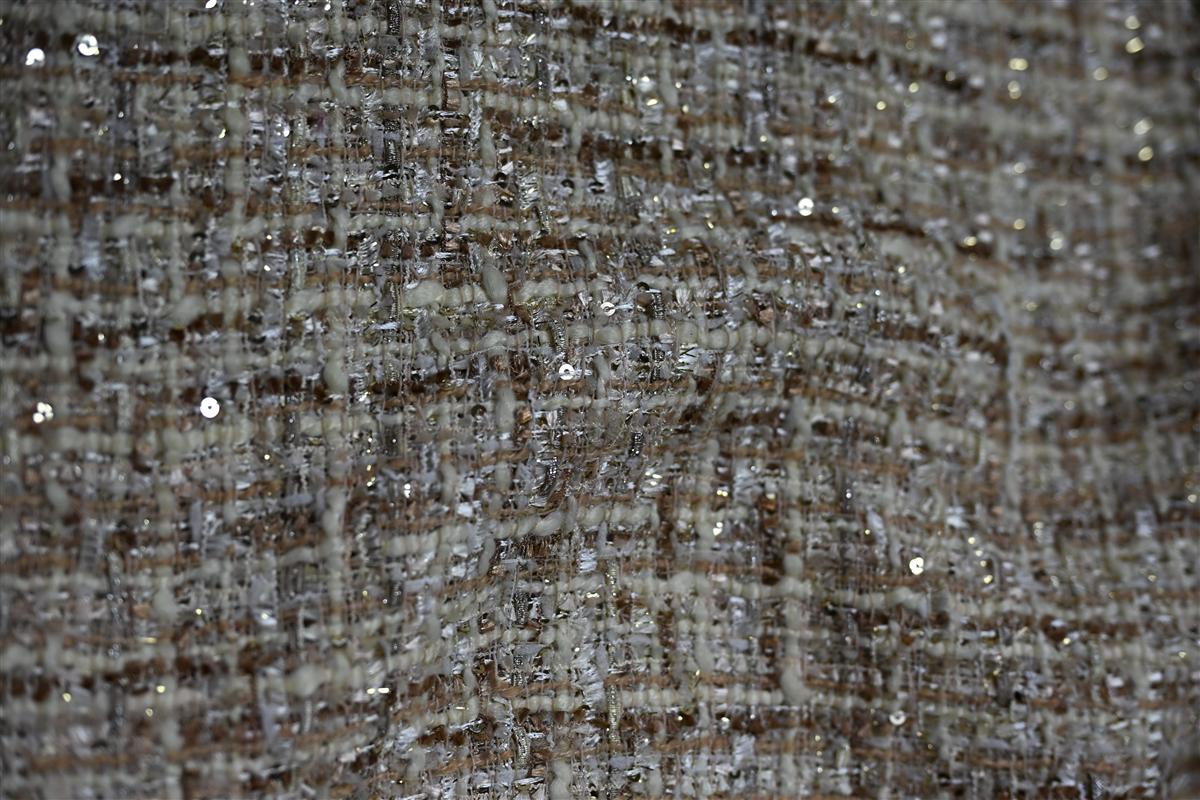
The objection is fair: digital tools flatten texture. A Chanel-style bouclé with slub yarns and nubby loops looks like a flat grid on a screen. Fursone addresses this by pairing every digital preview with a physical stock swatch option. For ready stock fabric swatches 100m, the designer gets a digital spec plus the option to request a physical hand-feel card in 3-7 days. For bespoke work, the 7-day sampling program includes a physical proof that is cross-referenced against the digital dye-lot photo. The texture is validated twice — once digitally for speed, once physically for accuracy.
Conclusion
A 7-day fabric sampling workflow isn’t a luxury — it’s a competitive necessity when seasonal windows shrink. Dual-path sampling with 100M meters of stock fabric and a 1000M custom MOQ lets you test textures immediately while keeping the option for exclusive development at a controlled risk.
Review the stock catalog to see which weights and textures ship in 3-7 days, or contact the team to start a custom color match on your next collection.
Frequently Asked Questions
What is the difference between a swatch and a sample of fabric?
In the B2B textile industry, a swatch is typically a small, hand-sized piece of fabric (often 4×4 inches or 6×6 inches) used to evaluate color, texture, and hand feel for initial design approval. A sample, in contrast, is a larger cut or a full production-length piece (e.g., a 1-meter strike-off or a 10-meter lab dip) used for garment prototyping, draping, or production testing. At Fursone, our 7-Day Rapid Sampling service delivers a physical swatch from your concept within one week, allowing you to validate the artisan aesthetic before committing to a larger custom sample or our 1000M bespoke run.
How to create a fabric swatch?
Creating a professional fabric swatch begins with a detailed design brief, including yarn specifications, color references (e.g., Pantone codes), and desired weave or knit structure. At Fursone, our engineers translate your sketch into a digital pattern using CAD software, then produce a small loom or knitting machine run to generate a physical swatch that matches the artisan aesthetic of Chanel-style bouclé or heritage cable knits. The swatch is then finished, inspected for quality, and shipped to you within 7 days, ensuring you can confirm texture and color accuracy before scaling to our 1000M custom MOQ.
What is a swatch of fabric?
A swatch of fabric is a small representative sample, typically measuring a few inches square, that showcases the material’s color, texture, weight, and weave or knit structure. For premium tweed and knit manufacturers like Fursone, swatches serve as the critical first physical proof of concept, allowing fashion brands to verify the artisan aesthetic and supply chain feasibility before placing larger orders. Our swatches are produced from our 100M meters of ready stock or as part of our 7-Day Rapid Sampling for custom bespoke developments, giving you a tangible asset to accelerate your collection launch.
Does Hobby Lobby do free fabric samples?
Hobby Lobby is a retail craft store that typically does not offer free fabric samples for B2B or wholesale purposes; their sampling is limited to in-store browsing of bolts. For professional fashion brands seeking premium tweed and knit fabrics, Fursone provides a superior alternative with our 7-Day Rapid Sampling service, delivering physical swatches from concept to hand within one week. Unlike retail outlets, we focus on direct, seamless manufacturing for global brands, offering 100M meters of ready stock and 1000M custom MOQs with the artisan aesthetic of European mill quality at 30-50% less cost.
What’s so special about swatch?
A swatch is the most critical decision-making tool in textile sourcing because it transforms a digital concept into a tactile, visual reality, eliminating guesswork in color, hand feel, and drape. For Fursone, our swatches are the cornerstone of our 7-Day Rapid Sampling advantage, enabling fashion brands to outpace competition by validating exclusive textures within a week. This speed, combined with our ability to deliver premium European mill quality at 30-50% less cost, makes our swatches a strategic asset for minimizing risk and accelerating time-to-market for high-end collections.