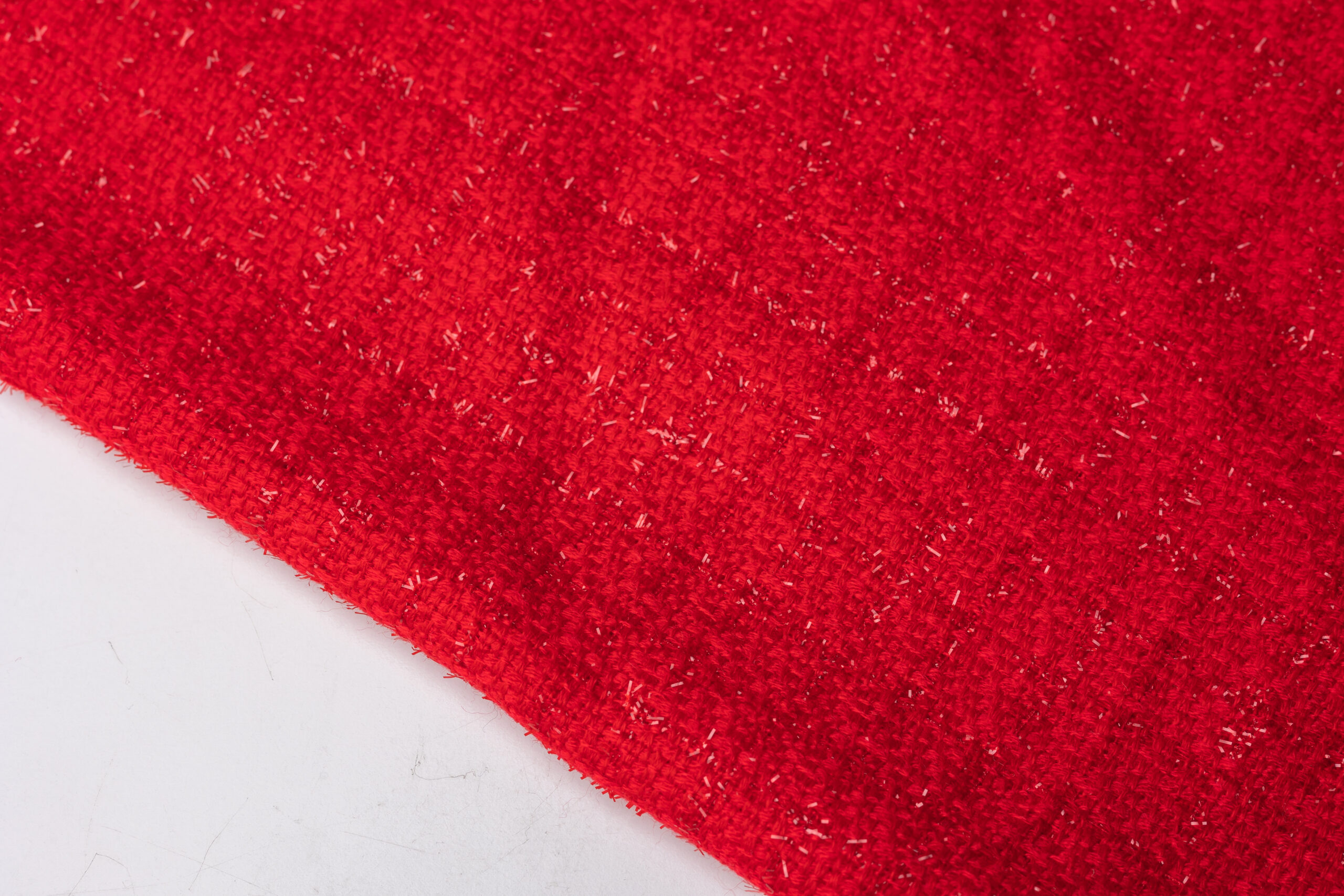
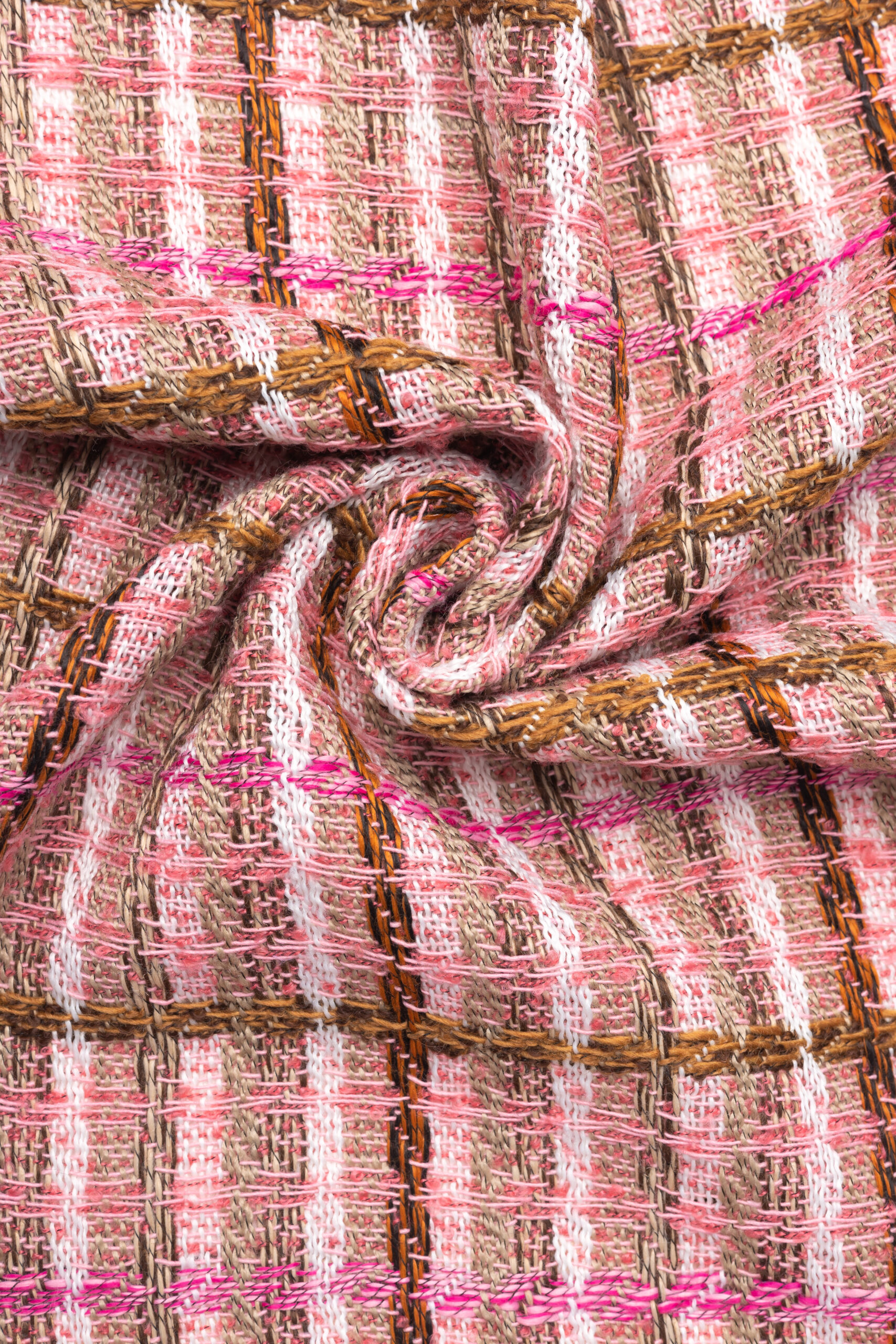
An emerging designer hunting for sustainable fabric usually hits the same wall: GRS certified yarn spinning sounds like heavy industry, not the soft hand of a luxury knit. The quiet fear is that recycled yarn means compromised drape, dull color, or that telltale scratchy finish no end customer forgives. It’s a reasonable worry. Most certified spinners churn out commodity ring-spun yarns — standard counts, standard twist, no texture — because that’s what fast fashion consumes. Our Wenzhou production capability runs against that current.
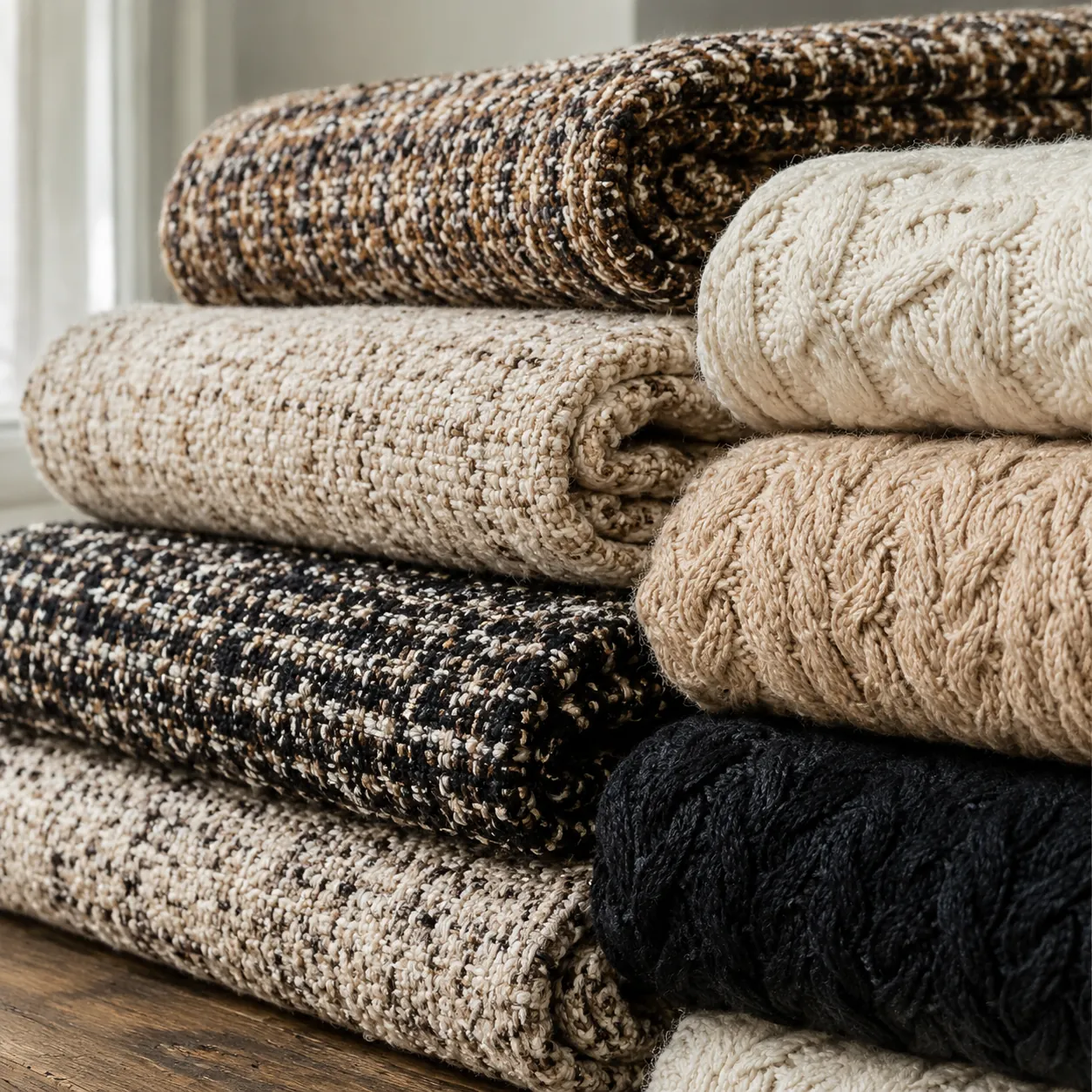
We support clients in sourcing bouclé, slub, and chenille yarns from 100% post-consumer PET bottle flakes, not from purchased grey yarn. That single change eliminates the middleman’s margin and hands back control over twist, evenness, and surface character. Our supply chain partners can produce yarn counts from a wide range of yarn counts suitable for chunky cable knits through lightweight melange, all held to an tight evenness standards. Yarn-dyeing locks the color at the fiber stage, reducing water usage compared to piece-dyeing and delivering the multitoneal depth designers want in a tweed or bouclé. The result: a recycled yarn fabric you can’t distinguish from virgin European mill quality by hand feel alone — with GRS chain-of-custody documentation coordinated on demand for qualifying orders (1,000m+). If you’re building a first sustainable collection, the entry point is 100 meters of in-stock fabric shipped in a week. That’s how you test the look and touch without betting a production run on an unknown process.
Why GRS Yarn Spinning Matters for Fashion
Spinning determines drape, strength, and hand-feel — not fiber origin.
Yarn spinning is where a fabric’s character is built. The twist level, yarn count, and evenness of the yarn directly dictate how a finished knit drapes, resists pilling, and holds its shape. A poorly spun yarn—full of thick and thin spots—creates a fabric that bags, pills, and feels cheap, no matter how expensive the raw fiber. integrated spinning capability gives us direct control over those variables before the first stitch.
The biggest hurdle for emerging designers is the assumption that recycled yarn equals a lower-quality hand-feel. That misconception comes from early-generation commodity GRS yarns that were inconsistently spun and lacked texture development. The material itself—100% post-consumer PET bottles—is not the problem. The problem is when a supplier treats recycled polyester identically to virgin polyester on standard ring-spinning frames, with no adjustment to twist angles, drafting ratios, or blending techniques. The yarn development team treats recycled inputs as a distinct material class, not a substitution.
Across a wide yarn count range, our yarn count range covers everything from airy fine-gauge knits to heavyweight bouclés. Twist per meter stays within optimized twist levels, a window we’ve validated through internal drape comparisons against Italian virgin wool benchmarks. Count variation is tightly controlled, and evenness CV stays at or below 5%—tighter than typical commodity GRS supply chain standards. These aren’t just lab numbers. They’re what allow a recycled tweed jacket to swing and drape like a Chanel original, without the virgin-fiber price tag. For a step-by-step look at how these yarns become finished luxury knits, see our article ‘How Luxury Knit Fabrics Are Made with Recycled Yarns.’.
- Twist (TPM): 400–550 for the right balance of drape and strength. Too low, the fabric lacks body. Too high, it turns stiff and loses softness.
- Count Variation: Tightly controlled to eliminate the thin spots that cause pilling and the thick spots that create uneven dye uptake.
- Evenness (CV%): ≤5% vs. the typical industry standards. A tighter CV means a cleaner fabric surface, essential for the flat, luxury appearance designers expect.
Inside Fursone’s Spinning Capability: From Bottle to Bale
The ability to produce bouclé, slub, and chenille from recycled PET addresses a gap most GRS-certifiable yarn spinners overlook.
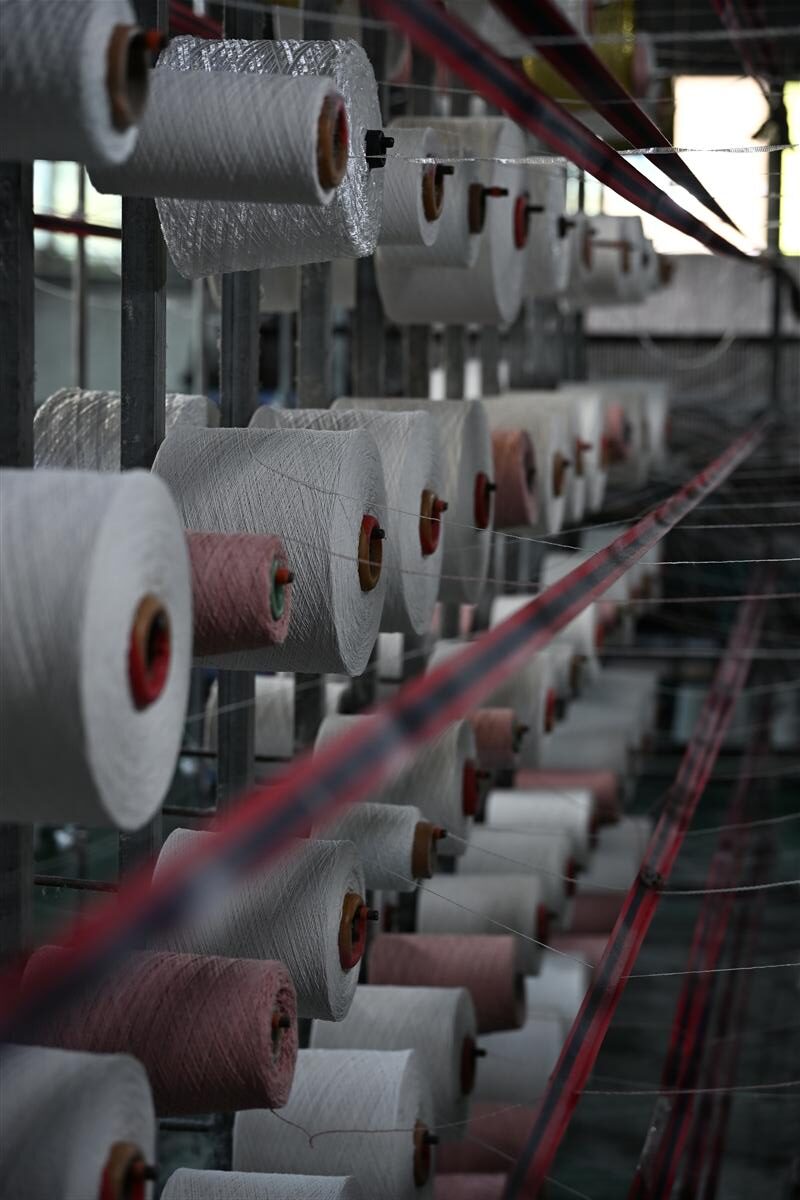
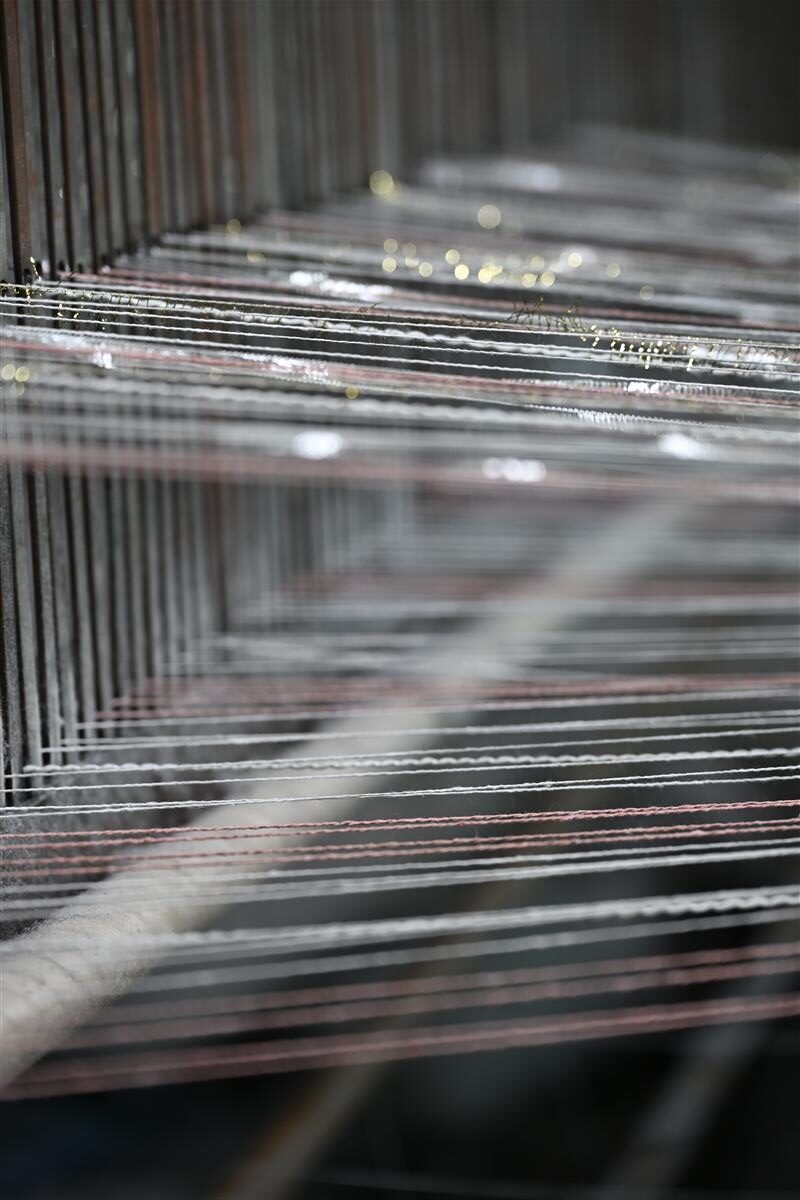
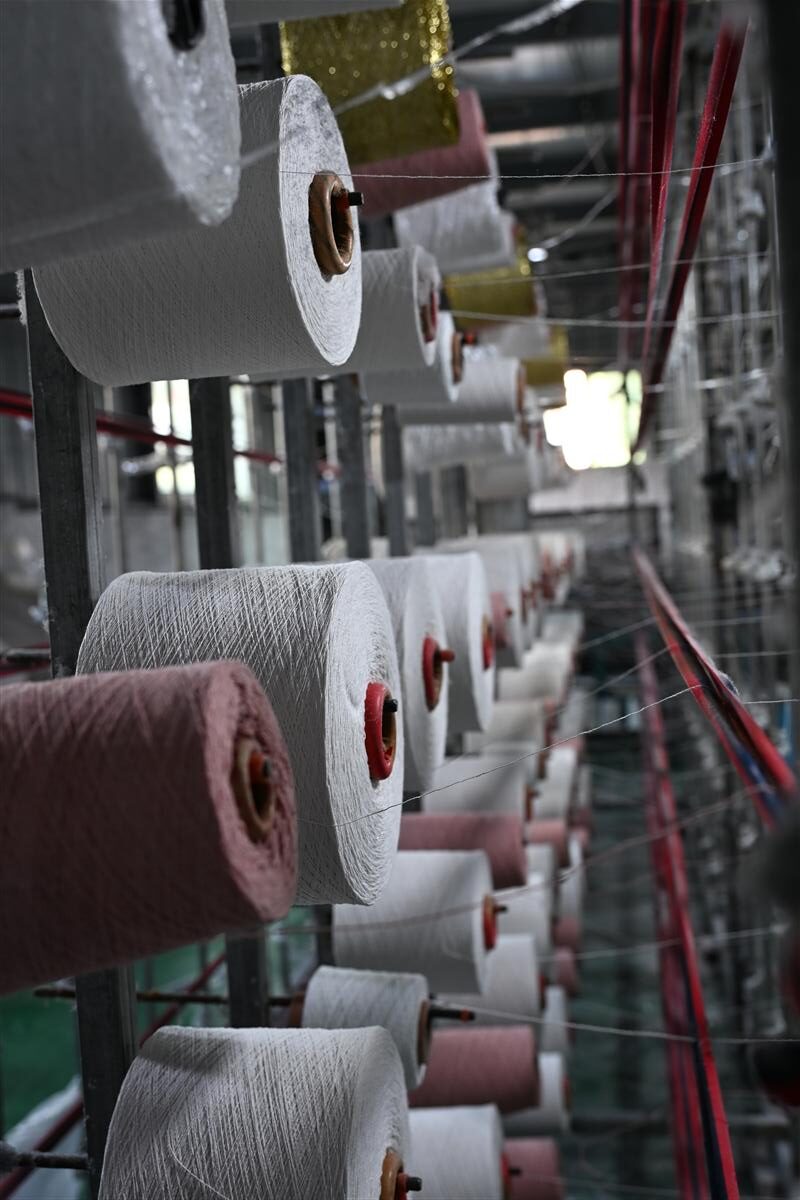
The process starts with bales of post-consumer PET bottles — crushed, washed, and shredded into flake. That flake gets melted and extruded into uniform chips, which are then fed into our production line. The conversion from bottle-grade flake to finished yarn on cone is managed through our integrated Wenzhou supply chain. This integrated flow supports GRS chain-of-custody integrity (coordinated on demand) and the precise physical properties a luxury knit demands.
Most GRS-certified spinners — certain large-scale commodity spinners come to mind — stop at commodity ring-spun or open-end polyester. Their catalogs cover standard counts from standard counts, designed for basic sportswear or fleece backings. What they lack is any capability to introduce texture at the spinning frame. Our development capability exists specifically to bridge that gap. By modifying drafting ratios, twist insertion rates, and overfeed, our supply chain produces the same fancy yarn structures — bouclé, slub, chenille — that designers expect from virgin wool or acrylic blends.
- Bouclé loops: A core yarn is overfed through a secondary twisting stage, creating irregular loops at optimized twist levels. This builds the dimensional surface of a heavyweight Chanel-style knit without adding dead grams per square meter.
- Slub variations: We digitally program momentary accelerations in the drafting roller speed. The result: thick-thin yarn architecture with a controlled tight evenness CV — tighter than the typical industry standards. No weak spots that snag during knitting.
- Chenille plush: Short staple fibers are trapped between two core ends under calibrated pressure. The output is a velvety yarn that holds its pile through cutting, sewing, and repeated wear. This can be produced using recycled PET input, and GRS certification can be coordinated on demand for qualifying orders.
Our supply chain partners maintain substantial recycled polyester yarn capacity. A custom fancy-yarn order — built to your specified count, twist, and color — can be sampled within 7–10 days from approval. That lead time includes dedicated machine set-up, in-line quality checks at shift change, and final coning ready for knitting or direct shipment.
Quality control includes testing for count variation, tensile strength, and colorfastness per ISO 105-C06. Yarn-dyeing at the fiber stage (rather than piece-dyeing later) reduces water consumption and locks the shade deep into the fiber. That melange depth you feel in a finished knit is a direct result of spinning already-dyed slub and bouclé yarns together. It is a technique European mills rarely combine with GRS recycled content, and it is the reason eco knit fabrics produced through our supply chain can match virgin equivalents in hand-feel.
Certification Traceability: From Yarn to Finished Fabric
One supplier, one certificate package — no chasing yarn mills.
Most suppliers buy certified yarn from a third-party spinner, then knit or weave it. That splits the chain of custody. You end up requesting two different transaction certificates — one from the yarn mill, another from the fabric producer — and hoping they match. If a single link is missing, the entire recycled claim collapses during your brand’s sustainability audit.
Because we can coordinate GRS-certifiable yarn through our supply chain and knit the fabric under the same roof in Wenzhou, the chain of custody never breaks. The same certified entity controls the material from bottle-grade PET flake through to the finished eco knit roll. That means you receive one seamless document package, not a puzzle.
- GRS Transaction Certificate (TC): Issued per shipment batch. Lists the input weight of 100% post-consumer recycled polyester and the output weight of your fabric. Third-party audited by an accredited certification body. This is the legal proof of recycled content.
- GRS Scope Certificate (SC): Annual site audit document confirming our facility meets the Global Recycled Standard for spinning, dyeing, and knitting. Without an active SC, a TC is invalid.
- OEKO-TEX® Standard 100 Certificate: Covers the finished fabric for harmful substances. OEKO-TEX certification (including product class I for baby articles) can be coordinated on demand when your brand requires it.
The fear we hear most from first-time sustainable collection launches: ‘How do I know the recycled polyester is real, not just a marketing claim?’ The TC certificate answers that directly. Every TC carries a unique certificate number, traceable to the specific raw material batch. You — or your auditor — can verify it through an accredited certification body’s online registry. If the yarn had 800 kg of recycled input and produced 750 kg of fabric output, those figures appear on the document. There is no room for fuzzy math.
For a walk-through on verifying these documents yourself, refer to our article ‘How to Verify GRS Certification on Knit Fabric Samples’. It covers how to cross-check certificate numbers, confirm the certifier is accredited, and spot red flags before placing a deposit.
Cost Comparison: Recycled vs Virgin Yarn for Designers
Our pricing runs approximately 1/5 to 1/3 of comparable European mills — with no compromise on drape or luxury feel.
Most emerging designers assume sustainable fabrics carry a price premium. That assumption holds true when you buy GRS-certifiable yarn from a separate supplier, add their margin, then pay a mill to knit it. Our Wenzhou facility eliminates layered middleman costs through vertical supply chain integration, from yarn sourcing through finished knit fabric. The result: you access Chanel-style bouclé, slub, or chenille textures at a competitive per-kg rate — compared to a significantly higher per-kg rate for a comparable virgin European yarn. That’s a significant cost advantage (approximately 1/5 to 1/3 of European pricing that goes straight into your collection margin.
- Recycled bouclé (Fursone in-house): a competitive per-kg rate. Spun from 100% post-consumer PET, high-volume capacity, no yarn middleman.
- Virgin bouclé (European mill): a significantly higher per-kg rate. Pricing driven by energy, labor, and brand markup, plus separate shipping and duty.
- Custom MOQ: Start with 100m stock or 1,000m custom fabric. European spinners often demand high minimums for a single color.
- Lead time: 7–10 day sampling. Production in 25–35 days. European mills typically quote significantly longer lead times.
- Certification cost: GRS chain-of-custody documentation is coordinated for qualifying orders (1,000m+ MOQ). Sourcing certified yarn separately adds auditing, testing, and logistics fees that inflate unit cost.
The cost gap widens when you factor in quality consistency. Most GRS yarn suppliers only sell standard ring-spun counts (10s–40s) for commodity fabrics. Our production partners custom-produce fancy yarns — bouclé loops, slub variations — at an tight evenness standards, meeting tight industry tolerances. That tight tolerance means your fabric drapes like virgin wool but retails at an affordable luxury price point. For a full production cost breakdown, including yarn dyeing, knitting, and finishing, see our sibling article ‘Cost Breakdown for Custom Eco Knit Fabric Programs in 2026’.
| Aspect | Fursone Recycled Yarn (GRS on demand) | Virgin European Mill Yarn | Designer Advantage |
|---|---|---|---|
| Price per kg | Competitive (bouclé, slub, chenille) | Significantly higher | significantly lower material cost with identical luxury hand-feel |
| MOQ (Custom Program) | 1,000m fabric (≈500 kg yarn) per batch | 2,000–5,000 kg per order typical | Low‑risk entry for emerging collections; test market with 100m stock first |
| Lead Time (Custom) | 7–10 day spinning + knitting; 7‑day swatch sampling | 4–6 weeks spinning alone | From concept to physical sample in 1 week; outpace seasonal deadlines |
| Certification & Traceability | GRS + OEKO‑TEX® 100 with full chain‑of‑custody documents; single source for yarn & fabric | Often no certified recycled content; separate suppliers for yarn & fabric | One certified quality document for entire supply chain; ready for eco‑marketing |
| Fancy Yarn Capability | Proprietary bouclé, slub, chenille from GRS input; tight evenness CV, TPM 400–550 | Most offer only standard ring‑spun; limited fancy yarn from certified recycled | Signature textures that mimic artisan wool without compromising sustainability |
How to Start Your Custom Eco Knit Program
Start with 100m stock samples—no risk, 7-day turnaround.
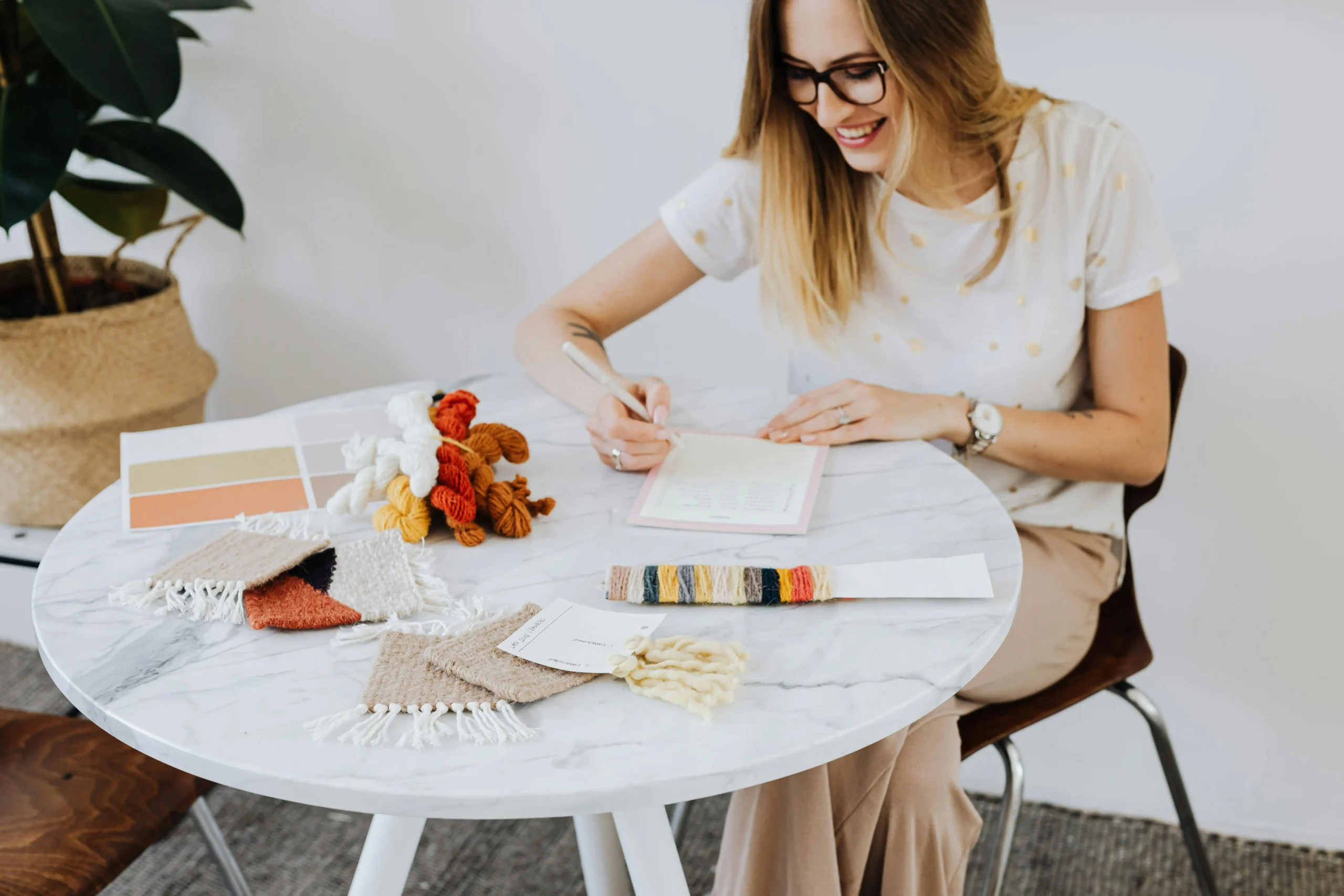
Most emerging designers kill their budget before their first collection launches because they over-order fabric they haven’t touched. We see it constantly: designers reserve high minimums of ‘sustainable knit’ from a catalog photo, then discover the hand-feel is wrong for their silhouette. Your custom eco knit program voids that risk. You start by requesting free swatches from our Wenzhou mill—not from a middleman’s swatch set. Choose from 200+ standard shades or describe your target color and texture. Our engineers then custom-spin a few kilos of GRS-certifiable recycled yarn (bouclé, slub, or chenille) and knit a sample panel. That sample arrives at your studio in 7 days, not 4 weeks.
Once you approve the lab-dyed sample, production moves to two tracks. Stock fabrics ship in 3–7 days from our 100-meter ready inventory—enough for a capsule collection or first production test. Custom programs begin at 1000 meters (roughly 500 kg of yarn), which is lower than the 3000 kg per color that most dedicated spinner-only suppliers demand. Because we spin yarn in-house and fabricate under one roof, you get one quality document—a GRS transaction certificate that traces the recycled PET from bottle-grade flake through knitting—and one point of contact for the entire supply chain. No separate yarn negotiations, no finger-pointing between subcontractors. For a complete breakdown on threshold decisions, read our guide on Minimum Order Quantities for Custom Eco Knit Fabrics.
- Step 1: Request free swatches: Browse the Eco-Sustainable Knits collection, select textures and reference colors, and we courier 5–10 swatch cards. No charge, no obligation.
- Step 2: Define texture and color: Share a physical reference, Pantone code, or digital moodboard. our yarn development capability custom-engineers yarn construction (bouclé loop size, slub frequency, metal content) to match your aesthetic.
- Step 3: Approve the 7-day sample: We spin, dye, and knit a 30×30 cm panel. This sample is production-representative—same yarn, same machine settings. You approve the hand-feel, drape, and color before we commit a single meter of bulk.
- Step 4: Confirm MOQ and lead time: 100m stock ships in 3–7 days. Custom 1000m runs deliver in 25–35 days after sample approval. Color-match unlimited shades with a 3000 kg OEM run, or pick from 200+ in-stock shades for smaller programs.
ConclusionRelated Resources
GRS certification does not force a trade-off between sustainability and the textured, high-drape hand that luxury knits demand. integrated spinning capability closes that gap — yarn evenness stays under a 5% CV, twist rates hit the optimized twist levels window for stability, and the dye lab achieves multitoneal melange without piece-dyeing’s water load. A single mill handling the bottle flake, the slub formation, and the finished fabric also means a single chain-of-custody document. No gaps. No finger-pointing between suppliers.
If your next collection needs certified eco-knits that pass a touch test alongside virgin-mill references, start with a 100-meter stock roll to validate hand-feel. The services page lays out stock availability, custom color timelines, and the sampling window.
Frequently Asked Questions
What is siro spinning?
Siro spinning twists two rovings together in one pass, creating a cleaner, stronger yarn with less hairiness. We use it to achieve the evenness (tight evenness CV) and subtle melange effects luxury knits. Ask for our yarn evenness report to confirm siro-spun quality.
What is TPM in yarn?
TPM (twists per meter) measures how many turns a yarn gets, dictating its strength, drape, and texture. In our quality control process, we adjust TPM precisely to build bouclé loops or crisp cable knits without. Request TPM data for the specific blend you’re sampling.
How is GRS certification verified for yarn suppliers?
Verification requires a Transaction Certificate (TC) that traces your specific batch from the certified facility, not just a Scope Certificate. The TC proves your order meets GRS chain-of-custody rules. Always demand the TC before accepting a shipment.
What MOQ is typical for custom GRS recycled yarn?
Standalone custom yarn often starts at 300–500 kg per blend, but when developed inside our fabric program, the yarn setup is absorbed by the 1000-meter fabric MOQ. Lock yarn MOQ inside your fabric order to avoid separate minimums.
Does recycled yarn affect fabric drape and softness?
Recycled yarn can match virgin softness and drape when spun with tight twist control and proper finishing. Our in-house fancy spinning delivers a hand identical to virgin wool blends. Request a swatch and feel the comparison yourself.
Related Insights
Recycled Wool vs Virgin Wool: Strength, Hand, and Price
Brands sourcing wool fabric for tweed and boucle lines face a question that did not...

RWS Explained: The Responsible Wool Standard for Tweed
The Responsible Wool Standard, known as RWS, is a voluntary certification developed by Textile Exchange...

GOTS vs GRS: Choosing a Certification for Knitwear
The gots vs grs certification question lands on every knitwear buyer’s desk at least once...