

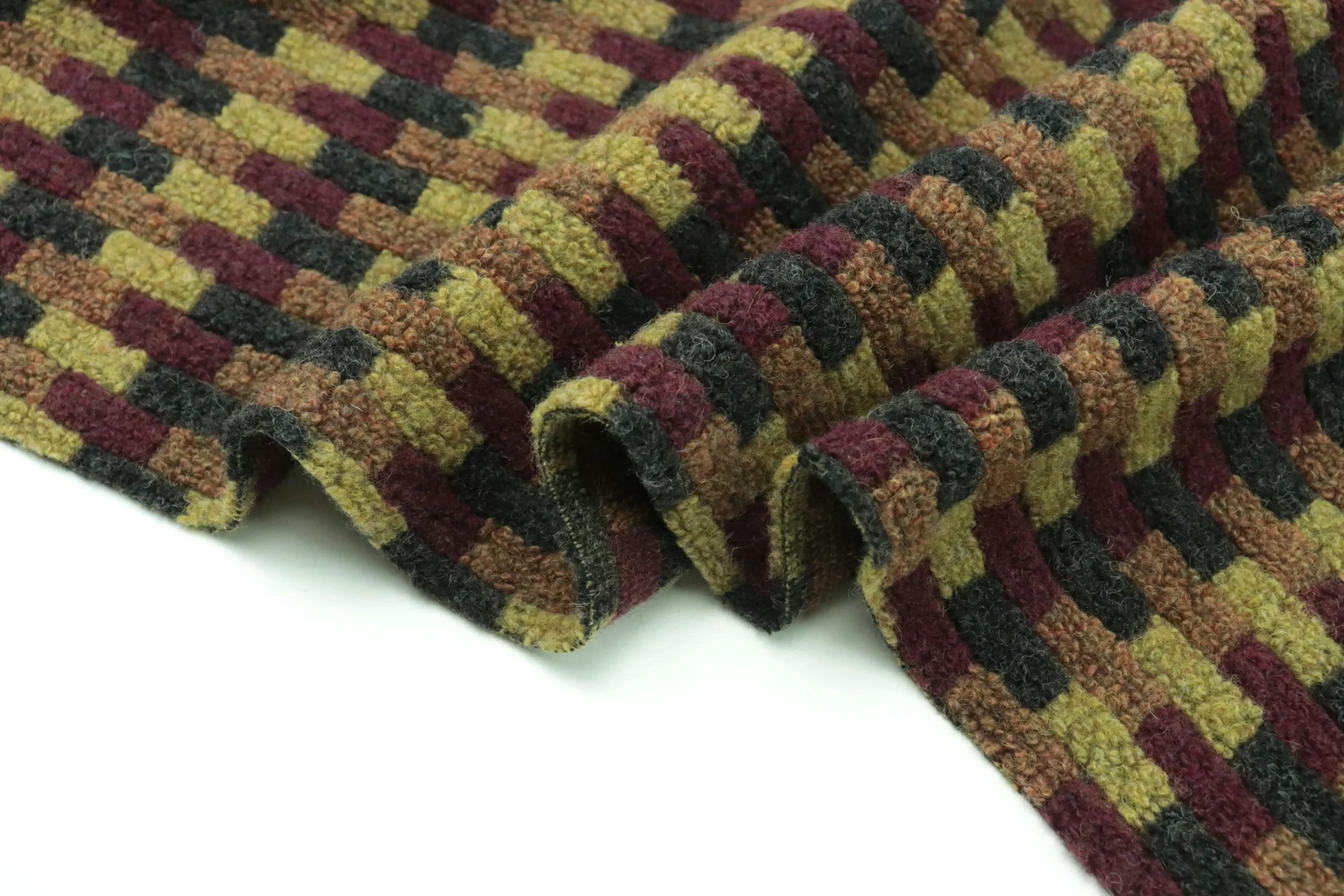
Brands sourcing wool fabric for tweed and boucle lines face a question that did not exist a decade ago: recycled wool or virgin wool? The choice affects fiber strength, hand feel, color consistency, price, and the sustainability story you can tell on a hangtag. Getting it wrong means either overpaying for virgin fiber you do not need or delivering a recycled blend that pills prematurely and underwhelms the customer.
Fursone works with both fiber streams on its Sustainable Tweed Fabrics Design program, holding GRS and OEKO-TEX certifications alongside its virgin wool lines. The comparison below comes from running both through the same 300+ looms in Wenzhou.
Virgin wool is fiber spun from sheep fleece that has never been processed into a textile before. The fibers are shorn, scoured, carded, and spun into yarn in a continuous first-use chain. Because the fibers have not been through a reclamation process, they retain their full length (typically 40 to 120 mm for apparel-grade wool), their natural crimp, and their cuticle structure intact.
That intact fiber structure translates into three measurable advantages in fabric:
- Tensile strength: longer fibers spin into stronger yarns. A virgin wool yarn at the same count will resist breaking under tension better than a recycled wool yarn of the same specification.
- Surface smoothness: the intact cuticle layer gives virgin wool yarn a smoother hand and more consistent surface texture after weaving or knitting.
- Dye clarity: virgin wool takes dye more evenly because the fiber surface is uniform, producing cleaner colors without the heathered effect that recycled wool naturally carries.
For a premium tweed jacket or a Chanel-style boucle blazer where the surface texture is the design feature, virgin wool is the safe specification. The cost premium is real, but the garment will perform better in wear and maintain its appearance longer. Fursone’s virgin wool boucle carries the same ISO grade 3-4 pilling resistance as the rest of the line, but the virgin fiber gives a noticeably smoother hand in side-by-side swatch comparison.
Recycled wool is fiber reclaimed from textile waste through mechanical processing. The source material can be post-consumer (garments collected for recycling) or pre-consumer (mill scraps, cutting room waste). The reclamation process involves sorting by color, shredding the fabric back into fiber, and re-spinning it into yarn. The Global Recycled Standard (GRS) certifies the recycled content percentage and the chain of custody from waste source to finished fabric.
The mechanical shredding process shortens the fibers. Where virgin wool fibers run 40 to 120 mm, recycled wool fibers typically measure 20 to 60 mm after reclamation. Shorter fibers mean weaker yarn and higher pilling tendency. This is not a defect; it is a physical consequence of the recycling process. The question is whether your product can perform well enough with shorter fibers.
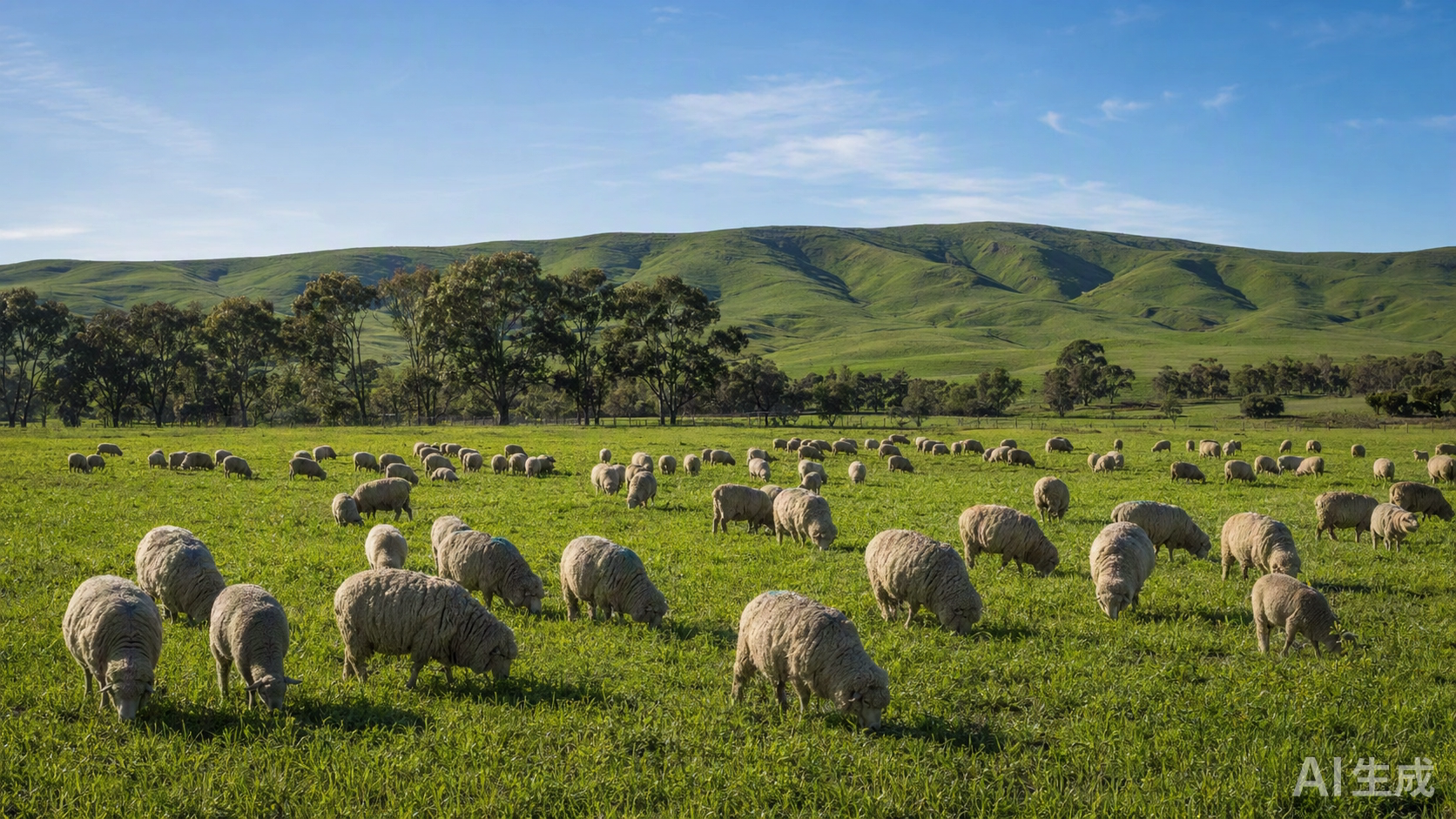
What recycled wool offers instead is a price advantage and a verified sustainability claim. The raw material costs less because it comes from waste streams rather than from newly shorn fleece. For brands that need a GRS-certified recycled content claim on their hangtag, recycled wool is the path to that certification. The heathered, slightly irregular color that comes from mixed fiber sources is also a design feature for certain tweed aesthetics, not a defect.
The strength difference between virgin and recycled wool is the most measurable and the most consequential for garment performance. Here is the practical comparison:
| Property | Virgin Wool | Recycled Wool |
|---|---|---|
| Fiber length | 40-120 mm | 20-60 mm after reclamation |
| Yarn tensile strength | Higher (longer fibers overlap) | Lower (shorter fiber overlap) |
| Pilling tendency | Lower (intact cuticle, longer fibers) | Higher (broken fibers migrate to surface) |
| Hand feel | Smooth, consistent | Slightly drier, more textured |
| Color consistency | Clean, even dye | Heathered, natural variation |
| Abrasion resistance | Better | Moderate; may show wear sooner at friction points |
For brands specifying pilling performance, the fiber-length difference is the key driver. Fursone achieves ISO grade 3-4 pilling resistance on both virgin and recycled wool lines, but the recycled blend requires tighter twist engineering and careful fiber blending to reach the same rating. A supplier who does not control the twist and blend ratio will deliver a recycled wool fabric that pills at grade 2, well below acceptable.
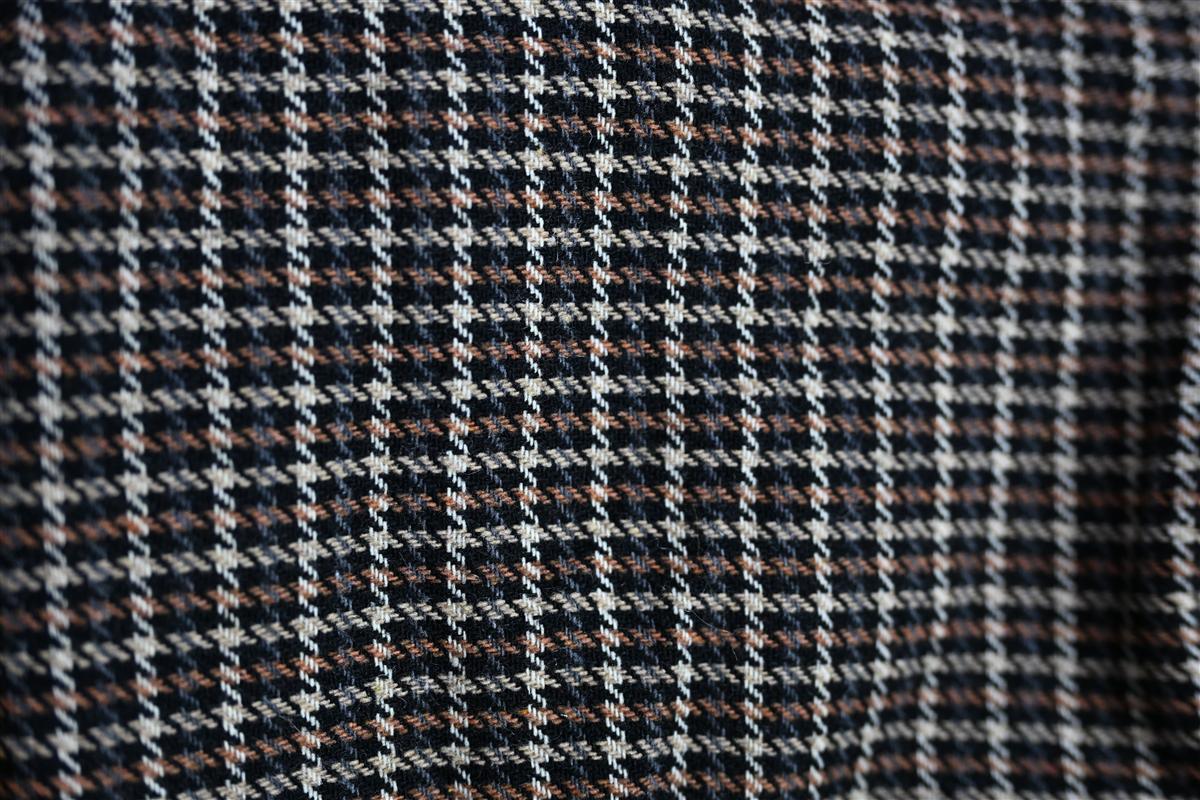
The hand feel difference between virgin and recycled wool is noticeable to a trained buyer but may not matter to the end consumer depending on the garment. Virgin wool has a smooth, slightly resilient hand that springs back when compressed. The natural crimp in unprocessed fibers gives the fabric a subtle bounce. Recycled wool has a drier, slightly harsher hand because the reclamation process breaks the cuticle layer and reduces the natural crimp.
For a structured tweed jacket that is fully lined, the hand difference is largely invisible to the wearer. The lining sits between the skin and the fabric, so the drier hand of recycled wool does not register. For an unlined cardigan or a scarf where the fabric touches skin directly, virgin wool or a virgin-rich blend is the better choice.
Comfort extends beyond hand feel to thermal regulation. Virgin wool’s intact crimp traps more air in the fiber structure, giving slightly better insulation per gram of fabric weight. Recycled wool, with its reduced crimp, is marginally less efficient as an insulator. For a winter coat, the difference may be 5-10% less warmth at the same fabric weight, which you can compensate for by specifying a heavier GSM.
The cost structure favors recycled wool on raw material price but may narrow when you account for the engineering required to match performance. Here is the practical price picture from Fursone’s dual-stream production:
- Raw fiber cost: recycled wool costs less than virgin wool, typically 20-30% lower per kilogram depending on the source quality and GRS certification chain.
- Processing cost: recycled wool may require additional blending and twist engineering to match performance, which adds cost back.
- Certification cost: GRS certification for recycled content and RWS for responsible virgin wool both carry audit and documentation costs that the supplier factors into the price.
- Fursone’s price position: both streams run 30-50% below European mill pricing on equivalent specifications.
For brands where the sustainability claim is a marketing requirement, the GRS-certified recycled wool stream delivers that claim at a lower fiber cost. For brands where garment performance is the priority and sustainability is a secondary message, virgin wool or a virgin-rich blend is the specification.
The decision framework is straightforward once you know the garment and the brand positioning:
For brands uncertain about which direction to take, Fursone’s 100M ready-stock program includes both virgin and recycled wool options that can be sampled within 7 days. Comparing physical swatches side by side resolves the specification question faster than any spec sheet.
The recycled wool versus virgin wool choice is not a moral test; it is a product specification decision. Virgin wool gives you longer fibers, smoother hand, cleaner color, and better pilling resistance. Recycled wool gives you lower fiber cost, a GRS-certified sustainability claim, and a natural heathered aesthetic. Most commercial tweed production blends both to capture the strengths of each.
- Match the fiber to the garment: virgin for structured and unlined, recycled for heathered and lined.
- Require GRS documentation for recycled content claims and ISO 12945-2 pilling data for both.
- Sample both from Fursone’s 100M stock program before committing to the 300M custom order.
Fursone’s dual-stream capability on the same factory floor means you can source both virgin and recycled wool with consistent quality control. Request samples from both programs and compare them side by side before specifying your production.
For how to reduce fabric cutting waste and what drives marker efficiency, see how to reduce fabric cutting waste and what drives marker efficiency.

Related Insights

Fiber Content Labels for Tweed and Knit: Reading Composition Percentages Right
A composition label is a legal document, a marketing claim and a care instruction all...
Fabric Waste in Cutting: How Much Your Collection Throws Away
Every collection throws away fabric twice: once in the cutting room, where markers never fit...

Lyocell Knit Blends: Sourcing, Blend Ratios and Verification for Buyers
Lyocell has moved from a niche fiber to a standard line item on knit buyers’...