How many times have you signed off on a perfect sample approval, only for the large bulk order to arrive three months later with a hand-feel that misses the mark? It’s the classic sourcing dilemma that fuels the entire factory-direct tweed vs european mills debate. We’ve all been there: the approved swatch feels substantial, the color is spot-on, but the production run feels flimsy, the color is a shade off, and you’re stuck explaining the variance to your design team. The default assumption is that you sacrificed quality for a better price, but the real issue is rarely that simple.
The discussion shouldn’t be about ‘heritage’ versus ‘low cost.’ I’ve audited mills from Italy to Wenzhou, and the real difference comes down to control and total landed cost, not a label. The common belief is that a European mill’s higher FOB pricing guarantees better quality tolerance. But what if a factory-direct partner can deliver the same 450 g/m² weight, pass the same pilling tests, and offer GRS certification for a landed cost that’s still noticeably lower? This isn’t about taking a risk. It’s about replacing romantic notions of sourcing with a pragmatic, line-item breakdown of cost, speed, and verifiable quality control.
Factory Price vs Landed Cost
Your CFO only cares about landed cost, not the supplier’s FOB price.
Let’s get straight to the numbers. A sourcing manager sees a European mill quote for a Chanel-style tweed at a high European heritage-mill rate. The factory-direct FOB pricing from a capable Asian mill for a comparable spec is a low mill-direct rate. The initial sticker shock is significant, but FOB pricing is only half the story—it’s a misleading metric for your P&L.
The only number that matters is the total landed cost per meter delivered to your warehouse. This figure includes the fabric cost plus all the logistics and compliance fees required to get it there. Anything less is just budget fantasy.
- Factory-Direct FOB Price: Starts at a competitive mill-direct rate for a quality wool/poly blend tweed.
- Freight, Duty & Fees: For a US-bound shipment, you must factor in ocean freight, insurance, customs brokerage, and an import duty (e.g., ~9%). This typically adds an accessible factory-direct rate to the FOB cost.
- True Landed Cost (Asia): The final, all-in cost lands between a low mill-direct rate. This is still substantially below the starting FOB price from the European mill.
The math is clear: your actual cost from a factory-direct partner is often roughly one-fifth to one-third the price than just the from Europe. When you scale up an order for a custom tweed development past the 1000m MOQ, price breaks become even more significant, further widening that margin.
For any serious volume, especially with fluctuating exchange rates, building a currency hedging strategy into your cost model is not optional. It’s a standard practice to protect your budget from volatility between placing the PO and final payment, ensuring the landed cost you calculated is the one you actually pay.
| Cost Component | European Mill Benchmark | Factory-Direct (Fursone) | Notes |
|---|---|---|---|
| Fabric Price (FOB per Meter) | a competitive mill-direct rate | an accessible factory-direct rate | Based on comparable quality Chanel-style tweed (350-500 g/m²). |
| Logistics & Duties (per Meter, to USA) | Varies (Air/Road Freight + Duties) | ~a low mill-direct rate | Includes ocean freight, 9% US import duty, customs & AQL inspection fees. |
| Total Estimated Landed Cost (per Meter) | a competitive mill-direct rate+ (FOB Price) | an accessible factory-direct rate | The total delivered cost from Asia is significantly less than the European ex-mill price. |
| Net Margin Impact (per Meter) | Baseline | roughly one-fifth to one-third Cost Reduction | Directly translates to improved collection margins or competitive retail pricing. |
Lead Time & Sampling Speed
Your collection calendar doesn’t care about European mill holidays or their 6-week sample lead times.
In this business, speed isn’t a luxury; it’s a core metric. The difference in sampling timelines is where the initial battle is won or lost. A European mill quoting 4–6 weeks for a custom swatch puts your entire design process on hold. You send a request and wait. A modern factory-direct partner, by contrast, operates on a 7-day cycle. You can have a physical swatch in hand in the time it takes a traditional mill to schedule the loom.
This acceleration carries straight through to production. Once you grant sample approval, the clock starts. An advanced Asian mill can move from approved sample to finished goods ready for inspection in 3–5 weeks. The European benchmark is closer to 8–12 weeks. That’s an entire fashion season of difference. A shorter production cycle means you commit capital later, react to market feedback faster, and carry less inventory risk.
But the real advantage of a 7-day sampling cycle isn’t just getting one sample faster. It’s about iterative development. In the six weeks you’d wait for a single swatch from an Italian supplier, you can go through three or four rounds of revisions with a factory-direct partner. You can test a different yarn, adjust the color, and tweak the weight, killing bad ideas quickly and zeroing in on the perfect fabric before competitors have even seen their first option.
Quality & Lot Consistency
European “quality” is often a brand premium; verifiable, process-driven quality is a measurable technical advantage available anywhere.
I’ve seen a substantial sum purchase order for jackets get ruined because the color delta between the first and last roll of fabric was over 2.0. The approved pre-production sample meant nothing when the bulk production didn’t match. That’s the real risk in fabric sourcing, and it has nothing to do with where the mill is located.
Let’s be direct. Heritage designations like the Harris Tweed Act or a Woolmark label are powerful for marketing. They guarantee a certain origin or material composition. What they don’t guarantee is perfect lot-to-lot color consistency. Any mill working with natural fibers will have slight variations. The question isn’t whether variation exists, but how a supplier measures and controls it.
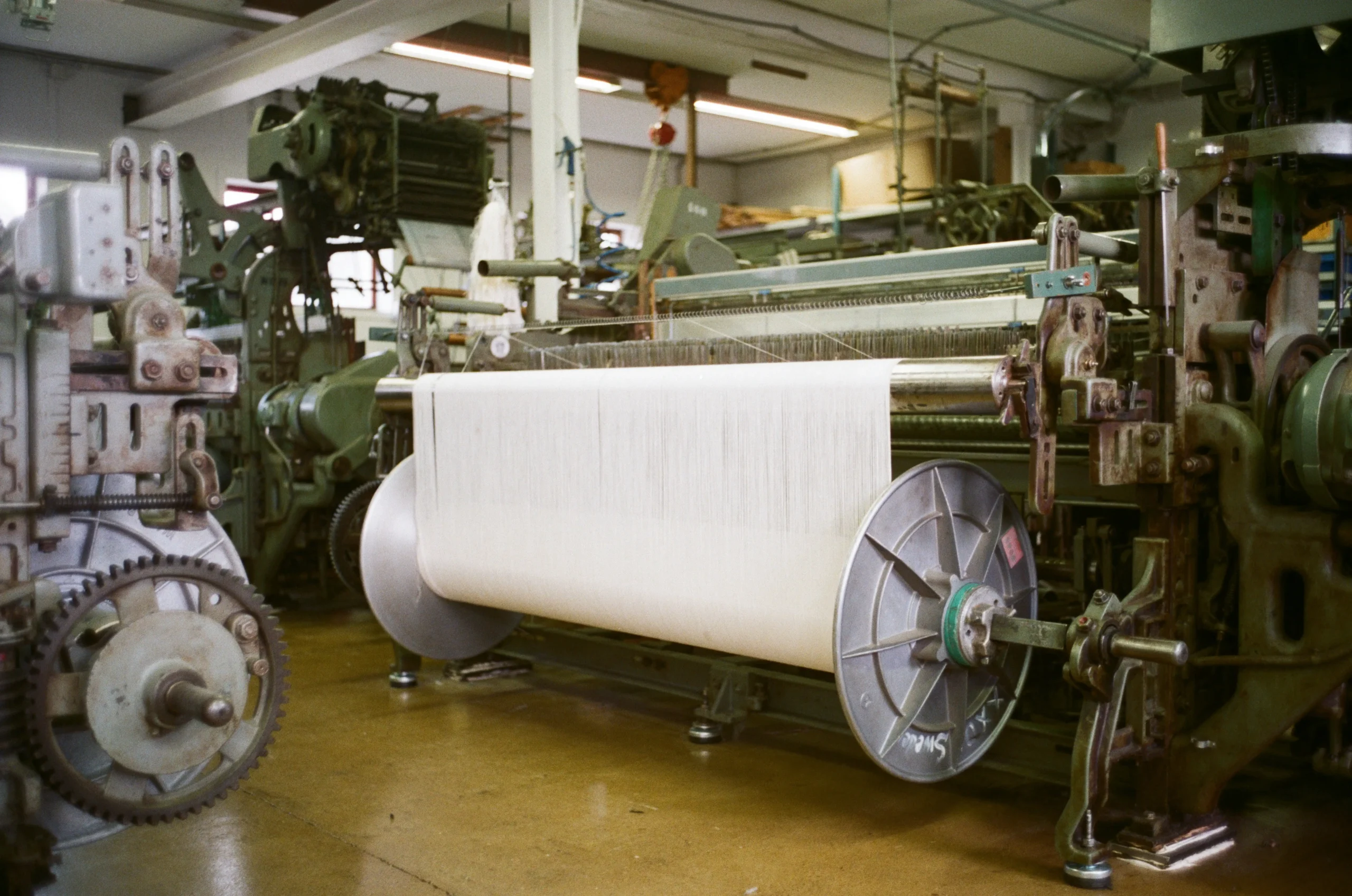
This is where process beats provenance. Instead of relying on a story, we rely on instruments. To manage color consistency, our dye house uses a digital spectrophotometer to measure the color value of the approved lab dip. We then measure the bulk production against that standard. This isn’t a subjective visual check; it’s a data-driven process to ensure the color delta is within a strict quality tolerance. For physical defects, we don’t just hope for the best; we run inspections based on the AQL 2.5 standard, a statistical method used globally to ensure quality across a production run.
For brands that require an extra layer of verification, we facilitate third-party lab testing. This isn’t a problem; it’s part of the job. These reports provide objective data on the fabric’s real-world performance.
- Colorfastness to Rubbing (Crocking): Tested to ensure color doesn’t transfer onto other surfaces.
- Pilling Resistance (ISO 12945-2): Measures how quickly the fabric forms pills through abrasion, a key indicator of durability.
- Tensile Strength: Determines the force required to tear the fabric, critical for upholstery and high-stress garments.
Ultimately, you have to decide if you’re paying for a story or for specified, verifiable performance. The perceived quality of a European tweed is real, but it’s a brand asset. The measurable quality of a fabric backed by spectrophotometer data, AQL inspections, and third-party lab reports is a supply chain asset. In my experience, the latter is what prevents costly mistakes.
Customization & Exclusivity
Exclusivity isn’t buying from a heritage catalog; it’s owning the weave itself.
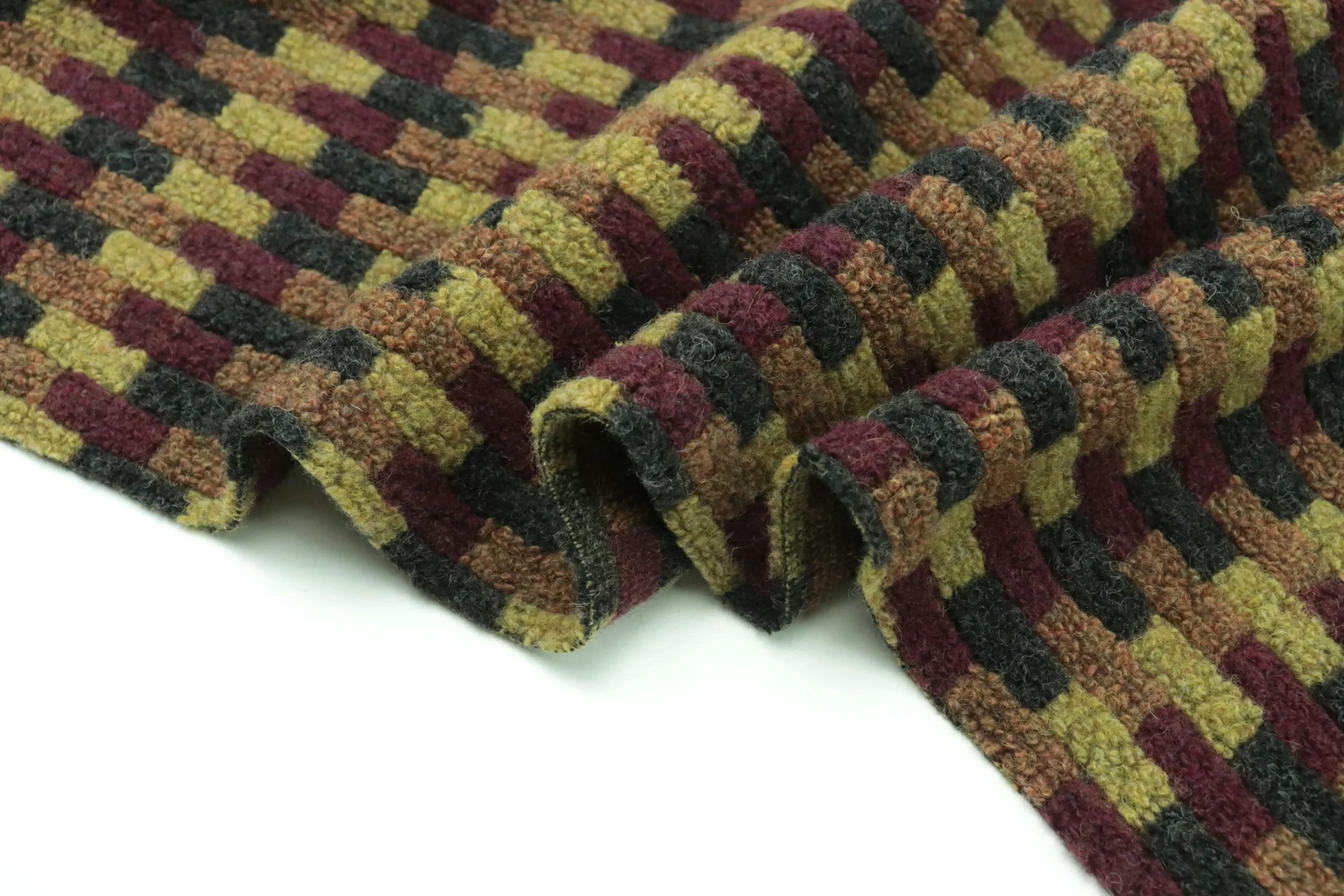
Let’s be blunt. The ‘exclusivity’ offered by many European mills is an illusion. You’re picking a color from their pre-approved card, a card that’s also sitting on your competitor’s desk. It feels premium, but you’re ultimately buying from a shared menu. For a ready-to-wear brand, that’s a commercial risk disguised as heritage.
A factory-direct partnership flips the model. The process doesn’t start with a fabric card; it starts with the
- European Mill ‘Customization’: You’re charged €100–€250 for a swatch from their existing weave library, which takes 4–6 weeks to arrive. The MOQ might be low, but the fabric is not exclusively yours.
- Factory-Direct Proprietary Development: Sampling fees are typically waived for committed programs. You get a physical swatch for sample approval in 7 days. Your custom tweed development at a 1000m MOQ is contractually exclusive to you.
That 1000-meter commitment isn’t a barrier; it’s the price of a competitive moat. It guarantees that the unique Chanel-style tweed you build your collection around won’t appear in a rival’s line next season. You’re not just buying fabric; you’re securing a tangible market advantage.
Certification & Sustainability
Sustainability isn’t just a story; it’s a line item on your cost sheet.
Let’s be direct. The demand for certifications like GRS (Global Recycled Standard) and OEKO-TEX isn’t coming from marketing anymore; it’s coming from major retailers’ compliance departments. If your fabric doesn’t have the paperwork, your garment might not get the PO. This has fundamentally changed the sourcing calculus away from heritage and towards verifiable claims.
This is where the supply base diverges. European mills are strong on certifications for natural, virgin fibers like GOTS (Global Organic Textile Standard) for wool. But ask for a GRS scope certificate on a complex, recycled polyester-blend tweed, and you’ll often get a blank stare. In contrast, leading Asian mills have invested heavily in GRS and OCS (Organic Content Standard) because it’s their ticket to the top tier of the market. They’ve built traceability into their process from the yarn up.
- European Certified ‘Eco’ Tweed: Often GOTS-certified virgin wool. The cost is prohibitive for most commercial collections, frequently exceeding a competitive mill-direct rate. Availability of recycled blends is extremely limited, defeating a key sustainability narrative.
- Asian GRS-Certified Tweed: Typically a recycled polyester/wool/acrylic blend with a full GRS scope certificate. The factory-direct cost per meter is in the a low mill-direct rate range, allowing you to meet brand ethics and retailer mandates without sacrificing your entire margin.
The decision for a sourcing manager isn’t about choosing a ‘less ethical’ option. It’s about aligning your sustainability goals with commercial reality. You can pay a premium for a European heritage story, or you can source a GRS-certified fabric from a factory-direct partner that provides a modern, traceable, and financially viable sustainability message your customers actually understand.
Conclusion
The decision is no longer about heritage versus a low factory-direct tweed fabric cost per meter. It’s about total landed cost, speed, and the commercial advantage of exclusivity. A sourcing strategy that relies solely on European mill FOB pricing overlooks the significant margin gains and supply chain agility available through a verified factory-direct partner—one where a rigorous sample approval process ensures the final product matches the initial vision.
Here is your benchmark: in your next supplier discussion, ask for their standard for lot-to-lot color consistency. For premium ready-to-wear, a quality tolerance of less than 1.5 Delta E is the target. Use this number to vet any mill’s process control and demand to see the spectrophotometer reports that prove they can meet it.
Frequently Asked Questions
Which tweed is best?
The best tweed depends on your collection’s priority. European mills offer a heritage brand story, while factory-direct provides significant cost savings and faster development for a comparable artisan aesthetic. Define your budget and speed-to-market needs before choosing a supplier.
What is the most famous tweed company?
Harris Tweed Hebrides is the most famous heritage brand, protected by an Act of Parliament. However, many global fashion houses now source Chanel-style tweeds from specialized factory-direct. Evaluate if your brand requires the ‘Harris Tweed’ label or simply a high-quality tweed aesthetic.
Is tweed more expensive than wool?
Not necessarily, as tweed is a type of woolen fabric whose price depends on composition and origin. A factory-direct wool-blend tweed at an accessible factory-direct rate is often more affordable than fine worsted. Always compare landed costs for specific compositions, not just fabric category names.
What is the best tweed in the world?
For protected heritage and brand recognition, Harris Tweed is the benchmark. For achieving a specific aesthetic with better margins and supply chain control, a well-specified factory-direct. The ‘best’ tweed is the one that meets your collection’s specific cost and lead time targets.
Why is factory-direct tweed cheaper?
Factory-direct tweed is more affordable due to vertical integration and lower operating costs, not lesser quality. In-house proprietary yarn spinning and large-scale production can reduce the final fabric price by. The price difference reflects the business model, not necessarily the material specifications.

Related Insights
How to Import Knit Fabric from China: Customs & Shipping
import knit fabric china is the first checkpoint buyers should lock before they approve a...

Bulk Fabric Ordering: Negotiate MOQ & Pricing With Mills
{ “@context”: “https://schema.org”, “@type”: “Article”, “id”: “evo301-geo-ai-block”, “definition”: “Bulk fabric ordering MOQ negotiation succeeds when...
Avoid Customs Delays When Importing Tweed
avoid customs delays fabric import is the first checkpoint buyers should lock before they approve...