tweed mill quality evaluation is the first checkpoint buyers should lock before they approve a supplier, budget, or production slot. Picture this: You are standing in a warehouse in New Jersey, three weeks before your retail launch, and the first roll of tweed is cut open. The color is wrong—a flat, lifeless beige instead of the rich, heathered oatmeal you approved on the lab dip. The hand-feel is stiff, not soft. That a substantial amount pre-production order just became a liability because the pre-production sample didn’t match the mass production run. This exact scenario has played out across multiple supplier audits in Italy, China, and Turkey. A proper tweed mill quality evaluation stops this before it starts.
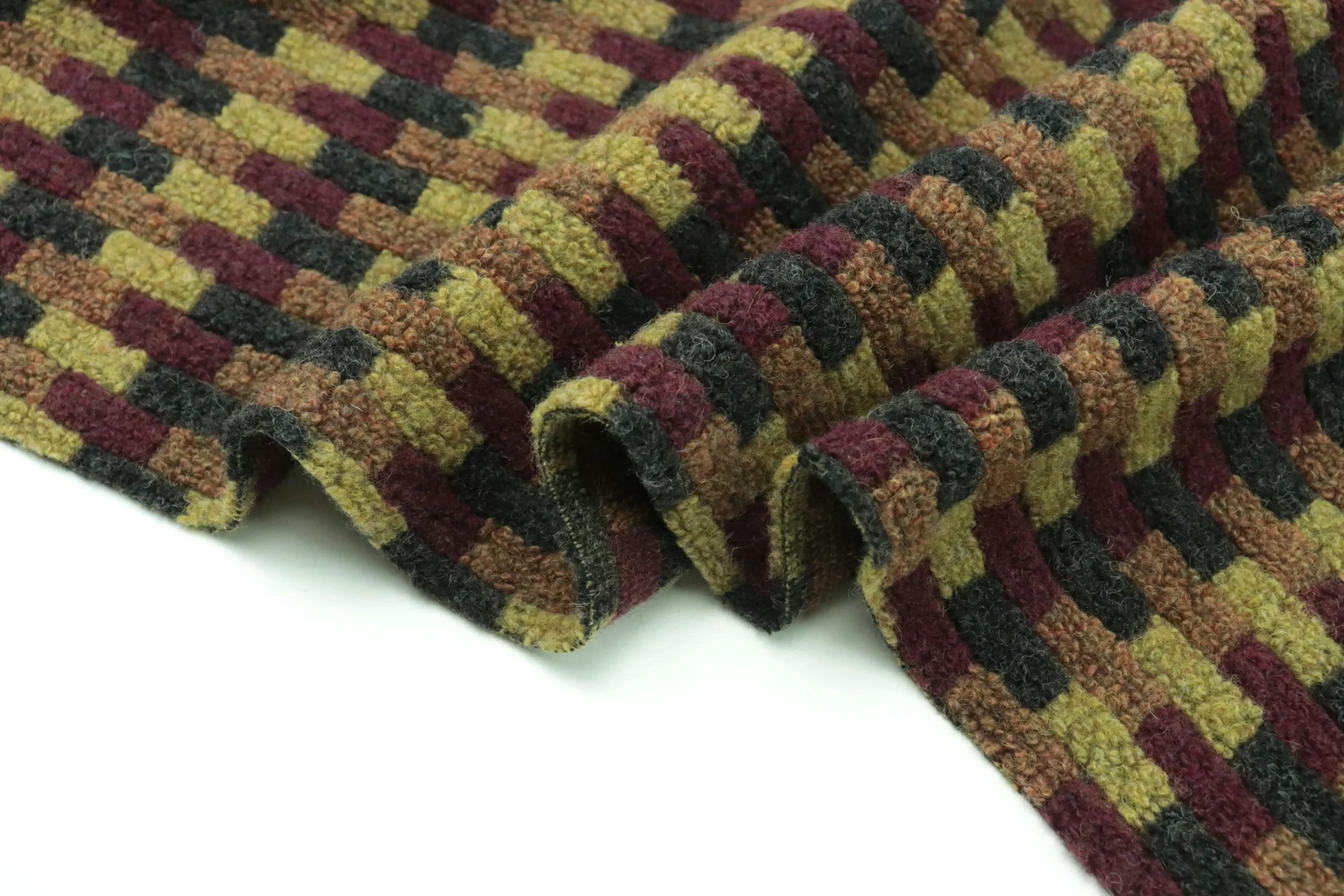
Most sourcing managers treat a mill audit like a box-ticking exercise—check for ISO certs, scan a few looms, ask about MOQs. But luxury tweed quality starts at the yarn, not the weave. Mills that buy commodity yarn off the shelf can never replicate the unique hand-feel or prevent lookalike fabrics from flooding your market six months later. The real differentiator is specialist spinning—mills that custom-spin slub, bouclé, and chenille yarns in-house deliver exclusive textures you simply cannot source elsewhere. When I evaluate a new supplier for my own clients, I skip the showroom and head straight to their spinning room.
The Real Cost of Poor Quality Tweed
Poor quality tweed can destroy your brand’s reputation and margins.
When you commit to a tweed order, you’re not just buying fabric—you’re betting on the consistency of yarn, dye, and weave. a substantial order can turn into a liability if the pre-production sample doesn’t match the mass production run. Color lot inconsistency alone leads to returns, rework, and missed seasons. The cost of poor quality isn’t just the fabric cost; it’s lost sales, discounted inventory, and damaged brand equity.
Color deviation: A ΔE value above 1.5 between lots is visible to the naked eye. Many mills don’t have lab-dye processes to control this. The result: garments from different production runs look like different fabrics.
Weave weight variation: Tweed weight should be within ±5% of spec. Mills that buy commodity yarns can’t control this. A 350g/m² tweed that arrives at 380g/m² changes drape and sizing—and your production line adjusts mid-run.
Pilling and shrinkage: Without proper yarn spinning and finishing, tweed pills after 10 wears. European mills test for Martindale rub cycles; many Chinese mills skip this. Our specialist spinning ensures bouclé yarns hold structure.
Missed sampling deadlines: Industry standard sampling is 4–6 weeks. If a mill can’t deliver a swatch in 7 days, it signals weak production planning. Fast prototyping correlates with factory flexibility and engineering depth.
The solution starts at the yarn. Mills that custom-spin slub and bouclé yarns in-house—like the Wenzhou facility—control the entire chain from fiber to finished fabric. These mills do not buy off-the-shelf yarns, so clients get exclusive textures no competitor can replicate. And with 100+ styles in stock, such facilities can ship within 3–7 days, so clients do not have to wait 4 weeks to see if the quality holds. Factory-direct communication via WeChat groups ensures specs are translated accurately into production, eliminating the miscommunication that plagues third-party agent arrangements.
Cost Factor
Hidden Impact on Your Brand
How Fursone Eliminates the Risk
Color Lot Inconsistency
Brand reputation damage from shade variations across production runs; costly returns and markdowns.
Lab-dye calibration with ΔE<1.5 tolerances ensures repeat orders match your approved standard precisely.
Yarn Quality & Hand-Feel
Lookalike fabrics from commodity yarns dilute your collection’s unique texture and artisan aesthetic.
Custom-spun slub, bouclé, and chenille yarns guarantee exclusive textures and prevent market duplication.
Sampling Delays
Missed seasonal windows and rushed production decisions due to4-6 week sampling cycles.
<< /tr>
<< tr>
<< tdstyle =” padding :12 px15 px ;border :1 pxsolid# eo eo eo ;color:#333;” > Supply Chain Communication< / td >
<< tdstyle =” padding :12 px15 px ;border :1 pxsolid# eo eo eo ;color:#333;” > Quality drift from third – party agents misinterpreting specs ;leads to rework and delayed shipments .< / td >
<< tdstyle =” padding :12 px15 px ;border :1 pxsolid# eo eo eo ;color:#333;” > Factory – direct communication via WeChat groups ensures specs are translated accurately into production without intermediaries .< / td >
<< / tr >
<< tr >
<< tdstyle =” padding :12 px15 px ;border :1 pxsolid# eo eo eo ;color:#333;” > Certification Gaps< / td >
<< tdstyle =” padding :12 px15 px ;border :1 pxsolid# eo eo eo ;color:#333;” > Inability to market sustainable collections or meet retailer compliance requirements (OEKO – TEX ,GRS ).< / td >
<< tdstyle =” padding :12 px15 px ;border :1 pxsolid# eo eo eo ;color:#333;” > Full eco – traceability with GRS – certified recycled polyesters and organic cottons integrated without compromising luxury aesthetics .< / td >
<< / tr >
“`
A 7-Point Framework for Tweed Mill Audits
Color lot drift ruins brands.
I’ve watched a substantial order of Chanel-style tweed get rejected at final inspection because the mass production run came out two shades warmer than the pre-production sample. The buyer had approved a lab dip, but the mill’s production dyeing used a different water source and skipped spectrophotometer verification. That’s the gap between what the spec sheet promises and what actually lands in the container.
Color lot consistency is the silent killer of brand reputation. Most mills will tell you they ‘match by eye’ — which works until it doesn’t. A professional tweed mill should show you their lab dyeing process and commit to a ΔE tolerance of less than 1.5 (measured under D65 light) for repeat orders. Anything above 2.0 is visible to the untrained eye on solid grounds like bouclé or melange tweeds.
Lab Dip Approval: Request a physical lab dip on your actual substrate (same yarn composition, same weave structure). Digital color codes alone are not enough — monitor calibration varies wildly between factories.
Bulk Production Check: Ask for a ‘first-piece approval’ before full production runs. The mill should pull one roll from the first dye lot and send you a sealed cutting alongside your approved lab dip.
Lot-to-Lot Consistency: For reorders, insist on a retained sample from your original production batch. Mills that archive cuttings properly can match within ΔE<1.5; those that don’t will guess.
At our partner mills in Wenzhou, we use an X-Rite spectrophotometer for every dye lot and archive physical retainers for all custom colors — because one mismatched shipment can cost a brand its retail placement for an entire season.
Yarn Provenance & Proprietary Spinning
The yarn determines 80% of the final hand-feel.
Most sourcing managers start their mill evaluation by looking at finished fabric swatches. That’s like judging a car by its paint job without checking the engine. The real differentiator in luxury tweed — that signature irregular slub, the soft-yet-structured bouclé loop, the depth of color — starts at the yarn. And here’s the hard truth: 90% of mills buy their yarn off the shelf from commodity spinners. That means any brand can order the same base yarn and produce a nearly identical fabric. Your ‘exclusive’ tweed isn’t exclusive.
When auditing a mill, the first question is: ‘Show me your spinning floor.’ If they don’t have one, it’s clear what is being offered — standard inventory with no texture uniqueness. A mill that custom-spins its own slub, bouclé, and chenille yarns in-house controls three critical variables: fiber blend ratios (e.g., 70% Australian Merino wool + 30% nylon for durability), twist levels (lower twist for softer drape in knit tweeds), and dye uptake consistency across production runs.
Provenance check: Request the mill’s raw material purchase records for the past three months. Look for Australian Merino wool contracts and GRS-certified recycled polyester invoices. If they can’t produce traceable source documents, you’re buying blind.
Spinning capability: Ask specifically: do you spin bouclé loops above 3mm diameter? Do you produce slab yarns with variable thickness between 0.5mm and 2.5mm? These specs determine whether your tweed will have that artisan ‘imperfect’ texture or look flat and machine-perfect.
Market duplication risk: “We don’t buy off-the-shelf yarns” isn’t just marketing — it’s a legal safeguard. Mills that buy commodity yarn cannot prevent another buyer from ordering the same fabric from them or another mill using identical stock yarns.
Insider warning: If a supplier quotes FOB pricing significantly below market average without owning a spinning operation, they’re likely cutting costs on fiber quality — substituting virgin polyester for recycled content or blending lower-grade wool tops into the core of bouclé loops where you can’t see them until after wash testing.
Weave Weight & Drape Consistency
Drape consistency separates a premium tweed from a rejected shipment.
You can spec a 400 g/m² bouclé tweed on the tech pack, but if the weave tension drifts by even 5% across a production run, the garment panels won’t align. a substantial order was scrapped because the pre-production sample draped at one weight and the bulk containers arrived with a stiffer hand-feel. The root cause wasn’t yarn quality — it was inconsistent loom tension and finishing shrinkage.
Weight tolerance: A qualified mill holds ±3% of target g/m² across all rolls. Ask for their internal QC records on your candidate fabric style before you commit.
Drape test: Request a Cantilever bending-length test or simply hang a 30 cm × 30 cm swatch over a ruler edge. A consistent tweed will bend within ±2 mm of the reference sample.
Shrinkage control: After finishing, relaxed shrinkage should be ≤3% in warp and weft. Mills that skip pre-shrinking or use inconsistent drying temperatures produce panels that distort after first wash.
When evaluating a tweed supplier, don’t just check the spec sheet — physically compare five random cuts from different rolls in the same lot. If the hand-feel varies more than what your fingertips can distinguish, you’re looking at quality drift that will kill your collection’s fit consistency.
Color Matching & Lab-Dye Calibration
A ΔE<1.5 tolerance is non-negotiable for repeat orders.
Color drift between production lots is the fastest way to kill a brand’s retail consistency. a substantial order was rejected because the second batch of tweed read 2.3 ΔE off the first — visible to the naked eye on a shop floor. The industry standard for pass/fail in apparel is often ΔE<2.0, but for multi-tonal melange tweeds, that margin is too wide. Insist on ΔE<1.5 and ask to see the mill’s lab-dye calibration records before you commit to a bulk run.
Most mills outsource dyeing to third-party facilities, which introduces variability in water quality, temperature control, and dye lots. Mills that operate their own lab — like our partner mills in Wenzhou — can run yarn-dyeing trials in-house using spectrophotometers and maintain a digital archive of every formula. This means when you reorder six months later, the recipe is pulled from a database, not re-engineered from memory.
Lab-Dip Approval Process: Request 3 lab dips per color against your Pantone or physical swatch. The mill should provide spectral data (Lb* values) with each submission. Reject any supplier that sends only visual approvals.
Bulk Production Protocol: Ask how they handle lot-to-lot consistency during mass production. A robust mill will test every 500 meters and flag deviations above ΔE<1.0 mid-run, not after the fabric is rolled.
Colorfastness Testing: For tweeds with metallic threads or high-contrast yarns, demand AATCC 61 (laundering) and AATCC 16 (lightfastness) test reports. Fading or bleeding in the first three washes means returns and chargebacks.
“What to check when evaluating tweed supplier” should always include their color management system. If they can’t produce spectrophotometer readouts or a documented reorder protocol, walk away.
How to Evaluate a Tweed Mill for Quality
Browse this product, solution, or service page to explore relevant offerings.
A GRS cert without a transaction certificate is just a PDF.
Every sourcing manager I’ve met has been handed a glossy OEKO-TEX or GRS certificate during supplier onboarding. The mistake is treating that PDF as the final word. In practice, certification verification is about chain-of-custody proof, not just a logo on a letterhead. A mill can hold a valid GRS scope certificate for its facility but still ship uncertified material if the yarn input wasn’t tracked through the mass balance system.
Scope vs. Transaction Certificate: Ask for the mill’s GRS scope certificate (issued by a body like Control Union or SCS Global) AND request a transaction certificate (TC) for your specific order. The TC proves that the exact lot of fabric you’re buying was produced under the certified chain of custody. Without it, you cannot legally label your garments as ‘GRS certified’.
OEKO-TEX Standard 100 Class: For tweed and knit fabrics, insist on OEKO-TEX Standard 100 Class I (for babies) or Class II (direct skin contact). Many mills only test to Class IV (decorative), which does not cover garment compliance in EU or US markets. Ask for the test report number and verify it on the OEKO-TEX portal — counterfeit certificates exist.
Yarn-Level Traceability: Our partner mills in Wenzhou integrates GRS-certified recycled polyesters and organic cottons at the yarn-spinning stage, not post-production. This means every meter of our Eco-Sustainable Knits collection carries full traceability from fiber to finished roll. A mill that buys commodity yarn off the shelf cannot provide this level of assurance.
Sampling Turnaround & Custom Development
Most mills take 4–6 weeks for samples.
Sampling speed tells you more about a mill’s engineering depth than any sales pitch. A 7-day turnaround from concept to physical swatch is not standard in this industry. When a mill claims they can do it, ask them how. The answer reveals whether they have dedicated R&D looms, in-house yarn dyeing, and buffer capacity — or if they’re just promising and will push your timeline later.
The benchmark: A factory that custom-spins its own bouclé and slub yarns can prototype faster because they don’t wait on third-party yarn deliveries. Our partner mills in Wenzhou keep specialist spinning on-site, which cuts the sampling cycle from the typical 4–6 weeks down to 7 days.
What to verify: Ask for the lab-dip process timeline. A mill that can produce a color-matched lab dip within 48 hours and ship a full strike-off within 5 working days has serious process control. If they need two weeks just to spin a sample yarn lot, you’ll face delays on repeat orders too.
Custom development MOQ: Low minimums like 300 meters per custom program indicate the mill is set up for flexible runs — not just massive commodity rolls. This matters when you’re developing exclusive textures for a capsule collection and don’t want to commit to 10,000 meters upfront.
Color lot consistency is the silent killer of brand reputation during sampling. Insist on seeing the mill’s lab dyeing process and request ΔE < 1.5 tolerances for repeat orders. If the first sample matches but production runs drift by ΔE > 2.0, your finished garments won’t match across batches — and returns kill margins faster than any fabric cost savings.
Factory Communication & QC Processes
The gap between sample approval and bulk shipment is where most quality failures occur.
a substantial order of bouclé tweed arrived with a 15% shade variation because the mill didn’t lock the yarn-dye recipe after sample approval. The brand had to re-cut half the collection. That is why every sourcing manager must verify three things before production starts: the mill’s lab-dip process, their lot-to-lot color tolerance, and how they handle mid-production communication.
Lab-Dip Process: A serious mill will show you their digital color-matching system and provide a ΔE report for each lab dip. Demand ΔE < 1.5 for repeat orders — that’s the threshold where the human eye can’t detect a difference under standard lighting (D65). If they can’t produce a ΔE number, walk.
Lot-to-Lot Consistency: Ask for three production lot numbers from the past six months of the same SKU. Lay them side by side. If you see visible striping or tonal drift, that mill doesn’t control their dye bath temperature or dwell time tightly enough.
Factory Communication Protocol: The best mills run WeChat groups with the client, QC manager, and production lead on one thread. No third-party agent filtering specs. Every change — from yarn twist to finishing tension — gets logged with photos within 24 hours. This prevents ‘lost in translation’ errors that cause rework.
Conclusion
The gap between a spec sheet and what arrives in the container closes only when you verify the mill’s yarn provenance, color lot control, and communication chain. A mill that custom-spins its own yarns and maintains direct WeChat-based QC protocols will consistently deliver against your quality tolerance, while one relying on commodity yarns and third-party agents introduces risk at every stage.
Frequently Asked Questions
How do I check yarn quality at a tweed mill?
Ask if they spin their own yarns in-house, as specialist spinning ensures exclusive textures and prevents market duplication. Mills that buy off-the-shelf yarns often lack control over the final hand-feel and drape consistency. Request a yarn sample before committing to yardage.
What is a reasonable sampling turnaround for tweed?
A top-tier mill should deliver physical swatches within 7 days from concept approval. This rapid sampling lets you outpace competitors by locking in designs early. Only proceed if the mill can meet your launch timeline.
What certifications should a quality tweed mill have?
Look for GRS certification for recycled content and OEKO-TEX for chemical safety, especially if you target sustainable fashion brands. Mills with eco-traceability can provide full transparency on raw material origins without compromising luxury aesthetics. Verify certificates against your brand’s compliance checklist.
How do I evaluate color consistency across tweed lots?
Review the mill’s lab-dye calibration process and request multi-tonal melange samples to check for colorfastness. Advanced yarn-dyeing techniques produce richer, more consistent heathered effects than piece-dyeing alternatives. Always approve a production strike-off before bulk cutting.