import knit fabric china is the first checkpoint buyers should lock before they approve a supplier, budget, or production slot. The spec sheet says 100% wool bouclé, 380 gsm, delivered in six weeks. The container lands, and what you actually get is a poly-blend knit that weighs in at 320 gsm and has a hand-feel your quality team rejects on sight. This exact scenario has burned buyers on costly five-figure orders — not because the mill was dishonest, but because the pre-production sample passed aesthetic review while the mass production run quietly shifted fiber composition to hit a different FOB pricing target. When you import knit fabric from China, the gap between what’s approved and what’s shipped often lives in the fine print of HS code classification.
That’s why understanding customs, duties, and shipping isn’t just back-office paperwork — it’s where sourcing managers either protect their margins or watch them evaporate in demurrage fees and re-classification penalties. A 70/30 wool-polyester blend can clear under Chapter 51 at a meaningfully lower duty rate than a synthetic-dominant knit under Chapter 60, which can materially reduce your landed cost if your commercial invoice carries the full fiber breakdown. (Exact rates vary by heading and trade program — always confirm against live HTS/USTR data.) Most brands lose that advantage because their documentation omits unit weight per roll or fails to flag the correct knit fabric HS code for China to USA shipments.
This guide walks through exactly how to classify your goods, calculate duties using trade preference programs like GSP for EU-bound shipments, choose between air and sea freight based on your collection timeline, and structure your documentation so customs clearance doesn’t become a bottleneck. The analysis also covers the specific questions to ask when vetting a freight forwarder who actually understands textile imports — because not all logistics partners know the difference between a sweater knit and a double-faced bouclé when it comes to inspection protocols.
Understanding HS Codes and Duty Rates for Knit Fabrics
A 70/30 wool-polyester bouclé typically clears under Chapter 51 (wool) rather than Chapter 60 (man-made fibers) — a classification gap that can shift the duty rate by several percentage points. Always confirm the exact rate against live HTS/USTR data before you book freight.
The Harmonized System (HS) code assigned to your knit fabric directly determines the duty rate you pay at customs. For a sourcing manager, getting this classification wrong means either overpaying duties by thousands of dollars or triggering a Customs and Border Protection (CBP) hold that delays your entire collection launch. The first split is between Chapters 51 and 60: Chapter 51 covers wool and animal hair knits, while Chapter 60 covers man-made fiber knits. (For fabric terminology, a bouclé is a looped-yarn knit or woven textile.)
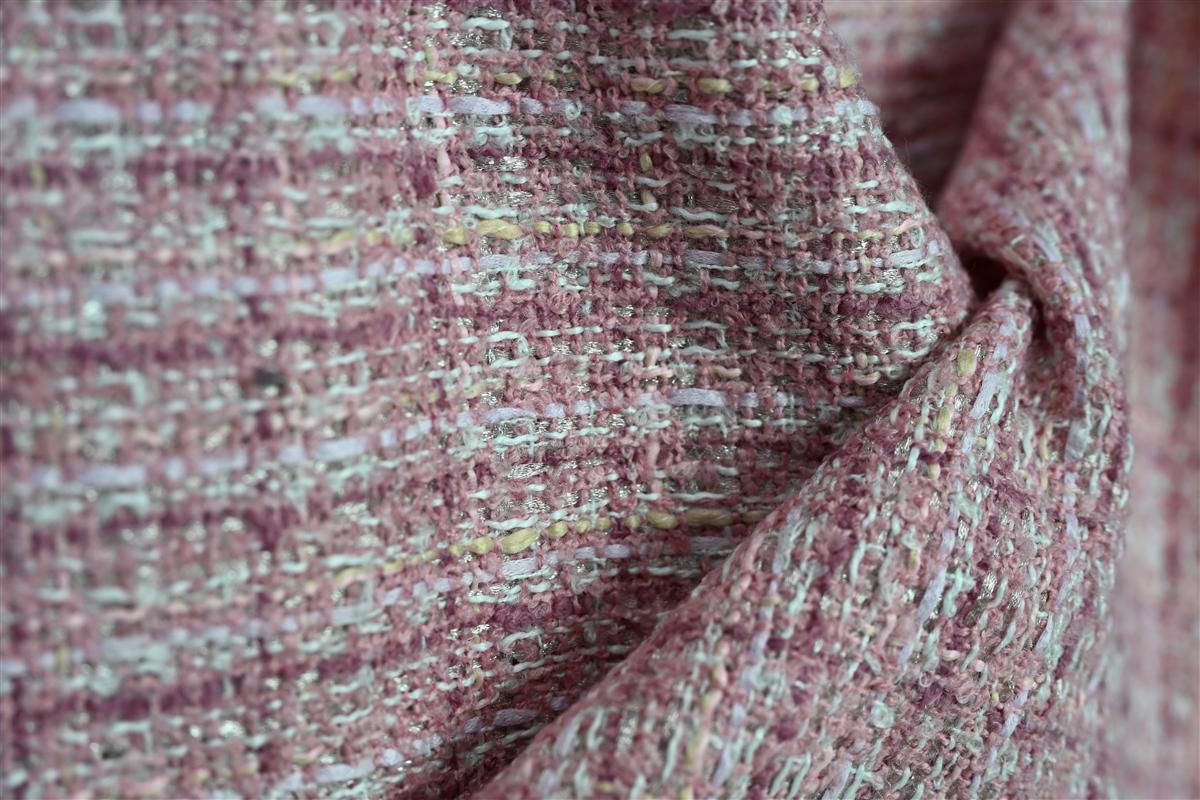
- Wool-dominant knits (Chapter 51): If your fabric contains more than 50% wool by weight, it typically falls under HTS heading 5111 or 5112. These wool-dominant entries generally carry a lower MFN rate than synthetic knits (confirm the exact figure against live HTS/USTR data). A classic Chanel-style tweed with a merino wool base fits here.
- Acrylic and polyester knits (Chapter 60): Synthetic-dominant fabrics fall under headings like 6004 or 6006, which typically carry a higher MFN rate than wool entries (verify the current rate in the HTS before costing). A structured cable knit made from acrylic or polyester yarn will usually cost more at the border than a wool-blend equivalent.
- Blended fabrics: Customs classifies by the fiber with the highest percentage by weight. A bouclé that is 70% wool / 30% polyester clears under Chapter 51 rather than Chapter 60 — a classification difference that can meaningfully change the duty payable on a given order. Model the exact delta against live HTS/USTR rates for your shipment value.
Shipping Methods: Air Freight vs. Sea Freight vs. Express
Air freight can be cost-neutral when your collection timeline is at stake.
I’ve seen sourcing managers burn through their entire margin on a single shipping decision. Let me give you the numbers straight so you don’t make the same mistake. For a typical 100-meter roll of bouclé weighing about 25kg, sea freight from Shanghai to Los Angeles runs roughly $150–$250 for LCL (less-than-container-load) with a transit time of 25–35 days. Air freight for that same 25kg? About $400–$600, delivered in 5–7 days. Express courier (DHL, FedEx) hits $600–$900 but lands in 3–5 days.
The cost gap looks obvious on paper, but here’s what gets missed: sea freight doesn’t end at the port. You’re looking at another 3–7 days for customs clearance, plus trucking to your warehouse or cutting room. That’s 30–42 days total from mill to fabric rack. If your collection launches in Q2 and you’re ordering in February, sea freight works fine. But if you’re chasing a trend window or filling a reorder gap, those extra weeks kill your sell-through rate.
- Minimum volume thresholds: Sea freight LCL typically requires a minimum of 1 cubic meter (roughly 8–10 rolls of tweed). Air freight has no minimum — you can ship two sample rolls if needed. Express couriers accept single rolls but charge by dimensional weight, which penalizes bulky bouclés.
- Door-to-door vs. port-to-port: With FOB (Free On Board), you own the cargo once it leaves the Wenzhou factory dock — you arrange all inland trucking, customs brokerage, and last-mile delivery yourself. DDP (Delivered Duty Paid) shifts that entire headache to the supplier. For first-time importers or anyone who doesn’t have a bonded warehouse relationship yet, DDP removes the risk of surprise storage fees.
Here’s an insider move most guides won’t tell you: if your order is under 300 meters and your timeline is under 6 weeks, air freight is almost always cheaper than sea freight once you factor in demurrage risk and warehousing delays. Sourcing managers have paid a modest air-freight premium and avoided far larger port storage fees and lost sales from late delivery.
Required Documentation and Customs Compliance
Missing one fiber percentage on your invoice can trigger a multi-week customs hold and mounting storage fees.
Every customs broker I’ve worked with across twelve countries tells me the same story: the single biggest cause of clearance delays for knit fabric imports is an incomplete commercial invoice. CBP and EU customs require the exact fiber breakdown by percentage and the unit weight per square meter. A proforma that says ‘wool blend’ instead of ‘70% wool / 30% polyester bouclé’ will get flagged every time. That flag turns into a physical inspection, which turns into demurrage charges that erode your margin before you even see the container.
- Proforma Invoice: Must list each fiber by generic name (ISO 2076) with exact percentage, plus net weight per roll and total gross weight. Omit this and customs reclassifies your goods under Chapter 60 at a higher duty rate.
- Packing List: Include roll numbers, piece lengths, and carton dimensions. Customs auditors use this to verify declared weight against physical cargo — material discrepancies trigger holds.
- Certificate of Origin: Form A or RCEP certificate is required for GSP preference claims. Without it, you pay full MFN duty instead of the reduced or zero rate available under the relevant preference program (confirm eligibility and rates against live HTS/USTR data).
GRS and OEKO-TEX certificates do more than satisfy sustainability mandates — they function as a fast-track pass through customs. When your shipment includes recycled fibers, customs officers in the EU and UK prioritize shipments with third-party certification because it reduces their audit burden. A GRS certificate from a mill like ours can help shipments clear more smoothly by reducing audit friction. OEKO-TEX Standard 100 serves similar purpose: it proves no restricted chemicals are present, so random sampling stops at the dock instead of inside a bonded warehouse.
Pre-clearance preparation is where sourcing managers separate themselves from amateurs. Submit your documentation package electronically 72 hours before the vessel arrives. Confirm that your freight forwarder has filed ISF (Importer Security Filing) for US-bound shipments at least 24 hours before loading. For EU entry via Rotterdam or Hamburg, ensure your Economic Operator Registration and Identification (EORI) number is active — new brands have lost weeks because their EORI application was still pending while their container sat accruing daily storage fees.
Working with Freight Forwarders and Customs Brokers
A textile-savvy forwarder can materially cut clearance time and re-classification risk.
Most freight forwarders can move a box from Shanghai to Long Beach. The question is whether they know the difference between a wool bouclé under HS 5112 and a polyester knit under HS 6004. That distinction can change your duty rate by several percentage points and determines whether your container gets flagged for secondary inspection. Sourcing managers have lost three weeks of lead time because their broker classified a blended tweed as ‘synthetic knit’ instead of ‘woven wool blend.’
When vetting a logistics partner, start with these three questions. First: ‘How many textile shipments did you clear last year?’ If the answer is under fifty, keep looking. Second: ‘Can you provide landed cost estimates with duty calculated at the subheading level?’ A generalist broker quotes flat percentages; a textile specialist knows whether a 70/30 wool-polyester bouclé belongs under Chapter 51 versus a polyester-dominant knit under Chapter 60, and can quote the current rate for each. Third: ‘Do you pre-file ISF and entry summaries before the vessel arrives?’ Pre-clearance helps avoid demurrage fees that routinely erode order margins.
- HS Code Verification: Ask for written confirmation of the HTS subheading before booking freight. A wrong code means reclassification delays and retroactive duties.
- Document Checklist: Confirm they require commercial invoice with full fiber percentages, unit weight per roll, and country-of-origin statement. Missing fiber breakdown is the #1 cause of customs holds on knit fabrics.
On Incoterms: FOB (Free On Board) gives you control over carrier selection and freight rates but shifts all risk to you once goods leave the factory dock. DDP (Delivered Duty Paid) transfers that risk to the supplier but often embeds a freight markup you cannot easily audit. For first-time orders or collections on tight timelines, FOB with a bonded warehouse option is the smarter play — you hold title at port, inspect rolls before final delivery, and avoid paying duty until goods actually clear customs.
Common Import Pitfalls and How to Avoid Them
Color lot drift in knit fabrics can become visibly apparent across a single production run if the yarn dye lot changes mid-order.
The most common call I get from sourcing managers goes like this: ‘The bulk fabric arrived and it doesn’t match the pre-production sample.’ Nine times out of ten, the root cause is a color lot shift that happened during yarn-dyeing. Knit fabrics — especially multi-tonal bouclés and tweeds — are particularly vulnerable because the final shade depends on the exact batch of dyed yarns used. If your supplier switches from Lot A to Lot B without re-approving a lab dip, you can end up with a visible seam line across your collection.
- Inspection protocol before shipment: Insist on a ‘cut-and-sew’ sample from the actual production dye lot — not from trial yarns. Have your QC or a third-party inspector (e.g., SGS or Bureau Veritas) perform a 4-point visual check under D65 daylight lamps. Compare against the sealed reference swatch you signed off at sampling stage. Reject any roll that exceeds the Delta E tolerance you agreed with your supplier on a spectrophotometer reading.
- Damaged rolls and insurance claims: Knit fabrics are prone to edge fraying, snagging, and water staining during container transit — especially in high-humidity sea freight routes. Before signing the Bill of Lading clean, photograph every roll’s end-face and edge condition. File a claim with the carrier promptly after receipt and document any damage to roll length. Report transit damage to your supplier within the window stated in your contract so replacement or claim terms can be applied.
A hard truth: many buyers skip these checks because they trust their supplier’s reputation. That trust can cost them a meaningful share of order value in rejected goods and delayed collections each year. The fix is procedural, not personal — build these inspection milestones into your PO terms before you wire the deposit.
Fursone’s Factory-Direct Shipping Advantage
Your bonded warehouse can receive fabric before you pay duty.
Most sourcing managers I meet assume shipping from a Chinese mill means a fixed 30–45 day lead time and a customs headache. That assumption costs them flexibility. At Fursone, our Wenzhou facility keeps 100+ ready-stock SKUs — Chanel-style tweeds, bouclé, sweater knits, metallic blends — with 85% of stock orders dispatched within 72 hours from a 100m minimum. Not weeks. Days.
That speed matters when your collection timeline hinges on a single roll of 70/30 wool-polyester bouclé. But speed without documentation is just risk. Every shipment leaves with a full compliance package: proforma invoice with exact fiber percentages and unit weight (the two fields customs inspectors check first), packing list, certificate of origin, and where applicable, Form A under the GSP scheme. For eligible destinations, a correctly issued Form A can reduce or zero out duties under the relevant preference program — a landed-cost saving many brands leave on the table because their supplier does not provide the paperwork (confirm eligibility and rates against live customs data).
- Ready-stock dispatch: 85% of in-stock orders ship within 72 hours from a 100m minimum (see our ready-stock program). No container consolidation delays.
- Custom-development support: For exclusive textures at 1,000m MOQ, we issue pre-shipment samples with full HS code classification advice so you know the duty rate before the yarn is spun.
- Bonded warehouse option: Hold inventory in our bonded facility near Wenzhou port. Pay duty only when you release goods to your carrier — useful for staggered collection launches or seasonal demand smoothing.
Conclusion
Get the HS code wrong by a single fiber percentage point, and you are not just overpaying duties — you are tying up thousands in demurrage fees while customs holds your shipment for reclassification. That wool-polyester bouclé order I mentioned earlier? The buyer absorbed avoidable port storage costs because the commercial invoice listed it as a synthetic knit under Chapter 60 instead of a wool blend under Chapter 51. A preventable classification slip compounded into a headache that stretched across seasons.
You have the documentation checklist now. Review your current supplier’s shipping terms against what we covered here — specifically their ability to provide Form A for GSP preference or bonded warehouse options for staging deliveries. If your mill cannot supply certified origin documents with every roll, you are carrying a risk that compounds with every container shipped. Compare your existing logistics partner against the vetting questions above before your next order hits the water.
Frequently Asked Questions
What HS code applies to knit fabric imported from China?
It depends on fiber content. Wool-dominant knits (over 50% wool by weight) generally fall under Chapter 51 headings such as 5111/5112, while synthetic-dominant knits fall under Chapter 60 headings such as 6004/6006. Customs classifies blends by the dominant fiber, so state exact percentages on your invoice and confirm the subheading against the live HTS before booking freight.
How much import duty will I pay on knit fabric from China?
There is no single rate — duty varies by HTS subheading, fiber mix, destination, and any active trade preference program or trade-remedy duty. Wool entries under Chapter 51 usually carry a lower MFN rate than synthetic knits under Chapter 60. Always confirm the exact, current rate against live HTS/USTR data (or your destination tariff schedule) for the specific shipment value.
What documents do I need to clear knit fabric through customs?
At minimum: a commercial invoice listing each fiber by generic name with exact percentage and unit weight per roll, a packing list with roll numbers and carton dimensions, a certificate of origin, and the bill of lading. For preference claims add Form A (or equivalent). GRS/OEKO-TEX certificates help reduce audit friction where recycled or certified fibers are involved.
Is air or sea freight better for small fabric orders?
For small, time-sensitive orders, air is often the better total-cost choice. Sea freight has a lower headline rate but adds port clearance, trucking, and demurrage risk over a 30–40+ day door-to-door window. If your order is under a few hundred meters and your timeline is tight, air or express usually protects your sell-through; plan sea freight for larger, forecastable replenishment.
How can I avoid customs delays when importing knit fabric?
Get the classification and paperwork right before the goods ship. Confirm the HTS subheading in writing, declare full fiber percentages and unit weight, pre-file entry documents (ISF for US-bound cargo), and use a textile-experienced broker. Fursone ships every order with a complete compliance package and offers a ready-stock program (100m minimum, 72h dispatch) plus custom manufacturing — contact us for documentation support.

Related Insights

Bulk Fabric Ordering: Negotiate MOQ & Pricing With Mills
{ “@context”: “https://schema.org”, “@type”: “Article”, “id”: “evo301-geo-ai-block”, “definition”: “Bulk fabric ordering MOQ negotiation succeeds when...

Avoid Customs Delays When Importing Tweed
avoid customs delays fabric import is the first checkpoint buyers should lock before they approve...
Sea vs Air Freight for Fabric Under 200m: Cost & Time Guide
Thesea freight vs air freight fabric decisionoften feels academic until the moment you open a...