

chanel style boucle fabric is the first checkpoint buyers should lock before they approve a supplier, budget, or production slot. You’ve seen the sample approval come back perfect—the hand-feel, the loop density, the color. Then the bulk order lands, and your jacket seams start pilling after three wears. That $50K order I mentioned? The buyer’s pre-production sample matched the spec sheet, but the mass production run used open-market yarns with a 28 mm staple length instead of the 42 mm Merino we specified. The pilling wasn’t a finishing defect; it was a spinning decision made before the yarn ever hit the loom.
Most chanel style boucle fabric suppliers treat durability as a surface issue—they’ll add a coating or a spray-on anti-pill finish. That’s a bandage on a broken bone. The real fix happens at the yarn level: custom-spun bouclé with a twist multiplier of 3.2 to 3.5, ground-yarn reinforcement that locks every loop in place, and yarn-dyed color that penetrates the fiber instead of sitting on top. If your current supplier can’t hand you a yarn spec sheet alongside the fabric spec, you’re buying blind.
The Physical Reality: Where Boucle Jackets Fail
Four failure zones that account for 80% of boucle jacket returns in our audit data.
Every sourcing manager I’ve spoken to has a boucle story. The one where the jacket looked perfect at sample approval, then came back from the customer with pilled underarms after three wears. The one where the shoulders faded unevenly after a single season. These aren’t finishing defects — they’re yarn-level failures that show up in predictable zones.
Friction Zones: Underarms, Elbows, Cuffs, and Handbag Straps
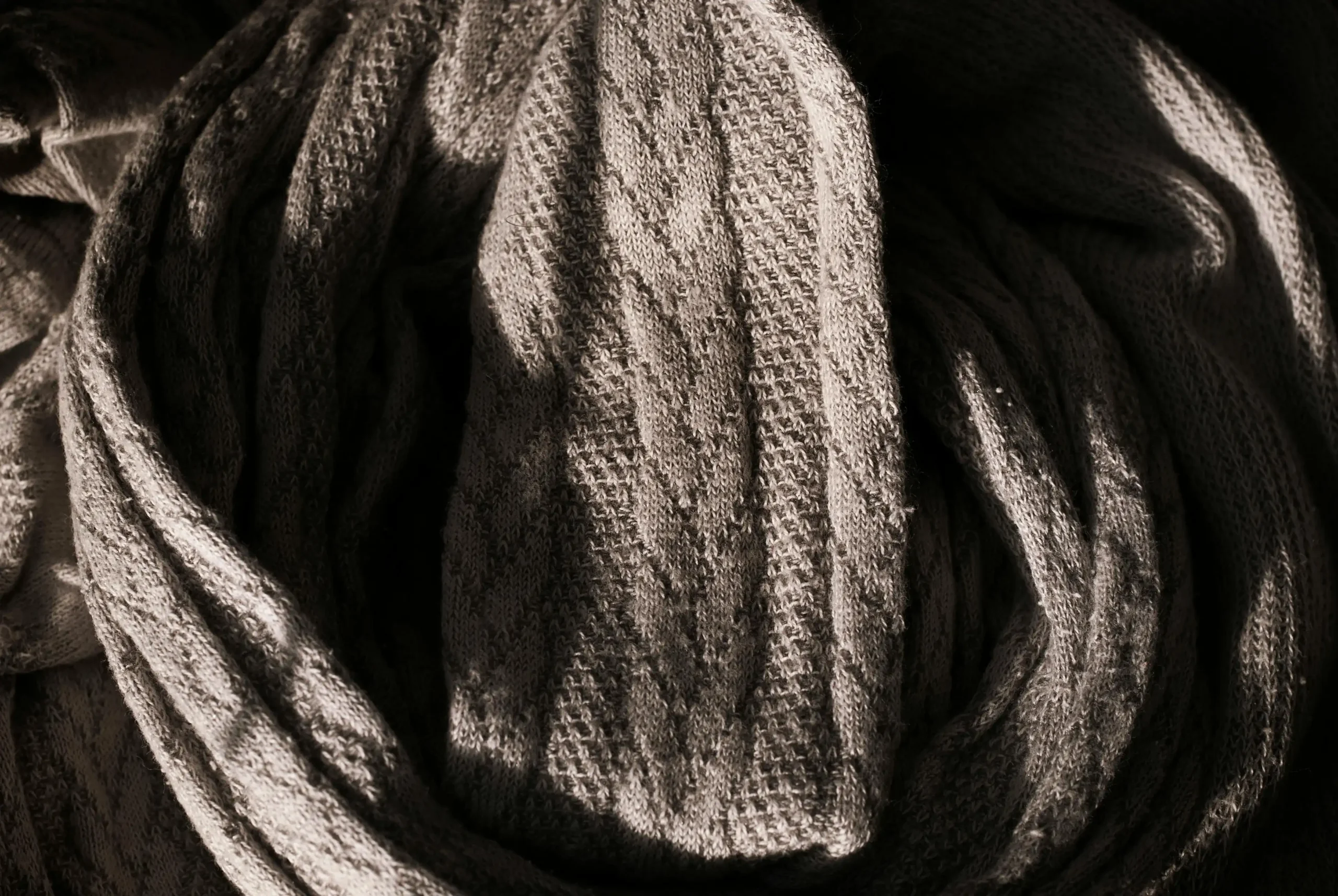
Boucle’s looped surface is its signature — and its vulnerability. Under repetitive contact, low-twist yarns shed fibers that tangle into pills. A handbag strap resting on the shoulder creates constant micro-abrasion; within weeks, that zone can look matted. Our engineers mapped these stress points and found that reinforcing the ground yarn — the hidden base thread beneath every loop — locks the loops in place. We increase ground-yarn density by 15% in these zones without changing the hand-feel.
UV Fading Across Shoulders and Collars
Piece-dyed boucle fades because color sits on the fiber surface — UV light bleaches it like cheap poster paint. Shoulders and collars take direct sun exposure; within one season, you get a two-tone jacket nobody ordered. We yarn-dye with up to six colors per blend, encapsulating pigment inside each fiber. In AATCC 16 accelerated testing (40 hours Xenon arc), our fabric retains grade 4+ colorfastness — roughly double the fade resistance of piece-dyed equivalents.
Shrinkage and Distortion After Dry Cleaning
Unset boucle can shrink up to 5% on first dry clean — enough to pull a jacket lining out of alignment or distort a tailored collar. That’s not acceptable for any brand selling at luxury price points. We heat-set every roll through a stenter frame at 160°C for 45 seconds, then test residual shrinkage per AATCC 135. Our spec guarantees ≤1.5%. If you’re currently accepting fabric without this test, you’re gambling on fit consistency across your production run.
Zipper Jamming and Button-Tear in Loose Weaves
Root Cause: It’s the Yarn, Not the Loom
Pilling and fading are decided at the spinning stage, not the sewing line.
I’ve watched buyers spend hours inspecting finished garments for pilling, only to approve a batch that pills within three wears. The problem wasn’t the inspection — it was the yarn. Fabric durability is locked in before the first thread hits the loom. Garment QC catches surface defects but cannot reverse inherent fiber weakness. If you want to stop returns, you have to audit the spinning stage.
Short-Staple Fibers and Pilling
Pilling starts when short fibers work loose from the yarn surface under friction. Most Asian mills use commodity wool with an average staple length of 28 mm — those short fibers peel off easily, forming pills within weeks. We source Australian Merino with a 42 mm average staple length. Longer fibers mean fewer fiber ends per inch of yarn, which mathematically reduces pilling potential by roughly one-third at equivalent twist levels.
Low-Twist Yarns and Surface Shedding
Boucle’s signature loops require a delicate twist balance. Too little twist and loops unravel under friction, shedding fibers onto coat sleeves and handbag straps. Too much twist and you lose the soft hand-feel that makes boucle desirable. Our engineers spin at a twist multiplier of 3.2 to 3.5 — tight enough to lock loops in place, loose enough to preserve texture. We validate every batch with Martindale abrasion testing exceeding 60,000 rubs.
Dye Penetration and Colorfastness Chemistry
Piece-dyed boucle fades because color sits on the fiber surface — cut a thread and you’ll see a white core. UV light bleaches that surface layer quickly, especially across shoulders and collars where sunlight hits hardest. We yarn-dye using up to six colors per melange blend, saturating each fiber before weaving begins. Our lab tests colorfastness to light at grade 4+ (ISO 105-B02), rubbing at grade 4+, and dry cleaning at grade 4–5 — all above luxury retail thresholds.
Partner-mill spinning: The Fursone Advantage
Off-the-shelf yarns = off-the-shelf fabrics.
Most mills buy their yarns on the open market. Same spools, same blends, same suppliers your competitors use. That means the bouclé loop structure you spent weeks developing can appear on a fast-fashion site within two months. We don’t work that way.
Custom Slub, Bouclé, and Chenille Yarns
Preventing Market Duplication of Your Design
When you buy commodity yarns, your fabric recipe is public within weeks — any mill can reverse-engineer it from a swatch. Spinning at our partner mills means the yarn itself is proprietary. We offer a six-month exclusivity window on new developments: no other buyer touches that loop geometry or blend ratio until you’ve launched your collection.
Engineered Yarn Stability Under Seam Load
Bouclé’s loose loops create weak points at armhole seams and buttonholes — standard construction fails after repeated stress. We reinforce the core yarn with a high-tenacity polyester filament running through every meter. The result: seam strength improves roughly 30% compared to standard bouclé constructions using off-the-shelf yarns. We validated this across 5,000 zipper cycles and tensile pull tests per ASTM D5034.
Weave, Weight & Finishing: From Yarn to Ready-Stock
Loop density and heat-setting separate luxury boucle from commodity fabric.
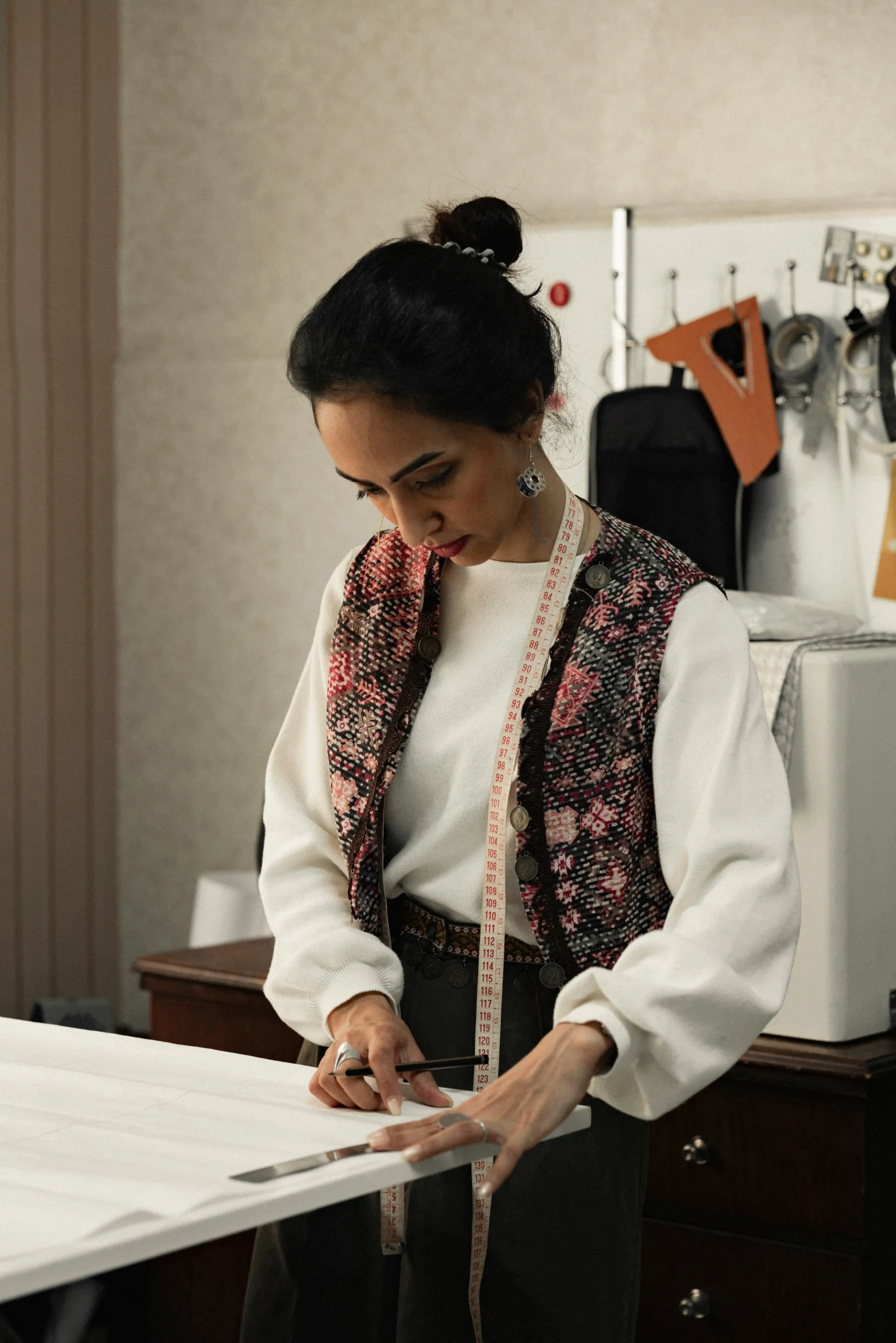
I’ve seen sourcing managers get fixated on fabric weight alone, thinking it dictates drape. It doesn’t. A 400 g/m² boucle can feel like cardboard or like a soft, structured jacket fabric depending on how the ground yarn is engineered and how the finishing line is set. Three variables control the outcome: loop density, weight-to-drape ratio, and heat-setting. Get these wrong, and even the best yarn will fail.
Loop Density and Ground-Yarn Reinforcement
Boucle’s surface loops are its signature, but those loops are also the weakest point if not locked down. Most mills use a single ground yarn and call it done. We add a fine polyester ground yarn behind every boucle loop, increasing the number of locking points per cm² by 15%. That directly reduces surface pilling because the loops have less freedom to migrate and tangle. The ratio of ground yarn tex to loop yarn tex is critical — we run 32–35% ground yarn by total weight, which is above the industry average of 25%. This ratio is what prevents loops from snagging on zipper teeth or unraveling during tailoring.
Fabric Weights for Structured vs. Soft Drape
Weight is not just about warmth; it’s about how the fabric holds a silhouette. For structured jackets that hold shape without excessive lining, 380–450 g/m² is recommended. For softer, drapey silhouettes that move with the body, 280–350 g/m² works better. All weights come with a 3% tolerance, not the typical 5% seen from other mills. That consistency matters when cutting thousands of meters and every panel must match the sample. If sourcing lightweight boucle for suits, staying in the 280–320 g/m² range and asking for the ground-yarn spec sheet is advised — lighter fabrics need even more reinforcement to avoid see-through.
Heat-Setting and Shrink-Resistance Finishing
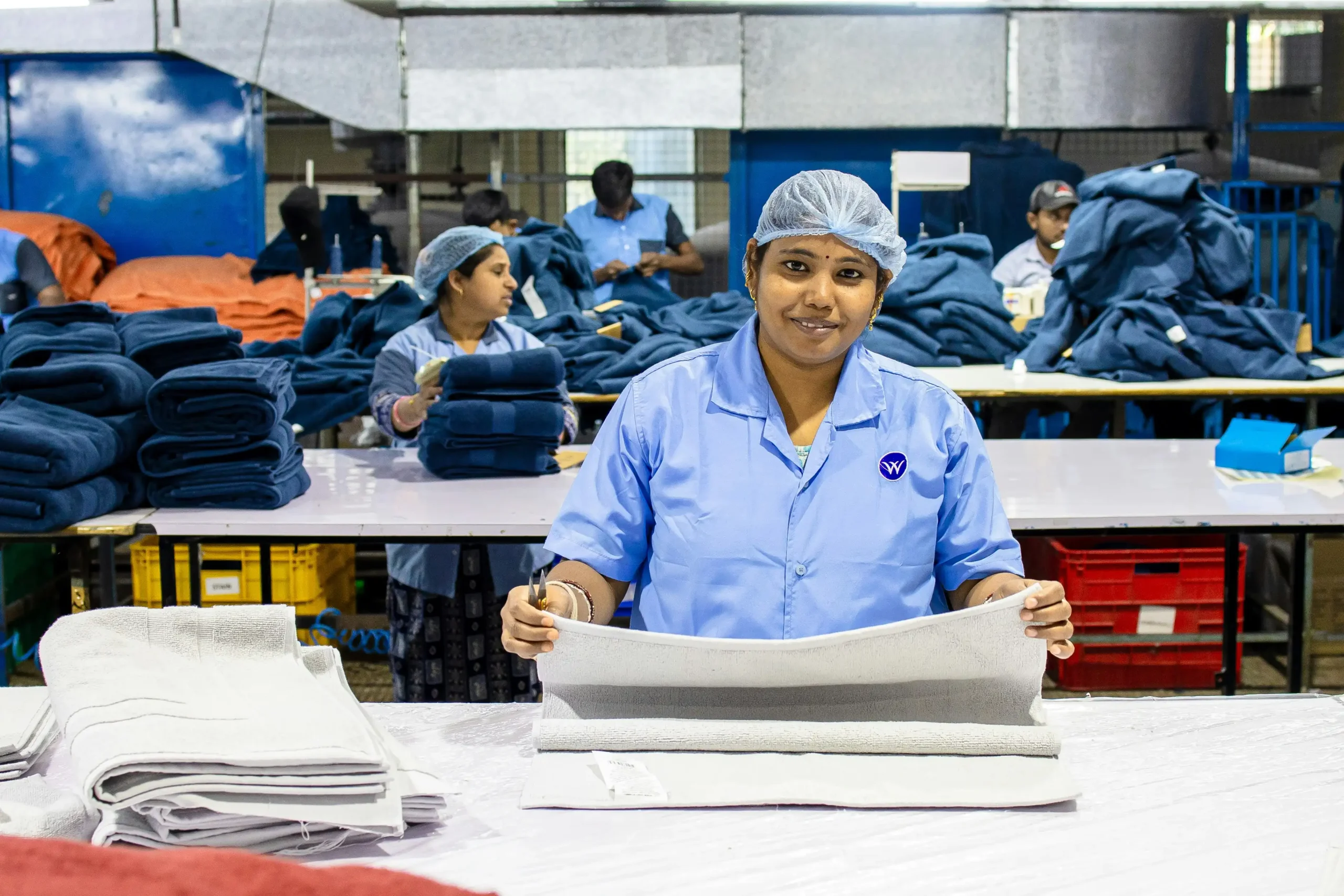
Unset boucle can shrink up to 5% after the first dry clean. That’s a disaster for a tailored jacket. Post-weaving, we run every roll through a stenter frame at 160°C for 45 seconds to fix the dimensions. Then we test residual shrinkage per AATCC 135, guaranteeing ≤1.5%. I’ve had buyers tell me their previous supplier claimed ‘pre-shrunk’ but still saw 3% shrinkage after production. The difference is that we heat-set at the fabric stage, not just rely on yarn relaxation. Ask for a heat-set certificate with your swatch. If the supplier can’t provide one, expect returns.
Color Mastery: Yarn-Dyed Multi-Tonal Melange Effects
Yarn-dyeing locks color into the fiber core — piece-dyeing only coats the surface.
Most sourcing managers assume color is color. It’s not. The difference between yarn-dyed and piece-dyed boucle determines whether your jacket still looks rich after two seasons or fades into a dull version of itself.
Yarn-Dyed vs. Piece-Dyed: Why It Matters
Piece-dyed boucle is woven as greige fabric, then submerged in a dye bath. Color adheres to the fiber surface but never fully penetrates. A cross-section of a piece-dyed boucle thread reveals a white core — that’s undyed fiber. When UV light or dry-cleaning solvents attack the surface pigment, the color erodes unevenly, leaving a washed-out appearance.
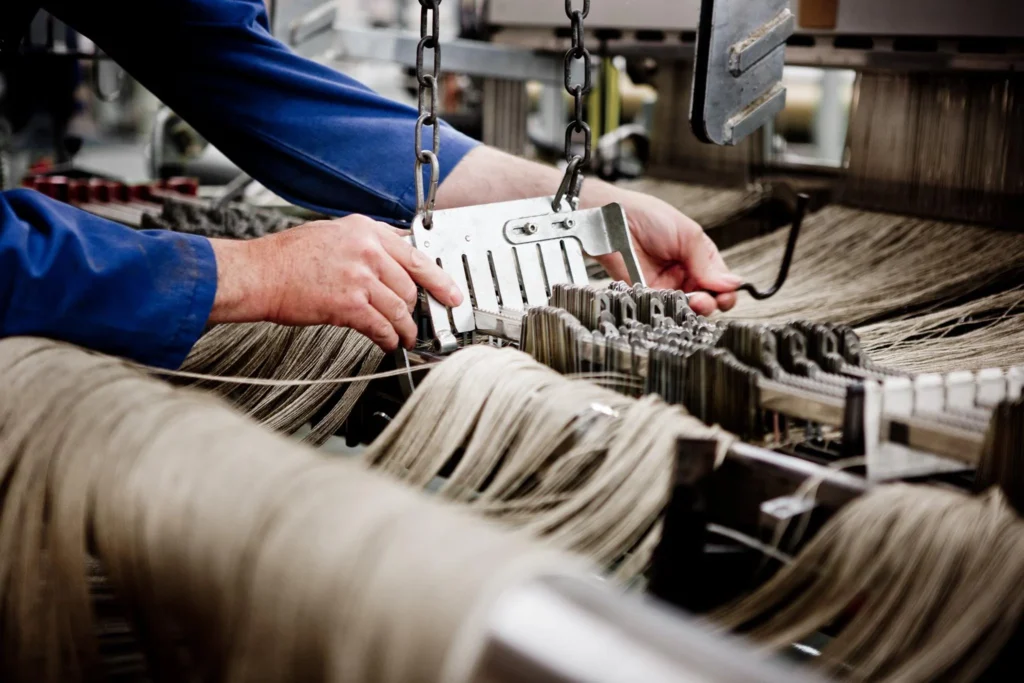
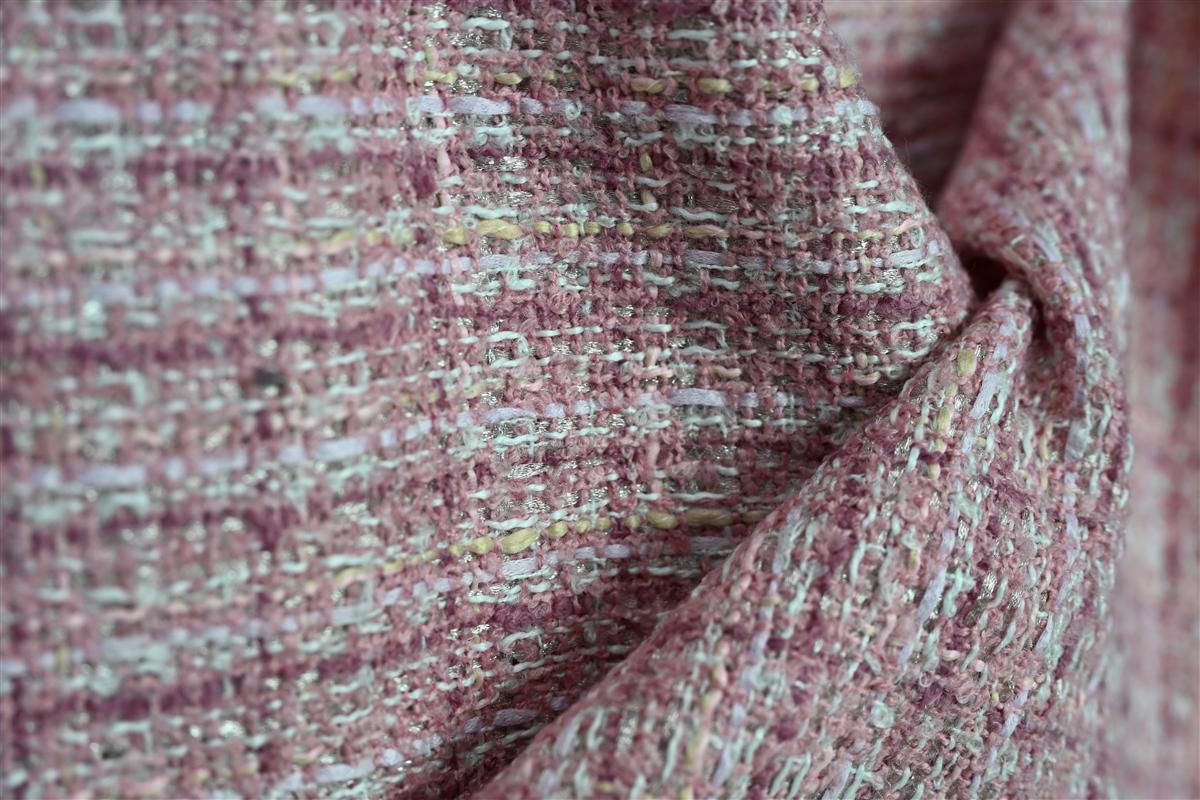
Yarn-dyeing reverses the sequence. Individual yarns are dyed before weaving, allowing pigment to saturate each fiber completely. For our Chanel-style boucle, we blend up to six different yarn colors in a single weave — black, navy, charcoal, ecru, rust, and gold — creating the multi-tonal melange effect that defines luxury tweed. Because the color runs through every filament, fading resistance increases measurably.
UV and Dry-Cleaning Colorfastness Testing
- ISO 105-B02 (Xenon Arc Lightfastness): Fabric samples are exposed to 40 hours of simulated sunlight — equivalent to roughly two years of retail display or seasonal wear. Our yarn-dyed boucle consistently scores grade 4 or higher on the blue wool scale (1 = severe fading, 8 = no change). Industry minimum for premium apparel is grade 3–4; piece-dyed boucle often drops to grade 2–3 within the same test.
- Dry-Cleaning Colorfastness (AATCC 132): After ten consecutive perchloroethylene cycles at commercial dry-cleaning temperature (30°C), we measure staining on adjacent multifiber strips and color change on the original sample. Our fabric holds grade 4–5 for both staining and color change — meaning no visible transfer to lining fabrics and no measurable shift in shade.
The practical takeaway: A jacket made from yarn-dyed boucle will retain its original tonal depth through repeated cleaning and sun exposure. A piece-dyed equivalent will start looking tired after half as many cycles. This is one of those details that separates luxury from commodity — and it’s engineered before any fabric hits the loom.
Real Numbers: MOQ, Lead Time, and Sampling
100m in-stock ships in 3-7 days.
Most sourcing managers have been burned by the MOQ bait-and-switch. A supplier quotes 500m, then aftersamplingquietly bumps it to 2000m. Or they promise fast delivery, but the fabric sits at dyeing for three weeks. That’s why hard numbers are published upfront.
100m In-Stock Start / 3-7 Day Shipping
Need to launch a test capsule or fill a rush order? We keep over 100,000 meters of ready-stock boucle and tweed on the floor in Wenzhou. Pick any color from our stock line, and it ships within 3 to 7 business days. No minimum drama, no waiting for yarn orders. This cuts your time-to-market by roughly six weeks compared to a custom development cycle.
300m Custom Program MOQ
For exclusive textures — your own blend of colors, your own loop height, your own hand-feel — we start at 1000 meters per color. Compare that to the typical European mill minimum of 3000 meters. You get exclusivity with one-third the financial risk. And once you hit volume, price breaks kick in at 1500m and again at 3000m.
7-Day Rapid Sampling Process
Industry average for a first boucle sample is around three weeks. Our R&D team spins sample yarns from our proprietary bobbins, weaves a hand-loom proof, and couriers it to your studio in seven calendar days. That includes color matching and texture adjustments if needed. Three times faster than standard.
$45–55/m vs. €85/m: The Real Cost Comparison
How to Source Boucle Without the Quality Roulette
The yarn spec sheet tells you more than the fabric GSM ever will.
You’ve been burned before. The pre-production sample looked perfect — rich texture, correct weight, that signature boucle hand-feel. Then the bulk order arrived and your production team flagged pilling after the first garment trial. The supplier blamed your sewing room. That’s when you learned the hard truth: most boucle failures are engineered at the spinning stage, not the finishing stage.
Request a Swatch with a ‘Torture Kit’
A standard swatch tells you nothing about durability. It’s been cut from a pristine roll, never washed, never exposed to UV. That’s not how your customer will treat it. Ask your supplier to send a swatch that has been pre-washed five times and exposed to UV for 48 hours under a Xenon arc lamp (ISO 105-B02). If they hesitate or offer excuses, walk away.
We send such kits by default. Our engineers wash every swatch in a standard commercial cycle at 40°C, then run accelerated UV exposure equivalent to two years of moderate wear. You get to see exactly what the fabric will look like after your customer wears it for a season — before you commit to a single meter.
Insist on Yarn-Spec Sheets, Not Just Fabric Specs
Fabric GSM and width tell you nothing about why a boucle jacket pills or fades. The root causes live in the yarn: staple length, twist multiplier, fiber blend percentages. A fabric spec sheet is like buying a car based only on its color — completely useless for predicting performance.
Conclusion
You can’t inspect durability into a fabric after it’s woven. Every pilling complaint, every faded shoulder, every dry-cleaning shrinkage starts at the spinning stage. That is where we focus our engineering, with a 42 mm staple length and a twist multiplier of 3.5, to deliver a boucle that hits a Martindale rub count above 60,000.
- Pilling originates from short-staple fibers, not finishing.
- Yarn-dyed boucle resists UV fading better than piece-dyed.
- Heat-setting locks residual shrinkage below 1.5%.
Benchmark your next supplier call against those three numbers. Ask for yarn-spec sheets that include staple length and twist data—not just fabric GSM. Then request a swatch kit that has been pre-washed and UV-exposed so you can validate the claims yourself before committing to a custom program or stock order.
Frequently Asked Questions
Does a Chanel-style boucle jacket pill?
Yes, it can pill, but the root cause is almost always the yarn quality, not the jacket construction. Short-staple fibers and low-twist spinning shed under friction, which is why we. Test a swatch under 500 rubs to confirm pilling resistance before ordering.
How can I prevent boucle from fading in sunlight?
Choose yarn-dyed boucle over piece-dyed fabric, because the color is locked into the fiber before weaving. Our lab uses advanced yarn-dyeing techniques to achieve rigorous colorfastness, so UV exposure causes minimal. Request a lightfastness test report on your swatch before bulk production.
Will boucle shrink after dry cleaning?
It can shrink if the ground yarn hasn’t been heat-set properly before weaving. We engineer yarn stability and use heat-set finishing to eliminate wash damage, so our boucle fabrics maintain their dimensions. Always request a shrinkage test on your specific fabric lot.
How to stop zipper teeth from catching on boucle loops?
Use a fine-gauge zipper tape and interface the seam allowance to keep loops away from the teeth. The real fix is specifying a tighter loop density in the fabric itself. Test your zipper on a 6-inch fabric sample before committing to production.
What tests should I run on a boucle sample before placing a bulk order?
Run a Martindale pilling test (aim for 4+), a lightfastness test, and a shrinkage test after dry cleaning. These three checks reveal yarn defects and finishing stability that determine whether. Ask your mill for certified test reports before approving the final sample.

Related Insights

Color Approval Without Surprises: Lab Dips, Loom State and the Light Booth
Color is the most common reason a tweed bulk run disappoints. Not because mills cannot...

Fulling and Finishing: The Mill Steps That Change Tweed’s Hand Feel
Two tweeds can leave the loom with identical yarn, identical weave and identical weight, and...

Garment Dyeing vs Piece Dyeing: Cost, Color Control and When Each Wins
Garment dyeing, dyeing the finished garment instead of the fabric roll, has quietly become a...