

A buyer puts two fabric options on the table for a knit program: organic cotton and recycled cotton. Both carry a sustainability label, and both sound better than the conventional alternative. They are not the same product, though. One changes how the fibre is grown, the other changes how an existing fibre is reused, and each decision affects the dyeing route, the yarn strength, and the certification paperwork your factory needs to prove the claim.
This comparison looks at what each promise actually covers, how they behave inside a knit, and how a brand picks between them for a real order. The production data below comes from Fursone Textile, a Wenzhou knit and tweed mill with 300+ looms running since 2020, and covers the GRS recycled and OEKO-TEX certified programs a sustainable fabric buyer usually asks about.
What Organic Cotton Actually Changes
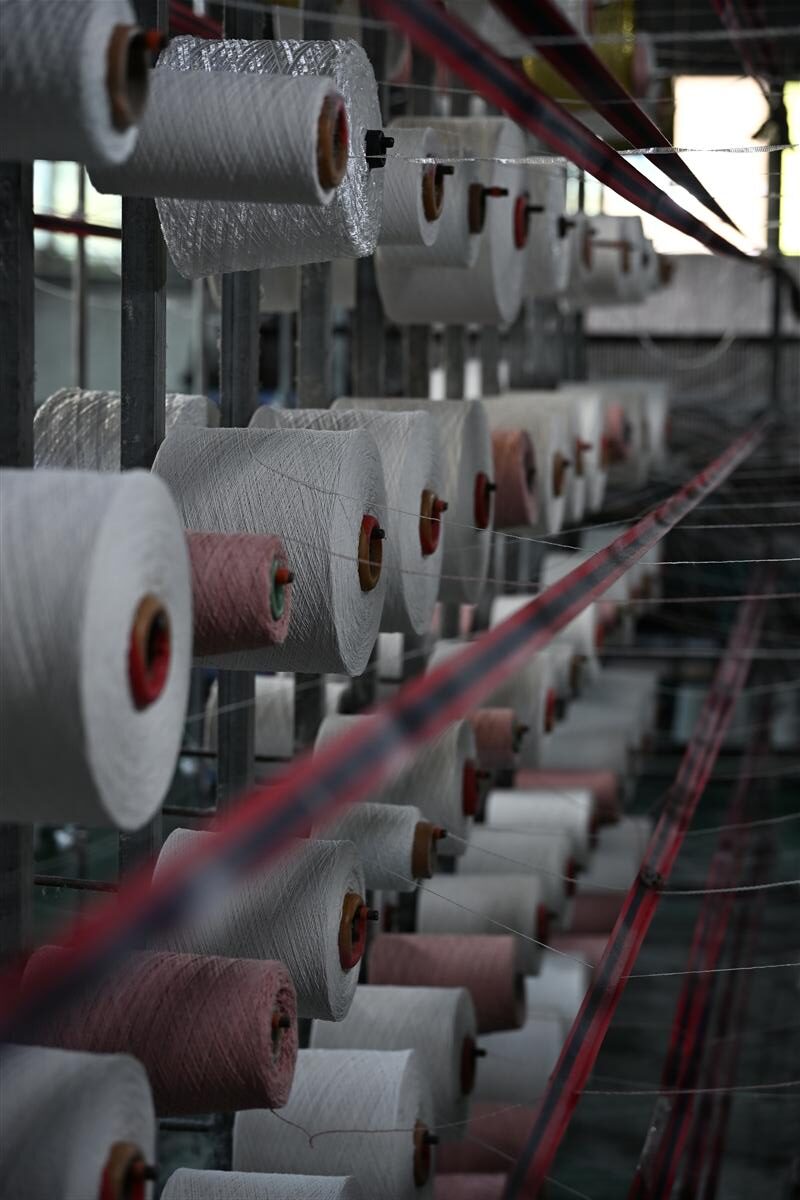
Organic cotton is a farming decision. The fibre is grown without synthetic pesticides, synthetic fertilisers, or genetically modified seed, and the land is managed to a certified standard such as GOTS (Global Organic Textile Standard). The growing stage is where the difference sits, and that is also where the certification has to be traced: from the seed through the gin to the yarn, so the finished fabric can honestly be labelled organic.
For a knit, organic cotton has a practical advantage beyond the label. Because the plant is grown without the heavy chemical inputs that can stress the fibre, the lint tends to be longer and cleaner, which means it can be spun into a finer, stronger yarn. That suits fine-gauge knits, babywear, and any garment where a soft hand and durability both matter.
Organic alone does not make the mill’s processing clean. The scouring, bleaching, and dyeing steps carry their own chemical footprint, which is why Fursone pairs organic yarn with OEKO-TEX Standard 100 certification and third-party SGS testing on the finished cloth. The growing claim is only one link in the chain.
What Recycled Cotton Actually Delivers
Recycled cotton is a waste-management decision. The fibre comes from two places: pre-consumer offcuts from spinning and garment cutting, or post-consumer garments collected after use. It is shredded back to a fibrous state and re-spun into yarn. Because every recycling pass shortens and damages the fibre, recycled yarn is almost always blended with a longer virgin or certified fibre to keep it spinnable and strong.
The claim is governed by a different standard. GRS (Global Recycled Standard) audits the whole supply chain — collector, processor, spinner, and mill — to confirm the recycled content percentage in the final fabric. That audit is the reason a recycled claim is worth more than the word “eco” on a spec sheet. Fursone’s GRS recycled knit program runs on this chain-of-custody model, with a custom MOQ of 300 metres or more so the certification can be traced back to the recycled input.
The biggest risk with recycled cotton is a softer-looking claim than the fabric delivers. A recycled content percentage that is genuine on paper can still fail in the garment if the yarn has been stretched too far. That is why Fursone runs the recycled program against recycled nylon and polyester knit benchmarks and ISO 12945-2 pilling resistance, so a recycled knit is judged by the same wear criteria as any other fabric.
Where the Real Trade-off Sits
The honest answer is that neither is categorically greener; they solve different problems. Organic cotton reduces the agricultural chemical load and protects soil over the growing cycle. Recycled cotton keeps fibre out of landfill and avoids the land, water, and energy needed to grow a brand-new crop.
Their weaknesses mirror each other. Organic cotton still consumes land, water, and transport, and it can be expensive to certify and source at scale. Recycled cotton loses length and strength with every pass, so it needs blending and can show lower pilling grades unless the blend ratio is engineered carefully. A “greener” verdict depends on what your customer values most and what your factory can actually document — see our sustainable fabric sourcing checklist for how to weigh these factors before you buy.
The mechanism behind a recycled claim matters as much as the percentage. Our circular fashion recycling loops guide breaks down how pre-consumer and post-consumer fibre re-enter the system, and where the traceability usually breaks down between a mill and a brand.

How They Behave in a Knit
Structure changes the answer. In a fine-gauge knit, organic cotton’s longer, cleaner fibre can be spun into a finer yarn, producing a dense, smooth fabric with a soft hand. In a heavier knit — a chunky sweater or a fleece — fibre length matters less, and recycled cotton’s blend can support the structure, provided the recycled portion does not pull the pilling grade down.
The practical lever is the blend ratio. A recycled knit that holds its shape and resists pilling usually carries a mix of longer fibre alongside the recycled content, and the mill has to balance the recycled percentage against the fabric’s performance. Fursone’s knit programs span roughly 150 to 650 GSM, and the blend target changes with the weight band. For how recycled fibre performs in a knit versus a woven, the recycled nylon vs recycled polyester comparison covers the performance side of the same question.
Picking the Greener Option for Your Line
Three questions settle the choice. First, what does your customer claim? Organic is a farming and soil story that resonates in babywear, bedding, and premium casual. Recycled is a circularity story that fits athleisure, basics, and any brand with a take-back or recycling programme.
Second, what can you prove? Organic requires GOTS chain-of-custody documentation from farm to mill. Recycled requires GRS documentation and a traceable recycled input. Fursone supports both routes and can supply OEKO-TEX Standard 100 and SGS testing on the finished fabric, so either claim can be evidenced rather than assumed.
Third, what does the order need? Fursone keeps 100 metres of ready stock on many knit constructions and offers a 300-metre custom MOQ with a standard 7-day sampling turnaround. For an organic knit, the certified yarn extends the lead time; for a recycled knit, the GRS audit keeps the MOQ higher. A babywear organic cotton case study shows how a brand handled that trade-off on a real order.
Where the two overlap, the cost set is the deciding factor. Fursone’s 95% Pantone colour-match accuracy and 95%+ re-order consistency apply to both fibre types, but the pricing advantage of around 30 to 50% compared with a European mill is larger on a blended recycled programme than on a fully certified organic one, because the recycled input is cheaper and the weaving remains the same 300-strong machine base.
Frequently Asked Questions
Is organic cotton or recycled cotton better for a knit?
Neither is universally better. Organic cotton reduces the chemical load at the growing stage and gives a longer, cleaner fibre, while recycled cotton keeps waste out of landfill but loses fibre length and usually needs a virgin blend. Pick based on the application and the certification you can prove.
What does GOTS certification cover for organic cotton?
GOTS traces the fibre from the farm through the gin and spinner to the finished fabric, confirming the organic growing claim across the whole chain. Processing chemicals, wastewater, and social standards are also audited under the standard.
Is recycled cotton as soft as organic cotton?
Generally no on its own. Because every recycling pass shortens the fibre, recycled cotton is usually blended with a longer fibre to keep it spinnable. A well-engineered blend can feel soft, but the hand depends on the blend ratio and the finishing route, not the recycled label.
What is the MOQ for GRS recycled knit fabric at Fursone?
Fursone’s GRS recycled knit program runs on a custom MOQ of 300 metres or more, so the recycled content can be traced back to the certified input through a chain-of-custody audit.
Does organic cotton cost more than recycled cotton?
Usually yes. Certified organic yarn and its chain-of-custody documentation add cost, so an organic knit sits higher on price than a comparable blended recycled knit. Fursone’s 30 to 50% price advantage over a European mill applies to both, but the gap is wider on a blended recycled program.
For a closer look, see our guide on how to design a repairable garment.

Related Insights

From Farm to Fabric: Mapping the Wool Certification Chain
A buyer asks for certified wool and gets three documents back that prove three different...

Fiber Content Labels for Tweed and Knit: Reading Composition Percentages Right
A composition label is a legal document, a marketing claim and a care instruction all...
Fabric Waste in Cutting: How Much Your Collection Throws Away
Every collection throws away fabric twice: once in the cutting room, where markers never fit...