

Every collection throws away fabric twice: once in the cutting room, where markers never fit pieces together perfectly, and once in purchasing, where buyers add safety overage that arrives as leftover rolls. The second waste source is the one buyers control directly, and most control it badly in both directions: too little overage and a production line stops; too much and perfectly good tweed becomes a discount-bin problem.
This guide explains where cutting waste actually comes from, how to compute your own number instead of guessing, and how ordering mechanics (stock rolls, narrow custom runs, roll-level inspection) change the total.
The Three Sources of Cutting Waste
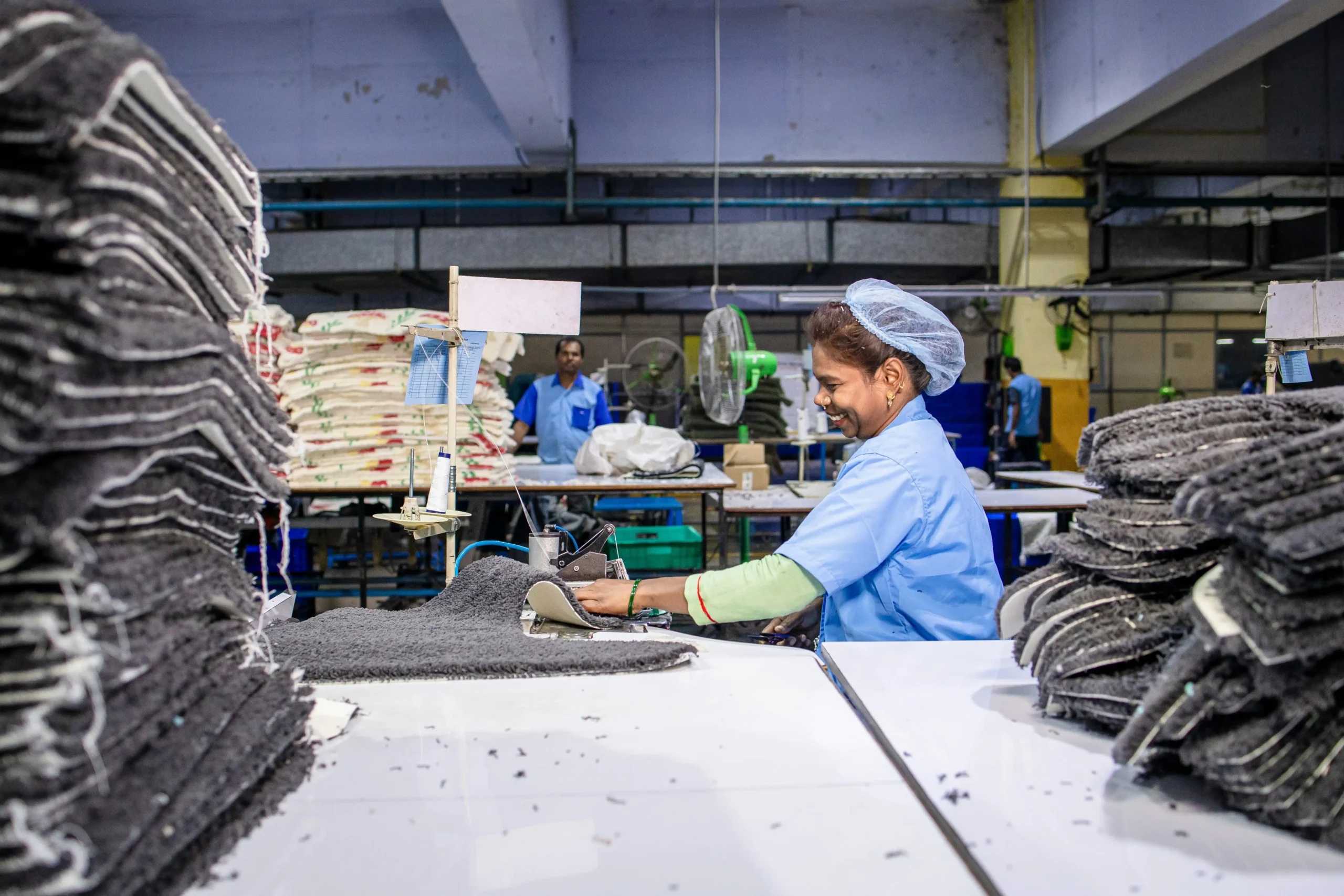
Marker loss. Pattern pieces cannot tile a roll with zero gaps. Curve-heavy garments in check or boucle fabrics, where pattern matching is part of the design, push marker loss upward; simple rectangles like scarves or cushion covers sit at the low end. Marker loss is a design-and-nesting property, not a mill property.
End-of-roll loss. Each roll ends with lengths that fall below the piece length a cutter can use, plus splice sections removed at inspection. Buying 12 short rolls instead of 4 long ones multiplies these end losses. Roll length strategy is a real lever: fewer, longer rolls cut less waste for the same total meters.
Defect loss. Flaws flagged during inspection remove usable meters. This is where the inspection system matters: buyers running the 4-point method (covered in our 4-point system explainer) know exactly how many meters each roll surrendered and why, instead of finding holes at the cutting table.
Compute Your Own Waste Number in One Formula
Waste percentage is not a mystery constant. For any program it is:
(meters purchased minus meters sewn into sellable garments) divided by meters purchased.
Track the three components separately and the reduction levers appear. If your marker loss is high, the fix is pattern engineering and nesting software, not a new supplier. If end-of-roll loss is high, the fix is fewer, longer rolls or a supplier who cuts rolls to your lay length. If defect loss is high, the fix is inspection discipline and a mill whose outgoing quality keeps flagged meters low. Sustainability research bodies such as WRAP, the resource efficiency organization, publish guidance on pre-consumer textile waste, and their core message matches the formula: measure before you optimize.
Ordering Overage: The Number Buyers Get Wrong
After marker and defect planning, buyers add safety overage. Our recommendation for most programs: hold overage near 3 percent for stock purchases where top-up shipments ship in days, and reserve a larger buffer only for custom runs where a shortage means a full reproduction cycle. That difference is structural, not managerial: Fursone’s ready stock program ships in 3 to 7 days with no minimum order, so the cost of a small shortage is a one-week top-up instead of a six-week resampling loop. The safety margin exists to protect the schedule, and a fast supply chain shrinks the margin the schedule needs.
For custom runs at our 300-meter minimum, the better lever is roll allocation at dispatch: tell the mill your lay length and single-marker plan, and request long rolls in returnable packaging. Specifying roll length in the purchase order is free; finding short rolls at cutting is not.

What Happens to the Leftovers: Closing the Loop
Cutting waste does not have to become disposal. Offcuts from tweed and boucle move into accessories, patchwork trims and stuffing applications, and roll remnants sell through stock channels to smaller brands whose minimums the remnants satisfy. Brands building a documented sustainability position can fold cutting-room recovery into the same verification discipline described in our guide to verifying sustainable fabric claims, and structure the program through the steps in building a sustainable fabric line. Dye-lot discipline matters here too: remnant reuse works best when repeat orders hold the same shade, which is the subject of our dye-lot consistency explainer.
Frequently Asked Questions
How do I calculate fabric waste percentage?
(Meters purchased minus meters sewn into sellable garments) divided by meters purchased. Track marker, end-of-roll and defect losses separately to find the lever.
How much overage should I order?
We recommend about 3 percent when buying from stock that tops up in days. Larger buffers make sense only for custom runs where a shortage triggers a reproduction cycle.
Does roll length really matter?
Yes. Fewer, longer rolls reduce end-of-roll loss for the same total meters, especially on single-marker lays. Spec roll length at purchase order stage.
What can cutting offcuts become?
Accessories, trims and stuffing inputs, plus remnant sales through stock channels to smaller brands.
Want a roll-allocation plan matched to your lay lengths? Send your marker plan and target meters to info@fursone.com, or message WhatsApp +86 134 5607 1339. The ready stock program page lists what ships in 3 to 7 days.

Related Insights

Fiber Content Labels for Tweed and Knit: Reading Composition Percentages Right
A composition label is a legal document, a marketing claim and a care instruction all...

Lyocell Knit Blends: Sourcing, Blend Ratios and Verification for Buyers
Lyocell has moved from a niche fiber to a standard line item on knit buyers’...
How to Verify a Sustainable Fabric Claim: Four Checks That Catch Greenwashing
A fabric supplier hands you a certificate PDF and a sustainability claim that sounds too...