
The most expensive defect in a garment factory’s cutting room is also the least dramatic: cloth that was cut too soon. Fabric comes off the loom or the roll under tension, and for the first day or two after it is unwound, it keeps moving, relaxing back toward its natural dimensions. Cut panels during that window and the finished garment grows, skews or distorts after its first press or wash. The prevention costs nothing but calendar time: a relaxation period before cutting, planned into production instead of squeezed out of it.
This guide explains what relaxation actually is, how long common constructions need, how factories verify it, and how buyers should write it into a program. It sits between two disciplines our production floor owns: inspection on arrival, covered in our 4-point system guide, and the stretch behavior of knits, covered in our stretch and recovery test.
What happens while cloth rests
Weaving and knitting stretch, bend and compress yarns. When tension releases, three things happen in sequence: elastic recovery in the first hours, as yarns snap back to their relaxed length; fabric relaxation over the first 24 to 48 hours, as the weave or knit structure settles and thickness equalizes where the cloth was rolled; and conditioning to the cutting room’s temperature and humidity, which matters most for wool, since fiber moisture content follows the room. Cutting before these settle produces panels whose dimensions are not stable, and the error surfaces downstream: seam puckering, uneven hems, garments that measure differently across a size run.
Knits make the issue visible fastest. A single jersey can lose one to three percent of its width in the first day off the roll, and its length can grow correspondingly; the extension and growth behavior of knits is measured in standardized tests such as ASTM D2594, which is why knit programs in our custom manufacturing flow carry a minimum 48-hour rest before spreading. Woven tweed moves less, typically under one percent, but its roll radius matters: tightly rolled cloth develops a curved memory along the roll edge, and panels cut from the outer layers can hang differently from inner layers.
| Construction | Minimum rest before cutting | What it stabilizes |
|---|---|---|
| Single jersey and fine knits | 48 hours | Width and length relaxation |
| Heavy knits, cable structures | 48-72 hours | Loop recovery, thickness |
| Woven tweed (wool blends) | 24-48 hours | Skew, roll-edge memory |
| Coated and bonded cloths | 72 hours | Adhesive settling, flatness |
How factories verify the rest is done
The standard method is marking and re-measuring. Unroll a section, mark a 100 cm length and width datum with fabric marker, and re-measure after the planned rest; dimensions stable across two readings 12 hours apart signal readiness. Some factories add a wash-and-dry pre-shrink step for programs that need it, but pre-shrinking does not replace resting: it addresses fiber shrinkage, while rest addresses structural relaxation. Both matter for a program’s dimensional spec, and buyers should ask which steps the factory ran, not just whether the cloth “passed inspection”.
Skew deserves its own check on tweed. Fold a panel on grain and see whether the pattern walks off the fold line; more than about one percent skew on a checked cloth will show at the side seams. The visible check on delivered rolls is part of the incoming routine described in our swatch and roll check, extended to full rolls at the cutting room gate.
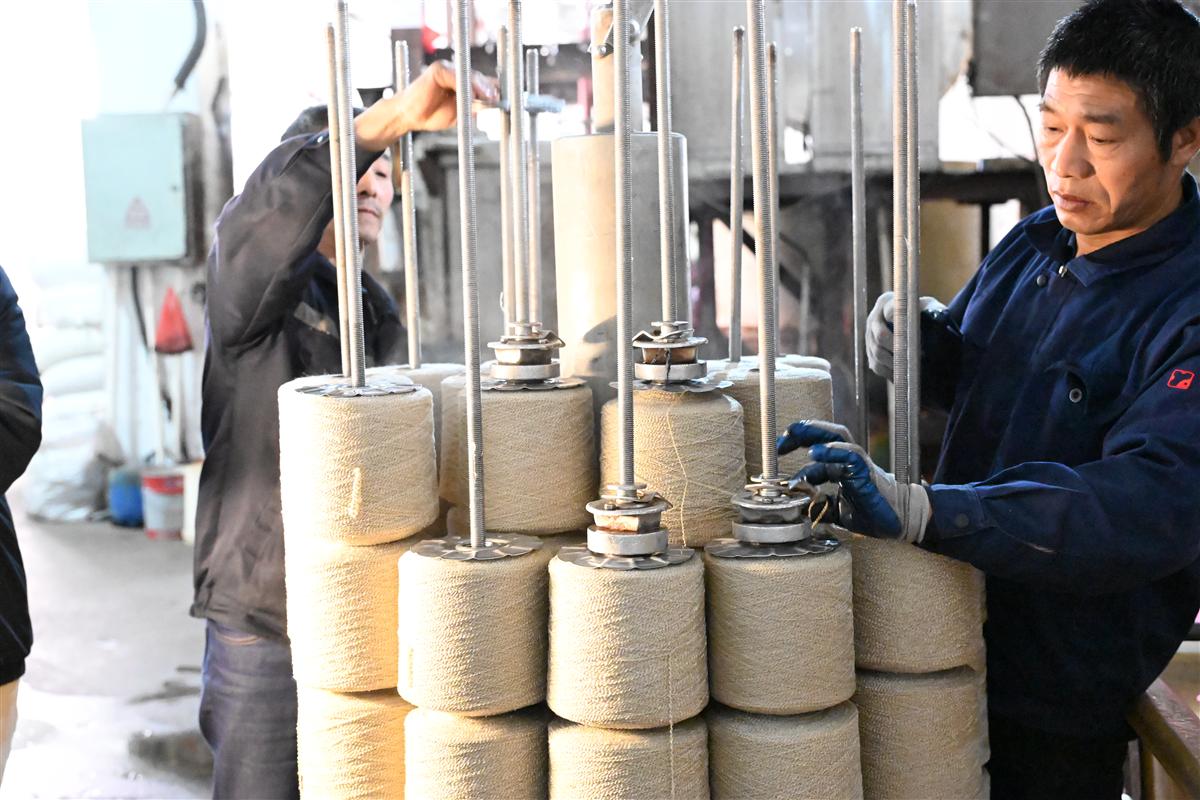
Writing relaxation into a program
Buyers control this variable through the schedule, not through heroics at the cutting table. Three lines in the program documents do the job. In the production calendar: “cloth arrives X days before first cut, per construction rest table”. In the spec sheet: “panels cut after verified relaxation; datum re-measure record kept per roll lot”. In the QC checkpoint: “first-piece approval includes panel dimensional check against relaxed dimensions, not roll dimensions”. A factory that quotes implausibly short lead times may be skipping the rest window, and the saving reappears later as size-run variance, the kind of hidden trade-off documented in our lead time stages guide.
On our floor the sequence is fixed: incoming inspection on arrival, rest per construction, datum re-measure, then spreading. The rest table hangs at the cutting room entrance because it changes with season: humid Wenzhou summers add conditioning time for wool cloths, which take longer to equalize with room moisture than the calendar suggests.
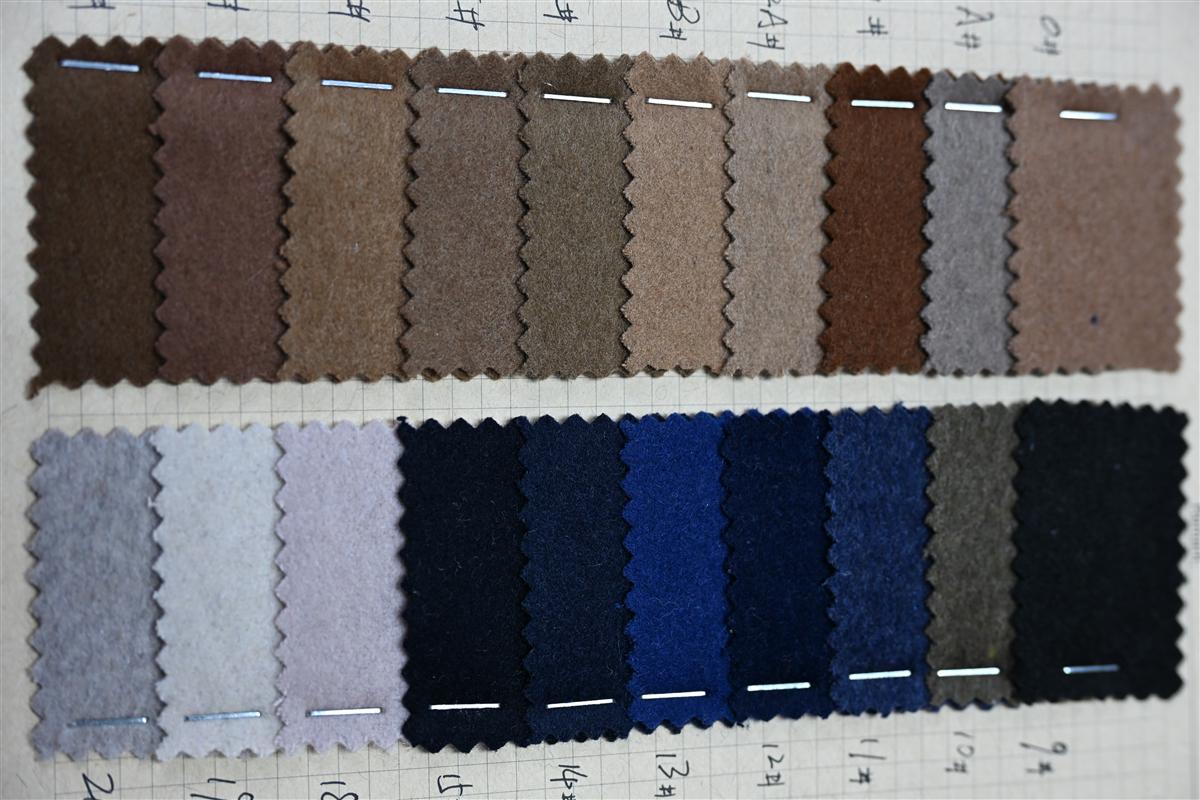
Sampling and bulk both run through this sequence, with stock-supported cloths shipped relaxed and re-checked on the buyer side with the same datum method. Questions about a specific construction’s rest requirement reach our production desk within one working day.
Video: from roll to garment panel
The clip shows cloth moving from roll into garment form. Every stable panel in that flow depends on the quiet relaxation step before cutting, which no camera captures because it is time, not motion.
Frequently asked questions
How long should tweed rest before cutting?
24 to 48 hours for most woven tweeds, verified by datum re-measure rather than the clock alone. Knits need at least 48 hours, and bonded constructions about 72.
Does pre-shrinking replace relaxation?
No. Pre-shrinking addresses fiber and finishing shrinkage under wash or steam; relaxation addresses structural recovery after winding tension. Programs that need dimensional certainty run both, in that order.
What happens if the factory cuts too early?
Panels keep moving after cutting: hems go uneven, seams pucker, and garments in one size run measure differently. The defects usually surface after first press or first wear, when correction is most expensive.
Who pays for the rest days in the schedule?
Nobody, if the calendar plans for them: rest runs in parallel with trim preparation and marker making. The cost only appears when a schedule is quoted without the window and the factory cuts early to catch up.

Related Insights

Heat-Set Pleats in Wool Tweed: What Must Be True?
Three conditions must hold before a pleater can set a pleat in wool tweed, and...

Sealed, Singed or Cracked: A Laser Edge on Wool Tweed
A laser edge on wool tweed is a burned edge, not a sheared one, and...

Garment-Washing Bouclé Coats: What to Test Before Bulk
A garment wash on finished bouclé coats is a wet process applied after the cloth...