
Key Takeaway
Both patterns look like zigzags from a distance. Up close, they share almost nothing. Herringbone is a broken twill — continuous V-shaped lines that reverse direction at regular intervals, creating a fishbone effect. Houndstooth is a check built from four dark and four light points in a 2×2 broken twill, producing an a
Both patterns look like zigzags from a distance. Up close, they share almost nothing. Herringbone is a broken twill — continuous V-shaped lines that reverse direction at regular intervals, creating a fishbone effect. Houndstooth is a check built from four dark and four light points in a 2×2 broken twill, producing an abstract four-pointed shape that repeats diagonally. If you source either pattern for tweed or knit fabric, mixing them up at the specification stage means wrong weave drafts, wrong warp coloring, and a bulk roll that doesn’t match what the buyer approved.

Weave Structure: What Makes Each Pattern Work
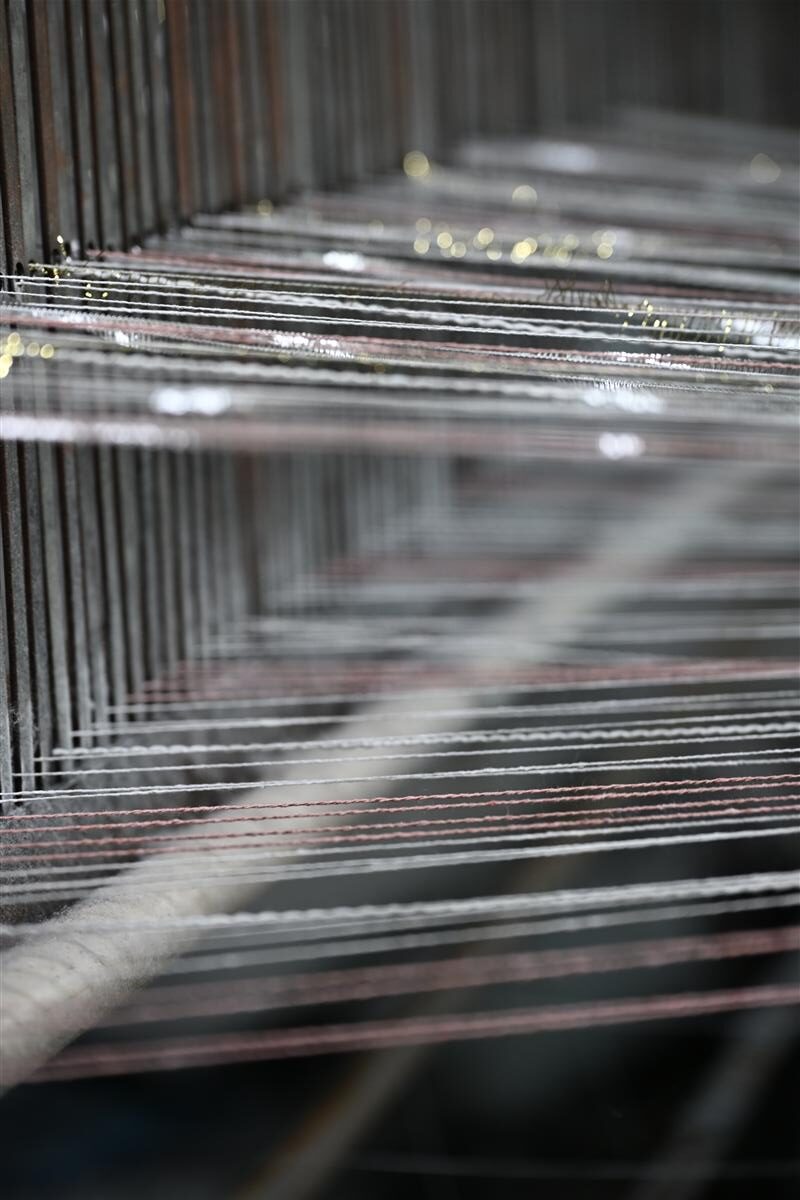
Herringbone starts as a standard twill — say, a 3/1 or 2/2 warp-faced twill — and then reverses the direction of the diagonal at a set interval, typically every 8 to 16 ends. The reversal point is where the twill line “breaks,” which is why the pattern is sometimes called a broken twill. The result is a series of V-shapes that nest together like the skeleton of a herring fish. On a tweed loom, a herringbone draft might use 16 to 32 ends per repeat, depending on how wide you want each V-leg.
Houndstooth uses a completely different construction. It’s a 4-and-4 pattern: four warp ends dark, four light, repeated across the reed; four picks dark, four light, repeated down the selvedge. The weave is a 2/2 broken twill where the break happens at a specific point that creates the characteristic jagged check. The repeat is small — just 4 ends by 4 picks — but the visual effect is much busier than herringbone because the eye reads the pointed shapes rather than the clean directional lines.
This structural difference has practical consequences. Herringbone is simpler to weave: the draft is a straight twill draft with a reversal, and most dobby looms handle it without any special equipment. Houndstooth requires a more complex draft — typically a straight draft on 4 shafts, but with the color-and-weave sequence carefully controlled. On a 300-loom mill, herringbone tweed runs at slightly higher loom speeds because the shedding sequence is more regular.
Visual and Physical Differences at a Glance
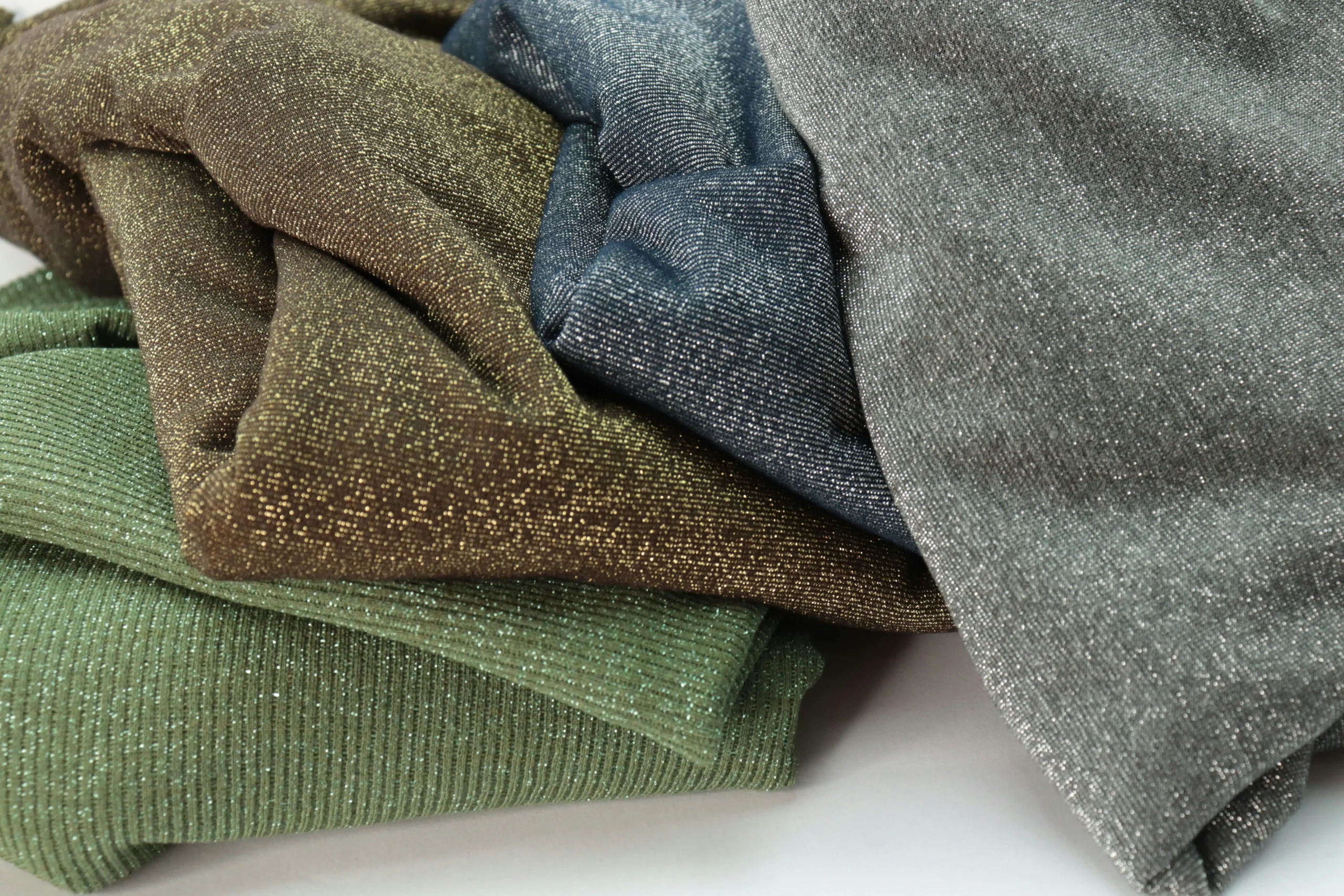
Weight tends to overlap, but typical ranges differ. Herringbone tweed for suiting usually sits in the 280–380 GSM range. The pattern is elongated and directional, which makes it flattering in tailored garments — the V-lines create a slimming visual effect. Houndstooth, because of its denser visual texture, often appears in slightly heavier constructions: 320–450 GSM for jacketing. The small-scale check gives it more visual bulk, which is why it reads as a heavier fabric even at the same actual weight.
Drape behavior differs too. Herringbone has a clear bias direction — the V-lines run diagonally, and the fabric behaves differently on the true bias versus the straight grain. Cut a herringbone jacket panel off-grain and the pattern will visibly shift. Houndstooth is more isotropic: the four-pointed shapes repeat in all directions, so minor grain deviations are less noticeable in the finished garment. This makes houndstooth slightly more forgiving in production, especially for brands that cut in large spreads.
Color options also diverge. Herringbone works well in tone-on-tone constructions — say, a dark navy warp with a light navy weft — because the V-pattern carries the color contrast clearly. Houndstooth needs stronger color separation to read properly. A black-and-white houndstooth is the classic for a reason: if the contrast drops below about 3 units on the AATCC gray scale, the four-pointed shapes start to blur and the pattern loses definition.
Sourcing Notes: What to Specify in Your RFQ
When you request a quote for either pattern, the mill needs more than just “herringbone” or “houndstooth.” Both patterns have variables that change the price and the lead time.
For herringbone, specify the repeat size (number of ends per V), the twill direction (Z or S twill base), and the reversal method. A sharp reversal — where the twill breaks cleanly — gives a crisper fishbone effect but is slightly harder to weave than a gradual reversal where the twill transitions over 2–3 ends. Most menswear buyers prefer the sharp version; womenswear and fashion fabrics sometimes use the gradual reversal for a softer look.
For houndstooth, specify the scale. The classic 4×4 houndstooth is about 6–8 mm per repeat, but oversized versions (12–16 mm per repeat) have been trending in womenswear since 2024. The scale is controlled by the warp and weft density: a larger repeat needs fewer ends per centimeter, which changes the fabric weight and hand. Also specify if you need a straight houndstooth (all four-pointed shapes identical) or a “windowpane houndstooth” where a contrasting overcheck is added — that’s a different construction entirely, requiring additional warp beams.
MOQ for herringbone tweed is typically 300 meters per color on a 300-loom mill like Fursone, because the draft is standard and changeover is quick. Houndstooth runs slightly higher — 1,500 to 2,000 meters per color — because the color-and-weave sequence requires more careful warp preparation. If you’re starting with a sampling order, expect 7 days for herringbone and 10 days for houndstooth, assuming the yarns are in stock.

End-Use Mapping: Which Pattern for Which Product
Herringbone dominates in menswear suiting and overcoating. The pattern reads as conservative and structured, which is why it appears in roughly 60% of men’s tweed suitings sold through European wholesalers. It also works well in scarves and ties, where the directional V-lines add visual interest without competing with the garment silhouette.
Houndstooth has a broader fashion profile. It appears in womenswear jacketing, coats, skirts, and accessories. The pattern has周期性 popularity spikes — every 8 to 10 years, a major fashion house revives houndstooth and drives a wave of new orders. The most recent cycle started in 2024 and is still running. If you’re planning a houndstooth fabric program, time your sampling 6–8 months ahead of the trend peak so you have bulk fabric ready when orders come in.
Both patterns are available in wool, wool-blend, and synthetic constructions. The choice of fiber affects the pattern definition: wool takes dye more deeply than polyester, so a wool houndstooth has richer contrast than a polyester version at the same yarn-dye percentage. For worsted yarn constructions, both patterns come out crisper because the smoother yarn surface holds the weave definition better. Woolen-spun versions — which have a fuzzier surface — soften the pattern edges, which works for a heritage or vintage aesthetic but loses sharpness.
Cost Comparison: What Buyers Actually Pay
At the same fiber content and weight, houndstooth costs about 8–12% more per meter than herringbone. The premium comes from three sources. First, the warp preparation takes longer because of the color sequence. Second, the weaving speed is slightly lower because the dobby shedding pattern is more complex. Third, the inspection is more time-consuming because pattern defects in houndstooth are harder to spot — a misplaced end in herringbone creates an obvious break in the V-line, while the same defect in houndstooth can hide within the repeating shapes until the fabric is viewed from a distance.
For a standard 350 GSM wool tweed, expect herringbone to price around USD 4.50–6.00 per meter (FOB Ningbo) in a 1,000-meter order, while the equivalent houndstooth would run USD 5.00–6.60. The gap narrows at higher volumes because the warp preparation cost amortizes over more meters. At 5,000 meters, the difference drops to about 5%.
According to the U.S. Department of Commerce International Trade Administration, woven wool fabric imports under HS 5112 (which covers both herringbone and houndstooth patterns) averaged USD 8.20 per kilogram in 2025, up from USD 7.10 in 2023. The price increase reflects higher raw wool costs and tighter environmental compliance costs at European mills — a gap that Chinese mills like those in Wenzhou have exploited by offering comparable quality at roughly one-third the price.
For more on how weaving parameters affect the final quality of patterned tweed, see our technical breakdown of tension, speed, and beat-up settings that separate first-grade fabric from seconds.

Related Insights
Blend Ratios and Batch Verification: Reading a Wool Blend Honestly
Two tweeds can share the same weave structure, the same weight and the same colour...

From GSM to Drape: How Fabric Weight Turns Into Silhouette
Weight is the first number buyers see on a fabric spec, and the last one...

Fabric Width and Selvedge Lines: Planning Cutting Efficiency Before You Order Tweed
Buyers compare tweed by weight, color and price, and then discover at the cutting table...