Walk into any tweed mill in Wenzhou and you will hear the same question from new buyers within the first five minutes: “What is the difference between woolen and worsted?” The answer is not a matter of fiber content. Both systems start with the same raw material—sheep’s wool. The split happens at the spinning frame. Woolen yarn keeps fibers short, random, and loosely twisted. Worsted yarn combs those fibers into alignment, trims out anything under 40 mm, and inserts a tighter twist. That single process decision changes the drape, hand, pilling behavior, and end-use of the finished tweed.
At Fursone, we run both woolen-spun and worsted-spun yarns across our 300-loom floor. This article breaks down what each spinning system actually does to the yarn, how that translates into fabric behavior on the cutting table, and which construction your next garment program should call for.
How Woolen Spinning Works
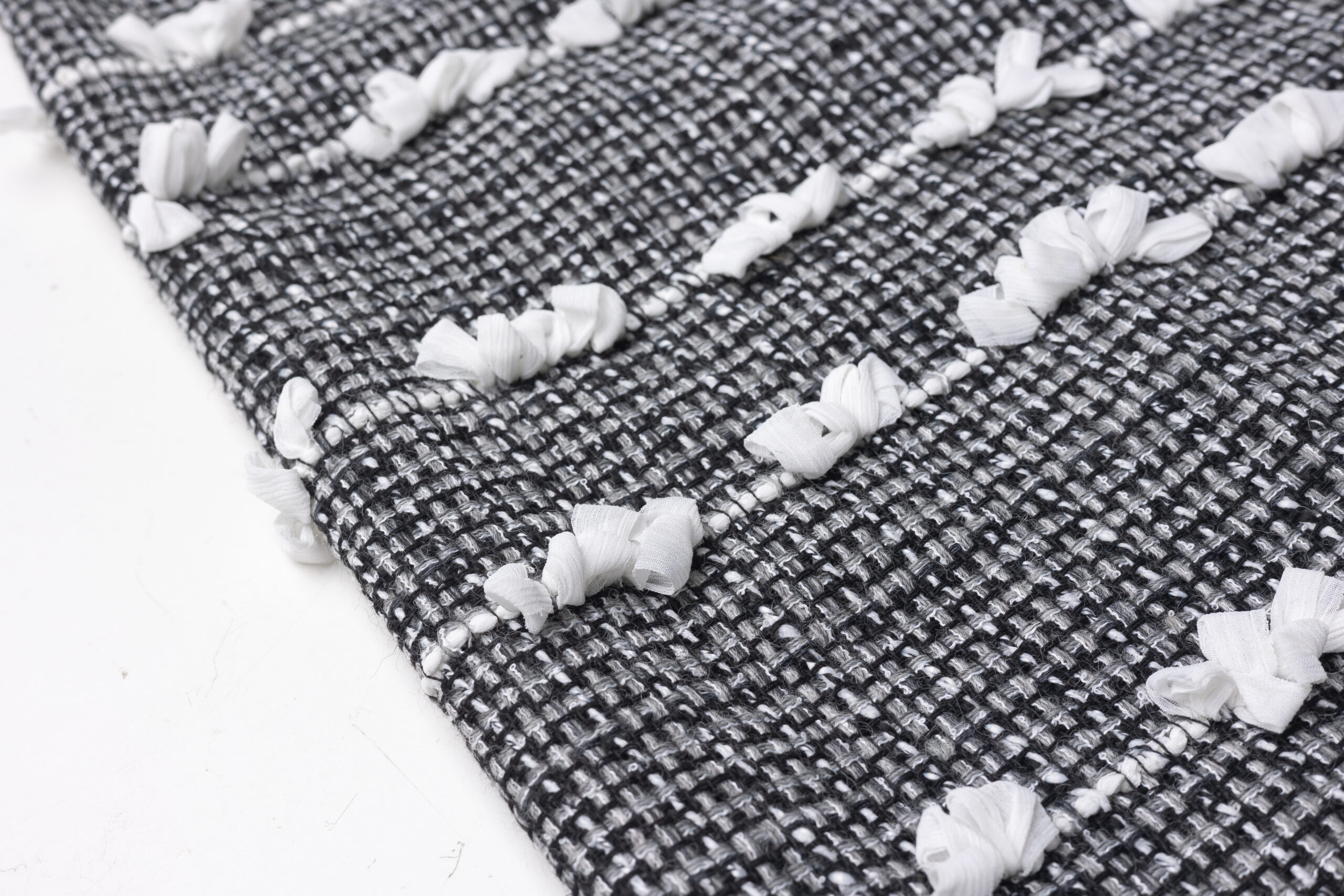
Woolen spinning follows the oldest path from fleece to yarn. After carding, the fiber goes directly to the spinning frame with no combing step. The result is a yarn where fibers sit in all directions—short staples (typically 30–70 mm), mixed lengths, and a lofty, uneven structure. Twist levels run between 180 and 350 turns per meter for a standard Nm 2/10 to Nm 2/16 tweed yarn.
Because the fibers are not aligned, woolen yarn traps more air. That loft gives the fabric insulation and a soft, fuzzy hand. The trade-off: woolen-spun yarns pill more readily and have lower tensile strength than worsted equivalents. A typical woolen-spun tweed yarn breaks at 12–18 cN/tex, compared to 20–30 cN/tex for a comparable worsted count.
The fabric that comes off the loom from woolen yarn has a characteristic matte surface with visible fiber ends. This is the classic Donegal and Harris tweed look—textured, rustic, and warm. If your brand positions around heritage craft or country-style outerwear, woolen-spun yarn is the default. For coat programs, our woolen overcoat fabric range is built on woolen and semi-worsted yarns woven at coating weights on the same Wenzhou floor.
How Worsted Spinning Works
Worsted spinning adds two steps before the spinning frame: gilling and combing. Gilling blends and parallelizes the fiber sliver. Combing then removes short fibers (anything under roughly 40 mm) and lays the remaining long staples in strict alignment. The output is a smooth, dense yarn with twist levels of 400–700 turns per meter for the same Nm 2/10 to Nm 2/16 range.
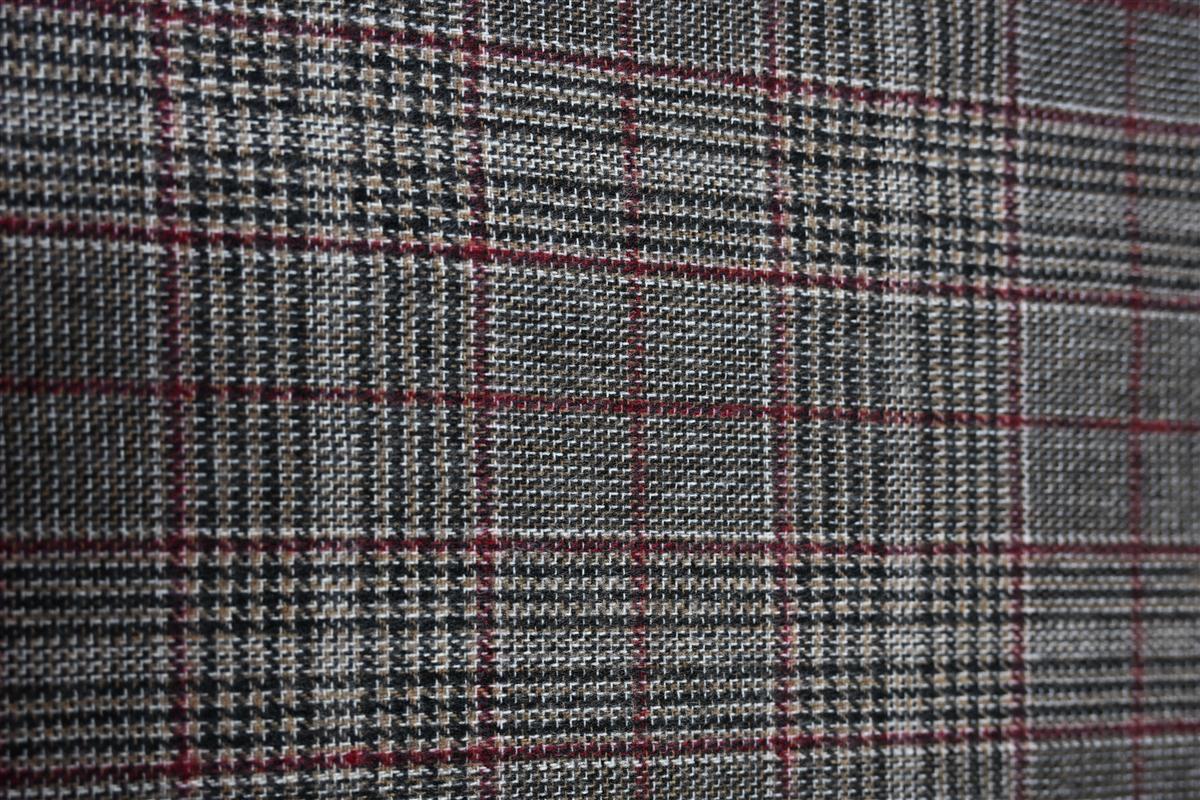
The structural consequence is significant. Worsted yarn has higher tensile strength (20–30 cN/tex), lower hairiness, and a smoother surface. Fabrics woven from worsted yarn drape with a cleaner line, show less pilling over the garment’s life, and accept finer weave structures such as 2/2 twill or herringbone at tighter sett densities (18–24 ends per cm).
Worsted-spun tweed is the choice for suiting, structured blazers, and any program where the fabric must hold a sharp crease or clean silhouette. Most Savile Row and Milanese tailoring houses specify worsted or semi-worsted yarns for their suitings.
Drape and Hand: The Practical Difference
Drape is how fabric falls under its own weight. Hand is how it feels between your fingers. Both are direct outputs of yarn structure.
| Property | Woolen-Spun Tweed | Worsted-Spun Tweed |
|---|---|---|
| Fiber alignment | Random, multi-directional | Parallel, combed |
| Typical staple length | 30–70 mm | 60–120 mm |
| Twist (Nm 2/12) | 180–350 T/m | 400–700 T/m |
| Yarn hairiness | High | Low |
| Fabric weight (260 gsm) | Softer, bulkier hand | Firmer, smoother hand |
| Drape coefficient | Higher (more flexible) | Lower (more structured) |
| Pilling resistance (ISO 12945-2) | Grade 2–3 | Grade 3–4 |
| Typical end use | Country tweed, coats, jackets | Suiting, blazers, structured garments |
A woolen-spun tweed at 260 gsm will feel softer and more yielding when you scrunch it in your hand. It drapes with gentle curves and absorbs movement—ideal for unstructured jackets and overshirts. A worsted-spun tweed at the same weight feels firmer, falls in straighter lines, and holds shape better at seam lines.
Semi-Worsted: The Middle Ground
Not every yarn falls cleanly into one camp. Semi-worsted yarns go through a carding step but skip full combing, or use a lighter comb that retains more short fibers. The result sits between woolen and worsted: more aligned than woolen, but with enough loft to keep the fabric soft. Many of the tweeds we produce at Fursone for mid-market fashion brands use semi-worsted yarns in the Nm 2/10 to Nm 2/14 range, balancing drape with durability at a lower cost than full worsted.
For brands that want the visual texture of traditional tweed but need better pilling performance for retail, semi-worsted is often the sweet spot.
Which Spinning System Should You Specify?
The decision comes down to three factors:
- Garment type. Structured suiting calls for worsted. Unstructured outerwear and country jackets call for woolen. Mid-range blazers and coats work with semi-worsted.
- Price point. Worsted spinning costs 15–25% more per kilogram of yarn because of the combing step and fiber waste (noil). If your wholesale price cannot absorb that, woolen or semi-worsted is the practical call.
- Performance requirements. If your buyer specifies pilling Grade 3 or above (per AATCC test methods), you need worsted or a high-twist semi-worsted. Woolen yarn rarely clears Grade 3 without chemical anti-pilling treatment.
When you send an RFQ to a tweed mill, specify the spinning system alongside yarn count, fiber content, and fabric weight. It eliminates the most common source of sampling revisions.
Yarn Count and the Spinning System Interaction
The spinning system you choose constrains which yarn counts are achievable. Woolen spinning excels at coarser counts (Nm 2/6 to Nm 2/14) because the short, random fibers cannot be drafted to fine widths without breaking. Worsted spinning handles the full range from Nm 2/8 to Nm 2/32, but its economic advantage appears above Nm 2/16 where the combing step pays for itself in reduced breakage during weaving.
At intermediate counts (Nm 2/10 to Nm 2/16), both systems can produce acceptable yarn. The choice then becomes a function of the fabric character you want. A Nm 2/12 woolen-spun yarn will give a bulkier, more textured fabric at the same sett density. A Nm 2/12 worsted-spun yarn will produce a flatter, more uniform surface. Most tweed mills in Wenzhou stock both options in this range because buyer demand splits roughly 60/40 between woolen-character and worsted-character constructions.
Impact on Garment Manufacturing
The spinning system does not just affect the fabric. It changes how the fabric behaves during cutting and sewing. Woolen-spun tweed, with its higher loft and lower cohesion, tends to shift slightly under the cutting knife. Operators need to use sharper blades and lighter table pressure to avoid distorting the fabric ply. Worsted-spun tweed cuts cleanly with minimal shift, which is why it is preferred for precision-cut garments like tailored blazers where pattern pieces must align at seam lines.
Sewing thread tension also interacts with yarn structure. Woolen-spun fabric tolerates higher thread tension because the loft absorbs some of the pull. Worsted-spun fabric, being smoother and firmer, shows puckering more readily if thread tension is too high. Garment factories working with worsted-spun tweed typically reduce presser foot pressure and use finer needles (size 70/10 or 80/12) compared to woolen-spun constructions.
Understanding these downstream effects helps you specify the right spinning system not just for fabric performance, but for manufacturing efficiency. When you send an RFQ to a mill, include your garment construction method so the mill can recommend the optimal yarn system. Use our RFQ template to ensure all critical specifications are captured.
FAQ
Can woolen and worsted yarns be blended in the same fabric?
Yes. Some tweed constructions use a woolen-spun weft for loft and a worsted-spun warp for strength. This is common in heavier coating fabrics above 350 gsm where you want body without sacrificing tensile strength in the warp direction.
Does worsted yarn always mean 100% wool?
No. Worsted is a spinning method, not a fiber. You can spin worsted yarns from merino, cashmere blends, or even cotton-wool mixes. The key is that the fiber is combed and aligned before spinning.
Why does my woolen-spun tweed pill after a few wears?
Short, unaligned fibers work loose from the yarn structure with abrasion. This is inherent to woolen spinning. Specify a tighter twist (above 300 T/m for Nm 2/12) or move to semi-worsted to reduce pilling without losing the woolen character.
How do I tell woolen from worsted by looking at the fabric?
Woolen-spun fabric has a fuzzier surface with visible fiber ends and a matte finish. Worsted-spun fabric looks smoother, has a slight luster, and the weave structure (twill, herringbone) is sharper and more defined.
Maintaining Fabric Performance Through Garment Care
The spinning system also influences how the finished garment should be cared for. Woolen-spun tweed, with its loftier structure and more exposed fiber ends, is more susceptible to felting during machine washing. The random fiber arrangement means that agitation causes fibers to interlock and shrink the fabric. For this reason, woolen-spun tweed garments should be dry cleaned or hand washed in cool water with minimal agitation.
Worsted-spun tweed, with its aligned fibers and tighter twist, resists felting more effectively. Many worsted-spun suitings can tolerate gentle machine washing at 30 degrees C without significant shrinkage. This care advantage is one reason worsted-spun fabrics dominate the suiting market, where consumers expect easy maintenance alongside sharp appearance.
For brands developing care labels, the spinning system should inform your care instructions. A woolen-spun tweed jacket and a worsted-spun tweed jacket of the same fiber content will have different care requirements. Specifying the spinning system in your product documentation helps the garment factory set appropriate care labels and reduces consumer complaints.
Whether your program calls for woolen, worsted, or semi-worsted yarn, the team at Fursone can spin to your specification across our 300-loom production floor. Send your tech pack and we will return lab-dip samples within 7 days. Read our sourcing guide to prepare your first order, or compare tweed and wool fabrics for more context on fiber selection.
Related Insights
Boucle Knit vs Woven Boucle: Which Construction for Which Garment
Walk into any fabric sourcing meeting about boucle and one question comes up before all...
What Is Metallic Tweed? Yarn Types, Weave Structure, and Care
metallic-tweed-bridal-fabric-case-study/” rel=”noopener”>Metallic tweed fabric merges traditional wool weaving with reflective metal-thread yarns, producing a textile...
Boucle vs Chenille: Texture, Weight, and Cost Differences
The boucle vs chenille fabric question usually surfaces when a designer holds both swatches and...