
Tweed and flannel both say “wool, autumn, tailoring” — and both are routinely misused as interchangeable terms in sourcing conversations. They are not the same fabric, and the difference is not cosmetic: tweed is a coarse, open, textured wool weave built for structure and durability, while flannel is a soft, brushed, balanced wool weave built for warmth and comfort against skin. Choosing the wrong one means a jacket that feels like sandpaper or an overcoat that cannot hold its shape. This guide compares them on the specifications buyers actually spec: weave structure, weight range, hand feel, warmth, and what each means for your order.
Weave Structure: The Fundamental Difference
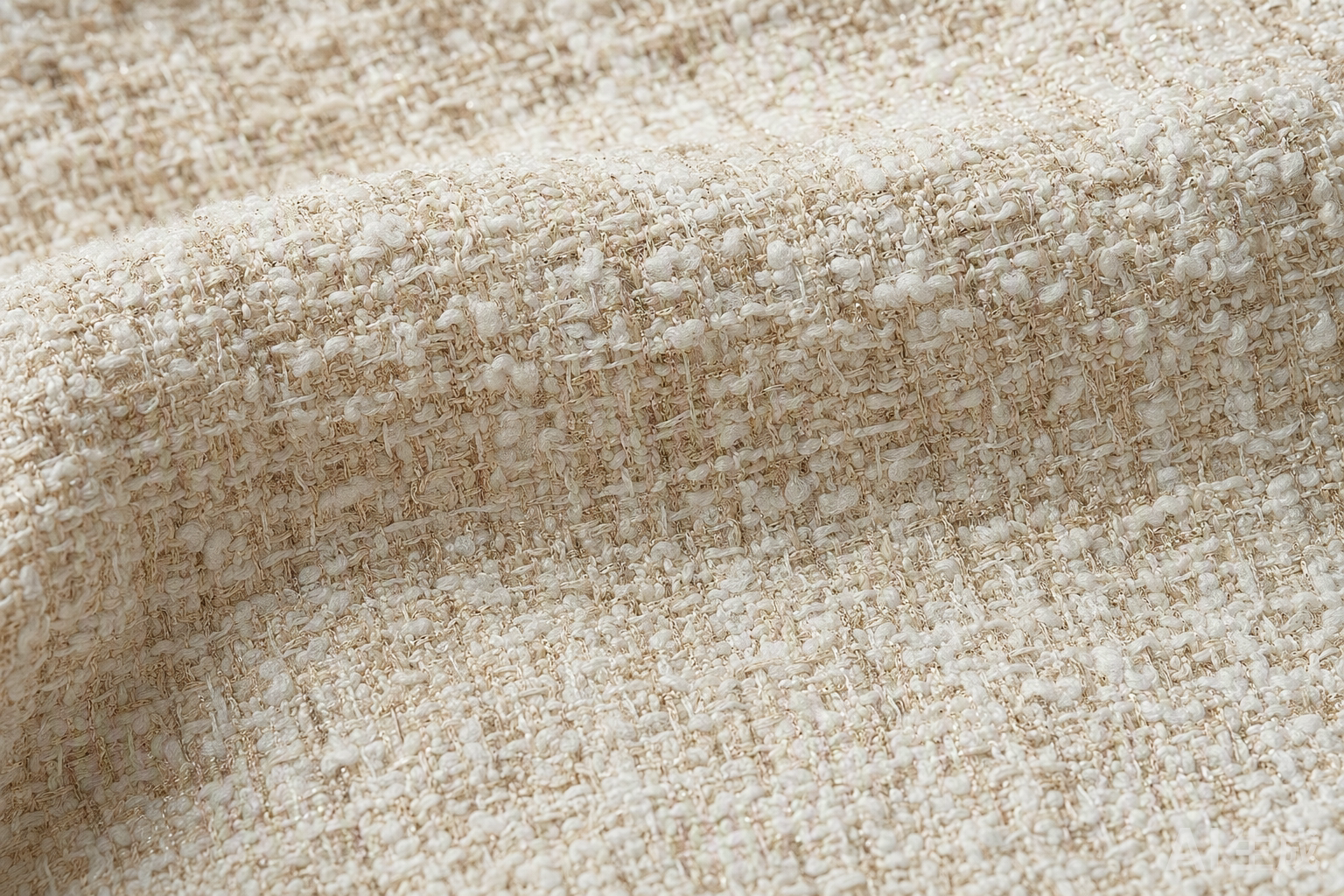
Tweed is woven from coarse, tightly twisted yarns in plain or twill weaves, often with slubs, nubs and color variation built into the yarn itself. The result is an open, textured surface with visible structure — that is why tweed photographs well, tailors crisply, and shrugs off abrasion. Flannel is woven from softer, finer yarns and then brushed or napped on both sides, which raises a soft fiber pile that blurs the weave structure entirely. Hold the two side by side and the difference is obvious: tweed shows you the weave, flannel hides it. This structural difference drives everything downstream — drape, tailoring behavior, care, and price. For a comparison of how yarn construction changes drape and hand, see our guide to woolen vs worsted yarns in tweed.
Weight Ranges and Warmth
Both fabrics are winter-weight, but their warmth mechanisms differ. Tweed’s warmth comes from its open, three-dimensional structure trapping air between the yarns — a 450 GSM tweed feels warmer than its fiber content alone suggests. Flannel’s warmth comes from the brushed pile creating a still-air layer directly against the skin, which is why flannel shirts work at much lower weights (200–280 GSM). In practice: a tweed overcoat in the 380–500 GSM range handles cold, windy outdoor wear; a flannel blazer at 280–350 GSM is an indoor-tailoring fabric. If you are specifying for an outerwear program, tweed’s structure wins; for a garment worn against the body — shirts, loungewear, lightweight suiting — flannel is the honest choice.
Hand Feel and Wear Comfort
Tweed is honest about being a garment you wear over something: the coarse surface can irritate skin, and unlined tweed against a bare neck is a common first-wear mistake. Flannel is the opposite — the brushed nap is the entire point, and the fabric’s comfort is the reason heritage menswear brands use it for shirts that touch skin all day. For outerwear and structured jackets, the tweed hand is a feature (crisp, tailored, durable); for anything worn against the body, it is a defect. The practical sourcing rule: ask where the garment touches skin, then choose. Brands building a jacket collection with a lining or interlining can comfortably use tweed; programs that skip linings should not.
Durability and Care
Tweed’s tightly twisted yarns and open structure make it exceptionally abrasion-resistant — elbows, cuffs and bag straps wear slowly, which is why tweed jackets survive decades of use. The trade-off is care: tweed picks up lint and debris in its texture, should be dry-cleaned or carefully spot-cleaned, and can snag on jewelry. Flannel is softer but wears faster: the brushed pile flattens and pills with friction, and the fabric’s relaxed structure means seams and edges show wear sooner. If your program is high-turnover fast fashion, neither is a problem; if the garment is a hero product meant to last seasons, tweed’s longevity justifies a higher meter price.

Cost and Sourcing Notes
Wool fiber quality itself is graded and certified through programs like The Woolmark Company, which is worth checking when your spec calls for premium wool content. At equivalent fiber content and weight, tweed typically prices 10–30% higher per meter than flannel because the fancy yarns (slub, nub, metallic, boucle-effect) are more expensive to spin and the loom throughput is lower. Flannel’s brushed finish adds a process step but uses plainer yarns, so landed cost tends to be lower at scale. Both are available as stock or custom: Fursone keeps 100-meter ready-stock rolls of premium tweeds with same-week dispatch, and custom programs start at 300 meters per colour with a 7-day sample cycle — versus the 6-week sampling norm in the industry. If you are still deciding between fabrics on hand feel alone, order swatches of both before the sample round; the swatch comparison method explains how to evaluate them side by side. And if your buyers ask how to tell wool from polyester tweed in the samples, the burn-test identification guide is the standard answer.
Which One for Your Collection?
Decision rule: outerwear, structured jackets, coats and heritage-inspired pieces — tweed. Next-to-skin garments, casual suiting, shirts, loungewear — flannel. Mixed programs can carry both, but they should be specified as separate SKUs with separate care labels, because the care instructions genuinely differ. For brands building a fall/winter program from a single factory, our tweed fabric range shows the structure and texture options available; the wool fabric manufacturer page covers custom weight, color and composition programs from 300 meters per colour.
FAQ
Is flannel a type of tweed?
No. Both are wool-family fabrics, but tweed is a coarse textured weave with visible structure, while flannel is a soft brushed weave with a napped surface; the drape, warmth mechanism and care differ.
Which is warmer: tweed or flannel?
Tweed traps air in its open structure (380-500 GSM outerwear weight), while flannel traps air in its brushed pile (200-350 GSM); tweed wins for windy outdoor wear, flannel for next-to-skin warmth.
Can tweed be used for shirts?
Not comfortably — the coarse surface irritates skin; flannel is the brushed, skin-friendly choice for garments worn against the body.
Is tweed more expensive than flannel?
Typically 10-30% higher per meter at equivalent fiber and weight, driven by fancy yarn spinning costs and lower loom throughput.
(function(){ var facades=document.querySelectorAll(‘.yt-facade’); for(var i=0;i<facades.length;i++){ (function(f){ f.addEventListener('click',function() var id=f.getAttribute('data-yt-id'); if(!id||!/^[w-]{6,20}$/.test(id)){return; f.innerHTML='’; }); })(facades[i]); } })();Specify by structure, not by reputation: tweed carries the structure and durability for outerwear; flannel carries the comfort for next-to-skin garments. Confirm your weight band, hand-feel requirement and care label before the sample round, and use our 7-day sampling cycle to test both on your actual pattern. Related reading: boucle fabric care guide and the yarn count guide (Ne/Nm/tex).
On blend composition specifically, see what wool, polyamide, and acrylic each add to tweed.
For the loop-yarn structure behind ratiné and other textured tweeds, see what ratiné fabric is and how loop yarns are structured.
Learn more: Tweed Fabric Guide · Explore Chanel-Style Tweed. Need samples? Request free swatches.
Related Insights

Fabric Width and Selvedge Lines: Planning Cutting Efficiency Before You Order Tweed
Buyers compare tweed by weight, color and price, and then discover at the cutting table...
Reading Fabric Selvedge: Markings, Width and Quality Signals
The selvedge, the finished edge running along both sides of a fabric roll, is the...

Yarn Counts in Tweed: What 2/8 NM Means for Hand, Weight and Cost
Ask three suppliers to quote “a 400 gsm tweed for overcoats” and you will often...