

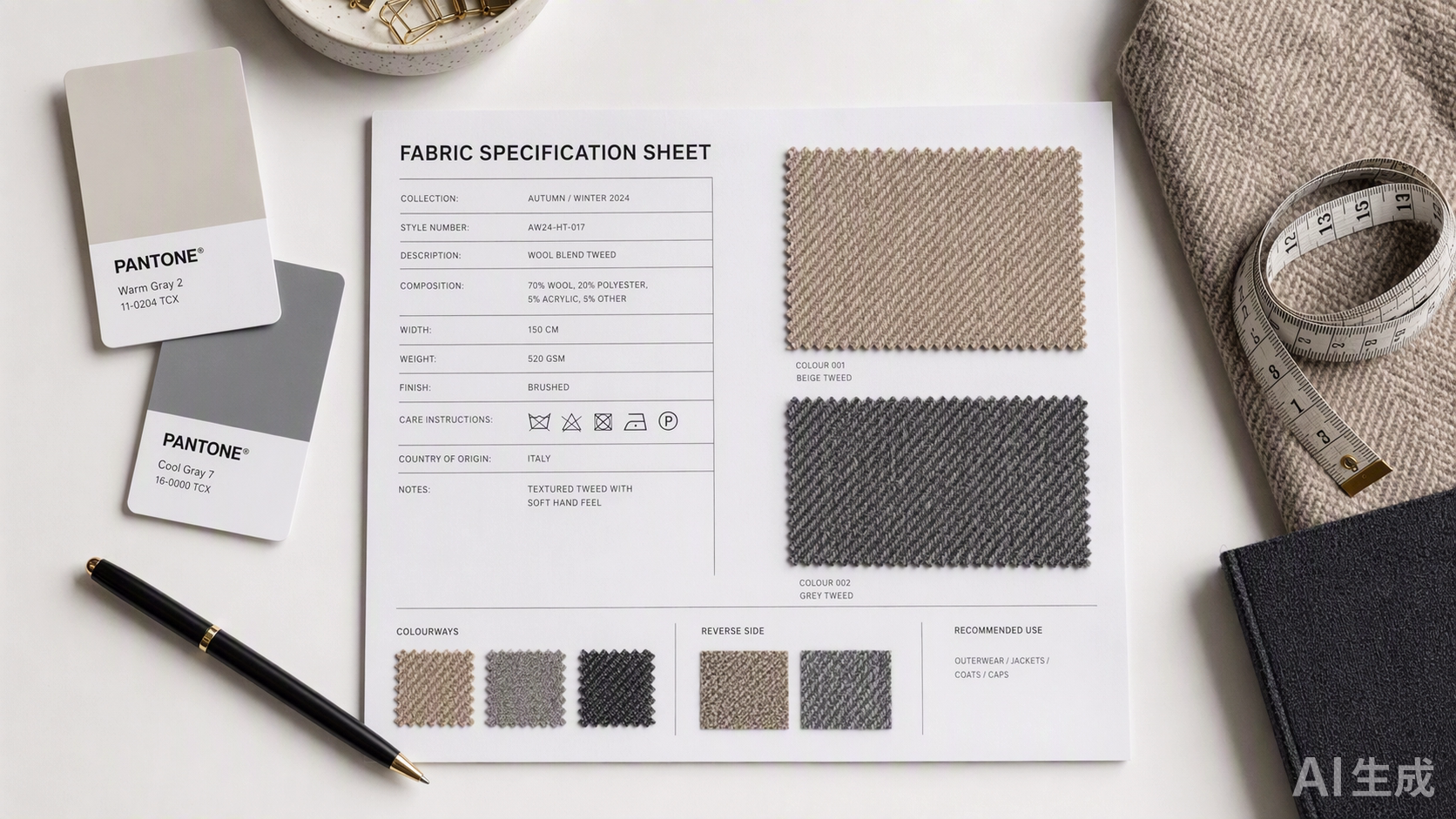
Compare fabric supplier quotes is where a sourcing decision is made or lost, and not the price per meter that decides it. Two quotes at the same number can be a world apart once the spec, the grade, the width, the MOQ and the incoterm are laid side by side. This guide shows what to line up, how to read a total landed cost, and the fine print that makes a cheap quote expensive.
Why a low price per meter is the wrong number
Fabric price to a buyer is a per-meter figure, but the number only means something if the width and the weight match. A quote at 8 yuan a meter on a 130 cm fabric is not the same as a quote at 9 yuan on a 150 cm fabric, because the wider cloth gives more usable area per meter. A garment that needs 1.4 meters of a 150 cm fabric may need 1.8 meters of a 130 cm one, so the cheaper number can be the dearer fabric once yield is factored in. Always compare cost per usable square meter, not cost per meter.
Five things to line up before you compare
Before a single number is read, five fields have to match, or the quotes are not comparable at all.
| Field | Why it matters |
|---|---|
| Specification | Same composition, weight, and weave |
| Width and yield | Cost per usable square meter |
| Grade standard | Pilling and defect points agreed |
| MOQ and lead time | Custom vs ready stock |
| Incoterm | Who pays freight, duty, and risk |
Rarely do two suppliers quote the same five fields, which is exactly why a comparison is a correction exercise, not a scanning one. Related reading: the structure of a request is covered in the fabric RFQ template.
Total landed cost is the real comparison
The honest number is the total landed cost, which adds the fabric, the freight, the duty, the finishing, and the rejects onto one line. A mill that prices roughly a third below a European supplier can still lose its edge if a buyer adds a forwarder and a duty on top, so the landed figure, not the factory price, is what a brand plans against.
Three costs sit hidden unless you ask for them. One, a smaller width or a heavier weight that shifts the yield. Two, a sampling or a set-up fee that a quote folds into the first roll. Three, a MOQ that forces a dead stock or a reorder. On a 300-meter order these can move the end price by more than the factory difference.
A useful comparison is the gap between the quoted price and the true cost, and it shows up in a few red flags. Ask each supplier for both a per-linear-meter and a per-square-meter price, because a supplier that will not give both is hiding the width. Ask for the grade and the defect allowance in writing, and treat a quote that omits the MOQ or the sample lead as incomplete rather than low. Finally, ask what happens to a rejected roll: whether it is credited, cut back, or simply relabelled. A supplier that answers those three without hedging is one you can price against, and a mill that sets a seven-day sample and writes the grade keeps the comparison honest, because the number then carries a schedule and a standard instead of a promise.
How to ask for a quote that is actually comparable
The trick is to send the same RFQ to every supplier with the spec fixed and the incoterm stated, then ask each to quote against that one line, not against their own sheet. Ask for the selling width, the grade, the MOQ, and the sample lead in the same five rows, and refuse a quote that does not give them. Fursone, a 300-loom Wenzhou mill since 2020, quotes on this basis through a custom manufacturing path at a 100-meter ready-stock or a 300-metre custom MOQ, with a fashion sweater knit and a performance knit and a 7-day sampling cycle, so a buyer compares like for like. The buying route matters as much as the price, which is why direct mill vs buying agent earns its own section.
What to watch for in the fine print
Two clauses routinely flip a comparison. First, a grade tolerance that says an accepted roll can fall to a lower pilling or a higher defect count than you assumed. Second, a dye-lot clause that lets each reorder shift colour. Neither appears in the headline price, and both are worth more than a 2 percent discount. A supplier who will write the grade and the dye-lot tolerance into the quote is a supplier who expects the comparison to hold. External standard: the practice of reading a purchase as a total cost, not a unit price, is set out under total cost of ownership.
Frequently asked questions
How do I compare fabric quotes fairly?
Fix the spec, width, grade, MOQ and incoterm in the same five rows, then compare a total landed cost per usable square meter, not a per-meter price.
Why is one fabric quote more expensive per meter?
A higher price can bring a wider width, a better grade, a lower MOQ, or a shorter lead, so compare yield and landed cost before you judge the number.
What is total landed cost for fabric?
The sum of the fabric, freight, duty, finishing and rejects, which is the figure a brand should plan against rather than the factory price.
What goes in an RFQ for fabric?
Composition, weight, selling width, grade, colour, MOQ, incoterm and sample lead, so every supplier quotes against the same line.
Are cheaper Chinese fabric quotes always worth it?
Usually, but only once you have read the width, the grade and the incoterm, because a tighter specification can close most of the gap.
For a step-by-step guide: How to Source Fabric from China for Small Brands. Need samples first? Request free fabric swatches.

Related Insights

How to Compare Fabric Quotes from Three Mills: A Side-by-Side Method
Three mills return three quotes for the same fabric brief, and the spread between them...

CNY Capacity Planning: Booking a Fabric Mill Around Chinese New Year
Every year, fabric buyers lose the same three weeks to the same event: Chinese New...

Second-Source Strategy: How Brands Qualify a Second Tweed Mill
Single-sourcing a signature fabric feels efficient right up to the season it fails: the mill’s...