

Sourcing custom knit fabrics is different from buying stock fabric. A fabric you help design needs a mill that can develop a yarn, run a small trial, and repeat the result at scale. The buyer who treats a custom knit like a stock order usually ends up with an unusable sample and a lost season.
What makes a knit fabric “custom”
Custom knit means the construction is built to your spec rather than pulled off a shelf. That can be a yarn choice (a specific blend), a gauge, a stitch, a weight (GSM), a finishing treatment, or a combination. Each of these is a variable the mill has to control, so the mill needs a development capability, not just a production line.
The first question is not price, it is capability. Can the mill develop a yarn to your spec? Can it run a small sample lot? Can it hold a clear standard across repeat orders? A mill that answers no to any of these is a stock supplier, whatever it calls itself.

The custom knit sourcing steps
| Step | What happens | What you deliver |
|---|---|---|
| Yarn spec | Fibre blend and count set | Blend % and yarn count |
| GSM and gauge | Weight and stitch density set | Target GSM and machine gauge |
| Development sample | Trial run on a small lot | Approved swatch |
| Colour | Dye to a standard | Pantone or lab dip |
| Pre-production | Confirm quality before bulk | Approved pre-production sample |
Set the blend percent, the yarn count, the GSM and the gauge at the start, because these drive the hand-feel, the drape and the cost. A small change in the blend shifts the whole fabric, so lock the spec on the development sample and keep it frozen through production.
How to vet a custom knit mill
Ask four questions: what is the minimum development quantity, what is the shortest development time, how many sample rounds are included, and what quality checks run before bulk. A mill that charges extra per sample round or quotes a very short development time may be cutting corners on consistency.
Confirm the mill runs a lab dip for colour and a pre-production sample. These two steps are where most custom-knit quality issues surface. If the mill skips them to save time, you inherit the risk at bulk.
Sample before you commit
Always order a development sample, and test it for hand-feel, weight, shrinkage and colourfastness. A knit fabric can look right on the roll and shrink or distort after a wash. Confirm the finishing (and whether it is pre-shrunk) on the actual swatch.
For a custom knit that will be labelled in the United States, the fibre content has to be disclosed, and the same fibre-labelling rules apply.
Review the US fibre-content labelling rule (16 CFR 303) before you finalise a knit that carries a content label.
How custom knit affects cost and MOQ
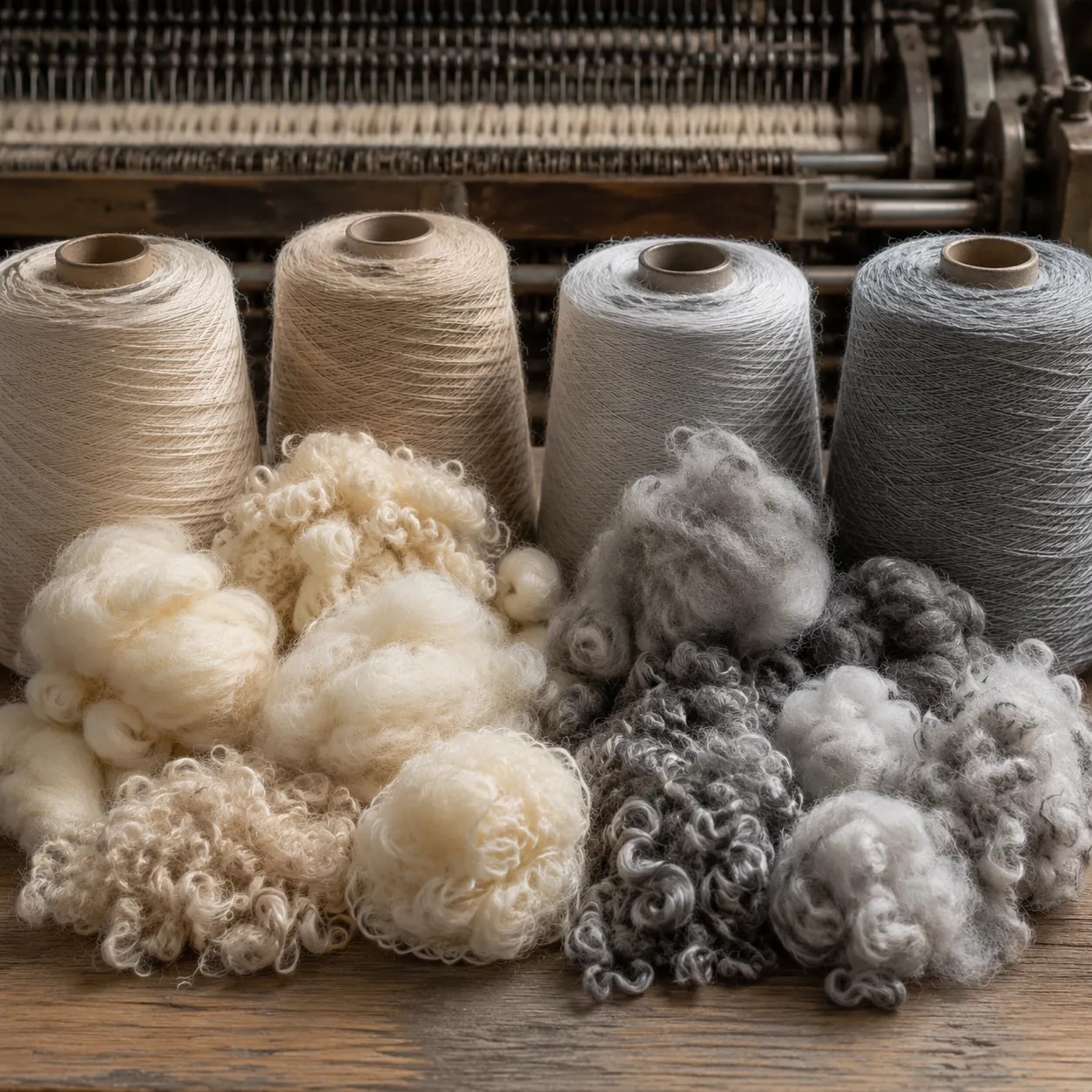
Custom development costs more than buying stock because you pay for a yarn and a trial. The development fee, the sample quantity and the MOQ all rise with the level of customisation. A mill that develops a bespoke yarn will usually set a higher MOQ than one that knits a standard yarn.
Budget the development cost against your target retail price. For a small brand, a custom knit may only make sense if the fabric is the core of the product; for a line where the fabric is secondary, a semi-standard knit with a custom colour is the cheaper route.
If you want to source a custom knit fabric, talk through your fibre, weight and development requirement with our custom knit fabric team so the spec and the MOQ match your plan.
Related reading: Knit Fabric Wholesale: Buying Direct From the Mill
Related Insights

Reading Knit Gauge: What 7gg, 12gg and 14gg Mean for Sweater Programs
Gauge numbers appear on every sweater knit quotation, 7gg, 12gg, 14gg, and too many buyers...

Moisture-Wicking Knits: Sources, Test Methods and Durability
Moisture-wicking is one of the most quoted claims in knitwear and activewear sourcing, and one...

Does Knit Fabric Shrink After Washing? Relaxation, Felting and What to Specify
Yes, knit fabric shrinks after washing, and the question is never whether but how much...