

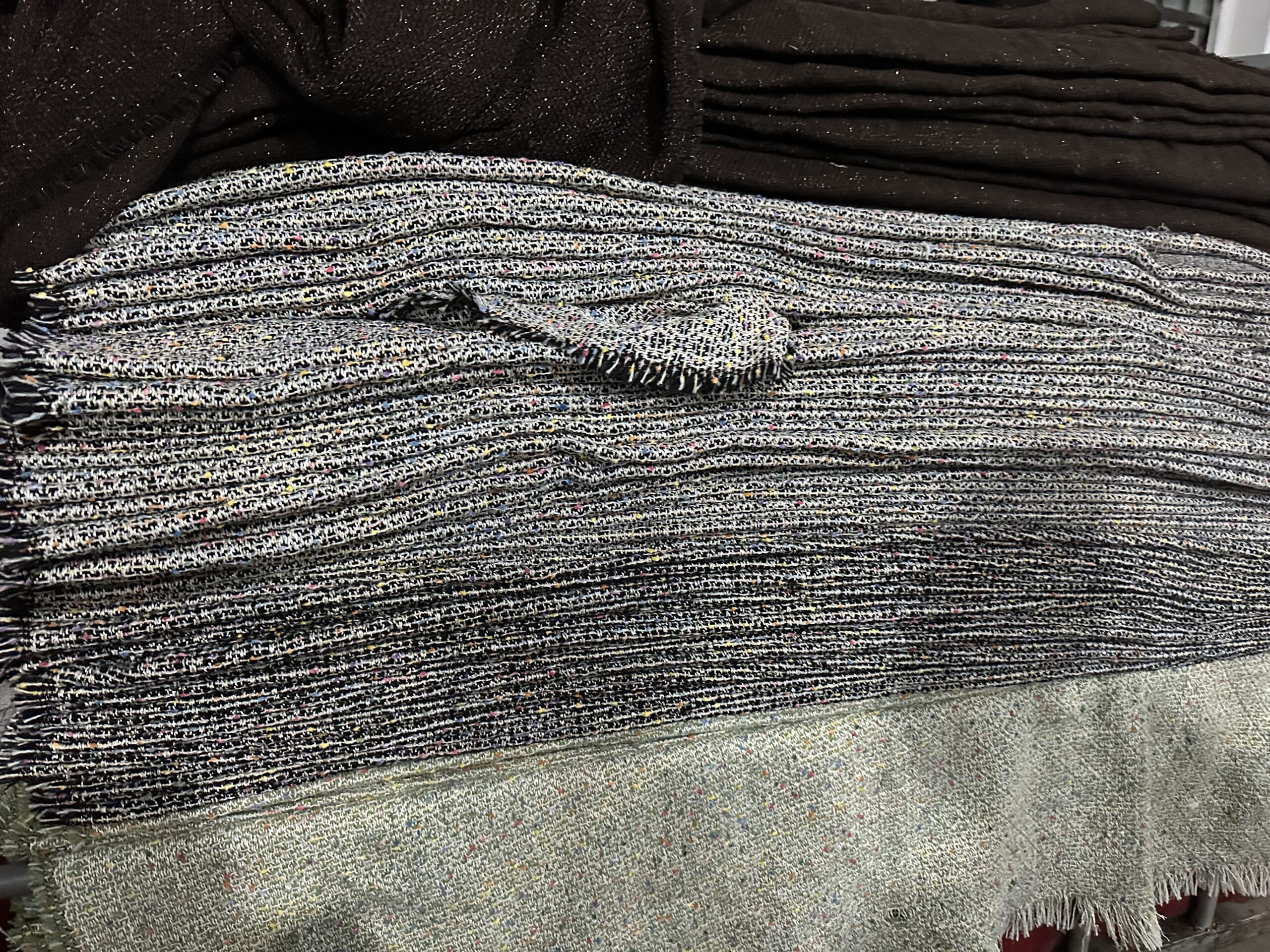
Between the loom and the bale there is a department most buyers never see. In it, the roll is inspected against a light, marked for mending, repaired where the menders can repair, and steamed to relax the cloth before it is measured, folded and packed. Skip this pass and the same cloth arrives with needle lines nobody agreed to accept, creases set in by folding, and a measured length that shifts after the first press.
This guide walks through what happens in the final pass, what each step can and cannot fix, and which records a buyer should ask for at the point the roll leaves the mill.
Inspection Against the Light
The roll is run over a backlit table at a defined speed while an inspector marks defects. The scoring method most mills use converts each defect into points by size, then normalises them to a hundred square yards, with twenty points as the common first-quality threshold. What matters for a buyer is not the scale itself but that the score is recorded roll by roll and that the fabric is identified, so a defect map can be matched to the fabric when it reaches cutting.
Inspection also catches the faults that have nothing to do with the weave: needle lines, tension marks, oil spots from the loom, and warp streaks caused by a bad end. These are the defects that menders can sometimes remove and that a buyer cannot accept if they run the full length of a roll.
The report that leaves this station should carry roll numbers, metres inspected, points assigned, and the defect positions. Anything less turns a quality conversation into an argument about memory.
Mending: What Can Be Fixed and What Cannot
Mending is skilled handwork. A mender pulls a broken end, darns a small hole, or picks out a foreign fibre with a hooked needle, working from the back of the cloth so the repair reads as texture rather than as a patch. Done well, a mend in a wool tweed is invisible from a metre away and stable through finishing.
What mending cannot fix is structural: a warp streak running the full length, a repeated pattern fault, or a shade band that crosses the width. Those are either accepted with an allowance or the roll is cut out and the affected length replaced. The decision has a commercial consequence, which is why good mills record the repair and any resulting shortfall on the roll ticket rather than quietly trimming it.
Buyers should ask two questions of the mending record: how many repairs per roll, and what the largest repaired area was. A roll with a handful of small mends is normal for a wool cloth. A roll with a large repaired area near the selvedge is a conversation about whether that section should be cut out before shipment.

Steaming and Relaxation
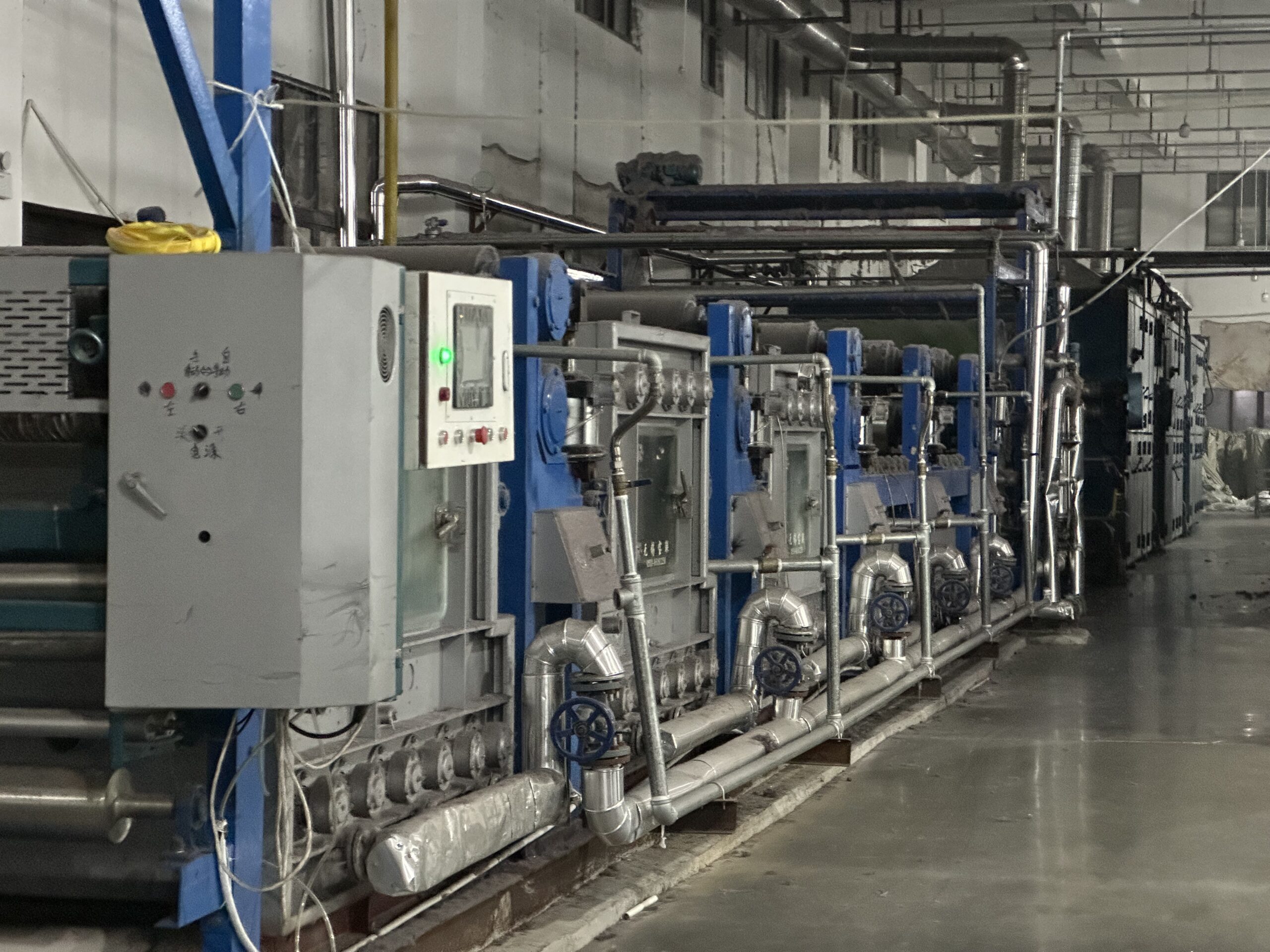
Steaming relaxes the cloth after the tension of weaving. Wool in particular holds the memory of the loom, and a steamed roll is calmer, flatter and closer to its final dimensions than one measured straight off the beam. This is the step that decides whether the length written on the ticket will still be the length in the cutting room.
The important consequence for buyers is that measurement should follow relaxation, not precede it. A mill that measures before steaming will report a length that shrinks on arrival, and a buyer who measures immediately after opening the bale can see a discrepancy in the other direction, because the cloth has relaxed further in transit.
Steaming is also where creases are either prevented or set. Rolls folded while hot and damp pick up fold marks that later show as lines in a garment. The discipline is to steam, rest, and only then fold, which is why a rushed order sometimes arrives with crease complaints that have nothing to do with the fabric construction.
Safety and Housekeeping Behind the Output
The finishing department runs on heat, steam and moving machinery, and the standards behind it are ordinary workplace ones: guarded machines, adequate ventilation, safe handling of hot surfaces and a clear floor. A buyer auditing a mill rarely walks this section carefully, and it is precisely where a serious factory shows its discipline, because the risks are higher than in the weaving hall.
The practical audit questions are simple. Are machines guarded and interlocks working? Is there visible steam extraction? Are rolls moved with equipment rather than carried? Are staff wearing the protection the process requires? General workplace requirements in the OSHA regulations library give a reasonable checklist frame for what a well-run finishing line should already be doing.
Housekeeping also shows up in the cloth. A finishing area with lint build-up and oil on the floor produces spotted rolls, and spot defects are among the hardest to mend because the mark often reappears after washing.
What the Buyer Should Receive
At packing, a well-run mill assembles four documents: the per-roll inspection record with points and defect positions, the mending note with counts and sizes, the measured length after relaxation, and the packing record showing fold method, wrapping and bale identification. Together they answer every question a cutting room will ask, and they cost the mill nothing beyond discipline.
Buyers who receive these records stop arguing about impressions and start comparing numbers. A program that tracks points per roll across three shipments can tell whether a mill is improving or drifting, which is exactly the kind of evidence that makes a supply conversation productive rather than personal.
The same records feed the packing decisions covered in hard creases in the bale, and they are the natural companion to the fabric length definition discussed in two rolls that came up short. Ask for them as a standard part of the order, not as a special request.
FAQ
What is the final pass in a mill?
The sequence after weaving: inspection against a light, mending, steaming and relaxation, then measurement, folding and packing.
Can mending hide a serious defect?
It can mask a small one. Ask for the repair count per roll and the largest repaired area, and cut around anything structural.
Why does my fabric measure shorter than the ticket?
Usually because it was measured before steaming and relaxation completed, or because it relaxed further in transit.
Should I inspect on arrival?
Yes. Re-measure after the cloth rests in your conditions, and compare against the mill record rather than against expectation.
Is steaming the same as pressing?
No. Steaming relaxes the cloth with moisture and heat; pressing flattens it. Tweed programs normally need relaxation, not a hard press.
Video: Fabric-to-garment effect display for two cost-effectiveness
If you want the final pass documented for your program, our custom manufacturing team can include the per-roll inspection record, mending note and post-relaxation measurement as standard documents with every shipment.

Related Insights
Shrinkage Control in Knit Manufacturing: Pre-Shrinking and Relaxation
Shrinkage complaints on knitwear rarely come from bad fiber; they come from unrelaxed fabric cut...

Raising and Brushing: How Nap Is Built in Wool Finishing
Two wool fabrics can leave the loom identical and arrive as different products. One is...

Garment Filler and Stiffening: How Weight Changes a Tweed’s Hand
Two cloths can share a blend, a weight and a colour reference and still feel...