
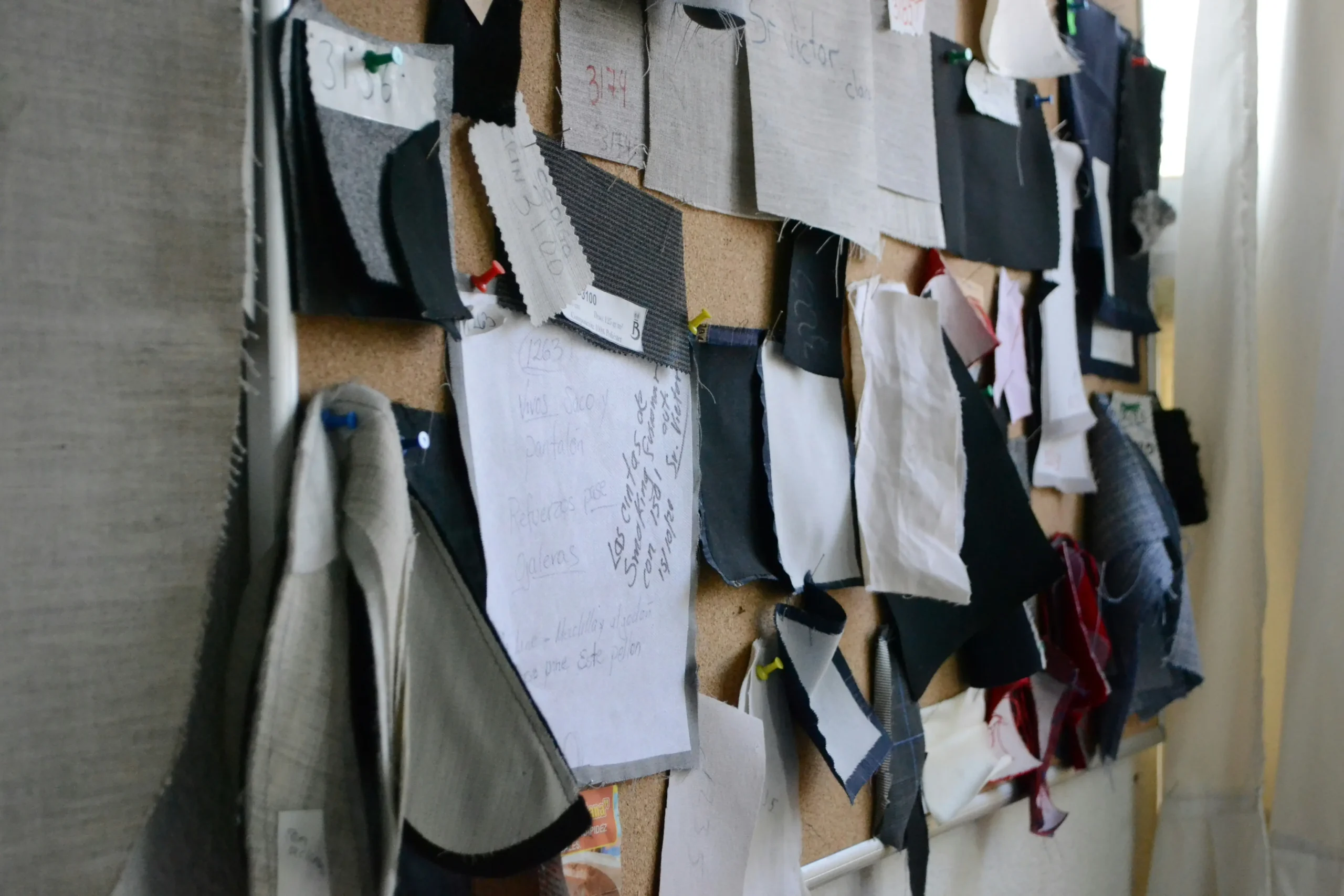
A tweed sample evaluation that looks perfect on the spec sheet can still unravel the moment the container doors open. I have seen a substantial order go sideways because the pre-production sample passed every visual check, but the mass production run arrived with a different yarn twist and a 4% width variance. The insiders know the gap: sample approval in a showroom feels nothing like unrolling 1,000 meters on a cutting table. That is where FOB pricing clauses and quality tolerance thresholds stop being theoretical and start hitting your landed cost per yard.
A repeatable 7-day protocol changes the math. Run your own shrinkage, colorfastness, and weave density checks before you commit. The benchmark that keeps most sourcing managers safe is a <2% shrinkage after first wash — write that down. When a supplier tells you their mill standard is 3–5%, you now have a number to push back with. The steps that follow give you the exact sequence I use across multiple countries to make sure the sample in your hand matches the fabric on the water.
Why 7 Days? Sample Speed vs. Cost
Speed without verified quality just gets you to a bad bulk order faster.
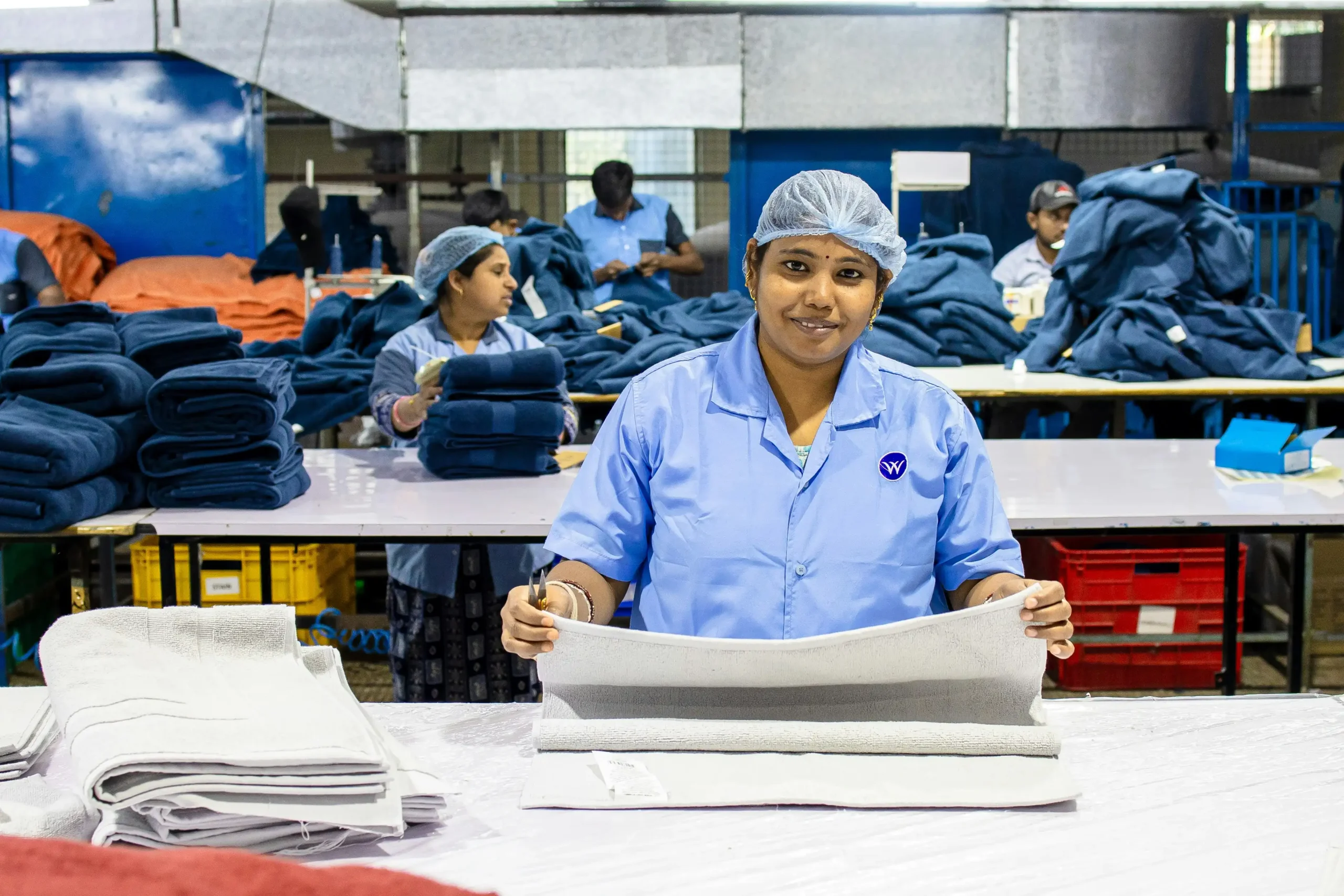
I still remember a brand manager who flew to Milan to pick up a pre-production tweed sample. The swatch was perfect. Rich hand, dead-on color, tight weave. He placed a substantial order. Six weeks later, the container arrived, and the fabric was thinner, the color flatter, and the scratchy finish nothing like the sample. The European mill shrugged: “There is always some variation in mass production.” That gap between the spec sheet and the shipment is what kills fashion launch timelines. And it’s why I stopped accepting 4-6 week sampling cycles as the cost of doing business.
A 4-6 week sampling window doesn’t just delay one order; it cascades. You can’t test multiple variants because the feedback loop is too slow. You settle for the first acceptable option rather than the best option. With factory-direct sampling in 7 days, you can pull 3-5 colorway or weight variants simultaneously, run your in-house tests, and lock down a final decision inside 30 days. That speed translates directly to faster time-to-collection and lower risk of getting stuck with a second-choice fabric.
- European mill sample cost: €50-80 per running yard, plus air freight. Standard lead time 4-6 weeks from swatch request to physical sample at your door. Often requires 50-100 yard MOQ for custom colors.
- Factory-direct sample cost: $12-25 per yard (FOB Wenzhou), delivered via courier. Routine 7-day turnaround because the mill spins custom yarns in-house and runs dedicated small-batch sampling lines.
The concern I hear most: does 7-day speed mean cutting corners? Not if the supplier has pre-certified yarns and rapid color matching under one roof. Our partner mills in Wenzhou pre-shrinks bouclé and tweed yarns at the spinning stage, which locks in dimensional stability before weaving. That’s a step many European mills skip—or tack on as a surcharge. We also keep a library of 2,000+ dyed yarn references, so color matching for a new tweed sample is a same-day formulation rather than a back-and-forth of lab dips over two weeks.
So when you compare landed cost, not just per-yard price, the math gets clear. A European mill sample at €65/yard, plus €12/yard shipping, lands near $85.Factory-direct tweedat $20/yard with $5/yard courier comes in under $30. Test three variants: you’re out $90 instead of $255. More important, you’ve run your shrinkage, colorfastness, and drape tests—the exact protocol outlined in the following sections—and placed a bulk order you actually trust.
| Aspect | Fursone Factory-Direct | European Mills | Manager Benefit |
|---|---|---|---|
| Sampling Lead Time | 7 days | 4–6 weeks | Test 3–5 variants in one month, decide faster |
| Cost per Yard (Chanel-style Tweed) | $12–25 | €50–80 (30–50% higher) | Landed cost within budget, higher margin |
| Minimum Order Quantity for Samples | 100m (refundable sample fee) | Often 500m+ with non-refundable charges | Low-risk validation before bulk commitment |
| Shrinkage Performance (Wash Test) | <2% (yarn pre-shrunk at mill) | 3–5% typical (no pre-treatment included) | Fewer bulk defects, consistent garment sizing |

Step 1 – Unboxing & Visual Inspection
The first 3 minutes can save you significant cutting room waste.
I’ve seen sourcing managers unroll a sample, glance at the color, and immediately sign off. That’s a mistake. The spec sheet might promise 140cm width, but variations as small as 1.5cm across a 100m roll can destroy marker efficiency. When you’re paying for fabric by the linear meter, width shrinkage directly hikes your cost per garment.
Before cutting a single swatch for shrinkage or colorfastness, you need hard data on physical consistency. This step isn’t about subjective beauty—it’s about verifying that the roll you received matches the approved pre-production sample and can be cut without surprises.
- Roll condition: Unspool the first 3 meters. Look for center creasing, edge curl, or moisture damage. A deep crease from loose winding won’t press out of a heavyweight bouclé and leads to shading differences in the finished garment.
- Width tolerance: Measure at 3 points: head, middle, and tail of the roll. Our internal release standard is ±1 cm from the labeled 140cm. If you’re getting 137cm at the tail, you’re losing over 2% of useable fabric—unacceptable for any order above 500m.
- Color accuracy: Compare the sample against the signed-off lab dip or swatch kit under a D65 light booth. Rely on a certified reference, not your memory. Even a half-shade difference in the grey mélange base can make a jacket look mismatched under boutique lighting.
- Visual defects: Scan a 2-meter section for loose bouclé threads, broken slubs, or uneven napping. These point to tension issues at the loom. If you spot more than 1 major defect per meter, flag the roll immediately.
Every sample we ship from Wenzhou includes a sealed color card and a yarn composition certificate. The card shows the actual lot’s dye recipe, not a generic brochure photo. The certificate lists percentage blends—say 50% wool, 30% polyester, 20% nylon—so you know exactly what you’re testing instead of guessing fiber content later.
This document combo matters when your cutting room discovers a roll is 2cm narrow at the core. You need traceable lot data to decide whether it’s a one-off winding error or a systemic loom fault. Without it, you’re gambling on a large bulk order.
Step 2 – Shrinkage & Colorfastness Tests
Pre-shrinking at the yarn stage is what separates a $25/yard tweed from a liability.
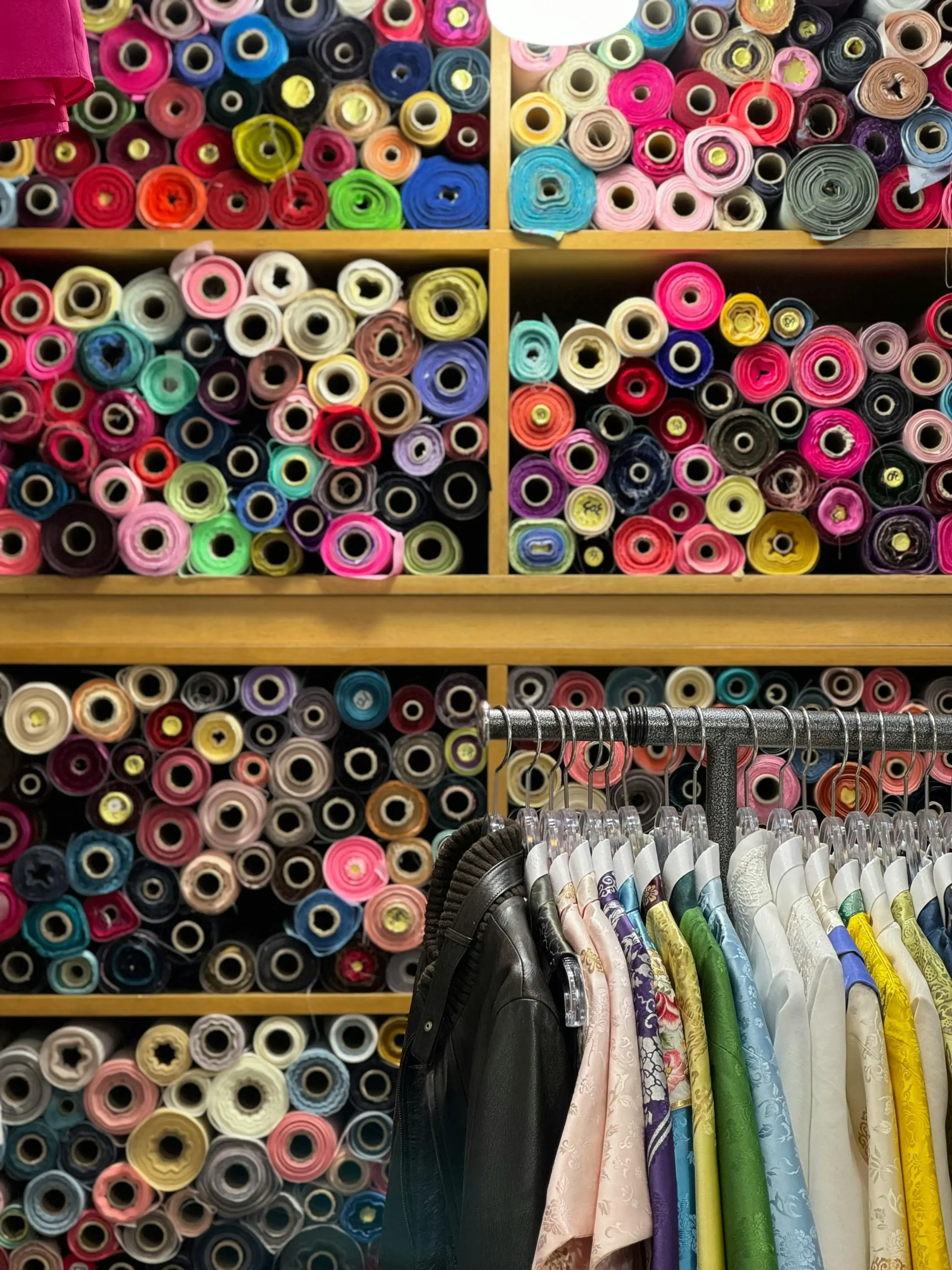
Shrinkage is the number-one reason a pre-production sample gets approved and the bulk shipment gets rejected. The garment looks perfect on the hanger. After one professional dry clean, the sleeves are 2 cm too short and the side seams torque. When I audit mills, I ask to see their shrinkage log before I look at anything else. If they don’t have one, I walk.
- Cut: Cut a 20 cm x 20 cm square from the center of the swatch. Mark warp and weft direction with a fabric pen. Do not use the selvedge edge.
- Wash: Immerse in a basin of 30°C water with a mild, neutral detergent. Agitate gently by hand for two minutes. Let it soak for 15 minutes, then rinse in cold water.
- Dry: Lay flat on a towel, away from direct heat or sunlight. Let it air dry completely. Do not wring or twist—bouclé yarns will distort and you’ll get a false reading.
- Measure: Re-measure both dimensions with a rigid ruler. Compare to original. Repeat the wash cycle three times and measure again. Progressive shrinkage after multiple washes tells you the yarn wasn’t stabilized.
- Dry Rub: Take a dry, white cotton cloth. Rub it firmly against the tweed surface for 10 strokes, back and forth, over a 5 cm area. Apply pressure equivalent to a firm handshake.
- Wet Rub: Dampen a fresh white cotton cloth with room-temperature water. Repeat the 10-stroke rub on an adjacent area. Let both test areas dry completely before evaluating.
- Evaluate: Check the white cloths for any color transfer under natural light. The target is Grade 4-5 on the gray scale—no visible transfer on dry rub, no more than a faint tint on wet rub. If you see a distinct stain, the dye bath was under-fixed.
For a luxury tweed destined for a structured jacket, anything over 2% dimensional change is a fail. Most commodity tweeds on the market settle around 3-5% after the first wash because the mill never stabilized the wool component. At our facility, we pre-shrink the yarn before weaving—specifically the Australian Merino wool core—so the finished fabric holds <1.5% shrinkage even after three wash cycles. European mills often skip this step unless you pay a surcharge for “London shrunk” finishing.
Colorfastness failures are non-negotiable for lined garments. A tweed that bleeds onto a silk charmeuse lining will generate chargebacks from retailers. I’ve seen brands lose entire department store accounts because the dry rub test was skipped. Our standard dyed yarn procedure includes a post-dye fixation step and a hot rinse that pulls out unfixed dye molecules before the yarn ever hits the loom. This is why we can consistently ship fabric that holds Grade 4-5 on both dry and wet rub, including deep jewel tones and metallic lurex blends that are notoriously prone to crocking.
Step 3 – Weave Density & Drape Assessment
Decoding drape and density separates tailoring-grade tweed from craft-store bulk.
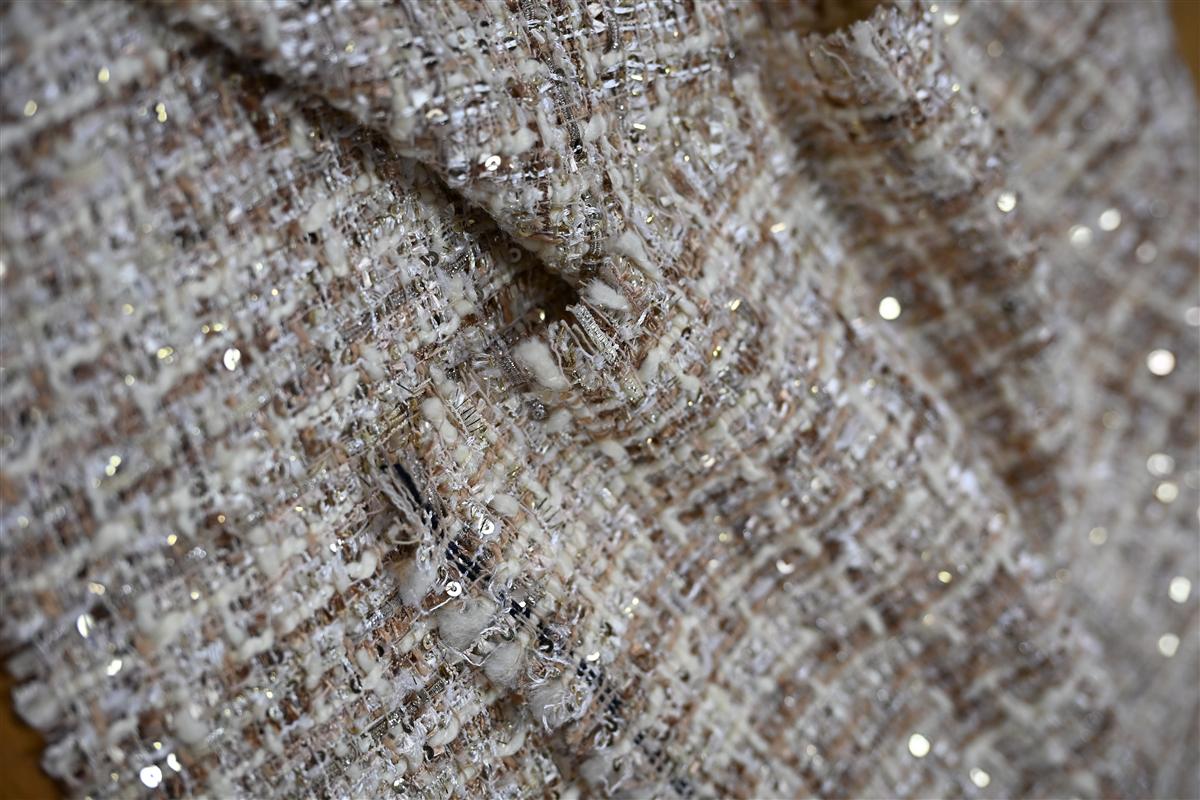
Weave density is the skeleton of Chanel-style tweed. Too loose, and the jacket loses structure after a season. Too tight, and the fabric turns stiff as cardboard. Grab a glass pick counter—never a phone magnification, which distorts yarn edges—and check three spots: near the selvedge, the center, and 10 cm from the cut end. Chanel-style tweed should deliver 30 to 40 picks per inch. If the sample drops below 25, walk away. That mill is saving yarn cost at your garment’s expense.
- Glass scale reads 30–40 picks/inch: Hold the counter perpendicular to the weft. Count across one full inch. Repeat three locations. Acceptable variance: ±2 picks. Greater spread signals unstable tension at the loom.
- Drape: 30 cm sample over a round form: Lay a 30 cm × 30 cm swatch over a dress form shoulder or a 20 cm diameter cylinder. Jacket-weight tweed (350–450 gsm) should fall with soft, even folds—not tent-like rigidity. Skirt-weight (280–350 gsm) must cascade without bunching.
- Bias stretch check: Pull the sample gently at a 45° angle. High-density tweed with balanced warp/weft will recover immediately. If the weave gaps open, the fabric will distort during wear and pressing.
Weight alone doesn’t guarantee drape. We’ve encountered 420 gsm tweed that drapes like cardboard because the mill over-compacted the finish. That’s why we combine pick count, weight, and the cylinder test. For Chanel-style jackets, aim for the 370–410 gsm sweet spot where bouclé texture and body coexist without heavy interfacing. If your sample hits 35 picks/inch and 400 gsm but still feels stiff, the yarn twist is likely too high—ask the mill for a lower TPM (twists per meter) in the next iteration. Pre-shrunk yarn, as used in our partner mills in Wenzhou, locks in the drape right from spinning, so the hand feel you test on the sample is what you’ll get in production. No surprises.
Step 4 – Touch & Hand Feel Evaluation
Fingers never lie — if the hand feel shifts between sample and bulk, your defect rate climbs.
Strip away the brand story and the price tag. The blindfold test — ranking three unlabeled swatches by softness, scratch, and drape — exposes how much of your landed cost actually goes into yarn quality. A $22/yard factory-direct twill can outscore a $60/yard European bouclé when the mill controls its own spinning. That’s not theory. We’ve watched sourcing managers wince as their “premium” sample fails against a Wenzhou lab dip after 30 seconds of bare-hand handling.
- Wool softness + bouclé bite: Premium tweed balances two contradictory sensations: the cushioned warmth of Australian Merino wool (50% minimum in our blends) and the granular, textural grip of bouclé loops. Run your palm flat, then rub with fingertips — if the fabric feels uniformly smooth, it’s probably a flat weave masquerading as tweed. A proper bouclé will drag slightly on the ridges of your fingerprints without scratching.
- Specialist spinning unlocks $35–40/yard hand feel: Most mills buy commodity yarn and hope the finishing process fixes the hand. We spin slub, bouclé, and chenille yarns in-house before weaving. This lets us tune the micron count, twist, and blend ratios (typically 50% wool, 30% polyester, 20% nylon) to hit a hand that mimics €55/yard European stock at significant savings. The difference shows up in the blindfold test: our swatches consistently land in the top-two preference slot when mixed with Italian and Scottish competitors.
- GRS-certified without the cardboard hand: Recycled polyester often feels stiff or waxy because post-consumer fiber lengths are uneven. We spin GRS-certified recycled polyester through the same compact spinning frames we use for virgin fiber, preserving a fluid drape. During the blindfold evaluation, our eco knits — which carry full GRS transaction certificates — score within 0.5 points on a 1–5 softness scale of their virgin equivalents. That’s not a marketing claim; we provide batch-level hand feel audit sheets with every sample submission.
One red flag that kills bulk orders: a sample passes the touch test, but the production run arrives with a stiffer, flatter hand. This happens when the mill switches yarn suppliers between sampling and mass production. Because we spin in-house and pre-shrink at the yarn stage, the hand you approve during the 7-day evaluation is the same hand you’ll feel on the cutting table. If you’re comparing samples from multiple factories, request a 100m Ready Stock roll alongside the swatch — that 100m gives you enough yardage for a one-garment production test without committing to a full MOQ.
Final Checklist & Bulk Order Decision
Pass 3 of 4 critical tests, then request a 500m production run to confirm consistency before bulk.
You’ve run the shrinkage, colorfastness, weight, and hand evaluations. Now make the call. A sample that looks perfect on a conference table means nothing if the next 5,000 meters arrive different. Here’s the go/no-go matrix we use with every mill, including our own Wenzhou facility.
- Shrinkage: Less than 2% after wash at 30°C. Industry average runs 3-5%; our yarn-stage pre-shrinking keeps bulk consistently under this threshold.
- Colorfastness: Grade 4-5 on dry and wet rub. No visible transfer after 10 strokes. If the sample bleeds, reject immediately — it won’t survive garment dyeing or consumer use.
- Weight: Target GSM ±5%. For a 350gsm Chanel-style tweed, acceptable range is 333–368gsm. Outside this, the drape changes and your pattern grading goes off.
- Hand: The ‘feel’ test. Soft, springy bouclé without scratchiness. If the sample feels flat or boardy, the yarn quality or weave tension is wrong.
If three of these four pass, you move forward. Passing all four is ideal, but weight can sometimes be adjusted in the final finishing — hand feel can’t be fixed without re-spinning the yarn.
Before authorizing the full 300m custom run or larger, request a production sample of 500 meters. This is not a lab swatch — it’s the first 500 meters off the same production line, with the identical yarn lot and machine setup that will produce your bulk order. The cost is minimal compared to a costly mistake. We charge a refundable sample fee for these pre-production runs, and they ship within 7 days. If the production sample matches your approved swatch, the risk of bulk deviation drops to near zero.
Now calculate landed cost, not just ex-works price. FOB pricing looks cheaper on paper but hides freight, insurance, and customs clearance. If you’re comparing a European mill at €58/yard FOB versus factory-direct at $22/yard FOB, the real difference narrows after DDP costs — but typically you still save 30-50%. Use the FOB vs DDP reference to model total cost per yard landed at your warehouse. Your budget KPI should be met at landed, not ex-works.
Once you’ve validated the sample and locked in the landed cost, don’t wait for custom production if speed matters. Browse the ready-stock collection. 100-meter minimums ship in 3-7 days. Same quality standards, same yarn pre-treatment, but immediately available for small-batch testing or fast-turnaround capsule collections. This lets you finalize your evaluation while production ramps up.
Conclusion
Before you commit to a bulk order, put these three questions directly to your supplier: Does your sample approval process include a documented quality tolerance clause that covers the width (±1 cm) and shade variation you can expect under FOB pricing? Can they guarantee the same yarn lot and pre-shrinking treatment on both the sample and the production run, with shrinkage held below 2%? Will they issue a production sample cut from the first 500 meters so you can verify colorfastness (grade 4-5) and weave density (30–40 picks per inch) before the full quantity ships?
If the answers don’t come back as a clear “yes” on all three points, you are carrying risk that no discount can offset. A 100-meter ready-stock trial from a mill that pre-shrinks at the yarn stage gives you a clean baseline in under a week—so you can walk into the bulk decision with numbers, not hope.
Frequently Asked Questions
What is the best tweed in the world?
There is no single best tweed—Harris Tweed is iconic for handwoven heritage, while Chanel-style tweeds from quality factories rival it on versatility and cost. The right choice depends entirely on hand-feel, weight. Evaluate samples against your specific hand-feel, weight, and design requirements.
What are the disadvantages of tweed fabric?
Tweed can be heavy, coarse, and prone to snagging, and it often carries a high shrinkage risk if not pre-finished correctly. A reliable mill keeps shrinkage under 2% with yarn-level pre-treatment. Confirm shrinkage under 2% in your sample evaluation before bulk.
When should you stop wearing tweed?
Traditionally, tweed is set aside after early spring, but modern styling weighs fabric, not the calendar. Lightweight tweeds work well into cooler summer evenings. Let fabric weight and climate, not date, guide your decision.
What is the difference between Harris Tweed and Donegal Tweed?
Harris Tweed is a handwoven, legally protected cloth from Scotland with subtle, earthy color blends; Donegal Tweed is an Irish tweed known for high-contrast colorful flecks on a solid ground. Sample both textures to see which fleck character suits your collection.
Is tweed still in style in 2026?
Tweed is firmly in style for 2026, driven by sustainable yarns, modern blends, and heritage-house influence. It remains a go-to for luxury and eco-conscious collections. Request current swatches to see how today’s tweeds adapt to trends.
Authoritative References

Related Insights

How to Compare Fabric Quotes from Three Mills: A Side-by-Side Method
Three mills return three quotes for the same fabric brief, and the spread between them...

CNY Capacity Planning: Booking a Fabric Mill Around Chinese New Year
Every year, fabric buyers lose the same three weeks to the same event: Chinese New...

Second-Source Strategy: How Brands Qualify a Second Tweed Mill
Single-sourcing a signature fabric feels efficient right up to the season it fails: the mill’s...