
Rapid fabric sampling is the difference between hitting a seasonal drop window and watching your line launch six weeks late. For emerging designers, the math is brutal: a 4-week sampling cycle eats up half your development timeline before you even see a strike-off. That’s not a bottleneck—it’s a hard stop on speed.
Here’s what most articles won’t tell you. The 4-week standard exists because mills batch sample requests to fill their narrow-width looms. They run your 50-meter sample alongside three other brands’ orders, and you wait until the loom is fully booked. But a growing number of mills now keep stock fabrics in greige form—undyed, unfinished cloth held in inventory—and can deliver finished samples in 3-7 days. The catch? You have to ask for it. Most designers don’t, because they assume sampling speed means sacrificing customization. In reality, stock greige can be piece-dyed to your Pantone in under a week, and the hand feel is identical to a custom-run fabric.
Speed to Market with Sampling
A 7-day sampling cycle eliminates the 4-6 week wait of traditional bespoke development, directly protecting your seasonal launch window.
The 7-Day Swatch Timeline vs. Traditional Bespoke
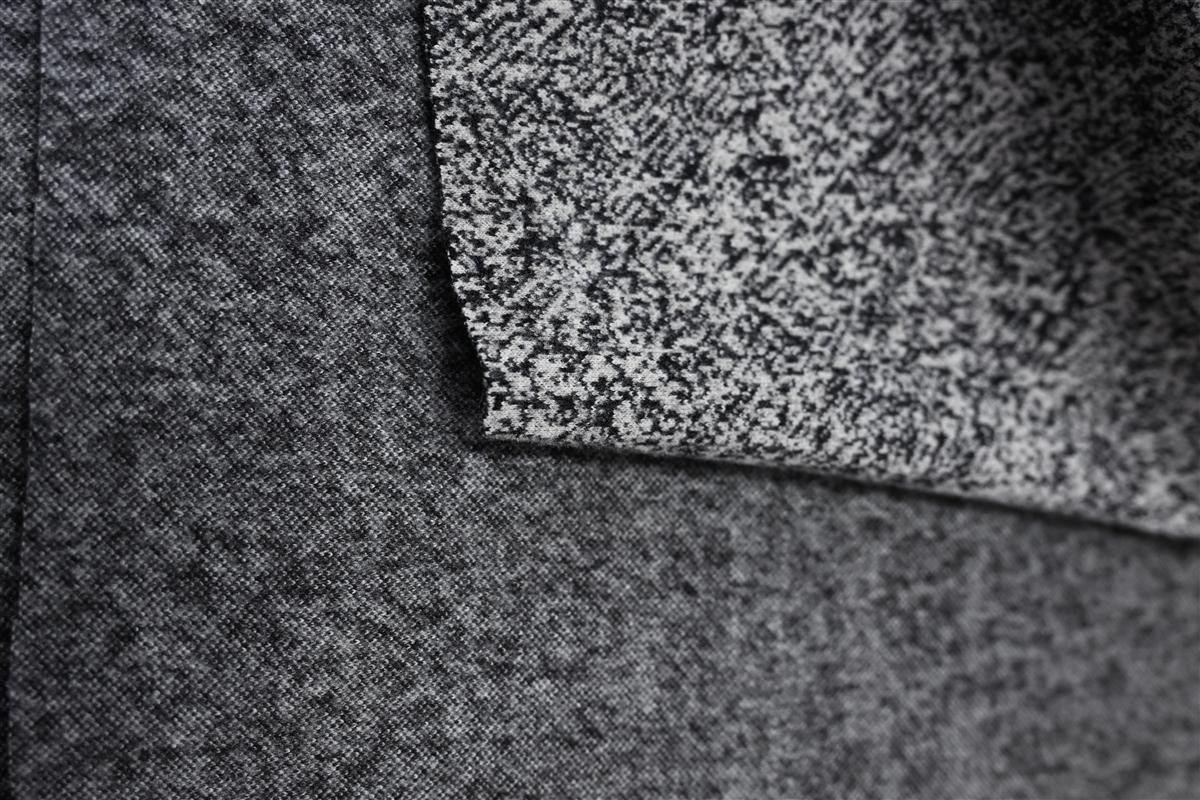
The core difference between stock and bespoke sampling is measured in weeks, not days. With 100,000 meters of in-stock bouclé and heritage knit fabrics, a physical swatch can move from request to your desk in 7 days. This is possible because the yarn, dye formula, and weave structure are already locked in production. In contrast, a custom bespoke order—starting from fiber selection—runs 4 to 6 weeks minimum. That gap is the difference between hitting a Spring/Summer window and scrambling for a late drop.
How Faster Decision Cycles Cut Inventory Risk
Every week you wait on a swatch is a week your design team cannot commit to a BOM (Bill of Materials). Delayed sampling pushes production into compressed timelines, which often forces rush orders on raw materials and air freight on finished goods. Those costs eat margin directly. A rapid sampling workflow—where you receive a swatch in 7 days and have dye-lot consistency data alongside it—lets you approve a texture in one round instead of three. Internal production data shows this reduces revision cycles by up to 50% per collection, cutting the opportunity cost of idle design time and the risk of over-ordering dead stock.
Stock-First Sampling for Bouclé and Heritage Knits
There is a common assumption that luxury textures like bouclé require a full bespoke run to achieve the right hand-feel. That is not always accurate. In-stock options with controlled dye lots and documented weight specs (grams per meter) can replicate the artisanal finish without the lead-time penalty. For a brand owner managing margin and time-to-market, the smart play is to pre-vet stock textures first. If the documented pilling profile, curl, and weight match your spec sheet, you can bypass the R&D phase entirely and ship in 3-7 days. If they do not, you still have the 300m custom MOQ as a fallback, but you will have saved 3-4 weeks by ruling out stock options quickly.
The Real Cost of a Slow Sampling Cycle
A slow sampling cycle does not just delay a collection—it increases financial exposure. Every month a design sits in sampling limbo, the market shifts. Trends move, raw material prices fluctuate, and your cash is tied up in development that has not yet proven itself. The 30-50% cost savings versus premium European mills are only realized if you can move from sample to production order without repeated delays. A 7-day sampling turnaround compresses the total development timeline, allowing you to place a production order while the trend data is still fresh and your margin projections are still valid.
Stock vs Bespoke Fabric
The core trade-off is simple: 3-7 days for stock vs. 4-6 weeks for bespoke. The right choice depends on whether you need speed or exclusivity.
The Stock Advantage: 100,000 Meters Ready to Ship
If your priority is time-to-market, the stock route eliminates the longest variable in fabric development: waiting for production. With 100,000 meters of in-stock fabric, allocation and shipping happen in 3-7 days. For an emerging designer working on a capsule collection or a seasonal drop, this means you can have physical bouclé fabric samples 7 days from your initial inquiry. The risk here is near zero — you are not committing to a custom run, and you can see the exact dye-lot consistency and weight specs through provided stock photography and BOMs before ordering.
Bespoke: Lower MOQ, Higher Control
The common assumption is that custom means high minimums. Here, the custom MOQ starts at 300 meters, which is deliberately low to minimize inventory risk for new collections. The trade-off is lead time: bespoke runs typically take 4-6 weeks, depending on the texture complexity. This path is for when you need an exclusive texture, a specific color that isn’t in stock, or a heritage knit construction that can’t be replicated from existing inventory. The 7-day rapid sampling turnaround applies here too — you get a physical swatch within a week to approve before the full production run begins.
Cost, Flexibility, and the Real Risk Calculation
Here is the data that matters for your margin. Both stock and bespoke options deliver 30-50% cost savings versus premium European mills for equivalent textures like bouclé and heritage knits. The flexibility difference is in revision cycles:
- Stock path: Pre-vetted dye lots and weight specs eliminate color-matching rounds. You cut revision cycles by up to 50%.
- Bespoke path: You get exclusivity and exact specifications, but expect 1-2 extra R&D cycles for color and hand-feel alignment if you are starting from a reference rather than an existing stock item.
The insider move: Pre-vet your textures by reviewing documented weight, curl, and pilling profiles combined with annotated swatch photos. This single step reduces discovery time in the QA phase and eliminates those extra revision cycles, regardless of which path you choose.
7-Day Sampling Workflow
The 7-day sampling workflow is not about magic. It is a stock-first, digitally-calibrated process that eliminates the 2-3 revision cycles typical of fully bespoke development.
Day 0-1: Concept Intake and Stock Matching
The workflow begins with your design brief—color references, weight requirements, and texture references (e.g., a specific bouclé loop size or cable knit gauge). Instead of immediately spinning a custom run, the team cross-references your request against the 100,000 meters of in-stock inventory. If the desired hand-feel, weight, and color profile exist in stock, we skip the development queue entirely and move to allocation. This is the single biggest time-saver: stock fabric samples ship in 3-7 days, not weeks.
Day 1-3: Digital Color Matching and Dye-Lot Alignment
For textures that require a color adjustment—say, a specific Pantone that doesn’t match an existing dye lot—we use spectrophotometer-based digital color matching. This step removes the guesswork of visual matching and reduces the need for physical lab dips. The system compares your target color against the dye-lot history of the base fabric and calculates the precise formula needed. Because we maintain documented dye-lot control for all stock materials, the alignment process takes hours, not days. The result is a near-immediate color match without full-scale sampling fatigue.
Day 4-7: Physical Swatch Production and QA Verification
Once the color formula is approved, a small production run is cut from the allocated stock roll. The swatch is then measured against three benchmarks: weight per square meter, curl profile (critical for bouclé stability), and pilling resistance. These specs are documented and attached to the swatch photo. This is where the insider advantage shows: pre-vetting textures by documented weight, curl, and pilling profiles eliminates 1-2 R&D cycles per collection. You receive a physical swatch plus an annotated photo that confirms the material matches the spec sheet—no surprises at the bulk production stage.
Why This Workflow Cuts Revision Cycles
The typical bespoke sampling loop—brief, lab dip, wait, revise, re-dip—averages 4-6 weeks and often requires 2-3 iterations to nail color and hand-feel. By starting with a stock-first approach and using digital color matching to align dye lots before cutting fabric, we compress that loop into a single pass. The 7-day rapid sampling turnaround is not a marketing claim; it is a structural outcome of a workflow designed to eliminate waiting time at every decision point. For emerging designers, this means you can validate a texture, lock in a color, and move to production within the same month—without locking cash into high MOQs or missing your season window.
Cost, Risk, and Compliance
The price per meter is not your total cost. Landed cost, compliance paperwork, and sampling risk are the three hidden variables that determine if your collection hits margin targets or gets stuck at customs.
Landed Costs: What You Actually Pay
The price per meter on a supplier’s website is not your total cost. Landed cost includes the fabric price, freight, insurance, duties, and port handling fees. For a 1,000-meter order of premium bouclé from a European mill, the landed cost can easily be 30–50% higher than the base price. That’s the difference between a $15/m fabric costing your line $22/m by the time it hits your warehouse.
Fursone’s pricing already reflects a 30–50% cost advantage versus equivalent European mills. For a standard bouclé stocked at $8–12/m, the landed cost stays in that range because the shipment originates from Wenzhou, not Milan or Paris. No hidden transatlantic freight premiums. No surprise duties that eat your margin on a 300-metre custom run.
Transparency in Certifications and Compliance
If you are selling into the EU or North America, your buyer will ask for certification documentation. The two standards that matter for tweed and knit fabrics are OEKO-TEX Standard 100 and the Global Recycled Standard (GRS). OEKO-TEX confirms that no harmful chemicals are present in the finished textile. GRS verifies the recycled content claim and tracks it through the supply chain.
Ship a container of bouclé without OEKO-TEX documentation and your buyer’s compliance team will reject the shipment. That means storage fees, return logistics, and a missed seasonal window. Fursone provides OEKO-TEX and GRS certifications upfront for all stocked and custom fabrics. The certificates are included in the BOM package, not buried in a follow-up email three weeks later.
Rapid Sampling Lowers Financial Exposure
The standard sampling cycle in the textile industry runs 4–6 weeks. During that time, a designer commits to a minimum of 500–1,000 meters without knowing if the color, hand-feel, or drape will match the mood board. If the sample fails, that money is tied up for another cycle. The risk is not just the sample cost—it is the lost time against a seasonal deadline.
Fursone’s 7-day rapid sampling changes that equation. For approved designs, you get a physical swatch in one week. The cost of that swatch is a fraction of a full production sample. If the color is off by half a shade, you know in 7 days, not 6 weeks. That allows for one or two revision cycles within the same timeframe a traditional mill would take to ship the first sample.
The financial math is straightforward:
- Traditional sampling: 4–6 weeks per cycle. Two cycles = 8–12 weeks. Total financial exposure: full sample yardage plus 6–8 weeks of calendar risk.
- Rapid sampling (7-day): One week per cycle. Two cycles = 2 weeks. Total exposure: swatch cost plus 2 weeks of calendar risk.
- Stock-first option: If the in-stock color and weight match your spec, you skip sampling entirely. Ship in 3–7 days. Zero sampling cost. Zero calendar risk.
For an emerging designer running a small-batch collection, that difference can mean the difference between hitting a Spring/Summer drop and pushing the entire line to Fall.
The Insider Shortcut: Pre-Vet Before You Sample
Here is the workflow that eliminates 1–2 R&D cycles per collection. Before requesting a physical swatch, review the documented weight, curl, and pilling profiles for the fabric. Fursone provides annotated swatch photos and BOMs for every stocked texture. Compare those specs against your design requirements. If the documented weight is 380 gsm and you need 400 gsm, you know immediately that the stock option will not work. No need to wait for a physical sample to confirm the mismatch.
This pre-vet step cuts discovery time in the QA phase. It also prevents the common mistake of ordering a custom run when a stock fabric with controlled dye lots and documented specs would have worked perfectly. The assumption that bespoke is always faster is false—stock-first with verified data is faster every time.
| Category | Metric | Fursone Advantage |
|---|---|---|
| Cost | Price vs. European Mills | 30-50% lower cost for equivalent premium textures |
| Cost | Sampling Investment | Minimal risk with 300m custom MOQ; no large upfront commitment |
| Risk | Inventory Risk | Stock-first options (100,000 meters) reduce dead stock and cash lock-up |
| Risk | Color & Hand-Feel Alignment | Guaranteed dye-lot control and weight specs cut revision cycles by up to 50% |
| Compliance | Lead Time Transparency | Stock ships in 3-7 days; bespoke lead times clearly communicated upfront |
| Compliance | Sampling Turnaround | 7-day rapid sampling from concept to physical swatch for approved designs |
Getting Started Quickly
A stock-first workflow cuts sampling time by 2-3 weeks versus starting from scratch. The 4-step plan below eliminates the back-and-forth that kills seasonal deadlines.
Step 1: Stock Assessment — Pick from 100,000 Meters, Not a Catalog PDF
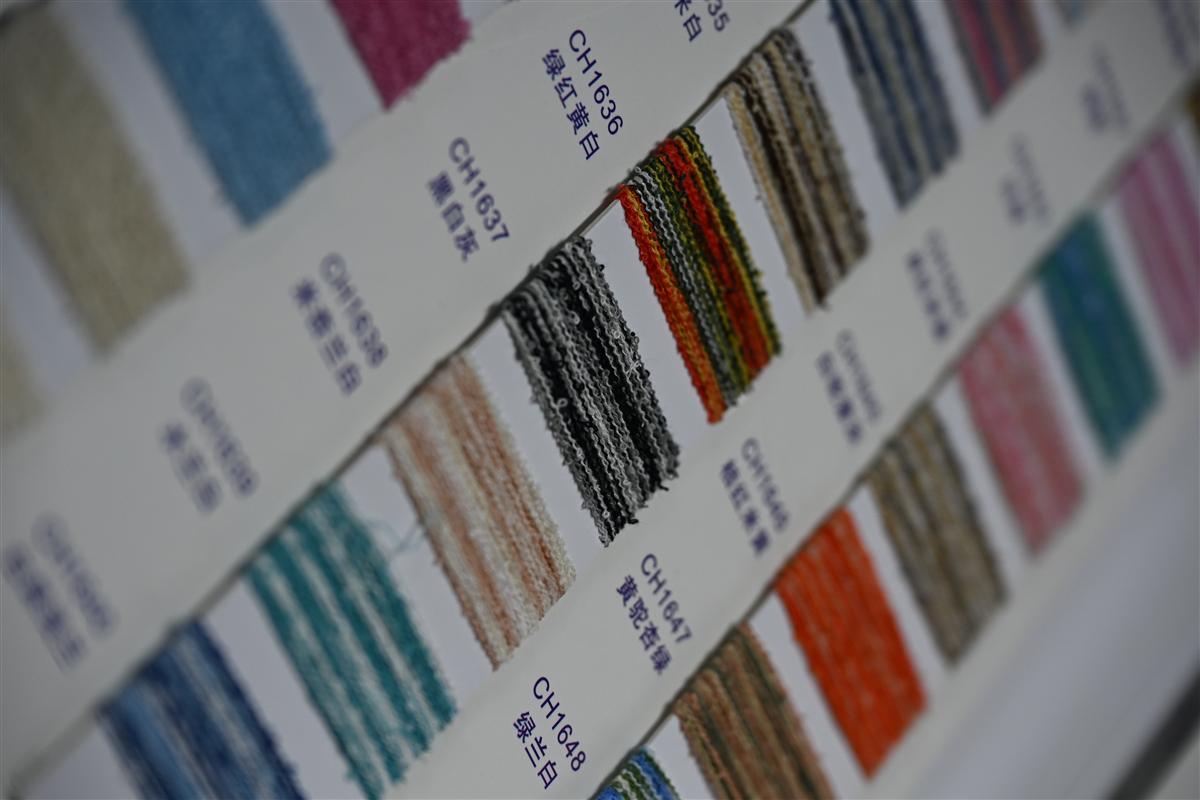
Most sampling delays start with a mismatch: the designer wants a specific hand-feel, but the supplier sends a swatch from a different dye lot or weight class. The fix is a stock-first assessment. With 100,000 meters of in-stock bouclé and heritage knits, you are not choosing from a sample card; you are selecting from physically allocated inventory. Request the stock photography and BOM sheets upfront. They include documented weight, curl profile, and pilling data. This lets you pre-vet textures before a single swatch is cut, eliminating the “that’s not what I expected” loop that eats 1-2 R&D cycles per collection.
Step 2: MOQ Confirmation — 300m Custom vs. 100m Stock
The MOQ decision is a risk calculation, not a price negotiation. If your texture exists in stock, the MOQ is effectively zero per SKU — you order as little as 100m and ship in 3-7 days. If you need an exclusive color or weave, the custom MOQ starts at 300m. That is intentionally low to minimize your inventory risk while still allowing the mill to set up the loom and dye vat economically. Compare that to the typical European mill custom MOQ of 3000-5000m, and the math is clear: 300m lets you test a season without betting the entire collection budget.
Step 3: Sampling Window Setup — The 7-Day Clock Starts with Approval
The 7-day rapid sampling turnaround is not automatic. It triggers only after design approval of the stock reference or custom spec. The clock runs from “approved concept” to “physical swatch in hand.” For stock fabrics, that window is tight because the allocated inventory is already cut and ready. For custom bespoke, the 7-day window applies to the first strike-off; production sampling for full rolls follows a separate 4-6 week timeline. Set your internal calendar accordingly: approve the reference by Monday, swatch lands by the following Monday. Miss that approval window, and you slip a full week.
Step 4: QA Handoff — Dye-Lot Control Eliminates the “Close Enough” Problem
The handoff between sampling and production is where most brands lose consistency. A swatch from lot #A might match your Pantone reference perfectly, but lot #B could shift by 2-3 shades. The internal standard here is unified dye-lot control: every swatch and every production roll is tagged with its lot number and weight spec. Your QA checklist should verify three things before signing off: (1) the swatch matches the stock photography under daylight and store lighting, (2) the documented weight is within ±5% of the spec, and (3) the dye lot on the swatch matches the lot assigned to your production order. This three-point check cuts revision cycles by up to 50% because you catch color drift before it hits the cutting table.
Conclusion
A 4-week sampling cycle doesn’t just delay a launch—it burns margin, inflates inventory risk, and hands the season to faster competitors. The fix isn’t a faster bespoke process. It’s a stock-first workflow with guaranteed dye-lot control and 7-day swatches. That cuts revision cycles and locks color alignment before you commit to production yardage.
Review your current sampling lead time against the 3-7 day stock fabric samples window. If the gap is weeks, browse the rapid sampling solutions page to see how stock bouclé and knits match your spec without the wait.
Frequently Asked Questions
What are the four stages of the fashion cycle?
The four stages of the fashion cycle are introduction, rise, peak, and decline. For a brand like Fursone, operating within the premium tweed and knit fabric sector, understanding these stages is critical to aligning production with demand. Our 7-Day Rapid Sampling and 100M Ready Stock allow clients to capitalize on the introduction and rise phases, bypassing the delays that cause missed market windows.
During which stage of the fashion life cycle do consumers reject the merchandise?
Consumers reject merchandise during the decline stage of the fashion life cycle, when demand wanes and styles become obsolete. A 4-week sampling cycle exacerbates this risk by pushing fabric procurement into this phase, leaving brands with dead stock. Fursone’s 7-Day Rapid Sampling and 300M Custom MOQ enable clients to test and commit to exclusive textures early, ensuring they hit the peak stage before consumer interest fades.
What is the rapid production cycle of fast fashion?
The rapid production cycle of fast fashion typically compresses design-to-shelf timelines to 2-4 weeks, relying on agile supply chains and pre-committed materials. For premium fabric manufacturers like Fursone, this cycle demands instant access to in-stock goods—our 100,000 Meters Ready Stock ships in 3-7 days—and low-MOQ custom runs that eliminate the 4-week sampling bottleneck, allowing brands to match fast fashion speed without sacrificing artisan quality.
Which factor accelerates the fashion cycle?
Consumer demand volatility, driven by social media trends and seasonal shifts, is the primary factor accelerating the fashion cycle. This forces brands to reduce lead times from concept to shelf. Fursone directly counters this acceleration with our 7-Day Rapid Sampling and 300M Custom MOQ, enabling designers to secure exclusive Chanel-style bouclé and heritage cable knits in weeks, not months, and stay ahead of the curve.
What is the 3-3-3 rule for clothes?
The 3-3-3 rule for clothes refers to a retail strategy where a brand aims to design in 3 days, sample in 3 weeks, and deliver in 3 months, optimizing for speed and margin. For fabric sourcing, this rule breaks when sampling takes 4 weeks alone. Fursone’s 7-Day Rapid Sampling and 100M Ready Stock align perfectly with this rule, delivering physical swatches in one week and bulk fabric in 3-7 days, ensuring your fashion line meets the 3-3-3 timeline without compromise.
Authoritative References

Related Insights

How to Compare Fabric Quotes from Three Mills: A Side-by-Side Method
Three mills return three quotes for the same fabric brief, and the spread between them...

CNY Capacity Planning: Booking a Fabric Mill Around Chinese New Year
Every year, fabric buyers lose the same three weeks to the same event: Chinese New...

Second-Source Strategy: How Brands Qualify a Second Tweed Mill
Single-sourcing a signature fabric feels efficient right up to the season it fails: the mill’s...