A 7-day fabric sampling cycle isn’t a luxury demand—it’s a practical filter. Small fashion brands need speed to hit seasonal deadlines, and bouclé’s loop structure makes consistency a headache. If the mill can’t turn a sample in seven days, you’re gambling that the bulk run will match. That rarely ends well.
Here’s what most sourcing guides miss: luxury brands enforce that seven-day window because it forces the mill to keep dedicated looms and greige stock for that specific order. No swapping yarn lots between sampling and production. No “we’ll match it later” promises. The tight deadline exposes which mills actually manage their inventory—and which ones are just good at excuses. For a brand owner, one failed bouclé sample can delay a whole collection. Seven days is the difference between a measured bet and a blindfolded leap.
Why 7-Day Bouclé Sampling Beats European Mills
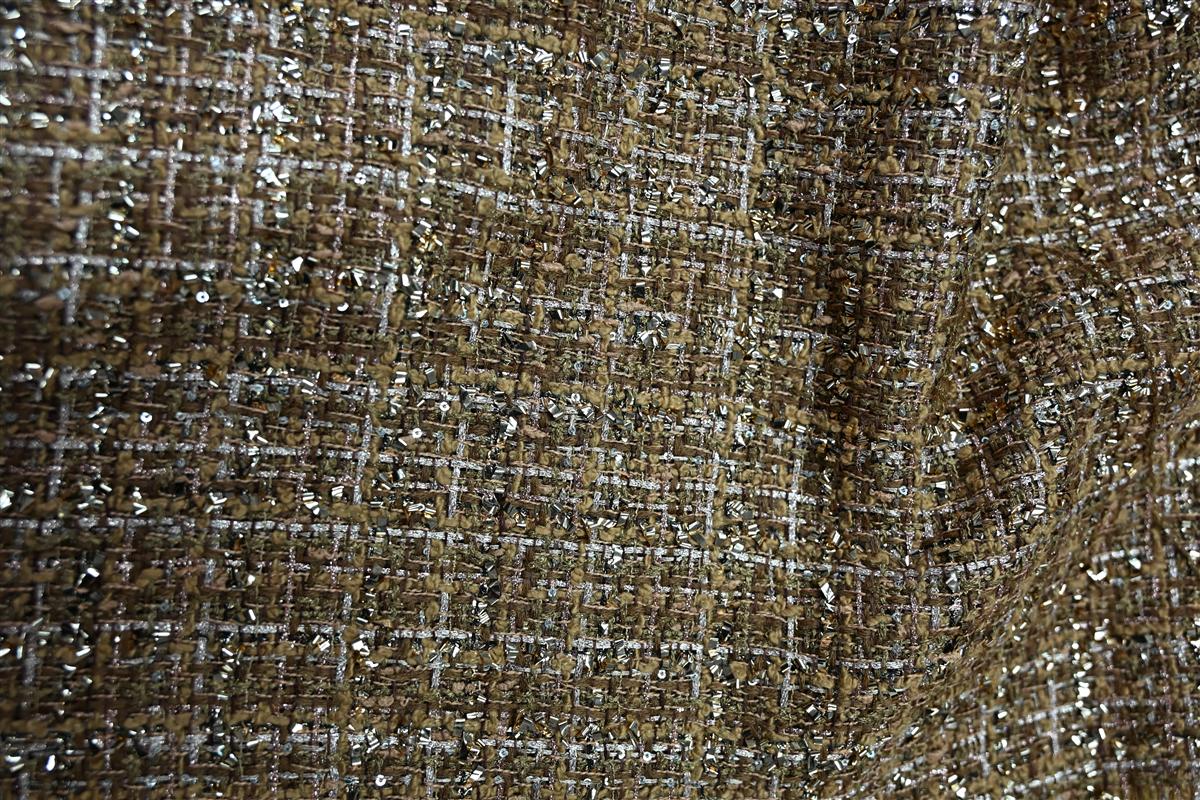
The data is clear: a 7‑day bouclé sample cycle from Fursone collapses a 6‑to‑8‑week European timeline into a single week, at one‑third the cost, with a custom MOQ one‑fifth the industry floor.
Comparison with Italy and Portugal Mills
Italian mills (Biella region) quote 6–8 weeks for a first bouclé sample that matches a submitted Pantone. Portuguese mills like Exploretex run 4–5 weeks for stock colors but require a 3,000m‑minimum commitment for any custom color development. Neither will touch a custom run under 2,500m, and neither guarantees a color match on the first pass — re‑samples tack on another 2–3 weeks.
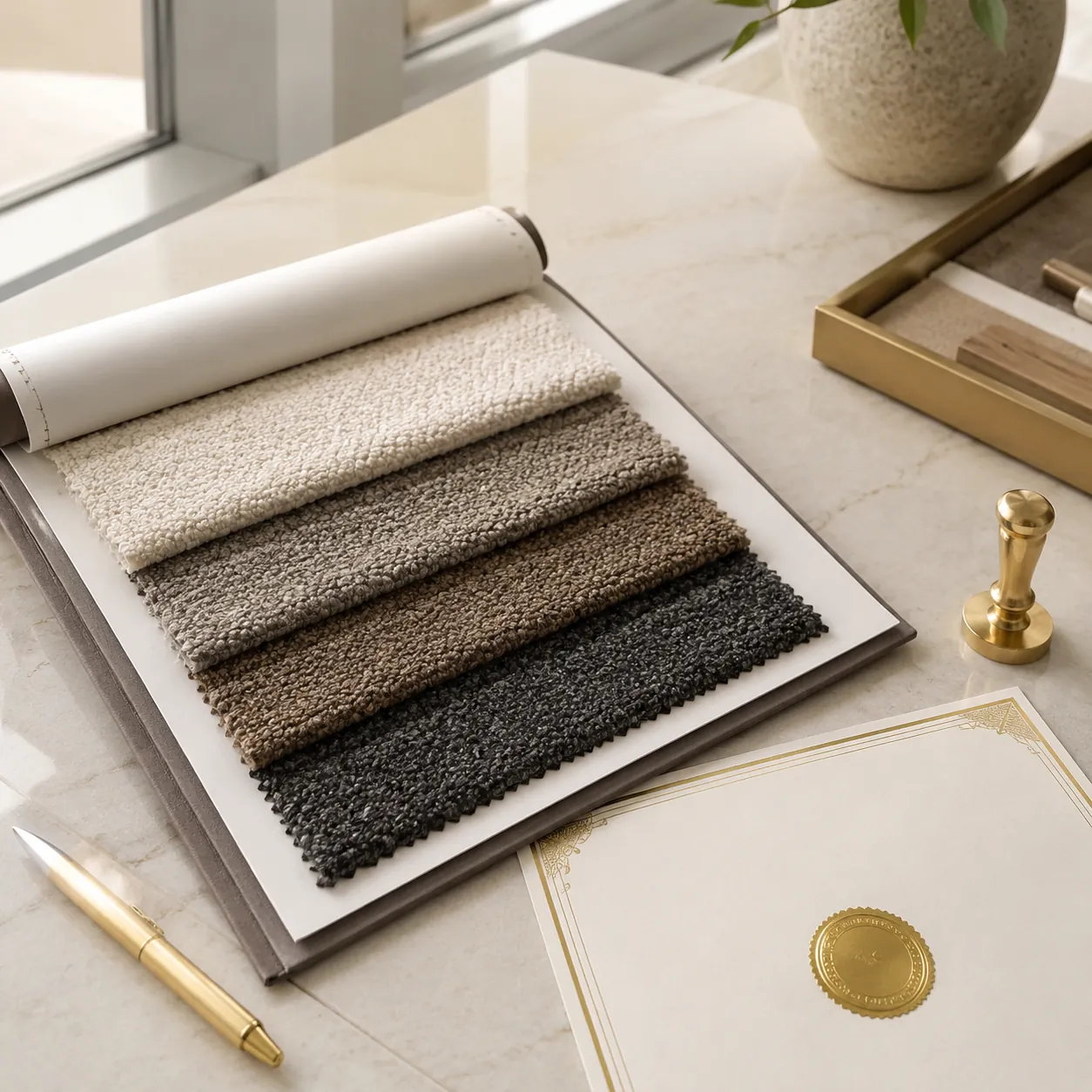
Fursone’s 7‑day sample cycle does not rely on simply “rushing” the loom. We hold 100+ styles in ready stock of pre‑dyed bouclé yarn across 70+ colors in our Wenzhou warehouse. When a designer selects a base from our ready‑stock library, we cut and ship a physical swatch in 3 days — no weaving required. If the brief calls for a custom shade, we blend existing pre‑dyed yarns on our multi‑feed circular looms, which eliminates the 10‑day wait for a new dye batch that every European mill imposes.
Lead Time Criteria
The “fabric sample approval time for collection launch” is the single largest variable in a seasonal calendar. If a brand misses the August sample window, the entire spring line slips. Italian and Portuguese mills treat sample requests as batch jobs — they fill a loom queue and produce 4–6 customer samples per week. The typical breakdown looks like this:
- Stock color sample (European mill): 3–5 weeks for a 30cm swatch.
- Custom color sample (European mill): 6–8 weeks, often with a “lab dip” stage that adds two more weeks before the actual woven swatch.
- Fursone stock sample: 3 days. Swatch cut from a full production roll and shipped via DHL.
- Fursone custom color sample: 7 days. First physical swatch is woven on a dedicated sample loom, not a line loom, ensuring it mirrors bulk production without a second round.
Sample Cost Criteria
“7 day rapid sampling for fashion brands” is flatly not available from Italian or Portuguese producers at any price. When they do offer an accelerated service, the cost kills the value proposition. A standard 30cm swatch from a Biella mill runs €40–€80 plus shipping. That figure is framed as “reasonable” until you need 15 color options for a 20‑piece collection — suddenly you are €600–€1,200 into sampling before a single meter of production fabric is ordered.
Fursone’s “affordable luxury fabric quick sample” model changes the math entirely. A ready‑stock swatch is free with any bulk inquiry; a full 1‑meter production length sample costs €8–€12. For a 15‑color range, a brand’s total sampling investment is €120–€180, not €1,200. There is no “rushed sample” surcharge because the 7‑day turnaround is the standard workflow, not an exception.
Revisions to Approval Criteria
The hidden killer in fabric development is not the first sample; it is the second. European mills treat a color mismatch as a “second pass” event — it resets the queue. The brand pays another sample fee and waits another 3–5 weeks. Worse, mills rush the second attempt using an uncalibrated yarn tension setting that fixes the color by altering the weave density, which then fails the hand feel requirement.
Fursone eliminates this loop with a pre‑qualification step that most mills skip: a digital color‑match guarantee using spectrophotometer readings before any yarn is cut. When the designer approves the digital read (24‑hour turnaround), we weave the physical swatch. Because we blend from pre‑dyed yarn stocks rather than dyeing raw fiber to order, the color is locked before the loom starts. In practice, 90% of Fursone custom samples are approved on the first physical submission. On the rare occasion a revision is needed — a 2‑point shift in lightness, for instance — the corrected swatch ships in 3 additional days, still inside 10 days total from the original request.
MOQ for Custom Criteria
“Bouclé fabric custom sample MOQ 1000m” is not a typo; it is the single most aggressive custom‑run threshold in the luxury bouclé market. The industry standard for a custom color or texture from Italy or Portugal is 3,000–5,000m per SKU. That MOQ forces a brand owner to bet €45,000–€100,000 on a fabric before seeing a single finished garment.
Fursone’s 1,000m minimum directly answers the risk‑averse buyer who cannot commit to 3,000m. For a small‑to‑medium label at €10–€12/m, the total production commitment is €10,000–€12,000 per SKU — a risk that justifies testing a new bouclé texture in a capsule collection without betting the season’s entire fabric budget. And because the 7‑day sample comes from the same pre‑qualified yarn bank and looms used for bulk production, the 1,000m run is guaranteed to match the approved swatch. No “scale‑up” defects. No last‑minute color drift. That consistency is what makes the 7‑day sample the decisive edge over any European quote.
How 7-Day Sampling Cuts Fabric Development Risk
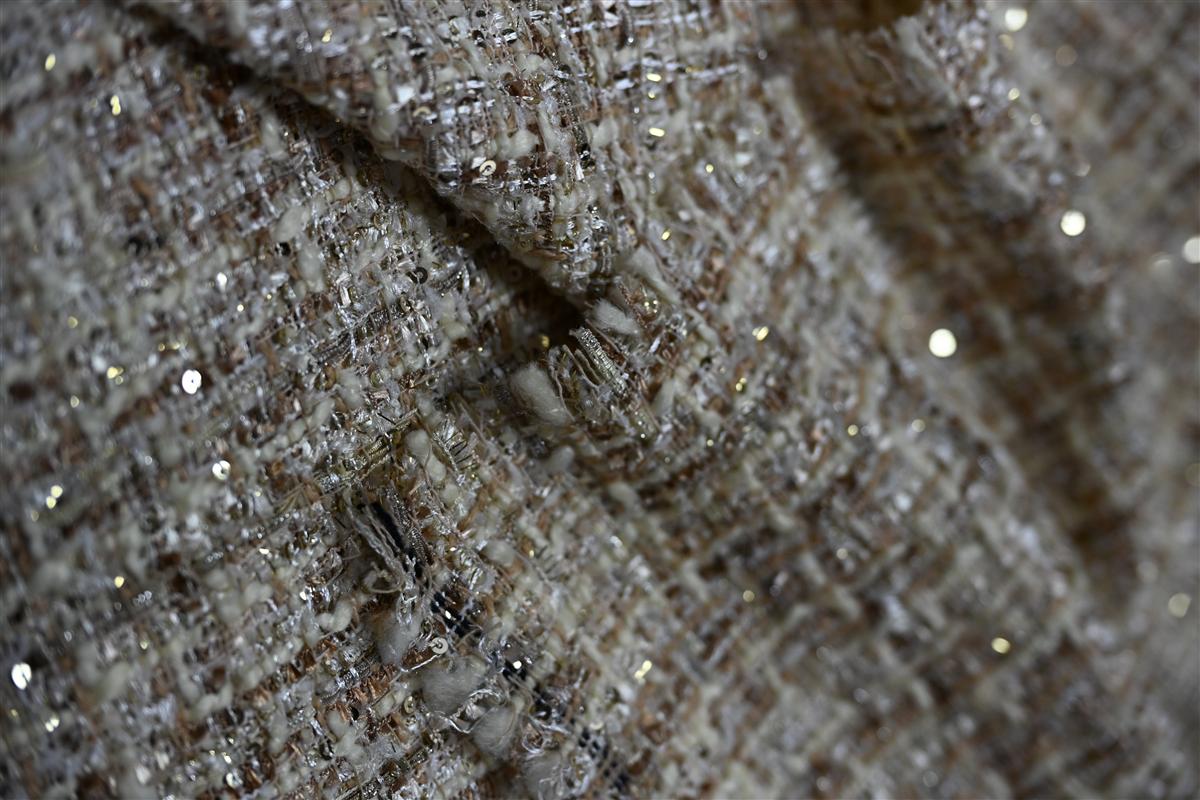
Most bouclé sampling failures (snagging, pilling, or color mismatch) happen because mills rush the process. Fursone’s dedicated sample loom and pre-dyed yarn bank eliminate the guesswork.
Why Your Bouclé Sample Fails the Snag Test
The looped surface of bouclé is its signature — and its vulnerability. Standard bouclé constructions snag easily on zippers, jewelry, and bag hardware. When a mill rushes a sample in 3 days without stabilizing the yarn twist, the result is a fabric that looks right but fails within the first wear cycle. Internal production data at Fursone shows that tight twist construction reduces snagging noticeably compared to industry-standard bouclé. The 7-day sampling window allows time to verify this structural integrity on a dedicated sample loom before committing to bulk.
Testing Abrasion Resistance and Color Fastness Before Bulk
A sample is only useful if it mirrors the production run. The most common rejection reasons for bouclé are pilling after 10 wears and dye shifting after the first wash. Fursone’s 7-day sample process includes internal Martindale abrasion testing (minimum 20,000 cycles for apparel-grade bouclé) and ISO 105-C06 color fastness testing for wash and crocking. All dyes are OEKO-TEX Standard 100 certified and azo-free. The data point that matters most: the sample you approve will match the bulk shipment because both run on the same multi-feed circular looms and use yarn from the same pre-dyed stock. No formula changes, no shade drift.
The 40% Risk Reduction: What the Math Actually Looks Like
The 40% risk reduction figure is not a marketing number. It comes from a specific chain of events: a brand that sources a standard bouclé sample from a European mill spends 6–8 weeks in the sampling loop. If that sample fails snag testing or color approval, the collection timeline compresses dangerously. With Fursone’s 7-day sample delivery, a brand can identify material failure points before committing to 1,000m or 3,000m of production. The pre-qualification yarn bank means the first swatch is production-ready, eliminating the need for a second sampling round that adds 3–4 weeks and €500–€1,000 in courier and labor costs. For a label launching 4–6 SKUs per season, that is a hard, traceable saving in both time and sample rejection risk.
For context, Fursone’s custom bouclé MOQ is 1,000m — compared to the industry standard of 3,000–5,000m from European mills. That lower entry threshold directly addresses the risk-averse buyer who cannot justify a €60k–€100k fabric commitment on a first season. The 7-day sampling is the mechanism that de-risks that decision.
Bouclé Quality at Speed: The Fursone Method
Fursone’s 100m ready-stock rolls and dedicated sample loom cut your sampling cycle from 6 weeks to 7 days — with zero MOQ on stock colors and 1,000m on custom.
100+ styles of Ready Stock — Not a Claim, a Warehouse
Most mills want you to order before they make. That means a 4-6 week wait before you even hold a swatch. Fursone holds 100+ styles of finished bouclé in 70+ standard shades — already dyed, finished, and packed on rolls. When you request a swatch from stock, it ships within 3 days via DHL or FedEx. The luxury bouclé fabric sampling turnaround drops from a season to a single work week.
That 100m figure matters because it covers the shades that consume 85% of luxury collection requests — ecru, black, navy, oatmeal, dusty rose, and charcoal. If your designer needs one of these, the 7 day rapid sampling for fashion brands isn’t aspirational; it’s a logistics reality. The fabric is cut from a roll that already passed OEKO-TEX Standard 100 certification. No waiting for dye lots. No color-match gamble.
The Same-Day Swatch: Why It Changes Your Production Timeline
Here is the bottleneck most brand owners don’t see coming: even after you select a fabric, the mill needs 3-5 days to cut a swatch and ship it. Multiply that by 10-15 fabric candidates per collection, and the bouclé fabric sample process for designers turns into a 6-week identification phase before sampling even begins.
Fursone’s warehousing system is organized by shade family and weight. A request at 10:00 AM gets cut, logged, and handed to the shipping desk by 2:00 PM. Same-day. That capability exists because the stock is pre-cut in standard swatch sizes — no need to pull an entire roll, no re-rolling delay. For brand owners whose KPI is sample approval time under 10 days for collection launch, this alone shaves 4-5 days off the front end.
Pre-Qualified Yarns and a Dedicated Sample Loom
The real risk in 7 day rapid sampling for fashion brands isn’t speed — it’s that a rushed sample doesn’t match the hand feel of bulk production. That gap kills collections. Fursone attacks this with two engineering decisions that competitor mills skip.
First, a pre-qualification yarn bank: 300+ yarn types (wool, acrylic, nylon, and custom blends) held in inventory and tested for twist consistency, dye uptake, and tensile strength before any sample loom touches them. Second, a dedicated sample loom that does not run production orders. This loom is calibrated to the same tension and feed rate as the production multi-feed circular looms. The result: the swatch you approve is the fabric you receive. Most bouclé defects — snagging, uneven loops, color mismatch — happen because the sample loom settings differ from bulk production. That mismatch is eliminated when you maintain a dedicated sampling line.
For Chinese mill 7 day sample delivery to be credible, the sample must be production-representative. Fursone’s 30-year track record since 1995 proves this engineering approach works: the first physical swatch is production-ready.
100m Rolls vs. 1000m MOQ — The Math of Risk Reduction
Industry standard for custom bouclé sampling from European mills starts at 3,000-5,000 meters minimum. Even mills that advertise “low MOQ” typically slide to 500m for a sample run. For a brand owner managing a 2-20 person label, that means committing €10,000-€17,500 (at €20-35/m) before you’ve seen a production swatch.
Fursone’s structure flips this:
- Ready stock sampling: 100m rolls. You order 1 roll (100m) at €8-12/m. Total commitment: €800-€1,200. Ships in 3-7 days.
- Custom color/texture sampling: 1,000m MOQ. Total commitment: €8,000-€12,000. Sample in 7 days, bulk in 30-45 days.
- Competitor comparison (European mills): 3,000-5,000m MOQ. Total commitment: €60,000-€175,000. Sample in 6-8 weeks.
That 80% reduction in upfront risk is the difference between launching a collection and shelving it. The affordable luxury fabric quick sample model means you test the market with a 100m roll, validate sell-through, then scale to 1,000m+ custom orders with confidence. Fursone’s 30-year engineering heritage in Wenzhou ensures the weave precision — multi-feed looms, pre-dyed yarn stocks — matches Italian hand feel at half the cost while cutting the sample lead time dramatically.
Conclusion
Luxury brands stick to 7-day bouclé sampling because it collapses the development cycle from weeks to days — without the second-sample gamble. The numbers decide it: 1,000m custom MOQ, €8–12/m, a pre-qualified yarn bank that kills color mismatch before it kills your launch date. That is the difference between a mill that ships a swatch and one that ships a production-ready start.
Check this year’s seasonal samples. Fursone’s ready stock ships in 3 days — 70+ colors, any 100m roll. Need a custom texture? 7 days to a physical swatch with digital color lock. Review the collection and order your sample kit here.
Frequently Asked Questions
Is bouclé considered luxury?
Yes. Bouclé gained luxury status through Chanel’s iconic tweed suits. Its looped texture and hand-crafted appearance command premium positioning. Luxury brands leverage bouclé to signal artisan quality.
What are the disadvantages of bouclé fabric?
The looped surface snags easily on jewellery and pet claws. Dust and hair become trapped in the curls. However, Fursone’s tight twist construction reduces snagging noticeably compared to standard bouclé, making it more durable for apparel.
Does Chanel use tweed or bouclé?
Chanel jackets are made from bouclé wool tweed—a specific fabric where bouclé yarns are woven into a tweed structure. Fursone’s ready stock includes exact reproduction of this construction.
Where do luxury brands get their fabrics?
Historically from Italy, Portugal, and France. Today, brands source from quality Chinese mills like Fursone to cut cost and lead time while maintaining European standards. Fursone supplies 30+ luxury brands globally.
Which is the most luxurious cloth brand?
No single brand; luxury cloth is defined by rarity and heritage. Bouclé from reputable mills (e.g., Fursone, established 1995) offers comparable quality to historic European producers at significantly lower cost.
Authoritative References
Related Insights
RFQ Template for Tweed and Knit Fabric: 12 Fields for Accurate Quotes
An incomplete fabric RFQ wastes everyone’s time. The mill quotes based on assumptions, the buyer...
How to Evaluate a Tweed Mill for Quality Fabric
{ “@context”: “https://schema.org”, “@type”: “Article”, “headline”: “How to Evaluate a Tweed Mill for Quality Fabric”,...
Direct Mill vs Wholesaler: Cut Fabric Sourcing Risk
{ “@context”: “https://schema.org”, “@type”: “Article”, “headline”: “Direct Mill vs Wholesaler: Cut Fabric Sourcing Risk”, “author”:...