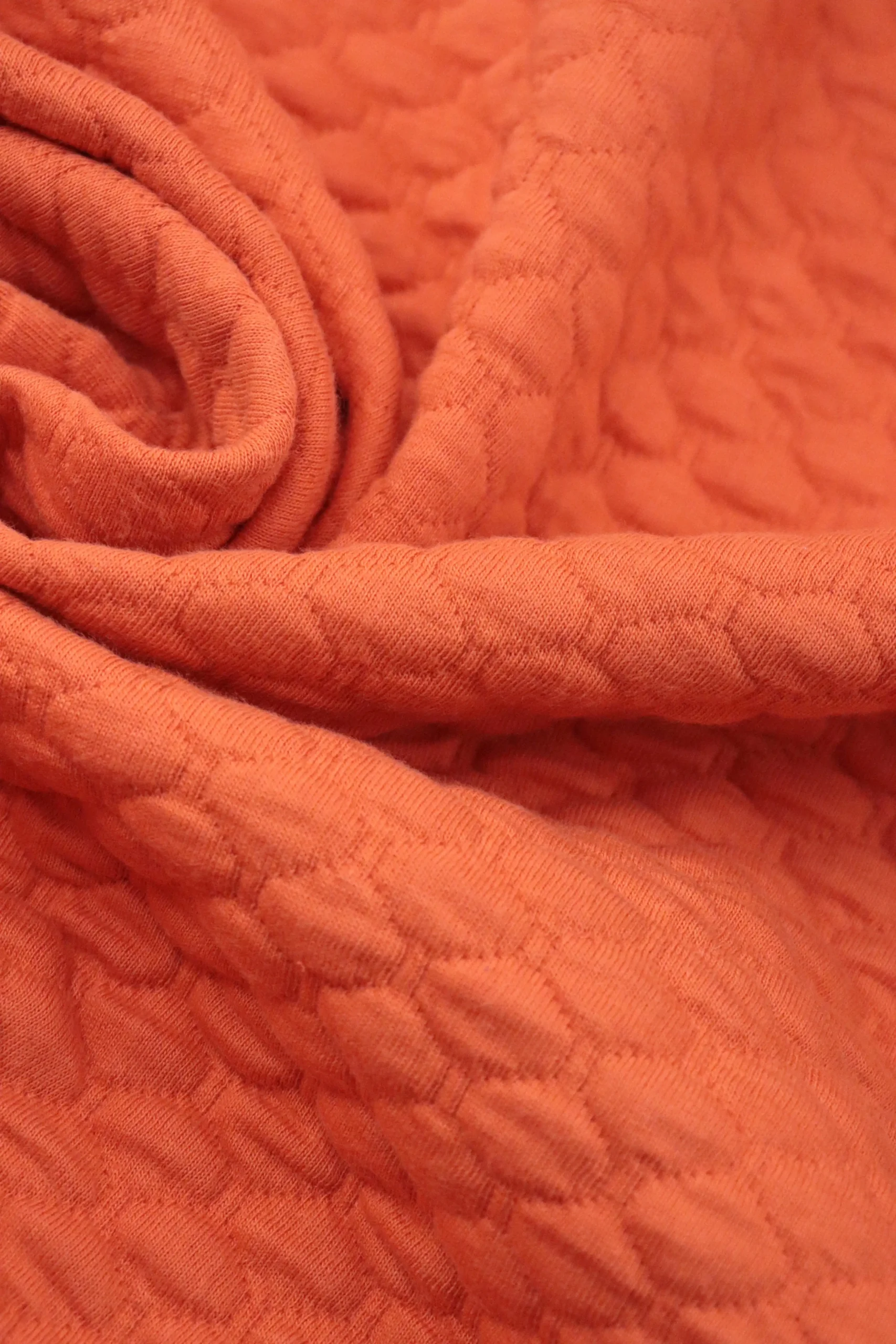
Nailing down a bouclé fabric price per meter for a luxury collection usually starts with a spreadsheet and a headache. The range is absurdly wide — you can see quotes from €8 to €45 per meter for what looks like the same loop yarn. The difference isn’t margin padding. It’s the yarn count, the weave density, and whether the mill owns its spinning capacity or buys yarn on the open market.
Here’s the part most sourcing guides skip: European mills quote higher because they bake in batch-to-batch color consistency testing and shorter lead times. Wenzhou mills quote lower because they run longer production runs and accept tighter margins on volume. Both can deliver luxury-grade fabric. But if you swap a 2/28nm wool blend for a 2/48nm cashmere blend without adjusting the weave architecture, the hand feel collapses and your upholstery sample fails. The price per meter tells you what fiber went in, not how it was constructed.
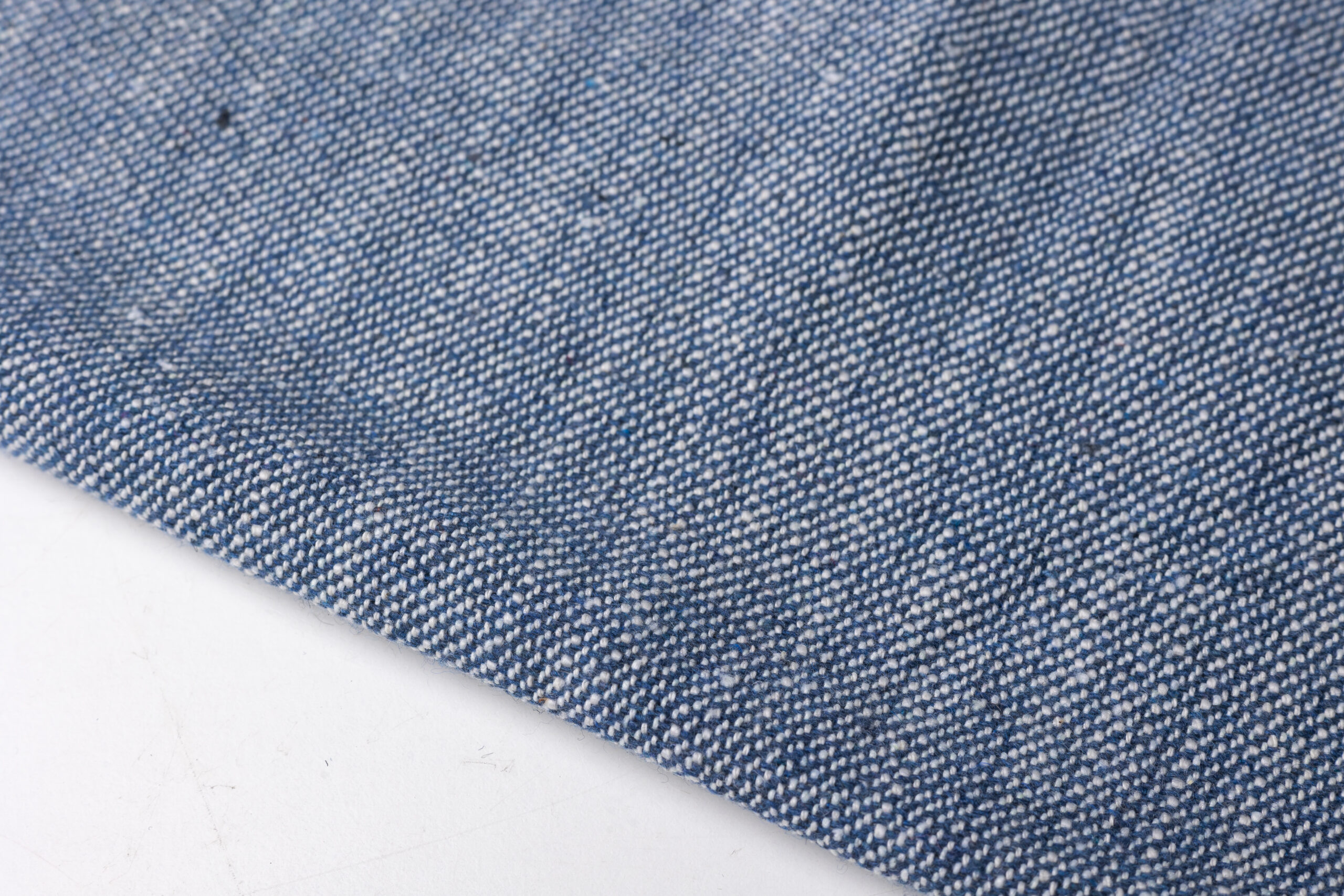
Fiber Type & Price Correlation
A 50% wool bouclé from Wenzhou runs a top-tier European mill rate. The exact same fiber composition from a European mill starts at €40/m. The difference is brand margin, not quality.
The Fiber Cost Ladder: From Polyester to Cashmere
Bouclé pricing is not random. It follows a predictable ladder based on the raw fiber input. The cheapest entry point is 100% recycled polyester bouclé, which wholesales at €4–€8/m for 100m+ rolls. This is acceptable for fast fashion or costume work, but the hand feel is stiff and the loop definition degrades after a few washes.
The mid-market sweet spot is a wool/nylon blend. A standard 50% virgin wool / 50% nylon bouclé from a Wenzhou mill like Fursone runs a low mill-direct rate for 100m ready stock. This is the composition used in most Chanel-style jackets. The wool provides loft and warmth; the nylon adds tensile strength to prevent the loops from pulling out. Fursone’s ready stock at this tier is OEKO-TEX Standard 100 certified, with a weight range of 280–450 gsm and a width of 140 cm (55″).
At the premium end, you move into cashmere-silk blends. A custom bespoke bouclé with virgin wool, silk, and a touch of cashmere runs a competitive mill-direct rate at a 1000m MOQ. The silk adds a subtle luster that cannot be replicated with synthetics, and the cashmere lowers the micron count for a softer drape. European mill equivalents for this same fiber spec start at €40/m and can exceed €120/m for heritage brands that trade on name recognition rather than technical superiority.
The 3x Premium Myth: Why European Mills Charge More for the Same Fiber
The common assumption is that European mills charge a premium because they use better raw materials. That is incorrect. The same 50% wool / 50% nylon composition can cost 3x more from a European mill due to brand positioning and overhead, not fiber quality. Wenzhou mills achieve identical loop density, color fastness, and tensile strength at roughly one-fifth to one-third less. The real quality variable is twist per inch and loop density consistency, not the mill’s country of origin or the label on the roll.
The Hidden Costs That Blow Your Budget
The per-meter price is only half the equation. Senior sourcing managers should factor in these add-ons:
- Sampling fees: Many suppliers charge a per-sample fee and do not credit it toward the bulk order. Fursone’s 7-day rapid sampling is a flat fee that gets credited back — a critical detail most competitors omit.
- Freight: Sea freight from Wenzhou to the US or EU runs approximately an accessible factory-direct rate for consolidated containers.
- Duties: Import duties range from 6% to 12% depending on the fiber classification and destination country.
A 100m order of mid-market bouclé at a low mill-direct rate lands at roughly a significant sum after freight and duties. The same order from a European mill at €40/m lands at approximately a meaningful amount. The savings are real and auditable.
| Fiber Type | Price Range (per meter) | Typical MOQ | Fursone Advantage | European Mill Equivalent |
|---|---|---|---|---|
| Basic Polyester Bouclé | €4 – €8 | 100m+ rolls | N/A (not in stock) | €15 – €25 |
| Mid-Market Wool/Nylon Bouclé | a competitive mill-direct rate | 100m ready stock | OEKO-TEX certified, 3-7 day ship | €40 – €60 |
| Premium Cashmere-Silk Bouclé | an accessible factory-direct rate | 1000m custom | 7-day sampling, exact color match | €80 – €120 |
| Chanel-Style Bouclé (60/30/10) | a low mill-direct rate | 100m ready stock | Same loop density, roughly one-fifth to one-third less | €50 – €80 |
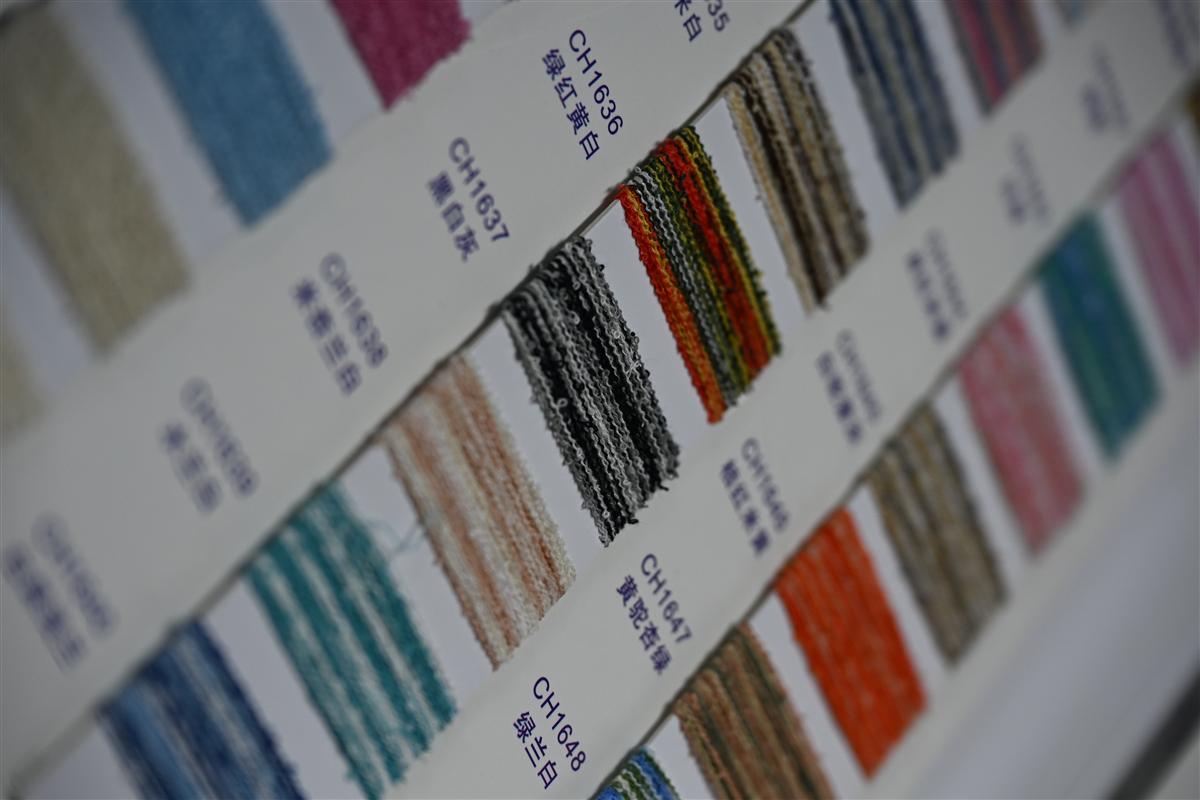
MOQ Impact on Unit Cost
The price gap between 100m ready stock and 1000m custom runs is the first negotiation lever a sourcing manager should pull. The numbers are predictable.
The MOQ-to-Price Relationship: It’s Not Linear
Most buyers assume that doubling the order volume halves the per-meter price. That is not how textile production works. The cost structure is dominated by setup overhead — yarn dyeing, loom configuration, and finishing calibration. Once those fixed costs are absorbed, the marginal cost of additional meters drops sharply.
This is why Asian mills, including Fursone, operate a two-tier pricing model. The 100m ready stock tier carries a higher per-unit cost because it covers the expense of maintaining inventory, color-matching stock lots, and offering immediate dispatch. The 1000m custom tier shifts the cost burden to volume, unlocking a meaningful discount on the base price.
Fursone’s Published Price Ladder
Here is the exact pricing structure for a standard wool/nylon bouclé (280–450 gsm, 140 cm width, OEKO-TEX Standard 100 certified):
- 100m ready stock (50+ colors, ships in 3–7 days): a competitive mill-direct rate.
- 1000m custom run (exact color match, 7-day sampling): an accessible factory-direct rate.
That is a low mill-direct rate saving — or 12.5% — purely for committing to a larger volume. On a 1000m order, that difference equals a sizeable figure in direct material cost reduction. For a sourcing manager tracking landed cost per garment, that margin matters.
Why the Ready Stock Premium Exists
The a competitive mill-direct rate ready stock price is not arbitrary. It reflects the cost of holding 100,000+ meters of inventory across multiple colorways, maintaining immediate availability, and absorbing the risk of unsold stock. European mills that offer similar ready stock often charge €40–€120/m for the same fiber specs — a 3–10x premium driven by brand positioning, not production cost.
The real insight for a senior sourcing manager: the 100m ready stock tier exists to de-risk your first order. You pay a small premium for the ability to test a colorway or a collection without committing to a full production run. Once you validate the quality and sell-through, the 1000m custom tier becomes the obvious economic choice.
The Hidden Cost of Ignoring MOQ Tiers
A common mistake is ordering multiple small lots (e.g., five separate 100m orders) across different seasons. At an accessible factory-direct rate, five 100m orders cost a substantial sum. A single 500m custom run at a low mill-direct rate costs a significant sum — a low mill-direct rate saving, plus reduced freight and customs processing fees. The math favors consolidation when your design team can commit to a consistent base fabric.
| MOQ Level | Price per Meter (USD) | Unit Cost Impact | Lead Time | Best For |
|---|---|---|---|---|
| 100m Ready Stock | a competitive mill-direct rate | Lowest risk; no inventory holding cost for small collections. | 3-7 days | Emerging designers & capsule collections |
| 1000m Custom Bespoke | an accessible factory-direct rate | roughly one-fifth to one-third the price than European mills; bulk savings offset setup. | 4-6 weeks (incl. 7-day sampling) | High-end collections & exclusive textures |
| European Mill Equivalent (1000m) | a low mill-direct rate | 2-3x premium for brand heritage, not quality. | 8-12 weeks | Brands with legacy supplier contracts |
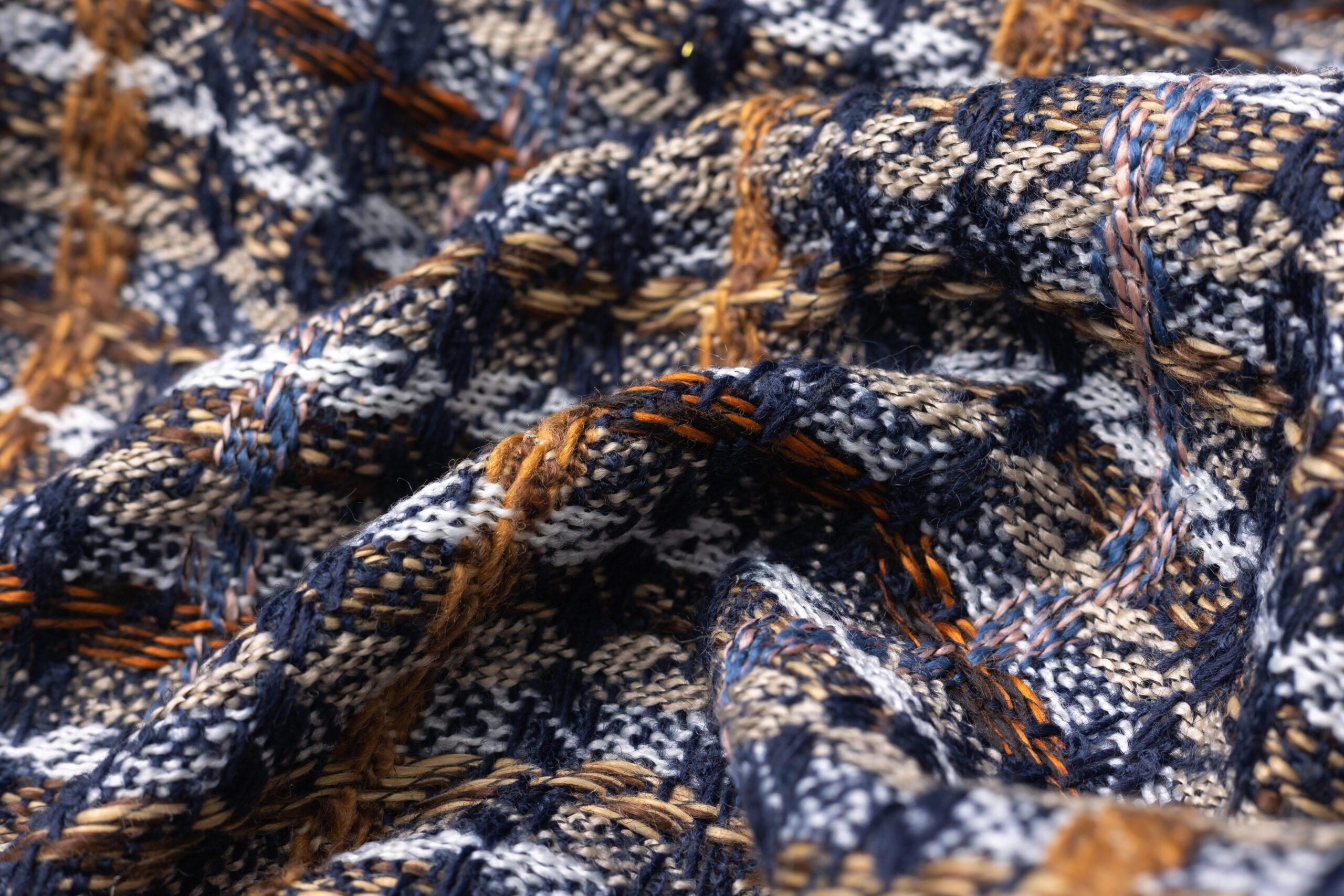
Hidden Costs: Sampling, Shipping & Duties
The Three Fee Categories That Inflate Your Landed Cost
The quoted per-meter price is only the starting point. For a Senior Sourcing Manager evaluating a bouclé fabric cost comparison between Wenzhou and European mills, the real number that matters is the landed cost. Three specific add-on categories consistently push that final figure noticeably higher than the base price.
- Sampling fees (a per-sample fee): Many suppliers treat sampling as a profit center. You pay a competitive mill-direct rate for a 1-meter cut, and that fee is rarely credited back. If you need 10 colorways for a seasonal collection review, that’s a substantial sum in non-recoverable cost before you even place a bulk order.
- Sea freight (a competitive mill-direct rate depending on region): Freight rates fluctuate by container type and route. For a standard 20-foot container of bouclé from Wenzhou to a US West Coast port, expect roughly an accessible factory-direct rate. To EU ports, the rate climbs closer to a low mill-direct rate due to longer transit and higher fuel surcharges.
- Customs duties (6–12% in EU/US): Bouclé fabric classified under HS codes 5111 (woven wool) or 6006 (knitted) typically faces a 6–12% duty rate upon entry. This is a direct percentage added to the CIF value, not the FOB price. A a competitive mill-direct rate fabric at FOB becomes an accessible factory-direct rate after a 12% duty.
Why 7-Day Sampling and FOB/CIF Terms Reduce Uncertainty
The hidden cost problem is not just the dollar amount—it’s the unpredictability. When a supplier requires 3–4 weeks for sampling, you cannot lock in a production timeline. When freight terms are vague, you absorb last-minute surcharges. Suppliers who offer 7-day rapid sampling and explicit FOB or CIF terms remove this uncertainty from your supply chain equation.
For example, Fursone’s sampling process charges a flat fee that is credited toward your first bulk order. This means the an accessible factory-direct rate you pay for a swatch is not a sunk cost—it reduces your first invoice. Combined with published FOB Wenzhou pricing, you can calculate your exact landed cost before committing to a single meter. That level of transparency is rare among affordable bouclé fabric suppliers, and it directly protects your margin.
| Cost Category | Typical Industry Cost | Fursone Advantage |
|---|---|---|
| Sampling Fee | a per-sample fee set | Flat fee credited toward bulk order; 7-day turnaround |
| Sea Freight (per meter) | a low mill-direct rate (Asia to EU/US) | Consolidated shipping for 100m+ orders reduces per-unit cost |
| Import Duties | 6–12% of declared value | OEKO-TEX & BSCI docs expedite customs clearance |
| Hidden MOQ Penalties | Premium for orders under 1000m | 100m ready stock MOQ; no penalty for smaller batches |
| Color Matching Surcharge | a per-lab-dip fee | Included in 7-day sampling; no extra charge for first revision |

Ready Stock vs. Custom Production Pricing
Ready stock buys speed; custom production buys control. The price delta reflects development risk and batch exclusivity, not a quality gap.
Ready Stock: Zero Development Cost, Immediate Shipment
Ready stock bouclé carries no development cost. A buyer selects from existing colorways and weights — at Fursone, that means 50+ classic and seasonal shades in 280–450gsm — and the roll ships in 3–7 days. The trade-off is limited palette and texture options. If a brand’s collection requires a specific Pantone match or a custom loop density, ready stock will not accommodate it. For a Senior Sourcing Manager evaluating speed-to-market against brand identity, this is the critical constraint.
Custom Production: Exact Color and Texture, Higher MOQ
Custom bouclé production requires a minimum order quantity of 500–2000m, depending on yarn complexity. The benefit is an exact match to a brand’s color standard and hand-feel specification — no compromise on the design brief. Fursone’s custom MOQ is 1000m, which is lower than many European mills that demand 3000m+ for bespoke runs. The 7-day sampling process allows a buyer to approve the physical swatch before committing to bulk, reducing the risk of batch rejection. Hidden sampling fees are common in this industry; Fursone’s sampling cost is a flat fee that is credited toward the bulk order, a detail that directly affects a buyer’s landed cost calculation.
Price Comparison: a competitive mill-direct rate vs. an accessible factory-direct rate
The per-meter price difference between ready stock and custom bouclé at Fursone is a competitive mill-direct rate. Ready stock for a mid-market wool/nylon bouclé is a low mill-direct rate at a 100m minimum. Custom bespoke bouclé starts at a competitive mill-direct rate at a 1000m MOQ. That an accessible factory-direct rate premium covers the development labor, color matching, and dedicated yarn sourcing required for a proprietary design. To put this in context, a European mill charging €40–€120/m for the same fiber composition is not pricing for development — it is pricing for brand heritage. The Wenzhou cost advantage remains intact at both tiers.
- Ready Stock (Fursone): a low mill-direct rate, 100m MOQ, 3–7 day lead time, 50+ colors, 280–450gsm, OEKO-TEX Standard 100 certified.
- Custom Bespoke (Fursone): a competitive mill-direct rate, 1000m MOQ, 7-day sampling, exact color matching, same quality standard as European mills at roughly one-fifth to one-third the price cost.
- European Mill Equivalent: €40–€120/m for identical fiber specs, with higher MOQ and longer lead times.
Certifications That Justify Price Premium
OEKO-TEX and BSCI certifications add an accessible factory-direct rate. If your supplier’s price doesn’t include audited compliance, you are buying risk, not fabric.
What a low mill-direct rate Actually Buys You
That a competitive mill-direct rate premium isn’t a markup — it’s an insurance policy. OEKO‑TEX Standard 100 certification means every batch of bouclé has been lab-tested for harmful substances. BSCI social compliance audit means the factory floor isn’t running on forced overtime. For a senior sourcing manager, these documents are the difference between a clean retail launch and a recall that costs 100x the certification fee.
Here is the hard truth most buyers miss: a factory can claim “eco-friendly” or “ethical production” without a single audit. The certification is the proof. Without it, your brand shoulders 100% of the liability if a third-party inspector flags your shipment at customs or a journalist investigates your supply chain.
The Fine Print: Verify the Price Includes the Audit
Many suppliers quote a base price and then add certification costs as a separate line item — or worse, they quote a low price that assumes no compliance documentation at all. When you request OEKO‑TEX or BSCI paperwork at the end of the order, they hit you with a “certification processing fee” that was never disclosed.
The correct approach: ask for a landed cost breakdown that explicitly states which certifications are included in the per-meter price. For example, Fursone’s ready stock bouclé at an accessible factory-direct rate includes OEKO‑TEX Standard 100 certification and BSCI audit availability as standard — not as an upsell. If a competitor quotes a low mill-direct rate but cannot show you the certificate for that specific roll, you are comparing apples to uninsured oranges.
The Risk of Skipping Compliance: A Real Scenario
A mid-market brand sourced bouclé from an uncertified mill at a competitive mill-direct rate, saving an accessible factory-direct rate versus a certified supplier. The fabric passed internal quality checks but failed a random customs inspection for formaldehyde levels. The shipment was held for 6 weeks. The brand missed its launch window, lost a wave of pre-orders and paid heavily in storage and re-testing fees. The small per-meter savings evaporated into a net loss of a low mill-direct rate after all costs — not counting reputational damage.
That is the math that matters. When you compare luxury bouclé fabric price per meter, factor in the cost of compliance. A certified supplier like Fursone closes that gap by delivering OEKO‑TEX documentation with every 100m roll, turning a potential liability into a verifiable asset.
| Certification | Scope & Standard | Impact on Quality & Compliance | Cost Justification for Premium |
|---|---|---|---|
| OEKO-TEX Standard 100 | Product safety; tested for harmful substances (Class I–IV) | Guarantees no banned chemicals; meets EU REACH & US CPSIA | Eliminates costly re-testing & compliance delays; protects brand reputation |
| BSCI Audit (Amfori BSCI) | Social compliance; factory working conditions & ethics | Ensures ethical manufacturing; reduces supply chain risk for buyers | Meets corporate social responsibility (CSR) KPIs; avoids audit penalties |
| ISO 9001 (Quality Management) | Process consistency; batch-to-batch uniformity | Guarantees repeatable loop density, color fastness, and width tolerance | Prevents costly rejects & re-orders; supports landed cost predictability |
| GRS (Global Recycled Standard) | Recycled content & chain of custody | Verifies sustainable fiber sourcing; supports eco-collections | Enables premium pricing for sustainable lines; meets brand ESG targets |
Conclusion
Bouclé pricing breaks down to fiber, MOQ, and mill location. The data shows a roughly one-fifth to one-third cost gap between Wenzhou and European suppliers for the same fiber specs — a gap driven by brand markup, not loop density or color fastness. For a 200-meter order, that difference covers your freight and duties with margin left over.
Review the ready-stock collection to compare per-meter costs against your current supplier. Each listing shows fiber composition, weight, and OEKO-TEX certification — no quote required.
Frequently Asked Questions
Why is bouclé fabric so expensive?
Bouclé fabric commands premium pricing due to its labor-intensive production process, which involves complex yarn twisting and specialized looms to create its signature looped texture. At Fursone, our bouclé achieves European mill quality through meticulous sourcing of high-grade fibers like wool, mohair, and silk, combined with artisan finishing techniques that add depth and durability. The cost is also driven by low yield per yard—each meter requires precise tension control to maintain consistent loops, reducing production speed. Additionally, our 1000-meter custom bespoke MOQ allows brands to access exclusive textures without the waste of mass production, ensuring every meter delivers maximum value for luxury collections.
Is bouclé considered luxury?
Yes, bouclé is unequivocally a luxury fabric, historically associated with haute couture houses like Chanel and prized for its tactile richness and structural elegance. At Fursone, we position bouclé as an affordable luxury, offering premium European mill quality at roughly one-fifth to one-third less cost, enabling high-end brands to elevate their collections without compromising on artisan aesthetics. Its status is reinforced by the intricate craftsmanship required—each meter reflects decades of Wenzhou textile expertise since 1995, ensuring exclusivity and superior hand feel. For luxury fashion houses, bouclé remains a definitive marker of sophistication and timeless design.
What are the three most expensive fabrics?
The three most expensive fabrics globally are vicuña wool, sourced from the rare vicuña animal and priced over a competitive mill-direct rate due to its ultrafine fibers and limited annual shearing; Guanaco, a wild camelid fiber even rarer than vicuña, commanding up to an accessible factory-direct rate; and premium silk like Habotai or Mulberry silk, which can exceed a low mill-direct rate for hand-dyed, artisan-grade weaves. At Fursone, we focus on delivering luxury bouclé and heritage cable knits that rival these high-end textiles in quality and aesthetic, while maintaining accessible pricing for global fashion brands. Our 100-meter ready stock and 7-day rapid sampling ensure clients can access premium textures without the exorbitant costs of ultra-rare fibers.
How much should I charge for fabric?
Pricing for fabric should be based on your total landed cost, including raw material procurement, manufacturing overhead, logistics, and desired margin—typically 2.5x to 4x the per-meter cost for luxury segments. For bouclé from Fursone, our per-meter pricing for ready stock starts competitively, and custom bespoke orders (1000-meter MOQ) allow you to negotiate volume discounts while maintaining savings down to about one-fifth to one-third of European luxury pricing versus European mills. We recommend charging a premium European luxury rate for retail bouclé, depending on fiber composition (e.g., wool-silk blends command higher premiums) and exclusivity of the texture. Our 7-day rapid sampling lets you test market response before committing to full production, optimizing your pricing strategy.
Is bouclé fabric going out of style?
No, bouclé fabric is not going out of style; it remains a perennial favorite in luxury fashion, consistently featured in Chanel collections and adopted by contemporary designers for its versatility in jackets, coats, and accessories. At Fursone, we observe sustained demand from global fashion brands, driven by bouclé’s ability to blend classic elegance with modern texture innovations—our custom bespoke service allows clients to refresh the look with new yarn blends and colorways. The fabric’s cyclical resurgence in runway shows and street style confirms its enduring appeal, and our 100-meter ready stock ensures brands can capitalize on trends without supply delays. Bouclé’s tactile uniqueness and association with artisan craftsmanship guarantee its relevance in high-end collections for years to come.

Related Insights
Fabric Incoterms: FOB, EXW, and DDP Explained for China Orders
EXW means the buyer collects the fabric at the factory gate. FOB means the seller...
How to Import Knit Fabric from China: Customs & Shipping
import knit fabric china is the first checkpoint buyers should lock before they approve a...

Bulk Fabric Ordering: Negotiate MOQ & Pricing With Mills
, { “question”: “What is Fursone’s MOQ structure for stock and custom fabric?”, “answer”: “Fursone...