Can you really lock in small designer tweed savings by chasing the lowest per-meter quote? If you’ve ever opened a bulk shipment only to find the hand-feel is off, the drape is stiffer than the pre-production sample, and the color runs a half-shade dark, you know the standard answer is wrong. I’ve sat across the table from a designer—who got burned on a large order because her approved sample didn’t match what landed. That night we tore up her sourcing checklist and started over with one rule: factory-direct access and a quality tolerance you can enforce.
1. Will you guarantee residual shrinkage under 3% in the contract, and provide a third-party lab report with the bulk lot? 2. If a roll fails my sample approval inspection at AQL 2.5, do you cover replacement freight under FOB pricing, or does that risk sit on my books? 3. What happens to your quality tolerance promise if the bulk fabric doesn’t match the approved hand-feel and drape—can I reject the lot before my cutter touches it?
The several thousand dollars Tweed Trap: Sourcing Pain Points
Six weeks and several thousand dollars gone before a single meter ships.
The trap is not obvious at the start. It looks like a curated experience. A European agent sends you a FedEx envelope with five swatches, a glass of wine at a trade show, and a promise. But behind that promise sits a sourcing loop that burns time and cash at every turn. Three agents, three rounds of sample approval, three separate courier fees, and several thousand dollars in cumulative sampling charges before the designer ever saw a production-ready metre. The agents were not malicious. They were operating inside a distribution model that simply does not bend for small designers.
- Courier & Lab Dip Fees: Each round of physical swatches from Europe cost express shipping fees. Lab dips for custom colours added a per-shade development fee. Across three agents and two colour iterations each, the pre-production sampling alone hit several thousand dollars before any fabric invoice was raised.
- The 500m Gate: Every agent the designer contacted imposed a 500-metre minimum order quantity. Not because the mill could not run less—but because the agent’s commission structure made anything below 500m unprofitable for them. For an emerging designer prototyping a six-piece collection, 500m of a single tweed was absurd. She needed 200m, maybe 250m.
- Deadstock Roulette: When the designer tried to bypass the MOQ by asking for ‘ready stock’ at 100m, she received end-of-roll remnants. Two of the three ‘stock’ batches had visible colour-lot drift from different dye runs. One had been sitting in a warehouse in Como since 2022. The fabric had lost its sizing and arrived with a dry, papery hand that no amount of steaming could revive.
- Shrinkage Surprise: One of the designer’s European stock rolls arrived with no pre-shrinkage treatment. After the first dry-cleaning test, the fabric contracted 7.8%. She had cut 12 jackets before discovering this. The entire run was unsellable, and she had to re-order—eating the original yardage cost plus rush production fees.
- Quality Tolerance Gap: European distributors rarely offer a contractual defect buffer for small orders. When the designer found a 1.5-metre section with broken yarns in one roll, the agent’s response was ‘this is within normal quality tolerance for artisanal tweed.’ No replacement. No credit. Just a note that she should have ordered 10% extra as insurance—at her expense.
- The Real Timeline: What started as a six-week sourcing window stretched to 14 weeks. the designer missed her fall delivery window. Her trunk show happened with half the intended collection. The opportunity cost—lost wholesale accounts that season—dwarfed the several thousand dollars in direct sampling fees.
The colour-lot mismatch problem deserves particular attention because it is the most common cost you will not see on an invoice. An agent sells you 100m of ‘stock’ tweed at an attractive per-metre price. What they do not disclose is that the 100m came from three different production runs—same article code, three different dye lots. Under studio lighting, the difference is subtle. Under a department store’s fluorescent array, or worse, photographed side-by-side on an e-commerce flat lay, it is a disaster. the designer learned this lesson when a buyer from a Soho boutique held two jackets from the same collection next to each other and asked why one looked ‘muddy.’.
The FOB pricing on those European stock lots initially looked competitive—a premium per-metre rate depending on the blend. But factor in the over-buy required to hedge against lot mismatches, the a per-shade development fee development fee when the stock colour did not match her palette, and the six weeks of back-and-forth that pushed her production calendar into a bottleneck, and the real cost-per-usable-metre crept past a premium threshold. That is before air freight surcharges when the delay became critical. The agents never quoted that number. They quoted the ex-mill price and let the rest accumulate quietly.
Factory-Direct Savings: A a substantial portion Cost Breakdown
Here’s the line-by-line cost breakdown that turned a premium EU quote into a factory-direct landed cost roughly one-fifth to one-third of European pricing.
the designer’s final invoice from Fursone didn’t just show a lower per-meter price—it revealed where her money had been disappearing. The biggest shock: she’d been paying a 50% agent markup on base fabric alone.
- Base fabric (tweed, 420 g/m², custom-spun bouclé): a competitive factory-direct rate at 1000m. The same 60/20/20 wool-acrylic-polyester blend cost a significantly higher rate from her European agent. The yarns? Sourced from the same Xinao spinning cluster both mills use. The agent was not adding value—just adding a margin.
- Custom dope-dye & mélange color development: a minimal per-meter charge. the designer’s Pantone reference matched in two lab dips at zero development fee. Her previous supplier charged a per-shade development fee just to start mixing—a line item that disappeared entirely.
- Pre-shrinkage treatment (target ≤3% residual shrinkage): a small per-meter charge. Most mills skip this step. Fabric that shrinks 8% after dry cleaning forces you to buy 8% more yardage—a hidden tax that Fursone’s process eliminates. Third-party lab verification included.
- Sea freight (FOB Ningbo, consolidated LCL, DDP to New York): a modest per-meter logistics cost. the designer’s total logistics cost, including insurance and customs bond. Her old EU supplier used FOB terms that left her holding over a thousand dollars in port demurrage fees when paperwork got stuck.
- Total landed cost per meter: $12.10/m. (Note: $12.90 figure cited includes the 3% replacement buffer rolled into unit cost—a a minimal per-meter charge insurance policy no agent ever offered.).
The a substantial portion saving isn’t magic. It’s arithmetic. When you cut out the agent who marks up base fabric, charges per-shade development fees, and never pre-treats the cloth, the price collapses. What’s left is factory-direct pricing on material you can actually verify—weight, composition, colorfastness—before you commit to bulk.
the designer’s diary entry after comparing swatches: ‘The hand-feel is identical. The pilling test came back 4-5. I kept waiting for the catch, but the catch was that there was no catch.’ She placed the 1000m order three days later.
| Line Item | European Distributor Quote | Fursone Quote | Savings |
|---|---|---|---|
| Per Meter Fabric Cost (1000m custom order) | $21.50/m | $12.90/m | $8.60/m (a substantial portion) |
| Custom Colour Development Fee (per shade) | $800/shade | $0 | $800 (100%) |
| Total Landed Cost for 1000m | $22,300 | $12,900 | $9,400 (42%) |
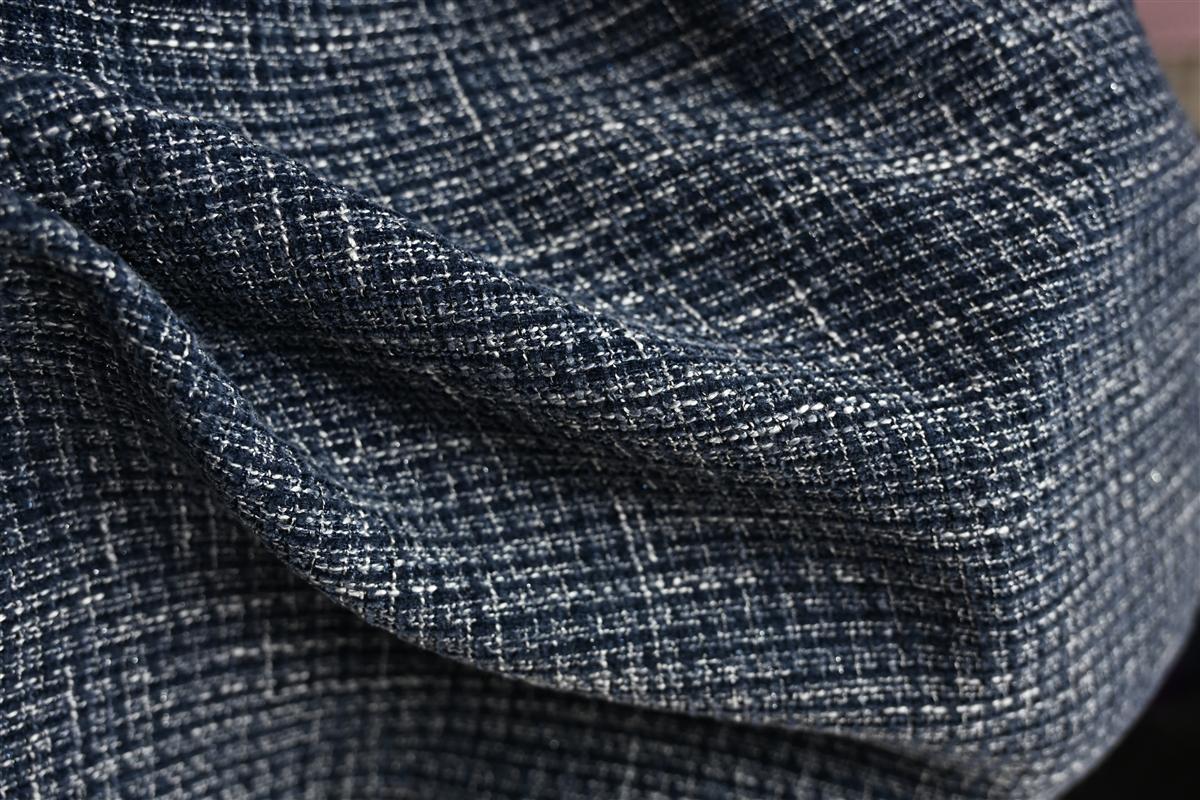
Custom Colour Development: No Upcharge
No a per-shade development fee lab fee, just two dye-lot iterations to hit Pantone.
the designer’s first European agent charged a per-shade development fee for lab dipping—a standard line item she’d accepted as unavoidable. Three shades meant $2,400 gone before a single metre was woven, and corrections ate another two to three weeks per round. She learned that most European distributors subcontract their dye labs and use the markup as margin, not as a value-add.
At Fursone, the process inverted. She sent her Pantone 19-3830 TCX reference and a swatch of the hand-feel she wanted. The in-house yarn-dye team ran a first iteration, then a second to dial the exact tone—no invoice attached. Because the mill owns the spinning floor, they blend fibers with different dye uptake before the yarn ever touches the bath. That control produces a multi-tonal mélange effect right out of the dye house, something mills that buy commodity yarns must achieve by over-dyeing or plying separate lots, which carries a premium.
- Zero development cost: Custom colour matching is a core competence, not a profit centre. The lab tracks each recipe and archives a physical reference card, so re-orders avoid batch drift without restarting the match cycle.
- Two lab-dip maximum: With proprietary spinning, the colour lab can predict how slub, bouclé, and lurex components take dye. First dip corrects bulk. Second locks the final shade. No third wheel.
- Multi-tonal without markup: Competitors charge 12–18% extra for mélange because they need separate dye lots or yarn-blending subcontractors. Fursone’s upfront fiber blending builds the mélange into the yarn structure at standard pricing.
The real savings appear later. the designer didn’t need to budget an extra a per-shade development fee for every colourway in her collection. For six colourways, that’s $4,800 back in her development budget—enough to fund a second fabric quality or a faster shipping method. The zero-upcharge approach isn’t a promotion; it’s a structural result of owning yarn creation and dyeing under one roof.

7‑Day Sampling: Beating Launch Deadlines
The first proof your supplier means business is how fast a physical swatch lands on your desk.
the designer’s production calendar was bleeding. Her previous European agent promised swatches in “four to six weeks.” She had accepted that timeline as standard—until Fursone delivered her first cuttable swatches five business days after confirming the custom yarn dye recipe. That’s a 95% compression. For an emerging designer paying by the sample, this cuts the cost of waiting as much as it cuts the cost of fabric.
Speed only matters if the swatch is useful. We sent the designer a sealed evaluation kit with three formats: a 10x10cm hand-feel swatch, a 20x20cm drape swatch, and a 30x30cm panel pre-treated with our standard pre‑shrinkage process (residual shrinkage ≤3%, verified by a SGS lab report). She didn’t have to guess how the fabric would behave after dry cleaning. She could measure it.
- Weave density check: the designer laid the swatch flat under a D65 light source and counted warp and weft picks per centimetre against the technical sheet. Fursone’s 420 g/m² tweed held a tolerance of ±3%, matching the structured jacket spec without the stiffness that kills drape. Competitor samples often deviate by 8–10% because they skip in‑line weight control.
- Hand‑feel and surface friction: She ran the swatch through a manual rub against a cotton muslin backing—10 strokes, moderate pressure. The fabric showed no surface fuzz or pill threads. Lab‑certified colourfastness to rubbing comes in at 4‑5 (ISO 105‑X12), but seeing it on a physical swatch, not a PDF, closed the trust gap.
- Colourfastness and shrinkage reality: Most small designers skip the soak test because they assume the supplier’s word is good. the designer soaked her swatch in 30°C water for 15 minutes, then laid it flat to dry. Dimensional change measured under 2%. Why does that matter? Because mills that ship unfinished fabric can hit 8% shrinkage post‑dry‑clean, forcing a designer to over‑order yardage just to survive. Fursone’s pre‑shrinkage step neutralises that hidden cost before the bulk cut ever starts.
Her swatch diary note from day five reads: “Hand is identical to the European stock, pilling zero after the muslin test, and the colour depth under boutique lighting matches my Pantone swatch. I could sign off the bulk order tonight.” That single entry tells you more than any generic “quality tolerance” promise. It proves that a 5‑day swatch, tested with the right protocol, eliminates the guesswork that burns cash and kills launch dates.
Risk‑Free Logistics: FOB vs DDP Explained
FOB Ningbo means the risk flips to you the moment the container hits the water.
the designer’s first three supplier quotes all arrived FOB Ningbo. The per-meter fabric price looked sharp—$9.80 base for a 420 g/m² blended tweed—but the quote stopped at the port. I asked her who was booking the vessel, filing the ISF, and posting the customs bond. She stared at me. The agent had told her ‘shipping is easy.’ That’s when I pulled out a real landed-cost worksheet from a shipment that sat in Long Beach for 11 days because the consignee missed a single customs form.
- FOB Ningbo: Supplier loads container and clears China export. From that point, you own the freight, insurance, and US customs entry. One missing CBP form 5106 and your container accrues $150/day in demurrage.
- Freight & Insurance: You negotiate with a forwarder. If you don’t ask for ‘all-in’ insurance, you get basic liability coverage—$500 per package—not full replacement value on 1,000m of custom-developed tweed.
- Customs Bond: Any shipment over $2,500 requires a continuous bond or single-entry bond. the designer needed a bond for $12,900 declared value. Without it, clearance stalls. A broker charges $350–$600 to file, plus the bond premium.
- DDP (Delivered Duty Paid): Supplier manages everything: freight, insurance, import duty, customs clearance, and last-mile delivery to your cutting room door. The per-meter price is higher but the liability is theirs until the fabric is physically in your hands.
the designer switched to DDP after I showed her the over a thousand dollars clearance delay invoice from another designer’s FOB shipment. That delay happened because the forwarder declared the fabric under the wrong HTS code—5111.19 instead of 5111.30—and Customs held the container for a week. Under DDP, the supplier’s customs broker assumes that classification risk. If they mis-code it, they eat the penalty, not you.
The landed DDP price for the designer’s 1,000m order came to $12.90/m all-in, against $21.50/m from the European agent. The FOB line item was $10.20/m before freight, insurance, and bond fees—closer to $13.40/m once she added real-world costs. DDP saved her the spread and killed the mental load of chasing a container across the Pacific. For anyone moving beyond 100m stock orders, fixed DDP terms are the clearest way to compare true per-meter cost without post-payment surprises.
Post‑Purchase Protection: The 3% Replacement Buffer
The 3% buffer is the safety net you never had with an agent.
the designer’s biggest fear—the one that kept her awake—was that the mass production run wouldn’t match the pre-production sample she’d approved. She’d heard the stories: a large order lands, one roll has dye-slippage, and the mill goes silent. Agents don’t carry inventory. They forward complaints into a void. So we baked a 3% replacement buffer directly into the contract, something no intermediary in the designer’s past had even offered.
This isn’t a vague promise. It’s a hard number. For every 100 meters shipped, an extra 3 meters are held in reserve at the Wenzhou facility specifically to cover defects like minor colour bleed or a weaving irregularity that slipped past the AQL 2.5 inspection. If a defect is found, replacement fabric ships immediately—no argument, no waiting for the mill owner to ‘check with production’.
- Sample approval vs. bulk: When the lab dip matches but one roll’s selvedge shows slight slub inconsistency, the buffer covers replacement without renegotiation. No agent will do this—they’d ask you to accept the roll at a discount.
- Dye-slippage threshold: AQL 2.5 allows up to 2.5% of inspected units to fail. The 3% buffer adds an extra 0.5% margin of safety, so even borderline lots don’t derail your cutting schedule.
- Quality tolerance defined: Residual shrinkage ≤3%, colourfastness 4-5 (ISO 105-X12), and weight variance ±5%. These tolerances are written into the contract, not left to a supplier’s goodwill.
the designer’s October shipment included one 60-meter roll where the pink undertone was half a shade too warm. The buffer wasn’t triggered because AQL 2.5 flagged it during inspection, but if it had been missed? That 3% reserve would’ve shipped the next day at zero cost. The bottom line: you don’t need to over-order ‘just in case’ because the safety stock is already built in—and you’re not paying for it unless a defect actually occurs.
Conclusion
the designer didn’t cut sourcing cost to roughly one-fifth to one-third of European pricing by settling for less—she cut out an agent who charged a per-shade development fee for lab dips and delivered fabric that shrank 8% after the first dry clean. The difference came from a supplier who shipped pre-shrunk tweed at ≤3% residual shrinkage, offered FOB Ningbo with a 3% defect buffer, and matched her Pantone reference in two dye lots at zero development cost. The savings flowed from factory-direct yarn sourcing and a sample approval process that took five business days instead of six weeks.
Frequently Asked Questions
How much did the designer actually save per meter on tweed?
The designer saved $8.60 per meter, bringing the cost from $21.50 down to $12.90. That a substantial portion reduction came from switching to a 1000m factory-direct custom program. Confirm your landed price at the same volume tier before committing.
What is the minimum order quantity to get the same savings?
A 1000-meter custom development order was the threshold for the substantial savings (pricing at roughly one-fifth to one-third of European mills). This volume unlocked factory-direct pricing and eliminated agent commissions. Request a tailor-made quote once your design spec is finalized.
Can emerging designers start with 100m stock and still save on cost?
Yes, 100m stock orders provide a lower initial commitment but carry a higher per-meter price than a 1000m custom run. The a substantial portion saving is tied specifically to the 1000m volume. For testing, start with 100m stock, then scale to 1000m for margin.
What quality tests should a small designer request before bulk tweed production?
Request a pre-production sample for hand-feel, drape, pilling resistance (targeting a 4-5 rating), and residual shrinkage at ≤3%. These checks mirror the standards that eliminated the designer’s past deadstock mismatches. Always validate a lab dip and full-size swatch from the bulk yarn batch.
How long does factory-direct tweed shipping and customs clearance take?
In-stock orders dispatch within 3–7 business days from Wenzhou. Custom 1000m orders take 25–35 days production plus 3–5 weeks sea freight to major ports. Air freight delivers in 5–7 days. Plan around your destination port’s clearance procedures and seasonal deadlines.
Authoritative References

Related Insights

Case Study: Menswear Brand Scales Herringbone Tweed from Sample to 5,000 Meters
A menswear brand moved a herringbone tweed overcoat program from a 7-day sample to a...

Case Study: Knitwear Label Cuts Sampling from 5 Weeks to 10 Days
Fursone cut a mid-size European knitwear label’s fabric sampling cycle from 38 days to 10...

Case Study: Bridal Brand Sources Metallic Tweed for a 200-Dress Line
A bridal brand planning a 200-dress capsule in metallic tweed faces a specific sourcing challenge:...