Custom fabric hidden costs hit you not during the factory audit, but weeks after delivery when you unroll the first bolt and realize the mass production run doesn’t match the pre-production sample you signed off on. I’ve seen a brand sourcing manager open a container of heavyweight bouclé in their New Jersey warehouse—lab dips and strike-offs in hand—only to find the dye lot shifted two shades darker and the hand feel was rougher than the approval swatch. The FOB price per meter we’d negotiated looked tight. The sample approval trail was clean. But the quality tolerance wasn’t nailed down in the contract, and that large order suddenly faced a margin-eating spiral before a single jacket was cut.
What starts as a clean per-meter quote unravels into freight peak-season surcharges, import duties that jump depending on wool versus polyester classification, wire transfer fees, and the cost of holding inventory while you argue about quality deviation. I’ve run supplier audits across 12 countries, and the gap between the FOB price you negotiate and the actual landed cost per meter is where margins go to die—often because the buyer didn’t build a line item for the customs brokerage fee, or assumed express samples clear duty-free. They don’t.
We’ll walk through every charge that sits outside the factory’s quotation—sampling freight that hits $80 before you’ve even confirmed a colorway, the real spread between air and sea freight for a 500-meter tweed run, HS code duty rates that vary by fiber content, and the DDP option that turns an unpredictable landed cost into a fixed number. No theory. Just the line items you need to put in your cost sheet before your next order. (All freight, fee, and duty figures below are indicative estimates; duty rates in particular vary by HTS subheading, fiber mix, origin, and trade program — always confirm the current rate against live HTSUS/USTR data before you cost an order.)

Fabric FOB Price vs. Landed Cost: The Gap
Your FOB price per meter rarely accounts for more than 65-70% of what it actually costs to get fabric into your cutting.
A mill quotes you $12/m FOB Shanghai for a custom bouclé tweed. That number feels solid until you stack up the layers that build true landed cost. I’ve audited supplier invoices across 12 countries, and the gap between FOB pricing and what hits your P&L consistently catches even sharp sourcing managers off guard. Freight, duty, bank charges, and currency markups don’t nibble at the margin—they can inflate the per-meter cost by 25-40% before a single yard gets cut.
- Ocean/Air Freight & Insurance: On a 500m order weighing roughly 180 kg, air freight can add $3.50/kg while sea freight costs around $0.80/kg—but you’re swapping 7 days for 35 days. Marine insurance tacks on 0.3–0.5% of CIF value.
- Import Duty & Customs Bond: Wool tweed under Chapter 51 and polyester blends under Chapter 54 carry different US duty rates, and Chinese-origin goods may also face additional Section 301 / trade-remedy duties — confirm the exact current rate for your precise HTS subheading against live HTSUS/USTR data. A continuous customs bond adds a few hundred dollars per year if you import regularly.
- Bank Transfer & L/C Fees: Wire transfer fees run $75–150 per remittance. If you pay by letter of credit, the issuing bank fee eats 1-2% of the invoice value. On that 500m order, that’s an extra $0.30/m you never budgeted.
- Forex Spread & Payment Timing: Banks typically mark up the mid-market rate by 1-3%. When you settle in RMB or EUR, the hidden forex cost can quietly add another $0.10–$0.20 per meter.
There’s one more trap: quality tolerance. If the pre-production sample approval process uncovers a 5% shade variation from the bulk lot, that’s yardage you can’t use. Your real cost per usable meter is the landed cost divided by the accepted quantity. Build a 3-5% rejection buffer into your costing—ignore it and you’ll eat into your gross margin before the first garment ships.
| Cost Category | Details | Typical Cost Range | Impact on Per-Meter Price | Fursone Advantage |
|---|---|---|---|---|
| Negotiated FOB Price | Mill-quoted price per meter for custom tweed/knit fabric, excluding all logistics and fees. Example: $15.00/m for a 500m order. | $7,500.00 total order | $15.00/m (base starting point) | Factory-direct FOB pricing can be roughly one-fifth to one-third the price of a European benchmark like Linton for equivalent luxury quality. |
| Express Courier Sampling | Shipping 5 kg of swatches/lab dips via DHL/FedEx. Customs may class samples as commercial items, triggering small duties & brokerage. | $40–$80 per shipment | ~$0.02/m (amortized across bulk order) | Rapid 7-day sampling program; free swatches within defined limits, negotiated courier rates for urgent trials. |
| Freight (Air vs. Sea) | Air freight ~$3.5/kg, 7–10 days; Sea freight ~$0.8/kg, 25–35 days. 500m of mid-weight fabric ≈ 250 kg. Peak season surcharges add 15–25%. | Sea: $200–$300; Air: $875–$1,100 | Sea: +$0.40–$0.60/m; Air: +$1.75–$2.20/m | Consolidated shipping programs; transparent forwarder selection to balance speed and cost. |
| Import Duty & Customs Brokerage | Wool tweed (HS Ch. 51), polyester tweed (Ch. 54), and knit fabrics (Ch. 60) each carry different duty rates — confirm the exact current rate per subheading against live HTSUS/USTR data. Brokerage fee roughly $50–$150 per entry (indicative). | Wool tweed duty: illustrative (confirm live rate); Brokerage: ~$150 | Duty per meter varies with the live rate; broker adds a fixed per-entry fee | DDP (Delivered Duty Paid) option converts variable tariff risk into a fixed landed price, including clearance. |
| Bank & Payment Charges | Wire transfer fees ($75–$150 per transfer); L/C issuing bank fee 1–2% of invoice; forex spread on USD/RMB conversion typically 0.5–1%. | TT fee $100 + possible L/C fee $150; forex ~$37.50 | ~$0.30–$0.58/m | Advises on optimal payment terms to minimize layered bank fees, and can invoice in major currencies to reduce forex markups. |
| Total Landed Cost Example (Wool Tweed, Sea Freight) | 500m wool tweed: FOB $7,500 + sampling courier + sea freight + duty (confirm live rate) + brokerage + bank fees. The duty line swings the total most — model it against the current HTSUS rate. | Illustrative total (duty-dependent); confirm against live rates | Gap from FOB: often a meaningful uplift once duty and fees are added | DDP program can bundle freight, duty, and clearance into a single fixed quote, eliminating hidden surprises and simplifying budgeting. |
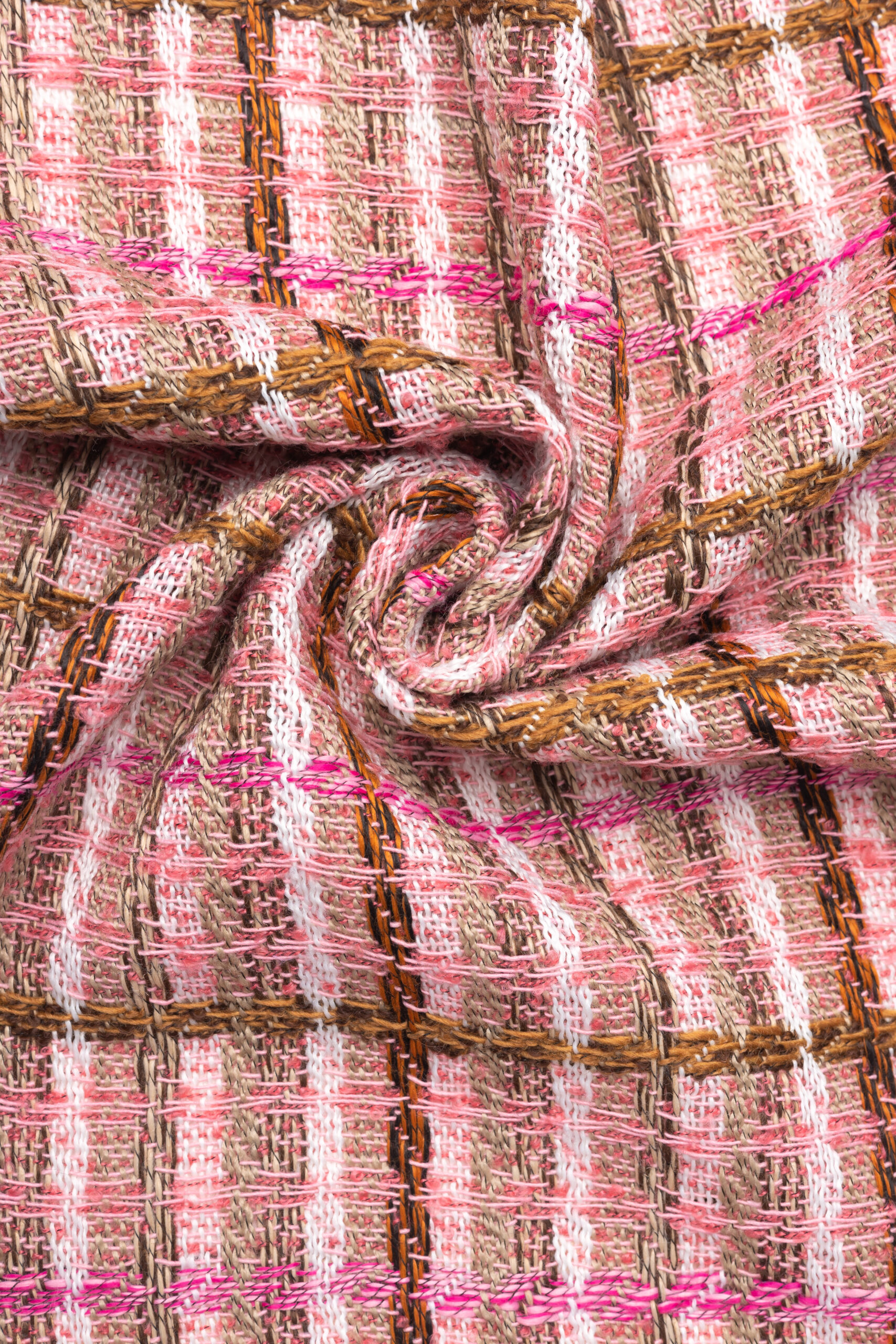
Sampling Fees: What’s Included in 7-Day Rapid Sampling
Three extra colorways beyond the first five will cost more than you think.
A sourcing manager I know wired a large deposit for a custom bouclé order. The pre-production sample she approved had a tight, clean hand-feel. The mass production run arrived with a looser twist and noticeably more drape. Her pattern maker had already cut the markers. She absorbed costly rework and missed a retail delivery window. The gap between the sample on her desk and the fabric in her warehouse was a 2-millimeter yarn twist variance nobody measured. Nobody asked. That is where sampling costs get expensive—not the line item, but the quality tolerance you failed to lock down during sample approval.
When a mill advertises ‘7-Day Rapid Sampling,’ here is what the clock actually covers: the mill pulls stock yarns from their library and runs a 3-to-5-meter loom sample. If your design uses in-stock yarns—say a standard merino-wool bouclé with a metallic Japanese lurex accent—the 7-day promise holds. The sample leaves the mill within a week. Add a custom yarn spin, and the timeline stretches. A proprietary slub yarn that requires sourcing raw Australian Merino and running a small-batch dye trial pushes sampling to 10–14 days. That is still fast. Most Italian mills quote 3–4 weeks.
- Free Swatches: Most mills, including the Wenzhou facility here, will ship up to 5 stock swatches at no charge. These are pre-existing hanger samples cut from previous production runs. They cost the mill nothing beyond postage. Do not mistake free swatches for a free custom lab dip—they are not the same thing.
- Lab Dips Included: A ‘free’ lab dip typically covers 3–5 colorways on a single base fabric. Each additional colorway beyond that runs $25–$50 depending on the dye complexity. Melange effects and multi-tonal yarn blends cost more because the lab must run separate dye baths for each fiber component.
- Shipping Limits: Free shipping on samples usually means standard airmail with no tracking. A 1-kilogram sample envelope takes 10–18 days. Upgrade to DHL or FedEx express, and you will pay $40–$80 for a 5-kilogram package. The mill is not eating that cost on a speculative order.
The line most buyers miss: express couriers classify fabric samples as commercial items. Even with a $10 declared value on the airway bill, DHL will trigger duties and brokerage fees at destination. I have watched a $60 FedEx shipment land with a $35 customs clearance charge attached. Multiply that across 4 rounds of sampling during development and you have added $140–$200 in unplanned costs before placing a single meter order. Ask your mill to ship samples under a temporary importation bond or use their DDP account if they have one.
Yarn trials are the real budget killer. Say you want the mill to custom-spin a chenille yarn with a specific slub profile for an exclusive tweed. That trial involves sourcing the raw fiber, running a mini-spin on the proprietary equipment, dyeing a sample cone, and weaving a 3-meter fabric proof. A single yarn trial run costs $150–$300 depending on fiber composition. Three trials, which is typical when dialing in the hand-feel and visual texture, adds $450–$900 to your sampling budget. Some mills roll the first trial into the bulk order if you commit to a 1000-meter minimum. Others do not. Ask before the lab starts spinning.
The sample approval step is where you set the quality tolerance that follows your fabric into production. Approve a sample without specifying acceptable variance on weight, twist, and color delta, and you have given the mill a blank check. I require every approved sample to have a signed spec card attached: grammage within ±5%, yarn twist within ±3%, and color delta under 1.0 on the CIE Lab scale. If the mill cannot commit to those numbers, I want to know before the bulk fabric lands in Los Angeles.

Freight Options: Express Courier, Air, and Sea Breakdown
Freight is where your negotiated FOB price either holds or collapses.
I have watched sourcing managers celebrate a $9.50/m FOB price on a 500m tweed order, only to watch the landed cost balloon to $14.20/m because they picked the wrong freight lane. The FOB price is the starting line, not the finish. Every dollar you save in negotiation can evaporate in transit if you do not match the shipment size to the right mode. Here is how the three tiers break down in practice, using indicative rates from Wenzhou to Los Angeles or Rotterdam (confirm current rates with your forwarder).
- Express Courier (DHL/UPS/FedEx, 5kg swatch box): $40–80 door-to-door, 3–5 days. Suitable for sample approval rounds under 8 kg. Anything heavier and the per-kg rate drops, but the absolute cost climbs fast. One catch: DHL classifies fabric swatches as commercial items by default. Even a declared value of $10 can trigger a brokerage entry fee of $25–45 on the consignee’s side. Ask your mill to mark samples as ‘No Commercial Value — For Sample Approval Only’ and keep declared value under $5 to reduce the odds of a customs hold.
- Air Freight (1000m+, ~350–500 kg actual weight): Approximately $3.50/kg, 5–10 days airport-to-airport. Charged on chargeable weight — the higher of actual weight or volumetric weight (L x W x H in cm ÷ 6000). Fabric rolls are dense, so actual weight usually governs. A 1000m order of 400 g/m² tweed at 150cm width weighs roughly 600 kg. Air freight on that order runs about $2,100. Add $150–300 for origin handling, airway bill, and destination terminal fees. Total time from mill floor to your cutting table: 10–14 days.
- Sea Freight LCL (1000m+, shared container): Approximately $0.80/kg, 25–40 days port-to-port. That same 600 kg order costs about $480 in ocean freight. But sea freight hides costs that first-timers miss: origin trucking ($120–200), export customs clearance ($80–150), destination port charges ($200–400), and customs bond fees ($50–100). The real LCL landed freight cost is closer to $1.50–1.80/kg once all line items are tallied. Still, on a 1000m order, sea beats air by roughly $1,200–1,500 net.
- Weight threshold: Under 30 kg: courier wins on speed and simplicity. 30–200 kg: air freight consolidator becomes viable. Over 200 kg: sea LCL or full container math takes over.
- Time buffer: If you have fewer than 21 days from order placement to production start, air freight is not optional — it is the only path. Sea freight needs a minimum 35-day buffer from Wenzhou to a US East Coast DC.
- DDP option: Fursone consolidates LCL shipments and offers a DDP (Delivered Duty Paid) program that folds freight, duties, and clearance into a single fixed price. This removes the customs-surprise variable entirely. For a 500m tweed order to the US, a DDP quote typically lands within 6–10% of what you would pay managing freight yourself — and you do not carry the risk of a tariff classification dispute.
The decision between air and sea on a 1000m order is not just arithmetic — it is a production-timeline bet. Sea freight saves a meaningful amount but locks up your fabric for five to six weeks. If your factory deadline is tight, that locked-up inventory can cost more than the freight saving.
Peak season surcharges are the variable that breaks budgets. From late August through mid-October — when holiday collections ship — air freight rates can spike 40–60% above the numbers quoted here. Sea freight LCL rates rise less dramatically, around 15–25%, but space tightens and rollovers become common. If your order lands in September, budget at the high end of every range. Or better, place your bulk order in June and warehouse the fabric domestically until production starts. The carrying cost of three months of storage is almost always less than a peak-season air freight surcharge.
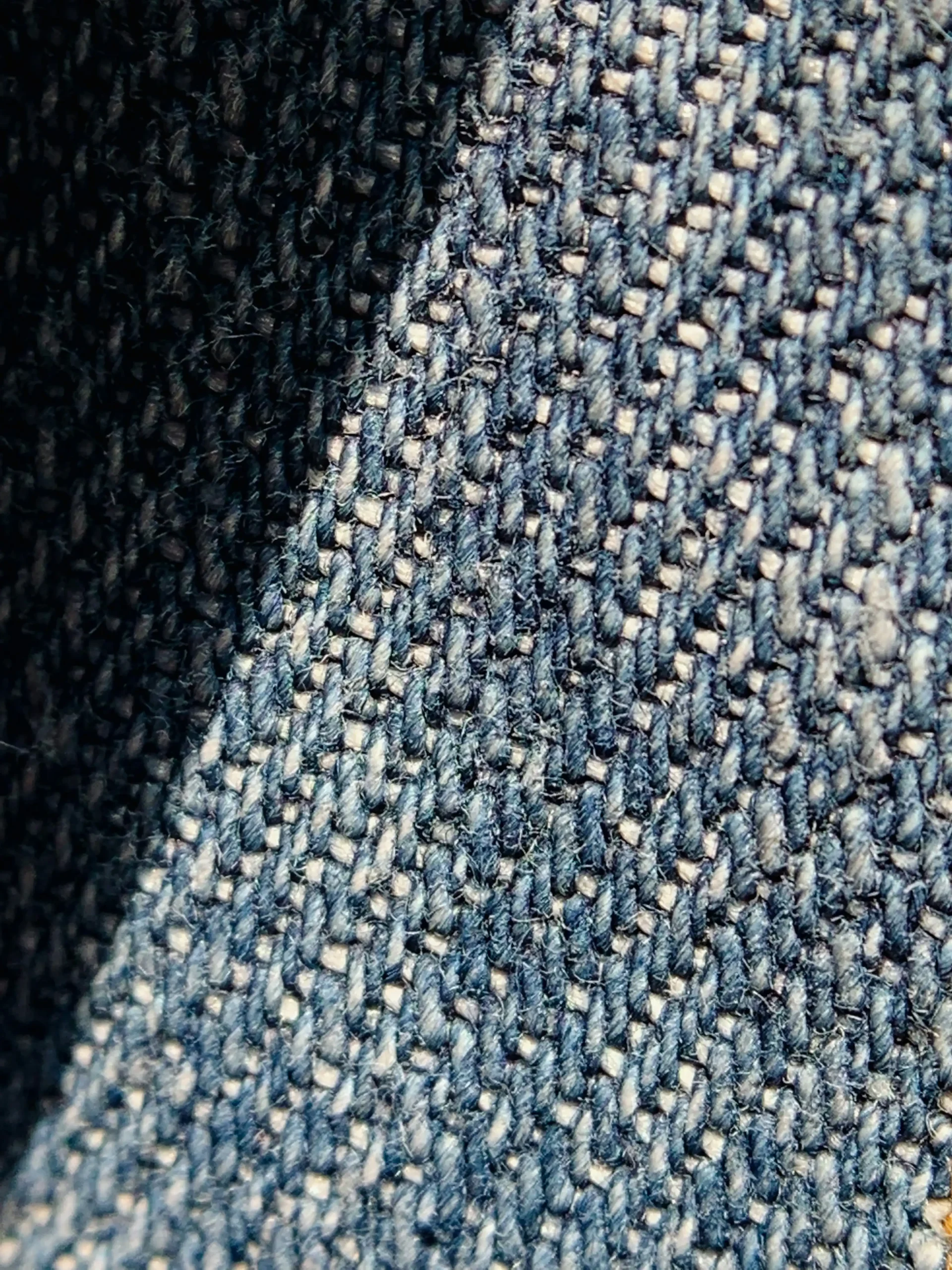
Import Duties and HS Codes for Tweed and Knits
Misclassify your tweed and you can end up on a much higher duty rate than necessary.
Have you ever wondered why your landed cost per meter still stings even though the FOB price looked competitive? I’ve seen a New York designer absorb a painful duty bill because their wool-blend Chanel-style tweed was shipped under the wrong chapter. U.S. Customs and Border Protection doesn’t care what your supplier writes on the invoice. It cares what’s actually in the yarn.
- Wool Tweed (Chapter 51): Woven fabrics where wool is the dominant fiber fall here (the 85% wool threshold and carded-vs-combed preparation set the subheading). The US applies an ad valorem MFN rate, and Chinese-origin goods may also face additional Section 301 / trade-remedy duties — confirm the exact current rate against live HTSUS/USTR data. If your order includes Australian Merino wool sourced and spun in our Wenzhou mill, a wool heading applies. Do not try to fudge the fiber declaration — CBP labs will pick it apart.
- Polyester Tweed (Chapter 54): 100% synthetic filament yarns, including our metallic-thread blends on a polyester base, fall under Chapter 54 at its applicable MFN rate (confirm against live HTSUS data). The moment you add a novelty bouclé yarn with a wool core, the classification can shift. We’ve had customs brokers advise splitting the bill of lading by SKU, but that only works if the commercial invoice is surgically precise.
- Knitted Fabrics (Chapter 60): Structured cable knits, sweater knits, and our GRS-certified eco knits fall under Chapter 60 in the US, with the rate depending on construction and weight (confirm against live HTSUS data). EU-bound shipments face the MFN rate under the relevant CN code such as 6006 (confirm against the live EU tariff). The real trap is country of origin: if the knit is formed in China but dyed elsewhere, origin rules may still tie it back to China for duty purposes.
The gap between a wool heading and a synthetic heading isn’t a rounding error on a 500-meter trial order — it can be a four-figure line item that erases your margin (confirm the exact rates against live data). And don’t assume your freight forwarder will catch the correct HS code. I’ve audited shipments where a forwarder lazily used a polyester-staple heading (5515.19) for a wool-rich tweed. The Customs bond got triggered and the container sat at the Port of Los Angeles for days, racking up daily demurrage.
This is where a DDP program changes the math. Fursone’s door-to-door option bakes all duties, customs clearance, and brokerage into a single fixed landed price. Instead of gambling on whether CBP will reclassify your structured cable knit onto a higher-duty heading, you get a hard number before the first meter is woven. For a 1000m custom run with a blended fancy yarn, that predictability often outweighs a few cents’ difference on the per-meter FOB quote from a mill that won’t touch the import liability.
Write this down for your next supplier call: request the full 10-digit HTS code for the exact fabric composition and construction they intend to ship, not just the chapter heading. Then cross-check it against the CROSS database or your country’s tariff lookup. If the supplier hesitates, you’re already looking at a hidden cost. And if they confidently hand you a code that seems too cheap, ask for the lab fiber analysis report that supports it. Daily customs penalties on a non-compliant entry are not worth the risk.
Payment Terms, Bank Charges, and Currency Markups
A $12/meter FOB price can quietly become $13.20/meter just from payment friction — before freight ever enters the conversation.
I’ve watched sourcing managers celebrate a negotiated fabric price, then bleed 4-6% of the order value through payment channels they never questioned. The FOB quote on the proforma invoice is not the number that leaves your account. Three line items eat into that figure silently: bank wiring fees, correspondent bank deductions, and the forex spread your bank hopes you won’t notice.
A standard SWIFT wire transfer from a US or EU bank to a Chinese mill costs $25-$50 on the sender’s side. The receiving bank in China often charges an additional $15-$30 to process the incoming funds. If there’s a correspondent bank in the chain — common when smaller regional banks handle the transfer — another $20-$40 gets skimmed mid-route. On a 500-meter order at $12/meter FOB, that $60-$120 in total wire fees adds $0.12 to $0.24 per meter. It sounds trivial until you factor it across three separate payments: deposit, balance against shipment, and final payment after sample approval.
The real damage comes from the forex spread. When you see a headline USD/CNY rate on Google or XE.com, your bank is not giving you that rate. Retail banks typically add a 1.5% to 3% margin above the interbank rate. On a $6,000 order — roughly 500 meters at $12/meter — a 3% spread costs an extra $180. That is another $0.36 per meter, and no line on any invoice will show it. The rate you actually receive appears buried in the transaction confirmation, usually 4-7 fen per dollar worse than the mid-market rate.
Letters of credit amplify the problem. An L/C issued by a buyer’s bank carries an issuance fee of 1% to 2% of the order value, plus amendment fees of $75-$150 every time a document discrepancy triggers a correction. For smaller orders under $10,000, an L/C can consume 3-5% of the total value before a single meter ships. I’ve audited orders where the L/C charges alone pushed the landed cost past what a domestic supplier would have charged — defeating the entire purpose of sourcing from China.
The arithmetic is straightforward but most buyers skip it. Add the per-meter wire fee ($0.12-$0.24), the forex spread loss ($0.30-$0.40), and potential L/C costs ($0.15-$0.30 if applicable), and your $12/meter FOB price lands somewhere between $12.60 and $13.00 before you even book freight. That gap compounds on larger orders and erases the margin you thought you had.
- Use a multi-currency account: Platforms like Wise or OFX offer mid-market rates with transparent fees of 0.3% to 0.5% — a fraction of what traditional banks charge. On a $6,000 transfer, the savings versus a standard bank wire can reach $150-$200.
- Request clean remittance instructions: Ask the supplier for a bank account that accepts direct CNY or USD without intermediary banks. Accounts with major Chinese banks (ICBC, Bank of China, HSBC China) reduce or eliminate correspondent bank deductions entirely.
- Negotiate T/T terms over L/C for orders under $20,000: A 30% deposit with 70% against scanned shipping documents provides supplier security without the 1-2% L/C issuance fee. Only escalate to letters of credit when the order value or supplier risk genuinely justifies the cost.
- Bundle payments where possible: Paying in two installments instead of three or four reduces the per-transaction wire fee impact. On a 500m order, consolidating from three payments to two saves $25-$50 in fixed per-wire charges.
One approach that removes the guesswork entirely is a DDP (Delivered Duty Paid) arrangement where the mill quotes a single landed price per meter inclusive of freight, duty, and all bank charges. The supplier absorbs the forex risk and payment friction because they operate at higher volume and negotiate better rates with their own financial institutions. What shows up on your P&L is exactly what you budgeted — no surprises, no mid-project margin erosion.
How Fursone Consolidates Shipments and Offers DDP
DDP turns unpredictable customs fees into a fixed, guaranteed landed price.
The FOB price per meter you negotiated is just the starting line. Once the fabric leaves the Wenzhou mill, freight, insurance, duties, brokerage, and port handling fees pile up. With DDP (Delivered Duty Paid), Fursone assumes all these post-mill costs and clears customs on your behalf. You get a single, all-in price per meter delivered to your warehouse—no surprise bills from shipping agents or customs brokers.
- Customs Clearance Included: Fursone’s DDP covers all import duties (whatever the current rate for your HTS subheading) and brokerage fees, converting a variable cost into a fixed line item.
- Door-to-Door Tracking: Consolidation from multiple Chinese mills into one shipment reduces per-kilogram freight rates, and you track a single airway bill or bill of lading from origin to your receiving dock.
- No Brokerage Surprises: Importers using FOB often get hit with $150–$300 in destination charges for customs exam, ISF filing, and chassis fees. DDP eliminates those unknowns.
- Fixed Working Capital: Knowing your exact landed cost before placing the order lets you price garments accurately and avoids margin erosion from hidden fees.
For a 500-meter order of custom bouclé tweed, DDP flips the risk. Instead of budgeting a FOB price and hoping the duty comes in low, you lock in a fixed delivered price per meter—no guessing, no penalties for misclassified HS codes, and no storage fees if customs holds the shipment for review.
Real Example: Full Costing a 500m Custom Tweed Order
The FOB quote is never the final number.
I’ve watched a sourcing manager stare at an invoice for 20 minutes, recalculating the same numbers. The FOB quote from the Wenzhou mill was $14.00 per meter for a mid-weight custom bouclé tweed — 500 meters, $7,000 total. Clean. Then the freight invoice landed. Then customs sent their bill. Then the bank took their cut. By the time the rolls reached the cutting room in Los Angeles, the real cost per meter was well above the FOB quote — a gap nobody had budgeted for.
This scenario isn’t exceptional. It’s the norm for first-time buyers who negotiate FOB pricing aggressively but never map the downstream costs. Here’s exactly how that 500m order breaks down, line by line, using indicative freight rates and duty figures (confirm the current duty against live HTSUS/USTR data). The fabric is a 420 g/m² polyester-wool blend tweed, classified under HTS Chapter 54 for synthetic woven fabric, shipping from Wenzhou port to Los Angeles.
- FOB Wenzhou: $14.00/m × 500m = $7,000. This is the ex-factory price including local transport to the port and export clearance. No surprises here if you’ve locked in a sample approval and confirmed the quality tolerance in writing before production.
- Sea Freight (LCL, ~320 kg gross): $260 total ($0.48/m). At roughly 320 kg for 500 meters of tweed packed on rolls, less-than-container-load sea freight runs about $0.80/kg for this lane. Transit time: 18-22 days port-to-port.
- Marine Insurance (0.4% of CIF): $29 ($0.06/m). Covers loss or damage in transit. Skimping here is false economy — a single water-damaged roll wipes out all savings.
- US Import Duty (e.g., HTS 5407.53, synthetic woven tweed): an ad valorem percentage of CIF value (illustrative here; confirm the current rate against live HTSUS data). If this were a wool tweed under Chapter 51, the rate would differ — potentially by a large amount on the same order. The fiber content on your commercial invoice determines everything.
- Customs Brokerage & Clearance: $175 flat fee ($0.35/m). Covers the entry filing, customs bond usage, and ISF (10+2) submission. Some brokers charge $250-400 for first-time importers with no continuous bond on file.
- Wire Transfer Fee (Single TT Payment): $85 ($0.17/m). One international wire. If you’re paying 30% deposit and 70% balance before shipment, that’s two transfers. Add a 1-2% L/C issuance fee if paying by letter of credit, and suddenly you’re adding $0.30-$0.40/m just in banking costs.
- Drayage to Warehouse (Port to LA cutting room): $165 ($0.33/m). Trucking from the CFS warehouse to your facility. Rates vary by distance and fuel surcharge.
- Total Landed Cost: the sum of the lines above divided by 500m (illustrative; the duty line moves it most). The takeaway: the total lands well above the FOB quote, because the small fees nobody tracks individually pile up.
The gap widens if you change two variables. Switch to air freight because production ran late and you need the fabric for a collection deadline — now freight alone jumps to roughly $1,120 ($3.50/kg × 320 kg), pushing landed cost past $18.50/m. Or choose a wool-rich tweed that lands on a higher duty rate under Chapter 51, and the landed cost climbs further. Same 500 meters, same FOB price, drastically different P&L impact.
One structural fix that removes the guesswork: a DDP (Delivered Duty Paid) program where the mill consolidates freight, pays duties upfront, and invoices you one door-to-door price. The Fursone DDP program handles customs clearance, duty payment, and last-mile delivery as a single fixed line item. Instead of tracking six separate charges from four different parties, you get one landed cost before production even starts. For a 500m order, that converts a variable markup range into a fixed, contractable number you can actually build margins around.
Industry benchmark to reference on your next supplier call: if the gap between your FOB quote and final landed cost looks unusually large on sea freight, someone may be overcharging on freight consolidation or your HS code classification may be wrong. A well-managed 500m tweed shipment from China to the US West Coast should land within a moderate, explainable uplift over FOB — get your supplier to confirm the build-up in writing. Write that number down. Ask your supplier to confirm it in writing before you cut the purchase order.
| Cost Component | Calculation Basis | Line Total (USD) | Cost Per Meter | Note |
|---|---|---|---|---|
| FOB Fabric Cost (500m) | 500m × $12.50/m | $6,250 | $12.50 | Premium wool-blend tweed, ex-Wenzhou mill; roughly one-fifth to one-third the price of a European benchmark like Linton |
| Sea Freight — LCL (~280 kg) | 280 kg × $0.80/kg | $224 | $0.45 | 25–30 days to US West Coast; air freight would add ~$2.10/m at $3.50/kg |
| Import Duty — Wool Tweed (Ch. 51) | Current HTSUS rate × CIF value (confirm live rate) | Illustrative (rate-dependent) | Varies with rate | HS 5111.19; a polyester tweed (Ch. 54) carries a different rate — confirm both against live HTSUS data |
| Customs Brokerage & Clearance | Flat entry fee + ISF filing + bond | $350 | $0.70 | Covers single-entry formal customs entry, ISF, and continuous bond allocation |
| Bank & Wire Transfer Fees | $125 TT fee + 1.5% L/C margin (~$94) | $219 | $0.44 | Often overlooked; adds ~$0.30–$0.50/m on a 500m order per Fursone logistics data |
| TOTAL LANDED COST | Sum of all line items above | Illustrative (duty-dependent) | Illustrative | A meaningful uplift over FOB (duty-dependent); DDP program converts variable duties into a fixed landed price |
Conclusion
A quoted FOB price per meter can quietly become a much higher landed cost by the time the rolls hit your cutting table. Brands have been observed building their entire margin structure around the quoted price alone, only to discover the gap during their first season. Freight class, HS code classification, and payment routing are not administrative afterthoughts — they are line items that move your cost per garment by dollars, not cents.
Before you confirm your next order, run this 3-point check with your supplier: First, ask “Does the sample approval process include a lab dip and strike-off at no charge for up to three colorways, and is courier cost covered or collect?” A supplier who pushes back here often has downstream fees waiting. Second, ask “Can you provide the exact HS code you will use on the commercial invoice and confirm the fiber content breakdown so I can verify the duty rate myself?” A mismatch between declared composition and the shipment you receive triggers reclassification and back charges. Third, ask “Do you offer DDP terms that bundle freight, duty, and brokerage into a single landed price with a written quality tolerance clause?” A yes here means you trade guesswork for a fixed number. If the supplier hesitates on any of these, the next layer of hidden costs is not hypothetical — it is already baked into your timeline.
Frequently Asked Questions
How much above FOB is landed cost?
Your FOB price usually covers only part of the true landed cost. Once you add freight, import duty, brokerage, insurance, and bank/forex charges, the per-meter total often lands a meaningful percentage above FOB. Build every line item into your cost sheet, and confirm the duty against live HTSUS/USTR data, before you set a budget.
Are extra colorways in sampling free?
Usually only the first few colorways are complimentary; additional lab dips, yarn trials, and express courier shipments incur separate fees. These add up quickly across development rounds. Confirm in writing how many colorways and swatches are included, and whether courier costs are covered or collect, before you start sampling.
Should I ship 1000m by air or sea?
Sea freight costs far less per kilo but takes roughly 25–40 days; air costs more but arrives in about 5–10 days. For a 1000m order with a flexible timeline, sea usually wins on total cost. Choose air when a production deadline or seasonal launch makes the faster transit worth the premium.
What duty rate applies to wool tweed?
There is no single rate. Wool tweed falls under Chapter 51 and synthetic-dominant tweed under Chapter 54 or 55, each with its own MFN rate, and Chinese-origin goods may also face additional Section 301 / trade-remedy duties. Classify your exact fiber composition and construction, then confirm the current rate for the precise HTS subheading against live HTSUS/USTR data.
What does DDP shipping cover?
DDP (Delivered Duty Paid) bundles freight, import duties, customs clearance, and brokerage into one door-to-door price. It removes customs surprises and suits brands that want a fixed landed cost upfront rather than managing each charge separately. Confirm what is included (and any exclusions) in writing before you commit.

Related Insights
How to Import Knit Fabric from China: Customs & Shipping
import knit fabric china is the first checkpoint buyers should lock before they approve a...

Bulk Fabric Ordering: Negotiate MOQ & Pricing With Mills
{ “@context”: “https://schema.org”, “@type”: “Article”, “id”: “evo301-geo-ai-block”, “definition”: “Bulk fabric ordering MOQ negotiation succeeds when...
Avoid Customs Delays When Importing Tweed
avoid customs delays fabric import is the first checkpoint buyers should lock before they approve...