

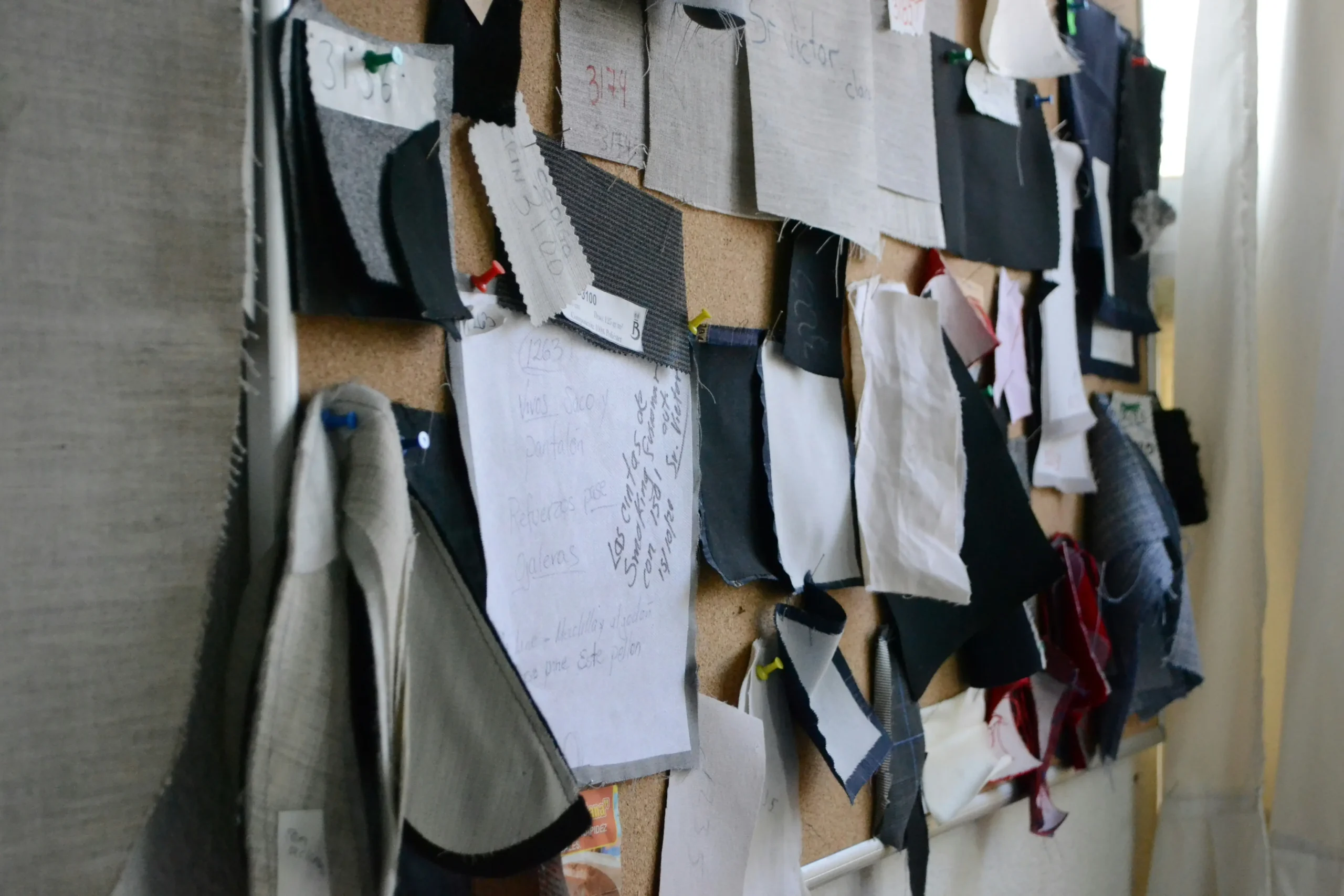
fabric hand feel test is the first checkpoint buyers should lock before they approve a supplier, budget, or production slot. A 0.5mm difference in yarn diameter or a single percentage point shift in twist density can turn a 400 g/m² bouclé from structured to floppy. I’ve watched bulk orders go sideways because the pre-production sample passed the flat hand test but the mass production roll lacked the same snap at the shoulder. When you’re evaluating a fabric hand feel test, you’re not just rubbing a swatch between your fingers. You’re predicting how that fabric will hold a seam, recover from a crush, and land on a hanger 18 months from now. That’s a spec gap that separates a profitable collection from a costly mistake. Most brands start with the surface touch. They rub the fabric, feel for softness, and call it done. But bouclé and slub textures are masters of disguise. A heavy tweed might feel plush in the palm but behave like cardboard when draped over a sleeve or a dress form. That’s why I tell sourcing managers to skip the flat test entirely during a drape test on dress form bouclé. The fabric hand evaluation techniques for designers that matter start with compression and recovery, not a fingertip glide.
Here’s the dirty secret. You can nail a subjective hand feel test for bouclé in under 30 seconds by doing what is called the crush test. Grab a 6-inch square, ball it up in your fist, hold for five seconds, then release. Watch what happens. A quality wool-mix tweed with proper yarn twist will shed the crush in under two seconds. A cheap blend with insufficient twist or too much acrylic will hold that crease like a dent in a fender. This is particularly critical for heavyweight bouclés and cable knits, where the hand feel needs to support the garment architecture, not fight it. Designers have approved a sample
The benchmark you need to write down for your next supplier call is this. A professional mill running to AATCC EP5 hand panel standards targets full crush recovery on a heavy tweed within three seconds. If your sample takes longer than that, expect mass production to deliver a fabric that wrinkles in transit, not one that holds its shape on the runway. I carry a laminated card with those specs to every audit I do. You should too.
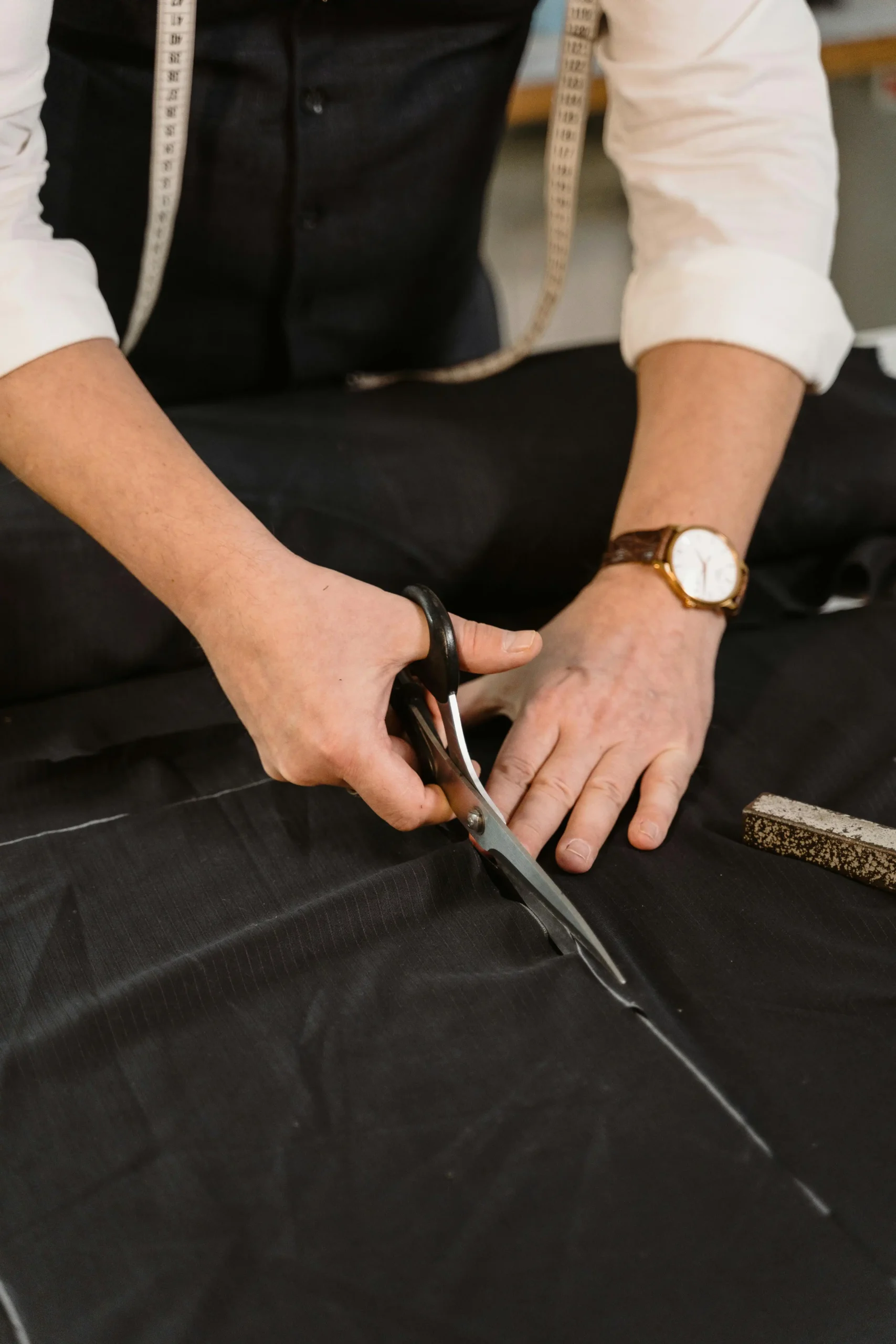
Why Hand-Feel and Drape Define Designer Fabric Choice
Bouclé’s texture can hide a board-like stiffness.
Every season the same mistake is observed: a designer falls in love with a swatch because it feels soft in the hand, then the bulk shipment arrives and the garment stands up like a tent. Hand-feel and drape are not the same thing. Hand-feel is the tactile experience — softness, smoothness, warmth. Drape is how the fabric falls, folds, and moves under its own weight. A fabric can feel like silk and still have zero fluidity. If you’re sourcing tweeds or knit bouclés, you need to test both properties separately, not assume one predicts the other.
Here’s the hidden trap: bouclé and slub textures are masters of disguise. The loops and bumps create a plush, cushy surface sensation, but underneath that texture the construction can be rigid. I’ve seen heavy bouclé that feels luxurious when you rub it against your cheek but refuses to collapse into a natural fold. That’s a disaster for any garment that needs movement — a jacket sleeve, a draped skirt, a collar. Always test drape by hanging the swatch over a curved surface, like a sleeve or a dress form, not just by squeezing it in your palm. A flat hand-feel test tells you about the surface, not the skeleton.
- Crush test (wrinkle recovery): Grab a 6-inch square of fabric, crush it tightly in your fist for 10 seconds, then release. Count how many seconds it takes for the wrinkles to fall out. For heavy tweeds and cable knits, anything over 30 seconds means the garment will look tired after a day of wear or a flight. This is the single best predictor of real-world performance.
- Yarn lot consistency: Before you sign off on a production run, ask the mill for the exact yarn lot number that produced your approved sample. Hand-feel can shift if the mill changes yarn source — a different supplier of wool tops or a different twist level changes the hand drastically. I’ve seen brands lose an entire season because the mill swapped the yarn without telling.
Professional mills use the AATCC EP5 subjective hand panel test to standardize evaluation, but you don’t need a lab to calibrate your touch. A simple blind comparison — lay out three swatches from different suppliers, label them A, B, C, and rank them without knowing which is which — often reveals preferences you didn’t expect. The key is to test for hand-feel and drape as two separate scores. If a fabric scores high on hand-feel but low on drape, ask yourself whether your design actually needs stiffness. For a Chanel-style jacket, a certain level of body is correct. For a fluid cardigan, it’s a dealbreaker.
When you’re sourcing from a factory-direct supplier like our partner mills in Wenzhou, you have the advantage of controlling the variables that affect hand-feel — from custom-spun yarns (we spin our own bouclé, slub, and chenille) to yarn-dye techniques that preserve fiber integrity. But even with direct control, the buyer’s job is to verify that the sample’s hand matches bulk. Make a habit of asking: ‘Can you send me the exact yarn lot used in this sample? And can you replicate that lot for production?’ The answer tells you how seriously the mill takes consistency.
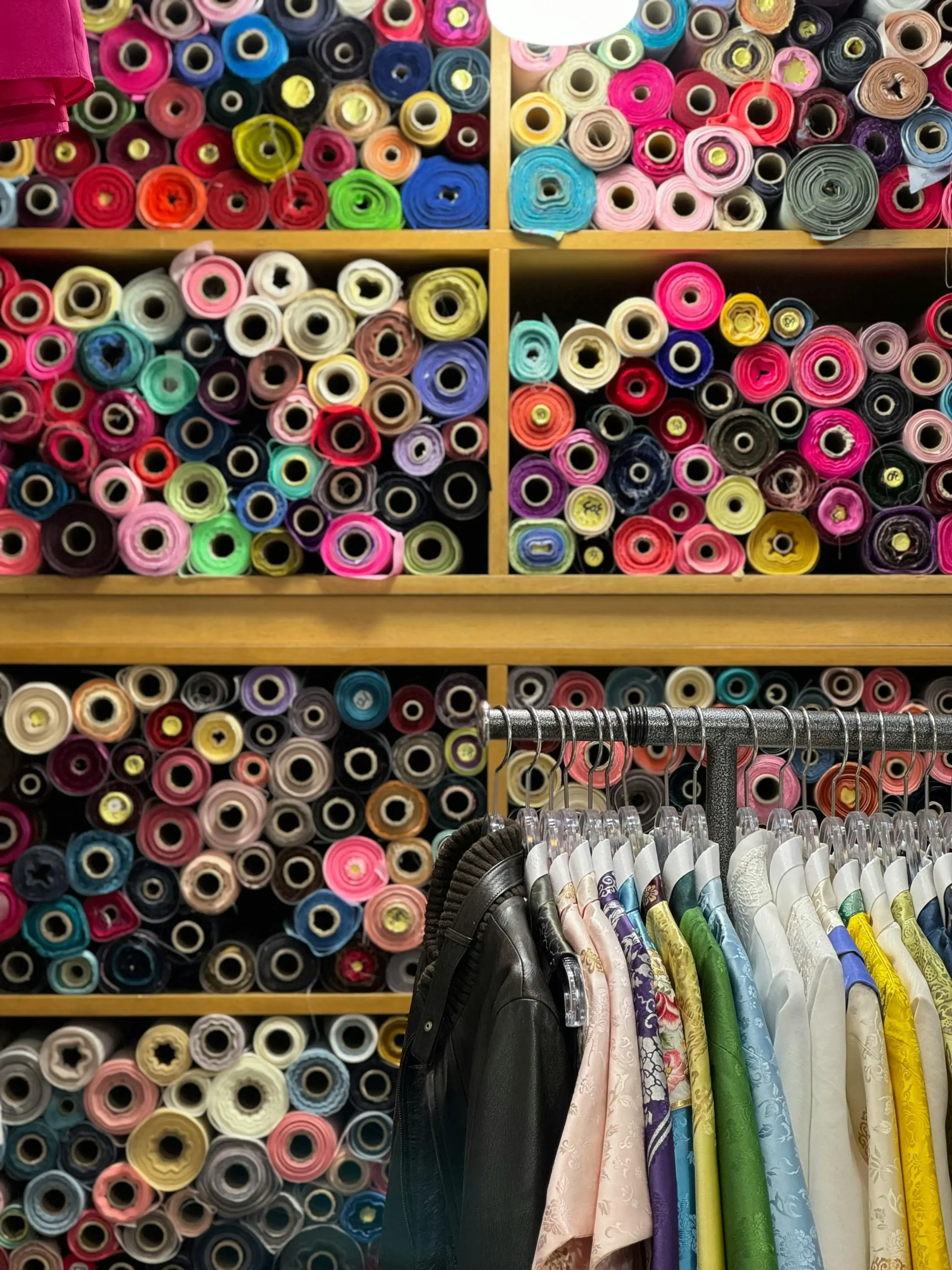
Step-by-Step Hand-Feel Testing Protocol
Bouclé textures can deceive your fingers—always verify drape on a form.
Begin with the surface touch. Run your palm flat across the fabric and then lightly brush it with your fingertips. You’re assessing three dimensions: softness vs. roughness, the thermal character (does it feel cool or insulating?), and any surface irregularities like slubs or bouclé loops. The trap here is that textured weaves—especially Chanel-style tweeds and bouclés—can feel plush and forgiving in a flat hand-feel test, but that same texture often masks underlying stiffness. A fabric that passes the palm test might still lack the fluidity needed for a draped sleeve or a soft shoulder. Use the back of your hand to gauge the thermal side: a fabric that feels cold to the touch indicates higher thermal conductivity (think mercerized cotton or linen), while a warm sensation suggests loft and air trapping (wool blends, heavy knits). This initial surface scan gives you the first clue about whether the material matches your intended garment structure.
Next, perform the compression and recovery test—often called the crush test. Take a corner of the swatch and ball it tightly in your fist for 10 seconds, then release and count how many seconds it takes for the creases to relax. For a heavy tweed or structured cable knit, you’re looking for full recovery within 3–7 seconds. If the fabric holds a sharp crease after 15 seconds, that stiffness will translate into poor drape memory and permanent wrinkles in the finished garment. This test is especially critical for jackets and outerwear where shape retention matters. And here’s a point that costs buyers real money: ask the mill for the exact yarn lot that produced your sample. Hand-feel can shift measurably if the supplier changes the yarn source between sampling and bulk production. A slight twist difference in the bouclé core or a change in wool blend ratio can alter recovery behavior entirely. I’ve seen a promising 380 g/m² tweed turn into a board-like mess in production because the mill switched to a cheaper yarn lot without notice.
Finally, the visual drape assessment on a curved form. This is where novices learn the hard way. Place the swatch over a dress form shoulder or a sleeve block. Observe how the fabric falls—does it hug the curve with gentle folds, or does it stand away in rigid peaks? Bouclé and slub textures that felt soft in your hand often reveal a surprising stiffness when draped over a compound curve. A flat swatch can hide this because the fabric isn’t forced into three-dimensional tension. For objective comparison, use the AATCC EP5 hand panel protocol as a calibration tool. It’s a subjective rating system (1–5 for stiffness, smoothness, etc.) but running a blind comparison across swatches from different suppliers will surface differences your fingers might miss. For example, a bouclé from one mill might score a 3 in stiffness on the panel while a visually identical competitor’s swatch scores a 4—and that one point translates directly to whether your jacket skims the body or fights it. Always request the lab test results alongside your physical swatch, but trust your hands first when those results contradict your on-form drape observation.
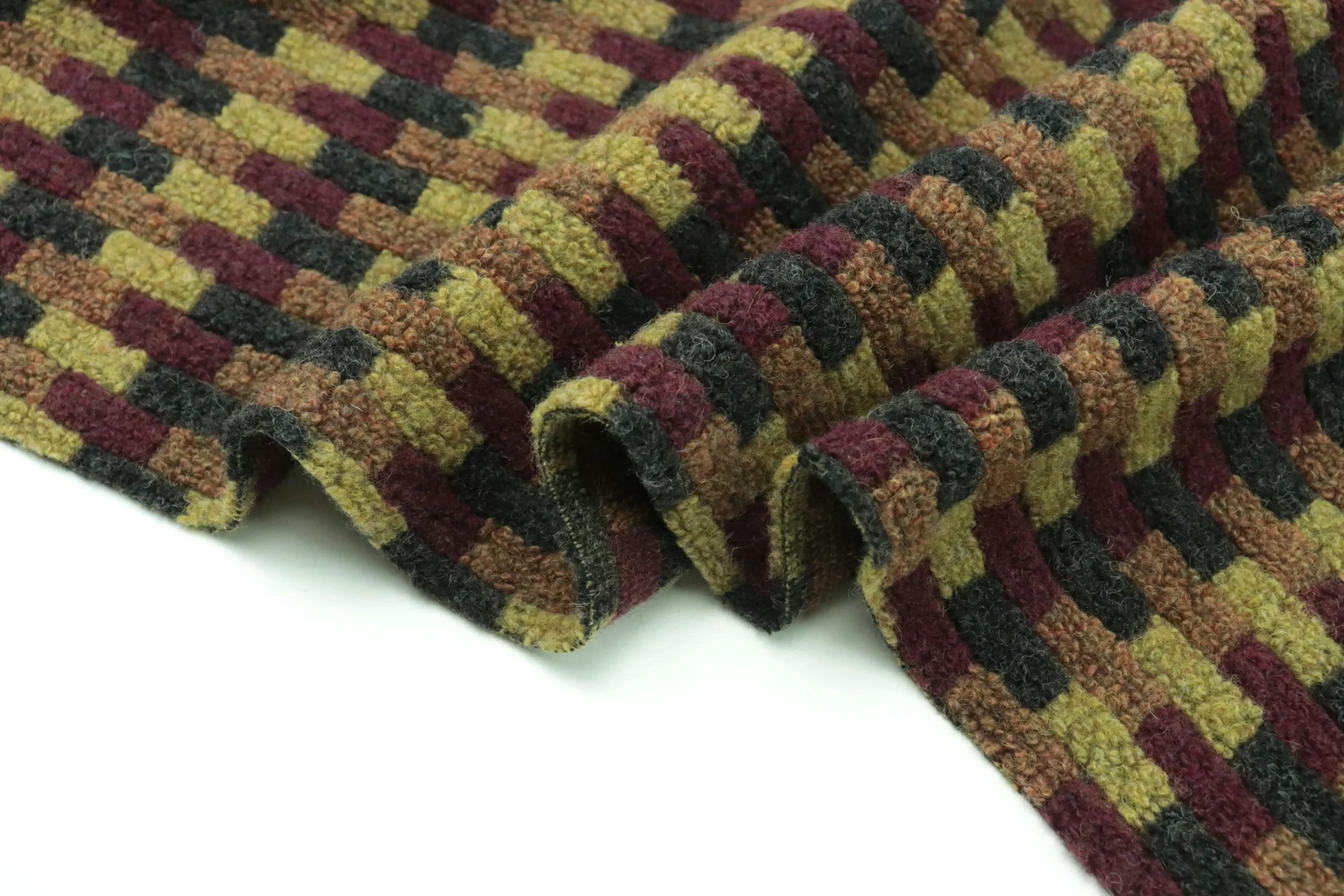
How to Compare Swatches Across Suppliers Objectively
A bouclé swatch that feels soft on the table can become a stiff jacket.
Almost every sourcing mistake I’ve witnessed traces back to the same error: comparing swatches by laying them flat on a table and rubbing them between thumb and forefinger. That method tells you surface texture, but it tells you nothing about how the fabric will behave when it has to wrap around a shoulder or fall from a hip. Bouclé and slub textures are especially deceptive — the loops and bumps give a plush hand feel that masks an underlying stiffness in the weave. You learn that lesson after the first garment fails the drape test.
- Drape test on a curved form: Take each swatch and drape it over a dress form sleeve or a mannequin’s shoulder — never a flat surface. A fabric that feels supple on the table will often stand away from the curve, revealing a rigid substructure. This single test eliminates 80% of the subjectivity in hand-feel comparison.
- Crush test for wrinkle recovery: Scrunch each swatch in your fist for ten seconds, then smooth it out on the table. Count how many seconds until the crease lines fade. Heavy tweeds that recover in under 15 seconds are safe for travel garments; those that hold the crease for more than 30 seconds will look rumpled after a day’s wear. I’ve seen buyers reject an otherwise perfect bouclé after this test because the recovery was 45 seconds.
- Weight and thickness consistency: Use a pocket scale and caliper. Within a single swatch, weight variance should stay under 3% across multiple measurements. If you see more than 5% deviation, that mill has poor yarn tension control — expect the same inconsistency in production rolls.
- Yarn lot traceability: Ask the supplier for the exact yarn lot number that produced your sample. A mill that sources yarn in bulk from different lots can deliver a production run with an entirely different hand feel. Direct factories like ours control the entire spinning process — we custom-spin bouclé and slub yarns in-house — so the hand feel stays locked from sample to bulk.
To make the comparison truly objective, run a blind test. Label each swatch on the back with a code, then handle them in random order — softness, stiffness, drape, recovery. Ranking them without knowing which supplier sent which swatch often flips your initial preference. Professional mills use AATCC EP5 hand panel protocols, but a simple blind ranking of those four attributes will catch the biases that cost you dearly on a bad bulk run.

When to Trust Your Hands vs. Request Lab Testing
Your hands judge aesthetics; lab tests catch hidden defects like colorfastness or shrinkage.
A bouclé or slub tweed can feel soft and pliable in your palm but turn rigid when draped over a shoulder. That’s the trap of texture masking stiffness. Your hand-feel is indispensable for assessing surface character, thermal touch, and initial softness — but it cannot detect internal structural issues. The moment you need guarantees on wash performance, dimensional stability, or interlining compatibility, you move from hand to lab.
- When to Trust Your Hands: Subjective assessment works for surface texture, compressibility, and thermal character. Use a professional swatch evaluation guide like AATCC EP5 to calibrate your touch across three descriptors: hand (overall feel), stiffness (resistance to bending), and recovery (ability to return to shape). A blind comparison of three swatches side by side often reveals unexpected differences that a single swatch won’t show.
- When to Request Lab Testing: Order lab tests for any fabric going through wet processing or high-stress wear. Minimum set: colorfastness to washing (ISO 105-C06), crocking (AATCC 8), dimensional change (AATCC 135), and wrinkle recovery angle (AATCC 66). For heavy tweeds, the crush test you do by hand is a proxy — but only the lab can give you the exact recovery angle number. Anything under 150° means the fabric holds creases after travel.
- Yarn Lot Consistency Check: Hand-feel can shift dramatically if the mill changes yarn source between sampling and bulk production. Always ask for the exact yarn lot code that produced your sample. If the mill can’t supply it — or uses off-the-shelf yarns — expect measurable variation in hand-feel on production rolls. In-house spinning operations (like our partner mills in Wenzhou) guarantee traceability because our partner mills spin bouclé and chenille yarns to our specification, locking the lot number from day one.
Set a rule: for all first orders over 1,000 meters, require a mill-supplied test report with the above standards. For repeat orders, a random 1-meter cut from production should undergo a crush and drape test at your end — if the recovery feels off by more than 10%, pause shipment and request the lab report again.
Benchmark: For a Chanel-style tweed in the 350–500 g/m² range, proper wrinkle recovery angle should fall between 160° and 200° (warp direction) and 150°–180° (weft). Anything below that, and your sampling budget is better spent on lab testing than on garment prototypes that wrinkle on the rack.
Conclusion
A bouclé that feels soft in hand can still drape like a board once hung on a dress form. The crush test, the curve drape, and the yarn-lot traceability check give you three fast ways to catch that gap before committing your bulk order. Without these checks, you are essentially trusting a spec sheet that the mill wrote — and we all know how that story ends.
Before you place that bulk order, run three yes/no questions: (1) Does the supplier guarantee the same yarn lot used in the pre-production sample approval? (2) Have you confirmed the quality tolerance for drape and recovery — not just surface hand? (3) Is the FOB pricing consistent with the actual sample weight and finishing process? Answering these will save you from costly surprises. If you are ready to test a mill that answers all three with a documented yes, browse Fursone’s services page to explore rapid sampling (7–10 days) and GRS-coordinated production backed by deep woolen textile development expertise.
Frequently Asked Questions
How do you test fabric hand-feel?
Rub the fabric between your thumb and fingers to assess surface texture, then compress it in your palm to check spring-back and density. The key is to test. Always test on a flat surface first, then on a curved form for drape.
What is the fabric drape test?
Drape testing involves draping a fabric sample over a curved form like a mannequin or your arm to see how it falls and folds. This reveals whether the fabric. Compare drape of all your supplier swatches under the same lighting and angle.
How to compare fabric swatches across suppliers?
Test all swatches at the same temperature and humidity, using a consistent hand-feel scoring system for softness, compression, and drape. Assign each swatch a numeric grade (1-5) and photograph the drape. Keep a reference swatch of your preferred hand-feel for baseline comparison.
When to trust hand-feel vs lab testing?
Trust hand-feel for early-stage design decisions and aesthetic selection, but always request lab data for colorfastness, pilling resistance, and shrinkage before bulk production. A fabric that feels perfect can still fail. Use hand-feel for design confidence; use lab reports for production commitment.
How do you explain fabric hand-feel to a factory?
Describe hand-feel using objective terms like ‘low vs high compression recovery’ or ‘surface roughness on a scale of 1-5,’ and provide a physical reference swatch. Avoid subjective words like ‘soft’ or. Send a sealed reference swatch with your spec sheet for alignment.
Related Insights

Color Approval Without Surprises: Lab Dips, Loom State and the Light Booth
Color is the most common reason a tweed bulk run disappoints. Not because mills cannot...

Fulling and Finishing: The Mill Steps That Change Tweed’s Hand Feel
Two tweeds can leave the loom with identical yarn, identical weave and identical weight, and...

Garment Dyeing vs Piece Dyeing: Cost, Color Control and When Each Wins
Garment dyeing, dyeing the finished garment instead of the fabric roll, has quietly become a...