Stock tweed rolls are the quiet engine of the wholesale fabric trade, and this case study shows why. A mid-sized wholesaler serving boutique brands wanted to launch a 12-SKU tweed line: six Chanel-style boucle colorways, three classic tweed constructions, and three textured knits. The normal route would have demanded a 1,000-meter commitment per SKU, meaning 12,000 meters of capital tied to styles that had never been tested with a single retail order.
The wholesaler did the opposite. It built the line from Fursone’s 100-meter ready-stock rolls, validated sell-through at boutique scale, and only then moved the proven colors into custom production. This is the stock-first, custom-later playbook, and the numbers explain exactly how it works.
Key takeaways
- The 100m stock tier ships in 3-7 days at 150cm width, with defect allowance capped at 2% per roll.
- One 100m roll covers roughly 50-80 garments depending on pattern layout, which is enough for boutique-level test runs.
- A 12-SKU line at 100m per SKU ties up 1,200m of stock, not 12,000m of custom commitment.
- 7-day samples arrive with shrinkage, pilling, and colorfastness data, so SKU selection is data-driven, not guesswork.
- Best sellers graduate to the 1,000m custom tier with Pantone matching and 0.5 Delta E dye lot approval.
The Problem: Depth Without Dead Stock
The wholesaler’s customers are small fashion brands that order 20-60 meters at a time for capsule collections. Those brands need color depth: they want six boucle colorways on the shelf, not one. But a wholesaler who orders six colors at the standard 1,000-meter custom MOQ is sitting on 6,000 meters before the first boutique places an order. If two colors miss, the dead stock is not a write-off; it is next season’s cash flow problem.
The deeper problem is that custom MOQs do not forgive a wrong color. A custom order locks the wholesaler into a Pantone, a yarn plan, and a warp beam for that color alone. The wholesaler needed a way to test color and construction at boutique scale, with the option to cancel a loser without eating a full minimum order. That is the exact gap the 100m ready-stock tier exists to fill.
Why 100m Stock Rolls Fit Wholesale Math
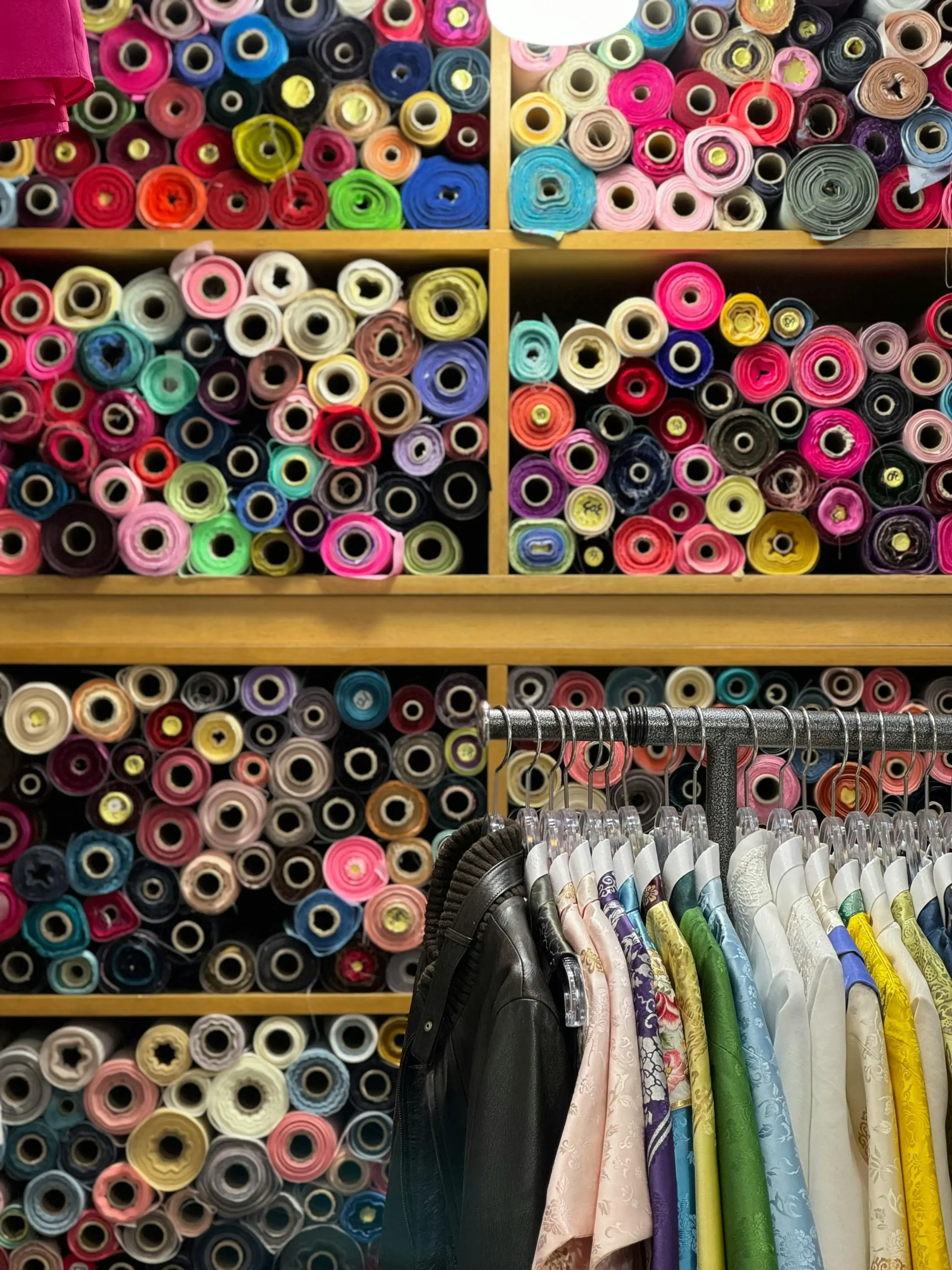
Fursone‘s ready-stock model holds core tweed and boucle constructions at a 100-meter tier with no minimum-volume penalty. Rolls ship in 3-7 days at 150cm width, and the defect allowance is capped at 2% or less per roll, with OEKO-TEX Standard 100 certification and SGS inspection reports available on request. For a wholesaler, that means the quality story is provable before the first meter sells to a boutique.
The garment math works at this scale. A 100-meter roll at standard specs covers roughly 50-80 garments depending on pattern layout. A boutique that needs 15 jackets per color can draw from one roll, and the wholesaler can reorder the same stock color in 3-7 days rather than waiting through a custom production window. That is the difference between a wholesale line that replenishes and one that sells from a single, shrinking batch.
What the Wholesaler Did
The wholesaler started with a 7-day sampling round across all 12 candidate SKUs. Every sample arrived with three pre-test wash cycles: shrinkage, pilling, and colorfastness data traveled with the swatches. Two candidates were cut in that round, one because its shrinkage exceeded the lined-jacket tolerance and one because the boucle loop density snagged under zipper hardware testing. The line entered production with 10 SKUs, not 12.
That filter is the quiet win of the process. On a custom-only sourcing model, the wholesaler would have discovered both problems after 12,000 meters was on the water. On the stock model, the discovery cost was a sampling round measured in days. The remaining 10 SKUs were ordered at 100 meters each, and the first roll shipment left the warehouse within a week of the sample approval.
The Numbers on the Launch
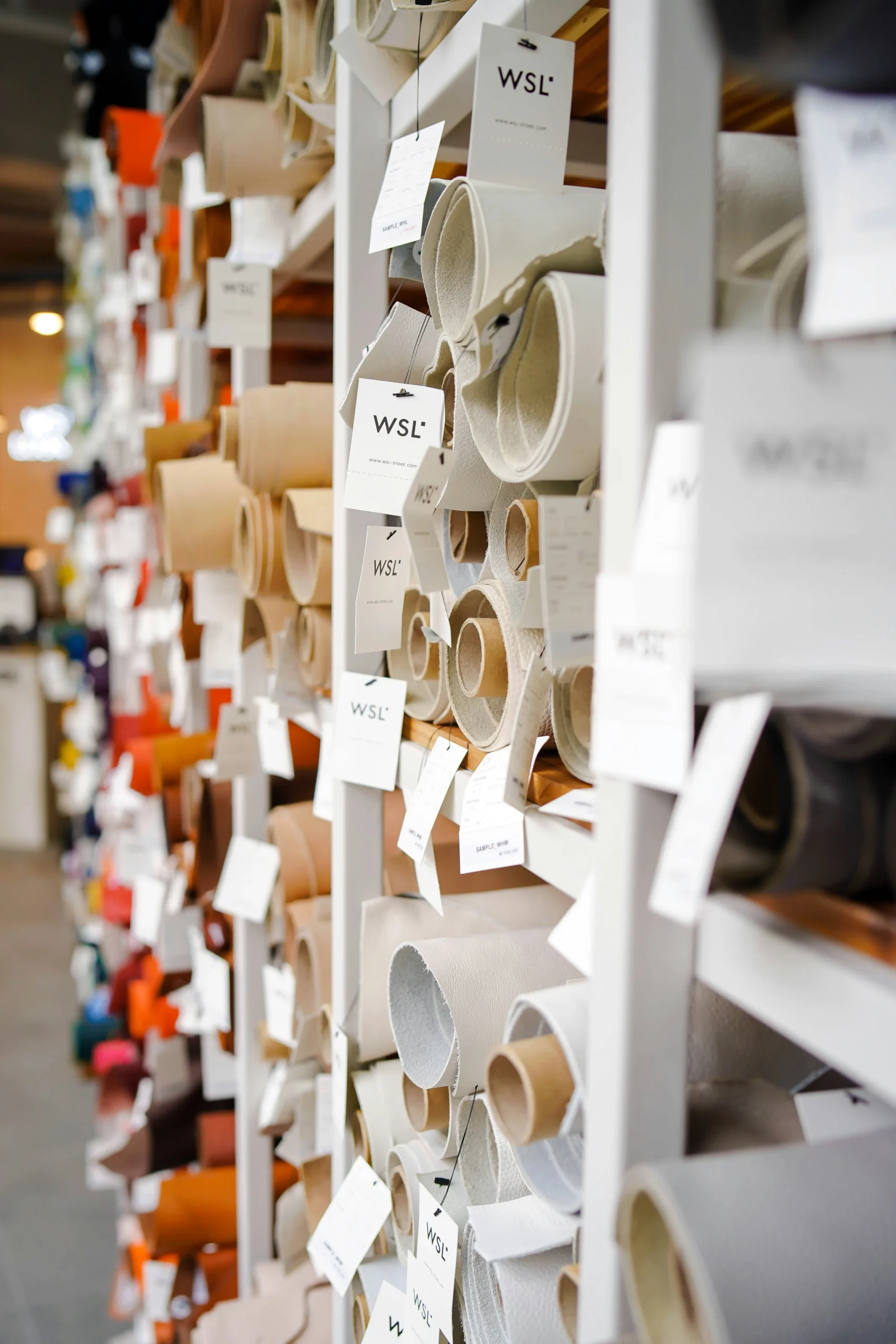
The launch inventory totaled 1,000 meters across 10 SKUs, one-tenth of the custom commitment the same depth would have required. Each SKU held 100 meters, enough for roughly 50-80 garments of boutique-scale test production. The per-roll defect cap of 2% gave the wholesaler a clean claim for its own retail customers: the stock it resold carried mill-level QC, not salvage pricing.
Boutique sell-through followed a familiar pattern. Three boucle colorways in the 380-450 g/m² jacket band moved first, because they matched the structured jacket demand of the wholesaler’s designer-brand customers. Two textured knits moved slowly and were dropped at the next review. The line settled into seven active SKUs within two reorder cycles, and each reorder shipped in the 3-7 day window without a single stockout-driven cancellation.
Reorders and the Custom Run
Once two hero colors had sold through three consecutive stock reorders, the wholesaler moved them to the custom tier. At 1,000 meters per color, custom production unlocked what stock cannot: Pantone-matched shade, exclusive yarn construction, and the option to make the color proprietary to the wholesaler’s own line. The custom path followed the standard 6-week flow, with dye lot approval at 0.5 Delta E before bulk weaving began.
The sequencing mattered more than the fabric. The wholesaler used stock to prove demand, then used custom to defend margin: a hero color that no competitor can restock from the same mill’s shelves is a color that stops price matching. The remaining stock SKUs stayed on the 100m tier as a continuous test bed for new colorways, which is how the line stays at 12 SKUs without ever holding 12,000 meters.
Lessons for Other Wholesalers
- Open a line with 100m per SKU; the 3-7 day dispatch window lets you restock winners before demand peaks.
- Use the 7-day sample data to cut losers before they become rolls; shrinkage and snag data do the filtering.
- Check the defect allowance in writing; a 2% per-roll cap is the difference between resale-grade stock and seconds.
- Move hero colors to the 1,000m custom tier only after repeat sell-through, and lock Pantone matching at 0.5 Delta E.
- Keep a stock lane open permanently; it is your hedge against forecasting errors in every season after the first.
The stock-first model is not a compromise for small wholesalers; it is the same sequence larger buying offices use to de-risk a range. Fursone’s ready stock program is built around the 100m tier, and the fabric wholesalers solution page covers the resale-specific details: width consistency, roll numbering, and certificate copies for your own customers. The ready-stock boucle scale-up study shows the same playbook at brand level.
Frequently Asked Questions
Can wholesalers order tweed in 100m rolls?
Yes. Fursone’s ready-stock tier ships 100m rolls in 3-7 days at 150cm width, with no minimum-volume penalty beyond the roll itself.
How many garments does 100m of tweed cover?
Roughly 50-80 garments depending on pattern layout and fabric width, which is enough for boutique-scale test runs and capsule lines.
What defect allowance comes with stock rolls?
Ready-stock rolls carry a defect allowance capped at 2% or less per roll, with OEKO-TEX certification and SGS inspection reports available on request.
When does custom production make sense for a wholesaler?
After a color sells through repeated stock reorders. Custom at 1,000 meters adds Pantone matching, exclusive yarns, and 0.5 Delta E dye lot control.
How fast can a stock reorder arrive?
Stock reorders ship in 3-7 days from the warehouse, which keeps wholesale shelves filled without forecasting six weeks ahead.
Conclusion
This wholesaler’s 12-SKU line proves the stock-first sequence: validate construction with 7-day samples, launch each SKU at 100 meters, let sell-through pick the winners, and reserve custom production for the colors that earned it. The result was a deep line without dead stock and a defensible margin on hero colors.
- 100m stock rolls de-risk color decisions; custom MOQs cannot.
- Sample data, not swatch optimism, filters the SKU list.
- Custom runs belong to proven colors, and 0.5 Delta E dye lots protect the reorder.
If you are planning a wholesale tweed range, our team will pull current stock colorways and sample schedules so you can start the same 100m validation round this week.

Related Insights

Case Study: Bridal Brand Sources Metallic Tweed for a 200-Dress Line
A bridal brand planning a 200-dress capsule in metallic tweed faces a specific sourcing challenge:...

Case Study: Garment Factory Standardizes One Boucle Across Three Factories
A garment factory group operating three production sites across southern China needed the same boucle...
Factory Direct Fabric Case Study: 60% Faster Sampling
{ “@context”: “https://schema.org”, “@type”: “Article”, “headline”: “Factory Direct Fabric Case Study: 60% Faster Sampling”, “author”:...